Dmitry Bagaev is a Researcher at Eindhoven University of Technology's Signal Processing Systems department, specializing in Bayesian inference and probabilistic programming. His work develops computational tools like RxInfer.jl and ReactiveMP.jl for scalable probabilistic modeling. Research spans Bayesian inference frameworks, reactive programming architectures, and applications in computational immunology. Recent publications focus on probabilistic programming languages (GraphPPL.jl), multi-agent trajectory planning, and SARS-CoV-2 T-cell receptor databases. Articles demonstrate consistent innovation at the intersection of computational statistics, biological data analysis, and real-time systems engineering. Awards and advising roles are not documented in available records. Research occurs within the BIASLab group, focusing on signal processing systems and probabilistic AI.
Lin Wang is an Assistant Professor at the Department of Computer Science, Vrije Universiteit Amsterdam, and an Adjunct Professor at TU Darmstadt. His research focuses on networked systems, edge computing, cloud computing, and optimizing computer systems for applications like augmented reality. He holds a PhD from Chinese Academy of Sciences and has postdoctoral experience at SnT Luxembourg. His work contributes to UN Sustainable Development Goals related to innovation and infrastructure. Education: PhD in Computer Science (ICT, CAS), Postdoc at SnT Luxembourg Previous Roles: Head of Smart Urban Networks group at TU Darmstadt's TK Lab (2016-2018) Research interests include edge computing, in-network processing, novel network protocols, and energy efficiency. Recent work addresses latency in edge networks, IoT synchronization, and congestion mitigation in data centers. Supervised 2 PhD theses and collaborates internationally. Active in labs like the Telecooperation (TK) Lab. No ancillary activities declared.
Irene van Oorschot is an Assistant Professor at the Department of Science Public Issues and Imaginaries, Erasmus School of Social and Behavioural Sciences, Erasmus University Rotterdam. Her research explores climate adaptation practices, ecological resilience, and the interplay between legal systems and environmental management. She investigates how communities sense and respond to climate change in everyday urban contexts, using ethnographic methods to study bodily exposures and care practices. Her work also examines the circulation of scientific concepts (e.g., resilience) in environmental policy. Van Oorschot's publications span climate adaptation, forensic genetics, and legal sociology. Recent articles analyze sensory experiences of climate change, ethical dilemmas in facial recognition technologies, and the adoption of DNA sequencing in forensics. Her interdisciplinary approach combines STS, anthropology, and environmental humanities. She led the research project Sensing Change , funded by Rotterdams Weerwoord, which documented how Rotterdam citizens perceive climate change.
Matthias Walter is an Assistant Professor in the Department of Mathematics of Operations Research. His research focuses on optimization, mathematical programming, and algorithm design, with applications in transportation, combinatorial optimization, and logistics. He contributes to the SCIP Optimization Suite and has developed the Combinatorial Matrix Recognition Library. His work spans topics such as linear programming relaxations, pseudo-Boolean solving, and multilinear optimization. Key research interests include operations research, integer programming, and algorithmic solutions for complex optimization problems. He has collaborated on projects like optimizing parcel transportation and analyzing congestion games. His recent publications address challenges in flow shop scheduling, graph realization, and pseudo-Boolean functions. Walter actively participates in academic activities, organizing events like the Mathematical Olympiad in Saxony-Anhalt and presenting invited talks on topics such as McCormick relaxations. His contributions to computational tools and theoretical advancements highlight his role in advancing optimization methodologies.
Tom van Dijk is an Assistant Professor in the Department of Formal Methods and Tools at the University of Twente. He holds a PhD and MSc in related fields. His research focuses on formal methods, algorithm design, model checking, decision diagrams, and parity games. Key contributions include work on reactive synthesis, parity game solvers (e.g., Oink and Knor), and multi-core computing techniques. His research interests include algorithm complexity analysis, symbolic methods, and formal verification. Notable achievements include the SYNTCOMP awards (2021–2023) and the Best Paper Award at SPIN 2017. He has published widely on topics such as parity game algorithms, decision diagram optimizations, and parallel computing frameworks like Sylvan and LTSmin. Recent articles highlight advancements in parity game solving strategies, reactive synthesis competitions, and worst-case complexity analysis. He actively contributes to open-source tools and datasets, including repositories on Zenodo and GitHub. His work aligns with UN Sustainable Development Goals through contributions to efficient computational methods and formal verification techniques.
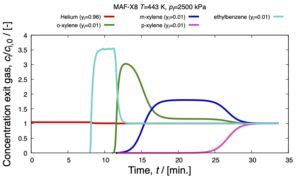
Dr. David Dubbeldam is a researcher at the University of Amsterdam's Faculty of Science, affiliated with the Van 't Hoff Institute for Molecular Sciences. His work focuses on molecular simulations of nanoporous materials and fluids, with a particular emphasis on developing and applying simulation software like RASPA, iRASPA, and RUPTURA. Research areas include adsorption, diffusion, and thermodynamics in nanoporous systems Develops simulation tools for computational chemistry and materials science Organizes workshops and educational schools on molecular simulation techniques His contributions to the field span over a decade, with recent advancements in GPU-accelerated simulations, force field development, and gas mixture separation technologies. The RUPTURA software enables breakthrough curve analysis and isotherm fitting, while RASPA3 offers significant performance improvements in Monte Carlo simulations of nanoporous materials.
Simon Hengeveld is a Researcher and Software Developer for Health Research at Wageningen University. He holds a PhD from Université de Rennes (2024), and bachelor's/master's degrees in Computer Science from Utrecht University. His research focuses on computational geometry, protein structure determination via Distance Geometry, and human motion analysis. He has developed applications like the UNESCO World Heritage Collect app, combining software engineering with historical and travel interests. Education: Bachelor's/Master's in Computer Science, Utrecht University PhD in Structural Biology/Computational Geometry, Université de Rennes 1 Research Interests: His work bridges computational methods with biological applications, including protein structure determination using NMR data and optical computing. He also explores human motion retargeting and geometric algorithms for adaptive maps. Simon emphasizes practical implementations, such as GPU-based solutions for 1D Distance Geometry problems. Publications: His articles span computational geometry, bioinformatics, and algorithm design, with contributions to journals like Journal of Optics and conferences such as SOCG, GSI, and BIBM. Key themes include optical processors for matrix operations and geometric algorithms for skeletal posture analysis. Awards: No scientific awards explicitly mentioned. Advising/Grants: No formal advising roles or grants detailed in the text. Labs/Teams: Developed the UNESCO World Heritage Collect app with collaborators, though no formal university lab affiliation is noted.
Steef van de Velde is a Full Professor at the Department of Technology and Operations Management within the Rotterdam School of Management (RSM), Erasmus University Rotterdam. His research focuses on operations excellence, service operations, and supply chain management, with contributions in optimization, scheduling, and algorithm design. He holds an MSc in Econometrics from Erasmus School of Economics and a PhD in Mathematics and Computer Science from Eindhoven University of Technology. His research interests span dynamic programming, approximation algorithms, and computational experiments in operations research. Notable work includes studies on flow shop scheduling, lot streaming, and supply chain optimization in self-storage warehouses. His publications appear in top journals like Management Science , Operations Research , and European Journal of Operational Research . Awards: Received the CSC Project Award (2016) for research on China's One Belt-One-Road Strategy. Editorial Roles: Editor of Operations Research Letters and former editor of Journal of Scheduling . Public Engagement: Contributed to media discussions on SDG integration in business and RSM's AMBA accreditation. He has supervised 26 academic works, though specific student names are not listed. His expertise bridges theoretical optimization with practical applications in logistics and manufacturing.
Loek Cleophas is an Assistant Professor in the Engineering of Software-Intensive Systems group at Eindhoven University of Technology (TU/e). He holds a joint appointment with the Mathematics and Computer Science department and is affiliated with EAISI (Eindhoven Artificial Intelligence Systems Institute). His work bridges model-driven software engineering (MDSE) and algorithm engineering, focusing on metamodel analysis, parallel pattern matching, and high-tech system simulations. Cleophas earned his MSc and PhD in Computer Science from TU/e, with industry experience at ASML and academic collaborations at institutions like University of Pretoria and Umeå University. Since 2017, he has led the Dutch research school IPA as Managing Director. He also serves as a research fellow at Stellenbosch University, supervising postgraduate students and co-developing joint research initiatives. His research emphasizes correctness, efficiency, and elegance in software systems. Notable contributions include the SAMOS framework for metamodel clone detection, VPDSL for material flow simulations, and foundational work on sublinear pattern matching algorithms.
Dinard van der Laan is an Assistant Professor at the Department of Operations Analytics within the School of Business and Economics at Vrije Universiteit Amsterdam. He holds a PhD from Leiden University (2003). His research focuses on dynamic programming, Markov decision processes, optimization of queueing networks, and dynamic pricing, contributing to UN Sustainable Development Goals through operations research applications. Key research interests include decision rule engineering, stochastic optimization, and queueing network control. His work applies to resource allocation, server systems, and dynamic pricing strategies. Recent publications address parallel server assignment, call center control, and auction mechanisms. Teaches courses including Operations Research and Thesis supervision. Engaged in academic activities such as peer reviewing for Operations Research , visiting research at the University of York (2016–2018), and presenting on sequential assignment algorithms at international conferences.
Jan Friso Groote is a Full Professor and Chair of the Formal System Analysis group in the Department of Mathematics and Computer Science at Eindhoven University of Technology (TU/e). He also holds professorial roles in the EAISI Foundational and EAISI High Tech Systems institutes. Since 2016, he has been working part-time at ASML, contributing his expertise in formal verification to industrial applications. Education: Born in 1965, studied Computer Science at Twente University of Technology (now University of Twente), 1983–1988. PhD in 1991 from the University of Amsterdam with thesis 'Process algebra and structured operational semantics', based on research at CWI (Centrum Wiskunde en Informatica). Jan Friso Groote is a leading researcher in formal methods and software verification. His work focuses on enabling the development of flawless software through rigorous formal analysis. Key research areas include structural operational semantics, model checking, branching bisimulation, protocol verification, and the development of the mCRL2 toolset. His current goal is to integrate formal techniques into complete software system design, improving both development speed and quality. His research has demonstrated that formal methods can reduce development time by a factor of three and increase quality tenfold, with potential for zero-defect software. His recent publications demonstrate sustained contributions in formal verification, including work on mutual exclusion algorithms, industrial control system modeling, probabilistic systems, and efficient bisimulation algorithms. The articles span topics such as tunnel control systems, simulation lower bounds, and formal methods for critical systems, reflecting both theoretical depth and practical application. Scientific Awards: Best Paper Award FACS 2018 FMICS-AVoCS Best Paper Award (2017) Jan Friso Groote has held significant leadership roles in education, including Director of Education for Computer Science (2000–2010) and for multiple bachelor’s and master’s programs. He has advised numerous researchers and supervised a large body of research output (over 320 publications). He leads the Formal System Analysis group and has been involved in projects such as 'Composable Embedded Systems for Healthcare'. His work bridges academia and industry, particularly through collaborations with ASML and Rijkswaterstaat, and he has been a visiting researcher at institutions across Europe and China. He is a key contributor to the mCRL2 toolset, which supports modeling and verification of software behavior with data, time, and probabilities. His research fingerprints highlight strong expertise in model checking, transition systems, software design, and process algebra. He teaches courses such as System Validation, Embedded Software, and Capita Selecta in Formal System Analysis.
Ravindra Laxman Shinde is a Researcher in Computational Chemical Physics at the MESA+ Institute, University of Twente. His work focuses on quantum Monte Carlo methods, exascale quantum simulations, and high-performance software development for accurate electronic structure calculations. Research Interests: Quantum Monte Carlo (QMC) Machine-Learned Force Fields Exascale Computing Electronic Structure Theory Scientific Software (CHAMP, AiiDA) Reproducibility in Computational Physics His recent publications highlight a strong trend in developing robust, scalable software solutions for quantum mechanical simulations, particularly in navigating hardware-software challenges at the exascale. His work bridges theoretical physics, computational chemistry, and computer science, with a focus on practical implementation and data integrity. Scientific Awards: FAIR data fund 4TU 2024 Advising and Grants: While specific students are not listed, Shinde is deeply involved in large-scale collaborative research projects such as TREX and NWO CHAINS, indicating leadership in grant-funded, team-based scientific computing initiatives. His role in creating software and datasets suggests mentorship in computational methods and data practices. Labs and Teams: He is a key contributor to the TREX project and the development of the CHAMP software suite, working within interdisciplinary teams focused on advancing quantum simulation capabilities at the exascale.
Fatih Burak Akçay is a PhD Candidate and Lecturer at Tilburg University's TS Economics and Management. His research focuses on operations research, optimization, and scheduling algorithms. Key topics include parallel processor scheduling, bin packing problems, and contiguity constraints. He is affiliated with the Operations Research research group. His 2025 publication in the European Journal of Operational Research addresses mathematical models and computational studies for scheduling and bin packing challenges. No scientific awards are listed, and no advising/grant details are provided. His work is centered at Tilburg University's Koopmans Building.
Wilker Ferreira Aziz is an Assistant Professor at the Institute for Logic, Language and Computation (ILLC) within the Faculty of Science at the University of Amsterdam, where he leads the Probabilistic Language Learning group. His primary affiliation is with the Natural Language Processing & Digital Humanities research unit. His research focuses on the intersection of machine learning, natural language processing, and probabilistic modeling. Key areas of interest include language modeling, machine translation, syntactic parsing, text classification, and question answering. He develops techniques for probabilistic inference, gradient estimation, and uncertainty quantification in neural language models. Dr. Aziz's recent publications demonstrate a strong focus on uncertainty in natural language generation, with multiple papers at top-tier conferences like EACL, EMNLP, and ICLR. His work examines how language models represent uncertainty compared to humans, calibration issues when humans disagree on labels, and methods for more robust decision-making in text generation. Best Paper Award at Coling 2020 He actively supervises both PhD and MSc students, with several ongoing PhD projects focusing on uncertainty in language models and neural text generation. Dr. Aziz serves on program committees for major ML and NLP conferences including ACL, EMNLP, NeurIPS, and ICLR, and has acted as area chair for several of these venues. His research has been supported through positions at the Mercury Machine Learning Lab, a collaboration between Booking.com, TU Delft, and the University of Amsterdam.
Dr. Syed Hassan Shah is a distinguished adjunct faculty member at California State University, Fullerton's Department of Computer Science, where he teaches graduate-level courses. Concurrently, he serves as a Wi-Fi connectivity subject matter expert and Product Director for Short Range Technologies at Quectel Inc., and previously held roles as Product Manager for Mobile & Compute Connectivity at Qualcomm Inc., focusing on Mi-Fi, CPE, and UWB technologies. Ph.D. in Computer Science & Engineering, Kyungpook National University, South Korea (2013-2017) BS in Computer Science, Kohat University of Science & Technology, Pakistan (2007-2012) Dr. Shah's research spans interdisciplinary domains in Wireless Communications , Cyber-Physical Systems , and Smart Cities , with significant contributions to Vehicular Networks , Internet of Things , and Future Internet Architectures . His recent publications demonstrate expertise in Neural Networks , Optimization Theory , and Security & Privacy applications. Scientific recognition includes: Qualcomm Innovation Award (2016) IEEE Senior Member (2018) ACM Distinguished Speaker (2018) Best Research Contribution Award (Brain Korea, 2016) Multiple travel grants from ACM and IEEE KNU Honors Scholarship (2013) Dr. Shah actively contributes to academic governance as: Editorial Board Member for 60+ special issues in top-ranked journals TPC Member for 100+ international conferences including IEEE Globecom and ACM MobiHoc IEEE Vehicular Technology Society Board appointee (2018-2019)