Chen DingView profile
Professor
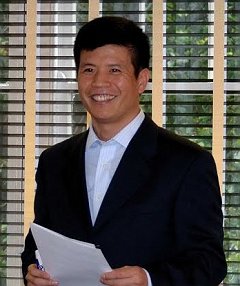
Chen Ding is a Professor and Chair of the Computer Science Department at the University of Rochester, where he leads research in computer memory systems and locality theory. His work focuses on optimizing memory hierarchy performance across computing platforms from handheld devices to supercomputers. Ph.D. from Rice University (2000) M.S. from MTU (1996) B.S. from Beijing University (1994) Professor Ding's research centers on the scientific foundation of computer memory, particularly locality theory and its applications for minimizing data movement - the primary bottleneck in modern computing systems. His work has established that data movement, data reuse, and working set are mathematically related manifestations of the same underlying phenomenon. His research spans parallel program locality, data movement complexity, relational theory of locality, reference affinity, and whole-program locality analysis. His recent publications demonstrate a continued focus on memory system optimization, with particular emphasis on lease caching, symmetric locality modeling, and continuous-time analysis of Zipfian workloads. His work bridges theoretical foundations with practical implementations across CPU/GPU cache modeling, cache sharing optimization, and key-value memory caching systems. NSF CAREER award (2003) DOE Young Investigator Award (2002) Professor Ding has supervised numerous graduate students, including Lavaee who contributed to the "Hardness of data packing" research presented at POPL'16. His work has received consistent funding from NSF and DOE, supporting his research in memory systems and parallel programming. He has served in leadership roles including General Chair for ISMM 2020 and committee positions for major conferences like PLDI and PPoPP. His research group maintains the roclocality.org resource and develops tools like SLO (suggestions of locality optimizations) for analyzing and improving program locality. The group collaborates with industry partners including Microsoft Research, where Ding served as a Visiting Researcher, and academic institutions worldwide.