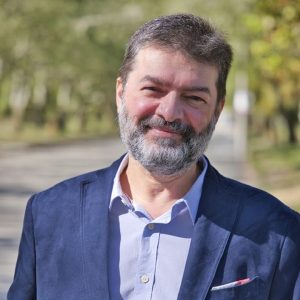
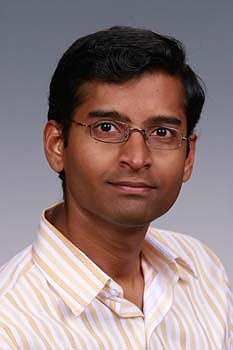
Vasilios V. Dimakopoulos is a Professor at the Department of Computer Engineering and Informatics, University of Ioannina, and has served as Dean of the Polytechnic School (School of Engineering) from 2017 to 2024. He holds a Diploma from the University of Patras, and a Master's and PhD from the University of Victoria, Canada. His research focuses on parallel processing, distributed systems, embedded systems, and performance analysis, leading the research group at ParaGroup . Administrative Roles: Dean of the Polytechnic School (2017-2024) Deputy Chair of the Department of Computer Engineering and Informatics (2014–2017) Director of Graduate Studies (2016–2020) President of the Technical Council of the University of Ioannina (2020–2023) His research group explores system software, computer architecture, and performance optimization , with contributions to both theoretical and applied aspects of parallel computing.
Florian Kübler is a researcher at Technische Universitat Darmstadt, Germany, specializing in Programming Languages and Static Analysis . He has contributed to major conferences including PLDI, ISSTA, ESEC/FSE, and SOAP, focusing on topics like abstract interpretation, call graph construction, and modular program analysis. His work addresses challenges in code optimization, soundness evaluation, and runtime reusability in static analysis frameworks. Research Interests: Florian's research spans Abstract Interpretation for static analysis Modularization techniques in program analysis Call graph algorithms for Java Parallelization of static analyses Intermediate representation design Compiler and toolchain optimization Conference Contributions: His publications highlight expertise in static analysis frameworks (OPAL, SootKeeper), semi-implicit parallelization, and systematic evaluation of analysis soundness. Recent work (2022) explores collaborative program analysis, while earlier studies (2018-2020) focus on lattice-based modularization and call graph algorithms.
Alexandros Dimopoulos is an Assistant Professor at the Department of Informatics and Telematics, Harokopio University of Athens, with expertise in reliable embedded systems, FPGA design, and bioinformatics applications. He graduated from the National Technical University of Athens (NTUA) in 2004 with a degree in Electrical and Computer Engineering and earned his PhD in 2009 in intelligent embedded systems. Current academic roles: Assistant Professor at Harokopio University (since 2012), Lecturer at the Naval Academy (2020–2025). Collaboration: Alexander Fleming Biomedical Sciences Research Center (since 2012). His research focuses on: Reliable embedded systems for biomedical applications FPGA-based solutions in bioinformatics Machine learning for RNA-Seq data analysis Internet of Things (IoT) architecture Energy systems fault detection via pattern recognition His publications demonstrate interdisciplinary work bridging computer engineering, bioinformatics, and electrical systems. He coordinates the Greek national hub ELIXIR-GR and has extensive teaching experience in both undergraduate and postgraduate programs, with a focus on course modernization.
Professor Kourkoubetis Konstantinos is a faculty member at the Department of Informatics, School of Information Sciences and Technology, Athens University of Economics and Business (AUEB). He holds a Ph.D. in Electrical Engineering and Computer Science from the University of California, Berkeley, following his Master's degree from the same institution and undergraduate degree from the National Technical University of Athens. His research focuses on network economics and telecommunications, with particular expertise in peer-to-peer systems, network pricing models, and high-speed network technologies. His work bridges theoretical computer science with practical telecommunications applications, developing mathematical models for network resource allocation and economic incentives. His publication record demonstrates consistent contributions to top networking conferences and journals, with a notable book Pricing Communication Networks: Economics, Technology and Modeling (Wiley, 2003) serving as a key reference in the field. His research shows a clear progression from theoretical network models to practical economic applications in telecommunications infrastructure. Professor Kourkoubetis has led significant research projects including MMAPS (Economic models for peer-to-peer systems) and M3I (Internet billing systems), and has contributed to major initiatives like the EuroNGI Network of Excellence. His work with the Energy Regulatory Authority on power import rights auctions demonstrates real-world impact of his theoretical research. Scientific Director of Communications and Networks Center, University of Crete (1996-2000) Head of Telecommunications and Networks Department, Institute of Informatics, FORTH (1990-1999) Head of Laboratory of Economics and Systems Theory, AUEB (2000-present) Member of National Research Council (2002-2003) Board Member of Information Society SA (2003-2004) His leadership extends to program committees for major conferences including INFOCOM and ICQT, reflecting his standing in the international networking research community. His dual expertise in theoretical computer science and economic modeling has positioned him as a key contributor to the development of economic frameworks for modern network infrastructure.
Paraskevi Frangopoulou is a Professor at the Department of Electrical and Computer Engineering (E.C.E.) of the Hellenic Mediterranean University (Heraklion, Crete). She specializes in distributed systems, parallel processing, computer networks, and their applications in education. She holds academic leadership roles in courses such as "Analysis and Design of Algorithms," "Data Structures," and "Parallel Processing" at the undergraduate level, and "Data Structures and Algorithms" in the postgraduate "Informatics Engineering" program. Education: B.Sc., Department of Computer Science, University of Crete (1989) M.Sc. & Ph.D., Queen's University, Canada (1991, 1995) Research & Affiliations: She leads the NetDil group within the MNCLab at the Hellenic University of Athens and collaborates with the DiSC Lab at FORTH. Her work focuses on distributed systems, P2P networks, and cybersecurity. She has authored over 70 articles, achieving 2000+ citations (h-index: 20, i10-index: 42). Grants & Activities: Principal investigator in multiple EU/National projects. Active in conference organization and peer review. Labs & Teams: MNCLab (Multimedia, Networks & Communications), DiSC Lab (Distributed Computing & Cybersecurity).
Rouskas Angelos is a Professor at the Department of Digital Systems, University of Piraeus. He holds a Diploma in Electrical Engineering from the National Technical University of Athens (NTUA), a Master's in Communications and Signal Processing from Imperial College London, and a PhD in Electrical and Computer Engineering from NTUA. Previously, he served as Lecturer, Associate Professor, and Head of the Computer Systems and Communications Laboratory at the University of the Aegean (2000–2009). His research focuses on next-generation wireless networks, edge computing, and energy-efficient network design. He has led multiple national and EU-funded projects and worked as a network designer at CosmOTE (1999–2000). He chaired the Technical Committee for European Wireless 2006 and served on numerous international conference committees. Education: BEng: Electrical Engineering, NTUA MSc: Communications & Signal Processing, Imperial College London PhD: Electrical & Computer Engineering, NTUA Research Interests: His work centers on optimizing wireless networks, particularly in edge computing environments and 6G/IoT connectivity. Key areas include energy efficiency, heterogeneous network architectures, and latency reduction through adaptive resource allocation. Recent trends in his publications emphasize non-terrestrial networks and federated edge-cloud IoT systems. Grants & Leadership: He has coordinated国家级 and European projects focusing on green networks and edge computing. His technical leadership extended to roles in industry partnerships and academic administration. Labs & Collaboration: Past leadership at the Computer Systems & Communications Lab (University of the Aegean) and current involvement in edge-cloud research initiatives.
Professor Efstratios Gallopoulos is a faculty member at the Department of Computer Engineering & Informatics , University of Patras, where he holds the Division of Computer Software . He currently serves as Deputy Department Chair and Director of the High Performance Information Systems Laboratory (HPCLab) . His academic career spans multiple institutions including the University of Illinois at Urbana-Champaign, University of California Santa Barbara, and collaborations with INRIA Rennes and NASA Goddard Space Flight Center. Education : B.Sc. in Mathematics (First Class Honours) from Imperial College London (1979) Ph.D. in Computer Science from University of Illinois at Urbana-Champaign (1985) Research Focus : His work centers on Large-scale Scientific Computing with emphasis on Computational Linear Algebra , Parallel/Distributed Processing , and Data Mining . Recent publications highlight innovations in Randomized Numerical Linear Algebra , Heterogeneous Cluster Scheduling , and GPU-Accelerated Inversion Techniques . Article Trends : His research bridges High-Performance Computing with Data Science , focusing on scalable algorithms for Matrix Computations , Recommender Systems , and Biomarker Analysis . The work spans theoretical advancements (e.g., Givens Rotations ) and practical implementations (e.g., pylspack library). Scientific Awards : NASA Group Achievement Award for Massively Parallel Processor (MPP) development ACM SIGWEB Hypertext Ted Nelson Newcomer Award (2012) Advising and Grants : He has advised numerous research projects funded by European Research Council , Hellenic Foundation for Research and Innovation (HFRI) , and international bodies like the US National Science Foundation. Notably, he co-organized the 2015 Gene Golub SIAM Summer School and served as Chair of the SIAM Gene Golub Summer School Committee (2020-24). Labs and Teams : He leads the High Performance Information Systems Laboratory (HPCLab) and co-directs the interdisciplinary graduate program Data Driven Computing and Decision Making . His teams have contributed to the Cedar vector multiprocessor project at UIUC and Text-to-Matrix Generator (TMG) tools for data mining.
Chronopoulos Antonis is a Professor at the University of Patras, specializing in distributed computing, grid and cloud computing, numerical algorithms, high performance computing, and scientific computing. His research spans both theoretical numerical methods and practical applications in distributed systems. His primary research interests focus on Distributed Computing , Grid and Cloud Computing , Numerical Algorithms , High Performance Computing , and Scientific Computing . His work bridges theoretical numerical methods with practical distributed systems implementations, particularly in the areas of load balancing, parallel iterative methods, and computational efficiency. Analysis of his publication record reveals a career trajectory that began with foundational work in numerical linear algebra and iterative methods in the late 1980s and 1990s, then evolved toward distributed and cloud computing applications in the 2000s and 2010s. His recent work shows increasing focus on healthcare applications of AI and machine learning, particularly in medical diagnostics and decision support systems. His research demonstrates consistent contributions to both theoretical numerical methods and practical distributed computing systems, with recent work expanding into healthcare applications of artificial intelligence.
Professor Theodoridis Ioannis is a distinguished faculty member in the Department of Informatics at the University of Piraeus, where he serves as Director of the Data Science Laboratory within the School of Information and Communication Technologies. With a career spanning over two decades, he has established himself as a leading expert in data management and analysis. His research interests focus on Data Science, particularly in databases, big data management, data mining, and geoinformatics. Professor Theodoridis has made significant contributions to spatial database systems, time series analysis, and distributed data processing. His work bridges theoretical foundations with practical applications in areas such as smart cities, mobility analytics, and scientific data management. His publication record demonstrates consistent research productivity with over 100 peer-reviewed articles in top-tier venues, accumulating more than 10,000 citations. His research output shows a clear evolution from foundational database techniques toward contemporary challenges in big data analytics, machine learning integration, and privacy-preserving methods. Member of editorial board of ACM Computing Surveys (since 2016) Reviewer for numerous international journals and conferences Active participant in data management conference committees Professor Theodoridis has secured significant research funding through Horizon 2020 projects, serving as project coordinator and research team leader since 2001. His work demonstrates strong industry and academic collaboration, with applications spanning multiple domains. He has also co-authored three influential monographs in his field. He leads the Data Science Laboratory, which serves as a hub for interdisciplinary research at the intersection of database systems, machine learning, and domain-specific applications. The laboratory fosters collaboration between computer scientists, domain experts, and industry partners to address real-world data challenges.
Panayiotis D. Tsanakas is a Professor of Computer Engineering at the National Technical University of Athens (NTUA), serving in the School of Electrical and Computer Engineering within the Department of Information Technology and Computers. Since 2023, he has held the position of Dean of the School of Electrical and Computer Engineering at NTUA. His academic career spans several decades with significant contributions to computer engineering and informatics. His educational background includes a Dipl. in Electrical Engineering from Aristotle University of Thessaloniki (1982), an MSc in Computer Engineering from Ohio University (1985), and a PhD in Computer Engineering from National Technical University of Athens (1988). Tsanakas specializes in high-performance computer architectures, cloud-computing systems, Internet-of-Things (IoT), and AI-based applications in medicine and biology. His research spans parallel and distributed processing, computer architecture, supercomputing applications, and biomedical engineering. He has published over 100 research papers in established scientific journals and conferences, with recent work focusing on AI applications in healthcare, cloud computing security, and advanced medical monitoring systems. His recent publications demonstrate a strong trend toward applying artificial intelligence to healthcare challenges, particularly in mental health monitoring, medical imaging, and biomedical diagnostics. His work frequently combines computer architecture expertise with medical applications, creating innovative solutions for healthcare challenges. 2023-now: Dean of the School of Electrical and Computer Engineering at NTUA 2018-2020: Board member of the EuroHPC Joint Undertaking 2004-2019: Chairman of GRNET, the national research and education network 2005-2009: Member of EETT (The Hellenic Electronic Communications and Posts Regulator) Tsanakas has supervised eight doctoral dissertations and more than 50 diploma theses. He has co-authored seven textbooks on computer systems that have been adopted by several higher-education institutions. His professional experience includes significant roles in national infrastructure development, including leading the design and deployment of advanced networking and cloud services for Greek academic institutions and healthcare facilities.
Sriram Krishnamoorthy is a Research Professor at Washington State University's School of Electrical Engineering & Computer Science and a research scientist at Pacific Northwest National Laboratory (PNNL), where he serves as the System Software and Applications Team Leader in PNNL's High Performance Computing group. Dr. Krishnamoorthy earned his B.E. from the College of Engineering, Guindy in Chennai, India, and his M.S. and Ph.D. degrees from The Ohio State University. He is a senior member of the Institute of Electrical and Electronics Engineers. His research focuses on parallel programming models, fault tolerance, and compile-time/runtime optimizations for high-performance computing. He has made significant contributions in areas including: Fault tolerance techniques that minimize rollback during failures Dynamic load balancing for irregular parallel applications Compiler and runtime optimizations for HPC applications GPU programming and heterogeneous computing Quantum chemistry simulations and quantum computing Dr. Krishnamoorthy's publications span computational science, high-performance computing, and quantum chemistry. His recent work shows strong trends toward quantum computing applications, fault tolerance in large-scale systems, and optimization of computational chemistry methods. He has developed techniques for density matrix quantum circuit simulation, floating-point error analysis, and scalable execution of coupled-cluster models. His scientific achievements have been recognized with several prestigious awards: Best Paper Award at International Conference on High Performance Computing (HiPC'03) Best Paper Award at International Parallel and Distributed Processing Symposium (IPDPS'04) U.S. Department of Energy Early Career award (2013) PNNL's Ronald L. Brodzinski Award for Early Career Exceptional Achievement (2013) The Ohio State University's Outstanding Researcher award (2008) Dr. Krishnamoorthy has advised numerous graduate students and collaborated extensively with researchers across computational science domains. His work on the NWChem project demonstrates significant grant funding and large-scale collaborative research efforts in computational chemistry. He leads research efforts in PNNL's High Performance Computing group, focusing on system software and applications development for next-generation supercomputing platforms.
Prof. Nikolaos Voros is a Professor at the Department of Computer and Electrical Engineering, University of the Peloponnese. He holds a PhD (2001) and Diploma (1996) in Computer and Informatics Engineering from the University of Patras. He leads the Embedded Systems Laboratory , an official Digital Innovation Hub of the European Commission. His research focuses on embedded/cyber-physical systems, including specification techniques, hardware-software co-design, formal refinement, and IoT platforms. He has coordinated over 30 EU-funded projects, including Horizon 2020 initiatives like ARGO and RADIO. He serves as an associate editor for journals like IEEE Transactions on Nanotechnology and has authored multiple books on system-level design and reconfigurable systems. He directs the Master's program 'Smart ICT Services & Infrastructures' and organizes international conferences like ISVLSI and ARC. Education: Diploma in Computer and Informatics Engineering (1996), University of Patras PhD in Computer and Informatics Engineering (2001), University of Patras Research Interests: Embedded systems, cyber-physical systems, hardware-software co-design, formal methods, IoT, and AI-driven assistive technologies. His work emphasizes safety-critical systems, real-time applications, and EU-funded innovations. Grants & Projects: Scientific coordinator of Horizon 2020 projects ARGO and RADIO. Managed FP7 projects ALMA and ARMOR. Over 30 EU-funded initiatives in embedded systems and cyber-physical systems. Labs & Teams: Leads the Embedded Systems and Applications Design Laboratory , a European Commission-recognized hub for innovation in embedded systems and IoT platforms.
Athanasios Liavas is a Professor at the Technical University of Crete (TUC), School of Electrical and Computer Engineering (ECE), where he has served as Department Chair (2009-2011) and Vice Chair (2011-2013). He holds a Diploma (1989) and PhD (1993) in Computer Engineering and Informatics from the University of Patras. His career includes postdoctoral research at the Institut National des Télécommunications (1996-1998) as a Marie Curie Fellow, and academic roles at the University of Ioannina and the University of the Aegean before joining TUC in 2004 as Associate Professor. He has been a Professor since 2009. His research focuses on Signal Processing for Communications , Information Theory , and Telecommunications , with recent emphasis on tensor decomposition techniques for biomedical signal analysis and machine learning applications. He leads the Telecommunications Laboratory and teaches courses such as Digital Communication Systems II and Wireless Communication Systems. He served as an Associate Editor for the IEEE Transactions on Signal Processing (2005-2009) and was a member of the IEEE SP COM Technical Committee (2006-2011). His recent work includes advancements in nonnegative tensor completion, parallel algorithms for large-scale tensor factorization, and generalized canonical correlation analysis for multi-subject fMRI data. These contributions address challenges in high-dimensional data reconstruction and brain imaging signal processing, leveraging stochastic optimization and distributed computing frameworks. Liavas has authored over 80 peer-reviewed articles, with key contributions in IEEE journals and conferences. His research spans theoretical signal processing, algorithm design, and practical implementations for telecommunications and biomedical engineering.
Konstantinos Parsopoulos is a Professor at the Department of Computer Science & Engineering, University of Ioannina. He holds a Dipl. Mathematics (1998) and M.Sc. in Mathematics of Computers and Decision Making (2000) from the University of Patras, where he also earned his Ph.D. in Intelligent Optimization (2005). Prior to his current role, he served as a Lecturer at the Department of Mathematics, University of Patras (2008–2009). His academic journey includes positions as Assistant Professor (2009–2016), Associate Professor (2016–2022), and Professor (since 2022) at the University of Ioannina. His research focuses on Numerical Optimization, Computational Intelligence (including Evolutionary Computation and Swarm Intelligence), and Computational Operations Research. These areas encompass the development and analysis of metaheuristics, algorithm portfolios, and optimization techniques for real-world applications such as logistics, financial forecasting, and engineering systems. His work emphasizes parallel computing strategies, reinforcement learning for parameter adaptation, and software tools like SOMO-VCB for stochastic optimization. Parsopoulos has contributed to diverse optimization challenges, including crowdshipping models, neural network-based differential equation solvers, and variance counterbalancing in stochastic systems. His publications span topics from theoretical algorithm design to practical implementations in MATLAB and distributed computing environments. Despite his extensive contributions, no scientific awards are explicitly mentioned in the provided texts. In terms of academic leadership, he has advised numerous students (though no names are listed) and has been involved in grants related to optimization software and algorithmic research. His collaborations extend to cross-disciplinary projects in visual sensor networks, traffic light optimization, and bioinformatics, reflecting the broad applicability of his optimization methodologies.
Panagiotis Stamatopoulos is an Assistant Professor at the Department of Informatics and Telecommunications, National and Kapodistrian University of Athens, where he has been employed since 1993. He holds a PhD in Computer Science (1988) and a Diploma in Physics (1982) from the University of Athens. His research spans artificial intelligence, constraint programming, natural language processing, machine learning, and optimization. Specific interests include: Hybrid approaches combining constraint programming with operations research Natural language understanding for database access Parallel processing and distributed constraint solving Multi-agent systems and web intelligence applications His publications show consistent focus on constraint satisfaction algorithms, text summarization techniques, educational timetabling systems, and AI applications in diverse domains like sports analytics and robotics. Recent works demonstrate increased attention to NLP evaluation metrics and multimodal learning. He has supervised numerous diploma theses and led projects funded by the European Union (EDS, APPLAUSE, PARACHUTE, PARROT), University of Athens, and Olympic Airways. Stamatopoulos teaches undergraduate courses in Introduction to Programming and Logic Programming, plus postgraduate courses in Advanced Artificial Intelligence. He previously taught Artificial Intelligence, System Programming, and Expert Systems.