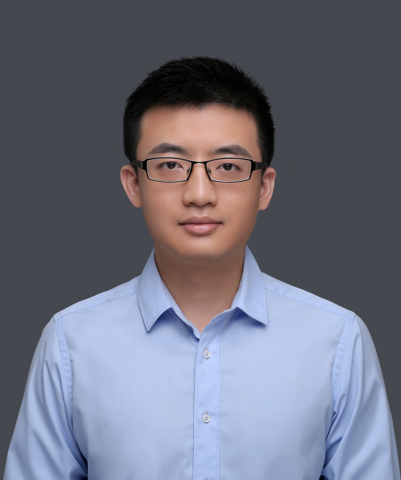
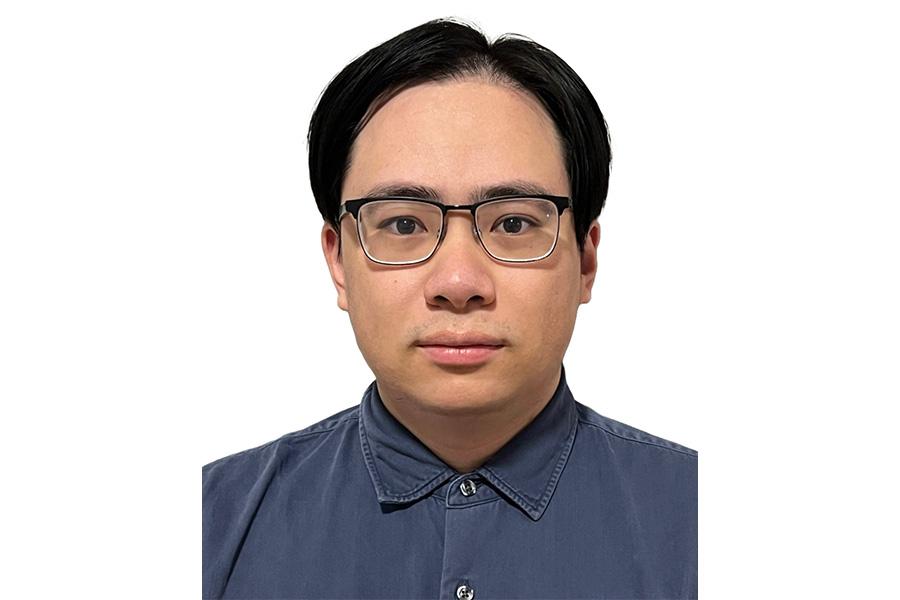
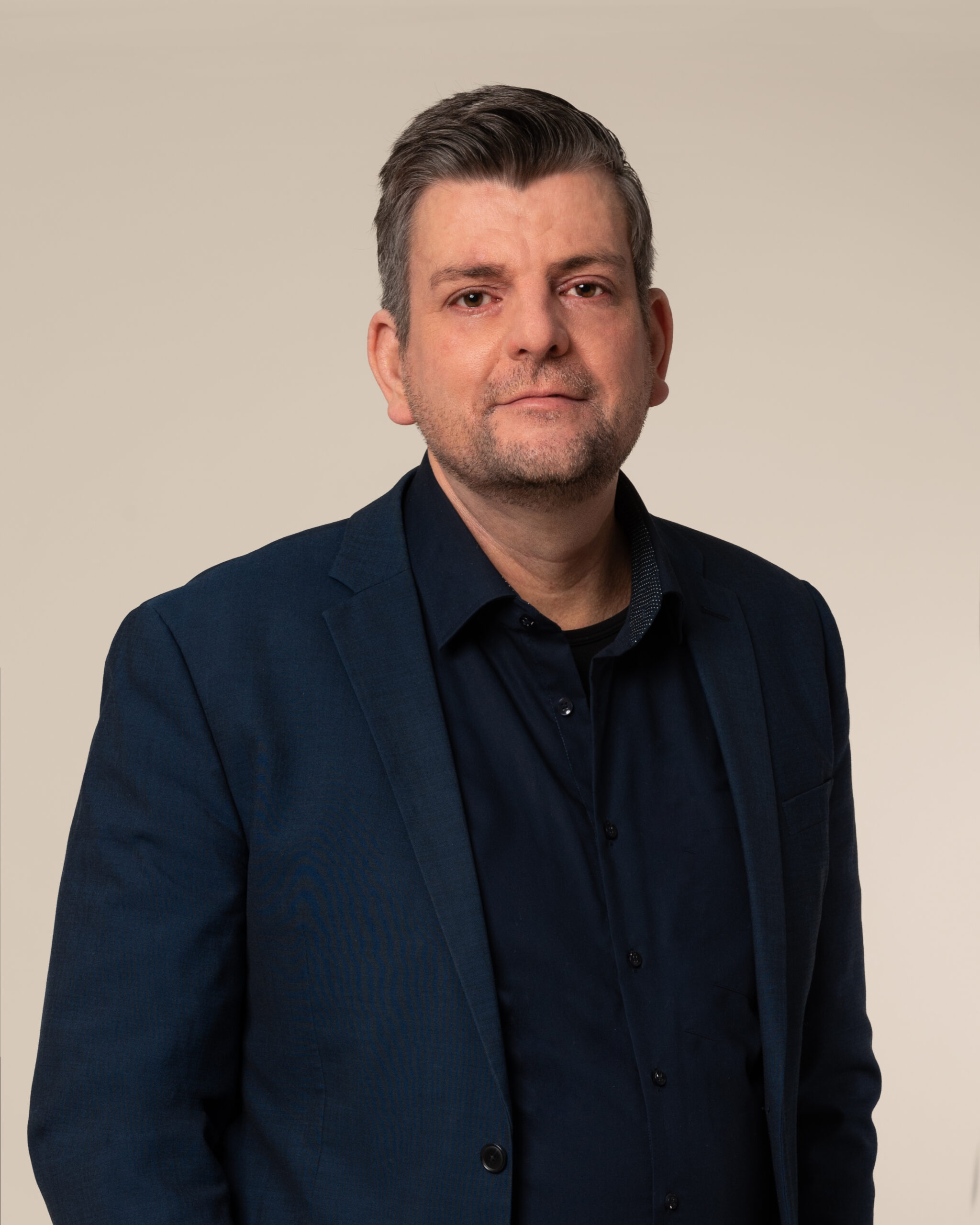
Benyuan Liu is a Professor at the Miner School of Computer and Information Sciences within the Kennedy College of Sciences at the University of Massachusetts Lowell . He serves as Director and Graduate Coordinator for Ph.D. programs, with expertise in Data and Computer Communication Networks, Mobile and Wireless Networks, and Internet Technologies & Applications. Education: B.S., University of Science and Technology of China M.S., Yale University Ph.D., University of Massachusetts Amherst His research focuses on Artificial Intelligence in Medical Imaging , Deep Learning for Endoscopy , and Edge Computing Systems . Recent work includes automated lesion detection, 3D reconstruction from sensor data, and predictive models for financial and reproductive health domains. The 15 most recent publications highlight applications of deep learning in medical diagnostics (thyroid nodules, gastric lesions, dental caries), computer vision (attention mechanisms, transformers), and financial technology (market psychology analysis). Technical themes include mmwave radar processing, diffusion models for synthetic data, and multi-scale feature extraction. Benyuan Liu leads the Computer Networking Lab and CHORDS initiative at UMass Center for Digital Health. His work bridges network optimization with healthcare AI , emphasizing real-time systems and portable diagnostics.
David Salesin is an Affiliate Professor in the Department of Computer Science & Engineering at the University of Washington and a Principal Scientist/Director at Google Research since 2019. He has held academic roles at Cornell University (Visiting Assistant Professor, 1991-92) and guest professorships at Zhejiang University. His career spans academia and industry, including leadership at Adobe's Creative Technologies Lab (2005-17) and Microsoft Research (1999-2005). PhD, Stanford University (1991) Sc.B., Brown University (1983) His research focuses on computer graphics, particularly non-photorealistic rendering, digital typography, color science, and adaptive document layout. He pioneered techniques in image-based rendering, pen-and-ink illustration, and facial animation, with applications in multimedia and user interface design. Article Trends : His work bridges procedural content generation, 3D visualization, and artistic computing, emphasizing user-driven tools for creative industries. Key subfields include texture advection, multiresolution modeling, and real-time camera control for virtual cinematography. Scientific Awards : ACM Fellow (2002) ACM SIGGRAPH Achievement Award (2000) Carnegie Foundation Professor of the Year (1998) NSF Presidential Faculty Fellow (1995-98) Alfred P. Sloan Research Fellowship (1995-97) Numerous industry grants and lab donations He has advised over 30 PhD and Master's students, including leaders at Microsoft, Pixar, and Google. His labs at UW and Adobe focused on graphics, imaging, and creativity tools.
Prof. Dr.-Ing. Christoph Stiller is a full professor at the Karlsruher Institut für Technologie (KIT) and serves as the director of the Institute of Measurement and Control Technology (Institut für Mess- und Regelungstechnik, MRT). His work focuses on autonomous driving, sensor fusion, probabilistic estimation, HD mapping, motion planning, and intelligent transportation systems. Education: Details on his academic degrees are not provided in the text, but he holds the title of Dr.-Ing. indicating a doctoral degree in engineering. Research Interests: Prof. Stiller's research spans a wide array of topics critical to the development of autonomous vehicles. His work includes: Sensor Fusion: Integrating data from LiDAR, cameras, and radar to create robust perception systems. HD Mapping & Localization: Developing high-definition maps and precise localization techniques for urban and highway environments. Motion Planning & Decision Making: Creating algorithms for safe and efficient trajectory planning under uncertainty. Machine Learning & AI: Applying deep learning and reinforcement learning to perception, prediction, and control tasks. Publication Trends: His recent publications (2023–2025) emphasize robust traffic light detection, image stitching for panoramic views, motion prediction using redundancy reduction, and safety-enhanced model predictive control. The work increasingly integrates learning-based methods with classical control and estimation theory. Scientific Awards: No specific awards are listed in the provided text. Teaching & Supervision: Prof. Stiller teaches foundational and advanced courses in measurement and control systems, probabilistic estimation, and autonomous driving. He holds regular office hours during both summer and winter semesters and is actively involved in advising students and researchers. Labs & Teams: He leads the Institute of Measurement and Control Technology (MRT) at KIT, which is engaged in cutting-edge research in autonomous systems. The institute collaborates with industry and academia on large-scale projects such as UNICARagil and various European initiatives.
Marc Pollefeys is a Full Professor of Computer Science at ETH Zurich and Director of the Microsoft Mixed Reality and AI Zurich Lab. He has held roles such as Visiting Professor at Stanford University (2007) and Assistant/Associate Professor at UNC-Chapel Hill (2002–2009). His research focuses on 3D computer vision, robotics, machine learning, and augmented reality. Education: PhD in Computer Science from KU Leuven (1999), followed by postdoctoral research there until 2002. He transitioned to academic roles at UNC-Chapel Hill before joining ETH Zurich in 2007. Research interests include 3D reconstruction, visual localization, SLAM, and applications in archaeology, urban modeling, and robotics. Notable projects include real-time 3D scanning, city-scale reconstruction, and autonomous vision-based drones. Key awards include ACM Fellow (2022), IEEE Fellow (2012), and ERC Starting Grant (2008). He advises numerous PhD students and collaborates with institutions like Google and Microsoft. Labs and teams: Leads the Computer Vision and Geometry (CVG) lab at ETH Zurich and directs the Microsoft Mixed Reality and AI Lab. His work bridges academia and industry, focusing on perception for mixed reality and autonomous systems.
Kede Ma is an Associate Professor in the Department of Computer Science at City University of Hong Kong (CityUHK). He received his B.E. from the University of Science and Technology of China (USTC) in 2012, and MASc and Ph.D. degrees from the University of Waterloo in 2014 and 2017, respectively. From 2018 to 2019, he was a Research Associate with the Howard Hughes Medical Institute and New York University. Prof. Ma has been named to the Highly Cited Researchers list by Clarivate Analytics in 2024 and currently serves on the editorial boards of IEEE Transactions on Image Processing, IEEE Transactions on Information Forensics and Security, and IEEE Signal Processing Letters. Prof. Ma leads the Multimedia Analytics (MA) Laboratory, an interdisciplinary research group focused on computational vision, computational modeling of human visual perception, perceptual multimedia signal processing, quality assessment, and multimedia forensics. His research spans computational photography, high dynamic range imaging and rendering, omnidirectional video analysis, camera processing pipeline design, and artificial intelligence safety in multimedia systems. His work integrates machine learning techniques including reinforcement learning, generative modeling, self-supervised learning, and continual learning for multimedia signal processing applications. His recent publications demonstrate a strong focus on image quality assessment, deep learning for multimedia processing, and multimedia forensics. His work bridges theoretical computer vision principles with practical applications in multimedia systems. The research trends show increasing integration of foundation models with specialized multimedia processing tasks, particularly in quality assessment and security applications. Highly Cited Researchers list by Clarivate Analytics (2024) Best Paper Award at IEEE International Conference on Virtual Reality and Visualization (2021) Best Paper Runner-Up at International Joint Conference on Artificial Intelligence Workshop (2021) Top 10% Award at IEEE International Conference on Image Processing (2015) Finalist for the Governor General's Gold Medal, University of Waterloo (2017) Spotlight presentation at NeurIPS (2022) Highlight paper at ICCV (2025) Oral presentation at ICLR (2025) Prof. Ma advises numerous PhD students and postdoctoral fellows in the MA Laboratory. His research is supported by various grants enabling work in multimedia analytics, image processing, and computer vision. The laboratory maintains active collaborations with researchers at institutions including SUSTech, ZJU, and HIT. Current projects focus on advancing image quality assessment methodologies, developing more robust deep learning techniques for multimedia forensics, and exploring new approaches to HDR imaging and omnidirectional video processing. The Multimedia Analytics Laboratory maintains a strong focus on both theoretical foundations and practical applications of multimedia processing. Current research directions include integrating large language models with image quality assessment, developing more robust deepfake detection methods, and advancing techniques for continual learning in multimedia applications. The lab emphasizes rigorous evaluation methodologies and maintains multiple datasets for multimedia quality assessment research.
Professor Adrian Hilton is a distinguished faculty member at the University of Surrey, serving as Director of the Centre for Vision, Speech and Signal Processing (CVSSP) and Director of the Surrey Institute for People-Centred AI. He is affiliated with the School of Computer Science and Electronic Engineering and leads the Visual Media Research Lab (V-Lab). His research focuses on pioneering next-generation 4D computer vision technologies that enable machines to understand and model dynamic real-world scenes. Key areas include 3D/4D shape capture, computer vision, machine learning, graphics, and animation for applications in sports analysis, film/TV production, virtual reality, and medical imaging. His work bridges the gap between real and computer-generated imagery, with notable contributions in volumetric capture, motion capture, and free-viewpoint video. Hilton's recent publications demonstrate a strong trend toward multimodal integration, particularly combining audio and visual processing for spatial audio applications, while advancing 4D reconstruction techniques for human performance capture. His work increasingly incorporates transformer architectures and neural rendering techniques for improved illumination estimation, shadow modeling, and multi-view consistency. Scientific Awards and Recognition Two EU IST Innovation Prizes Manufacturing Industry Achievement Award Royal Society Industry Fellowship (2008-2011) Royal Society Wolfson Research Merit Award in 4D Vision (2013-2018) Fellow of the Royal Academy of Engineering (FREng) Fellow of the International Association for Pattern Recognition (FIAPR) Fellow of the Institution of Engineering and Technology (FIET) Hilton actively mentors PhD and post-doctoral researchers through his leadership of CVSSP, which has a grant portfolio exceeding £31M and comprises 170 researchers. He has successfully commercialized several technologies, including systems used by the BBC for sports commentary visualization. His research collaborations span major industry partners including BBC, BT, Sony, Framestore, and The Foundry. He co-founded the G3 Games forum and the CVMP Conference on Visual Media Production, demonstrating strong engagement with the creative industries. Current research projects include the S3A Programme Grant in Future Spatial Audio and InnovateUK's ALIVE project for 360 video reconstruction.
Paolo Prandoni is a Lecturer at École Polytechnique Fédérale de Lausanne (EPFL) in the School of Computer and Communication Sciences (IC). He serves as a Scientist in the Audiovisual Communications Laboratory (LCAV) and teaches in the SSC-ENS and SIN-ENS units, focusing on signal processing theory and practical applications in audiovisual communications. He earned his PhD from EPFL after completing all prior education there, driven by childhood fascination with long-distance telephony. His doctoral work established foundations in communication systems that continue to inform his research. Prandoni's research spans audio/image processing, machine learning for media analysis, and DSP education. Key areas include computational photography (e.g., spectral imaging, stained glass rendering), speech quality assessment via transfer learning, music information retrieval (e.g., fingering prediction), and audience analytics through his company Quividi. His work consistently bridges theoretical signal processing with real-world implementation. Recent publications reveal a strategic shift toward machine learning integration in signal processing tasks, particularly non-intrusive speech assessment and lensless imaging reconstruction. Simultaneously, he advances DSP pedagogy through MOOC development and hands-on teaching tools using off-the-shelf hardware, emphasizing accessibility and practical skill development. No scientific awards are documented in the provided materials. He has advised PhD student Thanikachalam Niranjan (thesis: Image Based Relighting of Cultural Artifacts , 2016) and teaches Communication Systems and Computer Science courses. His educational impact extends through the open-access textbook Signal Processing for Communications (2008) and tools like MultiPub for maintainable online classes. Industry engagement includes Quividi co-founding (2006) and ongoing CSO role in attention analytics. As a core LCAV laboratory member, he collaborates on interdisciplinary projects including cultural heritage digitization, embedded signal processing systems, and real-time audience measurement, leveraging EPFL's infrastructure for both academic and commercial applications.
Peter K. Allen is a Professor of Computer Science at Columbia University's School of Engineering and Applied Science, with a career spanning over three decades in robotics research. His work focuses on robotic grasping , 3D vision and modeling , and medical robotics , where he has made significant contributions to autonomous manipulation and sensor integration. Current affiliation: Columbia University Robotics Lab Academic rank: Professor Key research areas: Robotics, Computer Vision, Artificial Intelligence Education A.B. in Mathematics-Economics from Brown University M.S. in Computer Science from University of Oregon Ph.D. in Computer Science from University of Pennsylvania (recipient of CBS Foundation Fellowship, Army Research Office Fellowship) Research Interests Allen's research bridges fundamental robotics challenges with applied domains. His work on robotic grasping explores low-dimensional subspaces and semantic task suitability, while 3D vision contributions include illumination coherence and texture registration methods. In medical robotics , he develops surgical imaging tools and BCI-enabled grasping systems. Recent publications show trends in: Deep learning for robotic manipulation (2017-2022) Human-robot interaction through BCI and augmented reality Deformable object manipulation (garments, thin shells) Multi-modal sensing (vision-tactile fusion) Scientific Recognition NSF Presidential Young Investigator Award Best Student Paper Award (2007) for collaborative work Over 30 years of continuous funding from NSF, Army Research Office, and medical grants Teaching and Mentorship He has taught graduate courses in robotics (COMS 4733/6731) since 2010, emphasizing hands-on projects with advanced platforms like Baxter, PR2, and Fetch robots. His lab provides immersive training in: 3D photography Humanoid robotics Autonomous navigation Grasp planning
Salvatore Livatino is an Associate Professor in Virtual Reality and Robotics at the University of Hertfordshire, UK. He holds a MSc in Computer Science from the University of Pisa (1993) and a PhD in Computer Science and Engineering from Aalborg University, Denmark (2003). His academic journey includes roles as Research Fellow and Associate Professor at Aalborg University, as well as visiting positions at institutions like INRIA Grenoble and the University of Edinburgh. He leads the Communications and Intelligent Systems research group and directs the Virtual Reality and Robotics Laboratory. His research focuses on immersive technologies (VR/AR/XR), stereoscopic 3D visualization, and teleoperation systems for applications in robotics, healthcare, and command-and-control interfaces. He has contributed to over 30 peer-reviewed publications and secured funding for projects such as the Innovate UK-backed 'iDOC: AI Empowered Document Authoring' (2023–2025) and 'Immersion for Care: Using Extended Reality in Healthcare Training' (2025–2027). Teaching expertise includes problem-based learning, 3D visualization, and immersive game design. His work spans interdisciplinary collaborations in robotics, AI, and healthcare, emphasizing practical applications of virtual environments.
Gwenn Englebienne is an Assistant Professor at the Digital Society Institute and Human Media Interaction group of Utrecht University. Their research focuses on Artificial Intelligence, Computer Vision, and Human-AI Interaction, with applications in robotics, health, and social computing. They have contributed to over 80 research outputs since 2007, emphasizing embodied AI, social robotics, and explainable machine learning. Research interests span activity recognition, teleoperation systems, and ethical AI design. Notable work includes developing GNN-based group detection algorithms and evaluating chatbot reliability through automated question-answering frameworks. Their studies often bridge technical innovation with human-centered design, such as measuring embodiment via pupil dilation or addressing asymmetry in video-conferencing interactions. Key collaborations include work on social robotics, telepresence systems, and health monitoring using ambient sensors. Publications span conferences like IDA, CogMI, and LREC-COLING, reflecting interdisciplinary impact. A dataset on robot social positioning behavior is publicly accessible via 4TU.Centre for Research Data. Current work explores semi-supervised domain adaptation, spiking neural networks, and the psychological dimensions of AI trustworthiness. They lead initiatives in the Digital Society Institute to align technological advancements with societal needs.
Chengzhou Tang is an Assistant Professor in the Department of Computer Science at the University of Manitoba. His research focuses on 3D computer vision, deep learning, robotics, and embodied artificial intelligence. He leads the Spatial Intelligent System (SPINS) Lab, exploring topics such as 3D object reconstruction, camera localization, and video processing techniques. His work spans applications in robotics, virtual reality, and computational imaging. Dr. Tang's research interests include developing novel algorithms for multi-view diffusion models, deep recurrent optimizers, and subspace methods. He has contributed to advancements in video depth estimation, point cloud processing, and stabilization of 360-degree videos. His recent work emphasizes generative models and embodied AI, addressing challenges in sparse-view 3D reconstruction and scene-agnostic camera localization. His publications reflect a trend toward integrating deep learning with traditional computer vision problems, such as structure-from-motion and SLAM (Simultaneous Localization and Mapping). The SPINS Lab collaborates on projects involving global bundle adjustment networks and initialization-robust monocular SLAM systems. While no awards or grants are explicitly listed, his active publication record indicates sustained research engagement in these areas. Dr. Tang’s academic profile highlights his contributions to foundational techniques in computer vision and their practical applications in robotics and AI systems. His work bridges theoretical advancements with real-world challenges in imaging and spatial intelligence.
El Mustapha Mouaddib is a Professor in the Perception and Robotics department at Universite de Picardie Jules Verne, affiliated with Laboratory Heudiasyc (UMR CNRS 7253). His research bridges advanced robotics with cultural heritage preservation, focusing on developing novel computer vision techniques for complex documentation challenges. His primary research interests include omnidirectional vision systems , hyperspectral imaging , and 3D reconstruction methodologies , with significant emphasis on applications for cultural heritage documentation. Mouaddib's work particularly addresses challenges in temporal illumination compensation , laser scanning registration , and multi-scale digitization of historical structures, as evidenced by his extensive Notre-Dame de Paris cathedral research. Analysis of his 15 most recent publications reveals a consistent trajectory toward heritage robotics - developing specialized computer vision algorithms for cultural preservation. His work demonstrates increasing sophistication in integrating multi-modal sensor data (TLS, hyperspectral, RGB-D) solving illumination challenges in historical documentation developing adaptive robotic systems for complex environments Notably, his Notre-Dame research forms a cohesive body of work examining structural changes through advanced 3D analysis. Mouaddib actively participates in major interdisciplinary projects including SAMURAI , ASSIDUITAS , SCANBOT , ADAPT , and SUMUM , which focus on heritage digitization and robotic exploration. His collaborative approach is evident through extensive co-authorship with institutions like CNRS and international partners in Japan and Italy. His laboratory work centers on the E-Cathedrale initiative, creating comprehensive digital twins of Gothic cathedrals through multi-temporal and multi-scale documentation. This involves developing specialized hardware (like the HDROmni camera system) alongside novel algorithms for processing challenging heritage environments.
Dr. Gun A. Lee serves as a Senior Research Fellow at the Empathic Computing Lab within the School of Information Technology and Mathematical Sciences at the University of South Australia. He concurrently holds an Adjunct Senior Fellow position at the HIT Lab NZ, University of Canterbury. His academic journey spans multiple institutions with significant contributions to extended reality research. Dr. Lee's educational foundation includes: Ph.D. in Computer Science and Engineering from POSTECH (2002-2009) M.S. in Computer Science and Engineering from POSTECH (2000-2002) B.S. in Computer Science from Kyungpook National University (1996-2000) His research centers on extended reality technologies and their applications. Dr. Lee's work explores Virtual Reality (VR), Augmented Reality (AR), and Mixed Reality (MR) systems with emphasis on creating immersive experiences for learning, training, and collaboration. His concept of 'Immersive Authoring' represents a significant contribution to the field, enabling content creation while immersed in the experience itself. In Human-Computer Interaction, he develops novel interaction techniques that leverage natural human behaviors and multimodal inputs, particularly focusing on eye tracking, gesture recognition, and spatial awareness. Analysis of Dr. Lee's recent publications reveals a clear trajectory from foundational AR frameworks to sophisticated collaborative mixed reality systems. His work increasingly integrates social and emotional dimensions into remote collaboration, with projects like SharedSphere demonstrating practical applications of live 360-degree mixed reality. The research consistently bridges theoretical HCI principles with real-world applications across education, professional training, and entertainment domains. As a Research Degree Supervisor, Dr. Lee mentors graduate students in extended reality and human-computer interaction. His teaching portfolio includes the 'Human Interface Technology - Design and Evaluation' course at the HIT Lab NZ, where he specialized in evaluation methodologies for interactive systems across multiple semesters from 2014-2016. He has also conducted specialized workshops including 'The Glass Class' on Google Glass development. At the Empathic Computing Lab, Dr. Lee leads research initiatives focused on creating technologies that enhance human connection. His project portfolio spans from fundamental interaction research like 'Interaction with Augmented Mirrors' to applied mobile AR applications including CityViewAR, AntarcticAR, and GeoBoids. His work on the Mobile AR Framework represents significant infrastructure development for the field, while projects like VPS (VR-based Paint Spray Training Simulator) demonstrate practical industrial applications of his research.
Dr. Roman Mauer is a Researcher in Film Studies and Media Dramaturgy at Johannes Gutenberg University Mainz. He completed his doctorate in 2004 with a study on Jim Jarmusch and has taught at institutions including the HFF Munich, dffb Berlin, and HS Mainz. Editor of the textbook series Film, Television and New Media at Springer Fachmedien (with Prof. Dr. Bulgakowa) Head of the university cooperation “Platform for Film Education” (with Prof. Dr. Meder, HS Mainz) Jury member of the Rhineland-Palatinate Film and Media Young Talents Programme Publisher of the online portal “NetzAtlasFilm” Member of the Media Convergence research focus at JGU Member of the Society for Media Studies' “Comic Research” working group His research spans intermedial panoramic analysis, narratology of film and comics, audiovisual didactics, and transcultural communication. Recent projects include Alles im Blick (2025) on intermedial panoramatik and Climate. Crisis. Film exploring ecocinema. Dr. Mauer's editorial and organizational roles highlight his commitment to fostering academic discourse and film education. He teaches courses such as Approaches to Film Studies: Film Aesthetics and professional internships, while contributing to digital resources like the Filmwissenschaft E-Learning platform.
Enes Ayan serves as a Doctor Lecturer in the Department of Computer Engineering at Kirikkale University's Faculty of Engineering and Natural Sciences, where he has maintained continuous academic affiliation since his 2014 appointment as Research Assistant. His career trajectory includes completing both master's (2015) and doctoral degrees (2019) in Computer Engineering at the same institution following his 2013 bachelor's graduation from Süleyman Demirel University. Education Bachelor's: Computer Engineering, Süleyman Demirel University (Isparta), 2013 Master's: Computer Engineering, Kirikkale University, 2015 Doctorate: Computer Engineering, Kirikkale University, 2019 Research Focus Dr. Ayan's work centers on deep learning applications across three primary domains: medical imaging (specializing in dental diagnostics, radiology, and endoscopy), security systems (weapon detection and traffic monitoring), and agricultural technology (crop pest classification). His research bridges theoretical AI advancements with practical healthcare solutions, particularly through explainable AI frameworks for dental caries detection and pneumonia diagnosis. Publication Trends Analysis of his 15 most recent publications (2020-2025) reveals intensifying specialization in dental AI applications (60% of 2024-2025 output), with significant contributions to caries detection under prostheses and tooth numbering systems. Concurrently, his work maintains strong threads in security-focused computer vision (UAV-based traffic analysis, weapon detection) and agricultural AI, demonstrating methodological versatility through genetic algorithm optimizations and ensemble CNN architectures. Professional Context No information regarding student supervision, research grants, laboratory facilities, or scientific awards appears in the source materials. His academic progression from Research Assistant to Doctor Lecturer indicates standard career advancement within Kirikkale University's engineering faculty without notable interruptions.