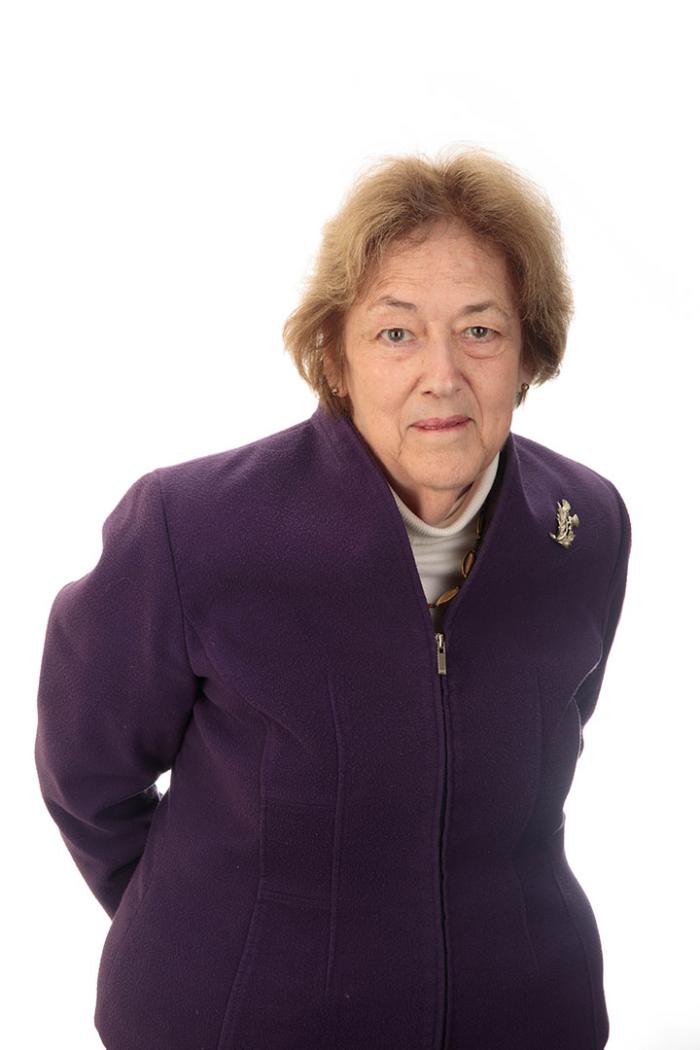
Roswitha ThomasView profile
Research Fellow
Roswitha Thomas serves as a Project Fellow in the Quaternary Archaeology Research Group at the Institute for Oriental and European Archaeology, part of the Austrian Academy of Sciences in Vienna. Her work focuses on Paleolithic archaeology with particular expertise in Gravettian culture and lithic analysis. Her educational background includes studies in prehistory and early history, geology, and art history at the University of Cologne. Professional experience spans from 1991-1993 as a scientific officer at the Rhenish Office for the Preservation of Archaeological Monuments in Bonn, followed by excavation management of Neolithic to modern archaeological sites in the Rhineland until 2004. She subsequently worked as an archaeological specialist in Lower and Upper Austria, with freelance assignments for various museums and the Prehistoric Commission of the Austrian Academy of Sciences. Thomas's research centers on Palaeolithic LMP, Gravettian, and Late Palaeolithic investigations, with specific focus on typological and morphological evaluation of flint artefacts and microchronological-spatial settlement dynamics of Palaeolithic open-air settlements. Her work frequently examines archaeological sites in Austria, particularly the Krems-Wachtberg complex, employing interdisciplinary approaches that combine archaeological data with sediment parameters to understand site formation processes. Her publication record demonstrates consistent contributions to major journals including Journal of Paleolithic Archaeology, Journal of Quaternary Science, and Quaternary International, with recent work analyzing material culture evolution in Gravettian points from Lower Austria and Moravia. Thomas has authored a significant monograph on the Jungpaläolithikum of Krems-Wachtberg covering excavations from 2005-2015. As a long-term scientific employee of the Quaternary Archaeology Research Group since 2010, Thomas collaborates extensively with international researchers on projects examining hunter-gatherer mobility, subsistence strategies during the Last Glacial Maximum, and lithic resource management across Central Europe. Her fieldwork integrates excavation management with detailed artifact analysis, contributing to broader understandings of Paleolithic settlement patterns and technological adaptations.