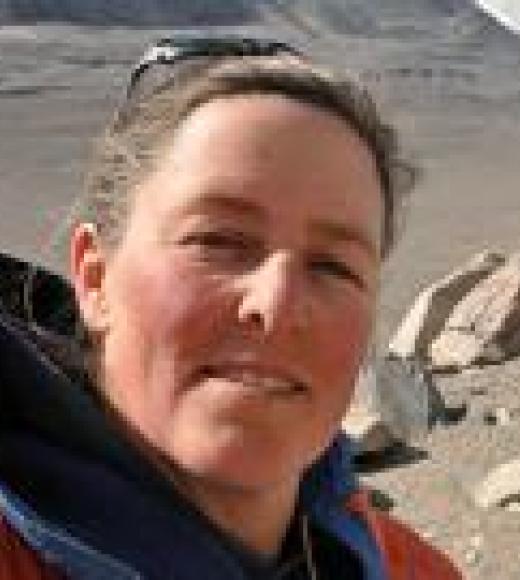
Dawn Y. Sumner is a Professor in the Department of Earth and Planetary Sciences at the University of California, Davis. Her research focuses on geobiology, paleobiology, and planetary science, particularly reconstructing ancient environments on Earth and Mars. She is a key member of NASA’s Mars Science Laboratory team, contributing to the Curiosity rover’s exploration of Gale Crater on Mars. Sumner’s work integrates field studies, lab analyses, and interdisciplinary approaches to understand microbial life’s role in shaping Earth’s history and potential habitability on other planets. Education: Ph.D., Massachusetts Institute of Technology (1995). Research interests include microbialite formation, Antarctic lake ecosystems, and the evolution of oxygenic photosynthesis. She investigates modern microbial communities in ice-covered lakes (e.g., Lake Vanda) to understand ancient environments and their biosignatures. Her scientific awards include the California Academy of Sciences Academy Fellow (2020) and Geological Society of America Fellow (2014). Sumner emphasizes inclusive education and supports student success in STEM through feminist research practices. Labs/Teams: W.M. Keck Center for Active Visualization in the Earth Sciences (KeckCAVES), Antarctic Lake Research Group.
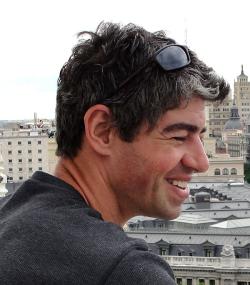
Peter Wilf is a Professor in the Department of Geosciences at Pennsylvania State University's College of Earth & Mineral Sciences. His research focuses on fossil plants as indicators of past climates, biodiversity, and environmental disturbances from the latest Cretaceous through middle Eocene (~67-45 million years ago). Wilf leads significant research projects including the Origins of Southeast Asian Rainforests from Paleobotany and Machine Learning and the Patagonia Paleofloras Project. His research interests span paleobotany, paleoclimatology, plant-insect interactions, and biogeography, with emphasis on how deep-time data illuminate modern ecosystems and their responses to anthropogenic change. Wilf's work primarily focuses on the latest Cretaceous through middle Eocene, examining global disturbances including warming and cooling events, the end-Cretaceous mass extinction, and recovery periods. His research has significant implications for understanding climate change, biodiversity conservation, and ecosystem dynamics. Wilf's extensive publication record demonstrates consistent high-impact research across paleobotany, with recent work focusing on Southeast Asian rainforests, Patagonian paleofloras, and the connections between Gondwanan landmasses. His research integrates fieldwork in Patagonia and Southeast Asia with advanced analytical techniques, including machine learning applications for fossil leaf identification. Fellow, American Association for the Advancement of Science (AAAS) 2022 Wilson Award for Excellence in Research, Penn State College of Earth & Mineral Sciences 2022 Fellow, Paleontological Society 2017 Fellow, Geological Society of America 2016 Paul F. Robertson Research Breakthrough of the Year Award, Penn State College of Earth & Mineral Sciences 2016 George W. Atherton Award for Excellence in Teaching, Pennsylvania State University 2013 Wilf maintains an active research program with numerous NSF-funded projects and international collaborations. He leads a productive lab group conducting extensive fieldwork in Patagonia, Argentina, and Southeast Asia. His research has transformed understanding of Southern Hemisphere floras, the role of Patagonia in plant evolution, and connections between ancient and modern ecosystems across continents. Wilf's laboratory serves as a hub for paleobotanical research, bringing together students, postdocs, and international collaborators to study fossil plant collections from around the world. The lab integrates traditional paleobotanical methods with cutting-edge technologies including machine learning for fossil identification and advanced imaging techniques for detailed morphological analysis.
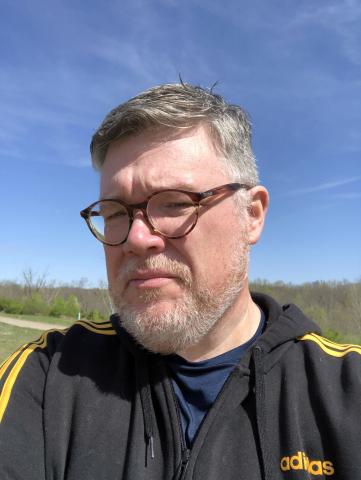
Seth Finnegan is a Professor in the Department of Integrative Biology at the University of California, Berkeley, and affiliated with the University of California Museum of Paleontology. His research focuses on understanding the processes shaping marine ecosystems and biota from the late Neoproterozoic to the present, with a particular emphasis on the Ordovician Period and mass extinctions. He integrates field observations, laboratory data, and literature databases to study extinction selectivity, environmental proxies (e.g., stable isotopes, biomarkers), and ecosystem reconstructions. His lab, the Finnegan Lab, explores themes such as organism-environment interactions and the drivers of biodiversity changes. Finnegan’s work has been widely published in journals like Proceedings of the National Academy of Sciences and Geology , and he collaborates with institutions globally. Despite no listed awards here, his contributions to paleontology are significant.
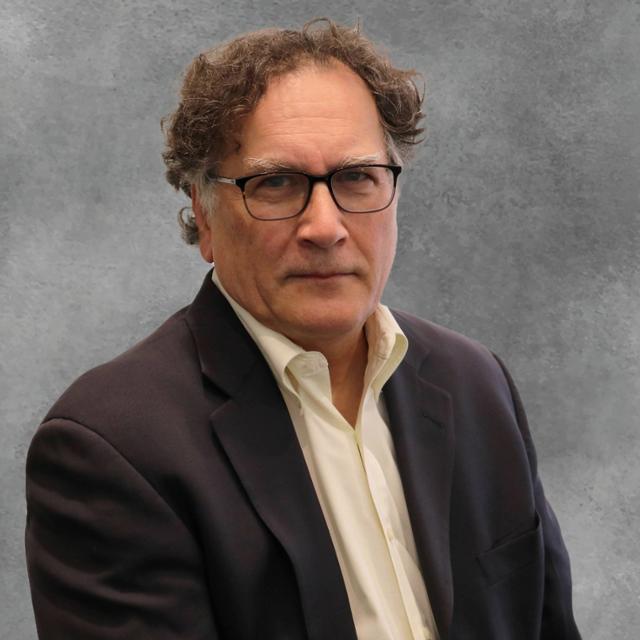
Dr. John Warren Huntley is an Associate Professor in the Department of Geological Sciences at the University of Missouri. His research examines the fossil record of biotic interactions including parasitism, predation, and competition, with additional focus on conservation paleobiology and morphological disparity evolution. Dr. Huntley investigates host-parasite dynamics in marine bivalves, human impacts on mollusk populations, and Phanerozoic predation patterns. His work integrates stratigraphic paleobiology with ecological and evolutionary analyses to reconstruct historical ecosystem dynamics. His recent publications demonstrate expertise in paleoparasitology, taphonomy, and conservation paleobiology, applying novel analytical methods to questions about parasite-host coevolution, preservation biases, and extinction events. This research provides critical insights into long-term ecological patterns and biological responses to environmental change. Dr. Huntley has received significant recognition including an NSF CAREER Award and Humboldt Research Fellowship, and he co-edited the comprehensive volumes 'The Evolution and Fossil Record of Parasitism'.
Eric Roberts is a Professor of Geology and Geological Engineering and Director of the Potential Gas Agency at the Colorado School of Mines. His research focuses on basin analysis, energy exploration, and sedimentary geology with specializations in Mesozoic-Cenozoic basins of Gondwana and North America. He leads projects in U-Pb geochronology, critical minerals exploration, and paleoenvironmental reconstruction through vertebrate paleontology and stratigraphy studies. Roberts' work integrates advanced geochronological techniques with field-based analyses to address questions in paleobiology, resource exploration, and earth system dynamics. Key research themes include: Geochronology of sedimentary and volcanic deposits Paleoclimate reconstruction using paleosols Stratigraphic frameworks for dinosaur fossil records Resource potential of helium/hydrogen reserves Antarctic and African vertebrate paleontology His exploration of hominin burial practices in the Rising Star Cave System has provided critical insights into early human behavior. Roberts' interdisciplinary approach bridges geological, biological, and environmental sciences to advance understanding of Earth's history and resource management strategies.
John Stolz is Professor of Environmental Microbiology and Director of Environmental and Energy Engineering at Duquesne University's School of Science and Engineering. His NASA-trained research examines microbial metal reduction, modern stromatolite ecosystems, and shale gas extraction impacts. His lab investigates arsenic/selenium biotransformation pathways, microbial communities in Shark Bay stromatolites, and environmental impacts of unconventional energy development. Recognized with multiple excellence awards including the Nobel J. Dick Endowed Chair. Over 150 publications explore microbial respiration mechanisms, biogeochemical cycling, and environmental bioremediation. Current grants support water quality testing near shale gas operations.
Charles C. Davis is a Professor of Organismic and Evolutionary Biology at Harvard University and Curator of Vascular Plants in the Harvard University Herbaria. He leads the Davis Lab, focusing on plant diversity through integrative research in systematics, paleobiology, ecology, and molecular biology. His work emphasizes phylogenetic theory, biogeography, and the application of herbarium collections to address global change challenges. Davis is particularly noted for leveraging herbarium specimens to study plant responses to climate change, phenology, and biodiversity patterns. Research interests include plant-insect interactions, genome architecture evolution in parasitic plants, and the ethical use of herbarium specimens. His lab has pioneered high-throughput phylogenomic pipelines (e.g., PhyloHerb) and explored the future of herbaria in the digital age. Collaborations span global institutions, emphasizing digitization, spectral imaging, and AI-driven analysis of biodiversity data. Recent work highlights the impact of anthropogenic change on plant communities, the role of phenology in species survival, and strategies to mitigate collecting biases in herbaria. Davis teaches courses on plant systematics and evolution, and his lab actively participates in public engagement through exhibits like the HMNH’s *In Search of Thoreau’s Flowers*. His research has been featured in *Trends in Ecology & Evolution*, *Molecular Phylogenetics and Evolution*, and *Current Biology*, with a focus on advancing methodologies for biodiversity science while addressing ethical challenges in specimen sampling.
Dr. Tessa M. Hill is a Professor in the Department of Earth and Planetary Sciences at the University of California, Davis, and serves as the Associate Vice Provost for Academic Programs, Public Scholarship & Engagement. She is affiliated with the Bodega Marine Laboratory, leading the Bodega Ocean Acidification Research (BOAR) group and the Ocean Climate Lab. Her work focuses on climate change impacts, particularly ocean acidification and deoxygenation, and integrates research with policy and education initiatives. Tessa holds a B.S. in Marine Science from Eckerd College (1999) and a Ph.D. in Marine Science from UC Santa Barbara (2004). She was a UC President’s Postdoctoral Fellow at UC Davis before joining the faculty. Her research examines marine species responses to environmental changes, leveraging interdisciplinary approaches to inform management strategies. Notable projects include collaborations with shellfish farmers and K-12 educators to address ocean acidification challenges. Tessa is a Fellow of the California Academy of Sciences and the American Association for the Advancement of Science (AAAS), and serves on the West Coast Ocean Acidification and Hypoxia Panel. She advocates for inclusive academic reward systems and equitable impact metrics in science. Key Roles: Faculty member, BOAR group leader, AAAS panelist, science education advocate Research Groups: Bodega Ocean Acidification Research (BOAR), Ocean Climate Lab, Hill Biogeochemistry Lab Her outreach efforts emphasize bridging science and policy, including workshops on paleoceanography’s relevance to decision-making. Tessa’s work highlights the importance of seagrass ecosystems in mitigating coastal ocean acidification and the need for adaptive strategies in marine conservation. She also addresses microplastic pollution and its effects on shellfish health, reflecting her broad commitment to environmental science and societal impact.
Nicole Griffin is a Professor in the Department of Biomedical Education and Data Science at the Lewis Katz School of Medicine, Temple University, where she integrates anthropological research with biomedical data science. Her academic trajectory spans over two decades of specialized work in human evolutionary biomechanics. Her educational foundation includes: Postdoctoral Fellowship in Evolutionary Anthropology, Duke University PhD in Hominid Paleobiology, The George Washington University BS in Evolutionary Anthropology, Rutgers University Dr. Griffin's research centers on hominin locomotor evolution , with rigorous focus on foot biomechanics and bone architecture across primate lineages. Her methodology combines comparative anatomical analysis of fossil specimens (notably Paranthropus boisei ) with biomechanical modeling to reconstruct evolutionary adaptations. Key contributions include elucidating the windlass mechanism in human foot evolution and trabecular bone adaptations in fossil hominins, bridging paleoanthropology with clinical applications in podiatry and vascular anatomy. Publication trends (2005-2025) reveal consistent specialization in lower limb biomechanics, with progressive expansion into vascular anatomy and dermatological applications. Her work demonstrates methodological evolution from descriptive fossil analysis toward integrative biomechanical modeling, maintaining strong emphasis on comparative primatology while addressing contemporary medical questions. No scientific awards were documented in the provided materials. Student mentorship and grant activities remain unreported in the available records, though her extensive publication record suggests active laboratory supervision. Collaborative patterns indicate sustained partnerships with institutions including Duke University and the Smithsonian Institution. Research infrastructure appears anchored in comparative skeletal analysis facilities, though specific laboratory names were not disclosed in the source text.
Carole S. Hickman is a Professor at the University of California, Berkeley. Her research integrates theoretical, constructional, evolutionary, and developmental morphology to understand the diversity of structure and function in living and fossil organisms, with a focus on molluscs. She explores macroevolutionary trends through phylogenetic trajectories in design spaces and investigates taphonomic assembly in shell beds linked to global climate change during the Cenozoic Era. Primary Research Organisms: Molluscs Key Tools: Design spaces, ecospaces, ethospaces, developmental spaces Current Projects: Community architecture responses to climate change, microbial-metazoan interactions in extreme environments Her publications highlight interdisciplinary approaches to evolutionary morphology, with recent work emphasizing gastropod larval development and biomineralization changes at metamorphosis. Students in her laboratory prioritize independent research questions while utilizing molecular tools and shared evolutionary methodologies.
Melissa Kemp is an Assistant Professor in the Department of Integrative Biology at the University of Texas at Austin, affiliated with the College of Natural Sciences. She is based at the Jackson School of Geosciences campus in Austin, Texas, with an office in PAT 102. Her research focuses on Quaternary paleontology, conservation paleobiology, and the ecological dynamics of Caribbean and North American biodiversity hotspots. She teaches GEO 391: Broader Impacts in STEM, emphasizing interdisciplinary approaches and community engagement. Dr. Kemp’s work integrates morphological and molecular data to study evolutionary adaptations, extinction processes, and human impacts on ecosystems. Her NSF CAREER Award supports research on Jamaican fossil ecosystems, while her NSF Postdoctoral Fellowship (2015) advanced studies on North American reptile evolution. She actively promotes equity in STEM through programs like GEOPAths GO Jamaica, which combines service learning with conservation efforts. Key research themes include reconstructing ancient communities, analyzing functional trait diversity in reptiles, and understanding the role of historical contingency in shaping modern biodiversity. Her grants and awards reflect a dual focus on scientific discovery and educational outreach, bridging paleontology with modern conservation challenges.
Stephanie E. Pierce is a Professor of Organismic and Evolutionary Biology and Alexander Agassiz Professor of Zoology at Harvard University, affiliated with the Museum of Comparative Zoology (MCZ). She serves as Curator of Vertebrate Paleontology and Interim Curator of Mammalogy at the MCZ. Her research focuses on the evolution of vertebrate musculoskeletal systems, integrating biomechanics, paleontology, and functional morphology to understand how form and function evolved in tetrapods and synapsids. Key projects include studying postural transitions in synapsids, the evolution of the mammalian vertebral column, and the functional adaptations enabling terrestrialization in early tetrapods. Dr. Pierce's work is supported by grants such as the National Science Foundation (NSF) Grant 1524523, which examines the functional evolution of the mammalian backbone. Her lab, the Stephanie Pierce Lab, collaborates widely and includes postdoctoral researchers, graduate students, and international teams. Recent work has revealed insights into the radiation of reptiles post-mass extinctions and the discovery of early South American predators. She has also been featured in podcasts and media for her contributions to paleontology and evolutionary biology. Her research spans disciplines including evolutionary biomechanics, paleohistology, and computational modeling, with a focus on major transitions in vertebrate evolution. She leads projects that bridge the gap between extant and extinct organisms to reconstruct ancestral functional traits and evolutionary trajectories.
Josh Schmerge is an Instructional Assistant Professor of Biology at the University of Mississippi. He holds a PhD in Geology from the University of Kansas (2015) and teaches courses such as BISC 102 and BISC 104. His research focuses on vertebrate paleontology, particularly the functional anatomy of burrowing rodents and the taxonomic validity of theropod dinosaurs like Nanotyrannus lancensis . He has published extensively on dinosaur morphology and phylogeny, arguing for Nanotyrannus ' distinct status from Tyrannosaurus rex based on dentary groove analysis. Education : B.S. Geology (University of Wyoming, 2007), M.S. Geology (University of Kansas, 2011), Ph.D. Geology (University of Kansas, 2015) His work integrates morphological studies with phylogenetic analysis, emphasizing anatomical features like dentary grooves to resolve taxonomic debates. Key contributions include clarifying groove morphology in tyrannosaurids and describing new castorid species. Awards include the 2015 Erasmus A. Haworth Award and teaching nominations.
Daniel Rabosky is a Professor in the Department of Ecology and Evolutionary Biology at the University of Michigan, where he also serves as Curator at the Museum of Zoology. His research program spans macroevolution, speciation dynamics, and phylogenetic comparative methods, with particular expertise in Australian reptiles and squamate evolution. Rabosky maintains an active laboratory and is currently seeking new graduate students and postdoctoral fellows to join his research team. Rabosky's research interests focus on macroevolutionary patterns and processes, particularly the connections between microevolutionary dynamics and large-scale biodiversity patterns. His work integrates phylogenetic comparative methods with ecological and morphological data to understand speciation processes, adaptive radiations, and the evolutionary dynamics of reptile communities, especially Australian skinks. He has made significant contributions to methodological developments in evolutionary biology through software tools like BAMM (Bayesian Analysis of Macroevolutionary Mixtures) and BAMMtools for analyzing evolutionary rate heterogeneity across phylogenetic trees. Analysis of Rabosky's recent publication record reveals a strong focus on evolutionary theory, methodological development, and empirical studies of reptile diversification. His work spans theoretical macroevolution, phylogenetic comparative methods, Australian herpetology, and the connections between population-level processes and macroevolutionary patterns. The research demonstrates increasing integration of genomic data with traditional morphological and ecological approaches, reflecting broader trends in evolutionary biology. Rabosky actively mentors graduate students including Matheus Januário and Tristan Schramer, and supervises postdoctoral fellows Michael Harvey, Jonathan Mitchell, Sonal Singhal, and Rudolf von May. His laboratory receives research funding supporting multiple projects in macroevolutionary dynamics, with recent grants likely supporting work on the connections between metapopulation ecology and speciation rates, as evidenced by his 2025 Ecology Letters paper. The Rabosky Lab maintains a strong presence in both theoretical and empirical evolutionary biology, with particular strengths in phylogenetic methods development, squamate reptile evolution, and the interface between micro- and macroevolution. The lab actively collaborates with researchers across institutions and contributes to major initiatives like the openVertebrate project for 3D imaging of museum specimens.
Uwe Bergmann is the Martin L. Perl Endowed Professor in Ultrafast X-Ray Science at the University of Wisconsin-Madison's Department of Physics. His research leverages advanced X-ray techniques to study nonlinear phenomena, real-time chemical reactions, and structural changes in both biological and material systems, with a focus on photosynthesis and ancient cultural heritage. PhD in Physics from Stony Brook University Former affiliations: National Synchrotron Light Source, European Synchrotron Radiation Facility, Lawrence Berkeley National Laboratory, Stanford Synchrotron Radiation Lightsource, Linac Coherent Light Source, Stanford PULSE Institute His work spans ultrafast X-ray spectroscopy, synchrotron methods, and the development of novel instruments like the X-FAST tabletop spectrometer. Research themes include: Photosynthetic water oxidation mechanisms using femtosecond X-ray crystallography Electronic and structural dynamics in 2D materials and metalloenzymes Imaging ancient fossils and manuscripts with X-ray techniques Advancing X-ray laser and synchrotron instrumentation Recent publications highlight attosecond X-ray pulses, catalysis under extreme conditions, and structural intermediates in photosystem II. His work intersects physics, chemistry, and paleobiology. Scientific recognition includes the Martin L. Perl Endowed Professorship. He leads the Bergmann Research Group, mentoring graduate students and postdocs in ultrafast X-ray science.