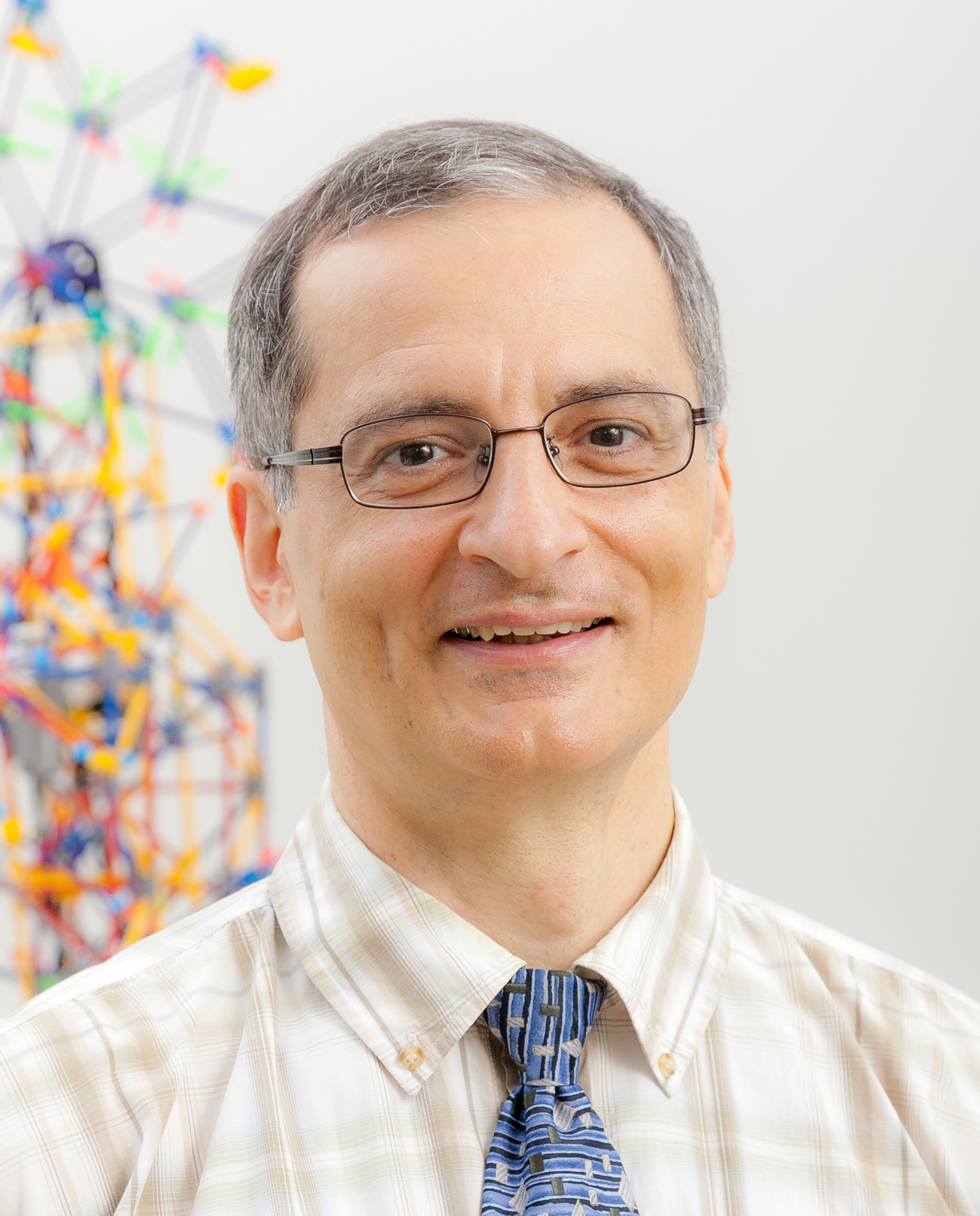
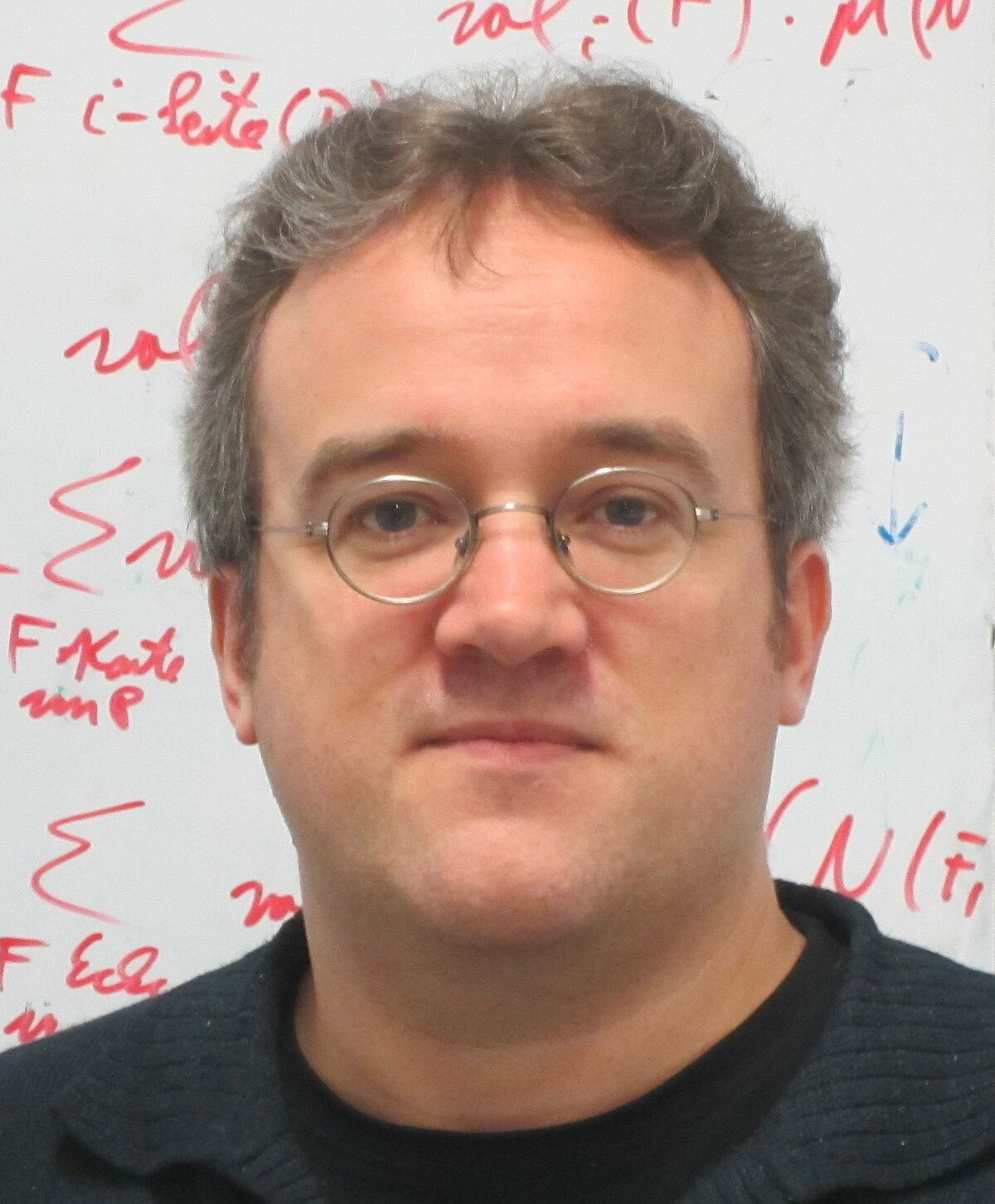
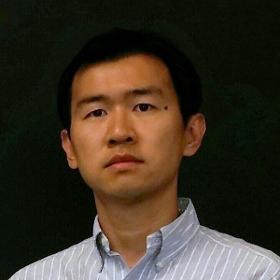
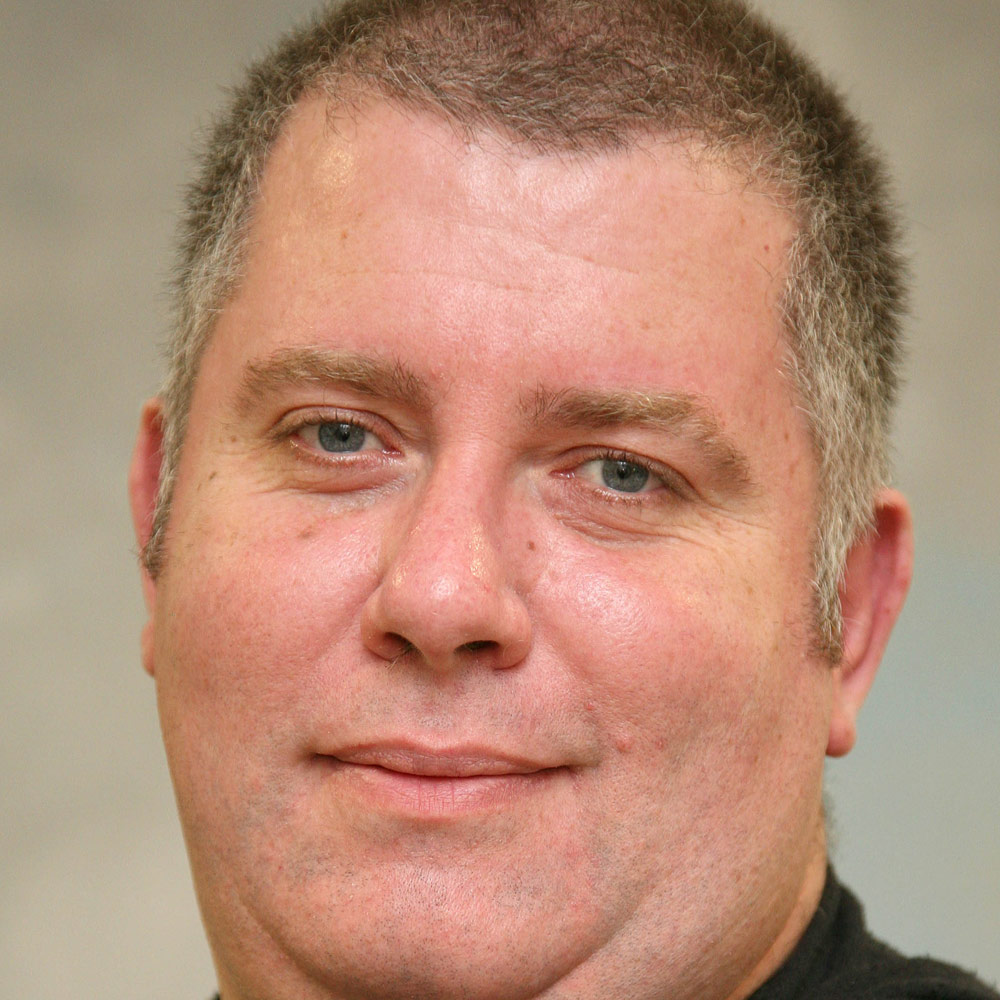
Ali Mostafazadeh is a Professor at the Department of Mathematics, College of Sciences, Koç University. His research spans Mathematical Physics, focusing on Quantum Mechanics, Scattering Theory, and PT-Symmetry. He has made significant contributions to understanding non-Hermitian Hamiltonians, electromagnetic wave propagation, and geometric scattering phenomena. Education: PhD in Physics (1994) from The University of Texas, BA in Physics and Mathematics (1989) from Boğaziçi University His work explores the intersection of mathematics and physics, particularly through spectral singularities, transfer matrix methods, and nonlinear optical systems. Recent publications highlight advancements in broadband directional invisibility, exact Born approximations, and time-dependent Hilbert spaces in quantum systems. 2011 Outstanding Success Award 2007 TÜBİTAK Science Award 2006 Werner-von-Siemens Excellence Award 2001 TÜBA Outstanding Young Scientists Award 2001 Parlar Foundation Research Incentive Award
Nori Franco serves as Professor in the Department of Physics at the University of Michigan and Chief Scientist at RIKEN's Theoretical Quantum Physics Laboratory in Japan. His dual appointments reflect his significant contributions to both American and Japanese academic communities, with continuous service at Michigan since 1990 and at RIKEN since 2002. His research spans quantum information, condensed matter physics, and quantum optics, with particular focus on light-matter interactions, superconducting qubits, optomechanics, and quantum open systems. Franco's work bridges theoretical foundations with experimental implementations, especially in circuit quantum electrodynamics and quantum computing applications. Analysis of his recent publications reveals a strong emphasis on non-Hermitian quantum systems, quantum control techniques, and applications of quantum information science to fundamental physics problems. His research group consistently produces highly cited work, with publications appearing in top journals across quantum physics and condensed matter disciplines. Scientific Awards: Charles Hard Townes Medal (2024) - sole recipient for fundamental contributions to quantum optics and quantum information processing Research Doctorate Honoris Causa from University of Messina (2024) Highly Cited Researcher for eight consecutive years (2017-2024) Member of Academia Europaea (2023) Willis E. Lamb Medal (2023) for quantum electronics research Throughout his career, Franco has secured significant research funding and mentored numerous students and postdoctoral researchers. His work has received international recognition through invitations to deliver prestigious lectures including the Stanislav Ulam Lecture and Sir Nevill Mott Lecture in 2024. His research group maintains strong collaborations across multiple continents, reflecting his global impact on quantum physics. At RIKEN, Franco leads the Quantum Information Physics Theory Research Team within the Quantum Computing Center, directing cutting-edge theoretical work that complements experimental efforts in quantum computing hardware development.
CHONG Yidong is a Professor in the Division of Physics and Applied Physics at Nanyang Technological University (NTU), Singapore. He leads the Centre for Disruptive Photonic Technologies and holds positions in the School of Physical and Mathematical Sciences. His research focuses on theoretical photonics, topological systems, and non-Hermitian physics, with contributions to photonic crystals, topological insulators, and coherent perfect absorbers. He has been recognized with awards including the President's Science Award (2020) and the National Research Foundation Fellowship (2012). Education: Ph.D. (Physics), Massachusetts Institute of Technology (2005–2008) B.Sc. (Physics) and B.Sc. (Mathematical & Computational Sciences), Stanford University (1999–2003) Research Interests: Topological photonics, non-Hermitian systems, photonic topological insulators, PT-symmetric structures, and applications in quantum optics and acoustics. Recent Articles: Focus on experimental realizations of topological lasers, exceptional points in non-Hermitian systems, and higher-order topological phenomena in acoustic and photonic platforms. His work bridges theory and experiment, with collaborations in materials science and electrical engineering. Awards: Extensive recognition for both research and education, including Nanyang Research and Education Awards. Teaching: Courses in mathematical methods for scientists, quantum mechanics, and computational physics, emphasizing numerical techniques and wave phenomena.
WANG Qinghai is an Associate Professor (Educator Track) at the National University of Singapore (NUS), specializing in Non-Hermitian PT-symmetric quantum mechanics, quantum field theory, and mathematical physics. His research explores the stability of non-Hermitian systems through periodic driving, time-dependent PT-symmetric frameworks, and applications of 2×2 matrices in quantum dynamics. Recent publications focus on advanced topics in quantum mechanics, thermodynamics, and cosmological instantons, reflecting his interdisciplinary expertise. While no formal student lists or scientific awards are documented in the provided texts, his work bridges theoretical physics and applied mathematics.
Dr. Eva-Maria Graefe is a Royal Society University Research Fellow and Senior Lecturer in the Department of Mathematics at Imperial College London. She specializes in quantum dynamics, focusing on the interplay between quantum and classical systems, particularly chaos and dissipation in non-Hermitian systems. Her research explores foundational questions such as how quantum motion relates to macroscopic physical laws and how dissipation can be engineered to control quantum behavior. Education: She earned her PhD in theoretical quantum physics from the Technical University of Kaiserslautern, Germany, followed by a postdoctoral position at the University of Bristol’s mathematical physics group. She joined Imperial College in 2010 as a Junior Research Fellow. Research Interests: Her work spans non-Hermitian quantum systems (e.g., PT-symmetric models), quantum chaos, semiclassical quantization, and Bose-Hubbard systems. She investigates exceptional points, Landau-Zener transitions, and the dynamics of open quantum systems with losses or gain. Her group is supported by the Royal Society and an ERC Starting Grant. Scientific Contributions: Notable achievements include studies on Husimi distributions in non-Hermitian systems, quantum-jump dynamics, and the semiclassical analysis of Bloch oscillations in dissipative lattices. Teaching & Outreach: She teaches quantum mechanics to undergraduates and Master’s students and engages in outreach to inspire high school students. She mentors a research group of PhD and Master’s students. Labs/Teams: Her lab focuses on theoretical and computational studies of quantum dynamics, supported by advanced grants and collaborations within Imperial’s Faculty of Natural Sciences.
Professor Jean Alexandre is a Professor of Physics at King's College London, affiliated with the Department of Physics within the Faculty of Natural, Mathematical & Engineering Sciences. His research focuses on non-perturbative quantum field theory, tunnelling phenomena, exact renormalization methods, and Lorentz symmetry violation. He has held positions including a Leverhulme Trust postdoc and temporary lectureship before his current role. Education: Doctor of Science in Theoretical Physics from University Louis Pasteur, Strasbourg (1998) Master of Physics in Theoretical Physics from École Normale Supérieure de Lyon (1994) Research Interests: Non-perturbative effects in QFT (dynamical mass generation, exact functional methods) Lorentz symmetry violation in particle physics and modified gravity Tunnelling mechanisms, cosmic bounce models, and null energy condition studies Non-Hermitian extensions of the Standard Model and PT-symmetric field theories Key contributions include work on magnetic monopole searches with the MoEDAL experiment at the LHC, finite volume effects in quantum field theory, and dynamical mass generation mechanisms. His recent articles explore topics like scalar high-electric-charge objects, vacuum decay rates, and cosmic bounce scenarios. He has supervised PhD theses on topics such as Lifshitz-type theories and gravitino condensation. Grants and Collaborations: Principal Investigator on Leverhulme Trust project 'Saving the Universe with finite volume effects in Quantum Field Theory' Co-Investigator on EPSRC and STFC-funded projects in particle physics and cosmology Labs/Teams: Active collaborator in the MoEDAL experiment and the Theoretical Particle Physics & Cosmology group at King's College London.
Omar B Karakchi is a Lecturer in the Department of Computing at Goldsmiths, University of London. His research focuses on applied mathematics and nonlinear differential equations, particularly soliton dynamics in PT-symmetric and charge-parity (CP) systems. He holds a PhD in Applied Mathematics from the University of Essex (2017). Research interests include the existence and stability of solitons in PT-symmetric oligomers, charge-parity dimers, and discrete nonlinear Schrödinger equations with gain/loss terms. He has published extensively on topics like soliton behavior in PT-symmetric chains and optimization algorithms for engineering problems. Publications span journals such as Nonlinear Dynamics and Physical Review A , with notable contributions to soliton dynamics and mathematical modeling of complex systems. His work bridges theoretical mathematics and applied engineering contexts. Teaching responsibilities include module leadership for Discrete Mathematics, Computational Mathematics, and Mathematics for Computer Science. No awards or grants are explicitly listed in the provided materials. No specific lab affiliations or team details are mentioned beyond his departmental role.
Foundation for research and technology-hellasGreece
Maria Kafesaki is an Associate Professor at the University of Crete's Department of Materials Science and Engineering and an Adjunct Researcher at the Institute of Electronic Structure and Laser (IESL) of FORTH. Her research focuses on electromagnetic wave propagation in periodic and random media, particularly in photonic crystals and metamaterials, with applications in nanophotonics and plasmonics. She has over 100 refereed publications and is a Fellow of the Optical Society of America. Education: PhD in Physics (1997), MSc (1992), and BSc (1990) from the University of Crete. Key Contributions: Developments in chiral and bianisotropic metamaterials, THz metamaterials, and reconfigurable metasurfaces. She has led projects on metamaterials for defense and energy applications, including collaborations with international teams. Awards: EU Descartes Prize (2005), Fellow of the Optical Society of America (2014). Editorial Roles: Associate Editor of EPJ: Applied Metamaterials and Section Editor of JEOS:RP. Governing Board member of Metamorphose VI.
Petros Rakitzis is a Professor in the Department of Physics at the University of Crete and affiliated with the Foundation for Research and Technology - Hellas (FORTH) at the Institute of Electronic Structure and Laser (IESL). He received his B.A. in Physics and Chemistry from Cornell University (1992) and his Ph.D. in Physics from Stanford University (1997), focusing on atomic and molecular angular momentum in chemical reactions. Since 2001, he has progressed from Lecturer to Professor, securing the prestigious ERC Starting Grant in 2008. His research spans quantum angular momentum, spin polarization, photodissociation dynamics, and cavity-enhanced spectroscopy. Education: B.A. in Physics and Chemistry, Cornell University (1992); Ph.D. in Physics, Stanford University (1997) Rakitzis's work explores spin manipulation in particle beams, polarization phenomena in spectroscopy, and chirality sensing using parity-time-symmetric systems. His research has applications in nuclear fusion, laser-plasma acceleration, and quantum metrology. He leads the PREFER collaboration, focusing on polarization research for fusion experiments and reactors, and has developed techniques like signal-reversing cavity ring-down polarimetry for precision measurements. His recent publications highlight trends in spin-polarized hydrogen production, cavity-based chiral sensing, and parity nonconservation studies. These works intersect atomic physics, quantum optics, and nuclear fusion, with methodologies involving laser excitation, relativistic plasmas, and advanced spectroscopic techniques. Scientific Awards: ERC Starting Grant (2008) Rakitzis has contributed to experimental techniques and theoretical frameworks in spin polarization and photodissociation, securing grants and advancing polarized beam applications. His research impacts fusion energy, quantum sensing, and fundamental symmetry studies.
PD Dr. Frieder Ladisch serves as an Associate Professor at the Institute for Mathematics within the Faculty of Mathematics and Natural Sciences at the University of Rostock, Germany. His institutional affiliation includes membership in the Geometry working group (AG Geometry), with office location at Ulmenstraße 69, Haus 3, Room 231, and contact via university email and phone. His research program centers on Quantum Physics and Quantum Information , with specialized expertise in: Non-Hermitian quantum systems and PT-symmetry phenomena Topological photonic implementations including Su-Schrieffer-Heeger lattices Non-Abelian geometric phases and quantum holonomy Quantum random number generation using solid-state photon sources Experimental quantum optics with integrated photonic circuits Analysis of his 15 most recent publications (2019-2025) reveals consistent focus on PT-symmetry breaking experiments, quantum walk implementations in topological photonic structures, and quantum random number generation using hexagonal boron nitride emitters. His work bridges theoretical non-Hermitian quantum mechanics with practical photonic implementations. Dr. Ladisch operates within the Geometry working group at Rostock's Institute for Mathematics, where his research integrates mathematical geometry concepts with quantum information processing through photonic chip technologies and single-photon source applications.
Li Ge is a Professor at the College of Staten Island (CUNY) with current research focusing on nonlinear and non-Hermitian phenomena in optics and photonics. His work spans topological photonics, PT-symmetric systems, and quantum chaos in optical microcavities, as evidenced by publications in leading journals like Science , Nature Photonics , and Physical Review Letters . Key contributions include the co-discovery of Coherent Perfect Absorbers and theoretical frameworks for non-Hermitian photonic lattices. Education: PhD in Physics (Yale University, 2010), BS in Physics (Peking University) His research explores: Non-Hermitian photonics and exceptional point dynamics PT-symmetric laser arrays and symmetry breaking Quantum chaos in optical microcavities Directional emission and mode control in microlasers High-dimensional quantum communication via spin-orbit microlasers Recent publications highlight advancements in Brillouin super-cooling, field-programmable photonic nonlinearity, and topological valley Hall polariton condensation. Research trends show increasing focus on integrated photonic devices and non-Hermitian symmetry applications. Scientific Honors: NSF CAREER Award (2019) Dolphin Award for Outstanding Scholarly Achievements (2023) Optica Fellow (2023) He serves on editorial boards for Physical Review B and previously for PNAS and Photonics Research , and has reviewed for over 50 journals and funding agencies globally.
Professor Panayotis G. Kevrekidis is a tenured full professor in the Department of Mathematics and Statistics at the University of Massachusetts Amherst, where he has been a faculty member since 2001. He holds a prominent position in applied mathematics and nonlinear science, with affiliations extending to the Center for Nonlinear Studies at Los Alamos National Laboratory as the Stanislaw M. Ulam Scholar. Education: B.Sc. in Physics, University of Athens, 1996 M.S., Rutgers University, 1998 M.Phil. and Ph.D. in Applied Mathematics, Rutgers University, 2000 (jointly supervised by Joel Lebowitz and Panos G. Georgopoulos) His research focuses on the mathematical analysis of nonlinear waves, particularly solitary wave structures in nonlinear partial differential equations and difference equations. His work has broad applications in nonlinear optics, atomic physics (especially Bose-Einstein condensates), materials science, biology, and chemistry. He employs dynamical systems, stability theory, and numerical methods to explore existence, bifurcations, and long-term behavior of coherent structures in Hamiltonian and dissipative systems. The 15 most recent publications reflect a strong emphasis on localized excitations, discrete solitons, and nonlinear models across physics and biology. These works span theoretical developments in the discrete nonlinear Schrödinger and sine-Gordon equations, applications in optical waveguides and Josephson junctions, and interdisciplinary modeling in tumor angiogenesis, aerosol dynamics, and cosmology. The keywords and subfields reveal a deep integration of mathematical rigor with physical insight. Scientific Awards and Honors: NSF CAREER Award (2003) Humboldt Research Fellowship SIAM Outstanding Paper Prize Stefanos Pnevmatikos International Award (2008) J.D. Crawford Prize, SIAM (2013) A.F. Pallas Award, Academy of Athens Fellow of the American Physical Society (2014) Fellow of the Society for Industrial and Applied Mathematics (2017) Fellow of the American Mathematical Society (2020) Professor Kevrekidis has secured major research funding from the National Science Foundation, US Air Force, European Research Council, Alexander von Humboldt Foundation, Alexander S. Onassis Public Benefit Foundation, and the US–Israel Binational Science Foundation. He has advised 8 PhD students, several of whom hold academic or research positions at institutions such as UIUC, Cameron University, ORNL, and Los Alamos National Laboratory. He has also mentored 5 postdoctoral researchers, many of whom now hold permanent positions in academia. He is an associate editor for three journals and has authored or edited four influential books in nonlinear science. He leads a vibrant research group at UMass Amherst focused on nonlinear waves and complex systems, fostering collaborations across disciplines and institutions. His work continues to shape the theoretical foundations of nonlinear phenomena in both discrete and continuous systems.
Hiromichi Nakazato is a Professor at the School of Advanced Science and Engineering , Waseda University , specializing in theoretical studies spanning particle physics , nuclear physics , cosmic ray physics , and quantum information theory . His research focuses on quantum dynamics , entanglement generation , decoherence control , and exact solutions for quantum systems with time-dependent Hamiltonians or reservoir interactions. Education : PhD in Physics from Waseda University (1985), MSc in Science and Engineering (1980) Research trends reveal a consistent exploration of quantum Zeno dynamics , state purification via measurements , multipartite entanglement in Josephson qubit arrays, and nonlinear quantum functionals like purity estimation without tomography. His work bridges quantum optics , condensed matter , and quantum field theory , with applications in quantum computing architectures and spin-based quantum devices .
Takeo Miyake is a Professor at the Graduate School of Information, Production, and Systems , Waseda University , with a career spanning over 15 years in Biomedical Engineering and Bioprotonics . His work bridges bioiontronics , wireless power systems , and biofuel battery technologies. BS, MS, PhD in Electrical Engineering and Nanoscience & Nanoengineering from Waseda University Former Acting Instructor at University of Washington and Assistant Professor at Tohoku University Research focuses on bioelectronic interfaces for in vivo applications, including: Self-powered diagnostics using biofuel cells (glucose/lactate sensing) Protonic devices for ATP synthesis and pH modulation Wireless-powered smart contact lenses for health monitoring Nanotube-based intracellular delivery systems His 15 recent publications (2024–2019) emphasize flexible bioelectronics and implantable energy systems , with breakthroughs in: Parity-Time symmetric wireless biosensors (2023) Multienzyme logic biotransducers (2024) Nanostraw-mediated molecular delivery (2019) Scientific recognition includes: Young Scientists Award from Japan’s Ministry of Education (2020) Best Presentation Awards (2011–2020) Incentive Prize from Aoba Foundation (2013) As an active committee member and professional society member (Materials Research Society, Japan Society of Applied Physics), he drives innovation in biofuel cells and smart wearable systems .
Dr. Georgi Grahovski is a Senior Lecturer in the Department of Mathematical Sciences at the University of Essex, affiliated with the School of Mathematics, Statistics and Actuarial Science (SMSAS). He holds a PhD in Theoretical and Mathematical Physics from the Bulgarian Academy of Sciences (2003) and earlier degrees from Sofia University. His research focuses on integrable systems, nonlinear dynamics, and mathematical physics, with notable contributions to quantum spin systems, affine Toda field theories, and soliton interactions. Dr. Grahovski has held academic positions at Essex since 2013, transitioning from Lecturer to Senior Lecturer in 2018. His work bridges theoretical physics and applied mathematics, emphasizing spectral analysis, Hamiltonian systems, and symmetry reductions. He teaches advanced mathematics courses and maintains office hours during academic terms. His research interests include integrable hierarchies, nonlinear Schrödinger equations on symmetric spaces, and Grassmann extensions of Yang-Baxter maps. He has published extensively on topics such as PT-symmetric systems, soliton interactions, and gauge group actions on integrable equations. Despite no listed awards or grants in the provided texts, his contributions to the field are evident through his prolific publication record. Dr. Grahovski’s academic support includes regular office hours and by-appointment consultations. He is involved in teaching and supervision activities, though no specific student advisees are listed here.