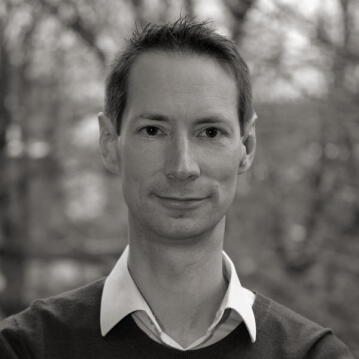
Prof. Jonas Hirsch is a Professor specializing in Calculus of Variations at the University of Leipzig. His office is located at Neues Augusteum, Augustusplatz 10, Room A 323, Leipzig. He focuses on advanced mathematical research areas including geometric measure theory, partial differential equations, and functional analysis. His research explores complex geometric and analytical problems, such as minimizing clusters, perimeter density, and rectifiability of measures under PDE constraints. Recent work includes studies on bounded mean curvature submanifolds and elliptic energy functionals. No scientific awards are explicitly listed in the provided information. His professional contacts include a work telephone (+49 341 97 - 32142) and fax (+49 341 97 - 32197). His ORCID identifier is 0000-0003-2962-5963.
Felix Schindler is a Researcher at the Institute for Analysis and Numerical Analysis , part of the Department of Mathematics and Computer Science at the University of Münster . His work bridges numerical analysis, machine learning, and scientific computing, with a focus on model reduction for partial differential equations (PDEs), adaptive algorithms, and computational efficiency. Research Interests include: Numerical analysis of parametric and multiscale PDEs Localized reduced basis methods (LRBM) and adaptive enrichment Integration of model order reduction (MOR) with machine learning (ML) Conservative flux reconstruction techniques Development of software libraries like dune-xt and pyMOR Recent Publications highlight trends in applying deep kernel models for surrogate modeling, localized training strategies for PDE-constrained optimization, and hybrid full/reduced-order pipelines for reactive flow prediction. His work emphasizes certified error control, hierarchical adaptivity, and cross-disciplinary computational frameworks. Collaborations span institutions such as AIMS Senegal, Springer Nature, and DUNE project teams. He actively contributes to conferences like GAMM, ENUMATH, and Algoritmy.
Rafael Vazquez Valenzuela is a University Professor in the Department of Aerospace Engineering and Fluid Mechanics at the Higher Technical School of Engineering, University of Seville. His research focuses on control systems for aerospace applications, particularly in spacecraft dynamics, orbital mechanics, and partial differential equation (PDE) control systems. Professor Vazquez Valenzuela's research spans several key areas in aerospace engineering and control theory. His primary interests include spacecraft guidance and navigation, particularly for asteroid exploration and rendezvous operations. He has made significant contributions to the field of backstepping control for PDE systems, with applications ranging from fluid dynamics to spacecraft control. His work also extends to stochastic analysis of aircraft performance, thermoacoustic instability control, and the development of advanced algorithms for unmanned aerial vehicles. Notably, his research bridges theoretical control theory with practical aerospace applications, resulting in numerous high-impact publications in top journals. His publication record shows a clear trend toward increasingly sophisticated control algorithms for complex aerospace systems. Recent work focuses on predictive control for spacecraft operations near asteroids, chance-constrained optimization for halo orbit rendezvous, and prescribed-time control methods. His research consistently addresses the challenging intersection of theoretical control design and practical implementation constraints in aerospace applications. Professor Vazquez Valenzuela has been involved in numerous research projects, including "APPLICATION OF LEADING TECHNOLOGY TO UNMANNED AERIAL VEHICLES FOR RESEARCH AND DEVELOPMENT IN ATM (ATLANTIDA)" "Diseño de Algoritmos de Guiado y Control Innovadores para Aplicaciones Avanzadas de Rendezvous: Órbitas Halo y Exploración de Asteroides" "SESAR WP-E ComplexWorld Network" These projects highlight his expertise in both theoretical control systems and practical aerospace applications. He is affiliated with the INGENIERÍA AEROESPACIAL (GIA) research group at the University of Seville, where he collaborates with researchers on advanced control and navigation systems for autonomous aerospace vehicles.
Karl Kunisch is University Professor at the Department of Mathematics and Scientific Computing, University of Graz , and simultaneously Scientific Director of the Radon Institute (RICAM) of the Austrian Academy of Sciences in Linz. A SIAM Fellow and recipient of the 2021 W.T. and Idalia Reid Prize, he leads the ERC Advanced Grant OCLOC and heads the research group “Optimization and Optimal Control”. Education: Dipl.-Ing. (1975), Dr. techn. (1978) and Habilitation (1980), Graz University of Technology Research Interests: His work centres on optimization and optimal control of partial differential equations , nonsmooth optimisation in function spaces , inverse problems and mathematical imaging , together with advanced numerical analysis . Current emphases are life-science applications , closed-loop control and machine-learning based feedback design. Publications Profile: With over 400 papers and two monographs, his recent output is dominated by high-impact studies on infinite-horizon optimal control , feedback stabilisation of semilinear parabolic and Navier–Stokes systems, risk-averse and data-driven control , and sparse control strategies . A clear trend is the fusion of rigorous PDE analysis with cutting-edge machine-learning techniques. Scientific Awards & Distinctions: W.T. and Idalia Reid Prize (2021) SIAM Fellow (2017) ERC Advanced Grant Horizon 2020 (2015) Alwin Walther Medaille (2008) ICM Invited Lecture, Hyderabad (2010) SIAM Outstanding Paper Prize (2006) Christian Doppler Laboratory Fellowship (1992) Fellowship of the Japanese Society for the Promotion of Science (1990) Max Kade Scholarship (1982/83) Fulbright Travel Grants (1979/80, 1985) Theodor-Körner-Fonds Research Award (1979) Pro Scienta Scholarship (1974–1977) Grants & Leadership: Principal Investigator, ERC Advanced Grant “ OCLOC – From Open to Closed Loop Control ” Scientific Director, Radon Institute (RICAM), Austrian Academy of Sciences Head of Research Group “Optimization and Optimal Control”, RICAM Co-Speaker, International Research Training Group IGDK Former member/consultant: MATHEON Scientific Advisory Board, Weierstrass Institute Scientific Advisory Board, Christian Doppler Forschungsgesellschaft Senate, DFG and INRIA evaluation boards Laboratory & Team: Prof. Kunisch currently leads the “Optimization and Optimal Control” group at RICAM, comprising post-docs, doctoral researchers and international visitors, focusing on interdisciplinary projects at the interface of PDE control, numerical optimisation and life sciences.
Elena Toscano is a researcher in the Department of Mathematics and Computer Science at the University of Palermo. She specializes in numerical analysis, machine learning, and computational mathematics, with a focus on mesh-free methods like Smoothed Particle Hydrodynamics (SPH) and applications to physics, engineering, and interdisciplinary fields. Teaching: Numerical Analysis (Master's in Informatics and Mathematics, 2025/2026) Research Areas: Signal/image processing, SPH consistency restoration, genetic algorithms for tomography, and mathematical-literary collaborations (e.g., Oulipo). Her publications span computational physics, machine learning, and mathematical modeling, emphasizing numerical stability and interdisciplinary innovation.
Hongbo Zhao is an Assistant Professor jointly appointed in the Department of Physics and Department of Chemistry & Biochemistry at the University of California, San Diego (UCSD), effective September 2024. His research bridges biophysics, soft matter, active matter, physical chemistry, and applied mathematics, focusing on uncovering fundamental principles of soft and living matter through interdisciplinary approaches. Prior to UCSD, he was a Princeton Bioengineering Initiative (PBI2) Distinguished Postdoctoral Fellow at Princeton University, working with Andrej Košmrlj, Clifford P. Brangwynne, and Sujit Datta. He earned his Ph.D. in Chemical Engineering from MIT under Martin Z. Bazant, focusing on energy materials and data-driven discovery in chemical physics. Key research interests include biological phase separation and phase transitions, physics of soft and active matter, and data-driven discovery from image-based datasets. His work explores how biomolecular condensates organize cellular components, the interplay between nonequilibrium activities and phase separation, and emergent phenomena in active matter systems. He develops computational tools and statistical mechanics frameworks to analyze complex systems across scales. Zhao's recent publications highlight contributions to understanding condensate-driven DNA repositioning, chemotactic motility-induced phase separation, and learning reaction kinetics from X-ray imaging. His research has been supported by grants including the PBI2 Fellowship and collaborations with institutions like Stanford University and the SLAC National Accelerator Laboratory. He leads the Zhao Research Group at UCSD, fostering an interdisciplinary environment for graduate and undergraduate students in theoretical and computational biophysics.
Dr. Tim Sullivan is an Associate Professor in Predictive Modelling at the University of Warwick, affiliated with the Mathematics Institute and School of Engineering. He serves as Co-Director of the Warwick Centre for Predictive Modelling. His research focuses on uncertainty quantification, inverse problems, probabilistic numerics, and mathematical data science. These areas bridge applied mathematics, computational science, and Bayesian statistics, emphasizing rigorous methodologies for modeling and analyzing complex systems under uncertainty. His academic work includes contributions to kernel matrix compression, Bayesian probabilistic numerical methods, and critiques of Bayesian inference robustness. His recent publications (2011–2021) highlight themes in optimal uncertainty quantification, probabilistic numerical techniques for PDE-constrained problems, and foundational Bayesian analysis. Sullivan’s textbook Introduction to Uncertainty Quantification (2015) remains a key resource in the field. In teaching roles, Sullivan oversees tutorial responsibilities across Mathematics and Engineering disciplines, including courses on predictive modeling fundamentals and control theory. His work at the Warwick Centre for Predictive Modelling underscores interdisciplinary collaboration in advancing computational and mathematical approaches to predictive science.
Hennes Alexander Hajduk is a Research Fellow at the University of Oslo's Section for Meteorology and Oceanography, part of the Department of Geosciences. He holds a PhD in Applied Mathematics from TU Dortmund University (2022). His work focuses on physical oceanography, numerical methods for fluid dynamics, and the influence of bottom topography on ocean flows. He develops property-preserving numerical schemes for conservation laws and shallow-water equations, with applications in geophysics and computational fluid dynamics. Education: PhD in Applied Mathematics (TU Dortmund University, 2022). Research Interests: Physical Oceanography: Investigating jet formation in stratified fluids and topographic effects on oceanic flows. Numerical Methods: Specializing in algebraic flux correction schemes, discontinuous Galerkin methods, and entropy-stable algorithms. Geophysical Modeling: Developing tools like FESTUNG for DG-based simulations in MATLAB/Octave. His publications emphasize stability, accuracy, and computational efficiency in simulating complex fluid systems. He collaborates on projects such as The Rough Ocean Research Group, advancing understanding of fluid dynamics in geophysical contexts. Affiliations: Section for Meteorology and Oceanography, University of Oslo Rough Ocean Research Group
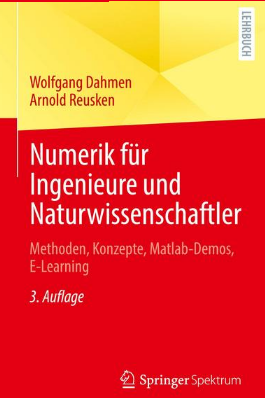
Prof. Dr. Arnold Reusken is a full Professor of Numerical Mathematics at RWTH Aachen University, affiliated with the Institute for Geometry and Practical Mathematics (IGPM). He has held the Chair for Numerical Mathematics since 1997 and maintains an active research and academic profile in computational mathematics. Education: Ph.D. in Mathematics, University of Utrecht (1988) M.Sc. in Mathematics, University of Utrecht (1984) His research focuses on the development and analysis of numerical methods for partial differential equations, with particular emphasis on finite element methods, multigrid solvers, and computational techniques for two-phase incompressible flows and PDEs on surfaces. His work bridges theoretical numerical analysis and practical scientific computing applications in fluid dynamics and interfacial phenomena. He has made significant contributions to trace finite element methods, surface Stokes equations, and unfitted discretizations. The recent publication trend shows sustained activity in numerical methods for evolving surfaces, surface fluid dynamics, and preconditioning techniques. His work often involves rigorous error and stability analysis, demonstrating a strong theoretical foundation. Editorial Roles: Associate Editor, Journal of Numerical Mathematics (2015–present) Associate Editor, IMA Journal of Numerical Analysis (2020–present) Former Associate Editor, SIAM Journal on Numerical Analysis (2016–2021) Former Associate Editor, SIAM Journal on Scientific Computing (2002–2008) Former Associate Editor, Computing & Visualization in Science (2010–2021) Member of Advisory Board, Computing (1997–2009) Prof. Reusken has advised numerous students and researchers, though specific names are not listed in the provided text. He has been involved in collaborative research projects and has secured funding for work in numerical simulation and computational fluid dynamics. He co-authored the influential textbook Numerik für Ingenieure und Naturwissenschaftler , now in its third edition, and has contributed to other key publications in the field. He leads a research group at IGPM focused on numerical methods for interface and surface problems, contributing to both fundamental algorithm development and practical implementation in scientific computing. His team works on cutting-edge methods for simulating complex fluid systems with moving boundaries and topological changes.
Prof. Michael Hintermüller is the Director of the Weierstrass Institute (WIAS) and holds a professorship in Applied Mathematics at Humboldt-Universität zu Berlin. He serves as Founding Coordinator of BR50, Spokesperson of the Mathematical Research Data Initiative (MaRDI), and Board Member of the MATH+ Cluster of Excellence. His research focuses on nonsmooth optimization, PDE-constrained control, mathematical image processing, and quasi-variational inequalities. Leadership Roles: Director of WIAS; Founding Coordinator of BR50; Spokesperson of MaRDI; Board Member of MATH+ Key Research Areas: Mathematical image processing, optimization under uncertainty, PDE-constrained optimization, shape/topology optimization, learning-informed constraints Recent Applications: Image deblurring/denoising/demodulation, energy network modeling, gas dynamics on pipeline networks, thermoforming simulations, strained photonic device design. His work combines analytical rigor with numerical methods for inverse problems, including adaptive regularization and physics-informed neural networks. Scientific Leadership: Active in mathematical modeling for biomedical imaging (e.g., quantitative MRI) and industrial applications (e.g., semiconductor design, gas flow optimization). Develops novel algorithms for nonsmooth PDE systems and contributes to the theoretical foundations of quasi-variational inequalities and generalized Nash equilibrium problems.
Dong Zhang is an Assistant Professor in the Department of Aerospace & Mechanical Engineering at the University of Oklahoma's College of Engineering. He leads the Energy Systems and Controls Lab (ESCL), focusing on energy storage systems, dynamic systems control, electrified transportation, and data-driven decision-making. His research includes battery management systems, electrochemical modeling, optimal control, and machine learning applications in energy systems. Education: Ph.D. in Systems Engineering from UC Berkeley (2020), dual M.S. in Systems Engineering (UC Berkeley, 2016), and dual B.S. degrees in Electrical and Computer Engineering (Shanghai Jiao Tong University, 2015) and Civil and Environmental Engineering (University of Michigan, 2015). Research interests emphasize battery state estimation, thermal dynamics, and safety-enhanced charging strategies for electric vehicles. He has received awards including the ASME Energy System ACC Best Paper Award (2020) and served as an invited session chair at SIAM control conferences. Key contributions include real-time battery capacity estimation, adaptive observers for electrochemical models, and PDE-based thermal control frameworks. His lab develops solutions for heterogeneous battery pack management and cyber-physical system integration in energy systems.
Danial Faghihi is an Assistant Professor in the Department of Mechanical and Aerospace Engineering at the University at Buffalo. His research focuses on multiscale computational modeling, data-driven predictive methods, and uncertainty quantification with applications in advanced manufacturing, thermal insulation materials, and biomedical systems. He holds a PhD from Louisiana State University and completed a postdoctoral fellowship at the University of Texas at Austin. Education: Postdoc, Computational Engineering, University of Texas at Austin (2015) PhD, Civil Engineering, Louisiana State University (2012) MS, Civil Engineering, Sharif University of Technology (2008) BS, Civil Engineering, K. N. Toosi University of Technology (2008) His research interests integrate advanced computational frameworks with experimental data to address challenges in materials science and biomedical engineering. Notable areas include predictive modeling of silica aerogels, stochastic surrogate models for uncertainty quantification, and tumor growth simulations using Bayesian methods. He has received prestigious awards such as the NSF CAREER Award (2022) and the SES Travel Award (2013). Recent work emphasizes dynamic data-driven approaches for real-time material damage prediction and scalable algorithms for multi-material design under uncertainty. His contributions span interdisciplinary collaborations in thermal management systems, carbon sequestration materials, and personalized oncology through computational oncology models. Key Honors: NSF CAREER Award (2022) SES Travel Award (2013) NSF Summer Institute Fellowship (2013) His research narrative includes development of novel surrogate models for high-dimensional systems and validation frameworks that bridge atomistic to continuum scales. While specific grants or lab affiliations are not detailed in the provided text, his work reflects sustained innovation in computational science and engineering applications.
Gennaro Notomista is an Assistant Professor at the University of Waterloo, part of the Full-time faculty. His research focuses on robotics, control systems, and multi-agent coordination. Key areas include swarm intelligence, optimization of robotic tasks, and safety-critical control algorithms. He is affiliated with the Robotarium, a remotely accessible multi-robot testbed, and explores applications in autonomous vehicles, environmental monitoring, and creative robotics projects like music-driven swarm painting. His work emphasizes energy-efficient task allocation, decentralized control strategies, and safe navigation frameworks. Notable contributions include advancements in control barrier functions for ensuring safe operation and resilient task execution in dynamic environments. Recent publications address challenges in persistent environmental monitoring, long-duration autonomy, and the design of wire-traversing robots. Notomista’s research also bridges robotics with real-world applications, such as using robot swarms to model epidemiological dynamics and enhance teleoperation systems. His interdisciplinary approach combines optimization theory, machine learning, and mechanical design to tackle complex robotic systems challenges.
Flore Nabet is an Assistant Professor in the Department of Applied Mathematics at École Polytechnique. She specializes in numerical analysis and computational methods for partial differential equations, particularly focusing on finite volume schemes, Cahn-Hilliard models, and Stokes flows. Education: PhD in Mathematics (Finite Volume Schemes for Multiphase Problems), Institute of Mathematics of Marseille, supervised by Franck Boyer and Pierre Bousquet (2014) Research Interests: Numerical analysis of PDEs Finite volume and finite element methods Stochastic differential equations Multiphase fluid dynamics Optimal transport and energy-stable discretizations Article Trends: Her work spans 2014–2025, emphasizing finite volume methods for Cahn-Hilliard equations, Stokes flows, and stochastic PDEs. Recent papers integrate optimal transport theory with nonlinear PDE discretizations. Scientific Awards: CANUM 2012 Poster Prize SMAI 2013 Poster Prize Teaching: She has taught courses on numerical approximation, optimization, and data science foundations at École Polytechnique and Aix-Marseille University, including co-organizing Collective Scientific Projects (PSC).
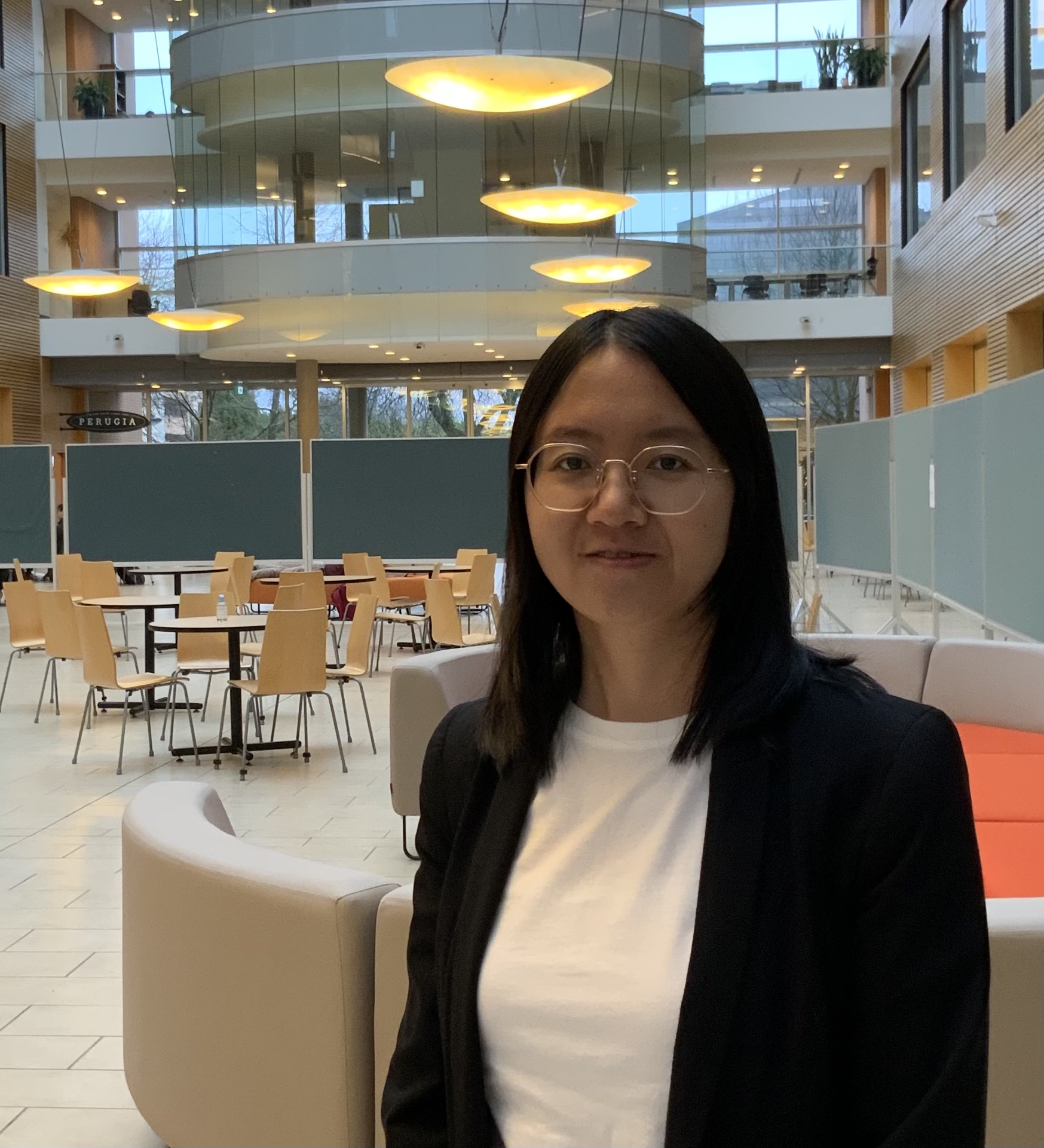
Yunhui He is an Assistant Professor in the Department of Mathematics at the University of Houston. His research focuses on numerical analysis and scientific computing, with expertise in finite element methods, multigrid methods, and local Fourier analysis. He has held postdoctoral positions at institutions like the University of British Columbia and the University of Waterloo. His work includes contributions to preconditioning techniques, acceleration methods, and the numerical solution of partial differential equations. Education: PhD in Mathematics (2018), Memorial University of Newfoundland MSc in Computational Mathematics (2015), Chinese Academy of Sciences BSc in Mathematics and Applied Mathematics (2012), Capital Normal University Research Interests: Dr. He’s research emphasizes numerical methods for PDEs, multigrid algorithms, and iterative solvers. He explores topics like finite element methods, preconditioning strategies, and local Fourier analysis to enhance computational efficiency in fluid dynamics and optimal control problems. His work bridges theoretical analysis and practical implementation, with applications in engineering and physics. Articles Trends: Recent publications highlight advancements in multigrid relaxation schemes, Anderson acceleration for nonlinear PDEs, and preconditioners for coupled flow systems. His work often integrates local Fourier analysis to optimize solver performance, with applications to Stokes-Darcy equations and optimal control problems. Grants & Awards: He co-organized the 2025 NSF-funded CBMS Conference on Applied Mathematics and Machine Learning (DMS-2430460), demonstrating leadership in academic collaboration. Teaching: Taught courses including Linear Algebra, Partial Differential Equations, and Numerical Analysis at the University of Houston and other institutions. His pedagogical focus aligns with computational mathematics and scientific computing. Lab/Team: Hosts Santolo Leveque as a postdoctoral fellow (2024–present), advancing collaborative research in numerical methods and multigrid theory.