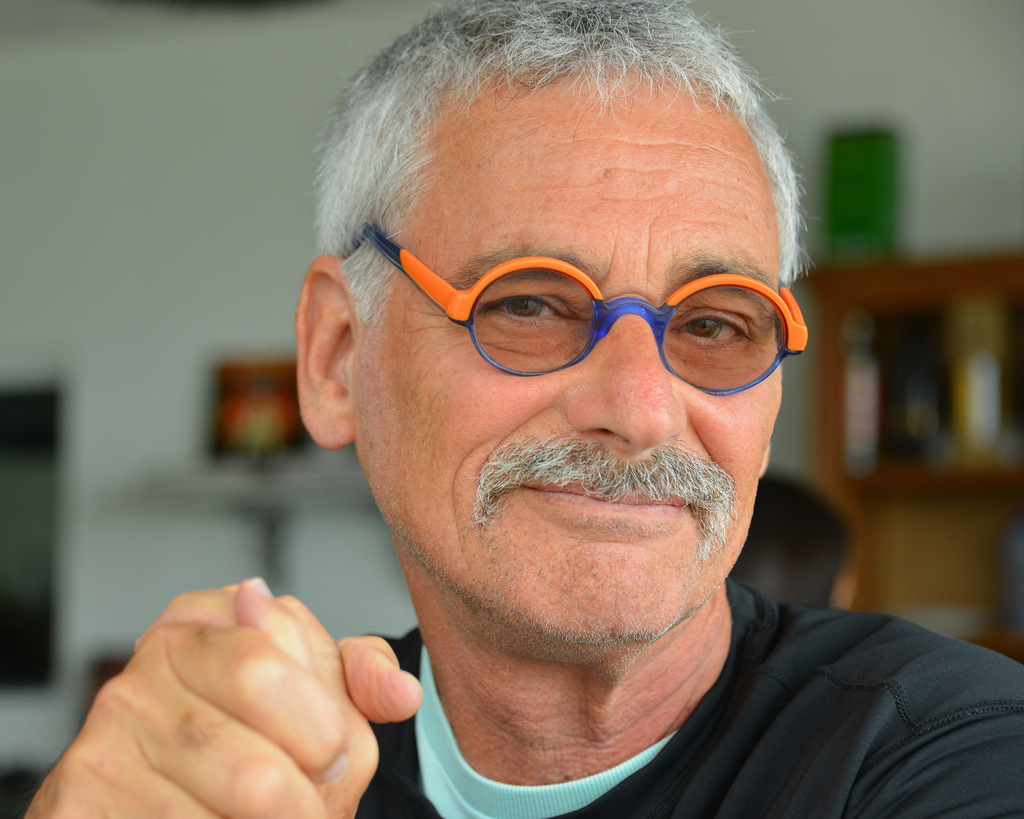
Professor Ke Chen is an applied and computational mathematician at the University of Strathclyde, Department of Mathematics and Statistics. His research focuses on developing imaging analysis techniques, including variational models, PDEs, iterative solvers, and AI algorithms for medical imaging (e.g., segmentation, co-registration). He holds an honorary clinical consultant position at Clatterbridge Cancer Centre (NHS) and has previously directed research centers at the University of Liverpool. His current projects include multimodal data integration and vision-language modeling with AI. He supervises several PhD students in areas like medical imaging and computational mathematics. Education: PhD from Plymouth University (1990), MSc from Manchester University (1986). Research interests span medical imaging, deep learning, and computational mathematics with applications in healthcare. Collaborations include industries and NHS institutions.
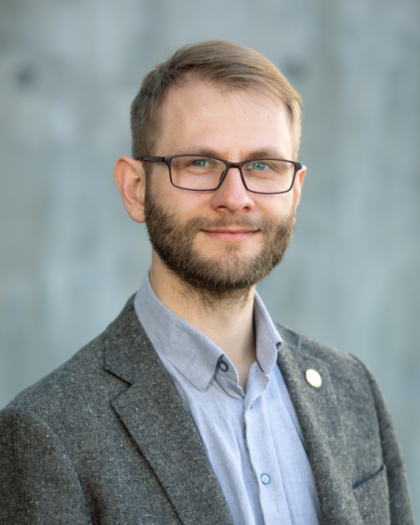
Robert Beinert is a Senior Lecturer (Privatdozent) in Applied Mathematics at the Technische Universität Berlin, affiliated with the Department of Applied Mathematics within the Faculty of Mathematics and Natural Sciences. He holds a Dr. rer. nat. (Ph.D.) from Georg-August-Universität Göttingen (2015) and completed his Habilitation at Technische Universität Berlin in 2025. His research focuses on inverse problems, optimal transport, phase retrieval, and mathematical imaging, with applications in signal processing and data analysis. He has held academic positions including Research Associate roles at TU Berlin (2020–2025), Karl-Franzens-Universität Graz (2016–2020), and Georg-August-Universität Göttingen (2016). His work bridges theoretical foundations and practical applications, with contributions to regularization techniques, optimal transport theory, and algorithmic development. Key research interests include phase retrieval uniqueness analysis, Gromov-Wasserstein transport, and denoising methodologies for manifold-valued data. His recent publications emphasize advancements in optimal transport frameworks, regularization strategies, and applications in image processing and machine learning.
Professor Elena Papadopoulou is a faculty member at the Technical University of Crete within the School of Mineral Resources Engineering . Her research focuses on applied mathematics and computational science , addressing problems in groundwater dynamics, tumor modeling, and numerical methods for partial differential equations. Key Research Areas: Stochastic optimization for coastal aquifer management GPU-accelerated simulations for biomedical applications High-order numerical schemes for reaction-diffusion systems Unified transforms in multi-domain PDEs She has published extensively on saltwater intrusion modeling , brain tumor invasion , and parallel computing algorithms . Her work integrates mathematical modeling with environmental and medical challenges , emphasizing computational efficiency and environmental sustainability. Contact : epapadopoulou@tuc.gr
Lindsey Heagy is an Assistant Professor in the Department of Earth, Ocean & Atmospheric Sciences at the University of British Columbia (UBC), Faculty of Science. Her research focuses on inverse theory, machine learning, and geophysical data analysis, with applications in mineral exploration, carbon sequestration, and groundwater systems. She leads a group developing open-source software like SimPEG for geophysical simulations and inversions, alongside GeoSci.xyz for geoscience education resources. Key research areas include geophysical inversions of electromagnetic and potential field data, detection of unexploded ordnance (UXO) using machine learning, and collaboration with industry partners on carbon sequestration projects. Heagy actively recruits graduate students and postdoctoral researchers, emphasizing interdisciplinary approaches to geophysical challenges. Her work emphasizes open science practices, with contributions to open-source tools for data processing and reproducible workflows in geophysics. Recent publications highlight advancements in electromagnetic modeling, magnetic vector inversion, and the integration of neural networks in geophysical parameterization. Her lab's projects often involve large-scale datasets and cutting-edge computational methods, reflecting a commitment to both theoretical innovation and practical applications in environmental and resource geoscience.
Uri M. Ascher is a Professor in the Department of Computer Science at the University of British Columbia's Faculty of Science. He has established himself as a leading researcher in numerical analysis, scientific computing, and computational methods for differential equations. His work bridges theoretical mathematics with practical applications in computer animation, computational finance, and inverse problems. Ascher's research interests focus on numerical methods for evolutionary differential equations, boundary value problems, differential-algebraic equations, and their applications. His work spans both theoretical developments in numerical analysis and practical implementations in scientific computing. He has made significant contributions to the fields of computer animation through numerical methods for simulating deformable objects and physics-based animation. His publication record shows a consistent trajectory of high-impact research spanning several decades, with recent work focusing on the intersection of numerical methods with machine learning, particularly neural differential equations and data-driven approaches to inverse problems. His research demonstrates a unique ability to connect classical numerical analysis with emerging computational challenges in visual computing and scientific simulation. Fellow of the Royal Society of Canada (FRSC), 2018 SIAM Fellow, 2010 CAIMS Research Prize, 2010 Ascher has supervised numerous graduate students and collaborated extensively with researchers across disciplines. His work on numerical methods for computer animation has led to practical implementations used in graphics applications. He maintains active collaborations with researchers in scientific computing, applied mathematics, and computer graphics. Ascher is also affiliated with the Scientific Computing Laboratory and the Institute for Applied Mathematics at UBC, reflecting the interdisciplinary nature of his work.
Francis Ogoke is an incoming Assistant Professor in the Department of Mechanical Engineering at Carnegie Mellon University, set to begin in Fall 2025. He is currently a postdoctoral associate at the Massachusetts Institute of Technology. His academic journey includes a Ph.D. in Mechanical Engineering from Carnegie Mellon University (2024) and a B.S.E. in Chemical and Biological Engineering from Princeton University (2019). His research lies at the intersection of artificial intelligence and engineering systems, with a focus on developing foundational AI methods for complex engineering problems. Key areas include: Physics-informed deep learning Uncertainty quantification and probabilistic modeling Representation learning for generalization Applications in additive manufacturing, digital twins, and cyber-physical systems The recent articles reflect a strong trend in leveraging deep learning—especially vision transformers, generative models, and reinforcement learning—for accelerating simulations, enhancing in-situ monitoring, and improving control in additive manufacturing. His work consistently bridges AI innovation with real-world engineering challenges, particularly in metal 3D printing and multiphysics modeling. Notable scientific awards include: Presidential Fellowship in the College of Engineering, Carnegie Mellon University G.E.M. Fellowship Francis Ogoke advises emerging researchers and is expected to lead a research group focused on AI-driven engineering systems. His lab will likely focus on developing intelligent frameworks for digital twins and autonomous manufacturing. He has not yet advised any students as per current records. He is actively involved in pioneering research that integrates AI into core engineering workflows, supported by advanced computational and experimental infrastructure. He is affiliated with the College of Engineering at Carnegie Mellon University and conducts research relevant to advanced manufacturing, sensing technologies, and intelligent systems.
Dr. Yue Wu is a Lecturer in the Department of Mathematics and Statistics at the Faculty of Science, University of Strathclyde. She is actively engaged in research and teaching, with a strong focus on stochastic and numerical analysis. She is affiliated with the Alan Turing Institute as a Visiting Researcher and collaborates internationally on advanced mathematical and data science projects. Research Interests: Numerical analysis for stochastic (partial) differential equations (SDEs/SPDEs) Random periodic solutions and their numerical approximation Rough path theory and signature methods Applications in machine learning, data science, and engineering systems Her recent work bridges pure stochastic analysis with practical applications in AI, autonomous systems, and industrial diagnostics. She employs advanced mathematical tools such as log-signatures and randomized numerical schemes to solve complex real-world problems. Publication Trends: Dr. Wu's recent publications (2022–2025) show a strong trend toward integrating stochastic numerics with machine learning. Her work spans theoretical convergence analysis of numerical schemes, feature extraction using rough paths, and PDE-informed deep learning. There is a clear interdisciplinary focus, connecting mathematics with engineering and computer science. Scientific Awards: Strathclyde & TU Braunschweig Joint Collaborative Funding Recipient (2023) ICIAM2023 Financial Support Scheme 2 Recipient (2023) Turing Network Development Award: Trailblazers Competition Recipient (2022) Lower Saxony – Scotland Tandem Fellowship Recipient (2022) Advising and Grants: Dr. Wu is accepting PhD students and offers projects in stochastic numerics and rough path applications. She has secured funding as Principal Investigator (e.g., International Exchanges Round 3) and Co-investigator (e.g., AI-based asteroid navigation project with ESA). Her grants reflect strong international collaboration and interdisciplinary innovation. Labs and Teams: While no specific lab name is mentioned, Dr. Wu is part of active research networks including the Alan Turing Institute and collaborates with teams in aerospace, data science, and applied mathematics. She organizes seminars and workshops, indicating leadership in her research community.
Vicente Fco Candela Pomares is an Associate Professor in the Department of Mathematics at the Faculty of Mathematics, University of Valencia, Spain. His academic career has been centered on numerical analysis and computational mathematics, with a focus on iterative methods for nonlinear equations and multiresolution techniques. His research interests lie primarily in Numerical Analysis , especially iterative root-finding methods such as Halley, Chebyshev, and Steffensen-type algorithms. He has contributed significantly to the convergence analysis of these methods, particularly in Banach spaces and for ill-conditioned problems. His work extends to multiresolution analysis , wavelets , and image restoration , where he applies fractional regularization and nonlinear approximation frameworks. The trends in his recent publications show a sustained focus on derivative-free iterative methods , convergence theory , and applications in image processing . His work often bridges theoretical numerical analysis with practical computational challenges. He earned his PhD from the University of Valencia in 1988 under the supervision of Dr. Antonio Marquina Vila, with a thesis on a priori error estimators for iterative methods. He has collaborated extensively with researchers including Sergio Amat, Sonia Busquier, and Rosa Peris. Notable co-authors include Pantaleón D. Romero and Francesc Aràndiga. His publications appear in high-quality journals such as Journal of Computational and Applied Mathematics , Applied Mathematics and Computation , and SIAM journals. He is actively affiliated with the University of Valencia, as evidenced by his institutional email and ongoing publications. There is no indication of part-time status, retirement, or awards in the available data.
Dr. Lennart Johnsson is a Professor of Computer Science at the University of Houston, with affiliations at the Royal Institute of Technology (KTH) in Sweden. He has held faculty positions at Caltech, Yale University, Harvard University, and KTH, and industry roles at ABB Research and Thinking Machines Corp. His research focuses on High-Performance Computing (HPC), energy-efficient systems, parallel algorithms, and grid computing. He has collaborated with institutions like PRACE, and companies including AMD, Intel, and Texas Instruments, leading to innovations such as energy-efficient HPC servers and DSP-based architectures. Research interests include optimizing HPC for energy efficiency, embedded processors (e.g., DSPs), and novel interconnection networks. He has pioneered software libraries like CMSSL and contributed to standards such as MPI and High-Performance Fortran. Awards include the Machtey Best Student Paper Award and recognition in the Gordon Bell Prize competition. Dr. Johnsson has supervised numerous students, including those working on adaptive scheduling, grid computing, and bioinformatics. He founded the Texas Learning and Computation Center and led initiatives like the Texas GigaPoP and RENoH network. Current projects explore energy-efficient HPC using DSP architectures. Key contributions include the first No. 1 system on the Top500 list (1993), grid computing frameworks, and infrastructure for distributed applications. He has served on boards for PRACE, NSF, and Swedish research councils, and advises on national HPC strategies.
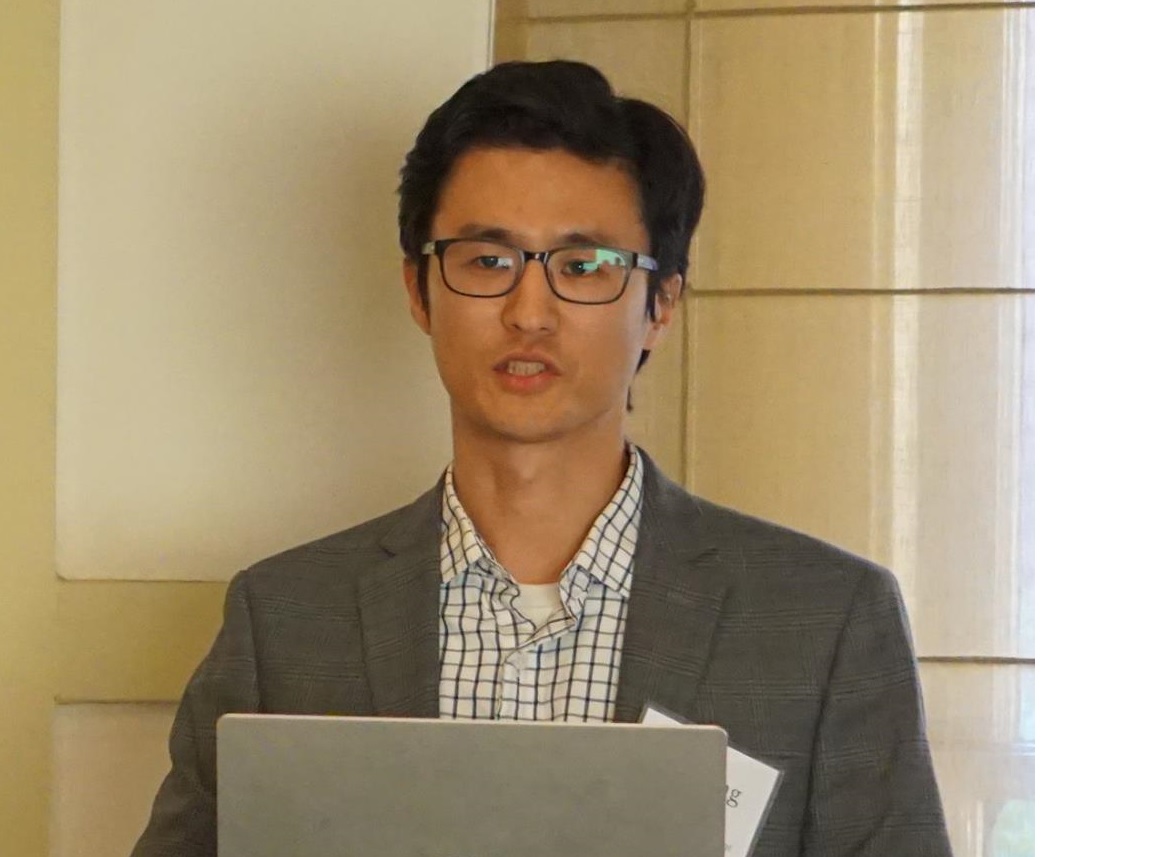
In Young Min is a Lecturer in Korean studies at the Centre for East Asian Studies, Heidelberg University. He holds a B.A. and M.A. in Political Science from Yonsei University (South Korea), and a Ph.D. in Political Science and International Relations from the University of Southern California. His research focuses on international relations and security in East Asia, particularly the dynamics of power asymmetry and smaller states' agency in shaping these dynamics, with a regional focus on Korea. Recent work examines historical and contemporary issues surrounding the Korean Peninsula, including nuclear policy and unification treaties. His interdisciplinary contributions span political theory and historical analysis. Education History: B.A. and M.A. in Political Science, Yonsei University, South Korea Ph.D. in Political Science and International Relations, University of Southern California Research Interests: Power asymmetry dynamics in international relations Ontological security and identity in hierarchical systems Korean Peninsula security and unification South Korea's nuclear policy and non-proliferation challenges Publications Trends: His work bridges historical and contemporary analyses, with contributions to journals like the International Relations of the Asia-Pacific and Journal of Asian Security and International Affairs . Earlier technical articles in mathematics and computational methods reflect interdisciplinary engagement, though recent focus is on political science and international relations.
Aleksandr Malyshev is Professor of Mathematics at the University of Bergen. His research integrates numerical linear algebra, stability theory, optimisation-based control, and image-processing algorithms, yielding a portfolio of more than 60 peer-reviewed articles and conference contributions. Education & affiliations: Professor, Department of Mathematics, University of Bergen, Norway (present) Previous research and teaching engagements in informatics and applied mathematics at the same university Research interests: Malyshev’s core interest is the theoretical and algorithmic analysis of matrix problems arising in stability, control and imaging. He develops numerically reliable tools for assessing the distance to instability of dynamical systems, constructs preconditioners that accelerate optimisation solvers in real-time model predictive control, and designs variational models for 3-D reconstruction and image denoising. His work frequently combines spectral theory of matrix polynomials with practical issues such as high-performance implementation and medical-image quantification. Across the last decade his articles reveal three dominant strands: (i) stability and perturbation of time-delay and periodic systems, (ii) preconditioned iterative solvers for interior-point and MPC formulations, and (iii) variational and learning-based approaches to depth estimation, surface reconstruction and glenoid-bone assessment. These themes are unified by a common mathematical substrate—exploitation of matrix structure to obtain computationally efficient, numerically trustworthy solutions. Scientific awards & recognition: Regular invited speaker at international workshops on numerical linear algebra and control (e.g., SK Godunov conference 2009, IFAC 2018) Funded principal investigator / co-investigator on Research Council of Norway and EU Horizon Europe grants Advising & grants: Malyshev has supervised numerous MSc and PhD candidates in numerical analysis and scientific computing and currently advises graduate researchers on projects ranging from 3-D machine-vision algorithms to Krylov-subspace preconditioning. Recent grant participation includes EU project 101373 (3-D quantification of glenoid bone loss) and the Norwegian Research Council project 262203 on perfusion-flow simulation. Labs & collaboration: He collaborates closely with the Group for Numerical Methods and Applications at UiB, the Visual Computing cluster at the Department of Informatics, and maintains international partnerships with the Universities of Brest, Lübeck, and several US institutions. These joint efforts feed cross-disciplinary projects combining rigorous matrix analysis with real-world applications in biomechanics, process control, and computer vision.
Jakub Wiktor Both is a permanent researcher at the Department of Mathematics, University of Bergen (UiB). He is affiliated with the Porous Media Research Group and the Center for Modeling of Coupled Subsurface Dynamics. His research focuses on numerical methods for multiphysics problems in porous media, including image-based data analysis for laboratory experiments and mathematical modeling of CO2 storage. His work involves developing tools like the DarSIA (Darcy Scale Image Analysis) toolbox for fluid displacement analysis and PorePy, a Python simulation framework for fractured porous media. He leads projects on CO2 storage validation and has been awarded an NFR FRIPRO grant for his TIME4CO2 initiative, aiming to enhance CO2 storage capacity through mathematical modeling. Key research themes include optimal transport metrics, robust numerical solvers for coupled systems, and gradient flow structures in dissipative systems. His contributions span experimental validation frameworks (e.g., FluidFlower), digital twins (PoroTwin), and open-source software for subsurface dynamics. Notable awards include election as Chair of the Board of InterPore Norway (2024) and leadership in international projects like ERC CoG MaPSI and NFR Petrosenter CSSR. His interdisciplinary approach bridges mathematics, geoscience, and engineering for sustainable subsurface resource management.
PD Dr. Florian Frank is Privatdozent (senior lecturer with full teaching licence) for Applied Mathematics at Friedrich-Alexander-Universität Erlangen-Nürnberg (FAU) and heads the Bavarian research project „Parallel mesh loading and partitioning for large-scale simulation“ . His expertise spans high-performance computing, phase-field and discontinuous Galerkin methods, digital-rock physics, and reactive transport in porous media. Education & career 2022 – Venia legendi (private lecturer), Mathematics, FAU 2019 – Dr. habil., Mathematics, FAU 2013 – Dr. rer. nat., Applied Mathematics, FAU 2008 – Graduate Mathematician, University of Frankfurt 2021-2022 (acting) W2 Professor Scientific Computing, FAU 2018-2021 (acting) W2 Professor Mathematical Modelling, FAU 2017-2018 Senior Postdoc, CAAM, Rice University, USA 2014-2017 Postdoc, CAAM, Rice University, USA Research interests Frank focuses on the development and analysis of numerical schemes for partial differential equations that govern multiphase, multicomponent and reactive processes in porous or biological media. Key themes include discontinuous Galerkin and finite-volume methods , physics-preserving discretizations , high-performance computing , and digital-rock-based pore-scale simulations . He couples phase-field approaches with (Navier–)Stokes, Cahn–Hilliard, Nernst–Planck and density-gradient equations to quantify flow, transport, colloid dynamics and interfacial phenomena. Recent publications reveal a clear trend toward data-driven modelling : convolutional neural networks are trained with direct numerical simulation data to predict permeability and diffusion coefficients from 3-D micro-CT images, while advanced preconditioners and regularization techniques accelerate multiphase thermodynamic computations. Awards & recognition 2020 – Emmy-Noether-Prize der Naturwissenschaftlichen Fakultät, FAU 2017 – Promotion to Senior Postdoctoral Research Associate , George R. Brown School of Engineering, Rice University Projects, tools & supervision Frank currently leads a Bavarian state-funded project on parallel mesh handling for large-scale simulations. Together with collaborators he maintains the open-source MATLAB/GNU Octave toolbox FESTUNG for discontinuous Galerkin methods. Since 2018 he has (co-)supervised ten BSc and MSc theses on topics ranging from Stokes preconditioning to enriched Galerkin shallow-water solvers, regularly serves as reviewer for more than a dozen international journals, and is guest editor of special issues in Computational Geosciences and Oil & Gas Science and Technology .
Maciej Woźniak serves as a university professor at the Institute of Computer Science within the Faculty of Computer Science at AGH University of Science and Technology in Kraków, actively contributing to research and teaching staff while participating in the Computer Science Discipline Council and College of the Faculty. His office is located at D-17, ul. Kawiory 21, III, 4.58, with primary contact via macwozni@agh.edu.pl. His research spans computational mathematics and high-performance computing, specializing in parallel algorithms for numerical simulations including isogeometric analysis, finite element methods, and multi-frontal solvers. Key applications address environmental challenges like hail suppression and urban smog reduction, alongside biomedical modeling of tumor growth and airborne pathogen dispersion. Methodological innovations focus on GPU acceleration, shared-memory architectures, and efficient integration techniques for partial differential equations. Analysis of his 2019-2024 publications reveals consistent advancement in parallel computational frameworks for environmental and biomedical applications, demonstrating interdisciplinary impact through experimental validation of hail cannons, smog reduction technologies, and pathogen dispersion modeling during the COVID-19 pandemic. His work bridges theoretical algorithm development with real-world problem solving across physics, engineering, and life sciences. Scientific Awards: No specific awards were documented in the provided sources. Student advising, research grants, laboratory affiliations, and educational background details beyond his PhD, DSc, and Eng. titles remain unspecified in the available materials, though his extensive publication record suggests active mentorship and collaborative research leadership.
Nicolas Garcia Trillos is an Associate Professor in the Department of Statistics at the University of Wisconsin-Madison, with research spanning applied analysis, computational probability, statistics, and machine learning. His work focuses on the intersection of calculus of variations, optimal transport, and partial differential equations in learning systems. His educational background includes: Bachelor's degree in Mathematics from Universidad de Los Andes, Bogotá, Colombia (2010) Ph.D. in Mathematics from Carnegie Mellon University (2015) Prager Assistant Professor (postdoctoral position) at Brown University (2015-2018) Garcia Trillos' research centers on the mathematical foundations of machine learning , developing tools in optimal transport and calculus of variations to analyze graph-based learning and continuum models. Key contributions address adversarial robustness , federated learning , and spectral clustering , providing theoretical guarantees for large-scale problems through PDE frameworks. Recent publications (2022-2025) demonstrate a cohesive focus on geometric approaches to adversarial robustness , using optimal transport to derive classification bounds and study solution existence. He has advanced federated learning via consensus-based bi-level optimization (CB2O) and developed Fermat distances for metric approximation, bridging pure mathematics with statistical learning theory. No scientific awards were mentioned in the provided text. There is no information available regarding student advising, research grants, or laboratory affiliations in the source material.