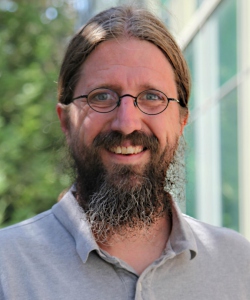
Aman Arora is an Assistant Professor at Arizona State University's Ira A. Fulton Schools of Engineering, specializing in the School of Computing and Augmented Intelligence. His research focuses on reconfigurable computing, hardware acceleration of machine learning, and non-traditional computing paradigms like Processing-In-Memory. With over a decade of semiconductor industry experience, he bridges academic research and industrial applications. PhD in Computer Science from The University of Texas at Austin Research interests emphasize domain-specific acceleration through FPGA optimization , compute-in-memory architectures , and machine learning for CAD/EDA . His work addresses critical challenges in energy efficiency and throughput for AI workloads. Recent publications demonstrate trends toward compute-in-memory systems , FPGA-based deep learning acceleration , and sustainable hardware design . Key contributions include frameworks like SAF, CSR, and GAMA for dynamic hardware optimization. Laboratory Website: ADVENT Lab Teaching includes courses on digital hardware design (CSE 320) and advanced topics in machine learning acceleration (CEN 524/CSE 524). Industry experience informs his practical approach to research and education.
David Blaauw is the Kensall D. Wise Collegiate Professor of Electrical Engineering and Computer Science (EECS) at the University of Michigan. His research focuses on ultra-low-power analog/mixed-signal circuits, mm-scale sensors, neural networks, and biomedical applications. He leads the Blaauw Lab, which has pioneered innovations like the Michigan Micro Mote (M^3) and neural recording probes. His work emphasizes real-world deployability, with applications in environmental monitoring (e.g., monarch butterflies), medical devices, and robotics. Education: B.S. in Physics and Computer Science, Duke University (1986) Ph.D. in Computer Science, University of Illinois Urbana-Champaign (1991) Research Interests: Blaauw’s lab explores ultra-low-power computing, mm-scale systems, RF communication, in-memory computing, and genomics acceleration. Key projects include: Millimeter-scale computers (e.g., 0.04mm³ temperature sensors) Wireless neural interfaces for brain-machine communication Energy-efficient accelerators for edge AI and genomics Micro-robotics with sensing/actuation/computation Awards: IEEE Fellow 2016 SIA-SRC Faculty Award Motorola Innovation Award Best Paper Awards at ISSCC, ISCA, and RFIC Advising & Impact: Over 600 publications, 65 patents, and 4 startup companies spun from his lab. Current research includes genome sequencing accelerators (GenAx) and neural recording dust for brain mapping. He directs the Michigan Integrated Circuits Lab and chairs major conferences like ISSCC and DAC. Labs/Teams: Blaauw Lab (University of Michigan) Michigan Integrated Circuits Lab (MICAL)
Susana Paton Alvarez is an Associate Professor at the Department of Electronic Technology within the College of Engineering at the Universidad Carlos III de Madrid. She is affiliated with the Microelectronic Design and Applications (DMA) research group and the University Institute on Gender Studies . Her contact information includes email addresses susana.paton@uc3m.es and spaton@ing.uc3m.es , and her office is located at 1.2.C06 - Agustin De Betancourt in Leganés. Her research focuses on analog and mixed-signal circuit design , with a particular emphasis on capacitance-to-digital converters , voltage-controlled oscillators (VCO) , and biomedical sensors . Recent work includes advancements in time-encoded sensors for physiological monitoring and noise analysis in multi-bit SigmaDelta modulators. She also explores applications in flexible electronics and edge computing for biosignal acquisition. Notable publications include contributions to IEEE Sensors Letters , IEEE Transactions on Circuits and Systems II , and IEEE Sensors Journal , reflecting her expertise in microelectronic design and biomedical engineering. Her research often bridges theoretical circuit analysis with practical implementations in nanometer CMOS technologies. Dr. Paton Alvarez actively participates in collaborative projects and conferences, such as Modularos and Short Range Wireless Front-Ends initiatives. While no scientific awards are explicitly listed, her publications highlight sustained contributions to the field of analog and biomedical circuit design. Her academic roles include teaching Computer Science and Electronics subjects. She is involved in the University Institute on Gender Studies , indicating an interest in interdisciplinary research or outreach in gender-related academic issues.
Gireeja Ranade is an Assistant Teaching Professor in the Department of Electrical Engineering and Computer Sciences at the University of California, Berkeley. She previously served as a Researcher at Microsoft Research AI in the Adaptive Systems and Interaction Group. Her educational background includes a PhD in Electrical Engineering and Computer Science from UC Berkeley and an undergraduate degree from MIT. Research Focus Prof. Ranade's research spans control theory, information theory, and machine learning, with applications in wireless communication, algorithmic fairness, and misinformation analysis. Her work addresses fundamental challenges in system stabilization under uncertainty, real-time control optimization, and equitable resource allocation. She maintains strong collaborations across disciplines, resulting in publications at premier venues like IEEE Transactions on Automatic Control, PNAS, and The Web Conference. Her recent publications demonstrate a consistent focus on robustness in control systems, fairness in algorithmic decision-making, and analysis of information propagation in online ecosystems. The work frequently combines theoretical rigor with practical implementations in robotics, networking, and social systems. Awards and Recognition 2017 UC Berkeley Electrical Engineering Award for Outstanding Teaching 2020 UC Berkeley Award for Extraordinary Teaching in Extraordinary Times Academic Leadership Prof. Ranade leads a dynamic research group including PhD candidates, master's students, and undergraduates. She has advised over 25 students on projects ranging from neural network controllers to fairness metrics in resource allocation. She founded the CalMentors program, which connects UC Berkeley students with K-12 learners for tutoring support during the COVID-19 pandemic. Educational Innovation She co-designed and teaches UC Berkeley's introductory EECS 16A/B sequence, integrating linear algebra with applications in machine learning and circuit design. She has also developed courses on optimization (EECS127/227A) and data science (Data 102), with publicly available lecture videos demonstrating her teaching methodology.
Alaa Alameldeen is an Associate Professor in the School of Computing Science at Simon Fraser University (SFU), part of the Faculty of Applied Sciences. Previously, he worked as a Research Scientist at Intel Labs (2006–2020) and held an Adjunct Faculty position at Portland State University (2008–2018). He earned a PhD in Computer Sciences from the University of Wisconsin-Madison (2006), and earlier degrees from Alexandria University, Egypt. His research focuses on computer architecture, including memory systems (processing-in-memory, cache/memory compression, security), energy-efficient architectures, and hardware-software co-design for machine learning. He advises PhD and MSc students in these areas and teaches advanced computing science courses. Key contributions include innovations in memory hierarchies, cache compression techniques, and mitigating hardware vulnerabilities. His work has been published in top conferences (e.g., ISCA, MICRO, HPCA) and patented in areas like near-memory processing and error correction. Alameldeen currently leads a research group exploring secure and high-performance memory architectures. He has supervised multiple graduate students, with many progressing to roles at leading tech companies and academic institutions.
Peter Alvaro is an Assistant Professor in the Department of Computer Science and Engineering at the Baskin School of Engineering, University of California, Santa Cruz. He joined the faculty in 2015 after earning his PhD from UC Berkeley under Professor Joe Hellerstein. His research lies at the intersection of databases, distributed systems, and programming languages , with a strong emphasis on data-centric approaches to building robust, scalable, and predictable distributed systems. He is the creator of the Dedalus language and co-creator of the Bloom language, both designed to simplify reasoning about distributed computation. Peter's recent work focuses on non-volatile memory (NVM) , computational storage , and data-centric operating systems , as seen in the Twizzler OS project. His publications span top venues such as USENIX ATC, HotNets, and Communications of the ACM, showing trends toward system resilience, efficient data management, and novel abstractions for modern hardware. Best Presentation award at USENIX ATC 2020 Peter advises graduate students, including Daniel Bittman, and is a key contributor to the Storage Systems Research Center (SSRC), now succeeded by the Center for Research in Storage Systems (CRSS). His work is supported by ongoing collaborations with researchers at UC Santa Cruz and beyond, particularly in the areas of storage, operating systems, and distributed computing.
Said Hamdioui serves as a full Professor in the Department of Computer Engineering within the Faculty of Electrical Engineering, Mathematics and Computer Science at Delft University of Technology. His research focuses on cutting-edge hardware architectures for neuromorphic computing and energy-efficient AI acceleration, with particular emphasis on memristor-based systems, emerging memory technologies, and fault-tolerant designs for edge applications. His research interests span Neuromorphic Computing , Memristor-Based Architectures , and Energy-Efficient AI Hardware , addressing critical challenges in hardware security, computation-in-memory, and reliable edge AI deployment. Recent work demonstrates significant advancements in RRAM/FeFET testing methodologies, spiking neural network implementations, and spin wave computing alternatives to traditional CMOS. His publications reveal strong trends toward real-world deployment of brain-inspired hardware with practical constraints like power efficiency, testability, and security. Award highlights include: DATE'20 Best Paper Award DFT'21 Outstanding Student Paper ETS 2021 Best Paper Award LATS 2018 & 2022 Best Paper Awards Professor Hamdioui actively contributes to the research community through editorial roles at IEEE Transactions on VLSI Systems , IEEE Design & Test , and Journal of Electronic Testing from 2017-2018. His leadership in multi-partner projects like CONVOLVE and NEUROKIT2E demonstrates strong industry-academia collaboration for edge AI solutions. Current work shows increasing focus on practical deployment challenges including in-field fault monitoring, security vulnerabilities in neuromorphic systems, and realistic brain simulation frameworks.
Saugata Ghose is an Assistant Professor in the Siebel School of Computing and Data Science at the University of Illinois Urbana-Champaign (UIUC), with affiliate appointments in the Coordinated Science Laboratory and the Department of Electrical and Computer Engineering. His research focuses on data-centric computing, processing-in-memory architectures, memory systems, and hardware-software co-design. He holds a Ph.D. and M.S. in Computer Engineering from Cornell University and dual B.S. degrees in Computer Engineering and Computer Science from SUNY Binghamton. His academic positions include roles at Carnegie Mellon University (2016–2020) and postdoctoral research at CMU (2014–2016). Ghose has received notable awards such as the 2024 HPCA Hall of Fame, 2023 Intel Rising Star Faculty Award, and the 2019 CMU Wimmer Faculty Fellowship. His work has been supported by grants from NSF, Samsung, and Sandia National Laboratories. Research Interests: His group (ARCANA) explores data-centric architectures, processing-in-memory (PIM), and emerging memory technologies. Key areas include architectures for smart cities, autonomous systems, and genomics. He teaches courses on computer architecture and systems organization. Awards: HPCA Hall of Fame (2024) Intel Rising Star Faculty Award (2023) CMU Wimmer Faculty Fellow (2019) Cornell ECE Teaching Assistant Award (2013) Grants & Projects: NSF $2M for semiconductor advancements Samsung/Sandia grants for PIM programming models UIUC/ZJU DREMES collaboration on neuromorphic PIM Labs/Teams: Leads the ARCANA Research Group, focusing on reimagining computing around new applications. Collaborates with ASAP and HYBRID centers for co-design tools and neuromorphic architectures.
Nicola Nicolici is a Professor in the Department of Electrical and Computer Engineering at McMaster University. His research focuses on methods and algorithms for the design of digital integrated circuits and systems, with significant contributions in manufacturing test, post-silicon validation and debug. His work has expanded to include embedded systems, low-energy computing, and custom hardware-accelerated computing systems. Professor Nicolici's research interests span multiple areas of digital system design and validation. His early work focused on manufacturing test methodologies and power-aware testing strategies for integrated circuits. More recently, he has made significant contributions to post-silicon validation techniques, including constrained-random stimuli generation, trace signal selection, and bit-flip detection. His research has evolved to address emerging challenges in embedded computing systems, low-energy design, and specialized hardware acceleration for various applications including deep neural networks and signal processing. His recent publications reveal a strong trend toward hardware acceleration for specialized computing tasks. The research spans matrix multiplication algorithms (Strassen and Karatsuba), memory system optimization (DDR5 calibration), FPGA-based radar processing, and neural network acceleration. His work consistently bridges theoretical algorithm development with practical hardware implementation considerations, particularly focusing on precision analysis, fault tolerance, and energy efficiency. The research demonstrates a clear progression from traditional digital circuit testing to more complex system-level validation and acceleration techniques. Professor Nicolici has been actively involved in teaching courses related to system-on-chip design and test, digital systems, and embedded systems. His teaching portfolio includes advanced courses such as System-on-Chip (SOC) Design and Test and Digital Systems Design , reflecting his expertise in the field. While specific grant information isn't detailed in the provided text, his extensive publication record suggests ongoing research funding support. His research has contributed significantly to the fields of digital circuit testing, post-silicon validation, and hardware acceleration. The work has practical applications in semiconductor manufacturing, embedded systems design, and specialized computing architectures. His recent focus on neural network acceleration and memory system optimization reflects the evolving landscape of computer architecture research.
Jennifer Ryan is a Professor of Numerical Analysis and Division Head of Numerical Analysis, Optimization, and Systems Theory at the Department of Mathematics, KTH Royal Institute of Technology. Her research focuses on designing and developing numerical schemes to extract accuracy from simulations, particularly through superconvergence properties and computational efficiency improvements. She applies these techniques to applications such as imaging, fluid visualization, and plasma dynamics. Education: PhD in Applied Mathematics, Brown University; MS in Mathematics, Courant Institute; BA in Applied Mathematics, Rutgers University. Professional Activities: Member of editorial boards for BIT Numerical Mathematics, ESAIM:M2AN, and Communications on Applied Mathematics and Computation; Steering committee member of AWM's Women in Numerical Analysis and Scientific Computing (WINASc). Her publications emphasize discontinuous Galerkin methods, SIAC filtering, and applications in fluid dynamics. She has served on multiple grant review panels and received awards for diversity and inclusion initiatives. Grants: Principal Investigator for projects funded by the Swedish Research Council, NSF, and US Air Force Office of Scientific Research. Awards: Fellow of UK Higher Education Academy, DAAD Fellowship, and Householder Fellowship.
Byron Boots is the Amazon Professor of Machine Learning in the Paul G. Allen School of Computer Science and Engineering at the University of Washington, where he directs the UW Robot Learning Laboratory. He also serves as a Principal Research Scientist in the Seattle Robotics Lab at NVIDIA Research and co-chairs the IEEE Robotics and Automation Society Technical Committee on Robot Learning. Dr. Boots received his Ph.D. from the Machine Learning Department in the School of Computer Science at Carnegie Mellon University, where he was a member of the Sense, Learn, Act (SELECT) Lab co-directed by Carlos Guestrin and his advisor Geoff Gordon. Prior to joining the University of Washington faculty, he was an Assistant Professor in the School of Interactive Computing within the College of Computing at Georgia Tech, and before that, he completed a post-doc in the Robotics and State Estimation Lab directed by Dieter Fox at the University of Washington. Professor Boots' research focuses on the intersection of machine learning, artificial intelligence, and robotics, with particular emphasis on developing theory and systems that tightly integrate perception, learning, and control. His work spans computer vision, state estimation, localization and mapping, high-speed navigation, motion planning, and robotic manipulation. His group develops algorithms drawing from deep learning and neural networks, nonparametric statistics, graphical models, nonconvex optimization, quantum physics, online learning, reinforcement learning, and optimal control. The research demonstrates a strong theoretical foundation while maintaining practical relevance to real-world robotic systems. His recent publications reveal a clear trend toward integrating advanced machine learning techniques with robotics, particularly in model predictive control, motion planning, and learning-based approaches to robot control. His work shows increasing focus on developing theoretically grounded methods that can handle the complex, nonlinear dynamics of real-world robotic systems while maintaining computational efficiency. The publications span top venues including ICRA, CoRL, IROS, and NeurIPS, demonstrating broad impact across multiple subfields of robotics and AI. Finalist for Best Systems Paper at Conference on Robot Learning (CoRL-2021) Multiple papers selected for oral presentations at top robotics conferences Work recognized for theoretical contributions and practical applications in robot learning As director of the UW Robot Learning Laboratory, Boots leads a vibrant research group focused on fundamental and applied research in robot learning. The lab maintains strong collaborations with NVIDIA Research and has produced numerous high-impact publications that bridge theory and practice. Professor Boots teaches courses in autonomous robotics, machine learning, and reinforcement learning, contributing to both undergraduate and graduate education at the University of Washington.
Suyash Gupta is a Tenure-Track Assistant Professor in the Department of Computer Science at the University of Oregon, where he leads the Distopia Laboratory and co-leads the Oregon Networking Research Group. His expertise lies in distributed systems, databases, blockchain technologies, fault tolerance, and federated learning. Education: Ph.D. in Computer Science, University of California, Davis (2022) M.S. in Computer Science, Purdue University (2017) M.S. (Research) in Computer Science, Indian Institute of Technology Madras Research Focus: Dr. Gupta’s research is centered on designing efficient distributed, decentralized, and blockchain systems that are resilient to arbitrary failures and can scale across wide-area networks. His work spans consensus protocols, Byzantine fault tolerance, secure transaction processing, and federated learning systems. He has contributed foundational work in permissioned blockchain architectures and fault-tolerant distributed databases. Scientific Contributions & Awards: Best Paper Award, EuroSys 2023 Distinguished Reviewer Award, SIGMOD 2025 Best Graduate Researcher Award, UC Davis Author of Fault-Tolerant Distributed Transactions on Blockchain , Morgan & Claypool Teaching & Mentorship: He currently teaches advanced courses like CS 607: Hot Topics in Systems and CS 451/551: Database Processing . He actively mentors a diverse group of PhD and MS students, including Nihal Balivada, Shistata Subedi, Neil Sharma, and others from institutions like UC Davis and BITS Pilani. Labs & Teams: Dr. Gupta leads the Distopia Laboratory at UO and co-leads the Oregon Networking Research Group , both focused on cutting-edge research in distributed systems and secure networked architectures.
Tathagata Srimani is an Assistant Professor in the Department of Electrical and Computer Engineering at Carnegie Mellon University (CMU), affiliated with the College of Engineering. He previously served as a Postdoctoral Scholar in Electrical Engineering at Stanford University. His academic journey includes a Ph.D. and S.M. in EECS from MIT (2022 and 2018 respectively) and a B.Tech. in E&ECE from IIT Kharagpur (2016). Research Focus: Srimani’s work centers on nanoelectronics and transformative NanoSystems. Key areas include: Carbon nanotube field-effect transistors (CNFETs) and their monolithic 3D integration with silicon Ultra-dense 3D integration of logic and memory to address the 'memory wall' in AI/ML Technology-architecture co-design frameworks for energy-efficient computing Key Achievements: Developed first silicon fab-compatible CNFET processes (TNANO ’18, Nature ’19) Enabled CNFET RISC-V microprocessor and monolithic 3D integration with Analog Devices/SkyWater Recipient of MIT Presidential Fellowship (2016) and Morris Joseph Levin Award (2018) Teaching & Outreach: Teaches semiconductor devices and hardware design, including hands-on 'Hacker Fab' courses. Leads the NEXUS Research Group exploring heterogeneous nanomaterials (e.g., magnetic and oxide semiconductors) and thermal/power management in 3D systems. Future Directions: Expanding into probabilistic computing hardware, co-design frameworks for application-specific systems, and scaling 3D NanoSystem technologies for industrial adoption.
Abolfazl Asudeh is an Associate Professor in the Department of Computer Science at the University of Illinois Chicago and director of the Innovative Data Exploration Laboratory (InDeX Lab) . He is a Senior Member of ACM and IEEE , serving as Associate Editor for IEEE Transactions on Knowledge and Data Engineering , VLDB Ambassador , and VLDB Endowment Liaison to NSF . His research focuses on Algorithm Design for Data and AI problems , emphasizing efficient, accurate, and responsible solutions through Approximation Algorithms , Randomized Methods , and Computational Geometry . Recent work explores LLM optimization ( Needle ), fair data structures ( FairHash ), and responsible AI frameworks ( Chameleon ). Scientific awards include Communications of the ACM Research Highlight Google Research Scholar Award SIGMOD 2019 Research Highlight Best of VLDB 2020 SIGMOD 2017 Reproducibility Award Grants: NSF IIS-2348919 (2024-2027): Fairness-aware Data Structures NSF IIS-2107290 (2021-2024): Collaborative Fairness Research The InDeX Lab develops systems like Needle (image retrieval) and RSR (matrix multiplication). His work integrates fairness , reliability , and computational efficiency across data structures , LLMs , and responsible AI implementations.
Arya Mazumdar is a tenured Professor of Data Science and Computer Science at the Halıcıoğlu Data Science Institute (HDSI) , part of the School of Computing, Information and Data Sciences at the University of California San Diego (UCSD). He also holds affiliations with the Computer Science and Engineering and Electrical and Computer Engineering departments at UCSD. Previously, he was an Assistant and Associate Professor at the University of Massachusetts Amherst (2015–2021), and held a postdoctoral position at MIT (2011–2012). He is an IEEE Distinguished Lecturer (2023–2024) and recipient of the NSF CAREER Award (2015–2020). Education : PhD in 2011 from the University of Maryland, College Park (advisor: Alexander Barg) Postdoctoral scholar at MIT (2011–2012, advisor: Greg Wornell) Internships at IBM Almaden (2010) and HP Labs (2008) Research Interests : Focus on algorithmic and statistical aspects of machine learning, error-correcting codes, optimization, signal processing, and distributed systems. Key areas include clustering algorithms, compressed sensing, federated learning, and information-theoretic foundations of data science. He has contributed to theoretical guarantees for learning mixtures, distributed optimization, and robust coding schemes. Recent Articles Trends : Recent work emphasizes distributed optimization (e.g., vqSGD, Byzantine-resilient algorithms), sparse recovery in high-dimensional models, and theoretical foundations of learning (e.g., support recovery, parameter estimation). His research bridges information theory and machine learning, with applications in storage systems and large-scale data processing. Awards & Roles : 2020 EURASIP JASP Best Paper Award Co-PI and co-leader of the NSF AI Institute for Learning-Enabled Optimization at Scale Editorships: IEEE Transactions on Information Theory and Foundations and Trends in Communications Grants & Labs : Leads the EnCORE Institute as UCSD Site Lead, focusing on theoretical perspectives of large language models and computational-statistical gaps. Active in organizing workshops on topics like LLMs, clustering, and distributed optimization. His research is funded by NSF and industry collaborations. Teaching : Courses include Algorithms for Data Science , Probability and Statistics for Data Science , and Coding Theory , emphasizing foundational theory and scalable methods.