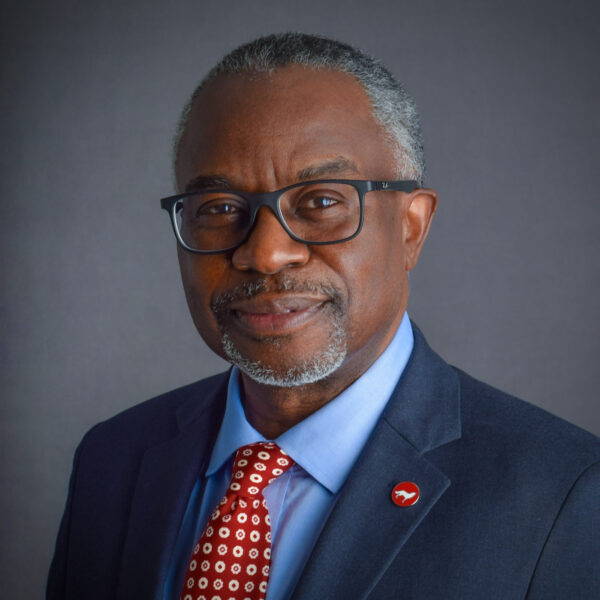
Sarah Billington is the UPS Foundation Professor of Civil and Environmental Engineering at Stanford University and a Senior Fellow at the Woods Institute for the Environment. Her research program focuses on sustainable building design, human wellbeing, and ethical supply chain practices. Education: PhD, University of Texas at Austin, Structural Engineering (1997) MSE, University of Texas at Austin, Structural Engineering (1994) BSE, Princeton University, Civil Engineering & Operations Research (1990) Her lab employs interdisciplinary methods to study how built environments impact human physical, psychological, and social wellbeing. Current projects include developing tools to quantify nature exposure in buildings, exploring affordable housing's role in wellbeing, and using AI to assess forced labor risks in material supply chains. While no longer active in this area, her group previously pioneered research on sustainable construction materials like bio-based composites and ductile cement-based composites. Her recent publications address topics such as nature integration in architecture, workplace design optimization, and health impacts of building materials. The Billington Lab at Stanford fosters collaborative team science, welcoming partnerships to advance occupant-centric engineering solutions.
Nancy M. Wells is a Professor in the Department of Human Centered Design and serves as the Senior Associate Dean for Research and Graduate Education in the College of Human Ecology at Cornell University. Her work bridges environmental psychology and public health, examining how built and natural environments impact human health and behavior across the lifespan. Dr. Wells received a joint PhD in Psychology and Architecture from the University of Michigan and completed National Institute of Mental Health (NIMH) post-doctoral training at the University of California, Irvine. Her educational background uniquely positions her to investigate the intersection of physical environments and human wellbeing through both psychological and architectural lenses. Her research focuses on how environmental contexts—from homes to neighborhoods to schools—affect health outcomes, cognitive functioning, and resilience. A central theme examines nature's role in human resilience, particularly how natural environments buffer against adversity and challenge. She has conducted influential work on school gardens and their effects on children's physical activity, dietary habits, and learning. More recently, she has pioneered research on nature and autism, conducting a randomized controlled trial examining natural environments' effects on autistic youth wellbeing. Analysis of Dr. Wells' recent publications reveals consistent focus on nature's health benefits, with strong emphasis on experimental methodologies including randomized controlled trials and natural experiments. Her work spans environmental psychology, public health, and education, with particular attention to vulnerable populations including low-income communities and children of color. NSF Funding for environmental health research USDA Funding for school garden studies Robert Wood Johnson Foundation Funding MacArthur Foundation Funding Senior Associate Editor of Environment and Behavior (4 years) Research Advisory Board of Children and Nature Network Board of Directors for reDirect Dr. Wells actively mentors undergraduate and graduate students through the Wells Lab, involving them in all research stages from data collection to publication. Her research has been supported by multiple significant grants examining housing quality effects on mental health, neighborhood design impacts on physical activity, and school garden interventions. She leads interdisciplinary research teams that integrate perspectives from environmental psychology, public health, landscape architecture, and education. The Wells Lab operates as an integrated research-teaching-outreach unit that develops practical yet rigorous studies to assess causal relations between environment and health, creates valid measurement tools, and identifies causal pathways. Current projects include examining nature's effects on autistic youth wellbeing in partnership with The Center for Discovery in New York, and investigating multi-sensory design in urban public spaces.
Karin Allor Pfeiffer is a Professor in the Department of Kinesiology at Michigan State University (MSU) and Director of the Institute for the Study of Youth Sports. She holds additional membership in the Center for Physical Activity and Health. With a Ph.D. from MSU, her research focuses on physical activity measurement methodologies and population health interventions, particularly among children and adolescents. Her work addresses obesity prevention, environmental design impacts on activity levels, and sociocultural factors influencing youth sport participation. Education: Ph.D. in Kinesiology from Michigan State University Her research interests emphasize: - Quantitative methods for physical activity assessment - Schoolyard redesign strategies and their health impacts - Cardiometabolic risk factors in pediatric populations - Longitudinal tracking of physical fitness and health outcomes Recent work explores accelerometer fragmentation metrics, GPS-linked activity tracking, and disparities in sedentary behavior across demographic groups. She has pioneered interdisciplinary approaches integrating spatial analysis, wearable technology, and policy evaluation. Key contributions include developing the Observational System for Recording Physical Activity in Children and advancing consensus methods for accelerometer data interpretation. Her studies frequently highlight socioeconomic and environmental determinants of health behaviors. Dr. Pfeiffer collaborates with public health agencies and urban planners to translate research into actionable policies. Her lab focuses on scalable interventions for underserved communities, leveraging community-engaged methods to address greenspace accessibility and safety concerns.
Joydeep Biswas is an Associate Professor in the Computer Science Department at the University of Texas at Austin, where he serves as the Director of the Autonomous Mobile Robotics Laboratory (AMRL). He is also affiliated with Texas Robotics, the UT Machine Learning Laboratory, and UT Good Systems. Previously, he was an Assistant Professor in the College of Information and Computer Sciences at the University of Massachusetts Amherst. Dr. Biswas earned his PhD in Robotics from Carnegie Mellon University in 2014 and his B.Tech in Engineering Physics from the Indian Institute of Technology Bombay in 2008. His educational background has provided him with a strong foundation in both theoretical and applied aspects of robotics and artificial intelligence. Dr. Biswas's research focuses on enabling long-term autonomy for mobile robots operating in human environments. His work spans robot perception, motion planning, control systems, and AI, with the ultimate goal of creating self-sufficient autonomous mobile robots that can perform tasks accurately and robustly in real-world settings. He is particularly interested in perception, planning, and failure recovery for autonomous mobile robots, which supports his vision of having autonomous service mobile robots deployed at campus-to-city scale, both indoors and outdoors, performing assistive tasks over deployments spanning years. His IJCAI 2019 Early Career Spotlight talk summarizes much of his research to date and ongoing interests. His recent research has shown a strong trend toward social navigation, human-robot interaction, and the application of machine learning techniques to robotics problems. There's a clear progression from fundamental robotics research toward more complex, real-world applications that require robots to understand and navigate human social spaces effectively. His work increasingly integrates large language models and other advanced AI techniques with traditional robotics approaches, as evidenced by his recent publications on topics like preference-conditioned navigation, social navigation benchmarks, and instruction-following navigation systems. Dr. Biswas has received numerous prestigious awards including the NSF CAREER Award (2021), J.P. Morgan Faculty Research Award (2019), Amazon Research Award (2019), and a grant from Northrop Grumman Mission Systems (2018). These awards recognize his innovative contributions to the field of robotics and autonomous systems. As a dedicated educator and mentor, Dr. Biswas actively supervises PhD and master's students, with his PhD student Sadegh Rabiee winning the student poster award at the Northrop Grumman University Symposium 2019. He has secured significant grant funding from the National Science Foundation for projects including 'Introspective Perception and Planning for Long-Term Autonomy' and 'Interactive Synthesis and Repair For Robot Programs,' demonstrating his ability to secure competitive research funding and his commitment to advancing the field. Dr. Biswas leads the Autonomous Mobile Robotics Laboratory (AMRL), which serves as a hub for interdisciplinary research in mobile robotics. The lab has developed notable resources such as the UT Campus Object Dataset (CODA) for 3D perception research and SOCIALGYM, a framework for benchmarking social robot navigation. His team regularly deploys robots on the UT Austin campus and in urban environments to test and refine their approaches in realistic settings, bridging the gap between simulation and real-world application.
Dr. James W. Navalta is an Associate Professor in the Department of Kinesiology and Nutrition Sciences at the University of Nevada, Las Vegas. His research focuses on physiological responses to outdoor exercise (hiking, trail running) and the validity/reliability of wearable technology. He earned his B.S. in Physical Education and Biology from Brigham Young University–Hawaii, M.S. in Kinesiology from UNLV, and Ph.D. in Exercise Physiology from Purdue University. Education: B.S. - Physical Education & Biology, Brigham Young University–Hawaii M.S. - Kinesiology, University of Nevada, Las Vegas Ph.D. - Exercise Physiology, Purdue University His research portfolio includes: Wearable technology validation for physiological measurements Comparative studies of indoor vs outdoor exercise environments Impact of gender-inclusive approaches on sports science Metabolic and cardiovascular responses to unconventional workouts Psychological benefits of nature immersion Recent publications demonstrate expertise in: Wearable device accuracy testing VO2max and lactate threshold validation Environmental influence on exercise physiology Methodological improvements in data collection Gender-inclusive research design Outdoor activity impact assessment As co-founder and executive editor of the International Journal of Exercise Science, he contributes significantly to academic discourse. He also serves on editorial boards for journals related to digital health and exercise technology.
Jennifer L. Gay is an Associate Professor in the Department of Health Promotion & Behavior and affiliated with the Institute of Gerontology at the University of Georgia's College of Public Health. Her research focuses on physical activity promotion, environmental health, and community engagement. She leads the PACE Lab, which develops innovative interventions to connect physical activity with environmental stewardship (e.g., the Blue Gym of Georgia project). Dr. Gay's work emphasizes the 24-hour activity cycle framework, analyzing how occupational and leisure-time physical activity impacts health outcomes like body fat percentage. She has collaborated with municipal government worksites and institutions like Piedmont Athens Regional Hospital to advance health equity through volunteer programs and workplace interventions. Recent contributions include a study on isotemporal substitution modeling in occupational activity and presentations at the ACSM Annual Meeting. She mentors students in research and outreach, with advisees contributing to peer-reviewed publications and national conferences. Her lab's interdisciplinary approach integrates public health, environmental science, and communication strategies to foster healthier communities. Current projects aim to quantify the dual health and environmental benefits of activities like litter cleanup combined with physical activity.
Scott E. Crouter is a Professor in the College of Education, Health, and Human Sciences at the University of Tennessee, Knoxville. He serves as director of the Applied Physiology Laboratory and is a Fellow of the American College of Sports Medicine. His research focuses on improving physical activity and energy expenditure measurement using wearable monitors and machine learning algorithms, with applications in youth, adults, and special populations like pregnant individuals and cancer survivors. Education: Postdoctoral in Nutritional Sciences (Cornell, 2005-07), PhD in Exercise Physiology (University of Tennessee, 2005), MS in Cardiac Rehabilitation/Adult Fitness (University of Wisconsin, 2000), BS in Exercise Science (Linfield College, 1998) Dr. Crouter's work spans physical activity assessment , sedentary behavior analysis , and technology validation . He has developed machine learning models for energy expenditure estimation using ActiGraph GT9X and Cosmed K5 devices. His recent studies examine pregnancy hyperglycemia interventions, urban environment impacts on activity patterns, and robotic exercise aids. He has secured significant NIH funding for projects including digital health weight management , pediatric obesity treatment translation , and fall risk factors in the elderly . As associate editor for Medicine and Science in Sports and Exercise and Journal for the Measurement of Physical Behaviors , he contributes to methodological advancement in activity monitoring. Scientific Awards: Fellow, American College of Sports Medicine Editorial Leadership National Physical Activity Plan Alliance Participation CDC/National Collaborative on Childhood Obesity Research Contributions National Academy of Sciences Committee Member Dr. Crouter's student collaborations include works with Natalie Butte on youth compendiums, Allan Opotowsky in cardiac rehabilitation trials, Patrick Hibbing in metabolic equivalent research, and Sara LaMunion in consumer monitor validation. His lab has produced over 100 publications and 15 recent articles focusing on sensor technology and population health.
Bruce Saxman is a Senior Lecturer in Adventure Education at Fort Lewis College, where he coordinates the interdisciplinary Fort Lewis on the Water (FLOW) program. With over two decades of experience in outdoor education, he has held administrative and teaching roles at multiple institutions, developing competency-based training systems and adventure curriculum. Education: M.A. in Recreation Administration, University of Nebraska-Omaha B.S. in Parks, Recreation, and Tourism Management (Resource Management Emphasis) with Anthropology Minor, Clemson University Research Interests focus on outdoor education methodology , adventure program administration , and experiential learning systems . His work explores digital education platforms, risk management protocols, and leadership development frameworks in outdoor settings. Professional Affiliations include the American Institute for Avalanche Research and Education (AIARE), American Canoe Association (ACA), and American Mountain Guides Association (AMGA). His publications address technical training systems, program development, and safety innovations in adventure education.
Dr. Tyler Becker is an Associate Professor in the Department of Food Science and Human Nutrition at Michigan State University’s College of Agriculture & Natural Resources. He serves as the Nutritional Sciences Experiential Learning Coordinator and chairs the undergraduate Nutritional Sciences curriculum committee. PhD, Michigan State University, 2016 MA, Central Michigan University, 2013 BA, Alma College, 2011 His research focuses on cardiovascular disease risk factors in rural populations, pediatric cardiovascular health, sports nutrition, and exercise physiology. He explores health intervention programs and public health epidemiology, with additional interests in nutrition education and curriculum innovation. Dr. Becker’s peer-reviewed articles emphasize nutrition education, dietary supplement curricula, and predictive modeling in animal health. His 2025 outreach publications address practical topics like nutrient timing for athletes and winter physical activity strategies. CANR Excellence in Teaching – Established Teacher Award (2024) He teaches courses including HNF 102 (Dietary Supplements: Evidence vs. Hype), HNF 250 (Contemporary Issues in Human Nutrition), and HNF 485 (Advanced Public Health Nutrition). His affiliations include the MSU Sensory Evaluation Center and the Center for Research on Ingredient Safety.
Dr. Jennifer Falbe is an Associate Professor of Nutrition and Human Development at the University of California, Davis. Her research focuses on programmatic, policy, and environmental interventions to prevent chronic diseases and reduce health disparities. Notably, she led the evaluation of Berkeley’s soda tax, the first of its kind in the U.S., and has examined healthy retail programs, multi-sector community interventions, and the impact of screen time on adolescent health. She employs quantitative and qualitative methods, including randomized controlled trials and observational studies, in clinical and community settings such as schools, childcare centers, and grocery stores. Dr. Falbe holds dual Sc.D. degrees in Nutrition and Epidemiology from Harvard University, as well as an MPH in Public Health Nutrition and a B.A. in Public Health from UC Berkeley. She is actively involved in mentorship, accepting applications from undergraduate and graduate students interested in her lab’s research areas. Key research interests include food policy, obesity prevention, environmental interventions (e.g., checkout policies, warning labels), and the social determinants of health. Her work often addresses disparities in low-income communities and ethnic minority groups. Education: Sc.D., Nutrition & Epidemiology, Harvard University M.P.H., Public Health Nutrition, UC Berkeley B.A., Public Health, UC Berkeley Recent projects include evaluations of sugar-sweetened beverage taxes, healthy checkout policies, and the effects of climate change impact labels on consumer choices. She has also explored retailer perspectives on taxation and the role of environmental factors in dietary behaviors. Dr. Falbe’s grants include a UC Office of the President initiative to assess drinking water and sugar-sweetened beverage availability on UC Davis’ campus. Her lab emphasizes translating research into actionable policy and community-level interventions.
Stephen M. Strader is an Associate Professor of Geography and the Environment at Villanova University, serving as Graduate Program Director. He holds a Ph.D. from Northern Illinois University (2016) and specializes in hazards geography, atmospheric science, and GIS applications. His research focuses on severe weather vulnerability, climate change impacts, and disaster risk reduction, with emphasis on tornado exposure, mobile home safety, and urban sprawl effects. He has led grants addressing tornado sheltering behaviors and severe weather communication, and co-authored over 30 peer-reviewed articles. Strader’s work bridges physical and social sciences to enhance community resilience against natural hazards. Education: Ph.D. & M.S. in Geography (Northern Illinois University), B.S. in Geography (Indiana University) Affiliations: American Meteorological Society, Association of American Geographers Research highlights include the 'Expanding Bull's Eye Effect'—explaining how population growth amplifies disaster risks—and studies on tornado impacts in mobile home communities. He actively engages with media to communicate climate and disaster science, including op-eds in The New York Times and CNN.
Shannon Cromwell serves as an Extension Professor with Utah State University Extension in Sanpete County, specializing in youth development and family studies. Her work spans multiple areas including 4-H youth programs, relationship education, nutrition education, and STEM engagement for families. She is actively involved in community outreach programs that connect schools, families, and communities through evidence-based educational initiatives. Extension Professor, Sanpete County, Utah State University (2011-present) Specializes in Home and Community programs with focus on youth development Coordinates 4-H programs and family relationship education initiatives Dr. Cromwell holds an MA in Human Development and Family Studies from the University of Missouri (2010) with a focus on Family Studies, and a BS in Family Studies and Human Services from Kansas State University (2000). She has also completed numerous professional certifications including Youth Mental Health First Aid (2019), Infant & Child CPR and First Aid (2018), and Master Food Preserver Certification (2011). Her research interests center on youth development through 4-H programs, strengthening interpersonal relationships, and integrating STEM education into family engagement activities. She has developed numerous curricula focused on social-emotional learning, healthy living, and family relationship education. Her work emphasizes practical applications that address community needs, particularly in rural settings, with a focus on improving protective factors among youth and strengthening family bonds through educational interventions. Analysis of her recent publications reveals a strong emphasis on social-emotional learning in afterschool settings, innovative approaches to family engagement in STEM education, and creative methods for strengthening family relationships. Her work consistently bridges research and practice, developing accessible educational materials that address contemporary challenges in youth development and family education. The Hidden Gems series represents a significant contribution to family education, offering practical activities that promote communication and bonding. Excellence in Afterschool Programming, Western Region Winner (2024) Faculty of the Year, Utah Association of Extension 4-H Youth Development Professionals (2023) Mid-Career Service Award (2022, 2023) Jim Kahler Excellence in Science, Technology, Engineering, and Mathematics (2021) Communications Award for Live Well Utah Blog (2016) Dr. Cromwell has received consistent recognition for her innovative programming and community impact, particularly in the areas of youth development and family education. Her work with the Hidden Gems curriculum and STEM family engagement initiatives has been particularly noted for its creativity and effectiveness. She has secured funding for various extension programs focused on youth development, relationship education, and nutrition education, with a strong emphasis on reaching rural communities through accessible, evidence-based approaches. She coordinates the Sanpete County 4-H programs and has developed several notable initiatives including the Hidden Gems Adventure Guides series, Family STEM Nights, and the Food Sense Nutrition Education Program. Her work often involves collaboration with local schools, community organizations, and other extension professionals to create comprehensive programs that address multiple aspects of youth and family well-being.
Dr. Myron F. Floyd is Dean of the College of Natural Resources at NC State University. With over 35 years of academic experience, he has held faculty roles at Clemson University, Texas A&M University, and the University of Florida before joining NC State in 2005 as a Professor in the Department of Parks, Recreation and Tourism Management. PhD in Recreation and Resources Development, Texas A&M University MS in Parks, Recreation and Tourism Management, Clemson University MS in Recreation and Park Administration, Clemson University BS in Recreation and Park Administration, Clemson University His research focuses on the intersection of race/ethnicity with leisure behavior, examining how urban green spaces can mitigate health disparities and promote physical activity in marginalized communities. He has pioneered studies on environmental justice, conservation behavior, and crowdsourcing data for health research. Key grants include $1.5M from DHHS for obesity prevention in NC counties, $435K from Robert Wood Johnson Foundation for park-based physical activity studies, and multiple USDA Forest Service/NPS-funded projects. He co-authored the seminal book Race, Ethnicity, and Leisure and has produced 95+ peer-reviewed articles. Elected Fellow: Academy of Leisure Sciences (2005), American Academy for Park and Recreation Administration (2019) Theodore and Franklin Roosevelt Award (2008) Leadership for a Diverse Campus Workshop Series (2014) Dr. Floyd has served on national advisory councils including USDA's Forestry Research Advisory Council (2014-2017) and NC Institute of Medicine's Healthy NC 2030 Taskforce. His work bridges public health, natural resource management, and social equity through interdisciplinary research.
Merrill R. Landers serves as Interim Dean and Professor in the Department of Integrated Health Sciences at the University of Nevada, Las Vegas, holding the Cyrus Chung Ying Tang Foundation Research Professorship. He has chaired the physical therapy program since 2011 and maintains active clinical licensure as a physical therapist. His academic credentials include: Ph.D. in Biological Sciences (Integrative Physiology) from UNLV (2012) with cognates in neurobiology and statistics DPT from Creighton University (1997) B.S. in Exercise Science from Brigham Young University (1993) with minor in Scandinavian Studies Dr. Landers' research program centers on Parkinson's disease and mild cognitive impairment, specifically investigating balance impairment mechanisms, fear of falling avoidance behaviors, and neuroprotective effects of exercise. His work bridges neuroscience and rehabilitation through innovative approaches like transcranial direct current stimulation for motor priming. Current projects examine the relationship between psychological factors and mobility limitations, with emphasis on clinical translation. Analysis of his 15 most recent publications (2023-2025) reveals dominant themes in Parkinson's disease research, particularly gait analysis, dual-task performance, and psychological contributors to mobility impairment. His work increasingly incorporates cross-cultural adaptations of assessment tools and explores novel interventions including cannabis effects and nature-based mindfulness. A significant portion focuses on fear of falling avoidance behavior measurement and intervention across diverse populations. His scholarly recognition includes: Credentialed Fellowship Graduate of the APTA Education Leadership Institute Cyrus Chung Ying Tang Foundation Research Professorship As an educator, Dr. Landers teaches advanced courses including Neurophysiology (DPT 756), Genomics and Regenerative Rehabilitation (DPT 713), and Clinical Trial Design (HSC 705). His leadership as Interim Dean and department chair demonstrates commitment to advancing health sciences education while maintaining active research productivity through clinical trials and collaborative neuroscience investigations.
Kreshnik Begolli serves as a Research Scientist at the University of California, Irvine's School of Education, where he investigates cognitive and socioemotional mechanisms in mathematics learning through innovative playful interventions. His work bridges laboratory-based cognitive science with real-world educational settings, focusing on translating theoretical insights into practical classroom and outdoor applications. Begolli earned his Ph.D. in Education from UC Irvine in 2015 with a specialization in Learning, Cognition, and Development, followed by postdoctoral training at Temple University's Institute of Education Sciences (2015-2017). His research program examines two interconnected strands: (1) how children develop higher-order thinking skills through analogical reasoning and spatial cognition, and (2) how to improve teaching practices using ecologically valid methodologies. Key projects include Fraction Ball (transforming basketball courts into fraction-learning environments) and Parkopolis (a board game fostering STEM skills through play), which integrate physical activity with mathematical reasoning. Analysis of his 15 most recent publications reveals consistent focus on playful learning landscapes that merge cognitive science with educational practice. His work increasingly emphasizes global applicability, with recent studies examining interventions in low- and middle-income countries and non-WEIRD populations. Methodologically, he combines experimental designs with implementation research to address scalability challenges while maintaining scientific rigor in complex learning environments. Begolli's collaborative approach spans multiple institutions, working with prominent researchers including Lindsey Richland (UCI), Kathy Hirsh-Pasek (Temple University), and Nora Newcombe (Temple University). His projects often secure external funding for developing and testing interventions that transform everyday spaces into learning opportunities, though specific grant details aren't documented in the provided materials. Current work focuses on refining assessment tools for playful learning and addressing implementation barriers identified through teacher partnerships. Through the Center for Research on Teacher Development and Professional Practice, Begolli contributes to initiatives connecting research with practice, particularly through UCI's educational outreach projects like the California Reading & Literature Project and UCI Math Project. His leadership in designing outdoor learning environments demonstrates commitment to making high-quality STEM education accessible beyond traditional classroom walls.