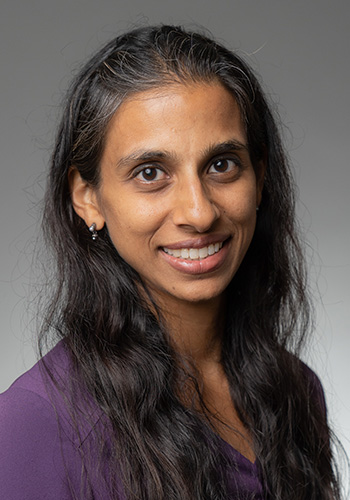
Deepa Ramachandran is an Instructional Assistant Professor in the Department of Electrical and Computer Engineering at the University of Houston's Cullen College of Engineering. Her research focuses on computational modeling of biological systems, with notable contributions to cardiovascular modeling and MEMS-enabled RF circuit design. She holds a Ph.D. in Electrical and Computer Engineering from Rice University. Education: Ph.D., Electrical and Computer Engineering, Rice University Research Interests: Dr. Ramachandran specializes in interdisciplinary biomedical engineering, developing computational models to study ventricular mechanics in heart disease and treatment interactions. Her work also extends to reconfigurable RF circuits using MEMS technology for applications in spectrum sensing and wireless communication. Publications Overview: Her research spans 2003–2011, with key contributions in cardiovascular modeling (e.g., cardiac tamponade characterization, rotary blood pump interactions) and MEMS-based RF systems (e.g., frequency-hopping filters, low-power VCO designs). These studies bridge biomedical and electrical engineering domains, emphasizing clinical applications and adaptive electronics. Affiliations & Contact: Office: KAB1 307E Email: dpr2@uh.edu
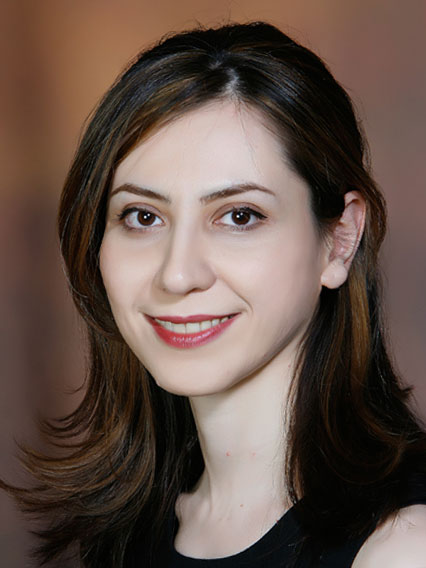
Mahshid Amirabadi is an Associate Professor in the Department of Electrical and Computer Engineering at Northeastern University. Her research focuses on power electronics for renewable energy systems, microgrids, variable speed drives, and wireless power transfer. She holds a PhD from Texas A&M University and has held academic positions at the University of Illinois at Chicago and Northeastern University since 2013. Education PhD, Electrical Engineering (Power-Power Electronics), Texas A&M University (2013) MS, Electrical Engineering (Power-Power Electronics), University of Tehran (2006) BS, Electrical Engineering (Electronics), Shahid Beheshti University (2002) Research Interests Dr. Amirabadi’s work centers on designing efficient and reliable power converters, particularly for renewable energy integration and high-frequency applications. She develops universal converters to streamline energy conversion processes across various systems. Key Awards NSF CAREER Award (2021) IEEE Transactions on Power Electronics Best Paper Awards (2020, 2021) Best Paper at IEEE ECCE (2016) Grants & Advising She leads NSF-funded research on universal SiC-based converters and has secured grants from the Office of Naval Research and ARPA-E. Her advisees include PhD students Ehsan Afshari and M. Khodabandeh, contributing to impactful publications in top journals. Labs & Teams Her lab focuses on advanced converter topologies and their applications in renewable energy systems, collaborating on projects like ARPA-E’s universal power converter initiatives.
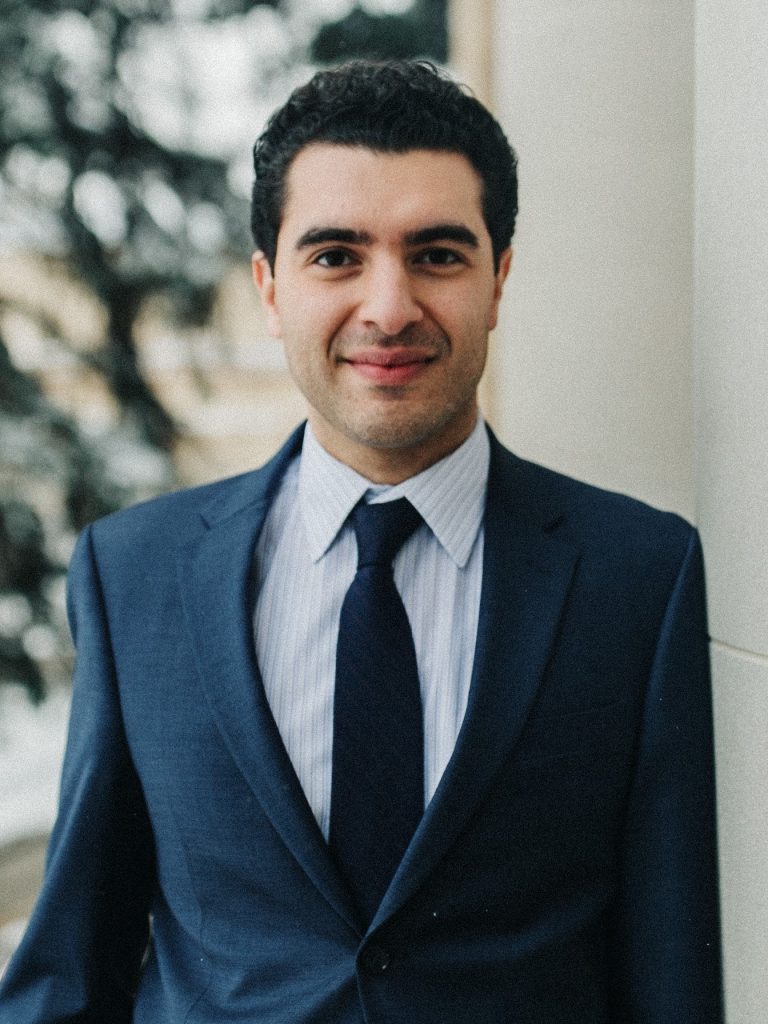
Dr. Soheil Fatehiboroujeni is an Assistant Professor in the Department of Mechanical Engineering at Colorado State University (CSU), part of the Walter Scott, Jr. College of Engineering. He holds a Ph.D. in Mechanical Engineering from the University of California, Merced (2018), with postdoctoral research at Cornell University and Purdue University focusing on engineering education and nonlinear dynamics. His roles include teaching core courses like Dynamics of Machines, Machine Design, and Mechatronics, while promoting student-centered learning and computational tools in education. Education: Ph.D. (2018) UC Merced, M.S. (2016) UC Merced, B.S. (2012) Sharif University Postdoctoral Experience: Cornell (2020–2021), Purdue (2018–2020) Research interests span engineering education (expertise acquisition, design philosophy), computational dynamics (nonlinear systems, active filaments), and biomimetic applications. His work emphasizes student retention, pedagogy innovation, and interdisciplinary design. Notable publications explore bio-inspired design strategies and fluid mechanics education. Dr. Fatehiboroujeni has received awards including the Professor Ali H. Nayfeh Award (2019) and Carol Tomlinson-Keasey Leadership Award (2018). He actively mentors senior design teams, honors students, and advises interdisciplinary projects like prosthetic arm design and water supply systems in Bolivia. Service includes roles as CSU Mechanical Engineering Department representative on faculty council, DE&I committee leadership, and ASEE division chair. His outreach focuses on K-12 STEM education and community engineering projects through programs like Engineers Without Borders.
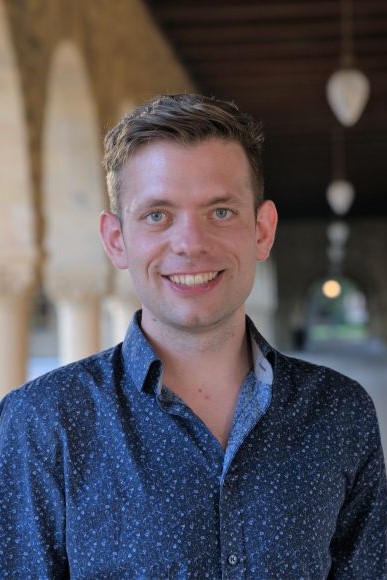
Dr. Alexander Zhigalov is a Lecturer in Biomedical Engineering at Aston University's School of Engineering and Technology within the College of Engineering and Physical Sciences. He specializes in neuroimaging techniques such as MEG/EEG and applies machine learning to analyze brain activity in cognitive tasks. His research focuses on understanding neural mechanisms of attention, developing neuromodulation techniques, and creating clinical biomarkers for diagnostics. Education: PhD in Human Neuroscience (Moscow State University, Russia) MSc in Telecommunication Engineering (Vyatka State University, Russia) Research Interests: Brain-computer interfaces, neuroimaging signal processing, computational modeling of neural dynamics, and translational applications in clinical settings. His work bridges fundamental neuroscience with practical tools for mental health and neurorehabilitation. Research Trends: His articles emphasize MEG/EEG-based studies of attentional processing, cortical excitability, and functional connectivity. Recent work explores perceptual echoes, distractor suppression mechanisms, and brain-computer interface innovations using frequency tagging techniques. Advising & Grants: Currently accepting PhD students. His career includes roles as Research Fellow at the University of Birmingham and Postdoctoral Researcher at the University of Helsinki's Neuroscience Centre and Department of Computer Science. Labs/Teams: Active in the Centre for Human Brain Health (University of Birmingham) and collaborates across disciplines in systems modeling and quantitative biomedicine.
John Volker is a Research Fellow at the Weierstrass Institute for Applied Analysis and Stochastics (WIAS), specializing in numerical analysis and computational fluid dynamics. His work focuses on developing and analyzing finite element methods, stabilization techniques for convection-dominated flows, and applications in fluid mechanics. He has contributed to advancing PINN-based methods, pressure-robust discretizations, and optimal control strategies for industrial and biomedical fluid dynamics problems. Key research areas include: numerical methods for PDEs (convection-diffusion, Navier-Stokes), turbulence modeling, and high-resolution schemes for discontinuous Galerkin methods. His studies often address spurious oscillations, error analysis, and the integration of machine learning in numerical simulations. Notable projects include investigations into blood flow simulations, liquid steel stirring optimization, and the impact of viscosity modeling in biomedical contexts. His research bridges theoretical analysis with practical applications, contributing to both algorithm development and real-world engineering challenges.
Christian Heide is an Assistant Professor in the Department of Physics at the University of Central Florida (UCF), with a joint appointment in the College of Optics & Photonics (CREOL) starting January 2025. Previously, he was a Feodor Lynen Fellow at Stanford University, working with Professors Tony Heinz, David Reis, and Shambhu Ghimire after earning his PhD in Physics from Friedrich-Alexander University Erlangen-Nuremberg, Germany, in 2020. His research focuses on ultrafast lightwave electronics, coherent control of solid-state systems, and advanced spectroscopic techniques to uncover novel quantum phenomena. Key areas include attosecond to femtosecond timescale dynamics, Floquet engineering, and quantum-optics interfaces. The LESL Group, led by Heide, develops cutting-edge laser-based methods like sub-cycle lightwave quantum spectroscopy and ultrafast current generation. Honors include the Alexander von Humboldt Foundation's prestigious Feodor Lynen Fellowship. He advises graduate students in Optics PhD programs and mentors undergraduate researchers. The group's interdisciplinary work bridges physics, materials science, and computer science, aiming to advance quantum electronics and energy harvesting technologies. Research directions include Ultrafast Lightwave Electronics & Photonics, Lightwave Quantum Spectroscopy, and Floquet Engineering. The team emphasizes innovation in laser engineering, nanostructure design, and quantum control, fostering a diverse and collaborative environment.
Jingbo Wang is an Assistant Professor of Physics at the South Dakota School of Mines & Technology (SDSMT). His research focuses on precision measurements of neutrino properties to explore physics beyond the Standard Model. He is actively involved in experiments like the Deep Underground Neutrino Experiment (DUNE) and the Accelerator Neutrino-Neutron Interaction Experiment (ANNIE), leveraging Liquid Argon Time Projection Chambers (LArTPCs) and gadolinium-loaded water detectors. His work addresses neutrino oscillation parameters, mass ordering, and CP violation. Wang holds a B.S. and Ph.D. in Physics from Tsinghua University. Prior to SDSMT, he held roles including Assistant Project Scientist at UC Davis, Intensity Frontier Fellow at Fermilab, and Postdoctoral positions at UC Davis and Argonne National Laboratory. His research emphasizes experimental neutrino physics with a focus on detector technology advancements. Key areas include optimizing LArTPC performance, analyzing neutron interactions, and developing machine learning techniques for event reconstruction. He contributes to international collaborations like DUNE, which aims to revolutionize our understanding of neutrino behavior and the universe's matter-antimatter imbalance. Wang’s technical expertise spans neutrino detection systems, scintillation light analysis, and GPU-accelerated simulations. His recent work addresses challenges in low-energy physics, neutron cross-section measurements, and background mitigation strategies critical to next-generation neutrino experiments.
Carl Franck is an Associate Professor of Physics at Cornell University, affiliated with the College of Arts and Sciences. He has maintained a continuous faculty position since 1982, progressing from Assistant Professor (1982-1988) to Associate Professor (1988-present), with a Visiting Professorship at the University of Bristol in 1991. His research bridges experimental physics and biological systems, employing quantitative approaches to complex phenomena. Dr. Franck's academic foundation includes: A.B. from Harvard College (1974) Ph.D. from Princeton University (1978) His research program focuses on biological physics and experimental condensed matter physics. Dr. Franck's group has pioneered the application of x-ray techniques to study photon-electron interactions and correlated electron dynamics, while simultaneously exploring microbial collective behavior—particularly Dictyostelium discoideum's transition from unicellular to multicellular life. His laboratory employs microfluidic technology, light scattering experiments, and advanced microscopy to quantify cellular signaling processes and population dynamics. The group has developed innovative automated cell counting systems and specialized equipment for measuring cell growth kinetics, contributing significantly to understanding how cells process information through chemical signaling. Dr. Franck's publication record shows consistent output across two major research domains, with recent work (2020-2022) continuing to advance both x-ray physics and microbial behavior studies. His research demonstrates a distinctive pattern of maintaining parallel investigations in condensed matter and biological physics while identifying common principles of collective behavior across different scales. His scientific contributions have been recognized through membership in the American Physical Society: Member, American Physical Society Dr. Franck has mentored an extensive network of students across multiple generations, currently advising Christopher Donohue, Rowan Hess, Yasmine Meziani, Gwendolyn Parks, and Daren Chen. His former students include Igor Segota, Elijah Bogart, Kayvon Daie, Albert Bae, and numerous undergraduate researchers who have contributed to his work on microbial signaling and condensed matter systems. His mentoring approach emphasizes interdisciplinary collaboration and the development of novel experimental techniques. The Franck Group operates at the physics-biology-engineering interface, maintaining specialized facilities for light scattering experiments and microfluidic research. The laboratory has developed unique methodologies for measuring cell population dynamics at low densities using laser-based detection systems, and continues to explore the quantitative bases of communication and computation in living matter through both experimental and theoretical approaches.
Prof. Nicolas Noiray is an Associate Professor and Deputy Head of the Institute of Energy and Process Engineering at ETH Zürich, where he leads the Combustion, Acoustics & Flow Physics (CAPS) Laboratory established in 2014. His research focuses on combustion, acoustics, and fluid mechanics, addressing both fundamental and applied challenges. He holds a Ph.D. from École Centrale Paris (2007) and previously worked at Alstom’s Gas Turbine Research Division. Key achievements include pioneering work on thermoacoustic instability control, hydrogen combustion systems, and plasma-assisted stabilization. He has received prestigious awards such as the Silver Medal from the International Combustion Institute and ERC grants. His academic affiliations include the Department of Mechanical and Process Engineering at ETH Zürich, with a focus on interdisciplinary research at the intersection of energy systems and fluid dynamics. His lab investigates topics like flame dynamics, aeroacoustic feedback, and novel combustor designs to enhance efficiency and reduce emissions. Research interests span combustion instabilities, acoustic wave control, and sustainable energy technologies. Recent work includes studies on hydrogen-powered combustors, nonlinear dynamics of flames, and metamaterial-based solutions for noise reduction. He has contributed to advancing computational models for large-eddy simulations and real-time digital twins for combustion systems. Notable awards include the Hiroshi Tsuji Early Career Award and ERC Consolidator/Synergy Grants, reflecting his impactful contributions to combustion science. His research bridges theoretical insights with industrial applications, particularly in aerospace and power generation sectors.
Dr. Hui Ma is a Senior Lecturer in Power & Energy Systems at the University of Queensland, affiliated with the School of Electrical Engineering and Computer Science. His expertise spans Electrical Asset Management, Power Systems, and High Voltage Engineering. He holds a PhD from the University of Adelaide and has been at UQ since 2008. Education: B.Eng and M.Eng from Xi'an Jiaotong University; M.Eng (Research) from Nanyang Technological University; PhD from the University of Adelaide. Research focuses on improving electricity network visibility through modeling, sensing, and signal processing, alongside data mining for renewable-integrated grids. Key areas include transformer condition monitoring, insulation diagnostics, and smart grid technologies. He edits IEEE Transactions on Power Delivery and participates in IEEE Smart Grid initiatives. Recent work addresses PV forecasting, low-frequency grid instability, and transformer aging analysis. His publications emphasize machine learning applications in energy systems and fault diagnosis. Collaborations involve Australian utilities and industry partners.
Dr. Feifei Bai is a Senior Lecturer at the School of Electrical Engineering and Computer Science, University of Queensland (UQ), and an adjunct Senior Research Fellow at Griffith University. She holds an Advance Queensland Fellowship (2018) and has secured over $4.6M in research grants. Her research focuses on renewable energy integration, power system stability, and smart grid technologies. She collaborates with industry partners like Energy Queensland and Powerlink, and her work has led to commercialized patents and an Australian Engineering Excellence Award (2020). Education: PhD in Engineering from Southwest Jiaotong University. Active editorial roles include Associate Editor for IET Generation, Transmission & Distribution and Assistant Editor for International Journal of Green Energy. Research Interests: Renewable energy systems, synchrophasor applications, power system oscillation control, and cybersecurity. Her work bridges theoretical advancements with practical industry solutions, emphasizing grid resilience and efficient energy management. Publications: Over 75 journal/conference papers (2025 highlights include EV charging optimization, microgrid scheduling, and Bayesian frequency modeling). Her research trends emphasize smart grid innovation, renewable integration challenges, and advanced control strategies for high-renewable grids. Awards: Advance Queensland Fellow (2018), Australian Engineering Excellence Award (2020). Grants & Industry: $4.6M in funded projects. ARENA-backed research on EV charging infrastructure received national recognition. Active in industry partnerships for technology deployment. Labs/Teams: Leads the Power & Energy Systems Research Group at UQ, contributing to initiatives like the Flexible Urban Energy Systems special issue (2021).
Natalia Ares is an Associate Professor in the Materials Department at the University of Oxford and a Tutorial Fellow at New College. She holds a Royal Society University Research Fellowship and joined Oxford in 2013. Her research focuses on advancing quantum technologies through machine learning for device control and quantum thermodynamics. Education: PhD in quantum computing (silicon-based devices) from CEA Grenoble, France Undergraduate and Master's in Physics with specialization in quantum chaos theory from University of Buenos Aires, Argentina Research Focus: Dr. Ares develops machine learning algorithms to control quantum circuits in real-time, addressing device variability challenges. Her group explores quantum thermodynamics at nanoscales, fabricating devices cooled to millikelvin temperatures to study information-thermodynamics relationships, aiming to build autonomous quantum machines like quantum engines and learning circuits. Current projects include machine learning for quantum control and thermodynamics of quantum information processing. Publication Trends (2024-2025): Recent works demonstrate strong integration of machine learning with quantum physics, focusing on quantum-dot systems, thermodynamic costs of quantum operations, symplectic learning frameworks, and high-fidelity qubit control. Publications consistently bridge theoretical quantum physics with practical engineering solutions. Awards and Recognition: Marie Skłodowska-Curie Fellowship Royal Society University Research Fellowship European Research Council Starting Grant (2020) Research Leadership: Leads the Machine Learning research group developing algorithms for quantum control. Manages experimental labs fabricating nanoscale quantum devices operating at cryogenic temperatures. Secured significant funding including ERC Starting Grant for quantum thermodynamics research.
Dr. Yoshishige Tsuchiya is an Associate Professor at the University of Southampton, specializing in nanoelectromechanical systems, quantum dots, and silicon-based nanotechnology. His research focuses on energy-efficient computing, MEMS/NEMS-Photonics integration, and spintronics, with active involvement in EPSRC-funded projects such as NOEMIA and quantum technology engineering initiatives. He leads or collaborates on projects like 'Nano-Opto-Electro-Mechanical Integrated Oscillator Arrays' and 'Sensor-integrated Nano-opto-electro-mechanical resonator arrays'. His work bridges fundamental physics with engineering applications, emphasizing nonlinear resonance analysis, spin transport in silicon devices, and high-frequency nanoelectromechanical systems. Research Groups: Smart Electronic Materials and Systems Current Students: Supervising 6 PhD candidates in Electronic Engineering and Quantum Technology. Key Projects: EPSRC CDT in Quantum Technology Engineering, Heterogeneous Material Integrated MEMS/NEMS-Photonics Platform. Publications span topics like NEMS resonance modeling, quantum dot stability, and spintronic sensing, with contributions to journals like Micro and Nano Engineering and Nanotechnology .
Professor Viktor Fedun is a faculty member at the University of Sheffield's School of Electrical and Electronic Engineering, holding the position of Professor in Space Science. He leads the Dynamical Systems and Systems Engineering theme and coordinates student-led projects. His academic journey includes a PhD in Heliophysics from the National Taras Shevchenko University (1998), followed by research roles in Ukraine before joining the University of Sheffield in 2005 as a STFC-funded researcher. Education: B.Sc. (1994, National Taras Shevchenko University), PhD (1998, same institution). Research Focus: MHD wave theory, plasma dynamics, solar vortex structures, ionospheric perturbations, and energy transport mechanisms. Leadership: Theme Lead for Dynamical Systems, coordinating interdisciplinary projects. Research interests span solar and space plasma physics, with a focus on magnetohydrodynamic wave propagation, vortex dynamics, and plasma instabilities. His work includes numerical modeling of solar atmospheric phenomena using high-performance computing (HPC) and GPU-based simulations. Publications highlight studies on solar vortex tubes, Poynting flux dynamics, and magnetic flux tube interactions. Collaborations include international projects like the Plasma Dynamics Group and contributions to missions such as ESA’s Solar Orbiter and DKIST. He has secured grants totaling over £500k, focusing on solar magnetism, vortex networks, and space weather. Teaching and outreach roles include supervising student projects (e.g., SUNbYte solar telescope initiative) and promoting space education through rocketry and balloon-based experiments. Professional activities include memberships in solar physics societies and editorial roles in journals.
David Bishop, PhD, is a Professor in the Department of Electrical and Computer Engineering at Boston University's College of Engineering. He holds leadership roles as Head of the Division of Materials Science & Engineering and Director of the CELL-MET Engineering Research Center. His expertise spans MEMS/NEMS, Casimir Effect, superconductivity, nanomanufacturing, and cardiac tissue engineering. Bishop leads interdisciplinary initiatives in quantum interconnects, cardiac microtissue engineering, and atomic-scale fabrication techniques like 'Atomic Calligraphy.' Education: PhD in Physics from Cornell University (1978). Additional affiliations include the Departments of Physics, Mechanical Engineering, Biomedical Engineering, and the Photonics Center. Research focuses on advanced materials, nanoscale sensing, and biomedical applications of MEMS. Research Interests: MEMS/NEMS device development Casimir force metrology Superconducting quantum circuits 3D cardiac tissue engineering Nanofabrication techniques Feedforward control algorithms Awards: Fellow, National Academy of Inventors Member, US National Academy of Engineering Fellow, American Physical Society George E. Pake Prize Nano50 Innovator Award Bell Labs Fellow & Gold President Award Advancing quantum computing through liquid metal interconnects and pioneering cardiac microtissue platforms with integrated mechanical stimulation. Active in federally-funded engineering research centers and cross-disciplinary collaborations. Labs include the CELL-MET ERC and advanced nanofabrication facilities.