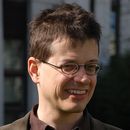
Dr. Sebastian Rimestad is a Research Fellow at the Institute for the Study of Religions , University of Leipzig. His work focuses on Orthodox Christianity, religious history of Eastern and Northern Europe, religious conversion, religion and politics in modern societies, and religious minorities in Europe. Current affiliation: University of Leipzig Education: Habilitation (2019), PhD (2011), MA in Religious Studies (2007) and Politics & IR (2004) Research interests include confessional identity formation in 18th-century Poland-Lithuania, religious conversion as political statement, and Russian Orthodox concepts of secularity. His work analyzes how religious identities have been shaped by external authorities and critiques of religious modernity. His scientific awards include the DFG Heisenberg Fellowship and Liselotte Kirchner Scholarship. He has taught courses on religious conversion and published extensively on Orthodox Christianity in Eastern Europe, Baltic states, and global contexts.
Stefan Rohdewald is a Professor of East and Southeast European History at the University of Leipzig since 2020. His research focuses on the historical entanglements between Eastern Europe and the Middle East, emphasizing transconfessionalism, urban history, and memory discourses. Education: Studied and completed his doctorate at the University of Zurich (2004), habilitation at Passau (2005–2012). Affiliations: Past professor at Giessen (2013–2020), research associate in Passau (2003–2012), and Max Planck scholarship for doctoral research. Research interests span Transottoman studies, examining mobility dynamics between Eastern Europe, the Ottoman Empire, and Persia. He leads the DFG priority program Transottomanica (2017–2023) and contributes to decolonial and transimperial frameworks in Ukrainian history. Recent publications include analyses of geopolitical imaginaries, edited handbooks on the Black Sea region, and studies on Ottoman-Europe knowledge exchange. His work critiques national historiographies and explores multiculturality in Habsburg Bosnia-Herzegovina.
Rhenish Friedrich Wilhelm University of BonnGermany
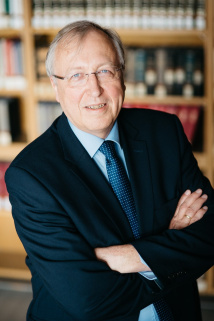
Christoph Witzenrath is a Professor for Premodern Slavery and Strong Asymmetrical Dependencies at the University of Bonn's Bonn Center for Dependency and Slavery Studies (BCDSS). His research spans Eurasian history, focusing on nomadic-settled relations, slave trade, and state-dependent group dynamics. Education: Ph.D. in History, King’s College, University of London (1999–2005) M.A. in History and Political Science, University of Freiburg, Humboldt University, and Free University Berlin (1991–1998) Witzenrath's work interrogates the structural gaps between premodern states and dependent populations, comparing Eurasian systems to community-oriented African models. His transdisciplinary approach integrates legal, cultural, and political frameworks, emphasizing liberation narratives and asymmetrical dependencies. Key article themes include Muscovite-Ottoman interactions, Siberian expansion, and transcultural legitimacy. His award-winning monograph Cossacks and the Russian Empire (2009) explores frontier governance and rebellion dynamics. Scientific Awards & Funding: DFG Priority Program funding (2017–2020) King’s College London research studentship (1998–2001) Leverhulme Early Career Fellowship (2007–2009) Shklar Fellowship at Harvard (2010) He has supervised 40 national/international lectures and mentored researchers like Turkana Allahverdiyeva and Stanislav Mohylnyi. As founding member of the Transottomanica project (2017–2020), he advanced mobility studies across Eurasia.
Rhenish Friedrich Wilhelm University of BonnGermany
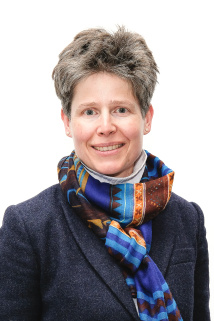
Dr. Vitali Byl is a Postdoctoral Researcher at the Bonn Center for Dependency and Slavery Studies (BCDSS), funded by a DFG Research Grant. Previously, he held part-time research roles at the University of Greifswald, including coordinating the Virtual University of the Baltic Sea Region and contributing to DAAD-funded projects on spatial data analysis and Belarusian forest sustainability. He earned his PhD from the University of Greifswald's IRTG 1540 program in 2021 with a thesis on witch trials in the Grand Duchy of Lithuania. His academic career includes roles at Belarusian National Museums and fellowships from the Polish Government and New Europe College. His research focuses on early modern history, particularly race, slavery, and witchcraft in Eastern European contexts. Current projects explore African communities in the Polish-Lithuanian Commonwealth and the intersections of proto-globalization, racial ideologies, and forced labor systems. His work bridges legal history, cultural studies, and transnational networks. Awards include the Konstanty Kalinowski Scholarship (2019–2020) and a Pontica Magna Fellowship (2018–2019). His publications span academic monographs, peer-reviewed articles on witch trials and ethnic minorities, translations of historical sources, and popular works on Belarusian heritage. He has contributed to documentaries, including consulting on Holocaust resistance films and producing cultural heritage films about Niasvizh.
Dr. Martin Illert serves as an Adjunct Professor (Apl. Prof.) at the Martin Luther University Halle-Wittenberg's Faculty of Theology, specifically within the Seminar for Eastern Church Studies. His academic journey includes a Doctorate (1997) and Habilitation (2015) in Eastern Church Studies, focusing on theological dialogues between the Evangelical Church in Germany (EKD) and Orthodox Patriarchates since 1959. He has held teaching positions since 2014 and became a Privatdozent in 2016. Additionally, he was appointed an Adjunct Professor at the Lviv Theological Academy in 2016. Current roles include Programme Executive for the Faith and Order Commission at the World Council of Churches (Geneva) and teaching at the Ecumenical Institute Bossey since August 2024. Prior roles include leadership at the EKD's Department for Orthodoxy and Ecumenism (2012–2019) and editorial work for the Ecumenical Review (2014–2019). Research interests encompass Eastern Christian theology, ecumenical dialogues, patristics, and church history with a focus on Balkan and Slavic religious contexts. Major works include studies on John Chrysostom, Bogomilism, and bilateral Orthodox-Protestant dialogues. His awards include the Priest’s Cross from the Ethiopian and Serbian Orthodox Churches (2016), the Gold Medal from Yerevan State University (2017), and the Ehrenplakette from Arad University (2023). He has contributed to academic projects like the "Bogomilism in History and the Present" initiative funded by Bulgaria's Ministry of Education. Publications span monographs, edited volumes, and over 100 articles in journals like ThLZ , Eastern Church Studies , and Revista Teologia . Key projects include co-editing the Eastern Church Identities series and serving on editorial boards for theological journals.
Sylvie Avakian is a Lecturer in Systematic Theology at the Faculty of Protestant Theology, University of Tübingen , since April 2019. She was ordained to the pastoral ministry in the Evangelical Church of Württemberg in 2021 and completed her habilitation at Tübingen University (2018-19) with the thesis Being Toward Death: Heidegger and the Orthodox Theology of the East . Her academic journey includes a Doctorate in Theology (2011) from Heidelberg University, a Master in Theology (2007), and a Bachelor in Theology and Christian Education (1998) from the Near East School of Theology (NEST), Beirut. Education: Doctorate (2011), University of Heidelberg Master (2007), Near East School of Theology Bachelor (1998), Near East School of Theology Her research focuses on Systematic Theology, Interreligious Dialogue, Eastern Orthodox Thought, Intercultural Theology, Secular Christianity, and Post-structuralism , with a particular interest in Christian-Muslim Dialogue and the Philosophy of Christian Education . Her recent publications explore themes like Heidegger’s existential philosophy in relation to Orthodox theology, divine hospitality , and theology of the Other in Middle Eastern contexts. She has taught courses ranging from Introduction to Systematic Theology to Eastern Orthodox Theology and Spirituality , reflecting her interdisciplinary approach. Key scientific recognitions include the Teach@Tübingen scholarship (2018-19) under Tübingen’s Excellence Strategy and the Bread for the World scholarship (2011) during her dissertation work. Her sermons and lectures (e.g., The Spirit of God: The Love That Burns Within Us , 2025) demonstrate her engagement with practical theology and spiritual reflection.
Hans-Peter Großhans is a Professor of Systematic Theology (with Philosophy of Religion and Ecumenical Theology) at the University of Münster's Faculty for Protestant Theology. He has served as Dean (2016–2020) and Vice Dean (2014–2016) of the faculty. His academic journey includes a Habilitation (2002) and Promotion (1995) from the University of Tübingen, alongside studies at Oxford. He holds honorary professorships at Zhejiang University and lectures internationally. Research focuses on Systematic Theology, Philosophy of Religion, Ecumenical Theology, and Global Protestantism. Key projects include leading the Cluster of Excellence's 'Religion and Politics' and initiatives on Orthodox Christianity in Southeast Europe and religious pluralism in Indonesia. He edits Theologische Rundschau and serves on international boards like the European Academy of Religion (Vice-President) and the International Academy of the Philosophy of Science. Teaching spans Dogmatics, Ecumenical Theology, and Philosophy of Religion, with recent courses on Ekklesiologie, Soteriology, and Jüngel's theology. His publications include monographs on theology and science, edited volumes on religious diversity, and over 60 articles in theology and philosophy. Advising includes 13 doctoral students focusing on topics like ecumenical theology, Bonhoeffer studies, and religious pluralism. Grants and collaborations involve the German Research Foundation and international institutions.
Ricarda Vulpius is a Full Professor of East European and East Central European History at the University of Münster. She holds a habilitation from Ludwig-Maximilians-Universität Munich and a PhD from the Free University of Berlin. Her research focuses on the Russian Empire, transcultural entanglements, and Ukrainian nation-building processes. Affiliations: Cluster of Excellence 'Religion and Politics', Blumenberg Professorship, German-Ukrainian Historical Commission Research: Specializes in imperial history, colonialism, religious conflicts, and 18th-19th century Eastern Europe Her work analyzes the interplay between religion, nationalism, and imperial governance, with key projects like 'The Newly Baptized in the Tsarist Empire' and studies on civilizing missions. She actively collaborates with institutions like the CEU and has organized conferences on memory cultures in Chernivci and Münster. Teaching includes courses on Russian expansion, revolutions, and comparative imperial studies. She has held visiting positions at Basel, Budapest, and Munich universities, and her editorial work spans encyclopedias and digital history portals.
George Vlahakis is an Associate Professor of History of Science and Philosophy at the School of Humanities, Hellenic Open University. He serves as Director of the M.Sc. Program "Science Communication" and investigates the interplay between science and politics in Greece from the 18th century to post-WWII, with a focus on left-wing scientists and the military junta era. He leads the Commission for Science and Literature (DHST/IUHPST), is Secretary of the European Physical Society's History of Physics Group, and a correspondent member of the International Academy of the History of Sciences. Research Interests : History of Science in Greece, Science-Politics intersections, Science and Religion, Science in the Public Sphere, Science and Literature. Key Contributions : Extensive work on physicist Achilles Papapetrou, the Queen Frederica-Werner Heisenberg relationship, and edited volumes like "Imperialism and Science" (2006). His publications span topics from scientific family networks to Cold War-era Greek physics, with recent work on Ottoman-era Greek educational institutions (2019). He has participated in international conferences and collaborations, emphasizing cross-cultural and interdisciplinary perspectives.
Vladimir Latinovic is a researcher at the Institute for Ecumenical and Interreligious Research within the Faculty of Catholic Theology at Eberhard Karls University of Tübingen. He holds a visiting fellowship at Princeton University (2024) and is completing a habilitation project at Heidelberg University on Orthodox theological hermeneutics of modernity. His research bridges Orthodox theology with contemporary challenges, focusing on ecumenical dialogue between Orthodox and Eastern Catholic Churches, historical heresy definitions, and modern identity intersections between religion, state, and gender. He contributes as co-editor of the Palgrave Macmillan series Pathways for Ecumenical and Interreligious Dialogue and has lectured extensively on topics like Orthodox ecclesiology and interfaith relations. Publications include a three-volume monograph series on Christology and Communion , analyzing Nicene theology's impact on liturgy and piety, and edited volumes on decolonial theological horizons. His 15 most recent works span 2015-2024, emphasizing ecclesial synodality, sacramental praxis, and postmodern theological hermeneutics. Latinovic participates in academic networks like the Orthodox Eastern-Catholic Dialogue Group and the international Ecclesiological Investigations Research Network. He teaches courses on ecumenical challenges, interreligious competence, and Russian Orthodox film theology at Tübingen and Heidelberg.
Professor Gabriela Lehmann-Carli is a distinguished scholar of Slavic philology and literature at Martin Luther University Halle-Wittenberg, where she has served as a full professor since October 1998. She is affiliated with the Faculty of Philosophy II and the Department of Slavic Studies, specializing in Russian and Polish literature and cultural history. Currently, she serves on the directorate of the Brückner Center for Interdisciplinary Polish Studies and is a member of the Leibniz Society of Sciences in Berlin since June 2023. Her research interests span multiple interconnected fields including trauma narratives in the context of war and the Holocaust, cultural translation theory, empathy in literary texts, Enlightenment literature and Freemasonry in Poland and Russia, 19th century Russian cultural policy, Dostoevsky studies, and national identity construction. Her scholarly work demonstrates a consistent focus on the intersections between literature, cultural history, and philosophical inquiry, particularly regarding Russian intellectual history from the 18th to 20th centuries. Analysis of her recent publications reveals a sophisticated interdisciplinary approach that bridges literary analysis with cultural history, trauma studies, and translation theory. Her work consistently examines how literature processes historical trauma, navigates cultural boundaries, and constructs national identity. She has developed a distinctive methodology examining empathy as both subject and methodology in literary analysis, particularly regarding taboo subjects and historical trauma. Member of the Leibniz Society of Sciences in Berlin (2023) Co-editor of the book series "Ost-West-Express. Kultur und Übersetzung" (2006-2022) Director of interdisciplinary research projects on empathy, taboo, and translation Professor Lehmann-Carli has directed numerous significant research projects including "Kriegstreibende und (potenziell) friedensstiftende nationale Narrative" (2022-2028), "F.M. Dostoevskijs anthropologische Grenz-Überschreitungen" (2021-2024), and earlier projects on trauma narratives, empathy strategies, and cultural translation. She has been instrumental in organizing international conferences, including the VII International Conference of the Study Group on Eighteenth Century Russia in Wittenberg (2004). She leads the interdisciplinary research group "Empathie – Tabu – Übersetzung" and has been a member of the "Study Group on eighteenth century Russia" for many years. Her work has established important connections between German and Slavic academic communities through collaborative projects with institutions including the University of Heidelberg and the Research Center for European Enlightenment.
Catholic University of Eichstätt-IngolstadtGermany
Joachim Braun serves as Scientific Coordinator and Manager at the Chair of Eastern Christian Theology within the Faculty of Theology at KU Eichstätt-Ingolstadt . His work focuses on the history and theology of Eastern Churches, liturgical traditions, and intercultural identity dynamics. Specialized in Byzantine rite liturgical history and Syrology Expert in multilingualism and ethnolinguistic border crossings Researches interreligious engagement with Islam and manuscript studies Recent publications explore digital cultural heritage platforms, martyrdom narratives, and Armenian diaspora theological perspectives. He actively participates in international conferences on Eastern Christianity and collaborates with Prof. Thomas Kremer on digital knowledge transfer initiatives. Contact: JBraun@ku.de | Ulmer Hof Building, Room UH-102
Dr. Anna Briskina-Müller is a researcher at the Saxon Academy of Sciences in Leipzig, working on the Edition of the Letters of Philipp Jakob Spener, and serves as a visiting lecturer at the Faculty of Theology, Martin-Luther-University Halle-Wittenberg. She has dedicated her career to the study of Orthodox theology, church history, and Eastern Christianity, with particular focus on Russian Orthodoxy and patristics. Her work bridges German and Eastern Orthodox theological traditions through extensive research, publications, and international collaborations. Briskina-Müller's research interests encompass Orthodox theology, church history, Eastern Christianity, Russian Orthodoxy, patristics, monasticism, ecumenical research, religious philosophy, theological anthropology, and Orthodox media studies. Her scholarly work examines the intersections between Orthodox spirituality, monastic traditions, and contemporary theological challenges, with special attention to figures like Paisius Velichkovsky and the Philokalia tradition. She explores how Orthodox theology engages with modernity, cultural diversity, and interconfessional dialogue. Her recent publications reveal a strong focus on Eastern Christian spirituality, particularly examining the Philokalia tradition, monastic governance, and the relationship between primacy and synodality in Orthodox ecclesiology. She has made significant contributions to understanding Paisius Velichkovsky's multilingual and multicultural monastic community, showing how Orthodox traditions navigate national identities while maintaining spiritual unity. Her work demonstrates how ancient patristic sources continue to inform contemporary theological discourse. Briskina-Müller actively participates in scholarly organizations including the European Society for Ecumenical Research, the Society for the Study of the Christian East, the German Historians Society, and the Working Group of Orthodox theologians in German-speaking countries. Since November 2024, she has served on the editorial board of the 'Ökumenische Rundschau.' Her committee work includes serving as a consultant for the PRO ORIENTE Foundation since 2016 and co-chairing the Slavic Orthodoxy Group of the International Orthodox Theological Association since 2016. As an educator, Briskina-Müller has taught numerous courses at the University of Halle since 2005, covering topics such as Orthodox church history, icon veneration, Russian religious philosophy, early monasticism, and Eastern Christian spirituality. Her teaching reflects her deep engagement with primary sources, often incorporating Greek and Russian language materials. She has led study trips to Orthodox monasteries, demonstrating her commitment to experiential learning about Eastern Christian traditions.
Dr. Andreea Kaltenbrunner serves as an Academic Councillor at the Chair of Southeast and Eastern European History and coordinates the Bachelor's program in Southeast European Studies at the University of Regensburg since September 2023. Previously, she was a Postdoctoral Researcher at the University of Vienna (2021-2023) and a Doctoral Student there (2016-2019). PhD in Eastern European History (2019), University of Vienna Master's in Eastern European History (2015), University of Vienna Bachelor's in History (2013), University of Vienna Her research focuses on transnational antisemitism in 19th-20th-century Eastern Europe, post-imperial nation-building, and refugee movements after 1918. She examines how antisemitic discourses evolved across the Russian Empire, Austria-Hungary, and Romania, with particular attention to political strategies and Jewish community responses. Recent publications include a monograph on Romanian Old Calendarism and peer-reviewed analyses of antisemitic violence, literary historiography, and interwar governance. Her "Beyond Vienna" habilitation project traces Karl Lueger's transnational antisemitic networks. She actively participates in academic forums like Seeffield and SNAKLAB , co-organizing panels on topics such as digital humanities and junior scholar career trajectories. Her teaching includes seminars on post-imperial transformations and antisemitism in mass politics.
Johannes Pahlitzsch is a Professor of Byzantine Studies at Johannes Gutenberg University Mainz. He holds a habilitation (2008) and PhD (1998) from Free University of Berlin, with research focused on Byzantine-Arab relations, Christian communities under Islamic rule, and cultural transfer in the Eastern Mediterranean. He has held visiting positions at institutions like Princeton’s Institute for Advanced Study and Wolfson College, Oxford. Education: 2008: Habilitation in Byzantine and Arabic Studies (Berlin) 1998: PhD in Medieval History (Berlin, summa cum laude) 1993: MA in Medieval History (Berlin, excellent) 1989: Church Music (Berlin) His research spans Byzantine legal history, monasticism, and intercommunal relations in Crusader states and Mamluk territories. He has edited the Mainz Publications on Byzantine Studies series (since 2014) and co-edited works on Euro-Mediterranean war cultures (2024). His articles analyze pious foundations, Garšūnī scripts, and conflict resolution mechanisms. Scientific Awards: Onassis Foundation Research Grant (2014/15) Princeton Institute for Advanced Study Fellowship (2019) Annemarie-Schimmel-Kolleg Fellowship (2011/12) Gerda Henkel Foundation Scholarship (2003-2005) Alexander-Böhlig Award for Dissertations (2002) He has served as Spokesman for GRK 2304 'Byzantium and the Euro-Mediterranean War Cultures' (since 2018) and directed the Historical Seminar at Mainz (2011-2013). His editorial work includes co-editing Victors and Vanquished (2024) and advising on projects like Christian-Muslim Relations: A Bibliographical History (2009-2013).