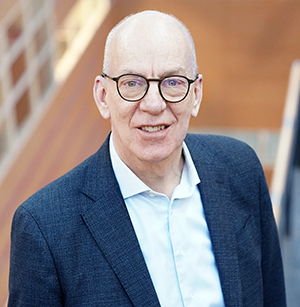
Hugo Jose Herrera de Leon is a Research Fellow at the Department of Geography, University of Bergen. His work focuses on socio-ecological resilience, system dynamics modeling, and policy planning for climate change adaptation. He is affiliated with the System Dynamics research group and has presented at major international conferences like the European Conference on Operational Research and the International System Dynamics Conference. His research explores bioeconomy transitions in Norwegian agriculture, resilience in farming systems, and participatory policy design. He has been funded by the Research Council of Norway (2021-2025) for projects investigating sustainable transitions in rural systems. Notable contributions include developing frameworks for assessing resilience through hybrid simulations and collaborative modeling approaches. Publications span topics like microworld simulations for policymaking, organizational impacts of group model-building, and system dynamics applications in food security. His doctoral thesis (2018) addressed public policy strategies for enhancing resilience in socio-ecological systems under climate change.
Oleksandr Kapranov is an Associate Professor of English at NLA University College's Teacher Education program. His work intersects discourse analysis, climate change communication, and English language teaching (ELT), with a focus on sustainable development education and intercultural communication. Research areas include political speeches (e.g., Keir Starmer, Rishi Sunak), corporate disclosures (Bank of England, Vedanta Resources), and media framing (Greenpeace branches, King Charles III). Key pedagogical interests: digital competence, beginner EFL training, and discourse markers in academic writing. His recent publications analyze climate change discourse through syntactic structures, metonymy, modality, and evidentiality, emphasizing institutional and political narratives. While no formal awards are listed, his work spans interdisciplinary collaborations with NGOs, governments, and universities.
Habib Ullah is an Associate Professor in Data Science at the Norwegian University of Life Sciences (NMBU), Norway, where he conducts research at the intersection of computer vision and machine learning. He is affiliated with the Institute of Data Science under the Faculty of Science and Technology. He has previously held academic positions at COMSATS University Islamabad, Pakistan, and the University of Ha'il, Saudi Arabia, and served as a postdoctoral researcher at The Arctic University of Norway. Educational Background: PhD in Information and Communication Technology (Computer Vision), University of Trento, Italy (2011–2015) MSc in Electronics and Computer Engineering, Hanyang University, South Korea (2007–2009) BSc in Computer Systems Engineering, NWFP University of Engineering and Technology, Pakistan (2002–2006) Habib Ullah's research is primarily focused on computer vision and machine learning, with applications in aquaculture, agriculture, and human behavior analysis. He investigates underwater fish feeding sounds using audio classification, develops zero-shot learning models for recognizing unseen classes, and applies deep learning to detect stress in salmon via skin dot patterns. He also explores AI-driven controlled environment agriculture, leveraging sensors and automation for optimal crop growth. His work emphasizes practical AI solutions for real-world challenges in environmental and biological domains. The recent publications highlight a strong trend in leveraging deep learning for zero-shot and semi-supervised learning, particularly in computer vision tasks such as sea ice classification, crowd anomaly detection, and agricultural monitoring. His research spans remote sensing, biomedical signal processing, and human activity recognition, demonstrating interdisciplinary versatility. The keywords reflect a focus on robust feature representation, knowledge transfer, and model generalization. Scientific Awards and Funding: Industrial PhD grant 'Advancing Controlled Environment Agriculture AI' from The Research Council of Norway (Project number 354125, 2 million NOK, 2024) Team member (Coordinator-Participant) in the Battery Cell Assembly Twin (BatCAT) project funded by Horizon Europe (7 mEuro, 2023–2027) Development of an AI-Based Image Analysis System for Monitoring Plant Status (Funding: 1.8 mNOK, starting 2025) Habib Ullah actively supervises PhD projects and contributes to academic service through editorial and organizational roles. He has served as an Associate Editor for IEEE Access, Guest Editor for MDPI Remote Sensing, and Editor of the Springer book Machine Learning Techniques and Sensor Applications for Human Emotion, Activity Recognition, and Support (ML-SHEARS) . He has also been a Track Chair and Program Committee Member for several international conferences, reflecting his leadership in the academic community. His research is supported by significant grants and collaborative projects, indicating strong institutional and international engagement. He is involved in multiple research teams and projects, including the BatCAT project on battery manufacturing and AI applications in controlled environment agriculture with RIFT LABS AS. His lab work integrates deep learning, sensor fusion, and data analytics for environmental and biological monitoring systems.
Nicoline Frølich is Professor and Director of the Centre for Learning and Education (LINK) at the University of Oslo, Norway. She also holds part-time Professor II appointments at the Department of Government, University of Bergen and at NIFU – Nordic Institute for Studies in Innovation, Research and Education. Education 2002 – PhD in Comparative Politics, University of Bergen 1994 – Master in Comparative Politics, University of Bergen 1992 – Pedagogy, Norwegian School of Economics (NHH) 1989 – Master in Economics and Business Administration, Norwegian School of Economics (NHH) Research Interests Frølich’s research focuses on governance, management and organisation of higher education systems, institutional reforms, knowledge policies, and public administration. She employs institutional theory to examine how universities and colleges respond to policy pressures, merger processes, quality assurance mechanisms, and leadership communication during change. Recent Publication Trends Between 2018 and 2025 her work has concentrated on three interconnected themes: leadership and communication within university mergers, gendered career trajectories in academia, and the tension between quality assurance systems and institutional autonomy. Empirically, her studies draw on Nordic and European cases, combining survey data with qualitative analyses of policy enactment. Scientific & Professional Appointments 2023–present – Academic Chair, Circle U alliance 2023–present – Member, SIKT advisory board (Norway) 2021–present – Editorial board member, TEAM – Tertiary Education and Management 2021–2022 – Chair, EAIR – The European Higher Education Society 2019–present – Advisory Board member, UKÄ (Swedish Higher Education Authority) 2019–2021 – Co-Editor-in-Chief, TEAM – Tertiary Education and Management Research Groups & Projects Frølich leads the research group Knowledge, Learning and Governance: Studies in higher education and work (HEDWORK) and participates in the Policy, Bureaucracy, and Organization (PBO) group. She is currently directing the project Re-Structure , which investigates the effects of structural reforms on Norwegian higher education institutions.
Kari Ingstad is a Professor of Sociology at the Faculty of Nursing and Health Sciences, Nord University, and currently serves as Vice-Dean for Research. Her work bridges academia, clinical practice, and policy, focusing on healthcare organization, leadership, and innovation in Norway's health sector. She holds a PhD in Sociology from NTNU (2011) and has extensive clinical experience in municipal and specialist healthcare. Education: PhD in Sociology, NTNU, 2011 Nursing background from municipal and specialist healthcare sectors Research Interests: Workforce planning and staffing strategies in healthcare Impact of shift scheduling on employee well-being and patient safety Integration of artificial intelligence in healthcare operations Cross-sectoral collaboration and innovation in health services Recent Research Trends: Her 2024 publications emphasize strategic staffing solutions, AI-driven shift planning, and long-shift work-life balance. Key projects include the OptiCare-AI initiative (Norwegian Research Council-funded), exploring AI applications for optimizing healthcare resource allocation. Leadership & Grants: Leads the Acute Care, Innovation and Patient Safety (AKIP) research group Principal Investigator on OptiCare-AI (2023–present) Labs/Teams: Active collaborations with the AKIP group and national/international networks on healthcare workforce issues.
Mikaela Vasstrøm (b.1977) is an Associate Professor at the Department of Global Development and Planning, University of Agder. She holds a PhD from the University of Copenhagen and leads significant research projects including the Norwegian Research Council-funded WINDPLAN initiative, which analyzes social acceptance and governance challenges in onshore wind power development across Norway, Scotland, and Denmark. She co-leads work packages in the WINDREG project focusing on procedural justice and knowledge co-production for energy transitions. Her research examines: Just energy transitions and energy democracy Governance challenges in renewable energy deployment Public participation in environmental conflicts Local/regional development implications of energy policies She co-directs UiA's participation in the Empowered Futures research school, developing PhD-level expertise in energy policy frameworks. Publications focus on wind energy governance, policy legitimacy, and spatial planning conflicts, with consistent themes of: Energy justice in policy design Local government capacity in energy transitions Participatory approaches in sustainability planning Research group affiliations include: Energy and Society Urban and Regional Planning (URPLAN)
Deodat Edward Mwesiumo is a Professor of Supply Chain Management at Molde University College (HiMolde), part of the Faculty of Logistics. He holds a PhD in logistics from the same institution and has extensive teaching and research experience since 2012. His roles include Head of the Supply Chain Management Research Group and member of the PhD committee. Previously, he directed the Bachelor program in Supply Chain Management and Logistics. His research focuses on supply chain resilience, digital business transformation, and tourism management. Key areas include procurement strategies, sustainability, circular economy models, and interorganizational relationships in tourism. He has published in high-impact journals like Production Planning and Control , Journal of Purchasing and Supply Management , and Annals of Tourism Research . Dr. Mwesiumo has led externally funded projects and contributed to over 50 peer-reviewed publications. He is affiliated with research groups such as MIIBS (Marketing, Innovation, International Business & Strategy) and the Transport Research Group (TRG). His teaching spans BSc and MSc levels, including courses on value chain analysis, digital business, and supply chain theory. Recent work emphasizes airport digital maturity, supply chain risk mitigation, and the impact of data-driven decision-making in public procurement. He has authored books like Making Value Chains Work and Fundamentals of Digital Business Management , underscoring his commitment to both academic and applied knowledge dissemination.
Terese Johannessen serves as an Associate Professor in the Department of Health and Nursing Sciences at the University of Agder (UiA), Norway. Her academic work focuses on quality improvement, leadership development, and implementation science within healthcare settings, particularly in nursing homes and home care services. Dr. Johannessen's research primarily centers on understanding quality and safety in long-term care environments. Her work investigates contextual factors influencing healthcare quality, leadership interventions for improvement, and the conceptualization of 'quality' among healthcare providers. She employs qualitative methodologies to explore managers' experiences, implementation challenges, and the development of practical tools for frontline staff. Her research has significant implications for improving care delivery in nursing homes and home care services through evidence-based leadership approaches. Analysis of Dr. Johannessen's publication record reveals a strong thematic focus on the SAFE-LEAD project, a comprehensive research initiative examining leadership interventions for quality and safety in nursing homes and home care. Her work spans multiple dimensions including intervention design, implementation challenges, contextual mapping, and evaluation of leadership approaches across different healthcare settings. The research demonstrates a methodological preference for qualitative and mixed-methods approaches to capture the complex realities of healthcare improvement work. Dr. Johannessen collaborates extensively with researchers including Siri Wiig, Eline Ree, and Ingunn Aase, primarily through the SHARE Centre for Resilience in Healthcare at the University of Stavanger. Her work bridges academic research and practical application in healthcare settings, with significant contributions to understanding how quality improvement efforts can be effectively implemented in real-world contexts. Her research portfolio demonstrates consistent productivity with multiple publications annually, showing progression from foundational studies on contextual factors to the development and testing of specific leadership interventions. The SAFE-LEAD project represents a cohesive research program addressing critical challenges in long-term care quality and safety through systematic investigation and practical tool development.
Francesco Antonio Perotti is a PhD Alumni in Business and Management from the University of Agder, Norway, and the University of Turin, Italy. He holds a Lecturer position at the School of Management and Economics, University of Turin. His primary research focuses on Circular Economy, Knowledge Management, Innovation, and Digital Transformation. He contributes to high-impact journals and serves on editorial boards. His work bridges theoretical insights with practical applications, emphasizing sustainable business practices and organizational leadership. Perotti is also a member of national and international research groups and engages in academic dissemination through conferences and teaching. His research explores topics like open innovation in sustainability, digital transformation leadership, and mitigating knowledge sabotage in organizations. He has published in journals such as Innovation: Organization and Management , Creativity and Innovation Management , and Journal of Business Research . His recent studies analyze SMEs' adaptation to circular economy models and AI-driven leadership strategies. Perotti’s work addresses strategic drivers for business survival in sustainability transitions and the implementation of digital tools in circular enterprises.
Johanne Thunes is a Research Fellow at the Department of Informatics (IFI), University of Oslo, specializing in Information Systems. She holds a Master’s degree in Informatics and a Bachelor’s degree in both Informatics and Political Science from UiO. Her research focuses on digitalization in the public sector, IT strategy, low-code development, and IT outsourcing/insourcing dynamics. She has contributed to prominent conferences like HICSS and ECIS, addressing topics such as digital government transformation and low-code-driven backsourcing. Thunes teaches courses on platform ecosystems, software engineering, and systems design. She is affiliated with the Information Systems research group and serves on the Department Board at IFI. Education: Master’s in Informatics: Design, Use & Interaction, UiO (2020–2022) Bachelor’s in Informatics: Design, Use & Interaction, UiO (2018–2020) Bachelor’s in Political Science, UiO (2015–2018) Teaching Highlights: IN5320 – Development in Platform Ecosystems (2022) IN1050 – Introduction to Design, Use, Interaction (2019–2021) IN2000 – Software Engineering with Project Work (2021–2022) Research Trends: Her work bridges IT strategy and public sector challenges, emphasizing resilience, governance, and low-code solutions for organizational agility. Recent publications explore targeted insourcing models and backsourcing phenomena in digital transformation contexts.
Norwegian University of Science and TechnologyNorway
Vidar Hepsø is a Professor at the Department of Computer Technology and Informatics, Faculty of Information Technology and Electrical Engineering, Norwegian University of Science and Technology (NTNU). His work bridges anthropology of science and technology with practical challenges in digitalization, energy transition, and remote operations. Research focuses on digital infrastructures, socio-technical systems, and human factors in oil and gas industries Active in NTNU Applied Information Technology and NTNU Energy Transition Initiative Publications emphasize open-source ecosystems, autonomous systems, and environmental monitoring His scholarly output spans computer-supported collaborative work, IT infrastructure governance, and risk-informed anomaly detection in subsea systems. He leads projects connecting digital innovation with offshore wind and petroleum geoscience.
Professor Ann Elisabeth Gunnulfsen works at the Department of Teacher Education and School Research (ILS) , University of Oslo. She focuses on educational leadership , school governance , and curriculum reform through projects like ChangeLead and RE-FORMED . Education: PhD in school governance (2018), University of Oslo Master of Philosophy in Educational Leadership (2010), UiO Research Focus: Policy enactment in schools National testing and accountability Curriculum implementation International comparative studies (e.g., ISSPP ) Her publications (15 recent) analyze leadership responses to reforms like Fagfornyelsen , emphasizing tensions between internal accountability and external policy demands. She co-edited books on reading strategies and school leaders as legal interpreters . Collaborations: Part of the CLEG research group , she leads projects like VIST (video assessment) and contributes to DIVA (digital integration). Guest researcher at UC Berkeley (2015-2016).
Sigrid Røyseng is a Professor of Cultural Sociology at the Norwegian Academy of Music (Department of Music Education) and holds an additional role as Professor II at BI Business School. She leads the government's newly formed Music Committee tasked with conducting a comprehensive public inquiry (NOU) into Norway's music sector, emphasizing institutional structures, cultural policy, and societal roles of music. Her research spans cultural policy analysis, arts management, and the intersection of artistic quality with administrative frameworks. Her work addresses topics like institutional change in higher music education, moral economies in cultural practices, and sustainability challenges in live music. She has published extensively on cultural policy decision-making processes, leadership in high-performance cultural environments, and the political dimensions of cultural institutions. The committee’s findings (due 2025) aim to inform future cultural policies by examining both professional and voluntary music sectors. Røyseng’s academic contributions include analyses of artistic quality assessment in audit societies, the paradoxes of Norwegian cultural policy frameworks, and the ethical dimensions of cultural work. She collaborates with interdisciplinary teams and maintains active engagement in music education reforms.
Peter Maassen is a Professor in the Department of Education at the University of Oslo . His work focuses on higher education governance, institutional autonomy, and the intersection of policy and organizational practices. He has contributed extensively to understanding university reforms, quality assurance mechanisms, and the evolving role of universities in global and European contexts. His research interests span Higher Education , University Governance , Institutional Autonomy , and European Higher Education . He investigates how universities adapt to external pressures while maintaining internal coherence, with a particular emphasis on policy-driven changes and their implications for academic freedom and organizational structures. Maassen's recent publications analyze academic freedom in the European Union, knowledge transfer strategies, and the democratic responsibilities of higher education institutions. His work often explores the tension between excellence and diversity in university systems, particularly in China and the Western Balkans . He has received the Faculty of Education's prize for excellence in teaching and serves as Head of the Higher Education Development Association (HEDDA) . His collaborations with researchers like Bjørn Stensaker and Mari Elken have produced significant insights into university alliances and quality management practices. Maassen is affiliated with the research group Knowledge, Learning and Governance (HEDWORK) , which examines higher education's role in societal and organizational contexts. His career includes visiting positions at institutions like the Centre of Advanced Studies in Oslo and Stellenbosch University in South Africa.
Karmenlara Ely Seidman is a Professor and Artistic Director in Acting and Performance at the Norwegian Theatre Academy (NTA), Østfold University College, and a part-time Professor II at the School of Music, UiT The Arctic University of Norway. She holds a Ph.D. in Philosophy (2008) and an M.A. in Performance Studies (2001) from NYU's Tisch School of the Arts. Her research explores interdisciplinary intersections of performance, ethics, and cultural memory, with foci including: Relational aesthetics and embodiment in performance Intergenerational art practices and indigenous/diaspora knowledge systems Transatlantic archives and decolonial methodologies Experimental pedagogy and institutional reimagining Street performance and ritual/game structures Her publications emphasize performative archives, actor training, and ethical frameworks, frequently engaging with themes of cultural memory, embodiment, and institutional critique. Recent works demonstrate a strong focus on decolonial praxis and interdisciplinary collaboration. She leads major funded projects including: Sea Matters (2023–2026): Performance research pedagogy laboratory Spectral Collaborations (2019–2022): Performative entanglement in Nordic Transatlantic Slavery archives Infinite Record (2013–2017): Archive memory and performance She mentors PhD students internationally, serves on evaluation committees across Nordic institutions, and has developed innovative study programs bridging artistic practice and scholarly research.




-2.jpg)