Southern University of Science and Technology (SUSTech)China
Zhe Dong is an Associate Professor (Researcher) and doctoral supervisor in the Department of Chemistry at the Southern University of Science and Technology . He obtained his B.S. from Peking University (2012), Ph.D. from the University of Chicago (2018), and conducted postdoctoral research under 2021 Nobel laureate David MacMillan at Princeton University (2018–2021). Current focus on photoredox-enabled organoboron chemistry and heterocycle functionalization Developed stereospecific coupling reactions for chiral quaternary carbon synthesis Innovated carbocation-carbanion substitution reactions and bioimaging probes His 15+ publications include Nature , JACS , and Nature Chemistry papers spanning: Photoredox-mediated deoxygenation Pd/NBE cooperative catalysis Protein hydrophobic pocket mapping Natural product total synthesis C-H bond functionalization strategies Scientific Recognition: National Scholarship for Outstanding Self-funded Students (2015) Reaxys PhD Prize Finalist (2017) University of Chicago Best Thesis Award (2018) Overseas High-level Talent Program (2020) Current funding includes Ministry of Science and Technology Key R&D Program (2021–2024) and participation in Peacock Team and Guangchuang Team research consortia.
Professor Yun-Bao Jiang is a full Professor in the Department of Chemistry, College of Chemistry and Chemical Engineering, Xiamen University, China. Since obtaining his PhD from the same university in 1990 he has built an internationally recognized research programme in supramolecular photochemical sensing, chiral amplification and single-molecule fluorescence spectroscopy, publishing >200 papers and accumulating >7 000 citations. Education BS 1984 – Xiamen University MS 1987 – Xiamen University PhD 1990 – Xiamen University (Advisor: Prof. Chen Guozhen) Research interests Jiang’s group develops photo-induced electron/proton-transfer systems for fluorescence sensing and biomolecular recognition. Core themes include: (i) signal amplification via controlled aggregation; (ii) chiral induction, memory and amplification in helical supramolecular polymers; (iii) single-molecule detection by fluorescence correlation spectroscopy; and (iv) designer chemosensors for saccharides, amino-acids, anions and heavy-metal ions. Recent work Recent articles (2022-2025) exploit π-conjugated molecular tubes, Ag(I)-thiol coordination polymers and peptide-derived azamacrocycles to create unprecedented anti-S-shaped CD-ee correlations, heterochiral β-turn scaffolds and 2-D supramolecular arrays, pushing the envelope of chiral sensing and optical imaging. Honours & awards Ministry of Education Natural Science Second Prize Chinese Chemical Society Young Chemist Award China Youth Science & Technology Award (5th) Fok Ying-Tong Young Teacher Award Fujian “Yunsheng” Youth Science & Technology Award State Council Special Government Allowance Humboldt Foundation Fellowship Volkswagen Foundation Research Grant Fellow of the Royal Society of Chemistry (2014) Grants & advising He currently leads three ongoing NSFC projects (2023-2026) on sub-nanometre Ag + -thiol coordination polymers, 2-D π-tube arrays and precision construction of multi-level chiral materials. A 30-member team (post-docs, PhD and Master candidates) operates in four contiguous laboratories (Rooms 531-538) equipped with home-built nanosecond lifetime spectrometers, FCS setups and modern synthetic facilities. Editorial & outreach roles Jiang serves on the editorial/advisory boards of ACS Sensors , Supramolecular Chemistry , Photochem. Photobiol. Sci. , Analytical Chemistry and several Chinese journals, and is a council member of the Chinese Chemical Society.
East China University of Science and TechnologyChina
Andrew I. Cooper is a Professor at the University of Liverpool, Director of the Materials Innovation Factory, and Honorary Professor at East China University of Science and Technology (ECUST). He pioneers research in advanced organic functional materials, including conjugated microporous polymers, porous organic cages, and porous liquids, and developed the first autonomous mobile robotic chemist. Fields of Interest: Materials chemistry, robotics, AI-driven synthesis, and computational design of functional materials. Scientific Impact: Over 200 SCI-indexed papers, 52,000+ citations, H-index 117. Key journals: Nature , Science , JACS , Angewandte Chemie . Awards: Royal Society of Chemistry Professorship, Outstanding AI Leader award, Fellow of the Royal Society and European Academy of Sciences. Leadership: Editor-in-Chief of Chemical Science , trained 47 Chinese postdoctoral fellows and PhD students, and leads international collaborations with Chinese universities. Research Trends: Articles focus on robotics, AI, computational materials design, photocatalysis, and dynamic porosity in molecular systems.
Southern University of Science and Technology (SUSTech)China
Liu Leo Liu is an Associate Professor and tenure-track faculty member in the Department of Chemistry at Southern University of Science and Technology (SUSTech), Shenzhen, China, leading research on multi-active ambiphilic main group centers. He serves on editorial boards for Chem (2020-2023), European Journal of Inorganic Chemistry (since 2022), Chinese Chemical Letters (since 2022), Inorganic Chemistry Frontiers (since 2024), and Acta Chimica Sinica (since 2024). His educational background includes: B.Sc. in Chemistry, Xiamen University (2007-2011) Ph.D. in Organic Chemistry, Xiamen University (2011-2016) with joint study at UC San Diego (2013-2015) Post-doctoral Fellow, University of Toronto (2016-2019) under Prof. Douglas W. Stephan Post-doctoral Scholar, Lawrence Berkeley National Laboratory & UC Berkeley (2019-2020) under Profs. F. Dean Toste, Kenneth N. Raymond, and Robert G. Bergman Dr. Liu's research pioneers the synthesis of novel ambiphilic compounds across d- and p-block elements, integrating synthetic chemistry, computational modeling, and spectroscopy. His group develops multi-active centers that challenge textbook knowledge while enabling practical applications in catalysis and materials science. Key focus areas include low-valent carbon species, isolable carbenes, and main group element chemistry with inverted electronic configurations. His publication record demonstrates consistent innovation in ambiphilic main group chemistry, with recent breakthroughs in crystalline stannyne, σ0π2 carbenes, and carbyne anions featured in Science, Nature Chemistry, and JACS. These works reveal fundamental principles of bonding and reactivity while expanding synthetic possibilities for unconventional molecular architectures. Significant scientific recognition includes: Chinese Chemical Society Young Chemist Award (2022) Huang Yao-Zeng Metal Organic Chemistry Young Award (2023-2024) Distinguished Lectureship Award from Chemical Society of Japan (2024) Chinese Chemical Society-RSC Young Chemist Award (2024) World's Top 2% Scientists (2024) As a doctoral supervisor, Dr. Liu mentors graduate researchers and received SUSTech's Outstanding Graduate Supervisor Award (2025). His research is supported by National Natural Science Foundation grants including Original Exploration Program, Excellent Youth Fund (Overseas), General Program, and Youth Fund C Project. The LLL group maintains active collaborations with international institutions and contributes to major chemistry conferences through invited lectures on ambiphilic main group chemistry. The LLL group operates as a dynamic interdisciplinary team within SUSTech's chemistry department, combining experimental synthesis with computational analysis to explore frontier areas of main group element chemistry. Their work bridges fundamental discovery and potential applications in catalysis, materials science, and chemical synthesis.
Hui-Jun Zhang serves as an Associate Professor in the Department of Chemistry at Xiamen University's College of Chemistry and Chemical Engineering, with research centered on organometallic chemistry and organic synthesis methodologies. His academic credentials include a BS from Zhengzhou University (2004), followed by a dual-institution PhD completed in 2010 under Prof. Zhenfeng Xi at Peking University and Dr. Christian Bruneau at Université de Rennes 1, culminating in his appointment as Associate Professor at Xiamen University in 2012. Dr. Zhang's research program emphasizes transition metal-catalyzed reactions, particularly rhodium(III)-mediated C-H activation for molecular construction. His work bridges synthetic organic chemistry and materials science through the development of π-extended systems like perylene diimides and thienoacenes, alongside innovative approaches to covalent organic frameworks using supramolecular assembly principles. Analysis of his 2016-2020 publications reveals a dominant focus on rhodium catalysis for C-H functionalization, with significant contributions in electrochemical phosphorylation methods and the structural engineering of perylene-based dyes. His collaborative work frequently explores π-stacking interactions and regioselective synthesis strategies for advanced organic materials.
Prof. Huayu Tian is a Nan Qiang Distinguished Professor at the Department of Chemistry, College of Chemistry and Chemical Engineering, Xiamen University. With a Ph.D. in Polymer Chemistry and Physics from Changchun Institute of Applied Chemistry (CAS), he leads research in biomedical polymers and nanocarriers for gene/drug delivery. B.S. (1994-1998): Polymer Materials, Harbin Institute of Technology M.S. (1998-2000): Materials Science, Harbin Institute of Technology Ph.D. (2002-2005): Polymer Chemistry, Changchun Institute His work focuses on biomedical polymers , nanocarriers for gene therapy , nucleic acid vaccines , and immunotherapy , with applications in cancer treatment and sepsis management . Recent publications highlight photothermal-immunotherapy combinations , MOF-based drug systems , and microenvironment-responsive nanomaterials . Notable awards include: Jilin Province Natural Science Award (First Prize, 2021) National Outstanding Youth Fund (China) Youth Innovation Promotion Association, CAS (2016)
Southern University of Science and Technology (SUSTech)China
HUANG Li is an Associate Professor in the Department of Physics at Southern University of Science and Technology (SUSTech) , where she has been since September 2019. She joined SUSTech in February 2013 as an Assistant Professor, advancing to her current rank. Her research focuses on quantum materials , novel energy materials , nonequilibrium phase selectivity , and surface/interfacial phenomena using first-principles computational methods and theoretical models . Educational Background: Ph.D. in Physics, Fudan University (2006) M.Sc. in Physics, Xiangtan University (2002) B.A. in Physics, Xiangtan University (1999) Research Interests span quantum materials (e.g., Moire superconductors , topological insulators ), novel energy materials (e.g., thermoelectrics , supercapacitors ), and surface/interfacial dynamics. Her recent work emphasizes two-dimensional systems , spin-valley-layer coupling , and nonequilibrium phase transitions in van der Waals heterostructures and metal-organic frameworks . Publications highlight her expertise in ab initio molecular dynamics , density functional theory , and quantum transport . Key trends include Moiré engineering in twisted bilayers, strain-tunable magnetism , and ferroelectricity in layered materials. Scientific Awards and Grants include leadership roles in projects funded by the National Natural Science Foundation of China and Shenzhen Science & Technology Commission . Notable grants address quantum state control in Moiré superlattices , nonlinear Hall effects , and thermoelectric performance enhancement . Professional Experience: Postdoctoral Research Associate at Ames Laboratory (2008–2012) Joint Postdoc at Georgia Institute of Technology & Ames Laboratory (2006–2008) Visiting Scholar at Harvard University & Oak Ridge National Laboratory (2004–2006)
Southern University of Science and Technology (SUSTech)China
Zhen He (HE Zhen) is an Assistant Professor in the Department of Materials Science and Engineering at Southern University of Science and Technology (SUSTech). He obtained his B.A. in Materials Science from Northwestern Polytechnical University (2013) and Ph.D. in Inorganic Chemistry from University of Science and Technology of China (USTC, 2018). His research focuses on bioinspired nanostructures, advanced characterization techniques, and structure-property relationships in nanosystems. Biomimetic Nanodesign: Inspired by natural microstructures for functional nanomaterials Characterization Expertise: Synchrotron-based SAXS, AFM, and dynamic monitoring Structure-Property Analysis: Relating microscopic order to macroscopic material behavior He has published 28 papers in top journals including Acc. Chem. Res. , J. Am. Chem. Soc. , Angew. Chem. Int. Ed. , Adv. Mater. , and Small . His work has been supported by multiple National Natural Science Foundation of China projects, including both general and youth programs. Scientific Awards: Principal Investigator of NSFC Youth Program Principal Investigator of three NSFC General Projects Principal Investigator of two NSFC Youth Projects Dr. He collaborates with the Hefei National Laboratory for Physical Sciences at Microscale and works within SUSTech's College of Engineering. His current research explores nanowire self-assembly principles, precise control of nanofilms, and structure-property relationships in ordered nanosystems.
Southern University of Science and Technology (SUSTech)China
Lu Zhouguang is a tenured Professor in the Department of Materials Science and Engineering at Southern University of Science and Technology . He is a Fellow of the Royal Society of Chemistry (FRSC), Shenzhen Pengcheng Scholar Distinguished Professor, Fulbright Scholar, and Shenzhen Peacock Program High-Level B Talent. Current research focuses on molecular design, precision synthesis, and electrochemical reaction mechanisms of advanced energy materials Specializes in nanostructured electrodes for lithium/sodium-ion batteries and lithium-air batteries Investigates phase/morphology transformations during electrochemical reactions Develops micro-nano battery devices and solid waste recycling technologies His publications in journals like Nature Communications and Angewandte Chemie demonstrate expertise in radical intermediates, defect engineering, and electrocatalyst development. With 260+ SCI papers, 10,000+ citations, and 30+ invention patents, he leads cutting-edge research in energy storage and conversion. Recipient of 2017 SUSTech Outstanding Research Award 2016 SUSTech Young Scientist Award Top 2% Scientist Worldwide (2011) As Deputy Secretary-General of China Energy Storage & Power Batteries Committee and council member of Guangdong lithium-ion battery innovation alliance, he actively shapes industry standards. The Shenzhen Hydrogen Energy Key Laboratory , which he co-leads, drives nanomaterials research for next-generation batteries.
Ai-E Wang serves as Associate Professor at Xiamen University's School of Chemistry and Chemical Engineering since October 2008, focusing on advanced organic synthesis methodologies and catalytic applications. His academic journey includes: Bachelor of Organic Chemistry from Lanzhou University (1996-2000) Ph.D. in Organic Chemistry from Nankai University (2000-2005) under Professor Zhou Qilin, specializing in asymmetric catalysis Postdoctoral research at the University of Basel with Professor Andreas Pfaltz (2005-2008) Research expertise spans: Organic synthesis methods development Metal-organic compound applications Asymmetric catalysis and stereoselective synthesis Bioactive natural/non-natural compound synthesis His work emphasizes innovative ligand design for precision molecular transformations. Publication analysis (2004-2008) reveals concentrated expertise in palladium/iridium-catalyzed reactions, particularly Suzuki/Heck cross-couplings and asymmetric hydrogenation using custom N-heterocyclic carbene ligands. This research advances stereoselective synthesis for biologically active molecules through novel catalytic systems. No scientific awards were documented in the source material. The provided text contains no information regarding student advisement or research grant acquisitions. Specific laboratory facilities or research team structures were not described in the available documentation.
Southern University of Science and Technology (SUSTech)China
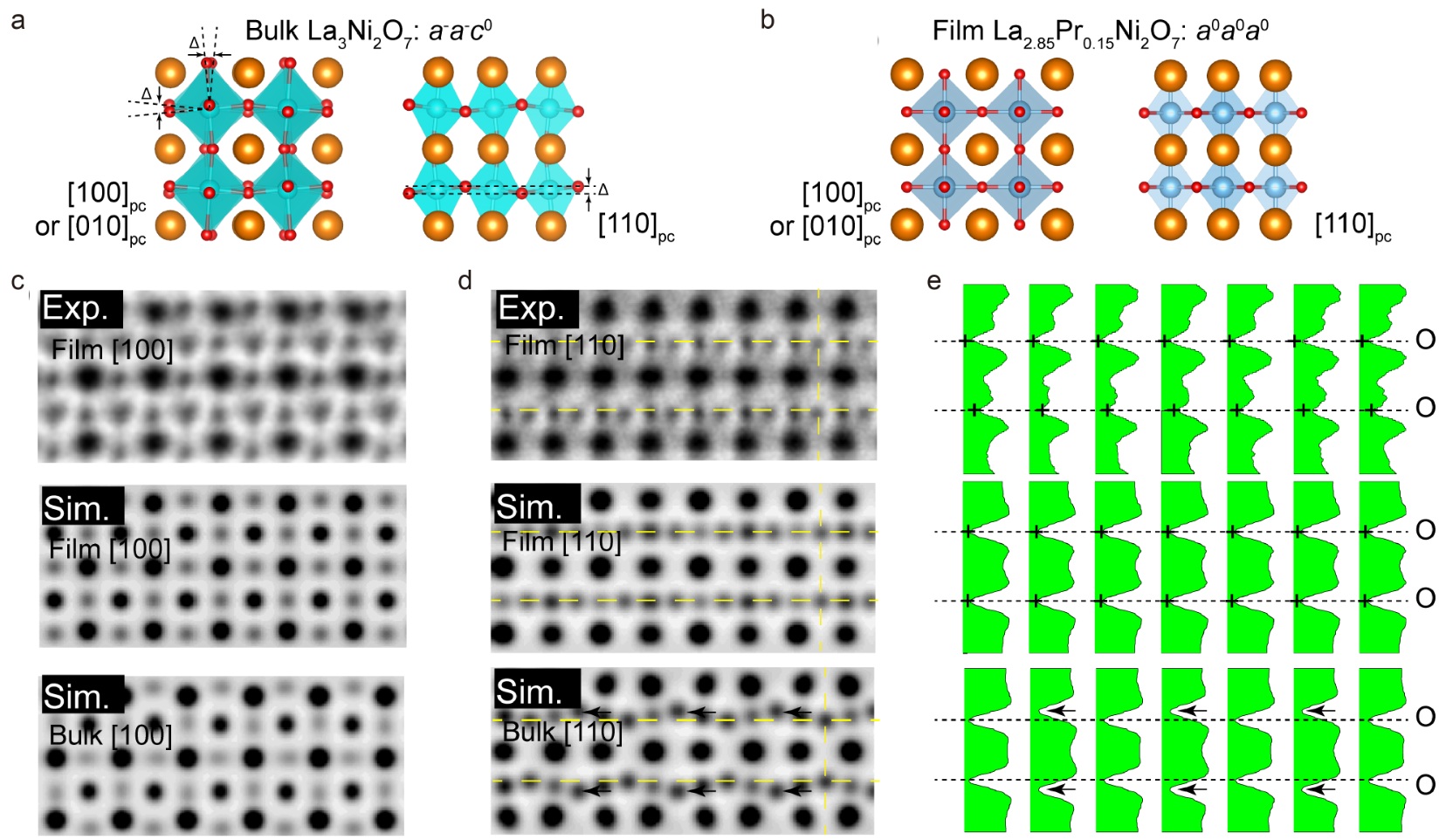
Prof. Junhao Lin is a tenured Full Professor at the Department of Physics, Southern University of Science and Technology (SUSTech). With a dual background in experimental and theoretical physics, he specializes in atomic-scale characterization of 2D materials, combining aberration-corrected STEM, EELS spectroscopy, and density functional theory calculations to study defect-structure-property relationships. Ph.D. (2015) from Vanderbilt University Postdoctoral work at National Advanced Institute of Science and Technology (Japan) under Kazu Suenaga Research Interests : Atomic-scale defect engineering in 2D materials In-situ high-resolution electron microscopy under external stimuli High-energy-resolution EELS for optical property characterization Quantum material structure-property correlations Publication Trends : Over 130 high-impact publications (Nature, Science, PRL) focusing on 2D material defects, phase transitions, and atomic engineering. Recent works explore nickelate superconductivity, magnetic phenomena in topological materials, and energy storage applications. Scientific Recognition : MIT Technology Review TR35 China (2021, Visionary category) Elsevier 2024 Highly Cited Researcher (China) Multiple international conference awards 8+ million RMB investment in glove-box interconnected lab systems Lab Overview : The Advanced Low-Dimensional Materials Laboratory at SUSTech (10+ members) integrates atomic-resolution STEM, in-situ TEM, and computational modeling. Collaborations span Oak Ridge National Lab, Peking University, and Singaporean/Japanese institutions.
Jian-Bin Lin is an Associate Professor in the Department of Chemistry at Xiamen University's College of Chemistry and Chemical Engineering. His research focuses on supramolecular chemical sensing, molecular recognition, and organic self-assembly. Education : BSc (Nankai University, 2004), PhD (Shanghai Institute of Organic Chemistry, 2009), Postdoc (Eindhoven University of Technology, 2011), Postdoc (Institute for Molecular Science, 2013) Lin's research explores supramolecular chemical sensing through organic molecule self-assembly and π-conjugated systems. His work includes designing chiral radical anions with NIR absorption, developing ambipolar semiconductors for light detection, and engineering stimuli-responsive smart windows. Publications highlight applications in optoelectronics, molecular architecture, and covalent frameworks. Recent articles show expertise in perylenediimide derivatives , heteroatom-doped nanohoops , and 2D anisotropic materials . Key themes include π-stacking, donor-acceptor systems, and responsive material design. Scientific Awards : JACS virtual issue (2020), Angewandte Chemie VIP & back cover (2021) Lin's collaborations span institutions including Eindhoven University of Technology and Institute for Molecular Science. While no student advisement list appears in the data, his laboratory's work impacts molecular electronics, optical materials, and sustainable technologies.
Pavlo O. Dral serves as Associate Professor at Xiamen University's Department of Chemistry, College of Chemistry and Chemical Engineering since 2019, following postdoctoral research at the Max-Planck-Institut für Kohlenforschung. His academic credentials include: BS (2004-2008), National Technical University of Ukraine M.Sc. (2008-2010), University of Erlangen-Nürnberg Mag. (2008-2010), National Technical University of Ukraine Dr. (2010-2013), University of Erlangen-Nürnberg Dr. Dral's research pioneers the integration of Machine Learning with Quantum Chemistry , focusing on developing the MLatom package for atomistic simulations, creating accurate NDDO-based semiempirical methods, and designing hybrid computational approaches. His work targets efficient solutions for complex physicochemical problems through innovative algorithm development. Analysis of his 15 publications (2014-2020) reveals consistent advancement in machine learning applications across quantum chemistry domains, including potential energy surface modeling, excited-state dynamics, and molecular property prediction. Key thematic trends involve hierarchical learning architectures, big data integration for quantum approximations, and methodological innovations in organic semiconductor characterization. Information regarding scientific awards, student advising, research grants, and laboratory teams is not provided in the source documentation.
Prof. Hu Peng is a Professor and Doctoral Supervisor at the School of Chemistry, Sun Yat-sen University. He holds a PhD in Organic Chemistry from the Chinese Academy of Sciences (2011) and conducted postdoctoral research at the Weizmann Institute of Science (supervisor: David Milstein) and Technical University of Munich (supervisor: Thorsten Bach). His work focuses on catalytic mechanisms, photothermal radical reactions, clean energy catalysts, and small molecule activation. Key achievements include developing novel photocatalytic C-H functionalization methods and plastic degradation technologies. Recognized with awards like the Alexander von Humboldt Fellowship (2014) and Top Ten Emerging Technologists in China (2024), Hu Peng leads a research group advancing sustainable chemical methodologies. His lab's activities include collaborations in green organic chemistry, energy materials, and catalytic systems. Education: B.Sc. (2006, Hubei University), Ph.D. (2011, Chinese Academy of Sciences). Positions: Humboldt Scholar (2014-2016), Sun Yat-sen University Hundred Talents Program recipient. Research projects include National Natural Science Foundation grants and Guangdong provincial initiatives. Current group activities emphasize metal-organic intermediates, clean energy systems, and cross-disciplinary chemical methods. Publications highlight innovations in photocatalysis, C-H bond activation, and sustainable materials. Recent work includes selective plastic degradation using iron catalysts and asymmetric spirocyclobutane synthesis via cage-confined reactions.
Southern University of Science and Technology (SUSTech)China
Dr. Chuan He is an Associate Professor and Principal Investigator at the Department of Chemistry, Southern University of Science and Technology (SUSTech). He holds prestigious appointments as a National Distinguished Young Expert and NSFC Outstanding Young Scholar. His research focuses on the development of novel synthetic methodologies for chiral organosilicon and organoboron compounds with applications in asymmetric catalysis and functional materials. Dr. He received his B.S. (2004-2008) and Ph.D. (2008-2013) in Chemistry from Wuhan University under the supervision of Prof. Aiwen Lei. He then pursued postdoctoral research (2013-2017) as a Marie Curie Fellow at the University of Cambridge with Prof. Matthew Gaunt before joining SUSTech in 2018. His research interests center on chiral organosilicon chemistry , chiral organoboron chemistry , electrocatalytic heteroatom chemistry , and chiral organic functional materials . Dr. He's group has pioneered innovative approaches including catalytic asymmetric dehydrogenative coupling reactions (Si-CADC) for silicon-stereogenic compounds and the first catalytic enantioselective construction of boron-stereogenic compounds. Analysis of his recent publications reveals a strong focus on creating novel methodologies for constructing stereogenic centers at silicon and boron atoms. His work has significant implications for asymmetric catalysis, chiral materials development, and pharmaceutical applications where stereochemistry plays a critical role. National Distinguished Young Expert NSFC Outstanding Young Scholar (2021) Guangdong Province Pearl River Youth Talent (2020) Shenzhen Excellent Science and Technology Innovation Distinguished Young Scholar (2023) Thieme Chemistry Journals Award (2021) Chemical Reviews Early Career Advisory Board (2020-2025) 23-ICOS Speaker Award (2023) Dr. He teaches core organic chemistry courses (Organic Chemistry I and II) at SUSTech and leads an active research group seeking talented individuals interested in transition metal catalysis, asymmetric catalysis, and organo-material chemistry. His research has been supported by multiple national grants and has resulted in over 70 publications with more than 5,000 citations. His laboratory focuses on developing novel synthetic methodologies for chiral organosilicon and organoboron compounds, with particular emphasis on creating efficient catalytic systems for constructing stereogenic centers at silicon and boron atoms, which have been historically challenging targets in asymmetric synthesis.