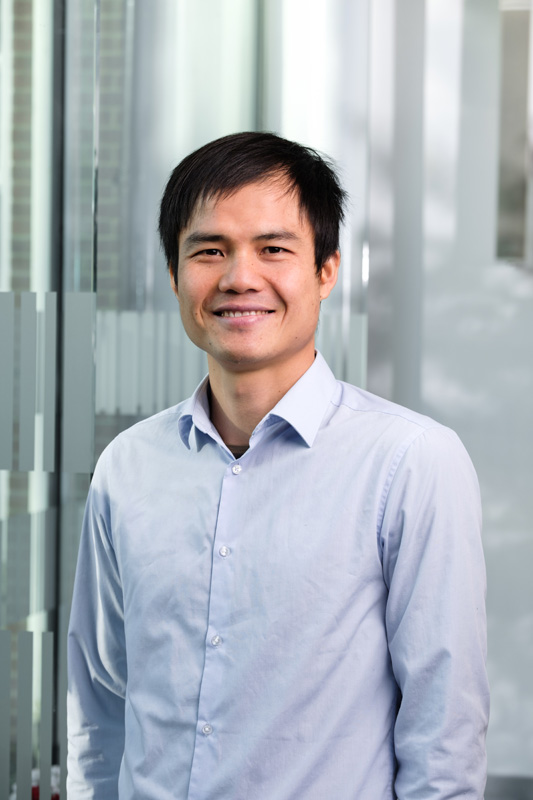
Dr. Arvydas Ruseckas is a Research Fellow at the School of Physics and Astronomy, University of St Andrews. His research focuses on organic photovoltaics, semiconductor materials, and optoelectronic systems. Key areas include exciton dynamics in solar cells, perovskite photovoltaics, and X-ray detector technologies. He collaborates extensively on interdisciplinary projects, bridging material science with marine biology and quantum optics. Research interests span organic solar cells, energy harvesting, and semiconductor physics, with contributions to understanding charge transfer mechanisms and material optimization. He has published widely on topics such as exciton diffusion, light-harvesting in red algae, and polariton condensates in organic semiconductors. His work often involves experimental studies of thin films, photoluminescence, and device performance, with a focus on advancing sustainable energy technologies and novel optoelectronic applications.
Professor Emilio Artacho is a faculty member in the Department of Physics at the University of Cambridge, based at the Cavendish Laboratory. He transitioned from the Department of Earth Sciences in 2011, where he was granted a Professorship in 2006. His research focuses on computational simulations of non-equilibrium processes in condensed matter, particularly using first-principles molecular dynamics and density-functional theory. He co-developed the SIESTA program for linear-scaling electronic structure calculations, widely utilized in computational materials science. Artacho’s work spans far-from-equilibrium phenomena in irradiated matter, multiferroics, nanoconfined water systems, and surface chemistry. His contributions include studies of electronic stopping power in materials, 2D electron gas formation at ferroelectric interfaces, and the structural dynamics of water under confinement. His academic roles include adjunct positions at Ikerbasque (Nanogune, Spain) and visiting professorships at institutions like the University of California, Berkeley, and École Normale Supérieure de Lyon. Research interests are anchored in theoretical condensed matter physics, with applications to nanomaterials, radiation effects, and interfacial phenomena. His computational methods bridge quantum mechanics and classical dynamics, enabling insights into complex systems like proton-irradiated solar cells and confined water films.
Dimitrios E. Anagnostou is Associate Professor in the Institute of Sensors, Signals & Systems within Heriot-Watt University’s School of Engineering & Physical Sciences, Edinburgh. He directs an anechoic-chamber & microwave characterisation facility, leads a thriving research group, and is currently recruiting PhD candidates. Education & Career: BSEE, Democritus University of Thrace, Greece (2000) MSEE, University of New Mexico, USA (2002) PhD, University of New Mexico, USA (2005) Post-doc, Georgia Tech (2005-2006) Assistant → tenured Associate Professor, South Dakota School of Mines & Technology (2007-2016) Associate Professor, Heriot-Watt University (2016-present) Research Focus: His work spans compact & reconfigurable antennas, 5G Massive-MIMO arrays, metasurfaces, metamaterials, functional materials (VO 2 ), RF-MEMS, microwave packaging, radar sensing for assisted-living, and AI/deep-learning applications in electromagnetics. He pursues “green” RF electronics printed on paper/organic substrates and hybrid integration of antennas on solar cells. Recent Publication Trends (2022-2025): Output is dominated by metasurface-enabled beam-steering antennas, VO 2 -based reconfigurable devices, radar absorbers/rasorbers, biomedical radar for vital-sign monitoring, and AI-assisted signal processing, with strong emphasis on experimental validation and open-access dissemination. Scientific Awards & Fellowships: IEEE John D. Kraus Antenna Award DARPA Young Faculty Award Marie Skłodowska-Curie Individual Fellowship (H2020) ASEE Campus Star Award Young Alumni Award, University of New Mexico Honored Faculty Award, SDSMT (×4) Distinguished Scientist Living Abroad, Hellenic Ministry of Defense Advising & Grants: He has mentored numerous PhD and MSc researchers; his students have won Best PhD Thesis and faculty-wide Engineering Prizes. He is supported by EU and UK research grants and continuously seeks motivated doctoral applicants. Facilities & Teams: He manages the Microwave Facility (anechoic chamber, mm-wave measurement systems) and collaborates with international academic/industry partners across Europe, North America and beyond.
Michael Turner is a Professor of Materials Chemistry and Director of the Organic Materials Innovation Centre (OMIC) at the University of Manchester's School of Chemistry. He holds a Chair in Materials Chemistry and leads the Knowledge Centre for Materials Chemistry (KCMC), a virtual interdisciplinary research hub. His research focuses on synthesizing conjugated molecules for applications in organic electronics, including transistors, LEDs, sensors, and solar cells. He coordinates the EPSRC-funded Organic Materials for Electronics Consortium (OME-C), involving collaborations across multiple institutions. Education: Bachelor's and PhD from the University of Bristol (organometallic chemistry with Prof. Selby Knox). Postdoctoral work in the U.S. with Prof. Harry Allcock on polyphosphazenes, followed by research at the University of Sheffield on Fischer-Tropsch reactions under Prof. Peter Maitlis. Research Interests: Synthesis of conjugated liquid crystals and polymers, organic electronics, electro-optical devices, and nanoscale fabrication. His work addresses challenges in energy, environment, and material synthesis through novel polymer architectures and functional nanoparticles. Key Projects: Principal Investigator for KCMC, advancing applied materials chemistry and knowledge transfer. Leading projects on CRISPR-Cas technology integration into organic electronics and roadside breath analysis of narcotics. Contributions to neuromorphic computing via printed electronics and bioelectronics networks. Awards: Royal Society University Research Fellowship (1993). Grants & Collaborations: Coordinates EPSRC consortia and collaborates internationally on polymer synthesis, sensor systems, and bio-inspired materials. His work aligns with UN Sustainable Development Goals, particularly energy and environmental innovation. Labs & Teams: Directs OMIC and KCMC, fostering interdisciplinary research in organic materials, device fabrication, and nanotechnology applications.
Professor Richard E Douthwaite is a distinguished academic in the Department of Chemistry at the University of York, where he leads research in molecular and materials chemistry with a focus on photocatalysis and solar energy conversion. His work bridges fundamental inorganic chemistry with practical applications in renewable energy technologies. His research interests span multiple areas of sustainable chemistry: Synthesis and application of materials for photocatalysis using renewable energy Development of metal complexes for catalytic applications Photocatalytic water splitting for hydrogen production Environmental applications of photocatalysis for pollutant degradation Structure-property relationships in catalytic materials Analysis of Professor Douthwaite's recent publications reveals a strong emphasis on materials design for solar energy conversion, particularly focusing on: Advanced characterization of photocatalytic materials using in-situ techniques Development of hybrid materials combining semiconductors with metal complexes Engineering of nanostructured materials for improved photocatalytic efficiency Understanding fundamental mechanisms of light-induced chemical reactions Professor Douthwaite has been recognized with the prestigious FRSC (Fellow of the Royal Society of Chemistry) award in 2010 for his contributions to the field. His research portfolio includes significant grant funding from EPSRC and other organizations, with current projects focusing on environmental electron microscopy of photocatalysts and quantum transport for advanced spintronics. As chair of the graduate school and inorganic section leader, he has mentored over 100 undergraduate students and numerous postgraduates. His teaching spans inorganic and physical chemistry, with a focus on metal-ligand bonding, reaction mechanisms, and materials chemistry. Professor Douthwaite's laboratory is equipped with state-of-the-art facilities including UV-Vis and diffuse reflectance spectrometers, electrochemical workstations, and access to the York JEOL Nanocentre for advanced microscopy. His research group collaborates extensively across disciplines, working at the intersection of chemistry, materials science, and renewable energy technologies.
Dr Dimitra Georgiadou is an Associate Professor at the University of Southampton's School of Electronics and Computer Science, leading the Flexible Nanoelectronics Lab. She is a UKRI Future Leaders Fellow and serves as Deputy Impact Champion in the UKRI Centre for Doctoral Training in Machine Intelligence for Nanoelectronic Devices and Systems (MINDS-CDT). Her research focuses on green manufacturing of flexible nanoelectronics, photonic synapses for neuromorphic computing, and solution-processed non-toxic materials. Key projects include developing Pb-free perovskite photoelectric memristors and radiofrequency Schottky diodes for IoT applications. Education: PhD in Chemical Engineering/Organic Electronics from the National Technical University of Athens (NTUA). Prior roles include Industrial Fellow at Imperial College London and Marie Skłodowska-Curie Fellow. Research spans nanoscale optoelectronic devices, energy harvesting, and flexible substrates. Publications highlight advancements in photodetectors, memristors, and neuromorphic systems, with recent work on self-powered organic photodetectors and γ-ray-induced memristor effects. She has over 40 peer-reviewed articles, including in Laser & Photonics Reviews , Optica , and Advanced Electronic Materials . External roles include editorial positions at Frontiers in Nanotechnology and IEEE Sensors Letters , and membership in the EPSRC Peer Review College. She actively participates in conferences, delivering invited talks on nanosciences, flexible electronics, and neuromorphic devices.
Larissa Gomes Franca is a Research Fellow at the University of Cambridge's Department of Materials Science & Metallurgy, affiliated with the Photoactive Materials Group. She holds a PhD from Durham University as a Marie Skłodowska-Curie Early-Stage Researcher and earned her BSc and MSc in Physics at the Federal University of Santa Catarina, Brazil. Her research focuses on energy-efficient materials for optoelectronic applications like OLEDs , solar cells , and photon upconversion . She explores stimuli-responsive liquid crystal hosts for spectral conversion systems and investigates photophysical processes in organic materials using optical spectroscopy techniques. Key publication trends include advancements in thermally activated delayed fluorescence (TADF) , room temperature phosphorescence , and triplet-triplet annihilation for energy upconversion. Her work bridges materials informatics with liquid crystal engineering to enhance solar energy harvesting. Scientific awards: Royal Commission for the Exhibition of 1851 Research Fellowship (2023) Contact: lg735@cam.ac.uk | Personal Webpage
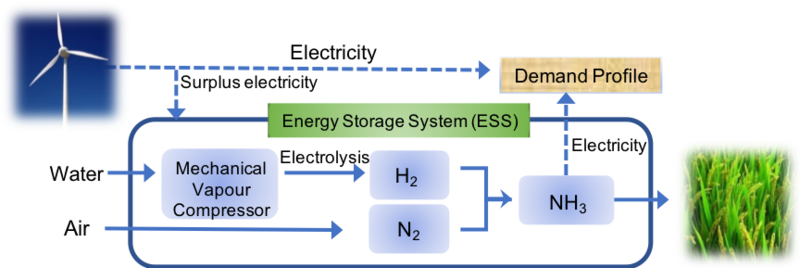
Professor Edman Tsang leads the Wolfson Catalysis Centre at the University of Oxford, focusing on catalysis and sustainable energy systems. His work includes developing novel catalysts for green ammonia production, renewable energy storage, and CO₂ conversion. He collaborates with Siemens on a £1.5M Innovate UK project for a wind-powered green ammonia plant at Rutherford Appleton Laboratory. Research spans photocatalytic solar cells, biofuel production from biomass, and hydrogen storage solutions. His team pioneered the e-Haber-Bosch process, reducing energy demands through renewable integration. Key innovations include patented catalysts for ammonia synthesis and advanced electrochemical systems. The group also explores plastic upcycling via mild heterogeneous catalysis and carbon capture technologies.
Christian Nielsen is a Professor of Materials Chemistry and Head of the Department of Chemistry at Queen Mary University of London (QMUL). He leads the Nielsen Lab, focusing on designing semiconducting materials for organic electronic and bioelectronic applications. His research spans organic solar cells, field-effect transistors, and biosensors, emphasizing structure-property relationships to advance device performance. He holds a PhD from the University of Copenhagen (2004) and has held academic and industrial roles in the US and UK. Key roles include Reader in Organic Materials (2022), and leadership in the Centre for Chemical Research and School of Physical and Chemical Sciences. Research interests include organic bioelectronics, semiconducting polymers, and thermoelectric materials. Notable achievements include EPSRC grants for graphene defect design, Leverhulme Trust funding for sequence-defined pi-conjugated materials, and an Academy of Medical Sciences award for bioelectronic sensors in epilepsy diagnosis. Supervision includes PhD students Dilara Gunturkun, Roman Halaksa, and others. Awards include the 2017 Higher Education Academy Fellowship and the Academy of Medical Sciences Springboard Award. His lab collaborates globally, with projects in EU consortia like ICONIC and MITICS.
Dr Andrew Thomas is a Senior Lecturer in the School of Materials at The University of Manchester, based in the Photon Science Institute. He holds a PhD in Adsorbate Studies of Titanium Oxides from the University of Liverpool (1994) and an MSc in Instrumentation and Analytical Science from UMIST (1990). His roles include Research Fellow and membership in professional committees such as the Thin Films and Surfaces Group of the Institute of Physics and the Diamond Light Source User Committee. His research focuses on surface science, biomaterials, catalysis, and photovoltaic materials. He has led projects like the £2 million bid to the Sir Henry Royce Institute for advanced spectroscopy instruments. Education: PhD (University of Liverpool), MSc (UMIST), BSc (University of Manchester) Research Groups: Biomaterials, Corrosion and Protection, Ceramics and Inorganics Key Projects: Manchester Bioelectronics Network, development of novel spectroscopy instruments His research interests span organic molecule interactions with surfaces, corrosion mechanisms, and solar energy materials. He has published over 119 articles and contributed to datasets on material characterization. Thomas is actively involved in outreach, including lectures and partnerships with schools for science education initiatives.
David Lewis is the Head of the Department of Materials and Professor of Materials Chemistry at the University of Manchester. His research focuses on energy-generation materials, including inorganic thin films and nanomaterials for applications in thermoelectrics, photocatalysis, and photovoltaics. He leads an internationally collaborative group exploring solution-phase synthesis routes and additive manufacturing techniques. Lewis holds editorial roles at Scientific Reports and Materials Science in Semiconductor Processing . Education: PhD in Chemistry MSc in Chemistry (1st Class Hons), University of Birmingham Research Interests: Lewis’s work centers on designing low-temperature syntheses of nanomaterials using molecular precursors. Key areas include layered and 2D materials (e.g., MoS2, black phosphorus), high-entropy materials, and superhydrophobic nanomaterials. His lab pioneers scalable methods like aerosol-assisted CVD and liquid-phase exfoliation. Grants & Awards: Lewis has secured £3.1M+ in funding, including EPSRC grants for nanofabrication and corrosion-resistant electrocatalysts. He received the IAAM Medal (2021) and FIMMM fellowship. His group hosts students via scholarships like the Presidential Doctoral Scheme. Labs & Teams: His lab collaborates globally on energy materials. Capacity-building initiatives include the Royal Society-funded CaGSUMI project for African solar cell development.
Professor Andrew Johnson at the University of Bath is a leading researcher in materials chemistry for energy applications , specializing in precursor design for advanced thin film growth techniques including Chemical Vapour Deposition (CVD) and Atomic Layer Deposition (ALD) . His work spans sustainable technologies, graphene science, and nanoparticle synthesis, with a focus on enabling next-generation electronics and climate solutions. Department of Chemistry, University of Bath Centre for Sustainable Chemical Technologies (CSCT) Institute of Sustainability and Climate Change Collaborations with University of Leeds, University of California Davis, and industry partners like Pragmatic Printing Research Interests: Development of volatile, non-toxic molecular precursors for metals/oxides ALD/CVD of metastable materials (e.g., SnO, α-Fe2O3) Carborane chemistry for early transition metals and lanthanides Surface engineering for automotive lubricant alternatives Photoanodes for solar water splitting Flexible electronics with sustainable materials Collaborations & Grants: Funded by EPSRC and Innovate UK , with projects on low-power flexible electronics and complementary semiconductor systems. Collaborates with physics, chemical engineering, and industry partners for mechanical property testing and device fabrication.
Dr. Jing Li is a Senior Research Fellow at the University of Hull's Energy and Environment Institute. He holds a BSc (2006) and PhD (2011) from the University of Science and Technology of China (USTC), followed by a postdoctoral position there and an EU Marie Skłodowska-Curie Fellowship at the University of Nottingham (2017–2019). His research focuses on renewable energy, energy storage, and sustainable heating technologies, with expertise in heat pumps, organic Rankine cycles, and solar PV/T systems. Dr. Li has led/co-led 12 research projects funded by organizations such as the EU, BEIS, and the Royal Society. He is a Fellow of the Higher Education Academy (FHEA) and has co-authored over 100 peer-reviewed papers, 3 books, and holds 10 patents. His innovations include vapor-injection heat pumps, novel thermal storage techniques, and advanced photovoltaic/thermal systems. Key research themes include low-carbon energy systems, thermodynamic cycle optimization, and sustainable building technologies. His recent work demonstrates low-carbon heating systems in public buildings and advanced solar-assisted heat pump designs. Education: BSc (USTC, 2006), PhD (USTC, 2011) Awards: FHEA, EU Marie Curie Fellowship Grants: £12k (Royal Society, 2022), EU/BEIS/EPSRC-funded projects His lab investigates cutting-edge energy solutions, including heat batteries, solar-driven ORC systems, and hydrogen-based CHP systems. He actively contributes to international conferences, delivering keynote speeches on sustainable energy advancements.
Rachel Oliver is a Professor of Materials Science at the University of Cambridge and Director of the Cambridge Centre for Gallium Nitride. Her research focuses on characterisation techniques for gallium nitride materials used in LEDs and laser diodes, with an emphasis on nanostructure engineering and quantum technology. Awarded OBE (2025), Fellow of the Royal Academy of Engineering (FREng) (2021), and Fellow of the Institute of Materials, Minerals and Mining (FIMMM) (2019) Developed atom-probe tomography and scanning capacitance microscopy to study nitride devices Her work on quantum dots and single-photon emitters has advanced quantum crystallography and optoelectronics. Recent publications highlight trends in nitride semiconductors , solar cell efficiency , and quantum device fabrication . Scientific Awards Royal Society University Research Fellowship (2006-2011) Chair in Emerging Technologies (2023) Grants EPSRC grant for semi-polar nitride structures Oliver's lab at the Department of Materials Science and Metallurgy explores nanoscale nitride structures for future devices, while advocating for gender equality in STEM.
Matthew Bidwell is a Research Fellow at Imperial College London's Department of Chemistry within the Faculty of Natural Sciences. His research focuses on sustainable energy materials, including photocatalytic hydrogen generation and electrocatalytic biomass oxidation using organic semiconductors. He holds a PhD from Imperial College (2016-2021) and was awarded the prestigious EPSRC Doctoral Prize Fellowship (2021), which he undertakes in collaboration with Professors Martin Heeney and Magda Titirici. Matthew's work bridges fundamental materials science with real-world applications in energy and environmental sustainability. He has held residential roles including Assistant Warden of Woodward Buildings (2021-2023), overseeing pastoral care for 700 students, and Subwarden positions in Pembridge Hall and Woodward Buildings. Matthew is an active member of the Royal Society of Chemistry and UKRI Early Career Researcher Forum. His research interests span organic photovoltaics, nanoparticle engineering, and biomass conversion. Notable achievements include co-inventing nanoparticles for photocatalytic hydrogen evolution (US Application No. 17/639,966) and being shortlisted for Forbes 30 Under 30 in Science & Healthcare. He has secured beamtime at ISIS Neutron and Muon Source for nanoparticle morphology studies and received multiple grants for research stays at Kyoto University and conference participation. Matthew’s publications emphasize practical applications of materials science, with recent work addressing organic solar cell stability and photocatalytic systems for sustainable chemical production. His innovative approaches to waste biomass utilization and hydrogen generation align with global sustainability goals.