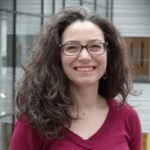
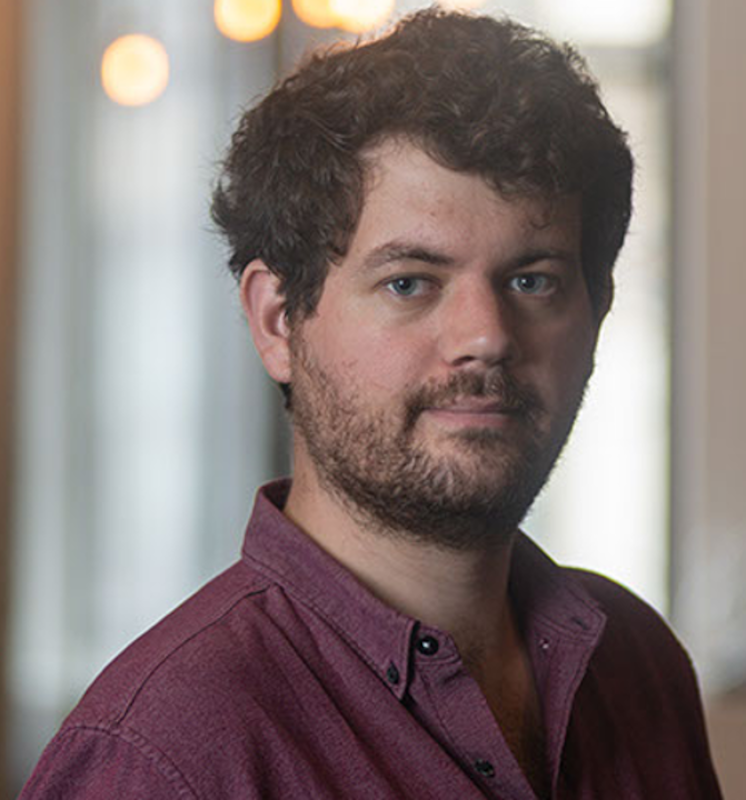
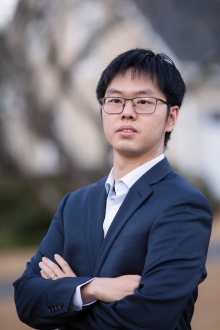
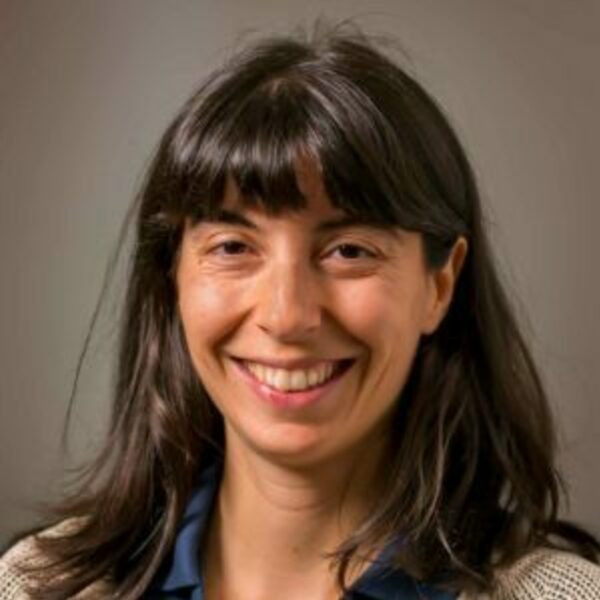
Diana Fusco is a University Lecturer in the Department of Physics at the University of Cambridge. Her research focuses on the evolutionary mechanisms underlying collective behaviors in microbial populations, integrating experimental microbiology, statistical physics, and population genetics. She holds a PhD in Computational Biology and Bioinformatics from Duke University (2014), and a MSc and BSc in Theoretical Physics from Università degli Studi di Milano (2008 and 2006, respectively). Prior to her current role, she conducted postdoctoral research at UC Berkeley, exploring evolutionary consequences of spatial range expansions. Her work investigates how molecular and cellular interactions shape population-level phenomena, such as biofilm dynamics and phage-host interactions. Key themes include stochastic processes in viral evolution, spatial expansion effects on genetic diversity, and the role of physical factors (e.g., crowding, adhesion) in microbial systems. She employs interdisciplinary methods to uncover fundamental principles in evolutionary biophysics. While no specific grants or awards are listed, her research has produced impactful publications on topics like biofilm wrinkling behavior, viral strategies in co-infection, and the interplay between spatial dynamics and genetic adaptation. As part of the University of Cambridge’s Department of Physics, her group contributes to theoretical and experimental studies of condensed matter systems and biological physics, bridging gaps between molecular processes and macroscopic biological outcomes.
Dr Courtney Crawford is an academic staff member at the Department of Physics, University of Sydney, specializing in astrophysics with a focus on stellar evolution and nucleosynthesis. Her research involves analyzing peculiar stars like R Coronae Borealis stars, hydrogen-deficient carbon stars (HdC), and white dwarfs using advanced observational data from missions like Gaia and TESS. Her work bridges theoretical models with observational data, particularly exploring merger scenarios of stars, nucleosynthesis processes, and the application of cutting-edge astrophysical datasets. Key contributions include developing spectral classification systems for hydrogen-deficient stars and investigating the implications of stellar mergers on stellar populations. Publications from 2019–2024 reflect her expertise in stellar atmospheres, dust formation mechanisms, and Galactic structure analysis through white dwarf studies. She collaborates extensively with international teams across multiple institutions, contributing to both observational and computational astrophysics. No formal academic awards or student advisement records are explicitly listed in the available profile content.
Alan Stark is an academic staff member at The University of Sydney, contributing to research in population genetics, statistical genetics, and genetic epidemiology. His work often intersects mathematical modeling with biological systems, particularly focusing on Hardy-Weinberg equilibrium, X-linked disorders, and rare heritable traits. He has published extensively in journals like Twin Research and Human Genetics and Genetics and Molecular Biology , collaborating with scholars such as Eugene Seneta on foundational genetic theories. His research addresses both theoretical and applied aspects of genetics, including mutation rates, disease prevalence modeling, and historical perspectives on genetic theories. Education details are not explicitly stated in the available text. His research interests span population structure analysis, random mating models, and the application of statistical methods to genetic problems. Recent studies include simulations of hemophilia B mutation rates and investigations into the X-linked analog of Hardy-Weinberg principles. Stark’s work also honors key figures in genetics like C. C. Li and E. M. Nicholls, contextualizing their contributions within modern genetic frameworks. No awards or current grants are listed in the profile. His research has implications for understanding genetic disorders such as neurofibromatosis, retinoblastoma, and microcephaly, leveraging interdisciplinary approaches between statistics and biology.
Professor Thomas Adcock is a Professor of Engineering Science at the University of Oxford and Tutorial Fellow at St Peter's College. He currently serves as Senior Proctor for the 2024/25 Proctorial year, with responsibilities spanning University Council, over 50 University committees, OUP delegation, finance committee membership, ceremonial events, and student discipline. Previously, he served as Associate Head (Teaching) during the COVID pandemic and Director of Third Year Studies in the Department of Engineering Science. Professor Adcock received his MEng in Engineering Science from St. Peter's College, Oxford in 2001, followed by a D.Phil. under Paul Taylor at New College, Oxford. After initial post-doctoral work at Oxford, he gained industry experience as a metocean engineer for GL Noble Denton in London before returning to Oxford for research in tidal stream energy, eventually securing a lectureship in 2012 and promotion to Professor in 2022. His research focuses on ocean hydrodynamics for marine energy applications, with expertise in extreme wave statistics (particularly rogue waves in non-equilibrium sea states), wave-structure interactions (especially for offshore wind turbines), tidal stream energy resource assessment, and storm surge analysis. His Environmental Fluid Mechanics group employs analytical, numerical (including machine learning), and experimental methods to analyze ocean data, with strong international collaborations, particularly with the University of Western Australia. The group also explores historical engineering projects like the WWII Mulberry Harbours and innovative applications such as 'flyak' kayaks. Professor Adcock's recent publications reveal a strategic integration of machine learning with traditional fluid dynamics, particularly in tidal prediction (RTide), wave analysis, and offshore structure design. His work bridges fundamental fluid mechanics with practical engineering applications in renewable energy, with numerous publications in top journals spanning from 2006 to the present. 2024 Divisional teaching award for establishing a residential program for underrepresented prospective students Editing the engineering formula book (HLT) Exceptional tutoring and pastoral care recognition Students Tim Tang and Thomas Monahan won the Osborne Reynolds competition Media coverage in The Guardian and The Independent for Pentland Firth research BBC One Show demonstration of Mulberry Harbour engineering As a supervisor, Professor Adcock has mentored numerous doctoral students to completion with a median DPhil time of 40 months (vs. 48 months university-wide). His current research team includes post-doctoral researchers and graduate students working on floating wind turbines, wave-structure interactions, and tidal energy forecasting. He actively seeks students with strong backgrounds in engineering, physics, or mathematics interested in ocean engineering and marine energy. Professor Adcock chairs 'SUTGEF,' a special interest group of the Society for Underwater Technology, and maintains leadership roles in college governance. His Environmental Fluid Mechanics group conducts both fundamental and applied research, maintaining strong industry connections in marine renewable energy and collaborating on tidal and wave energy projects worldwide. The group's recent 'away day' in Wytham Woods exemplifies their collaborative, interdisciplinary approach to ocean engineering challenges.
Aleksi Korhonen is a Doctoral Researcher in the Department of Management Studies at Aalto University. His research focuses on executive education's role in shaping business elites, particularly examining processes of training, indoctrination, and socialization within top management in Finland. He collaborates with senior researchers on projects analyzing elite formation dynamics. His work appears in prominent venues like the Academy of Management Annual Meeting Proceedings (2024) and EGOS Colloquium (2022), reflecting a growing scholarly contribution to organizational behavior and management studies. No specific awards or grants are mentioned in the provided materials. His current affiliation does not indicate formal student advisement roles.
Professor Pearson Miller is a faculty member in the Department of Physics at the University of California San Diego (UCSD). He holds a PhD in Physics from MIT (2020) and previously served as a Flatiron Research Fellow at the Center for Computational Biology at the Flatiron Institute (2020–2024). His research focuses on nonlinear dynamics applied to biological systems, including cell polarization, tissue morphogenesis, and pattern formation in developmental biology. Teaching responsibilities include advanced courses on numerical methods. His work bridges physics and biology, with a particular emphasis on mathematical modeling of biological systems. Key research areas include: Cellular mechanics and actomyosin networks Biophysical mechanisms of morphogenesis Evolution of stripe patterns in rodents Topological phenomena in cell membranes His interdisciplinary approach integrates computational modeling with experimental insights to study complex biological processes. While no awards are explicitly listed, his research has been published in top journals across physics and biology. He currently holds no listed lab affiliations or collaborative teams, though his prior fellowship at the Flatiron Institute indicates strong ties to computational biology research networks.
Felix Holzmeister is a Professor at the University of Innsbruck’s Department of Economics , Austria, whose research agenda spans experimental and behavioral finance, meta-science, risk perception, and the reproducibility of empirical research. His work is characterised by large-scale collaborative projects—often involving dozens of co-authors—that combine laboratory experiments, field interventions, and meta-analytical methods to understand how individuals, particularly finance professionals, form expectations, perceive risk, and make decisions under uncertainty. Research Interests: Experimental and behavioural finance, with special attention to replicability of asset-market findings Risk preferences and risk perception among finance professionals and retail investors Meta-science topics such as non-standard errors, reviewer reliability, and computational reproducibility Policy-oriented behavioural interventions (nudging) in household finance and debt collection Across more than fifteen recent papers, Holzmeister’s research exhibits a clear focus on methodological rigour and transparency . His 2024 Journal of Finance article on non-standard errors—co-authored with over 150 colleagues—has already garnered thousands of downloads and citations, illustrating the broad interest in improving statistical inference in finance. A parallel strand of work uses preregistered experiments to test the robustness of classic asset-market findings, while additional studies explore how cognitive skills and personality traits shape fund-manager performance and how choice architecture influences portfolio allocation. Scientific Impact & Recognition: Top-3 000 SSRN author by total downloads (>24 000) Top-10 500 SSRN author by total citations (>100) Lead or co-author on large multi-institutional studies featured in top finance journals Collaboration & Funding: Holzmeister routinely leads interdisciplinary teams involving institutions such as the Stockholm School of Economics, VU Amsterdam, HEC Paris, the University of Gothenburg, and Copenhagen Business School. Funding acknowledgements in his papers imply support from national science foundations and European research councils, although specific grant numbers are not detailed in the present text. Laboratory & Research Environment: He conducts experiments within the University of Innsbruck’s experimental-economics laboratory infrastructure and is affiliated with cross-university consortia such as the “Non-Standard Errors Project” and the “Researcher Variation in Economics” consortium, which bring together dozens of scholars to tackle methodological challenges in economics and finance.
Pengfei Liu is an Assistant Professor in the School of Earth & Atmospheric Sciences at the Georgia Institute of Technology (Georgia Tech), within the College of Sciences. His research focuses on atmospheric chemistry and aerosols, particularly their roles in climate interactions and air quality. He holds a Ph.D. in Environmental Science and Engineering from Harvard University (2017), an M.S. in Atmospheric Physics and Environment from Peking University (2011), and a B.S. in Atmospheric Sciences from Peking University (2008). Dr. Liu’s research interests span aerosol-climate interactions, organic particulate matter properties, and biomass burning emissions across timescales. He investigates how atmospheric aerosols influence cloud formation, fog microphysics, and long-term environmental changes using laboratory experiments and advanced modeling techniques. His work also addresses mercury emissions in India, regional air quality policies, and the health impacts of air pollution exposure in older populations. His publications highlight innovative approaches to measuring aerosol hygroscopicity, refining emission inventories, and exploring the chemical reactivity of particles under varying environmental conditions. Notably, he has contributed to improving historical biomass burning emission estimates using ice core data and inverse modeling, with implications for global climate forcing. Collaborations involve interdisciplinary projects linking atmospheric chemistry, public health, and machine learning. Though no specific advisees or awards are listed, his research is supported by grants addressing topics such as aerosol optical properties, regional climate dynamics, and environmental health disparities. He actively engages in field studies and model development to advance understanding of anthropogenic and natural aerosol processes.
Malintha Fernando is a Digital Futures Postdoctoral Fellow at KTH Royal Institute of Technology in Stockholm, Sweden. His current project focuses on Designing Interaction-Aware Heterogeneous Multi-Robot Systems , aiming to develop scalable distributed control policies for multi-robot systems in dynamic environments. He holds a PhD from Indiana University (2023) and an undergraduate degree from the University of Moratuwa, Sri Lanka. Prior to KTH, he served as a visiting lecturer in Machine Learning at Indiana University and completed an internship at Open Robotics. Education: PhD in Robotics/Control Systems, Indiana University, Bloomington, USA (2023) Bachelor’s degree in Engineering, University of Moratuwa, Sri Lanka Research Interests: Malintha’s work emphasizes cooperative control policies for multi-drone systems, particularly in scenarios with communication failures or dynamic environments. His research addresses challenges in humanitarian aid, disaster response, and urban air mobility (UAM) applications. He explores frameworks to balance task prioritization in real-time, minimizing human bias in system design. Key areas include: Decentralized decision-making in multi-agent systems Swarm intelligence and UAV coordination Robust control under uncertainty Grants & Supervision: His fellowship is hosted by KTH’s Department of Mathematics, under the supervision of Assistant Professor Silun Zhang (Optimization and System Theory) and Professor Petter Ögren (Robotics, Perception and Learning). The project aligns with Digital Futures’ mission to address societal challenges through digital innovation. Labs & Teams: Malintha is affiliated with the Division of Optimization and System Theory and the Robotics, Perception and Learning (RPL) group at KTH, contributing to cross-disciplinary research in robotics and control systems.
Cansu Civelek is a Lecturer at the University of Vienna, specializing in urban studies, political anthropology, and spatial politics. Her teaching focuses on critical disaster studies and urban socio-political dynamics. She conducts research on urban renewal projects in Turkey, particularly in Eskişehir, analyzing how spatial policies intersect with legal frameworks, political power, and identity formations. Her work critiques neoliberal urban governance and explores the socio-cultural impacts of state-led development initiatives. Her research interests prominently feature studies on the Karapınar Renewal Project, Turkish conservative diaspora politics in Austria, and the temporal dimensions of law in urbanization processes. She examines topics such as hegemony, welfare state transformations, and the interplay between electoral dynamics and far-right political movements. Civelek’s publications span from 2013 to 2024, reflecting a consistent focus on urban politics and socio-spatial conflicts. Notable themes include the critique of 'model city' narratives in Turkey, the representation struggles of migrant communities, and the anthropological analysis of policy-making processes in urban regeneration. No scientific awards have been explicitly mentioned in the provided texts. While no formal advising relationships or grants are documented here, her academic contributions highlight engagement with interdisciplinary methods combining ethnography, legal analysis, and political theory. Her work often bridges academic inquiry with real-world socio-spatial conflicts in Turkey and Europe.
Rune Lødeng is a Senior Researcher at SINTEF Industry, Department of Process Technology, in Trondheim, Norway. He has been with SINTEF since 1984, specializing in catalysis R&D including materials, chemistry, catalytic reactors, and processes. He is affiliated with the Kinetics and Catalysis research team, part of the Gemini Center KinCat in collaboration with NTNU's Department of Chemical Engineering. His educational background includes: Master of Science in Engineering (Siv. ing.) from the Norwegian Institute of Technology (NTH), 1980-1984 Doctor of Engineering (Dr. ing.) from NTH, 1988-1991 Postdoctoral research at Ghent University, Belgium, 1997-1998 Lødeng's research centers on catalysis for energy and chemical production, with core expertise in kinetic measurements and modeling , performance testing , and material characterization . His work spans silver-catalyzed methanol oxidation, hydrodeoxygenation of bio-oils, catalytic oxidation for nitric acid production, and flue gas treatment. He integrates fundamental catalyst science with industrial process development, emphasizing reactor design and in situ analytical techniques. Analysis of his 2018-2023 publications reveals consistent focus on sustainable catalytic processes for hydrogen production, biofuel upgrading, and emission control. Key themes include catalyst structure-activity relationships, competitive adsorption effects, and advanced reactor configurations like annular systems. His research bridges experimental kinetics with theoretical modeling to optimize catalytic performance in energy-intensive industries. No major scientific awards were mentioned in the available information. There is no information provided regarding student advising or specific research grants. Lødeng operates within the Kinetics and Catalysis team at SINTEF's Perleporten facility (formerly Chemistry Hall D), leveraging Gemini Center KinCat's collaborative framework with NTNU. This environment supports end-to-end research from molecular-level catalyst studies to pilot-scale process validation, with recent work featuring innovations like the in situ mass analyzer (ISMA) for real-time reactor monitoring.
Paola Crippa is an Assistant Professor in the Department of Applied and Computational Mathematics and Statistics at the University of Notre Dame, College of Science. Her research focuses on air quality, aerosol dynamics, climate change, and wind energy, leveraging advanced computational models like WRF-Chem and large eddy simulations (LES). She holds a Ph.D. in Atmospheric Science from Indiana University-Bloomington (2013), and M.S. and B.S. degrees in Environmental Engineering from Politecnico di Milano, Italy (2007 and 2005). Her work integrates high-performance computing with atmospheric processes, exploring topics such as urban climate impacts, aerosol-cloud interactions, and extreme weather events. Notable contributions include studies on Sundowner events, wind energy potential in complex terrain, and the role of urbanization in deep convection. Research interests span multiscale modeling, environmental justice in air pollution epidemiology, and the application of machine learning (e.g., echo state networks) for weather forecasting. She actively participates in interdisciplinary projects like the Perdigão field campaign, addressing wind energy and turbulence dynamics. Her publications emphasize quantifying uncertainties in climate impacts, optimizing wind energy assessments, and understanding human health risks from air pollutants. Despite no explicitly noted awards or grants in the provided text, her extensive publication record reflects sustained contributions to atmospheric science and computational methods.
Kirsten E. McAllister is a Professor in the School of Communication at Simon Fraser University, where she has established herself as a leading scholar in interdisciplinary research at the intersection of memory studies, visual culture, and critical race theory. Her academic journey includes a PhD in Sociology from Carleton University, an MA in Communication from Simon Fraser University, and a BA in Geography from the same institution, followed by an SSHRC Postdoctoral Fellowship at Lancaster University. McAllister's research focuses on political violence, racism, migration and diaspora through interdisciplinary approaches drawing on Memory Studies, Visual Studies, Ethnography, Critical Race Studies, and Indigenous Studies. Her methodological toolkit incorporates Art History, Ethnography, Literary Studies, and Autoethnography, with significant community-based research projects examining WWII Japanese Canadian internment camps, asylum seekers, and contemporary Asian Canadian artists exploring sites of memory regarding war, military occupation, colonialism, and environmental disaster. Her scholarly output reveals consistent engagement with transnational memory practices, particularly examining how communities navigate trauma, memorialization, and cultural identity across borders. The trajectory of her work demonstrates increasing focus on the intersections between Indigenous and Japanese Canadian experiences, settler colonialism, and redress politics, with recent publications addressing questions of whiteness in communication studies and the limitations of state-led reconciliation processes. SSHRC Insight Grant (2013-2016): 'Transpacific Memories: Moving from the Trauma of Canada's National Past to the Transnational Present' SSHRC Standard Grant (2006-2010): 'Public Discourses of Fear and Containment: Refugees in Canada and Scotland' National Association of Japanese Canadians funding (2008): 'Tracing the Lines: A Symposium on Contemporary Poetics and Cultural Politics to Honour Roy Miki' SSHRC Post-doctoral Fellowship (2000-2002): 'Re-presentations of Everyday Life in Internment Camps: Hostile Environments or Familiar Landscapes?' McAllister actively contributes to academic discourse through conference participation, including organizing panels on #CommunicationSoWhite and participating in Scholarstrike Canada's 'Anti-Asian Racism Undone' symposium. She teaches courses including Design and Method in Qualitative Communication Research and The Media of Memory: Political Violence, mentoring the next generation of critical communication scholars.
Dr. David Hindle is a Lecturer at the University of Göttingen's Department of Structural Geology and Geothermics. He holds a PhD from the University of Neuchâtel (1993-1997) and has held academic and industry positions at Shell, GFZ Potsdam, Michigan State University, GEOMAR, and the Universities of Freiburg and Jena before joining Göttingen in 2012. His research focuses on plate kinematics, intraplate tectonics, lithosphere flexure, and dynamic topography. He combines field data with numerical models to study tectonic processes in regions like the Jura Mountains, Central Andes, Okhotsk Plate, and Central Western Europe. Recent work includes studies on the Subhercynian Basin's formation, seismicity along the Okhotsk-North America plate boundary, and structural modeling techniques. He emphasizes model simplicity while acknowledging the limitations of all models. No scientific awards or grants are explicitly mentioned. He advises no students listed in the provided text. His contact is available at dhindle@gwdg.de.
Dr. Thorsten Streibel is a Senior Scientist and Research Associate in the Department of Analytical and Technical Chemistry at the University of Rostock, Germany. His research focuses on the development and application of advanced mass spectrometric techniques for real-time analysis of organic trace components in energy conversion processes. Institution: University of Rostock Department: Department of Analytical and Technical Chemistry Role: Research Associate (since 2008) Education: Diploma in Chemistry, University of Karlsruhe (1995) Doctorate (Dr. rer. nat.), University of Karlsruhe (2001) His research interests lie at the intersection of analytical chemistry and environmental science, particularly in the characterization of emissions from combustion and pyrolysis processes. He specializes in photoionization mass spectrometry (PIMS) coupled with thermal analysis methods to study the molecular composition of fossil and biogenic fuels, particulate matter, and engine deposits. His work enables real-time monitoring of dynamic chemical processes in energy systems. The key publications highlight his methodological innovations in hyphenated techniques such as thermal desorption-PIMS and SPI-MS, applied to urban aerosols, biomass, coal, and polymers. These studies contribute significantly to understanding pollutant formation and emission profiles across various fuel types and combustion scenarios. Scientific Awards: No awards mentioned in the provided text. There is no public information about student supervision or grant funding in the provided materials. However, his long-standing research activity suggests involvement in collaborative projects and potential mentorship within the analytical chemistry group. Dr. Streibel is part of a research team led by Prof. R. Zimmermann, focusing on environmental analytics and molecular characterization of complex organic mixtures. The group develops cutting-edge instrumentation for real-time, in-situ analysis of emissions, contributing to cleaner energy technologies and improved environmental monitoring.