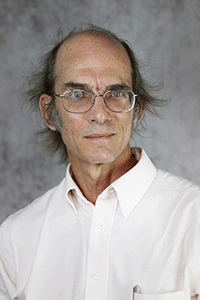
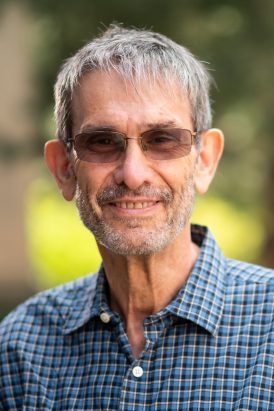
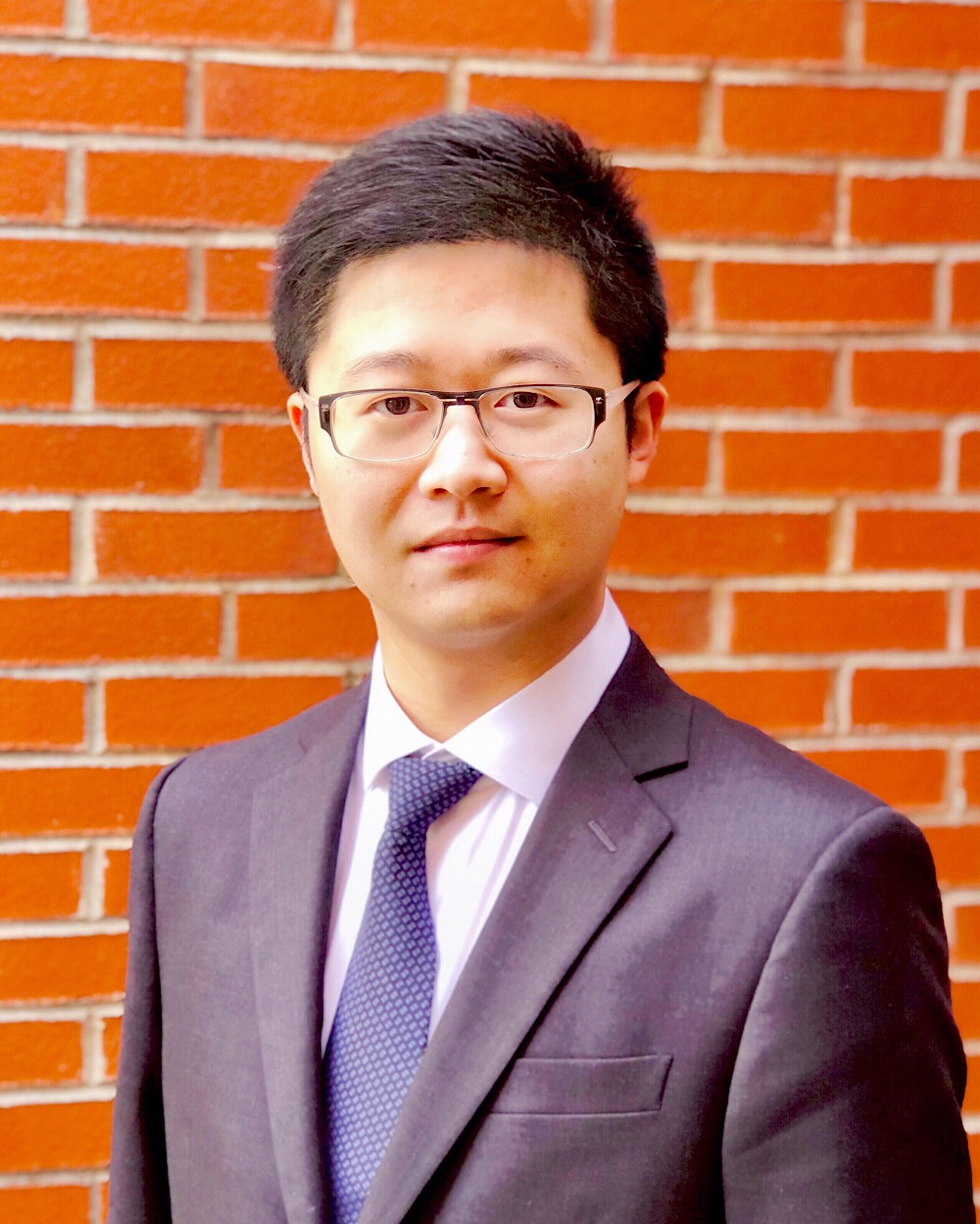
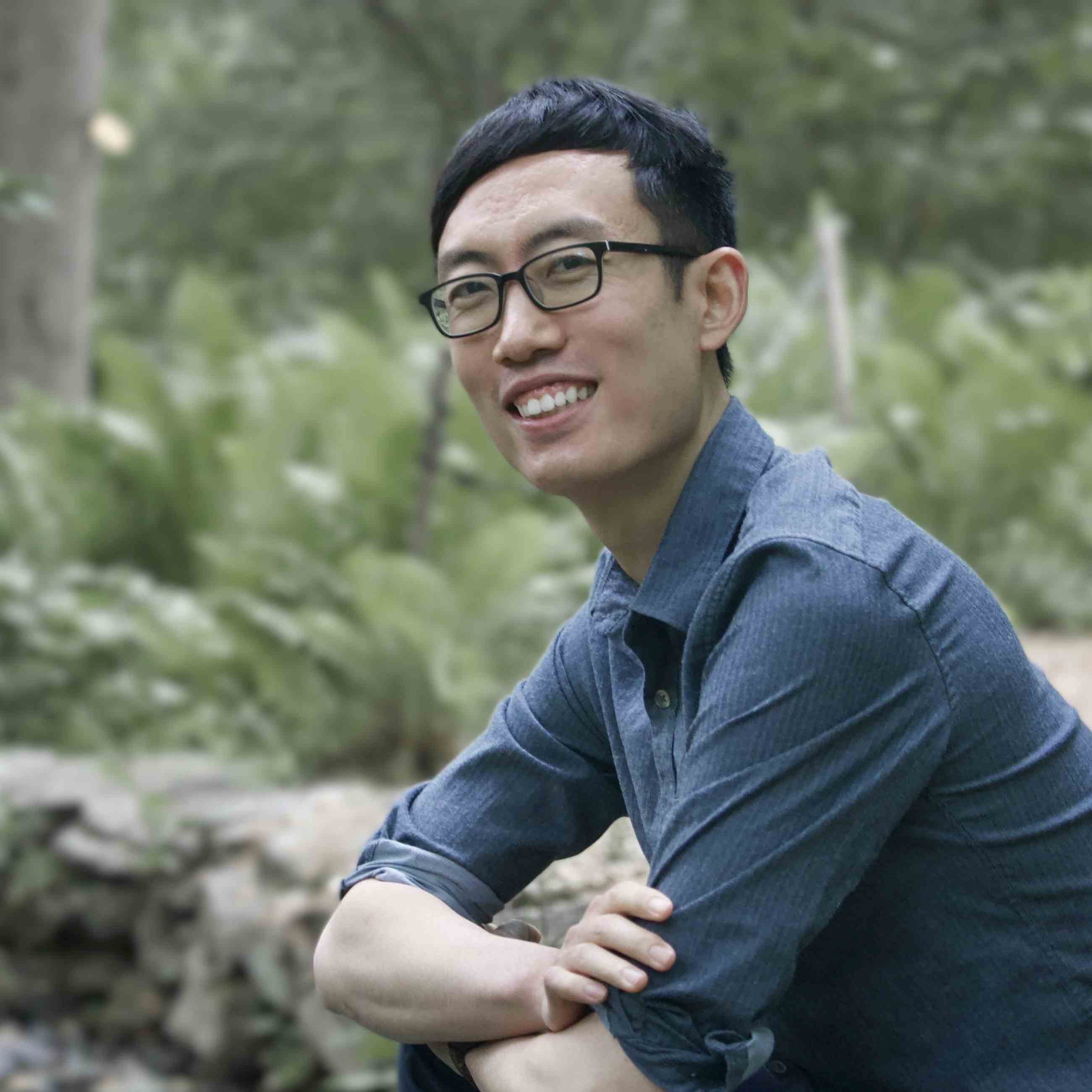
Calvin Berry is Associate Professor of Mathematics at the University of Louisiana at Lafayette, specializing in statistical decision theory, Bayesian methods, and multivariate analysis. He holds a PhD in Statistics from Cornell University and teaches across the statistics curriculum. Research focuses on: Decision-theoretic approaches to estimation Bayesian inference in restricted parameter spaces Improvements to classical estimators Multivariate distribution theory Publications frequently address minimax estimation, equivariant estimators, and enhancements to established methods like the James-Stein estimator. Berry developed original course materials including textbooks on probability and statistics used in undergraduate and graduate instruction. He provides statistical consulting services to university researchers while maintaining an active research program in theoretical statistics.
Professor Nabendu Pal is a faculty member in the Department of Mathematics at the University of Louisiana at Lafayette. His research focuses on decision theory, reliability and life testing, multivariate analysis, and biostatistics. He holds a Ph.D. in Statistics from the University of Maryland Baltimore County (1989), and M.S./B.S. degrees from the Indian Statistical Institute, Calcutta. His work includes contributions to statistical inference, parameter estimation, and applications in environmental science and health studies. Notable achievements include grants from the National Science Foundation and leadership roles in statistical associations. He has advised multiple Ph.D. students and authored/co-authored textbooks such as Handbook of Exponential and Related Distributions for Engineers and Scientists and Statistics: Concepts & Applications . Education: Ph.D. 1989 (UMBC), M.S./B.S. 1986/1984 (Indian Statistical Institute) Research Grants: Includes NSF-funded projects on population modeling and environmental impact assessments Professional Roles: Editor for Calcutta Statistical Association Bulletin , past Louisiana Chapter President of ASA His awards include Phi-Kappa-Phi membership and recognition for statistical contributions.
Ya'acov Ritov is a Professor of Statistics at the University of Michigan, affiliated with the Department of Statistics under the Literature, Science, and the Arts (LSA) School. He also held the Francis Hock Emeritus Chair in Statistics at The Hebrew University of Jerusalem. His academic career includes positions as a Lecturer (1984), Senior Lecturer (1989), Associate Professor (1990), and Professor (1992) at Hebrew University before joining the University of Michigan as a Professor in 2015. Ritov's research focuses on statistical theory, semiparametric models, high-dimensional data analysis, and empirical Bayes methods. He has contributed to areas such as robust Bayes procedures, errors-in-variables models, and the analysis of contingency tables. His work bridges theoretical advancements with practical applications in fields like machine learning, biostatistics, and econometrics. Education: B.Sc. in Electrical Engineering (1973, Technion), M.Sc. in Electrical Engineering (1980, Technion), Ph.D. in Statistics (1983, Hebrew University of Jerusalem). His doctoral thesis, advised by Peter J. Bickel and Yosef Yahav, explored robust Bayesian procedures. Scientific Awards: Francis Hock Emeritus Chair in Statistics (Hebrew University). Students: Advised numerous Ph.D. and Master's students, including Michael Law, Hamid Eftekhari, and Debarghya Mukherjee. His academic mentorship spans foundational statistical theory and applied methodologies. Labs/Teams: Collaborates extensively with researchers in statistics and interdisciplinary fields, contributing to projects on algorithmic fairness, transfer learning, and high-dimensional inference.
Wayne Yuan Gao is an Assistant Professor of Economics at the University of Pennsylvania's Department of Economics, housed in the Ronald O. Perelman Center for Political Science and Economics. He holds a Ph.D. from Yale University (2019) and prior degrees from Duke University (M.A., 2014) and the University of Hong Kong (B.Economics & Finance, 2012). His research focuses on econometrics and microeconomic theory , with a specialization in network economics and structural models . Gao has held visiting roles at Harvard University (2022) and has taught advanced econometrics courses at Penn, including ECON7310 and ECON8300. Research Interests: His work bridges econometric methodology and economic theory, addressing topics like nonparametric identification, dyadic network formation, and informal risk-sharing mechanisms. He emphasizes practical applications of econometric tools to real-world economic structures. Key Awards: 2021 Arnold Zellner Award (Journal of Econometrics) for Nonparametric Identification in Index Models of Link Formation . Exemplary Paper Award (ACM EC'21) for How Flexible is that Functional Form? . Teaching & Grants: Teaches graduate-level econometrics courses and has contributed to research on panel data models and labor income processes. His work often intersects with policy-relevant questions in economic networks and risk-sharing systems. Labs/Teams: Collaborates with interdisciplinary teams at Penn and beyond, focusing on econometric theory and network economics. Active in academic communities via GitHub and Google Scholar profiles.
Arie Beresteanu is an Associate Professor and Associate Chair in the Department of Economics at the University of Pittsburgh. Previously, he was an Assistant Professor at Duke University. He holds a Ph.D. from Northwestern University and an undergraduate degree from the Hebrew University of Jerusalem (summa cum laude). His research focuses on micro-econometrics, partial identification in structural models, and applications to industrial organization and environmental economics. Notable contributions include work on observable consequences of incompleteness in economic behavior and methodologies for convex moment predictions. Education includes: Ph.D. in Economics, Northwestern University Bachelor's Degree, Hebrew University of Jerusalem (summa cum laude) Research interests emphasize econometric methods for identification and partial identification, nonparametric estimation, and discrete choice modeling. His work bridges theoretical econometrics with applied problems in industrial organization, environmental policy, and cost analysis in telecommunications. Recent advancements include contributions to Minkowski summation inverse operations and quantile regression with interval data. Teaching spans Ph.D. and undergraduate courses in econometrics and industrial organization. He developed a new data course for economics undergraduates. His coding projects include interactive econometric tools in Fortran, Julia, Python, and JavaScript, such as an OLS visualization app and a simulated annealing Sudoku solver. Athletic pursuits include running with notable personal records in 5K (19:58), Half Marathon (1:34:08), and Marathon (3:18:45). He maintains an extensive resource page on running strategies and training programs.
Kevin He is an Assistant Professor of Economics at the University of Pennsylvania's School of Arts and Sciences. He holds a Ph.D. from Harvard University and was a postdoctoral fellow at Caltech. His research focuses on microeconomic theory, behavioral economics, and social learning dynamics, with applications to artificial intelligence, network economics, and experimental methods. He has received the Best Paper Award at ACM EC’21 for his work on Bayesian learning in networks. Research Interests: His primary areas include behavioral experiments analyzing AI alignment perceptions, the impact of network structures on information aggregation, and the evolution of learning mechanisms in strategic settings. He also explores topics like p-hacking mitigation, dynamic information preferences, and the design of incentive-compatible systems. Awards: Best Paper Award at ACM EC’21 (2021) Teaching: He has taught advanced courses such as Game Theory and Applications, Topics in Advanced Microeconomic Theory, and Behavioral Economics at both undergraduate and graduate levels. Labs/Teams: His research often involves interdisciplinary collaborations, particularly with computer scientists and statisticians, to address issues in algorithmic fairness, misinformation dynamics, and learning in complex systems.
Michel van der Wel is a faculty member at the Erasmus School of Economics , affiliated with the Econometric Institute at Erasmus University Rotterdam . His research focuses on finance , econometrics , and dynamic modeling of financial markets, particularly term structure of interest rates , liquidity , and volatility surfaces . He has extensively collaborated on empirical studies involving market microstructure , order flow , and financial time series analysis . His recent work includes high-impact papers in the Journal of Finance and other top journals, addressing topics such as nonstandard errors , shadow-rate models at the zero lower bound, and macro-finance interactions . These studies leverage advanced econometric techniques like Kalman filtering , dynamic factor models , and machine learning for forecasting bond risk premia and volatility. He has co-authored over 27 scholarly papers, many published in journals like Journal of Empirical Finance , Journal of Applied Econometrics , and Journal of Business and Economic Statistics . His collaborative network includes leading academics and institutions globally, though no specific awards, grants, or student advisory roles are detailed in the provided data.
Juan Carlos Escanciano holds the position of Research Chair in Economics and Full Professor (Catedrático) at the Economics Department of Universidad Carlos III de Madrid. He obtained his PhD in Economics from the same university in 2004. Prior to his current role, he served as Assistant Professor at Universidad de Navarra (2004-2006), Full Professor at Indiana University (2006-2018), and held visiting positions at Yale University, Cornell, Rochester, and MIT. His research focuses on Econometric Theory, including identification, estimation, specification testing, and applications in Financial Econometrics and Risk Management. Escanciano holds editorial roles at leading journals including Econometric Theory , Econometric Reviews , and Journal of Business and Economic Statistics , and serves as Co-Editor of Advances in Econometrics . He is a Fellow of the Journal of Econometrics and has published extensively in top-tier journals such as the Journal of the American Statistical Association and The Annals of Statistics . His research interests emphasize semiparametric/nonparametric methods, specification testing, and empirical asset pricing. Notable contributions include work on backtesting financial risk measures, conditional moment restrictions, and the development of robust estimation techniques. His recent work explores machine learning applications in econometrics and systemic risk analysis. Scientific Awards: Fellow of the Journal of Econometrics Grants & Advising: Extensive record in grant-funded research; has advised numerous PhD candidates through the university's Economics Doctoral Program. Labs/Teams: Leads the Quantitative Economics Research Group at UC3M, collaborating with global institutions on structural econometric modeling.
Emilia Simeonova is a Professor at the Johns Hopkins Carey Business School, where she has been a faculty member since 2013. Her research lies at the intersection of health economics, health policy, and behavioral science, with a strong focus on health equity, patient behavior, and the long-term effects of health shocks. She is affiliated with the Hopkins Business of Health Initiative (HBHI), contributing to interdisciplinary research on pressing health care challenges. PhD in Economics, Columbia University, 2008 Research Fellow, Center for Health and Wellbeing, Princeton University, 2011–2012 Faculty, Johns Hopkins Carey Business School, 2013–present Her research interests include health equity, economic evaluation, telehealth, health behavior change, and the intergenerational transmission of health. She investigates how socioeconomic factors, policy interventions, and health care delivery systems influence individual and population health outcomes. A significant portion of her recent work centers on the impacts of the COVID-19 pandemic, including mobility responses to public health orders and geographic spillovers of non-pharmaceutical interventions. The recent publications reflect a consistent focus on causal inference in health policy, using natural experiments and large administrative datasets. Themes include the long-term effects of childhood health, the role of income and family structure in health outcomes, and the evaluation of staggered policy implementations. Her work often leverages international data, such as from Sweden and tribal populations in the U.S., to draw generalizable conclusions. Dr. Simeonova has secured research funding from major national and international agencies, including the National Institutes of Health (NIH), National Science Foundation (NSF), Swedish Research Council, and Danish Academy of Sciences. These grants support her investigations into health disparities, patient adherence, and policy evaluation. National Institutes of Health (NIH) National Science Foundation (NSF) Swedish Research Council Danish Academy of Sciences She has collaborated with HBHI colleagues on projects examining spillover effects of public health policies, demonstrating how interventions in one region influence behavior in adjacent areas. This work highlights the importance of regional coordination in pandemic response.
Miguel Ángel Delgado is a Professor in the Department of Economics at Charles III University of Madrid, where he has held a faculty position since 1991. Promoted to full Professor in 1997, he served as Head of the Department of Economics (2006-2009) and Principal Investigator of the María de Maeztu Unit of Excellence (2014-2018). He earned his Licenciatura from Universidad Complutense de Madrid and PhD in Economics from the London School of Economics (1989), following which he was Assistant Professor at Indiana University. His academic journey reflects deep institutional commitment to Charles III University. Delgado's research centers on advancing non-parametric and semi-parametric inference methodologies in econometrics. He specializes in developing distribution-free testing frameworks applicable to microeconometric models, time series structures, and spatially dependent data, contributing foundational tools for empirical economic analysis. His publication trajectory (2012-2022) reveals consistent innovation in econometric theory, particularly in distribution-free testing for moment inequalities, stochastic monotonicity, and spatial autocorrelation. These works bridge theoretical rigor with practical applications in labor economics and structural modeling, appearing consistently in top-tier journals like the Journal of Econometrics. Delgado has supervised 13 doctoral theses and teaches advanced econometrics courses at both undergraduate (Econometría, Topics in Advanced Econometrics) and master's levels (Econometrics II, Nonparametric Inference). His editorial service spans Econometric Theory, Journal of Econometrics, and other leading publications, reflecting disciplinary leadership. As Principal Investigator of the María de Maeztu Unit of Excellence (2014-2018), he directed a high-impact research team focused on methodological innovation in economic analysis, fostering collaborative projects across theoretical and applied econometrics.
Raffaella Burioni is a Full Professor of Theoretical Physics in the Department of Mathematics, Physics and Computer Science at the University of Parma. She serves as Chair of the Non-Linear and Statistical Physics Division of the European Physical Society (EPS) and co-founded the Italian Society of Statistical Physics (SIFS), where she holds the position of Vice President. Her academic leadership includes directing the Ph.D. School in Physics and previously managing quality assurance for the Master's program in Physics (2017-2023). Her educational background includes an MS in Physics with distinction from the 2nd University of Rome and a PhD in Theoretical Physics from the University of Rome 'La Sapienza'. Postdoctoral experience spans the Theoretical Physics Laboratory of the École Normale Supérieure in Paris, the University of Milan, and the National Institute for the Physics of Matter (INFM). Prof. Burioni's research centers on equilibrium and non-equilibrium statistical physics, with deep expertise in graph theory, complex networks, random walks, and stochastic processes. She pioneers interdisciplinary applications to biological systems, neuroscience, and machine learning. Her work on rare events and anomalous diffusion has established fundamental principles like the 'single big jump' mechanism in transport phenomena. Recent investigations bridge statistical physics with neural network theory, examining kernel renormalization and feature learning in deep architectures. Analysis of her 15 most recent publications (2022-2025) reveals three dominant trends: (1) Theoretical advances in rare event statistics for jump processes and extreme value theory, (2) Network-based epidemic modeling incorporating adaptive temporal dynamics and simplicial structures, and (3) Machine learning physics connecting neural network theory to statistical mechanics through Bayesian effective actions and kernel methods. Her work consistently demonstrates how statistical physics principles solve complex problems across disciplines. Her scientific accolades include: Two-time recipient of the Enrico Persico Prize from the Accademia Nazionale dei Lincei Fellow of the Institute for Scientific Interchange (ISI) since 2014 American Physical Society Outstanding Referee (2018) Fellow of the European Centre for Living Technology (2020) As Director of the Ph.D. School in Physics, she mentors doctoral candidates while serving on editorial boards for Physical Review E, JSTAT, and Journal of Physics A. Her research is supported by international collaborations with institutions including the Kavli Institute for Theoretical Physics, Max Planck Institute, and Ben-Gurion University, evidenced by frequent keynote invitations at major conferences like StatPhys, ECCS, and APS March Meetings. Prof. Burioni leads collaborative research networks through her EPS division chairmanship and SIFS leadership, fostering cross-institutional projects on statistical physics applications. Her campus-based studies leverage Wi-Fi data from Parma University to model pedestrian dynamics and epidemic spreading in real-world constrained environments.
Cheng Mao is an Assistant Professor in the School of Mathematics at the Georgia Institute of Technology (Georgia Tech), with office location in Skiles 102C and mailing address at 686 Cherry Street, Atlanta, GA 30332 USA. His position is active as of 2025, with no indication of part-time status or retirement. Education: B.S. and M.A. in Mathematics, University of California, Los Angeles (UCLA), 2013 Ph.D. in Mathematics and Statistics, Massachusetts Institute of Technology (MIT), 2018 (Advisor: Philippe Rigollet) Postdoctoral Researcher, Yale University, 2018-2019 (with Yihong Wu) Cheng Mao's research centers on the mathematics of data science, specifically statistical inference for random graphs. His work bridges mathematical statistics, applied probability, and theoretical computer science to address fundamental problems in graph matching, community detection, and matrix estimation under structural constraints like total positivity. He investigates algorithmic efficiency, information-theoretic limits, and the detection-recovery gap in planted models. His publication trends (2020-2025) reveal deep specialization in spectral methods for graph matching (e.g., Erdős-Rényi graphs, noise robustness) and combinatorial approaches to planted structures (dense cycles, subhypergraphs). Key themes include leveraging low-degree polynomials for detection, tree counting for network correlation, and method-of-moments techniques for permutation learning. Matrix estimation under Monge and total positivity constraints forms another consistent thread. Scientific Awards: No scientific awards mentioned in the provided text Cheng Mao advises three Ph.D. students at Georgia Tech: Jingyi (Joy) Zhang (co-advised with Debankur Mukherjee), Shenduo Zhang, and Abhishek Dhawan (Ph.D. 2024, now postdoc at UIUC, co-advised with Anton Bernshteyn). Timothy Wee joined as a postdoc in 2024. The text contains no references to research grants or external funding sources. No laboratories, research teams, or collaborative groups are specified in the source material.
Mary C. Meyer is a Professor at Colorado State University , Department of Statistics. Her research focuses on nonparametric estimation and shape-restricted inference, with applications in environmental science, public health, and anthropology. Education: Ph.D. in Statistics from University of Michigan (1996) Research Interests include: Nonparametric function estimation under shape constraints Constrained regression splines and generalized additive models Statistical software development for constraint-based modeling Applications to forest dynamics and public safety Publication Trends show a focus on: Statistical methodology for shape-restricted models Environmental applications (Landsat time series, forest monitoring) Public safety analysis (airbag effectiveness studies) Statistical software packages (cgam, cone projection algorithms) Email: meyer@stat.colostate.edu
Robert Stamps is a Professor and Department Head of Physics and Astronomy at the University of Manitoba, within the Faculty of Science. His research focuses on magnonics, artificial spin ice systems, hyperbolic optics, and neuromorphic computing. He explores complex systems such as spin textures, magnetic dynamics, and the interplay between spintronics and photonics. His work bridges condensed matter physics, materials science, and computational approaches. Research Interests: Magnonics and spin wave dynamics in antiferromagnetic materials Artificial spin ice configurations and defect control Hyperbolic metamaterials and optical propagation Neuromorphic systems modeled using restricted Boltzmann machines Phase transitions and topological defects in nanostructured magnets Recent Work Trends: Over 2021-2025, his publications emphasize cavity magnonics, active inference in spin systems, and hyperbolic optical phenomena in antiferromagnets. He investigates emergent behaviors in artificial spin ice under varying fields and thermal conditions. Advising & Grants: No specific students or grants listed, though his research likely involves collaborative experimental/theoretical projects. His lab likely focuses on advanced microscopy, magneto-optical measurements, and computational simulations. Labs/Teams: While not explicitly named, his work suggests involvement in multi-institutional collaborations in spintronics and condensed matter physics.
Gemechis Djira is a Professor of Biostatistics at South Dakota State University (SDSU) and serves as co-director of the SDSU Statistical Consulting Center. He holds a Ph.D. in Biostatistics from Leibniz University Hannover, along with multiple master's degrees in statistics and biostatistics from institutions including Addis Ababa University and Limburgs Universitair Centrum. His research focuses on simultaneous statistical inferences, structural equation modeling, and methodological advancements in biostatistical applications. He has extensive professional experience including over 20 years at SDSU, previously as Associate and Assistant Professor. His academic responsibilities include teaching advanced biostatistics courses (e.g., Biostatistics I/II, Regression Analysis) and advising graduate students. He has led research projects funded by USDA ($150k) and OSHA ($110k), analyzing agricultural education trends and occupational safety programs. Professional memberships include the International Biometric Society (ENAR region). Recent research emphasizes spatial panel autoregressive models, quantile-based statistical methods, and healthcare data analytics. Djira has published extensively in top journals like Biometrical Journal and Communications in Statistics, with a focus on developing novel statistical methodologies for real-world applications.