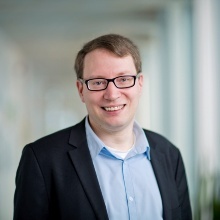
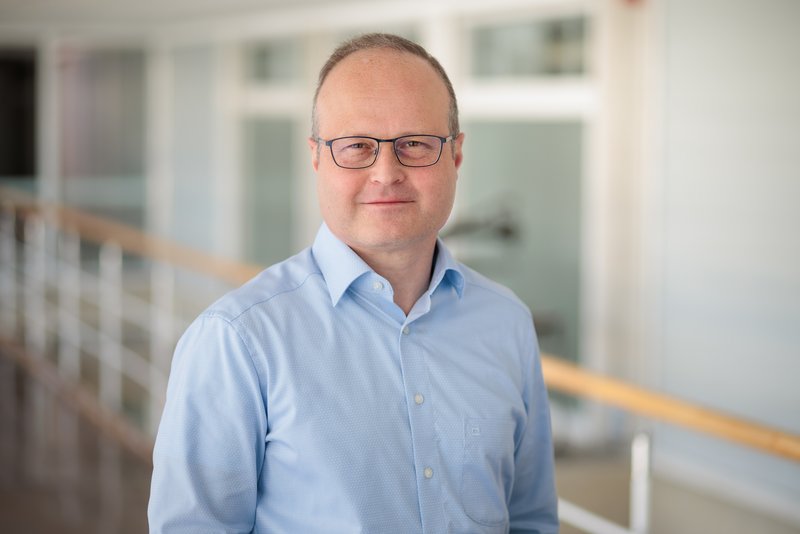
Professor Andreas Mildner, born in 1984, serves as Professor of Harp and Deputy Chair of the University Council at the University of Music Würzburg. He is also the spokesperson for the Harp Department at the institution. Mildner is recognized as one of the most interesting harpists of his generation, known for his "technical brilliance" and "incredibly aesthetic play with timbres." He discovered his passion for the harp at age six and began formal training at 14 in Gisèle Herbet's harp class, with further instruction from Ursula Holliger, Frederique Cambreling, and Marie-Pierre Langlamet. After graduating with honors in 2007, he completed his master class studies in 2009. Mildner has established himself as a much sought-after soloist both in Germany and internationally. His solo debut came at age 17 with the Czech Chamber Philharmonic Orchestra in Prague, and he has since performed with renowned orchestras including the WDR and SWR Symphony Orchestras and the Bremen Philharmonic. First prize at the 6th International Harp Contest Arpista Ludovico in Madrid Two special prizes for best interpretation of final concertos Bavarian Cultural Prize Bavarian Art Prize Scholarships from multiple prestigious foundations Mildner maintains an active performance schedule, regularly appearing at major music festivals worldwide including the Mecklenburg-Vorpommern Festival, Ludwigsburg Palace Festival, Schleswig-Holstein Music Festival, Central Europe Festival, World Harp Congress, Lucerne Festival, and International Harp Festival Rio de Janeiro.
Schloss Dagstuhl - Leibniz Center for InformaticsGermany
Umakishore Ramachandran is a Professor in the School of Computer Science within the College of Computing at Georgia Institute of Technology. His research spans edge computing, distributed systems, and real-time video analytics, with significant contributions to fog computing infrastructure, mobile systems, and sensor networks. Over a prolific 38-year career, he has authored 142 publications with major contributions in 2022-2025. His research interests focus on bridging the gap between cloud and edge computing, with pioneering work in video analytics systems like EVA and MicroEdge. He investigates resource optimization for latency-sensitive applications, developing novel approaches for load shedding, data management, and container runtime efficiency at the network edge. His work addresses fundamental challenges in distributed camera networks, autonomous vehicle systems, and real-time stream processing. Ramachandran's recent publications reveal a strong emphasis on practical edge computing solutions, with 75% of his 2021-2025 work focusing on video analytics and infrastructure optimization. His research shows increasing collaboration with industry partners while maintaining academic rigor, with publications appearing in top venues like SIGMOD, Middleware, and DEBS. The work consistently addresses real-world constraints of resource-constrained edge environments. Ramachandran has mentored numerous researchers who have become principal investigators on edge computing projects, with notable collaborators including Harshit Gupta, Enrique Saurez, and Zhuangdi Xu appearing as first authors on multiple papers. His work has received significant grant support for projects related to mobile fog computing and distributed video analytics. He leads research in the Edge Computing Laboratory at Georgia Tech, focusing on the development of practical frameworks for real-world deployment of edge infrastructure. Current projects include eCAV for connected autonomous vehicles and MicroEdge for multi-tenant camera processing systems.
Prof. Dr. Janick Edinger is a Professor of Distributed Operating Systems at the Department of Informatics, Faculty of Mathematics, Informatics and Natural Sciences, University of Hamburg, Germany. He leads a research group focused on distributed, context-aware, and adaptive computing systems, with a strong emphasis on edge computing, computation offloading, and assistive technologies. Education: PhD in Computer Science, University of Mannheim Studies at National Taiwan University Studies at University of Alberta, Canada Research stays at University of British Columbia, Hong Kong Polytechnic University, and Georgia State University, USA His research explores how edge computing and computation offloading can enable efficient, privacy-preserving processing of sensor and video data close to their sources, particularly in dynamic environments. He investigates the integration of autonomous and heterogeneous systems—such as drone fleets and mobile devices—into scalable middleware platforms for real-time monitoring and decision-making in logistics and industrial operations. His work also emphasizes societal impact, contributing to accessible routing, adaptive interfaces, and crowd-sourced mapping. The recent publications reflect a strong trend in edge computing, federated learning, privacy-preserving analytics, and assistive technologies. Topics include WebAssembly-based offloading, emotion prediction via eye tracking, real-time traffic detection, and predictive maintenance in Industry 4.0, showcasing a blend of foundational systems research and applied human-centered computing. Scientific Awards: PerCom 2021 Mark Weiser Best Paper Award Best Paper Award at IEEE PerCom 2021 for 'Voltaire: Precise Energy-Aware Code Offloading Decisions with Machine Learning' Prof. Edinger actively advises students and leads research projects involving grants and collaborations. His team includes PhD candidates and researchers working on middleware, edge systems, and context-aware applications. He has served on conference program committees, such as shadow PC member for EuroSys 2021, and publishes in top venues including IPDPS, PerCom, CHIIR, and COMPSAC. Labs and Teams: He leads the Distributed Operating Systems research group at the University of Hamburg, where he mentors students and collaborates on projects involving edge computing, IoT, and adaptive systems.
Prof. Dr. Estela Suarez is a Professor of High Performance Computing at the Institute for Computer Science, University of Bonn (W2 in the Jülich Model) and Joint Lead of the Division "Novel System Architecture Design" at the Jülich Supercomputing Centre (JSC), Forschungszentrum Jülich GmbH. She also leads the Research Group "Next Generation Architectures and Prototypes" at JSC and serves as Spokesperson of Helmholtz Information Program 1, Topic 2. Currently on sabbatical during the 2024/2025 and 2025 academic years, she remains active in research leadership roles. 2010: PhD in Physics from University of Geneva, Switzerland 2004: Master in Physics, Specialization in Astrophysics, University Complutense of Madrid, Spain Professor Suarez specializes in high performance computing with particular expertise in heterogeneous HPC system architectures and modular supercomputing architecture (MSA). Her research spans hardware prototyping and evaluation, system software development, operational data analysis, and co-design methodologies. She has pioneered approaches to address hardware heterogeneity through system-wide orchestration of diverse computing resources, enabling more efficient scientific computing across multiple domains. Her work bridges theoretical computer architecture with practical implementation challenges in exascale computing environments, focusing on real-world applications that require specialized hardware configurations. Professor Suarez's publication record shows a clear evolution from foundational work on the DEEP project (2016) through the development of modular supercomputing concepts (2019-2021) to current applications across diverse scientific domains (2022-2024). Her recent publications demonstrate how modular architectures can be effectively applied to climate modeling, neuroscience simulations, quantum chemistry calculations, and other computationally intensive fields. This trend highlights her focus on practical implementation challenges and the growing importance of adaptable computing architectures in modern scientific research. 2023/2024 Lehrpreis der Universität Bonn: UniBonn teaching award Professor Suarez has secured significant research funding through major projects including NUMERIQS (Projects A05, B02, and Z02), European Processor Initiative (EPI), DEEP-SEA (Software for Exascale Architectures), IFCES2 (optimization of simulation algorithms for exascale supercomputers), and AIDAS (virtual laboratory between Forschungszentrum Jülich and CEA on AI and data analytics). While currently not accepting new students due to sabbatical, she has previously mentored graduate students in high performance computing techniques and has delivered numerous invited lectures at international conferences. Professor Suarez leads the "Next Generation Architectures and Prototypes" research group at JSC and serves as Joint Lead of the "Novel System Architecture Design" division. She chairs the Research and Innovation Advisory Group (RIAG) from EuroHPC Joint Undertaking since 2024. Her work involves close collaboration with international research teams on advancing supercomputing architectures, including contributions to the University of Bonn's new HPC system "Marvin" which ranks on both the TOP500 and GREEN500 lists.
Prof. Nicola Jürgensen is a distinguished German clarinetist and Professor of Clarinet at Faculty 1 of Folkwang University of the Arts in Essen, Germany. She also serves as Dean of Faculty 1 and is a Confidential Lecturer for the German Academic Scholarship Foundation. Her career seamlessly integrates performance, education, and artistic leadership. She is the Artistic Director of WDR 3 Campus Concerts and a board member of the Folkwang University Foundation. Professor of Clarinet, Folkwang University of the Arts (2018–present) Dean, Faculty 1 Artistic Director, WDR 3 Campus Concerts Board of Directors, Folkwang University Foundation Principal Clarinet (former), WDR Symphony Orchestra Cologne (2001–2018) Regular coach, German National Youth Orchestra (2020–present) Nicola Jürgensen's research and artistic interests center on clarinet performance, chamber music, and contemporary repertoire. She is deeply committed to historical performance practice, evidenced by her recordings on basset clarinet, and to expanding the global reach of classical music through international masterclasses and festivals. Her work bridges traditional European repertoire and modern experimental works, including performances in avant-garde operatic productions. She has collaborated with leading orchestras and ensembles worldwide, from Berlin and Leipzig to New York, Bangkok, and Auckland. Her recent artistic output reveals a strong focus on rediscovered works (e.g., Wilms' concerto), contemporary compositions (e.g., Kancheli, Zwilich), and cross-cultural collaborations (e.g., German Masters Music Festival in Thailand). She emphasizes pedagogical innovation and performance excellence, mentoring students who now hold principal roles in Germany’s top orchestras. Her recordings and performances consistently highlight expressive depth, technical mastery, and scholarly engagement with historical instruments and arrangements. Scientific and Artistic Awards: Mozart Prize, Wiesbaden Mozart Society German Music Competition Soloists' Prize (1999) Germany Radio Promotion Prize (2002) Nicola Jürgensen has been instrumental in guiding numerous students into prestigious orchestral positions and leads the ensemble 'Folkwang Clarinets' with her students. She holds multiple leadership roles in academic and artistic institutions and continues to perform as a guest principal clarinetist with major orchestras like the Mahler Chamber Orchestra and NDR Elbphilharmonie Orchestra. Her involvement in grants and funding appears indirect through institutional roles and festival organization. She is actively involved with several artistic initiatives, including the 'Spannungen' festival, WDR 3 Campus Concerts, and international masterclass programs. Her ensemble collaborations and educational outreach reflect a sustained commitment to excellence, innovation, and accessibility in classical music.
Christof Weiß is a Professor for Computational Humanities at the CAIDAS / Institute of Computer Science, Julius-Maximilians-Universität Würzburg (JMU), Germany. He serves as Head of the DFG-funded Emmy Noether group on Computational Analysis of Music Audio Recordings: A Cross-Version Approach. His academic journey includes previous positions as Visiting Researcher at University Télécom Paris (2021), Visiting Lecturer at Karlsruhe University of Music (2020, 2021), and Research Assistant at International Audio Laboratories Erlangen (2015-2022) and Fraunhofer Institute for Digital Media Technology (2012-2015). His educational background encompasses a PhD in Media Technology from University of Technology Ilmenau (2017), Concert Diploma in Composition from Würzburg University of Music (2012), Physics Diploma from University of Würzburg (2012), and Music Diploma in Composition from Würzburg University of Music (2011). This unique combination of technical and artistic training forms the foundation of his interdisciplinary research approach. Weiß's research operates at the critical intersection of computer science and musicology, developing novel computational methods for analyzing musical structures in audio recordings. His work bridges technical audio processing with musicological insights, creating methodologies for tonal analysis, key estimation, and cross-version comparison of musical performances. His approach combines deep learning techniques with music theory to extract meaningful patterns from large music corpora, enabling new forms of musicological corpus studies that were previously impossible. His recent publications reveal a clear research trajectory toward integrating advanced machine learning with fundamental musicological questions. The consistent theme across his work involves analyzing classical music structures through computational lenses, with particular emphasis on cross-version consistency in performances, tonal complexity measurement, and developing datasets that support computational musicology. His publications span both highly technical audio processing journals and musicology-focused venues, demonstrating his commitment to bridging these disciplines. Best paper award at the 4th conference on Computational Humanities Research (CHR), 2023 KlarText award for science communication of the Klaus Tschira Foundation, 2018 2nd prize at Festival Pablo Casals composition competition, Prades (France), 2013 Youth Cultural Advancement Award (Kulturförderpreis) of the city of Amberg, Germany, 2011 As principal investigator of the DFG Emmy Noether group, Weiß leads a multidisciplinary research team investigating computational analysis of music audio recordings through a cross-version approach. His research has secured significant funding including the prestigious Emmy Noether program, supporting doctoral and postdoctoral researchers working on various aspects of music information retrieval and computational humanities. His collaborative network spans institutions across Europe, including University Télécom Paris, Queen Mary University of London, and multiple German research centers. Weiß leads the Computational Humanities research group at CAIDAS, which focuses on developing computational methodologies for music analysis with particular emphasis on classical repertoire. The lab creates specialized datasets (including the Wagner Ring Dataset and Schubert Winterreise Dataset), develops algorithms for structural music analysis, and applies these tools to address musicological questions that require computational scale and precision. Their work bridges the gap between technical audio processing capabilities and humanities research questions, creating new pathways for understanding musical structure and evolution.
Prof. Dr. Harald Ritz serves as Professor of Practical Computer Science, especially Business Informatics, at the Technical University of Central Hesse (THM) within the Department of Mathematics, Natural Sciences and Computer Science since 2003. He holds leadership roles as Chair of Examination Committees for B.Sc. and M.Sc. Business Information Systems and Spokesperson for the MNI department in the Business Informatics Working Group (AKWI). His educational background includes a Diplom in Business Informatics (Dipl.-Wirtsch.-Inform.) and doctorate (Dr. rer. pol.) from the Technical University of Darmstadt, following professional experience at SAP SI AG and a professorship at Heilbronn University of Applied Sciences. Ritz's research centers on AI-driven digital transformation for data-driven enterprises, with focus on the “Data to Decision” value chain encompassing Framing, Allocation, Analytics, and Preparation phases. His work integrates business intelligence, data warehousing, machine learning, and SAP ecosystems to address challenges in SME digitalization, operational IT management, and educational technology. Current projects emphasize AI applications in higher education, including intelligent tutoring systems and automated feedback mechanisms. Analysis of his 15 most recent publications reveals a consistent trajectory toward applied AI solutions in business contexts, particularly in intelligent chatbots for educational support, financial trading algorithms, and cloud-based data infrastructure. The research demonstrates increasing integration of no-code platforms, real-time analytics, and domain-specific AI applications across logistics, banking, and procurement sectors. No scientific awards were documented in the source materials. Professor Ritz actively supervises academic development through bachelor’s and master’s theses, doctoral research, and collaborative projects. Current initiatives include the “Winfy” AI chatbot (v4.0, 2025), AI-based feedback systems for educational content (Freiraum 2025 grant), the frits intelligent tutoring project with Prof. Kammer, and doctoral research on AI adoption in SMEs. His work bridges theoretical research with practical implementation in SAP environments and cloud platforms. He operates within THM’s MNI department infrastructure, collaborating through the Business Informatics Working Group (AKWI) and contributing to the Digital Classroom communication platform for online education.
University of Music, Drama and Media HanoverGermany
Aaron Cassidy is an American composer and conductor based in Berlin and Hannover. He serves as Professor of Composition and Director of Incontri – Institut für neue Musik at the Hochschule für Musik, Theater und Medien Hannover. His work emphasizes innovative graphical notations prioritizing physical sound production and non-geometrical rhythm theory. Cassidy’s compositions have been performed globally across 29 countries, with 12 commercial recordings on major labels like Kairos and NEOS. As a conductor, he specializes in contemporary and historical repertoire, leading over 100 world premieres with ensembles such as Ensemble Musikfabrik and ELISION. Notable engagements include the Munich Biennale and Melbourne Recital Centre. His recent research includes a 2025 reflection on non-geometrical rhythm and collaborative Erasmus+ residencies in Klagenfurt. Current projects include works for bassoon, violin-piano duet, and ANAM residency with ELISION in Melbourne (2025). Cassidy’s academic focus bridges compositional theory and performance practice. His research explores notation’s role in shaping musical interpretation, with particular attention to rhythm’s non-metric frameworks. Recent works like Reassessing Non-Geometrical Rhythm (2025) synthesize a decade of theoretical development. His teaching integrates experimental techniques and historical context, fostering innovation in Hannover’s new music institute.
Adlen Ksentini is a Professor at EURECOM, a leading graduate school and research center in Sophia Antipolis, France, specializing in digital science and communication systems. His extensive research focuses on next-generation mobile networks (5G/6G), network management, and the integration of artificial intelligence with telecommunications infrastructure. Dr. Ksentini actively contributes to major EU research initiatives including 6G-BRICKS and AC3, serving as a key researcher and project leader in the development of future network architectures. Dr. Ksentini's research interests center around network slicing, intent-based networking, edge computing, and the application of machine learning to network management problems. His work bridges theoretical advancements with practical implementations in 5G/6G systems, with particular emphasis on zero-touch network management, energy efficiency optimization, quality of service assurance, and the integration of large language models with network operations. His research has significantly contributed to the development of O-RAN (Open Radio Access Network) frameworks and the evolution of network automation. His recent publication trends reveal a strategic shift toward AI-native network architectures, with increasing focus on integrating large language models (LLMs) with network management systems. His work demonstrates a clear progression from traditional network management approaches to more autonomous, AI-powered systems capable of intent-based configuration, self-optimization, and predictive maintenance. The publications show strong emphasis on practical implementations within the 6G research ecosystem, addressing critical challenges in network slicing, resource allocation, and energy efficiency. As a research supervisor, Dr. Ksentini mentors several PhD students including Abdelkader Mekrache, Karim Boutiba, Bouziane Brik, and Houda Hafi, who frequently appear as co-authors on his publications. His research is primarily funded through major EU research projects such as 6G-BRICKS (Building Reusable Testbed Infrastructures for Cloud-to-Device Breakthrough Technologies) and AC3 (which focuses on Cloud Edge Continuum). Dr. Ksentini is actively involved with the 6G-BRICKS project consortium and the AC3 project team, where he contributes to developing next-generation network architectures that integrate communication, computing, and sensing capabilities. His work within these projects focuses on creating reusable testbed infrastructures and addressing security and trust management challenges in the cloud-edge continuum.
Prof. Dr. Torsten-Oliver Salge is a University Professor and Co-Director of the Institute for Technology and Innovation Management (TIM) at RWTH Aachen University, where he heads the Innovation, Strategy and Organisation (ISO) Group since April 2013. He also serves as a Fellow of Cambridge Digital Innovation at the University of Cambridge, maintaining strong international academic connections. His work bridges theoretical organizational research with practical applications across multiple sectors. Salge completed his business administration studies across multiple European countries including Germany, France, Italy, and England. He earned both his Ph.D. and M.Phil. degrees from the University of Cambridge. His academic journey includes positions as interim professor at the University of Duisburg-Essen (2012-2013), junior professor at the Ruhr-University Bochum (2009-2012), and post-doctoral research associate at Cambridge (2009). His research focuses on organizational behavior in innovation contexts , particularly examining collaboration across disciplinary, organizational, and institutional boundaries. He investigates how organizations learn from performance feedback, approach problem-solving, and implement strategic HRM practices that enhance employee well-being. A distinctive feature of his work is the examination of technology legitimation, adoption processes, and payoff realization in complex organizational settings. His research combines behavioral and institutional perspectives to understand innovation processes. Analysis of Salge's publication record reveals a strong emphasis on healthcare innovation management, with numerous studies examining hospital information systems, infection control, and healthcare service improvement. His work often applies dynamic capabilities theory to innovation processes and demonstrates methodological sophistication through both quantitative and qualitative approaches. The publications show consistent contributions to top-tier management journals including Academy of Management Review , MIS Quarterly , and Journal of Product Innovation Management . Scientific Recognition: Nominated for European Research Paper of the Year 2016 (CIONET) Multiple Best Paper awards at Academy of Management conferences across various divisions Shortlisted for Strategic Management Society (SMS) Best Conference Paper Awards Recipient of prestigious scholarships including ESRC, DAAD, and Cambridge European Trust funding Recognized with the Knut Holt Best Paper Award from ISPIM Throughout his career, Salge has maintained active collaborations with organizations across healthcare, central government, and financial services sectors. His international scholarly network is evidenced by visiting appointments at universities in Auckland, Buenos Aires, Cambridge, Oxford, and Philadelphia. At RWTH Aachen, he leads an interdisciplinary team within the TIME Research Area, which comprises over 100 senior and junior researchers working at the intersection of innovation, technology management, marketing, and entrepreneurship. As Co-Director of the RWTH TIM institute, Salge oversees a research unit with approximately 30 doctoral candidates, 5 postdocs, and more than 20 student researchers. The institute maintains strong industry connections and focuses on strategic technology management, open innovation, innovation culture, organizational change, business model development, and customer-oriented value creation.
Ann-Katrin Zimmermann is an apl. Professor (non-tenured professor) at the Musicological Institute within the Faculty of Philosophy at the University of Tübingen. She has held this position since 2018, following her time as a private lecturer from 2012-2018. In addition to her academic work, she serves as a dramaturg at the Gewandhaus Leipzig since 2013 and has teaching assignments at LMU Munich, Felix Mendelssohn Bartholdy University of Music and Theatre, and Leipzig University since 2012. Her educational background includes: Habilitation (2012) on "Forms of slow movements in the classical cycle" Promotion/PhD (2006) on "Studies on medieval three-part harmony" Master's degree in musicology, philosophy and art history from University of Tübingen and University of Oxford (1998-2003) Professor Zimmermann's research spans multiple eras and aspects of music history and theory. Her work focuses particularly on polyphony of the 12th and 13th centuries, keyboard music from the 15th-18th centuries, early German-language music terminology, and the works of Heinrich Schütz, composers of the Viennese classics, and Richard Strauss. She has made significant contributions to the fields of organology, instrumentation, music iconography, and 19th-century symphonies, with particular interest in cross-temporal aspects of genre, form, and composition. Her extensive publication record shows a consistent focus on historical music analysis, particularly examining compositional strategies across different periods. Her recent work has increasingly focused on Richard Strauss and Mozart, while maintaining her longstanding interest in early music traditions and terminology. She has published numerous articles in prestigious journals and contributed to important edited volumes in musicology. Professor Zimmermann is actively involved in the academic community: Member of the Society for Music History in Baden-Württemberg since 2009 Member of the DHV since 2012 Throughout her career, Zimmermann has balanced academic research with practical musical experience. She has been a bassoonist and leader of various vocal and instrumental ensembles since 1998, and served as a church musician from 1997-2014. Her work as a dramaturg at the Gewandhaus Leipzig since 2013 demonstrates her commitment to connecting scholarly research with contemporary musical practice.
Robert Schumann University of Music DüsseldorfGermany
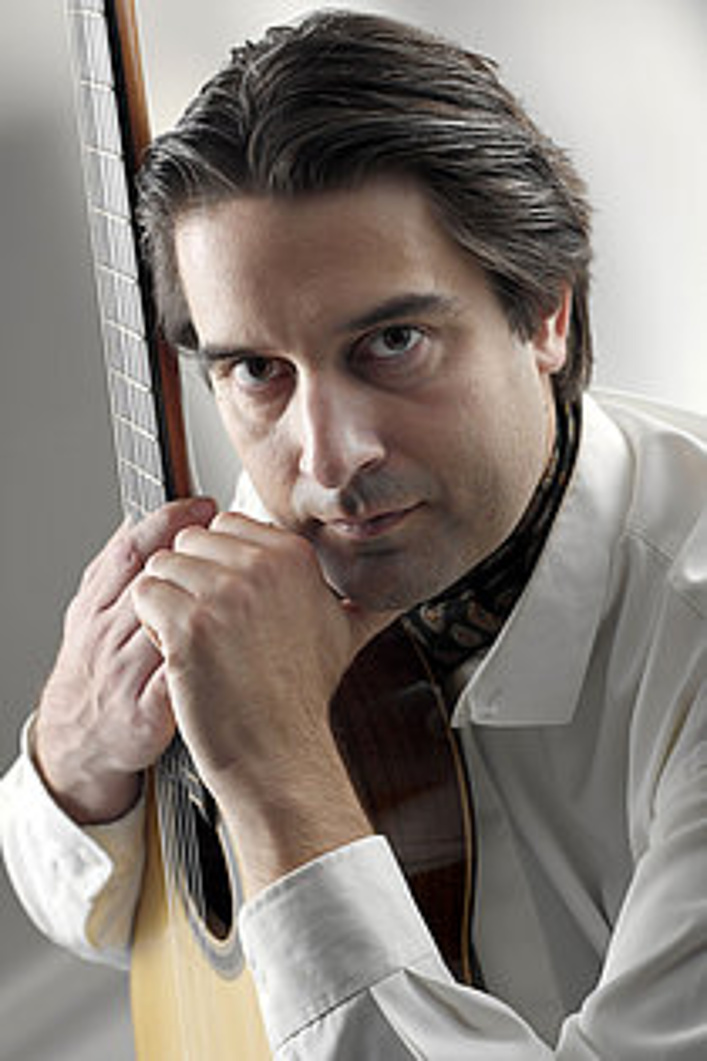
Professor Alexander-Sergei Ramirez is a distinguished classical guitarist serving in the Guitar Department at the Robert Schumann Hochschule Düsseldorf. Born into a family of artists in Lima, Peru, he has established an international career as both performer and educator since joining the faculty in 1997. His research and performance interests center on classical guitar performance with specializations in Latin American guitar repertoire, Spanish guitar music, and historical guitar works. Ramirez has made significant contributions to musicology through his rediscovery and performance of previously unknown works by Peruvian composer Pedro Ximénez de Abrill, bringing important historical compositions to modern audiences. His extensive discography reveals trends across multiple musical traditions, with recent recordings exploring multinational guitar repertoire spanning five continents as featured in his critically acclaimed 'Odyssey' album. Ramirez's work demonstrates exceptional technical mastery combined with deep musical understanding across diverse stylistic periods from Renaissance to contemporary compositions. First prize at the Alhambra International Guitar Competition CD of the month on MusicalWeb CD of the month by Ecos magazine Voted CD of the month by Ecos magazine for 'Odyssey' As an educator, Ramirez mentors the next generation of guitarists while maintaining an active international performing schedule. His recordings with major labels like Deutsche Grammophon and DENON have received enthusiastic reviews, with critics describing his work as 'the most fascinating 75 minutes I have ever heard' and 'Spanish school par excellence.' Ramirez also explores historical performance practices through his work with romantic guitar in a duo with fortepianist Sheila Arnold.
Steffen Becker is a Professor at the University of Stuttgart's Faculty of Computer Science, Electrical Engineering and Information Technology, affiliated with the Institute for Software Engineering's Software Quality and Architecture group. His work focuses on software engineering, cloud systems, model-driven engineering, and cybersecurity. He leads research in architectural modeling tools like Slingshot, GUI testing frameworks (ViMoTest), and hardware security analysis. Recent studies explore AI integration in testing, education, and automotive systems (CARISMA). Research interests include elasticity modeling, self-adaptive systems, and educational technology. His 2025 publications address issues like end-user hardware comprehension, FPGA security, and LLM-driven test generation. Notable tools developed include the Slingshot Simulator for cloud-native systems and Gropius for cross-component issue management. Becker contributes to both theoretical advancements and practical implementations in software quality, security, and cloud infrastructure. Key Areas: Software Architecture, Cyber-Physical Systems, Testing, Reverse Engineering Tool Developments: ViMoTest, Slingshot, Gropius Education Focus: Online programming pedagogy and curriculum innovation His work bridges foundational research with industry applications, addressing challenges in automotive computing, cloud elasticity, and human-centric security awareness. Recent efforts emphasize explainable hardware (XHW) and AI's role in qualitative analysis automation.
Prof. Wolfgang Blochinger is a Professor in the Department of Computer Science at Reutlingen University, specializing in Services Computing and IT Security. He leads teaching programs in Wirtschaftsinformatik (Business Informatics) at both Bachelor and Master levels, focusing on foundational topics such as Programming Basics, Operating Systems, IT Security, Cloud Computing, and Big Data Technologies. His research emphasizes Cloud Computing and High Performance Computing, particularly in elasticity control, parallel processing, and cloud resource optimization. His research projects include developing elastic parallel systems for HPC applications, cloud migration strategies, and automated cloud service generation. Notable contributions involve frameworks like TASKWORK for elastic task parallelism and the Elasticity Description Language for cloud applications. He has published extensively on serverless computing, cost-efficient cloud resource utilization, and container-based isolation techniques. Prof. Blochinger collaborates with industry partners through the university's labs, including the AI-Reallabor AIDA and Cloud Lab. His work bridges academia and industry, addressing real-world challenges in distributed systems and cloud infrastructure. Current research trends focus on self-tuning cloud services and adaptive parallel algorithms for scalable computing environments.
Cristina Bianchi is a Professor of Harp and Chamber Music at the Munich University of Music and Performing Arts, affiliated with the Institute for Artistic Instrumental Studies. She has held principal harpist positions at prestigious institutions including the Teatro Carlo Felice in Genoa and the Bavarian Radio Symphony Orchestra, collaborating with world-renowned conductors such as Claudio Abbado and Lorin Maazel. Born in Milan, graduated with highest honors at 16 Studied under Fabrice Pierre from age 19 Jury member at international harp competitions including ARD Music Competition Research and Performance Focus: Her career centers on harp performance, chamber music collaboration, and orchestral studies. She has performed extensively across Europe, the USA, and Canada with ensembles like the European Soloists Ensemble. Scientific Awards: Recognized through multiple international harp competitions, including: 1989 - International Harp Contest (Israel) 1992 - International Harp Contest (Bloomington) 1993 - Prix Lily Laskine (Paris) 1995 - Victor Salvi Competition (Italy) Recordings: Her chamber music performances have been released by Decca, Naxos, and Wergo, with a solo CD titled "Scarlatti & More" available on Oehms Classics.