Prof. Walter Leal Filho is a distinguished academic and researcher holding professorial positions at Hamburg University of Applied Sciences (Germany) and Manchester Metropolitan University (UK). He is the founding director of the European School of Sustainability Science and Research (ESSSR) and the Inter-University Sustainable Development Research Programme (IUSDRP). With over 30 years of editorial experience, he has authored over 500 publications, focusing on sustainability, climate change, and environmental management. His research interests span Climate Change, Urban Resilience, Natural Resource Management, and Sustainability Education. He emphasizes interdisciplinary approaches to address global challenges, such as space debris mitigation and bio-based materials for sustainable packaging. His work bridges policy, education, and practical solutions for sustainable development. Prof. Leal Filho’s recent articles highlight trends in sustainable urban planning, space sustainability, and ecosystem conservation in the Amazon. He has been recognized as a Top Cited Scholar 2024, reflecting his impactful contributions. With 1,200+ co-authors and a global network, he collaborates widely, fostering international research and education initiatives. As director of ESSSR and IUSDRP, he leads programs advancing sustainability science and interdisciplinary research. His academic leadership and prolific publications underscore his role as a pivotal figure in global sustainability efforts.
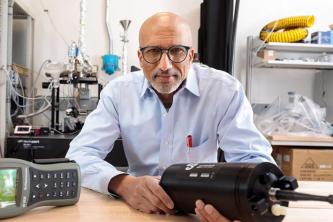
Supratik Guha is a Professor at the Pritzker School of Molecular Engineering and Senior Advisor to Argonne National Laboratory's Physical Sciences and Engineering directorate. His work bridges industrial R&D with academic and national lab research, focusing on quantum computing , semiconductor materials , and sensor networks for water and soil monitoring. Guha leads Argonne’s quantum information science strategy and serves as Faculty Director for the University of Chicago Center in Delhi. Education: PhD in Materials Science (USC, 1991), BTech in Engineering Physics (IIT Kharagpur, 1985) Research interests span multiple domains: Quantum technologies focusing on erbium-doped oxides for quantum memory and quantum interconnects Sensor networks for soil and water quality monitoring using cyberphysical systems Nanofabrication techniques including controlled spalling for heterogeneous material integration Advanced memory technologies exploring ferroelectric and optically addressable memory at atomic scales Scientific awards include: Election to National Academy of Engineering (2015) APS Prize for Industrial Applications of Physics (2015) Vannevar Bush Faculty Fellow (2018) Fellow of Materials Research Society and American Physical Society IBM Corporate Award (2013) Advising notable students like Manish Kumar Singh (co-founder memQ ), Cheng Ji (now at Intel), and Vamsi Nittala (now at Micron Technology). His group contributes to major DOE , NSF , and USDA funded projects including: Q-NEXT - DOE National Quantum Information Center AIFARMS - NSF/USDA AI for Agriculture Institute Thoreau Project - Geospatial sensor networks Labs and teams operate across University of Chicago and Argonne National Lab , with facilities for molecular beam epitaxy , nanofabrication , and optical/electrical characterization . The group has spawned startups like memQ (quantum networking) and K1 Semiconductors (wide-bandgap material transfer).
Professor Marina Jirotka is a leading academic in Human-Centred Computing at the Department of Computer Science, University of Oxford, and a Governing Body Fellow at St Cross College. She directs the Responsible Technology Institute and leads interdisciplinary research on responsible innovation in AI, robotics, and digital systems. University: University of Oxford School: Department of Computer Science Position: Professor of Human-Centred Computing Leadership: Director, Responsible Technology Institute Fellowships: EPSRC Established Career Fellowship (RoboTIPS) Her research focuses on integrating ethical, societal, and human values into technology design. Key areas include responsible innovation, human-computer interaction, algorithmic accountability, and socio-technical systems. She explores trust, transparency, and governance in autonomous systems, digital mental health, and quantum computing ethics. Her recent publications reflect a strong trend in responsible robotics, explainable AI, digital wellbeing, and ethical governance. Articles emphasize interdisciplinary methods, stakeholder engagement, and practical tool development such as the Ethical Black Box and TrustScapes. Themes span autonomous vehicles, social robots, algorithmic bias, and sustainability in digital innovation. Excellence in Teaching Award, University of Oxford (2006) ESRC/SSRC Fellowship (2007) UCLA Scholar Award (2011) EPSRC Established Career Fellowship (2018, 2019) Vice Chancellor’s Innovation Award Highly Commended (2020) She supervises numerous PhD and Master’s students and leads major grants including RoboTIPS, RAILS, PARIS-DE, and Adolescent Mental Health in the Digital World. She co-directs ORBIT, a leading RRI training provider, and contributes to policy through advisory roles with the House of Lords, All-Party Parliamentary Groups, and industry consortia. She is a member of the IEEE P7000 working group and the UK Committee for IIASA. Her lab work involves interdisciplinary teams focused on responsible technology design, public engagement, and ethical tool development.
Dr. Rebecca Connolly is an Adjunct Professor at the Sydney Law School, University of Sydney, specializing in International Space Law, Technology Law, and Biotechnology Regulation. Her research addresses global governance challenges in outer space militarization, commercialization, and sustainability, while contributing to agricultural biotechnology policy frameworks. She is affiliated with the Space Law Council of Australia and New Zealand and the International Law Association. Education: LL.B (Hons), LL.M, Ph.D. (Sydney University). Teaching focuses on International Space Law and Technology Law. Recent publications (2023) emphasize regulatory gaps in near-space military activities and outer-space advertising, reflecting her expertise in emerging legal frontiers. Publications span over two decades, with early work addressing WTO disputes over genetically modified foods and AUSFTA environmental cooperation. No scientific awards listed, though her contributions to space law are notable. She supervises in space law and technology law domains, contributing to interdisciplinary legal scholarship.
Prof. Jorge Piekarewicz is a Professor of Physics at Florida State University (FSU), affiliated with the College of Arts and Sciences. He earned his Ph.D. in theoretical nuclear physics from the University of Pennsylvania in 1985, followed by postdoctoral research at Caltech and Indiana University. Since 1990, he has been a faculty member at FSU. Education: Ph.D. in Theoretical Nuclear Physics, University of Pennsylvania (1985) Postdoctoral Fellowships: California Institute of Technology and Indiana University Research Interests: His work focuses on extreme-density nuclear matter in neutron stars, bridging terrestrial experiments and astrophysical observations. Key areas include: Neutron star structure and equation of state Weak interaction probes (e.g., parity-violating electron scattering) Multi-messenger astronomy insights from neutron star mergers Covariant energy density functionals and symmetry energy constraints Articles Trends: Recent work emphasizes refining the nuclear equation of state using PREX-CREX experiments, gravitational wave data (e.g., GW170817), and Bayesian methods. Key themes include neutron skin thickness, crust-core interactions, and symmetry energy sensitivity. Service & Outreach: Nuclear Science Advisory Committee (2012–2015) FRIB Theory Alliance Director (2017–2021) INT National Advisory Committee Chair (2018–2020) OLLI Lecturer on stellar evolution and neutron stars Collaborations: Active involvement with CERN, FRIB, JLab, and the Facility for Rare Isotope Beams (FRIB). Research leverages facilities like the Relativistic Heavy Ion Collider and the National Superconducting Cyclotron Laboratory.
Prof. Chiara Manfletti is a Professor at the Technical University of Munich (TUM), leading the Chair of Space Propulsion and Mobility. She also serves as Director and COO of Neuraspace. Her academic journey includes a degree from Imperial College London (2001), a master's from the International Space University (2002), and a PhD from RWTH Aachen (2010). Previously, she worked at the German Aerospace Center, served as Programme Advisor to the European Space Agency Director General, and became the first President of Portugal's national space agency. Her research focuses on innovative propulsion systems, satellite autonomy, and AI-driven propulsion controls. She has received the National Defence Medal (2020) and Medal of Merit (2020) from Portugal. Research Interests: Democratization of space access via novel propulsion technologies Autonomous and sustainable satellite propulsion systems Data-driven propulsion control using AI and health monitoring Key Contributions: Her work bridges numerical/experimental expertise with space safety policy. Recent publications analyze water hammer phenomena in propulsion systems and propose frameworks for planetary protection in space activities. Awards: National Defence Medal 1st class (2020) Medal of Merit from Portuguese Ministry of Science (2020) Professional Roles: Combines academic leadership with industry roles, actively shaping space policy and innovation. No listed grants are detailed publicly in the provided text.
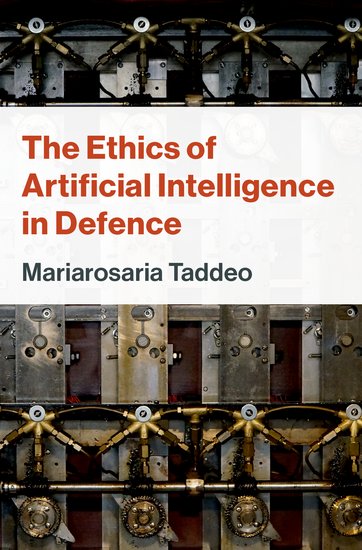
Mariarosaria Taddeo is Professor of Digital Ethics and Defence Technologies at the Oxford Internet Institute (University of Oxford) , where she also serves as DPhil Programme Director for Information, Communication and the Social Sciences. She is a Senior Research Fellow at the Alan Turing Institute and holds advisory roles at institutions including the Ministry of Defence (UK) Ethics Advisory Panel , the BRAID Programme , and the Leonardo Foundation . Education PhD (Doctor Europeus) in Philosophy from University of Padua Mariarosaria Taddeo’s research spans Digital Ethics, Philosophy of Technology, Cybersecurity Ethics, and AI Governance , with a focus on national defence applications. Her work addresses trust in AI , cyber conflict regulation , and ethical frameworks for autonomous weapons . She has published extensively in journals like Nature , Science , and Minds and Machines , including studies on data philanthropy , digital well-being , and quantum technology ethics . Scientific Awards 2010 Simon Award for Outstanding Research in Computing and Philosophy 2016 World Technology Award for Ethics 2018 InspiringFifty: Top 50 Italian women in technology ORBIT listings (2018, 2020) of top 100 women in AI Ethics 2020 Women’s Forum for Economy and Society: Outstanding Rising Talents ComputerWeekly Top 100 Influential Women in UK Technology (2020, 2023) Her projects include the UK MOD-funded AI Ethics Principles initiative, the NATO Cooperative Cyber Defence Centre of Excellence ethical guidance project, and contributions to the PETRAS IoT Research Hub . She advocates for ethical AI implementation in defence and digital governance, influencing EU policy through the CEPS Task Force on AI and Cybersecurity .
Professor Joy Singarayer is a leading academic in the Department of Meteorology at the University of Reading, specializing in paleoclimatology. She holds the position of Joint Head of Department (Facilities and Finance) and is actively involved in research on climate-human interactions and past environmental changes. Her work bridges climate science, archaeology, and ecology, with a focus on understanding how past climate fluctuations inform future environmental resilience. Her research interests include the impact of climate change on agriculture and water resources, human-land-climate interactions across prehistoric to modern eras, and paleoclimate reconstructions using Quaternary records. Notable projects include CROPP (Peruvian climate resilience), PRIDE (Caspian Sea biodiversity), and Amazonian paleoecology studies. Professor Singarayer has supervised numerous PhD students exploring topics like agent-based modeling of pre-Columbian cultures, Caspian Sea hydrology, and Amazonian drought responses. Her interdisciplinary approach integrates climate modeling, fieldwork, and data analysis to address global environmental challenges. She is affiliated with the University of Reading's Meteorology Department and collaborates internationally on projects like the PotASH initiative studying southern hemisphere paleolakes. Her contributions span academic leadership, policy-relevant research, and fostering inclusive academic environments through her role on the SMPCS WIDE committee.
Julie Michelle Klinger is an Associate Professor in the Department of Geography and Spatial Sciences at the University of Delaware's College of Earth, Ocean & Environment. Her research examines global resource frontiers and space-based technologies through ethnographic fieldwork across China, Brazil, and the United States, with significant contributions to environmental politics and critical minerals governance. Her educational background includes: Ph.D. in Geography from the University of California, Berkeley (2015) B.A. from Sarah Lawrence College (2006) Dr. Klinger's research program centers on three interconnected themes: critical minerals supply chains (analyzing environmental/social impacts of rare earth extraction for sustainable decarbonization), global space politics (challenging privatization narratives through projects like her book 'Capitalizing the Cosmos'), and community survival strategies (collaborating with Indigenous groups like Brazil's Yanomami to document land use amid extractive pressures). Her work consistently bridges geopolitical analysis with on-the-ground survival tactics in resource frontier zones. Recent publications (2020-2024) reveal intensifying focus on US-China space rivalry, mineral supply chain vulnerabilities for renewable energy, and the environmental geopolitics of orbital infrastructure. She increasingly connects terrestrial mining impacts with space resource extraction debates, emphasizing Global South perspectives. Her accolades include the 2017 Meridian Book Prize for 'Rare Earth Frontiers: From Terrestrial Subsoils to Lunar Landscapes'. Dr. Klinger has secured funding from the National Science Foundation, Irmgard Coninx Stiftung, and Johns Hopkins University's China-Africa Research Initiative. She previously co-directed Boston University's Land Use and Livelihoods Initiative and mentors students in community-centered research partnerships, particularly with Amazonian Indigenous communities. Affiliated with UD's Embodiment Lab and Minerals, Materials and Society Program, she develops collaborative frameworks with remote sensing specialists and Indigenous knowledge holders to advance equitable climate solutions.
Patrick Lin is a Professor in the Philosophy Department at California Polytechnic State University (Cal Poly), where he serves as Director of the Ethics + Emerging Sciences Group, a non-partisan organization established at Cal Poly in 2007 to focus on the risk, ethical, and social impact of emerging sciences and technologies. He is frequently quoted in national publications on topics including ethics of autonomous vehicles, artificial intelligence, robotics, outer space, Arctic frontiers, military and policing applications, virtual and augmented reality, and smart cities. Lin received his Ph.D. and M.A. from the University of California, Santa Barbara, and his B.A. from the University of California, Berkeley. His academic appointments include Affiliate Scholar at Stanford Law School's Center for Internet and Society, Fulbright Specialist at the University of Iceland's Centre for Arctic Policy Studies (2018), and Visiting Senior Research Fellow at the Centre for Applied Philosophy and Public Ethics in Australia (2010-2016). Lin's research spans technology ethics broadly, with specific expertise in AI ethics, robotics ethics, autonomous vehicle ethics, space ethics, cybersecurity ethics, and military ethics. His work bridges philosophical theory with practical application, examining how emerging technologies challenge traditional ethical frameworks. His research demonstrates consistent themes across different technological domains: examining risk assessment methodologies, developing ethical frameworks for emerging technologies, analyzing social and political implications of technological adoption, and providing practical guidance for developers, policymakers, and users. His publication record shows a progression from early work on nanotechnology ethics to current focus areas including space cybersecurity, AI kitchens, and ethical frameworks for autonomous systems. The articles reflect his interdisciplinary approach, combining insights from philosophy, law, engineering, and policy studies to address complex ethical challenges in emerging technologies. Cal Poly/Academic Senate, Distinguished Scholarship Award (2017) American Philosophical Association's Public Philosophy Op-Ed Award (2015) Cal Poly/College of Liberal Arts, Outstanding Scholarship Award (2009) Lin has secured significant grant funding from organizations including the National Science Foundation, US Department of Defense, and Canadian Institute for Advanced Research for research on military AI risk assessment, AI kitchens and robot cooks, outer space cybersecurity, and autonomous vehicles. He has advised numerous students through his teaching and research activities at Cal Poly, where he teaches courses including Philosophy of Technology, Ethics of Science and Technology, and Introduction to Philosophy. Lin directs the Ethics + Emerging Sciences Group at Cal Poly, which serves as a hub for interdisciplinary research on technology ethics. He also participates in several other research initiatives including his role as Research Director for the Consortium for Emerging Technologies, Military Operations, and National Security (CETMONS) and as a member of the Emerging Technologies of National Security and Intelligence initiative at the University of Notre Dame.
James O. Ellis Jr. is the Annenberg Distinguished Visiting Fellow and Adjunct Professor in the Department of Management Science and Engineering at Stanford University . He retired from a 39-year U.S. Navy career as a four-star admiral, culminating as Commander of the United States Strategic Command, and later served as President of the Institute of Nuclear Power Operations (INPO) until 2012. His academic and professional expertise spans energy policy , nuclear security , and international defense strategy . At Stanford, he co-leads the George P. Shultz Energy Policy Working Group and contributes to global security initiatives. His research emphasizes nuclear energy’s role in climate solutions , semiconductor supply chain resilience , and deterrence strategies in an era of technological complexity . Notably, Ellis was inducted into Georgia Tech’s Engineering Hall of Fame (2005) and elected to the National Academy of Engineering (2013) . Current leadership roles include Chair of the National Academy of Engineering Council (2025) and advisory positions on energy and defense policy. His publications frequently address energy security , high-tech warfare , and U.S.-Taiwan semiconductor partnerships .
Anastasios Zafeiropoulos serves as Assistant Professor at Harokopio University of Athens, specializing in Spatial Data Management and Analysis within the Postgraduate Studies Program for “Applied Geography and Spatial Management” (Direction C: Geoinformatics). His academic role encompasses teaching “Spatial Databases” and advancing research at the intersection of geospatial technologies and distributed computing systems. His research program focuses on Spatial Databases, Internet of Things (IoT), Cloud/Edge Computing, and 6G Network Orchestration, with significant extensions into Knowledge Graph applications for Sustainable Development Goals (SDGs) and socio-emotional learning in education. Key innovations include the EduCardia methodology for student competency assessment and frameworks for climate vulnerability analysis using knowledge graphs. Analysis of his 2024-2025 publications reveals three dominant thrusts: (1) AI-driven orchestration of 6G services across the computing continuum using reinforcement learning; (2) Knowledge Graph applications for SDG interlinkage analysis and materials science; (3) EU-funded IoT/Edge Computing project ecosystems. His work consistently bridges theoretical networking concepts with practical sustainability and educational applications. Dr. Zafeiropoulos actively contributes to EU-funded initiatives in IoT and Edge Computing standardization, particularly through AIOTI WG Standardisation. His project portfolio includes NEPHELE multi-cloud ecosystem development and O-RAN slice admission control research, demonstrating strong industry-academia collaboration in next-generation networking. He leads the development of innovative tools including Palindrome.js for distributed system visualization and the EmoSocio open-access emotional intelligence model, reflecting his commitment to translating research into practical educational and environmental solutions.
Juan Antonio Añel Cabanelas is a Professor of Earth Physics at the University of Vigo , affiliated with the EPhysLab research group and the Specialized Group on Atmospheric and Ocean Physics of the Royal Spanish Society of Physics . He serves as an Executive Editor for Geoscientific Model Development and an Associate Editor for PLoS Climate . PhD in Physics (2007) from the University of Vigo, thesis: Climatic analysis of the tropopause using radiosonde data Taught courses in Meteorology, Atmospheric Physics, Computational Science, and Renewable Energy at the University of Vigo and international institutions His research focuses on climate change impacts , upper troposphere-lower stratosphere dynamics , renewable energy modeling , and computational reproducibility in climate research . He emphasizes instrumental data recovery and open science , with recent work addressing stratospheric contraction and mercury cycling . Key publications span extreme weather-energy sector interactions , Fortran code quality , and ozone data analysis . He mentors PhD students in Physics and Computer Science, and has collaborated with institutions in Mexico, Portugal, and the private sector. He advocates for free software and has organized workshops on climate intervention and citizen science . His work is funded by public grants from Spain's Government, Xunta de Galicia, and private entities like Naturgy and Acciona, with computing support from Google and Microsoft.
Christoph Raible is a Professor at the Climate and Environmental Physics department within the Physics Institute at the University of Bern, Switzerland, a position he has held since 2011. He also maintains a strong affiliation with the Oeschger Centre for Climate Change Research (OCCR) at the University of Bern, where he has been a Senior Lecturer since 2011. His research focuses on atmospheric dynamics, climate modeling, and understanding past and future climate change patterns. Professor Raible's research interests encompass Processes of the Climate System, Atmosphere-Ocean-Sea Ice Interaction, Climate Modelling, Atmospheric Dynamics, Past and Future Climate Change, Predictability, Tropical and Extra Tropical Cyclones, and Climate Impacts. His work bridges theoretical climate science with practical applications, particularly in understanding extreme weather events and their implications for society. He has developed expertise in analyzing historical climate patterns to inform future projections, with particular attention to European climate systems and their global connections. Analysis of his recent publications reveals a strong focus on paleoclimatology, climate modeling, and the societal impacts of climate change. His research spans from reconstructing historical climate patterns using proxy data to projecting future climate scenarios under various forcing conditions. Key themes include Mediterranean droughts, Atlantic Meridional Overturning Circulation variability, glacial climate dynamics, and the health impacts of climate change. His methodological approach combines advanced climate modeling techniques with statistical analysis of observational data. Professor Raible has been actively involved in numerous significant research projects including the NCCR Climate program (serving as Work Package leader), the SNF Sinergia project on solar influence on terrestrial climate, and collaborative projects with SwissRe on climate change impacts. He has also contributed to major international climate initiatives including the CH2018 Climate Scenarios for Switzerland. His teaching responsibilities include graduate-level courses on atmospheric circulation and climate modeling at the University of Bern.
Tolga ERDEM is a Researcher at Trakya University's Faculty of Economics and Administrative Sciences, Department of International Relations. Holding a PhD in International Relations (2020) and two bachelor's degrees (2012) with full scholarships, his work bridges cybersecurity, international security, and geopolitical dynamics. Key affiliations include editorial roles in security anthologies and presentations at international conferences. PhD: Cyberspace as a Power Competition Domain Master's Thesis: Europeanization & Religious Identity in Turkey-EU Relations Research spans cybersecurity , space weaponization , AI-driven security , and energy geopolitics . Recent 2024-2025 publications analyze Balkan cybersecurity, water security, and biosecurity frameworks. His 2023 book Uluslararası İlişkilerin Yeni Güç Rekabet Sahası: Siber Uzay established him as a digital geopolitics expert. Journal trends show 2023-2024 focus on UN disarmament policies for AI weapons, space diplomacy frameworks, and EU-Turkey energy dynamics. Conference papers (2024) examine Central Asian water security and Balkan cyber threats. Teaching since 2020, courses include World Conflict Regions , EU-Turkey Relations , and Contemporary International Issues . No scientific awards listed.