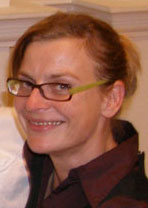
Prof. Ann Heylen is a Professor at the Department of Taiwan Culture, Languages and Literature (TCLL) at National Taiwan Normal University (NTNU), Taipei, Taiwan since 2008. She also serves as Executive Director of the International Taiwan Studies Center at NTNU. Holding a Ph.D. in Chinese Studies (Sinology) from Catholic University Leuven (KULeuven), her research focuses on Taiwan’s historical narration, colonial periods (Dutch and Japanese), sociolinguistics, and digital humanities. Education: Ph.D. in Chinese Studies (Sinology), Catholic University Leuven (KULeuven), Belgium Research Interests: Prof. Heylen explores Taiwan’s historical discourse through digital newspaper corpora and language planning. Her work applies Einar Haugen’s sociolinguistic matrix model to analyze Taiwanese language standardization. She also investigates 17th-century European presence in East Asia, particularly Dutch-Taiwan relations, and uses ego-documents (diaries, oral histories) to study Taiwanese national identity. Publications: Her work bridges historical analysis and modern methodologies, with recent focus on digital humanities and colonial historiography. Affiliations: Founding board member of the European Association of Taiwan Studies (EATS) Editor-in-Chief of the East Asian Journal of Popular Culture (Intellect Books) Current Projects: Monograph on Formosa media narratives in Benelux newspapers (19th-20th centuries) and 400-year Dutch-Taiwan relations commemoration studies.
Cornelia Kleinitz is a Senior Lecturer at the Institute of Archaeology, Humboldt University of Berlin , specializing in Northeast African Archaeology and Cultural Studies. She is also a Research Associate at the German Archaeological Institute (KAAK) and Honorary Research Associate at the McDonald Institute for Archaeological Research, University of Cambridge . Her work focuses on Sudanese archaeology, Meroitic studies, rock art, digital humanities, and critical heritage management. PhD in Archaeology from University College London (2005) MA in Archaeology (African Archaeology, Ethnoarchaeology) from UCL (1994) Magister in History and Archaeology from Freie Universität Berlin/Humboldt University (1998) Research and Teaching Her research spans Sudan archaeology , with leadership roles in the Musawwarat Project since 2016 and the Meroe Pyramids Graffiti Project (2015-2016). She pioneered the Musawwarat Graffiti Archive (2011-present), an open-access platform for digital documentation of ancient graffiti. Teaching includes seminars on Meroitic material culture, archaeological interpretation, and community heritage. Scientific Awards and Grants Petrie-Prize for best MA thesis at UCL DAAD, AHRB, and UCL Graduate School funding for PhD Leadership and Collaborations Kleinitz co-directs the Humboldt University Archaeological Mission to Musawwarat es-Sufra and contributes to UNESCO World Heritage site management. She collaborates with institutions like the Spanish National Research Council (CSIC) and UCL Qatar , integrating participatory GIS and digital methods in heritage studies.
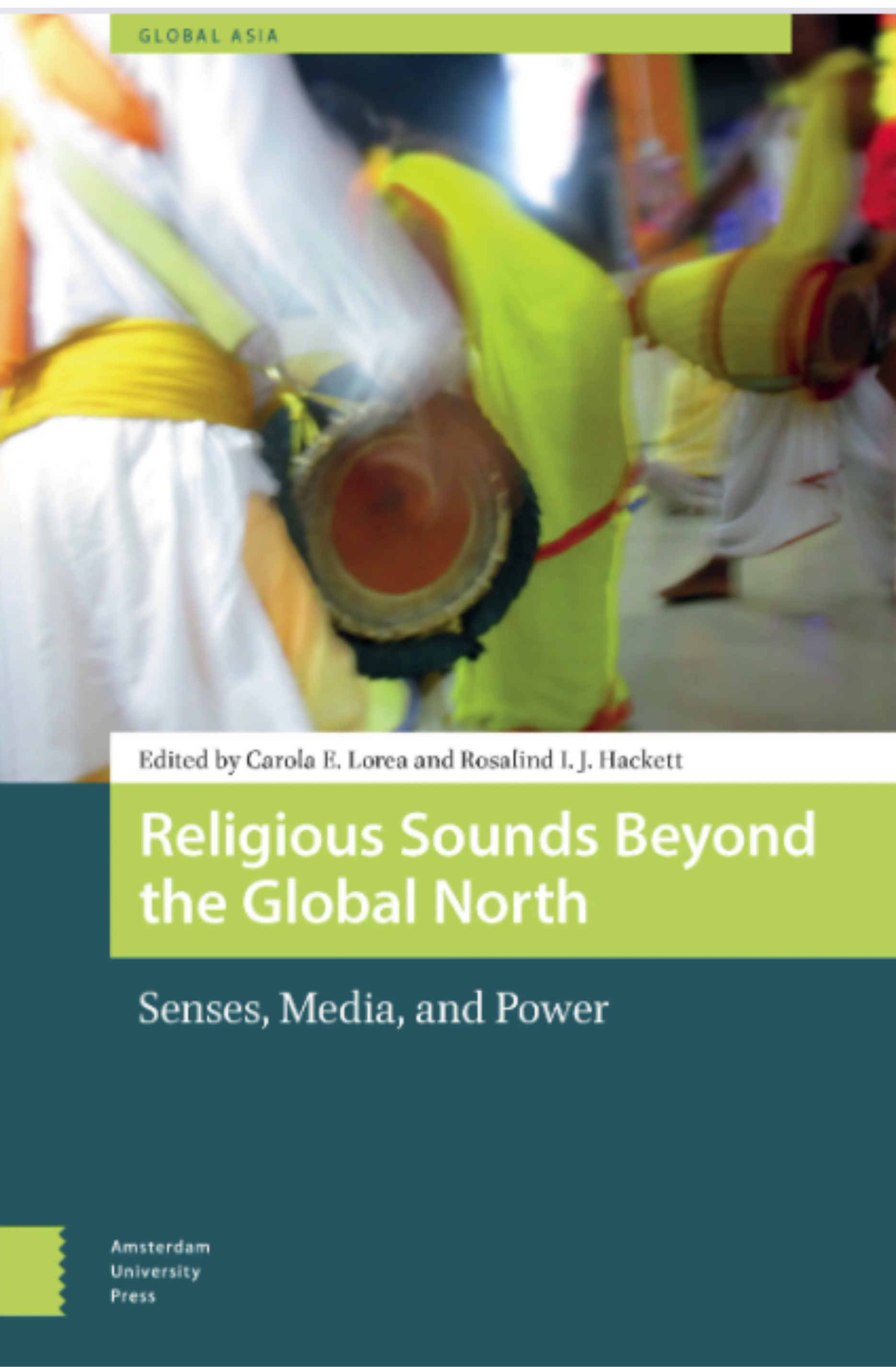
Dr. Carola Lorea is a Junior Professor at the Institute for Religious Studies, Faculty of Philosophy, University of Tübingen (since 2023) and former Senior Research Fellow at NUS's Asia Research Institute (2022-2023). Her work bridges religious studies, cultural anthropology, and digital humanities with a focus on South/Southeast Asian borderlands. PhD in South Asian Studies (2015, La Sapienza University of Rome) 2023 Habilitation Venia Legendi in religious studies and cultural anthropology Research centers on Matua traditions , Baul oral cultures , religion and pandemics , and sensory scholarship . She pioneered the CoronAsur research blog (2020) and leads the MANTRAMS project with ERC Synergy Grant (2023). Key contributions include: Digital Archive of Baul Songs (EAP1247 PI) Theoretical work on bricolage thinking in borderland communities Critical analysis of caste dynamics in post-Partition Andaman settlers Sonic approaches to religious studies Teaching includes courses on Religious Sounds (Tübingen 2024), Religion and South Asian Society , and Bengali language instruction. She founded the Digital Archive 'Songs of the Old Madmen' and co-edits volumes on global religious sound studies.
Univ.-Prof. Dr. Michaela Sambanis is a Professor of English Didactics at the Institute of English Philology within the Department of Philosophy and Humanities at Freie Universität Berlin. She has held this position since 2011 and previously served as the managing director of the Institute from Winter semester 2017/2018 to October 2019. Her academic journey includes research work at the Transfer Center for Neuroscience and Learning at the University of Ulm (2008-2011), completion of her habilitation in 2006, and her promotion in 2001. Professor Sambanis's research centers on the innovative intersection of educational neuroscience and language teaching methodology. Her work pioneers the field of Positive Foreign Language Didactics, connecting positive psychology with language education. She investigates embodied cognition approaches, particularly movement-based learning, and explores theater methods and arts integration in language instruction. Her research also addresses teacher well-being and health, multilingualism in educational settings, and the application of neuroscience findings to practical classroom situations. The k2teach project represents her current focus on teaching-learning labs in English teacher education. Her scholarly output demonstrates a consistent trajectory toward integrating neuroscience with language pedagogy, with recent publications increasingly addressing mental health, digital transformation in education, and positive psychology applications. The evolution of her work shows a progression from practical teaching methods to increasingly sophisticated neurodidactic frameworks that bridge scientific evidence with classroom practice. Professor Sambanis serves on multiple scientific advisory boards including the Goethe Institut in Munich, the Transfer Center for Neuroscience and Learning at the University of Ulm, and the Schlözer Program for Teacher Education. She is also the founding chair of the cross-state E&M Berlin-Brandenburg section and a member of the German Society for Foreign Language Research (DGFF). Her editorial work includes the SELT book series on English Language Teaching. Her teaching responsibilities include supervising master's theses in English teaching, and she has developed numerous teaching-learning laboratories that connect theoretical knowledge with practical application in teacher education. Her work demonstrates a strong commitment to evidence-based foreign language didactics that incorporates insights from neuroscience, psychology, and educational research.
Dr. Alba Fedeli is a Researcher and Head of Project RFK06 at the Cluster of Excellence 'Understanding Written Artefacts' (UWA), University of Hamburg. Her work focuses on early Qur’anic manuscripts, combining philological analysis with natural sciences. She leads projects such as What is in a Scribe’s Mind and Inkwell (2023–2025) examining the Gotha Collection, and InterSaME (2020–2023) exploring oral-written transmission of Middle Eastern sacred traditions. Her research spans palimpsest studies, material analysis of manuscripts, and digital humanities. Notable outputs include studies on Qur’anic codicology, authentication methods, and interdisciplinary methodologies. Dr. Fedeli collaborates internationally with institutions like the Vatican Library and the Gotha Research Library, contributing to global efforts in cultural heritage preservation. Her academic contributions include 14 publications across peer-reviewed chapters, journal articles, and digital platforms. She actively participates in workshops, conferences, and public engagement through blogs like the Forschungsbibliothek Gotha to disseminate research findings.
Ramin Shaghaghi is a Lecturer for Persian language and literature at the Asia-Africa Institute within the Faculty of Humanities at the University of Hamburg, holding this position since the summer semester of 2003. His academic background includes a Magister in Iranistics and Ethnology from Freie Universität Berlin, where he completed his thesis "Der Naqqāl als Träger des kulturellen Gedächtnisses in Iran" (The Naqqāl as Carrier of Cultural Memory in Iran). During his studies, he contributed to the DFG-funded "Digitalization of Turfan Manuscripts" project at the Berlin-Brandenburg Academy of Sciences. Shaghaghi's research spans critical domains of Iranian and Near Eastern studies, with primary focus on: Oral tradition of Iran Cultural memory and remembrance practices in Iran Persian classical and modern literary traditions Historical evolution of Persian grammar Ethnology of the Near East Gender Studies frameworks Broad Iran-related socio-cultural phenomena His scholarly work emphasizes the interplay between oral transmission mechanisms and cultural preservation in Iranian contexts, particularly examining narrative carriers like the Naqqāl tradition. This research intersects with literary analysis, historical linguistics, and ethnographic methodologies to explore identity formation and memory politics. Shaghaghi actively supervises Bachelor's and Master's theses on Persian language, literature, and Iranian cultural studies at the University of Hamburg, though specific student names are not publicly documented. The Asia-Africa Institute hosts his academic activities alongside major research initiatives including Social Contexts of Rebellion in the Early Islamic Period (SCORE), Persian Letters from the "second Iran" manuscript analysis, Evolution of Islamic Societies algorithmic project, InterSaME oral/written transmission study, COBHUNI, FGM-Egypt, Rifaiya-Iraq, and the RomanIslam Center for Comparative Empire Studies, providing collaborative frameworks for his research.
Cecilia Valenti is a Junior Professor for Film Studies at the Institute for Film, Theatre, Media and Cultural Studies, Johannes Gutenberg University Mainz. Her research spans feminist postcolonial theory, archival practices of world cinema, television history, and militant documentary traditions. She actively organizes the IMACS Master's program and participates in academic self-governance via the Georg Forster Forum. Valenti's publications focus on global film heritage, feminist media critique, and political film practices. Her work intersects with 1930s left-wing cinema, archival activism (e.g., Cinemien network), and feminist reworkings of militant film. She teaches seminars on anti-colonial film practice, including Sarah Maldoror's work. She is affiliated with the Zeughauskino Berlin's archival department and co-founded the curatorial collective 'The Canine Condition,' which organized film series in Berlin, Frankfurt, Vienna, and London (2009–2017). Her contact details: cevalent@uni-mainz.de, phone +49 (6131) 39-31750, office hours Wednesday 4-5 PM by appointment.
Prof. Dr. Ulrich Mücke is Professor of Latin American and Iberian Peninsula History at the University of Hamburg , Faculty of Humanities, Department of Global History. His research focuses on Latin America's political culture, self-testimony, and colonial/postcolonial memory. Education: Studied history, political science, and philosophy at University of Hamburg (1988-1994) Doctorate at University of Hamburg (1997) Research interests span Latin America's political systems, autobiographical writing in colonial contexts, and transnational migration. His 2025 work examines Peruvian memory politics post-civil conflict, while 2024 collaborative research investigates Cuban contract workers in GDR. Earlier articles analyze voting patterns, conservative thought, and indigenous representation. Key trends in his 15 most recent publications include: 19th-century political culture in Peru, colonial self-representation, conservative ideologies in Iberian Atlantic, German-Peruvian migration, and critical analysis of historical textbooks. Notable keywords: Political History , Autobiography , Migration Studies , Colonialism . Awards: Kurt-Hartwig-Siemers-Prize (1997) from Hamburg Scientific Foundation Current work includes editorial leadership of the Yearbook for Latin American History and a 2025 lecture series on international cooperation.
Dr. Marcel Mierwald is a researcher at the Department of History Didactics at Ruhr University Bochum, specializing in empirical studies of historical learning. He collaborates on the oral history project "People in Mining" and focuses on digital learning, epistemological beliefs, and language-sensitive history teaching. His work bridges theoretical frameworks with classroom practice. Education: Doctoral degree (2019) at Ruhr University Bochum; Master of Education in social studies and history (Free University of Berlin, 2012). Research Trends: His recent publications emphasize authenticity in learning materials, media comparison studies, and assessment tools for historical argumentation. Collaborations with Nicola Brauch and others highlight interdisciplinary approaches to history education. Scientific Awards: Doctoral scholarship from Professional School of Education (PSE) at Ruhr University Bochum (2013-2016). Teaching: Offers courses on subject didactics, practical semester preparation, and language-sensitive history teaching. Led seminars on migration history, the Weimar Republic, and National Socialism in school labs. Labs & Teams: Active in the Alfried Krupp Student Laboratory and Ruhr University Bochum's student laboratory for humanities, focusing on empirical history education research and innovative teaching methods.
Prof. Dr. Jessie Pons is a Professor of South Asian Religious History at Ruhr University Bochum (Germany), affiliated with the Centre for Religious Studies (CERES). She holds a Ph.D. in Art History from the University of Paris-Sorbonne (2011) and has held postdoctoral and visiting research positions at institutions including the Käte Hamburger Kolleg. Her expertise spans Gandharan Studies, Early Buddhism, religion and materiality, and digital humanities. Pons leads projects like DiGA (Digital Gandharan Artefacts) and the Pelagios Working Group, advancing digital preservation of Buddhist cultural heritage. She teaches courses on South Asian religions and has supervised multiple Ph.D. students. Her research focuses on Gandhara’s artistic networks, Mahayana Buddhism’s emergence, and religious material heritage preservation. Education: Ph.D., Art History, University of Paris-Sorbonne (2011) M.A., Museum Studies, École du Louvre (2005) B.A., Art History & Archaeology, SOAS, London (2002) Research Interests: Early Buddhist Art and Networks in Gandhara Material Culture and Religious Experience Digitization of Cultural Heritage Inter-religious Dynamics in South Asia Recent Projects: DiGA: Digital Documentation of Gandharan Artefacts Pelagios Working Group: Linked Data Methodologies Co-edited De l'Oxus au Gange (2024) Grants & Roles: Principal Investigator, SFB 1475 „Metaphern der Religion“ Directorial Member, CERES Coordinator, „Religion & Medien“ initiative
Rhenish Friedrich Wilhelm University of BonnGermany
Prof. Michael Max Paul Zeuske is a Senior Research Professor at the Bonn Center for Dependency and Slavery Studies (BCDSS) , University of Bonn, Germany. He holds a Ph.D. and Habilitation in Modern Global History from the University of Leipzig. His academic career includes professorships at the University of Cologne and the University of Havana (as DAAD Fellow). He specializes in the global history of slavery from antiquity to modernity, with particular focus on Atlantic slavery, South-South slave trades, and the intersections of slavery with capitalism, law, and cultural practices. Zeuskе’s research integrates micro-historical analyses of enslaved individuals and elites with macro-historical frameworks. He has authored over 26 books, 196 papers, and edited 23 volumes, including landmark works like Sklaverei. Eine Menschheitsgeschichte and Handbuch Geschichte der Sklaverei . His editorial roles include co-editing COMPARATIV , a leading journal for global history. He is a corresponding member of prestigious academies in Venezuela and Cuba. Zeuskе’s supervision record includes 25 completed and 10 ongoing Ph.D. theses, along with extensive teaching and mentoring. He has led major international projects like the International Research Seminar on the Second Slavery and conducted groundbreaking studies on slavery’s legal frameworks and commodity production. His work bridges archival scholarship with public history, emphasizing marginalized voices in slavery narratives. Key academic contributions span slave trade networks, gender dynamics in enslavement, and the material culture of enslaved communities. His recent work emphasizes slavery’s legacy in modern capitalism and global justice debates. He has received third-party funding from the German Research Foundation (DFG) and other institutions for large-scale collaborative projects.
Dr. Mina Ibrahim is a Researcher at the Center for Conflict Research (ZfK) at Philipps University of Marburg , Germany. She is also the founder and director of Shubra’s Archive for Research & Development (SARD) in Cairo, Egypt, and serves as a project manager for the MENA Prison Forum and Institute for Foreign Relations (IFA) in Lebanon and Germany. PhD in Cultural Studies & Social Sciences (2022, Summa Cum Laude), Justus Liebig University & GCSC Giessen Master of Arts (2015, Cum Laude), Central European University (CEU), Hungary Bachelor of Arts (2014, Highest Honours), American University in Cairo (AUC), Egypt Her research explores minority dynamics , prison studies , urban sociology , and archives of conflict in the Middle East. Recent publications focus on Coptic Christian identity, sectarianism, and post-revolutionary Egypt. She has received prestigious fellowships from the DFG , Arab Council for Social Sciences , and Carnegie Endowment . Dr. Ibrahim supervises graduate students and teaches courses on prison systems, ethnography, and Middle Eastern cultural studies. Her fieldwork bridges Germany , Egypt , and Lebanon , emphasizing interdisciplinary approaches to power, memory, and urban marginalization .
Nick Thieberger is an Associate Professor in the School of Languages and Linguistics at the University of Melbourne, Australia. He also holds adjunct positions at the University of Sydney, University of Hawai'i, LaTrobe University, Australian National University, and the University of Tasmania. Thieberger serves as Director of PARADISEC (Pacific and Regional Archive for Digital Sources in Endangered Cultures), President of DELAMAN (Digital Endangered Languages and Musics Archives Network), and Deputy Director of the Research Unit for Indigenous Language at the University of Melbourne. He is a Fellow of the Australian Academy of the Humanities and leads multiple major research projects including Nyingarn and Modularised cultural heritage archives. Thieberger's primary research interests focus on language documentation, endangered languages, and digital archiving methodologies. His work bridges linguistics, digital humanities, and Indigenous language preservation, with particular emphasis on Pacific and Australian Indigenous languages. He has developed innovative approaches to linguistic archiving, including the creation of PARADISEC, which has become a model for digital language archives worldwide. His research spans theoretical linguistics, practical archiving solutions, and community-based language work, with significant contributions to Nafsan (South Efate) language documentation and Australian Indigenous language preservation. His recent publications demonstrate a clear trend toward integrating digital humanities with language documentation, particularly focusing on computational approaches to endangered language preservation. Thieberger's work increasingly addresses ethical considerations in linguistic archiving, community-led documentation models, and the development of platforms that give Indigenous communities control over their linguistic heritage. His research shows a progression from descriptive linguistics toward infrastructure development for language preservation, with growing emphasis on access protocols, data sovereignty, and the technical challenges of long-term digital preservation. Open Scholarship Award (2025) for PARADISEC team Digital Repository of Ireland Award for Research and Innovation (2024) DASSH award for Research Partnership and Social Impact (2021) Fellow of the Australian Academy of the Humanities (2021) Ludwig Leichhardt Jubilee Fellowship by Alexander von Humboldt Foundation (2013-2015) ARC Australian Postdoctoral award (2004-2007) QEII Fellowship (2009-2014) Future Fellowship (2014-2018) Thieberger has secured substantial grant funding throughout his career, including multiple ARC grants as Chief Investigator. He leads the ARC LIEF grant 'Nyingarn: a platform for primary sources in Australian Indigenous languages' (2021-2025) and another ARC LIEF grant for 'Modularised cultural heritage archives – future-proofing PARADISEC' (2022-2025). He also serves as Chief Investigator in the ARDC-funded 'Online Heritage Resource Manager to Describo Collections' project (2023-2024) and in the ARC Centre of Excellence for the Dynamics of Language (2014-2025). His grant portfolio reflects his dual focus on theoretical linguistic research and practical infrastructure development for language preservation. Thieberger directs PARADISEC, a pioneering digital archive for endangered language materials that has become an international model. He also leads the Nyingarn project team, which is developing a platform specifically for Australian Indigenous language materials. Through DELAMAN, he coordinates with other language archives worldwide to establish best practices for digital language preservation. His work with the Language Data Commons of Australia (LDACA) further demonstrates his commitment to building research infrastructure that serves both academic researchers and Indigenous communities.
James W. Watts is a Professor of Hebrew Bible and ancient Near Eastern textual traditions in the Department of Religion at Syracuse University's College of Arts and Sciences. He has been at Syracuse since 1999, serving as Chair of the Department of Religion from 2009-2015 and as William P. Tolley Professor in the Humanities from 2011-2013. Watts also served as Visiting Research Fellow at the Käte Hamburger Kolleg, Ruhr Universität Bochum from 2015-2016. His educational background includes: Ph.D. in Hebrew Bible/Old Testament from Yale University (1990) M.Div. and Th.M. in New Testament from Southern Seminary (1985-1986) B.A. in Philosophy from Pomona College (1982) Watts specializes in the literature and religion of the Hebrew Bible, particularly the Pentateuch, sacrifice, law, and narrative genres. His research explores ancient Near Eastern religious rhetoric, ritual theory, comparative scriptures, and iconic books. His work bridges textual analysis with ritual studies, examining how sacred texts function as physical objects within religious communities and how they acquire iconic status across cultures. His recent publications reveal a growing focus on the materiality of scripture, ritual performance, and the social power of sacred texts. Watts has increasingly examined how biblical texts, particularly Leviticus, have been used to construct social boundaries related to race, diet, and purity. His work connects ancient textual traditions with contemporary issues of social justice, censorship, and religious authority in digital contexts. Among his notable achievements: William P. Tolley Professor in the Humanities (2011-2013) Secretary-Treasurer of The Society for Comparative Research on Iconic and Performative Texts (2010-present) Editor of the Equinox book series, Comparative Research on Iconic and Performative Texts (2017-present) Chair of the Pentateuch Section of the Society of Biblical Literature (1998-2003) Watts has directed graduate studies in the Department of Religion (2006-2009, 2023-2025) and undergraduate studies (2000-2004). He has supervised numerous student research projects on iconic books, biblical ritual texts, normative texts, and scripturalization. His academic leadership extends to the Renée Crown Honors Program and the SU Humanities Council. Watts leads the Iconic Books Project, which analyzes the functions of scriptures in cross-cultural and trans-historical perspectives. This project has developed into the Society for Comparative Research on Iconic and Performative Texts (SCRIPT), of which he serves as Secretary-Treasure. His work continues to explore the relationship between textual practices, ritual performance, and the social power of sacred texts.
Dr. Joanna Malukiewicz is a Postdoctoral Researcher at the University of Hamburg, affiliated with the Faculty of Mathematics, Informatics and Natural Sciences and the Department of Biology. She works within the Institute of Animal Cell and Systems Biology, focusing on Evolutionary Immunogenomics. Her research emphasizes genomic studies of primates, particularly marmosets (Callithrix species), hybridization dynamics, microbiome analysis, and conservation genomics. Dr. Malukiewicz's work spans evolutionary biology, genomics, and biodiversity conservation. She investigates topics such as morphological variation in marmosets, genomic mechanisms driving dwarfism, and the impact of captivity on animal health. Her studies often combine genomic data with ecological observations to understand species adaptation and survival. Her recent publications highlight advancements in sequencing technologies, applications of genomics to conservation, and insights into zoonotic diseases in urban primate populations. She collaborates internationally, addressing challenges in endangered species management and sustainable biodiversity strategies. Dr. Malukiewicz holds no listed scientific awards but contributes actively to peer-reviewed literature and conservation initiatives. She is based at the Institute of Animal Cell and Systems Biology, Room 459, in Hamburg.