Eva Schenner is a Researcher at TU Wien's Department of Software Engineering, affiliated with both the Office Services and eduLAB teams. She specializes in formal methods, program analysis, and machine learning applications in software engineering. Her work focuses on testing tools, smart contract certification, and probabilistic models for material design. She has led multiple high-profile projects, including the FWF-funded 'Types4Strings' (2024–2027), WWTF's 'Effective Formal Methods for Smart-Contract Certification' (2023–2027), and an Amazon Research Award project on testing Dafny (2024–2027). Her research also spans metamorphic testing of machine-learning models and probabilistic hybrid models for material design. Education: Mag.a phil. (Master of Philosophy) Her awards include Amazon and Google Research Awards, and grants from the WWTF and Max-Planck-Gesellschaft. She actively contributes to initiatives like Bebras, promoting computational thinking education since 2007. Labs/Teams: Involved in the Software Engineering group within the Faculty of Informatics, collaborating with industry partners like Amazon and Google.
Martin Schöberl is affiliated with TU Wien's Institute of Computer Engineering (E191-01), part of the Faculty of Informatics. He holds the role of Privatdozent (Senior Lecturer) and specializes in computer architecture for real-time systems, embedded systems, and worst-case execution time analysis. His research emphasizes time-predictable computing, compiler optimization, and hardware-software co-design for real-time applications. Key research areas include compiler-directed execution time control, method cache analysis, and processor design for embedded systems. He has supervised multiple theses on topics like hard real-time garbage collection, WCET-driven inlining, and real-time Java processors. His work bridges theoretical computer science with practical embedded system implementations. Publications focus on optimizing code execution predictability, with contributions to real-time systems conferences like ISORC and WCET. His PhD thesis introduced the JOP processor, a stack-based architecture tailored for real-time Java applications. Collaborations include projects on Patmos processors and time-aware compiler techniques. Active in academic advising, he has guided students through advanced topics such as constant-loop optimization, scope-based caching, and multi-processor garbage collection. His email is martin.schoeberl@tuwien.ac.at , and his profile is accessible via TU Wien's faculty directory .
Dietmar Schreiner is a Senior Lecturer at TU Wien's Faculty of Informatics within the Department of Compilers and Languages. His research focuses on compiler optimization, real-time systems, robotics software engineering, and component-based automotive software. He has contributed to major projects like C3Pro (2010–2015) and ALL-TIMES (2007–2010), addressing challenges in embedded systems and automotive software. He advises students on robotics and embedded systems projects, including thesis works like 'Robotersteuerung mittels Genetic Programming für die RoboCup Standard Platform League' (2011) and 'Reasoning capabilities for a cognitive-assistive assembly system' (2017). He is actively involved in the Austrian Kangaroos robotics team and has received the Best Poster Award at SAC 2007 for work on UML-based component modeling. His teaching responsibilities include courses such as 'Introduction to Programming 1', 'Programming Principles of Mobile Robotics', and 'Fundamentals of Digital Systems'. He has also contributed to EU and national grants, advancing research in timing analysis and automotive system software.
Johann Blieberger is an Associate Professor and Head of the Institute of Computer Engineering at Technische Universität Wien. He also leads the Automation Systems Research Unit (E191-03) and serves as a Principal Member of the Faculty Council. His work focuses on real-time systems, concurrent programming, railway operation optimization using Kronecker Algebra, static analysis, and Ada programming. Key projects include developing simulation tools for sustainable public transport (2021–2023), coordinating autonomous vehicles in pedestrian environments (2017–2019), and optimizing railway systems via Kronecker Algebra (e.g., the Zagreb-Rijeka line). He has secured grants from the Austrian Research Promotion Agency (FFG) and Austrian Science Fund (FWF). Blieberger’s research interests span weak memory models, symbolic evaluation, and algorithm analysis. He actively contributes to the ISO JTC1/SC22/WG9 committee for Ada language development. His advising spans multiple PhD and master’s theses, including work on concurrent program verification and Kronecker Algebra applications.
Raimund Kirner is an academic at the Institute of Computer Engineering (E191-01) at Technische Universität Wien , specializing in real-time and embedded systems. His career spans research in Worst-Case Execution Time (WCET) Analysis , Time-Triggered Communication , and Automated Testing for safety-critical systems. He has contributed to projects such as ALL-TIMES, COSTA, and HINT, focusing on timing predictability and composability in real-time systems. Key Research Areas : WCET Analysis, Real-Time Systems, Embedded Testing, Time-Predictable Computing Notable Collaborations : Peter Puschner, Andreas Prantl, Martina Zolda Recent Publications analyze cybersecurity in automotive networks, quantitative interface evaluation for time-triggered systems, and synchronization trade-offs. His work bridges theoretical timing models with practical compiler and hardware solutions for deterministic execution. Awards : Recipient of the Mobilitätsstipendium der Creditanstalt AG (2003) for outstanding dissertation. Advising includes supervising 11 theses from 2002–2014 on topics like Automated Load Balancing , WCET Estimation , and Compiler Timing Models .
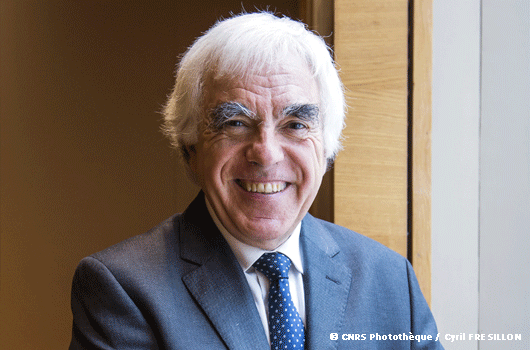
Berry Gérard is a distinguished Professor at Collège de France, holding the Chair in Algorithms, Machines, and Languages since 2012. He previously served as Director of Research at INRIA Sophia Antipolis and Chief Scientist at Esterel Technologies. His academic journey includes roles at École des Mines de Paris and École Polytechnique. Gérard specializes in models of computation, programming language design, and synchronous systems. He has contributed significantly to the development of the Esterel language for embedded systems and formal verification techniques. Education: Docteur d’Etat in Mathematics, Université Paris VII (Computer Science option), 1979 Ingénieur des Mines, Corps National des Ingénieurs des Mines, 1970 École Polytechnique, 1967 Research Interests: Focuses on computational models (e.g., lambda-calculus, synchronous concurrency), programming languages (Esterel, Hop/HipHop), circuit synthesis, and formal verification. His recent work explores diffuse programming and web orchestration. Key Awards: 2014: Médaille d'or du CNRS 2005: Member, Académie des technologies 1993: Member, Academia Europaea 1979: Bronze Medal of CNRS Professional Roles: President of the Council of Education and Research at École Polytechnique Member of the Scientific Council of IRCAM Former President of the INRIA Evaluation Committee Labs/Teams: Active in INRIA’s Indes project on diffuse programming and collaborates with IRCAM on real-time music systems.
Ivona Brandić is a University Professor for High Performance Computing Systems at TU Wien's Institute of Software Engineering and Interactive Systems. Born in Gradačac, Bosnia and Herzegovina, she moved to Austria in 1992 as a refugee during the Bosnian War. She earned a master's degree (2002) and doctorate (2007) in business computer science from TU Wien and completed her habilitation in applied computer science there in 2013. Her career includes roles as an assistant professor (University of Vienna, 2002–2007) and postdoctoral researcher (University of Melbourne, 2008). She transitioned to a tenure-track position at TU Wien in 2014 and became a full professor in 2016. Brandić’s research focuses on cloud computing, energy-efficient ultra-scale systems, and hybrid quantum-classical computing. She has been recognized with the MiA Award (2011), the Austrian Science Fund's Start-Preis (2015), and membership in the Austrian Academy of Sciences' Young Academy (2016). Her work emphasizes sustainable computing, edge systems, and optimizing resource management for distributed applications. Education: Bachelor's degree in Business Informatics (University of Vienna/TU Wien) Master's in Business Computer Science (University of Vienna, 2002) PhD in Applied Computer Science (TU Wien, 2007) Habilitation in Practical Computer Science (TU Wien, 2013) Research Interests: Brandić’s work spans cloud computing, energy efficiency in HPC systems, edge computing, and quantum-classical hybrid systems. She explores autonomic resource management, distributed system resilience, and sustainability in ultra-scale infrastructures. Her projects often address real-world applications like drug design, environmental monitoring, and smart energy grids. Publications: Her 2009 paper Cloud Computing and Emerging IT Platforms is a seminal work in the field. Recent publications focus on quantum-edge integration, energy optimization in AI models, and adaptive edge analytics frameworks. These contributions highlight trends toward sustainable, distributed, and hybrid computational paradigms. Awards: 2011: MiA Award for distinguished contributions by international backgrounds 2015: Austrian Science Fund’s Start Prize 2016: Austrian Academy of Sciences Young Academy Membership Advising & Grants: Brandić leads research groups and has secured grants for projects like NESSUS (energy-efficient cloud systems) and CHIST-ERA’s SDCDN (distributed networks). She mentors students in HPC, edge computing, and quantum systems. Advised topics include workload scheduling, fault tolerance, and energy-aware algorithms. Labs & Teams: She directs research on autonomic cloud management, edge intelligence frameworks (e.g., Sea-LEAP, FRESCO), and quantum-classical workflow systems (RIGOLETTO). Her teams collaborate internationally, integrating academia and industry for scalable, sustainable solutions.
Daniel Große serves as a full Professor at Johannes Kepler University Linz, holding primary affiliation with the Institute for Symbolic Artificial Intelligence and secondary appointments at the Institute of Complex Systems and LIT Secure and Correct Systems Lab. He currently leads 3 major research projects including Modular Real-Time Control (2023-2026) and the ENGEL Austria GmbH industry collaboration (2019-2027), while maintaining active roles in 113 professional activities through 2025. His research integrates Computer Security , Hardware Design , and Artificial Intelligence to address critical challenges in embedded systems. Key focus areas include cryptographic instruction chaining for control flow protection, RISC-V vector workload simulation, and LLM-assisted metamorphic testing of graphics libraries, with strong emphasis on practical applications for safety-critical systems. Recent publications (2025) reveal a cohesive research trajectory toward secure computing foundations, combining formal verification techniques with AI-driven development tools. His work consistently bridges hardware security primitives and software engineering innovations, particularly targeting vulnerabilities in instruction set architectures and embedded graphics pipelines. Prof. Große has supervised 4 graduate students and secured significant funding through both public grants (VerA project) and industry partnerships. His project portfolio demonstrates strategic balance between theoretical advances in arithmetic circuit verification and applied industrial solutions for real-time control systems. As a core member of the LIT Secure and Correct Systems Lab, he contributes to interdisciplinary research initiatives developing formally verified secure computing platforms, with active collaborations spanning hardware security validation, virtual prototyping frameworks, and AI-enhanced software testing methodologies.
Thomas Eiter is a Full Professor at the Vienna University of Technology (TU Wien) in the Department of Knowledge-Based Systems, Faculty of Informatics. His research focuses on artificial intelligence, knowledge representation and reasoning, logic programming, computational logic, and neurosymbolic AI integration. He leads projects in declarative problem-solving, intelligent agent systems, and stream reasoning frameworks like LARS. Eiter has contributed to foundational work in answer set programming (ASP), algebraic reasoning, and their applications in scheduling, robotics, and real-time data processing. He has extensive international collaborations, including EU-funded projects like HumanE-AI-Net and the Austrian Science Fund (FWF) initiatives. His work emphasizes bridging symbolic AI with modern machine learning techniques, particularly in visual question answering and neural-symbolic systems. Eiter has supervised numerous PhD students and maintains active roles in academic leadership, including editorial boards of journals like Theory and Practice of Logic Programming . Key contributions include development of the DLVHEX system for hybrid knowledge representation, optimization frameworks for ASP, and methodologies for stream reasoning in dynamic environments. His research also addresses ethical AI through projects like the TAIGER initiative, focusing on training AI agents with ethical rules.
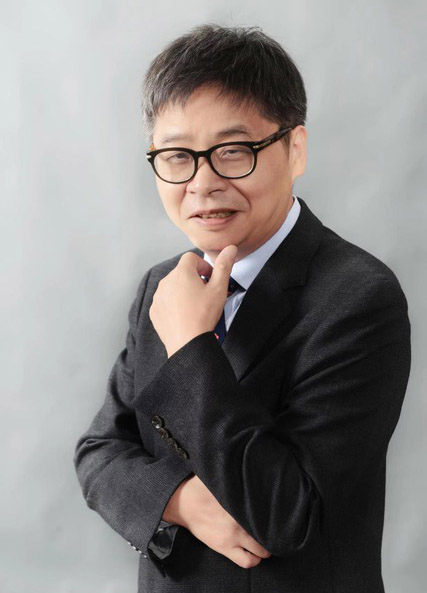
Minyi Guo is a Chair Professor and Head of the Department of Computer Science and Engineering at Shanghai Jiao Tong University (SJTU), China. Previously, he served as Professor and Department Chair at the School of Computer Science and Engineering, University of Aizu, Japan. Dr. Guo received his BSc and ME degrees from Nanjing University, China in 1982 and 1986, and his PhD from University of Tsukuba, Japan in 1998. Dr. Guo's educational background includes: BSc in Computer Science, Nanjing University, China (1982) ME in Computer Science, Nanjing University, China (1986) PhD in Computer Science, University of Tsukuba, Japan (1998) Dr. Guo's research spans multiple areas in computer science, with a primary focus on parallel/distributed computing , compiler optimizations , cloud computing , database systems , and big data . He has published over 400 papers including approximately 150 in major journals and 250 in international conferences, with more than 60 papers in IEEE/ACM transactions and over 100 papers in prestigious conferences. Dr. Guo has also authored 7 books (4 in English, 3 in Chinese) and received 5 best/highlight paper awards from international conferences. Dr. Guo's publication record demonstrates strong contributions across multiple domains of computer systems research. His recent work shows particular emphasis on big data processing, edge computing, graph neural networks, and data center optimization. The publications reveal a consistent trajectory of impactful research in parallel and distributed systems, with increasing focus on AI/ML applications and blockchain technologies in more recent years. Dr. Guo has received numerous prestigious awards and honors: State Technological Invention Award of China (second class award, 2019) Shanghai Technological Invention Award (first class award, 2018) IEEE Technical Committee on Scalable Computing Award for Excellence in Scalable Computing (2018) Ministry of Education Natural Science Award (first class award, 2017) IEEE Fellow (2017) Chief Scientist of National Basic Research Project (973 Program, 2014) Recruitment Program of Global Experts (2010) Excellent Academic Leaders of Shanghai (2010) National Science Fund for Distinguished Young Scholars (2007) As an academic leader, Dr. Guo has served as Department Head for ten years, managing a department with over 100 faculty members and 1000+ students. Under his leadership, the department was promoted to the top tier in China and ranked among the top 40 in the world. He has secured significant research funding, including serving as Chief Scientist of the prestigious 973 Program in 2014 and receiving the National Science Fund for Distinguished Young Scholars in 2007. Dr. Guo has also been selected for the Recruitment Program of Global Experts in China (2010). Dr. Guo actively contributes to the academic community as an associate editor of IEEE Transactions on Parallel and Distributed Systems, IEEE Transactions on Cloud Computing, and Journal of Parallel and Distributed Computing. He has served as General/Program Chair for IEEE conferences and delivered keynote speeches at well-established conferences. His research group has developed practical technologies with industry impact, including 28 licensed patents, some of which have been transferred to companies like Alibaba.
Benjamin Roth is a Professor at Saarland University holding dual affiliations in the Faculty of Computer Science (Research Group Data Mining and Machine Learning) and the Faculty of Philological and Cultural Studies (Department of European and Comparative Literature and Language Studies). His research focuses on natural language processing, large language models, machine learning, and computational linguistics. He leads multiple active research projects including 'Understanding Language in Context' (2025–2033) and 'Linguistic Methods for the Detection of Implicit Abuse' (2024–2027). Notable collaborations span cross-functional studies on LLM behavior, clinical text analysis, and knowledge graph integration. He actively participates in conference organization and has presented at venues like the Konferenz zur Verarbeitung natürlicher Sprache (2024). His work emphasizes methodological innovation in weak supervision, model calibration, and multimodal reasoning. Recent contributions include studies on persona effects in LLMs, specification overfitting mitigation, and zero-shot temporal relation extraction. He has co-authored over 20 peer-reviewed publications since 2020, with a focus on advancing ethical AI, model interpretability, and NLP education.
Siegfried Benkner is a full Professor at the Vienna University of Technology (TU Wien) within the Faculty of Computer Science and leads the Research Group for Scientific Computing. His work focuses on high-performance computing (HPC), parallel programming models, runtime systems, and performance optimization for heterogeneous architectures. He has actively contributed to EU-funded projects such as TROCI (2024–2027) and PEPPHER, addressing resilience in critical infrastructures and programmability for exascale systems. His research spans topics like task-based runtime systems (OCR-Vx), autotuning frameworks (Periscope PTF), and performance portability for GPUs/Xeon Phi architectures. Recent interests include accelerating graph neural networks via novel matrix compression formats and cloud-edge continuum systems for eHealth applications. Prof. Benkner has published over 270 articles, with a focus on runtime systems, parallel patterns, and HPC infrastructure. His work emphasizes practical applications, including semantic data management for medical research and cloud-based analytics frameworks for big data processing in cellular networks. He has led multiple EU projects (9 total), including the 2024 initiative on exascale computing and resilience, and frequently presents at conferences like Euro-Par and Supercomputing events. His activities include media engagement on topics like exascale hardware trends and HPC challenges.
René Mayrhofer is a full Professor at the Institute of Networks and Security, Johannes Kepler University Linz, leading the LIT Secure and Correct Systems Lab. With over 137 research outputs and active leadership in projects like the Christian Doppler Laboratory for Private Digital Authentication (Digidow), he is a key figure in network security and privacy research. His research focuses on practical security solutions for real-world systems, particularly in digital identity management , Tor network security , and mobile device authentication . Recent work addresses critical challenges in Android security states, biometric systems, and trusted execution environments, emphasizing deployable privacy-preserving architectures for physical-world applications. Analysis of his 15 most recent publications reveals strong trends in empirical security evaluation (e.g., Android device security studies) and system hardening (e.g., attested builds and backdoor mitigation), with growing emphasis on supply chain security and decentralized identity frameworks. Professor Mayrhofer has supervised 12 students and currently manages 6 research projects, including the active Digital Shadows initiative (funded until 2025) and the Digidow laboratory (running through 2026). His grants include significant support from federal authorities and the Austrian Research Promotion Agency. As principal investigator of the LIT Secure and Correct Systems Lab, he drives interdisciplinary research in secure communication protocols, privacy-aware authentication, and verifiable computing systems, collaborating with industry partners on real-world deployment challenges.
Zhenjiang Hu is a Chair Professor at Peking University, China, and previously held professorships at the National Institute of Informatics, University of Tokyo, and SOKENDAI. He specializes in bidirectional transformation, functional programming, and software engineering. His research focuses on foundational theories and applications in programming languages, including parallelization and formal methods. Education: BSc, Shanghai Jiao Tong University (1988) MSc, Shanghai Jiao Tong University (1991) PhD, University of Tokyo (1996) Research Interests: Development of bidirectional languages and frameworks Optimization of functional programs Automated parallelization techniques Formal verification of transformations Awards: Yangtze River Scholar (2015) ACM Distinguished Scientist (2016) Basic Research Achievement Award (2015) Multiple Best Paper Awards including Takahashi Awards (1997, 2008) Grants & Leadership: PI of 14 national grants totaling over 250 million Yen Founder and Chair of NII Shonan Meetings (2010-2018) Leadership roles in ICFP, MODELS, APLAS, and other top conferences Labs/Teams: Active in the NII Shonan Meetings, fostering collaborative research in informatics and software engineering.
Helmut Schauer is an Associate Professor affiliated with the Department of Software Engineering at Vienna University of Technology (TU Wien). His work focuses on programming verification, educational technology, and mobile application development. He has supervised multiple diploma theses including Programming for Smartphones (2014) and Blended Assessment (2014). Research interests include formal methods in software engineering, mobile computing frameworks, and innovative educational tools for competency assessment. His 1989 publication Programmentwicklung und Verifikation remains foundational in programming methodology. No scientific awards are explicitly mentioned. Advising activities include guiding students in mobile development, assessment systems, and entrepreneurship education. Active in curriculum design for technology-enhanced learning environments.