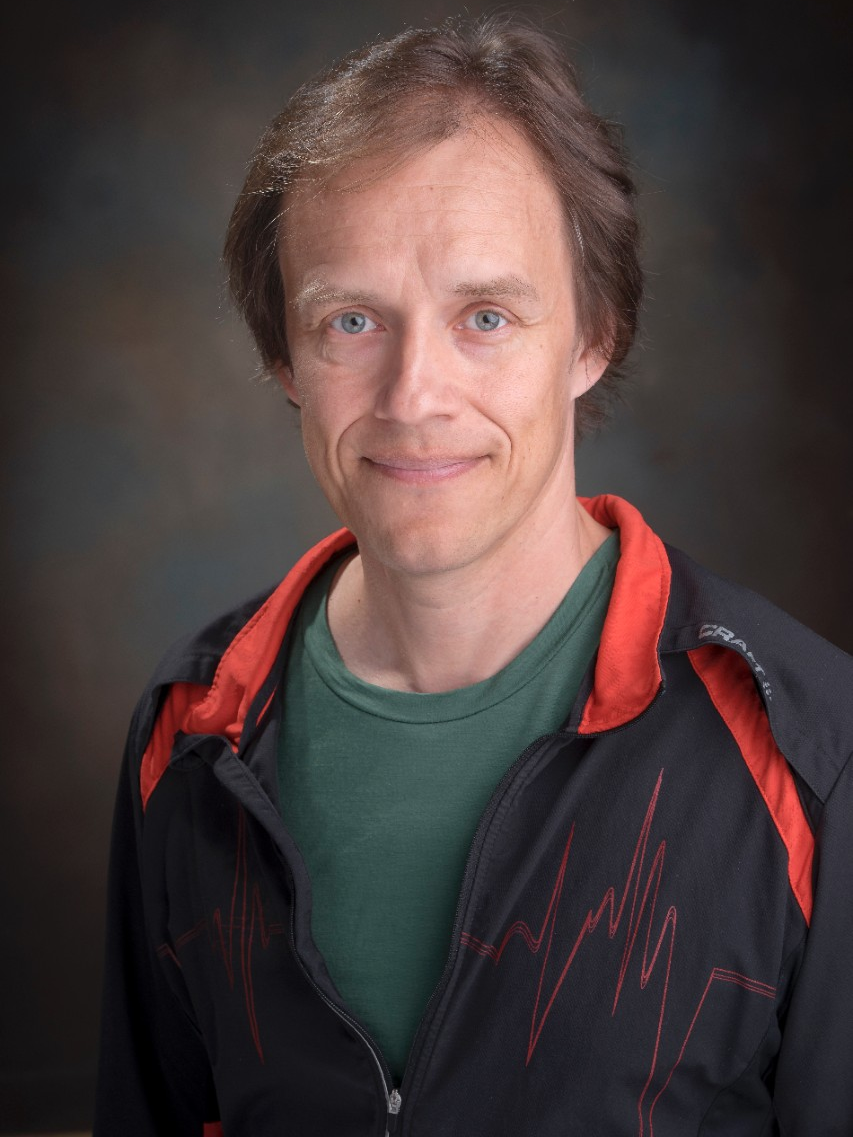
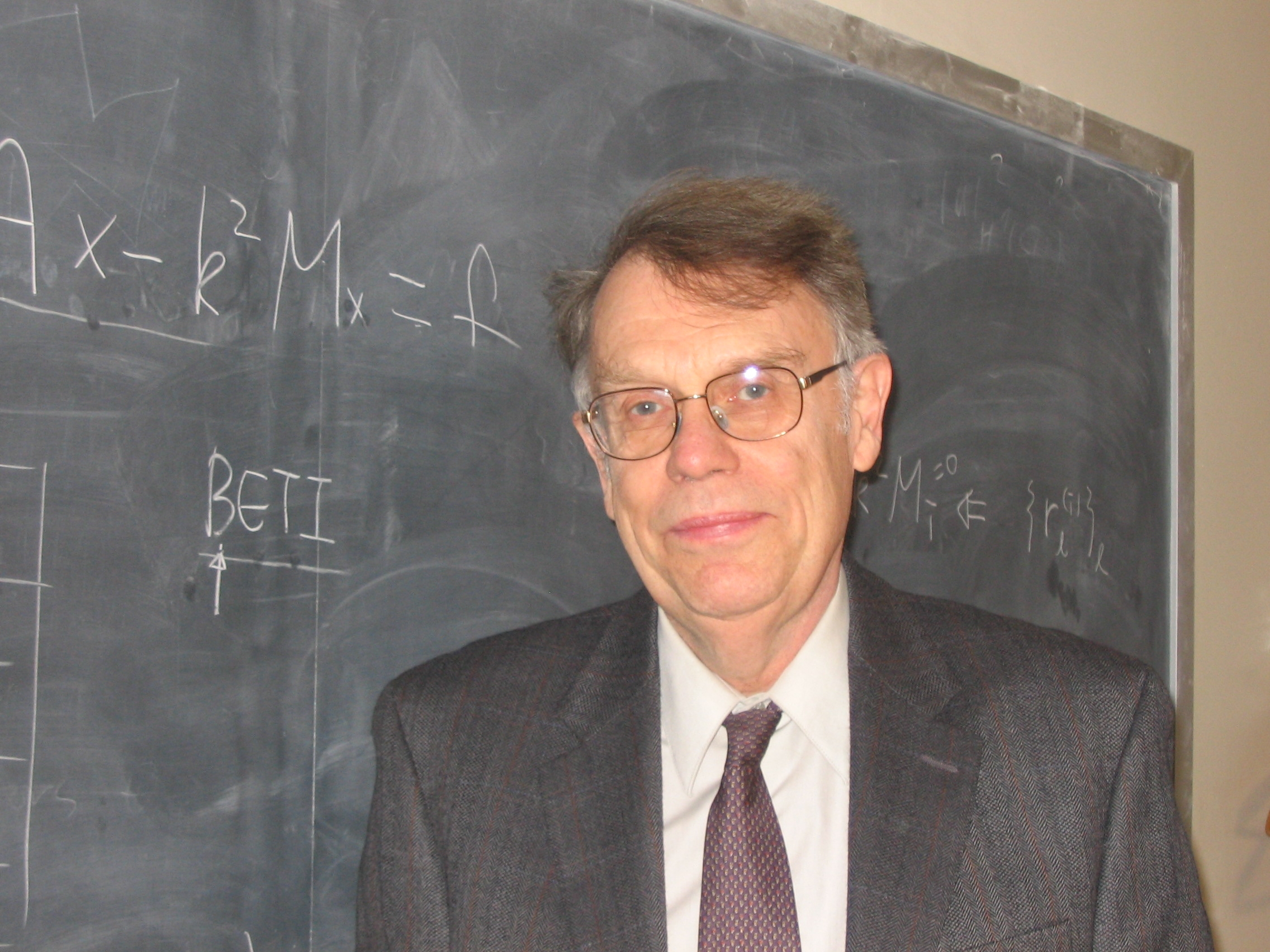
Prof. Dr. Martin Kronbichler is a faculty member at the Faculty of Mathematics , Ruhr University Bochum , leading the Numerics group. His research focuses on higher-order finite element methods, multigrid techniques, and high-performance computing for complex fluid and solid mechanics problems. Key Research Areas: Higher-order finite element methods, iterative solvers, multigrid algorithms, exascale mathematical software, and computational fluid dynamics. Notable Projects: EU-funded dealii-X (exascale digital twins), BMBF PDExa (optimized PDE solvers for exascale), and DFG grants for cut-discontinuous Galerkin methods and geometric multigrid. Publications Trends: Recent works emphasize matrix-free operators for hyperelasticity, diffuse-interface models for additive manufacturing, and multigrid smoothers for higher-order elements. Scientific Awards: Recipient of the Humboldt Research Award for his contributions to numerical methods and HPC. Team: Collaborates with researchers like Dr. Shubham Kumar Goswami, Dr. Richard Schussnig, and Natalia Nebulishvili.
Brian Hie is an Assistant Professor of Chemical Engineering at Stanford University , a Dieter Schwarz Foundation Stanford Data Science Faculty Fellow , and an Innovation Investigator at Arc Institute . He leads the Laboratory of Evolutionary Design , focusing on the intersection of biology and machine learning . His prior roles include a Stanford Science Fellow in the Stanford University School of Medicine and a Visiting Researcher at Meta AI . Education: Ph.D. , Electrical Engineering and Computer Science , Massachusetts Institute of Technology (2021) Bachelor’s Degree , Stanford University Research Interests: Brian’s work bridges machine learning and computational biology , with a focus on protein engineering , single-cell RNA sequencing , and viral evolution . His Evolutionary velocity framework predicts protein evolutionary dynamics across timescales, while his Scanorama algorithm enables efficient integration of heterogeneous single-cell datasets. He also develops structure-informed language models for antibody optimization and uncertainty-aware ML for biological discovery. Publication Trends: His recent work (2023) emphasizes structure-based inverse folding for antibody evolution, evolutionary scale modeling , and unsupervised optimization . Earlier studies (2022-2021) cover evolutionary velocity , multi-modal single-cell analysis , and viral escape prediction using natural language analogies. Scientific Awards: Stanford Science Fellow (2021) National Defense Science and Engineering Graduate Fellowship (2019) Advising: He mentors doctoral students including Brandon Ameglio , Garyk Brixi , and Chang M. Yun , with a focus on biological design and computational methods . Labs & Collaborations: His lab collaborates with Bio-X and the Institute for Human-Centered Artificial Intelligence (HAI) , and he maintains affiliations with Sarafan ChEM-H and Stanford Data Science .
Daniel B. Szyld is a Professor in the Department of Mathematics at Temple University's College of Science and Technology. He is co-Director of the High-Performance Computing for Scientific Applications Professional Science Master’s program and a member of the Center for Computational Mathematics and Modeling. He holds leadership roles as President of the International Linear Algebra Society (ILAS, 2020–2026) and as a Board of Trustees member at ICERM (2024–2028), and previously served as Vice-President of SIAM (2014–2015). His research interests include Numerical Analysis , Scientific Computing , Numerical Linear Algebra , Iterative Methods , Preconditioning , Domain Decomposition , and High-Performance Computing . His work often focuses on Krylov subspace methods like GMRES, block solvers, and asynchronous algorithms, with applications in large-scale scientific simulations. The 15 most recent publications reflect a strong focus on enhancing the stability, convergence, and performance of iterative solvers, especially GMRES variants and domain decomposition methods. Topics include random sketching, deflation, weighted norms, multisketching in QR factorization, and asynchronous Schwarz methods. These works appear in top journals such as SIAM Journal on Matrix Analysis and Applications , Numerische Mathematik , and Electronic Transactions on Numerical Analysis , often in collaboration with leading researchers in the field. Scientific Awards and Recognitions: Commemorative medal, Charles University of Prague, 1997 Featured in Hall of Fame by Henk van der Vorst, SARA, 2010 Dean's Distinguished Award for Excellence in Research, Temple University, 2011 Fellow, American Mathematical Society, 2017 Fellow, Society for Industrial and Applied Mathematics, 2017 Achievement in Mathematics Award, Temple University, 2018 Faculty Senate Outstanding Service Award, Temple University, 2021 Daniel B. Szyld has served on the editorial boards of numerous prestigious journals, including Mathematics of Computation , Linear Algebra and its Applications , Numerical Linear Algebra with Applications , and was Co-Editor-in-Chief of Electronic Transactions on Numerical Analysis (2005–2013) and Editor-in-Chief of SIAM Journal on Matrix Analysis and Applications (2015–2020). His research has been supported by the National Science Foundation and the Department of Energy. He has advised students and postdocs, though specific names are not listed in the provided text. He is also involved in professional service through societies such as SIAM, AMS, ILAS, and NAM, and advocates for equity and ethical engagement in mathematics. Labs and Research Groups: He is a member of the Center for Computational Mathematics and Modeling at Temple University and co-Director of the High-Performance Computing for Scientific Applications Professional Science Master’s program, indicating active leadership in computational research and training.
Gavin Schwarz is a Professor and Head of School at the School of Management and Governance within the UNSW Business School . He specializes in organizational change , organizational failure and inertia , and the dynamics of virtual teams , with a focus on how organizations fail during change processes and how to develop applied strategies for change management . His work spans diverse sectors including healthcare, technology, and education, with publications in leading journals such as Academy of Management Learning and Education and Administrative Science Quarterly . Education : PhD in Management (University of Queensland), MPhil (Hons) in Management (University of Auckland), BA in Management and English (University of Auckland). Grants : 2020 Brock University grant for "University communication in times of COVID-19" , 2020 UNSW Medicine grant for "Translation and change: Embedding effective change management in health" , and earlier Australian Research Council and Gordon J. Samuels Fellowship awards. His research explores the development of knowledge in organizational theories , with an emphasis on collective responses to change , HR management during crises , and technology strategy . He has contributed to understanding organizational communication , team innovation , and structural inertia . His 15 most recent publications cover topics from AI’s role in organizational change to pandemic-driven research adaptation, with keywords spanning management science , behavioral economics , and digital transformation . Scientific Awards 2021-2023 : Outstanding Reviewer Awards (Academy of Management Review) 2017-2020 : Best Reviewer Awards (Journal of Organizational Behavior) 2019, 2013, 2011 : Best Paper Finalist/Awardee (Academy of Management divisions) 2007, 2006 : Editorial Board Excellence (Academy of Management Journal) and Gordon J. Samuels Fellowship As an active supervisor in organizational change and HR development , his work supports healthcare innovation and digital transformation. He serves as Editor-in-Chief for the Journal of Applied Behavioral Science and is on the editorial boards of Academy of Management Review , Journal of Management , and Journal of Organizational Behavior . Contact: g.schwarz@unsw.edu.au
Ronald D. Haynes is a Full Professor and Chair of Scientific Computing Graduate Programs in the Department of Mathematics and Statistics at Memorial University of Newfoundland. He leads research in numerical methods for PDEs and industrial-scale optimization problems. His work develops advanced domain decomposition techniques, adaptive mesh methods, and parallel computing approaches for solving complex physical systems. Applications include modeling pitting corrosion of materials, predicting rock strength for drilling optimization, and simulating multiphase fluid flows in porous media. Recent publications demonstrate innovations in mesh adaptation, parallel algorithms, and machine learning applications for industrial problems. Collaborative projects have addressed reservoir simulation, drill bit analysis, and corrosion prediction through integrated computational approaches. Professor Haynes has received the President's Award for Outstanding Research (2018) and Dean of Science Distinguished Teaching Award (2017). He serves as Co-editor-in-chief of the CAIMS Mathematics in Science and Industry Journal and was President-Elect of the Canadian Applied and Industrial Mathematics Society (2023-2025). He maintains active doctoral supervision with current research groups focusing on domain decomposition methods, closest point algorithms, and optimization techniques. Industry partnerships include projects with ExxonMobil and Global Maritime addressing drilling optimization and mooring design challenges.
Dr. Stephan Rave is a Researcher in the Institute for Analysis and Numerics at the University of Münster. He is affiliated with the Applied Mathematics Münster cluster and serves as an Investigator in Mathematics Münster. His work focuses on numerical analysis, scientific computing, and machine learning, with a strong emphasis on model reduction techniques for complex systems. Education : PhD in Mathematics (2012), University of Münster, thesis on finitely summable K-homology. Master's and Bachelor's degrees in Mathematics from the University of Münster. Research Interests : Dr. Rave specializes in model order reduction (MOR) methods, including reduced basis techniques, localized orthogonal decomposition (LOD), and nonlinear approximation strategies. His work addresses challenges in multiscale modeling, domain decomposition, and parametrized partial differential equations. He also develops open-source software tools like pyMOR for MOR and contributes to initiatives like the MaRDI (Mathematical Research Data Initiative) to enhance interoperability in scientific computing. Projects : Key initiatives include the MaRDI project (2021–2026), EXC 2044 Cluster of Excellence (Geometry-based modeling), and MULTIBAT (lithium-ion battery simulation). His research bridges theoretical developments with practical applications in battery modeling, electrochemistry, and computational fluid dynamics. Grants & Awards : Funded by DFG, the German Federal Ministry of Research, and internal university grants, his work addresses strategic areas like sustainable research software and energy storage systems. He leads projects on distributed model reduction and communication-avoiding algorithms. Teaching : Dr. Rave teaches advanced numerical methods courses, including Model Order Reduction, Numerical Methods for PDEs, and Python-based computational labs. He co-organizes seminars and workshops on MOR and scientific software engineering.
Holger Schwarz is an Associate Professor (Apl. Professor) at the Institute for Parallel and Distributed Systems (IPVS) within the Faculty of Computer Science, Electrical Engineering and Information Technology at the University of Stuttgart. He serves as Head of the Infrastructure Department and is actively involved in research and teaching in the areas of data management, database systems, and data analytics. Professor Schwarz earned his doctorate (Dr. rer. nat.) from the University of Stuttgart in 2003 with a dissertation on "Integration of Data Mining and Online Analytical Processing." He later completed his habilitation (Dr. rer. nat. habil.), qualifying him as a university professor in Germany. His primary research interests focus on data management systems , particularly in the domains of data lakes, lakehouses, enterprise data platforms, and metadata management. Professor Schwarz investigates how to design efficient and scalable data architectures that support modern analytical workloads while addressing challenges in data integration, governance, and democratization. His work bridges theoretical database concepts with practical industrial applications, as evidenced by numerous collaborations with industry partners. Professor Schwarz's recent publications demonstrate a clear trend toward enterprise data management solutions, particularly focusing on data lakehouse architectures, enterprise data marketplaces, and advanced clustering techniques. His research shows a consistent pattern of addressing real-world data management challenges through innovative architectural patterns and algorithmic improvements, with strong emphasis on practical industrial implementation. Professor Schwarz supervises numerous research projects including MetaMan (metadata management in complex data landscapes), DLArchitecture (design of comprehensive data lake architecture), INTERACT (interactive rapid analytic concepts), and VALID-Partition (improving prediction quality using domain knowledge). He also coordinates the University of Stuttgart's projects within the Software Campus initiative and serves as Managing Director of the Technology Partnership Lab and as a Member of the Board of Directors of the Industrial Data Lab. His teaching portfolio includes courses on Advanced Information Management, Database Systems, and Data Science projects across multiple semesters, demonstrating his commitment to educating the next generation of data management professionals.
Dimitrios Betsakos is a Professor at the Department of Mathematics , Aristotle University of Thessaloniki , Greece. His academic journey began with a degree in Mathematics (1990) from Aristotle University, followed by a PhD in Mathematics (1996) from Washington University in St. Louis. He has held various academic positions, including Postdoctoral Fellow at the University of Helsinki (1998-1999), Visiting Assistant Professor roles at Aristotle University and the University of Crete (1999-2002), and progressively advanced to Assistant, Associate, and Full Professor at Aristotle University (2002-). His research focuses on Complex Analysis , Dynamic Theory , and Geometric Function Theory , exploring topics like harmonic measure, symmetrization, and hyperbolic geometry. His work connects analysis with probability, particularly through Brownian motion and Markov processes. The 15 most recent publications (2004-2021) span geometric versions of Schwarz’s lemma, harmonic measure, hyperbolic metrics, and condenser capacity. These studies often involve collaborations and address extremal problems, inequalities, and applications of complex analysis to differential equations. He has supervised numerous doctoral and postgraduate students, including Kelgiannis Georgios , Tsantaris Athanasios , and Sachpazis Stylianos , guiding research on topics like holomorphic functions, geometric transformations, and hyperbolic metrics. His teaching includes courses on Real Analysis and Complex Analysis. Current research projects include geometric versions of Schwarz’s lemma under hyperbolic metrics and capacity estimation problems, reflecting his long-term engagement with conformal invariants and analytic number theory.
Prof. Dr.-Ing. Ulrich Schwarz serves as Professor of Design, Construction and Manufacturing of Wood Products at Eberswalde University of Sustainable Development, where he has been Dean of the Department of Wood Engineering since 2012. His academic leadership oversees comprehensive wood engineering programs while maintaining active research in advanced wood technologies. Schwarz earned his doctorate from Technical University Dresden in 2003 with research on decontamination processes for contaminated waste wood. His educational background includes Dipl.-Ing. degrees in Wood and Fiber Materials Technology from TU Dresden (1993) and Wood Technology from Rosenheim University of Applied Sciences (1990), establishing a strong foundation in both theoretical and applied wood science. His research program focuses on quality assurance systems, adhesive technology innovations, sawmill production optimization, solid wood processing techniques, and building physics measurement. Schwarz has pioneered work in piezoresistive bond lines for structural health monitoring, developing multifunctional wood adhesives that serve as integrated sensors in timber construction. His research bridges traditional wood technology with modern sensing methodologies to enhance structural safety and longevity. Analysis of his 15 most recent publications reveals a clear research trajectory evolving from fundamental wood adhesive properties toward smart material applications. His recent work demonstrates increasing sophistication in using impedance spectroscopy to optimize piezoresistive measurements in wood adhesives, with significant contributions to understanding mechanical properties of wood composites and curing behavior of advanced adhesive systems. As Department Dean, Schwarz manages academic programs and research infrastructure while maintaining his Ingenieur-Büro-Schwarz consultancy practice established in 2001. His career demonstrates exceptional integration of academic scholarship with industrial application, particularly in developing practical solutions for wood processing challenges and structural monitoring systems.
Steven Ruuth is a Professor in the Department of Mathematics at Simon Fraser University (SFU), within the Faculty of Science. He specializes in numerical methods for partial differential equations (PDEs), particularly those involving complex geometries and discontinuous solutions. His work bridges applied mathematics and computational science, focusing on interface dynamics, geometric numerical methods, and efficient algorithm development. Ph.D. in Applied Mathematics, University of British Columbia (1996) NSERC Postdoctoral Fellow and Visiting Assistant Professor at UCLA (1996–1999) His research emphasizes robust numerical techniques for evolving networks of interfaces, implicit-explicit time integration methods, and the closest point method for PDEs on manifolds. Applications span computational fluid dynamics, materials science, and computer vision. He has contributed to advancements in meshfree methods, RBF-FD discretizations, and parallel domain decomposition algorithms. Recipient of the Germund Dahlquist Prize (2011) and CAIMS Research Prize (2020) , he is also an editorial board member for SIAM Journal on Scientific Computing and Numerical Mathematics: Theory, Methods and Applications. Teaching responsibilities include courses such as MATH 260 (Introduction to Ordinary Differential Equations). His research group actively explores cutting-edge computational methods with applications to geometry processing and scientific computing challenges.
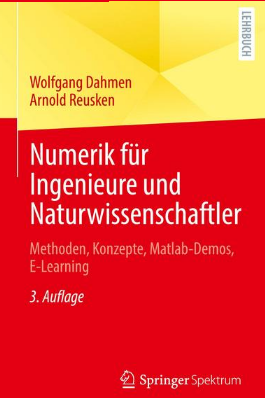
Prof. Dr. Arnold Reusken is a full Professor of Numerical Mathematics at RWTH Aachen University, affiliated with the Institute for Geometry and Practical Mathematics (IGPM). He has held the Chair for Numerical Mathematics since 1997 and maintains an active research and academic profile in computational mathematics. Education: Ph.D. in Mathematics, University of Utrecht (1988) M.Sc. in Mathematics, University of Utrecht (1984) His research focuses on the development and analysis of numerical methods for partial differential equations, with particular emphasis on finite element methods, multigrid solvers, and computational techniques for two-phase incompressible flows and PDEs on surfaces. His work bridges theoretical numerical analysis and practical scientific computing applications in fluid dynamics and interfacial phenomena. He has made significant contributions to trace finite element methods, surface Stokes equations, and unfitted discretizations. The recent publication trend shows sustained activity in numerical methods for evolving surfaces, surface fluid dynamics, and preconditioning techniques. His work often involves rigorous error and stability analysis, demonstrating a strong theoretical foundation. Editorial Roles: Associate Editor, Journal of Numerical Mathematics (2015–present) Associate Editor, IMA Journal of Numerical Analysis (2020–present) Former Associate Editor, SIAM Journal on Numerical Analysis (2016–2021) Former Associate Editor, SIAM Journal on Scientific Computing (2002–2008) Former Associate Editor, Computing & Visualization in Science (2010–2021) Member of Advisory Board, Computing (1997–2009) Prof. Reusken has advised numerous students and researchers, though specific names are not listed in the provided text. He has been involved in collaborative research projects and has secured funding for work in numerical simulation and computational fluid dynamics. He co-authored the influential textbook Numerik für Ingenieure und Naturwissenschaftler , now in its third edition, and has contributed to other key publications in the field. He leads a research group at IGPM focused on numerical methods for interface and surface problems, contributing to both fundamental algorithm development and practical implementation in scientific computing. His team works on cutting-edge methods for simulating complex fluid systems with moving boundaries and topological changes.
Professor Talal Rahman is a faculty member at the Western Norway University of Applied Sciences, where he works in the Department of Computer Science, Electrical Engineering and Mathematical Sciences. His office is located at Bergen KRONSTAD D305, and he can be reached at phone number +47 55 58 72 46. Professor Rahman's research spans several key areas in computational mathematics and scientific computing. His primary research interests include: Scientific Computing Numerical Analysis Numerical Methods for Partial Differential Equations Preconditioning Finite Element with Domain Decomposition Methods Variational Image Processing Artificial Intelligence and Machine Learning applications Professor Rahman's extensive publication record demonstrates a strong focus on domain decomposition methods, particularly Schwarz methods and their applications to multiscale problems. His recent work shows an increasing integration of machine learning techniques with traditional numerical methods, as evidenced by publications on neural network applications for environmental modeling and capelin migration patterns. His research also extends to biomedical applications, including computational analysis of biodegradable materials and bone tissue engineering scaffolds. He has made significant contributions to the development of adaptive preconditioners and parallel algorithms for solving complex numerical problems, with his work on the TV-Stokes model for image processing representing an important contribution to the field of variational image processing. Professor Rahman has supervised numerous research projects and students, though specific student names are not provided in the available information. His research appears to be supported by grants related to computational science and engineering, though specific grant details are not mentioned in the provided text. Based on his research areas, Professor Rahman likely collaborates with various research groups focused on computational science, with potential connections to biomedical engineering labs and environmental research teams studying the Barents Sea ecosystem.
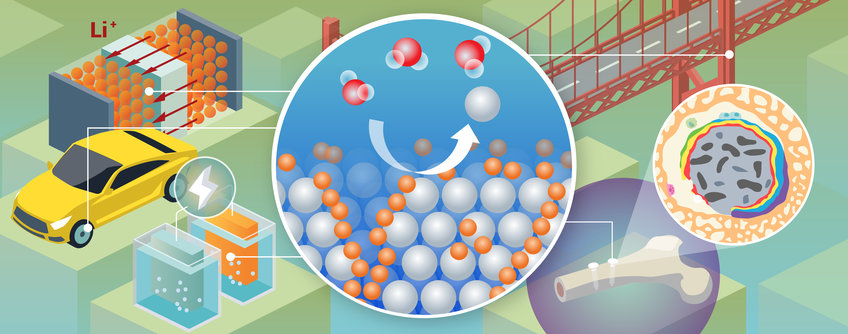
Dr. Tim M. Schwarz is a Research Fellow and Group Leader at the Max Planck Institute for Sustainable Materials, where he leads the 'Interfacial Processes/Reactions at the Atomic Scale' research group. He holds a Walter-Benjamin position funded by the German Research Foundation (DFG). His work focuses on understanding corrosion mechanisms at liquid-solid interfaces using advanced techniques like cryo-atom probe tomography. Key areas include magnesium alloys for bioresorbable implants, battery materials, and infrastructure steel durability. He has been awarded the Walter Benjamin Prize (2024), Otto Hahn Medal (2025), and Erwin Müller Prize for his contributions to materials characterization. Education: Ph.D. in Materials Science, RWTH Aachen University (2021–2024) M.Sc. in Materials Science, University of Stuttgart (2018–2021) B.Sc. in Materials Science, University of Stuttgart (2013–2018) Research Interests: His group investigates interfacial reactions in structural, energy, and functional materials, with a focus on corrosion processes, alloy design, and sustainable materials. Recent studies include magnesium alloy degradation, bioresorbable implants, and cryo-atom probe tomography for liquid-solid interface analysis. Grants & Collaborations: His DFG-funded research group collaborates with ETH Zurich on iron corrosion and infrastructure materials. Projects aim to develop corrosion-resistant materials and improve atom probe methodologies for biological and engineering applications. Awards: Walter Benjamin Prize (2024) Otto Hahn Medal (2025) Erwin Müller Prize Outstanding Paper Award 2024
Christian Mendl is a Rudolf Mößbauer Tenure Track Assistant Professor at the Technical University of Munich (TUM) , affiliated with the School of Computation, Information and Technology and the Institute for Advanced Study (TUM-IAS) . His career includes a postdoctoral position at Stanford University (2015-2017) under a Feodor Lynen Fellowship from the Alexander von Humboldt Foundation, a Junior Professorship at TU Dresden (2017-2019), and a PhD in Physics from LMU Munich (2012). Education : Physics and Mathematics (TUM) Appointments : Rudolf Mößbauer Assistant Professor (TUM, 2019), Junior Professor (TU Dresden, 2017), Postdoc (Stanford, 2015-2017) Research Focus : Mendl specializes in Quantum Computing , Computational Physics (tensor networks, quantum Monte Carlo, neural-network quantum states), Statistical and Non-Equilibrium Physics , and Numerical Simulation . His work bridges quantum information theory with condensed matter physics, emphasizing efficient quantum algorithms and simulators for complex systems. Scientific Contributions : Recent publications highlight advancements in quantum circuit optimization , tree tensor network simulations , block encoding of operators , and quantum-assisted optimization for problems like the capacitated vehicle routing and Toda lattice dynamics. His methods often integrate machine learning with quantum information to address challenges in Hamiltonian simulation and quantum error analysis . Awards : Alexander von Humboldt Feodor Lynen Fellowship, Boehringer Ingelheim Fonds PhD Fellowship, TopMath Graduate Program, Studienstiftung des deutschen Volkes Grants : Rudolf Mößbauer Tenure Track Fellowship (TUM-IAS), Dieter Schwarz Fellowship
Olof B. Widlund is the Silver Professor of Mathematics and Computer Science at the Courant Institute of Mathematical Sciences , New York University , where he has been a leading figure in numerical analysis and scientific computing for decades. His research focuses on domain decomposition methods for partial differential equations, particularly in the context of large-scale parallel computation. Widlund’s work has significantly advanced the theory and application of iterative substructuring and Schwarz methods, including FETI-DP and BDDC algorithms, for problems in elasticity, fluid dynamics, and electromagnetics. He co-authored the award-winning monograph Domain Decomposition Methods – Algorithms and Theory (Springer, 2005), which received the Association of American Publishers’ Excellence Award in 2006. His recent research includes hybrid domain decomposition methods, isogeometric analysis, and adaptive selection of primal constraints. The trends in his publications show a sustained focus on robust, scalable preconditioners for elliptic systems, H(curl) and H(div) problems, and nearly incompressible materials, with strong emphasis on theoretical analysis and practical implementation. Scientific Awards: Award for Excellence in Professional and Scholarly Publications, Association of American Publishers, Mathematics and Statistics (2006) Research Sponsorship and Leadership: His work has been supported by the National Science Foundation (NSF DMS-1522736) and the U.S. Department of Energy . He was the institutional lead for the DOE SciDAC TOPS project until 2007 and co-PI on earlier multi-institutional computational methods initiatives. Advising: Widlund has advised 31 doctoral students, many of whom have become leaders in numerical analysis and computational science. His students have worked on spectral elements, mortar methods, Stokes solvers, and BDDC/FETI algorithms. Community Engagement: He is a regular participant in the International Conferences on Domain Decomposition and delivered a full-day tutorial prior to the 20th conference in 2011. A special conference was held in his honor at Courant in 2008 for his 70th birthday.