Øyvind Aas is an Associate Professor of Economics at Kristiania University of Applied Sciences and a Researcher at Université libre de Bruxelles (ECARES). His academic roles include teaching graduate-level microeconomics, industrial organization, and mathematics, alongside advising bachelor students. He leads research groups at ULB, Northeastern University, and the Oslo IO-theory group in Norway. Research interests focus on firm behavior, contractual structures, competition economics, and corporate governance. His work explores topics such as price dispersion, optimal governance under incomplete contracts, and the interplay between productivity and labor reallocation. Recent publications span educational innovations like Thinking Classrooms methodologies and adaptive testing in mathematics, reflecting his dual focus on pedagogy and core economic theory. His applied research includes analyses of the Norwegian petroleum industry and behavioral nudging in academic settings. No scientific awards are listed, though his affiliations with prestigious institutions suggest ongoing recognition. He maintains active collaborations across multiple universities and research centers, contributing to both European and North American academic networks.
Inês Black is an Assistant Professor in the Strategy area at Duke University's Fuqua School of Business. Her research examines the intersection of firm strategy and labor markets, focusing on how hiring practices impact organizational performance. She teaches the core Strategy course for Fuqua's MBA program. Her research interests include analyzing firm-driven labor market search mechanisms, network hiring effects, and the strategic implications of skill demand. She has published in top journals like Strategic Management Journal and Strategy Science, with a focus on understanding how organizations optimize talent acquisition strategies in evolving labor markets. Recent work explores topics such as the increasing role of proactive talent hunting by firms (up 50% since 2010), the role of occupational switching in wage dynamics, and the interplay between technology adoption and organizational fit. Her methodologies include large-scale administrative data analysis and employer-employee linked datasets.
Ismail Erzurumlu is an Assistant Professor of Marketing at NEOMA Business School, where he teaches Marketing Strategy, Marketing Management, and Integrated Marketing Communications. He holds a PhD in Management with a Marketing specialization from Koc University. His research focuses on the intersection of marketing and finance, specifically examining how product portfolio decisions impact firm market value and stock risk. Key research areas include: Marketing-Finance Interface Product Failure/Recall dynamics Innovation impact on financial performance B2B marketing strategies Luxury goods and conspicuous consumption His publication portfolio (2016-2023) demonstrates consistent focus on financial implications of product decisions, with recent work exploring sustainability in luxury retail. Research methodologies frequently employ event studies and financial metrics to analyze product recalls, discontinuations, and innovation risks. Awards recognizing his scholarly contributions include: Finalist for AMS Mary Kay Dissertation Proposal Award Runner-up in PDMA-UNH Innovation Dissertation Competition Finalist for EMAC Best Paper Award based on Doctoral Work He maintains active professional engagement as an ad hoc reviewer for the Journal of Product Innovation Management and holds memberships in the American Marketing Association and European Marketing Academy.
Jackie Baek is an Assistant Professor in the Department of Technology, Operations, and Statistics at the Leonard N. Stern School of Business, New York University, where she joined in January 2023. Her research bridges machine learning, operations research, and societal impact, focusing on algorithmic fairness, decision-making systems, and data-driven applications in healthcare and online platforms. Ph.D., Operations Research, Massachusetts Institute of Technology (2022) Bachelor, Mathematics, University of Waterloo Her research interests span Machine Learning, Algorithmic Fairness, Data-Driven Operations, Healthcare Analytics, Revenue Management, and Transportation Systems . She develops algorithms that improve decision-making while examining the societal consequences of algorithmic systems, particularly in hiring and health interventions. Her work combines theoretical rigor with practical applications, often involving collaborations with institutions like the Simons Institute at UC Berkeley. The recent publications reflect a strong trend in fairness-aware machine learning, bandit algorithms, and behavioral health interventions . Her work on TS-UCB improves Thompson sampling efficiency, while papers on statistical discrimination and algorithmic monoculture highlight ethical concerns in hiring algorithms. Other works apply machine learning to global health, such as COVID-19 forecasting and personalized behavioral interventions. These contributions appear in top-tier journals and conferences including Management Science , Operations Research , PNAS , and ACM FAccT . Her scientific awards include: Winner, Pierskalla Best Paper Award (2024) Second place, MSOM Student Paper Competition (2022) Finalist, George Nicholson Student Paper Competition (2021) Finalist, RMP Jeff McGill Student Paper Award (2021) Honorable Mention, MIT ORC Best Student Paper Award (2021) Oral presentation at EAAMO (2021) Jackie Baek has advised or collaborated on research with students and scholars such as Hamsa Bastani, Shihan Chen, and Vivek Farias. She has contributed to forecasting efforts through the COVID-19 Forecast Hub and presented her work at venues like BIRS. While no specific grants are mentioned, her publications suggest support from institutions like MIT, Simons Institute, and NYU Stern. She is actively involved in research groups focusing on dynamic allocation and matching, as evidenced by her BIRS talk in 2025. She maintains an active research presence with code available on GitHub and participates in interdisciplinary collaborations across computer science, operations, and social impact. Her lab or research team appears to focus on algorithmic fairness and decision systems, likely involving graduate students and postdocs in ongoing projects related to fairness, learning, and operations.
Onur Ozturk is an Associate Professor at the Telfer School of Management, University of Ottawa. He holds a PhD in Industrial Engineering from Grenoble Institute of Technology (2012), followed by a postdoctoral fellowship at Ivey Business School (2012–2014). Prior to his current position, he worked as an Assistant Professor at ESIEE Paris (2014–2017). His research focuses on large-scale optimization in healthcare and transport sectors, leveraging scheduling theory, simulation modeling, and stochastic processes. He has contributed to projects such as the Efficacity Institute’s urban freight transport optimization in Île-de-France. Research interests include: Integer linear programming and operations research applications Scheduling and simulation modeling for healthcare logistics and transportation Optimization of pandemic-related operations (e.g., staff scheduling in hospitals, patient admissions) Bi-criteria optimization in medical sterilization and manufacturing systems Recent funded research includes a NSERC grant (2019–2026; $169,000) for batch scheduling methods, and multiple internal grants addressing healthcare routing (2021), medical sterilization (2021), and pandemic staffing (2020–2021). His work emphasizes practical solutions for urban logistics, healthcare capacity planning, and crisis management. No scientific awards are explicitly mentioned in the text. His teaching focuses on business analytics, operations management, and stochastic modeling.
William Kuszmaul is an Assistant Professor in the Computer Science Department at Carnegie Mellon University. His research focuses on designing and analyzing randomized algorithms and data structures, with a particular emphasis on hashing techniques, algorithm complexity, and data structure optimization. He holds a PhD from MIT, advised by Charles E. Leiserson, and previously served as the Rabin Postdoc of Theoretical Computer Science at Harvard University. His research interests include theory and algorithms and complexity , with recent work addressing optimal bounds for open addressing, efficient cuckoo hashing, and tight analyses of linear probing. Notable contributions include studies on list labeling, minimal perfect hashing, and distributed load balancing under dependency constraints. Kuszmaul has advised students Jingxun Liang and Renfei Zhou in his current role. His publications span 2023–2025, reflecting a focus on foundational algorithmic problems with applications in memory management, parallel computing, and data structure efficiency. Key themes include optimizing hash table performance, analyzing algorithmic phase transitions, and establishing theoretical limits for dynamic retrieval systems. No scientific awards are explicitly listed in the provided materials. His academic trajectory includes postdoctoral work at Harvard and doctoral research at MIT, supported by the John and Fannie Hertz Fellowship. Current courses listed include 15-151 (Fall 2025) and 15-756 (Fall 2024) , suggesting involvement in both introductory and advanced computer science education.
Gregory Characklis, PhD, is the W. R. Kenan Jr. Distinguished Professor in the Department of Environmental Sciences and Engineering at the University of North Carolina at Chapel Hill’s Gillings School of Global Public Health. He also serves as Director of the Institute for Risk Management and Insurance Innovation (IRMII) and the Center on Financial Risk in Environmental Systems (CoFiRES). His research focuses on evaluating and managing financial risks from natural hazards (e.g., floods, droughts, pandemics) through interdisciplinary modeling integrating engineering, economics, and data science. Characklis leads pan-campus initiatives supported by industry and federal partners, addressing risk mitigation for sectors such as water utilities, energy, agriculture, and real estate. Education: PhD in Environmental Science and Engineering (Rice University, 1999), MS (Rice, 1994), BS in Materials Science (Johns Hopkins, 1989). Research emphasizes financial risk from hydrometeorological variability, with innovations like index-based insurance instruments and adaptive water management contracts. Key projects include flood exposure mapping in North Carolina and resilience strategies for California’s water infrastructure. Characklis has received accolades for teaching and research, including the Newton Underwood Award for Excellence in Teaching and the ASCE Quentin Martin Award. Service activities include leadership roles in AEESP, CUAHSI, and AGU; advisory roles for water policy initiatives; and editorial work for journals like Water Security and Water Resources Research . Collaborations span federal agencies, insurers, and financial institutions to design risk management tools.
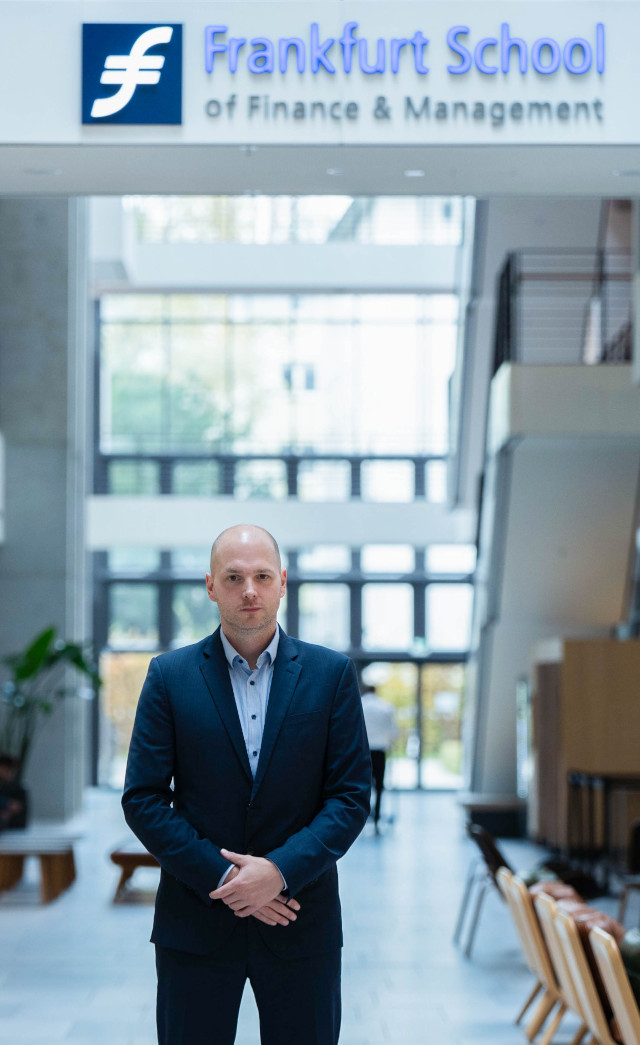
Co-Pierre Georg is a Professor at the Frankfurt School of Finance & Management and Director of the Frankfurt School Blockchain Center. His research spans financial technology, blockchain, systemic risk, and network theory. He previously held the DSI-NRF SARChI Chair in Blockchain Research at the University of Cape Town and worked at the Deutsche Bundesbank's Research Centre. Education: PhD in Economics (Friedrich Schiller University Jena), MSc (Karlsruhe Institute of Technology) Affiliations: Research Associate at Columbia University's Center for Global Legal Transformation and Oxford Martin School Research Interests: Georg specializes in financial networks, systemic risk, and regulatory complexity. He applies network theory to analyze contagion in banking systems, vaccine allocation during pandemics, and software vulnerability propagation. His interdisciplinary work bridges economics, computer science, and complex systems theory. Scientific Awards: No awards explicitly mentioned in the text. Advising: Georg has mentored numerous PhD students and postdocs including Changyeop Lee, Xueying Zhao, and Gideon du Rand. His advisees hold positions at institutions like Oxford, Groningen, and the Bank for International Settlements.
M. Selim Akturk is a Professor in the Department of Industrial Engineering at Bilkent University's Faculty of Engineering in Ankara, Turkey. His academic career spans over three decades since earning his Ph.D. from Lehigh University in 1990, during which he has established himself as a leading researcher in operations research and production systems. Education: Ph.D. in Industrial Engineering, Lehigh University (1990) M.S. in Industrial Engineering, Middle East Technical University (METU) (1984) B.S. in Industrial Engineering, Middle East Technical University (METU) (1982) Akturk's research focuses on Production Management Systems, Disruption Management, Cellular Manufacturing Systems, Production Scheduling, and Advanced Manufacturing Technologies. His work demonstrates particular expertise in scheduling problems with controllable processing times, airline operations optimization, and robotic cell scheduling. His research bridges theoretical advances with practical applications in manufacturing and transportation systems. His extensive publication record shows a consistent trajectory of high-impact research, with recent work (2016-2022) focusing on airline scheduling with cruise speed control, risk-averse stochastic programming, and robotic cell optimization. His publications appear in top-tier journals including Operations Research, Transportation Research Part B/C, and European Journal of Operational Research, demonstrating both theoretical rigor and practical relevance. Scientific Awards: Fellow, Class of 2023, The Institute for Operations Research and the Management Sciences (INFORMS) 2008 Winner of the Bilkent University Distinguished Teaching Award 1988 Winner of the Lehigh University Arthur E. Humphrey Outstanding Teaching Assistant Award Akturk has taught numerous courses at multiple institutions including Bilkent University (IE 376, IE 463, IE 561, IE 573), Lehigh University (MSE 433, IE 222), and McGill University (305-529, 277-601). His teaching spans production systems design, operations scheduling, manufacturing processes, and stochastic models, reflecting his broad expertise in industrial engineering principles and applications.
Anastasia Leonidovna Antsygina serves as Deputy Dean for International Affairs at the Faculty of Economic Sciences of the National Research University Higher School of Economics (HSE). She holds dual appointments as Associate Professor in the Department of Theoretical Economics and Senior Research Fellow at the International Laboratory of Macroeconomic Analysis. Dr. Antsygina joined HSE in 2017 and brings 13 years of scientific and teaching experience to her roles, having previously served as Assistant at the Department of Econometrics and Statistics at Ural Federal University from 2011-2017 and as Assistant to Professor Filippo Taddei at The Johns Hopkins University, SAIS Europe in 2016-2017. Dr. Antsygina earned her PhD in Natural Sciences from the European University Institute of Florence in 2017. She completed her Master's degree in Economics with 'Master' qualification from Ural Federal University named after the first President of Russia B.N. Yeltsin in 2012, and her Bachelor's degree in Economics from Ural State University named after A.M. Gorky in 2010. Her educational background provides a strong foundation for her interdisciplinary research approach. Her primary research focuses on Applied Microeconomic Theory and Structural Econometrics , with particular expertise in contest theory, information disclosure mechanisms, and auction theory. Dr. Antsygina's work examines how strategic information revelation affects competitive behavior in contests with heterogeneous agents, stochastic valuations, and capacity constraints. Her research bridges theoretical modeling with empirical applications, often using data from professional sports competitions and legal settlements to test theoretical predictions. She has made significant contributions to understanding optimal prize allocation, information design in competitive environments, and the impact of wealth inequality on legal dispute resolution. Her research demonstrates rigorous theoretical development coupled with innovative empirical validation approaches. Analysis of Dr. Antsygina's publication record reveals a consistent focus on contest theory and information design, with her most recent work expanding into pricing strategies of retail chains. Her research demonstrates a clear progression from theoretical foundations to empirical validation and practical applications across economics, law, and business contexts. She has published in top economics journals including Economic Theory and the Journal of Economic Behavior and Organization, while also contributing to major academic conferences worldwide including EARIE, SAET, and GAMES. Gratitude from the Department of Theoretical Economics of HSE (January 2024) Gratitude from the Faculty of Economic Sciences of HSE (February 2020) Best Teacher award for 2020-2022 Dr. Antsygina actively contributes to academic service as a member of committees for thesis defenses, conference selection panels, and editorial boards for prestigious economics journals including Economic Journal, Southern Economic Journal, and Journal of Economic Behavior and Organization. She supervises student research and has been involved in the XX April International Scientific Conference on Problems of Economic and Social Development. Her administrative work includes organizing international seminars and leading the methodological commission for the All-Russian School Olympiad 'Higher Standard' in Economics since 2018. As a Senior Research Fellow at the International Laboratory of Macroeconomic Analysis, Dr. Antsygina collaborates with a multidisciplinary research team on projects related to contest theory, information economics, and applied microeconomics. She currently leads three major research projects examining job promotion contests with multi-dimensional skills, wealth inequality effects on legal case duration, and efficient alliance formation in competitive environments. Her methodological approach combines sophisticated game-theoretic modeling with rigorous empirical analysis, contributing significantly to both theoretical and applied economics.
Professor Koki Oikawa is an academic researcher at Waseda University's Faculty of Social Sciences, School of Social Sciences, specializing in macroeconomics, economic growth, and innovation economics. With a Ph.D. in Economics from New York University (2007), he has established himself as a prominent researcher in monetary economics and firm dynamics, with significant contributions to understanding the relationship between inflation, monetary policy, and economic growth. His primary research interests focus on Macroeconomics, Economic growth, Technological change, Firm dynamics, and Social learning. Oikawa's work bridges theoretical macroeconomic models with empirical analysis of firm-level data, particularly examining how price stickiness, inflation, and monetary policy affect innovation incentives and resource allocation. His research often incorporates Japanese economic data to provide comparative insights with the United States. Oikawa has published 12 refereed journal articles with over 268 Google Scholar citations and an h-index of 8. His recent work examines reallocation effects of monetary policy, firm exit during the pandemic, and the tradeoffs between short-term and long-term impacts of monetary easing. His research consistently explores how firm-level dynamics aggregate to macroeconomic outcomes, with particular attention to innovation processes, technological diffusion, and the role of uncertainty in economic growth. He has received multiple research grants from the Japan Society for the Promotion of Science, including a current project (2025-2030) on 'Empirical Study on General Purpose Technologies: Generation, Diffusion, and Impact' and a recently completed project (2021-2025) analyzing economic growth policies based on matching between companies and researchers. His professional affiliations include the Japanese Economic Association, American Economic Association, and Econometric Society. As an educator, Oikawa teaches advanced macroeconomics courses at Waseda University's Graduate School of Social Sciences, including Macroeconomics I-III, Advanced Macroeconomics, and specialized seminars on applied macroeconomics. His teaching focuses on both theoretical foundations and empirical applications, preparing students for research in modern macroeconomics.
Dr. Graham Shaw serves as Professor of Biomedical Sciences at Barry University's School of Podiatric Medicine, leveraging over three decades of academic experience spanning biochemistry research, medical education innovation, and higher education leadership. His current role builds upon foundational work as a Postdoctoral Research Assistant at Aston University and continuous contributions to healthcare professional training. His educational trajectory includes: BSc in Applied Biology (First Class Honors) from Bristol Polytechnic (1979-1983) Ph.D. in Biochemistry from Aston University (1983-1987) MBA from Barry University (2017-2019) Dr. Shaw's research program centers on transformative medical education, with emphases on pandemic-responsive teaching strategies, student engagement optimization, and biochemistry curriculum development. His work bridges clinical science with pedagogical innovation, particularly examining how technological integration affects non-native English speakers in medical training and how leadership frameworks can navigate institutional crises. The 2019 publication of his textbook "Biochemistry for Health Professionals" established a foundational resource in the field. Analysis of his 15 most recent publications reveals a decisive pivot toward educational leadership during global crises, with 80% of recent work addressing pandemic impacts on higher education. Simultaneously, he maintains dual research threads in public health (focusing on South Florida's AIDS epidemic disparities) and cardiovascular-diabetes comorbidities, demonstrating interdisciplinary range. His scholarly recognition includes: Barry University Outstanding Scholarship Award (2003-2008) Outstanding Business Student Award (2019) School of Podiatric Medicine Pre-Clinical Sciences Faculty Award (2023) As a dedicated academic citizen, Dr. Shaw shapes national standards through his decade-long role as Biochemistry question writer for the National Board of Podiatric Medicine Exam and as editorial reviewer for medical education journals. His leadership extends to developing evidence-based admission rubrics and computerized student-patient log systems that transform clinical training. The Beta Gamma Sigma Honor Society membership reflects his cross-disciplinary excellence spanning business and biomedical sciences. While no formal laboratory is described, Dr. Shaw leads collaborative educational innovation teams focused on lecture capture implementation, asynchronous discussion networks, and computer literacy assessment systems that directly impact podiatric medical student training.
Professor Christian Bayer is a Professor of Economics at the University of Bonn, where he has been a full professor since 2008. He is affiliated with the Department of Economics and the Institute for Macroeconomics and Econometrics. His research focuses on macroeconomics of heterogeneous agents, fiscal friction, and monetary and fiscal policy. PhD from the University of Dortmund in 2004 Positions at EUI and Bocconi before joining University of Bonn Member of the Academic Advisory Board of the German Federal Ministry of Economics and Technology Visiting professor at the German Federal Ministry of Finance Member of the German Gas Crisis Commission in 2022 Professor Bayer's research primarily centers on the macroeconomics of heterogeneous agents, examining both firms and households. His work investigates how financial frictions, fiscal policy, and monetary policy affect macroeconomic outcomes and inequality. He has made significant contributions to the development of heterogeneous agent new Keynesian (HANK) models, which have become influential in modern macroeconomic analysis. His recent work has focused on the economic implications of energy shocks, particularly related to Russia's invasion of Ukraine and the resulting energy crisis in Germany. He has also conducted important research on the distributional effects of fiscal policy, the impact of pandemics on consumption patterns, and the convergence dynamics between East and West Germany. Hermann-Heinrich Gossen Prize of the Verein für Sozialpolitik (2022) ERC Advanced Grant (2017) ERC Starting Grant (2012) Professor Bayer has published in leading economics journals including Econometrica and American Economic Review. He is actively involved in policy discussions, frequently contributing op-eds to major German newspapers like FAZ and serving on important policy advisory bodies. He is a member of the ECONtribute: Markets & Public Policy cluster of excellence at the University of Bonn and co-hosts a popular economics podcast called "WRINT: Wirtschaftskunde" where he discusses current economic issues with colleagues.