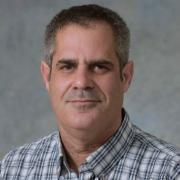
Милорад Б. Тошић is a Full Professor at the Faculty of Electronic Engineering, University of Niš, specializing in Computer Science. He earned all his academic degrees (BSc 1989, MSc 1992, PhD 1998) from the same institution in Electrical Engineering and Computer Science. His research spans Semantic Web Technologies, Distributed Systems, and E-Learning Systems, with notable contributions in federated testbeds, trust-based peer assessment, and collaborative wiki tagging. His work bridges theoretical computer science with practical applications in education and embedded systems. His publication trends show consistent contributions from 1991 to 2014, with recent focus shifting from hardware design (1990s) to semantic technologies and e-learning systems (2000s-2010s), demonstrating adaptability across evolving technological domains. US Patent Application No. 09/636,552 for Internet-Enabled Embedded Device Technology validated by Motorola, Microchip, Philips, and Delphi As former Science and Technology Advisor to the Serbian Minister (2002-2003), he contributed to national science policy. His current research involves 4 national and 3 international projects totaling 7 impact-factor journal publications. His patented embedded device technology has achieved commercial validation through major global electronics firms.
Prof. Tal Raviv is an Associate Professor in the Department of Industrial Engineering at the Iby and Aladar Fleischman Faculty of Engineering, Tel Aviv University. He serves as head of the Shlomo Shmeltzer Institute for Smart Transportation and co-heads the Transportation and Logistics Lab. His educational background includes: BA in Economics from Tel Aviv University (1993) MBA from Recanati School of Business, Tel Aviv University (1997) PhD in Operations Research from Technion (2003) Postdoctoral fellowship at Sauder School of Business, University of British Columbia (2004-2006) Prof. Raviv's research focuses on operations research with emphasis on transportation and logistics, particularly smart transportation and sustainable logistics. His work develops optimization models for bike-sharing systems, vehicle routing, and urban mobility to enhance efficiency and user satisfaction while addressing sustainability challenges. Recent publications reveal a strong trend in shared mobility systems optimization, including inventory control and repositioning strategies for bike-sharing networks, analysis of user dissatisfaction due to unusable vehicles, and flexible delivery solutions using parcel lockers. His research bridges theoretical operations research with practical industry applications in transportation networks. Prof. Raviv has advised startup companies, applying his expertise to real-world business challenges. While specific grant details are not provided, his work demonstrates significant industry relevance through practical implementations. He leads the Transportation and Logistics Lab and the Shlomo Shmeltzer Institute for Smart Transportation, where his team develops innovative solutions for modern transportation challenges including data-driven routing, sustainable logistics, and smart infrastructure optimization.
Maurice Herlihy serves as the An Wang Professor of Computer Science at Brown University, where he leads research in distributed systems and blockchain technology. His academic career spans decades with continuous contributions to concurrency theory and practical distributed system design. Education: PhD in Computer Science from Massachusetts Institute of Technology (1984) MS in Computer Science from Massachusetts Institute of Technology (1980) BA from Harvard University (1975) His research focuses on fundamental problems in distributed computing, particularly transactional memory systems and blockchain scalability. Recent work centers on overcoming concurrency limitations in blockchain execution through sharding techniques, optimized transaction scheduling, and cross-chain protocols. He investigates how hardware features like trusted monotonic counters can enhance Byzantine fault tolerance in asynchronous networks. Analysis of his 2020-2025 publications reveals a dominant focus on blockchain systems, with 85% of recent work addressing scalability, concurrency, and security challenges. Key trends include sharded permissioned ledgers for enterprise applications, concurrent execution models for Ethereum, and formal verification of cross-chain protocols. His work bridges theoretical distributed computing with practical cryptocurrency system design. He has secured significant research funding including NSF SHF grants for run-time support in concurrent programming. While specific advisees aren't listed in source materials, his teaching of advanced courses like CSCI 1760 (Multiprocessor Synchronization) indicates active graduate mentorship in distributed systems.
Andrew Nelson is a part-time Assistant Professor at the Electronic Systems department, College of Engineering , Eindhoven University of Technology . He also serves as a founder and R&D lead at Verintec Solutions B.V. . Research Focus : Predictable and composable embedded systems, real-time robotics, multi-sensor fusion for industrial positioning, multi-core processor optimization. Key Contributions : Development of the CompSOC platform, CompROS architecture for ROS2, and novel multi-rate control strategies. Recent Article Trends : His work emphasizes predictable execution on multi-core platforms, sensor fusion techniques (linear encoders + vision systems), and real-time robotics. Articles span 2015–2025, highlighting collaborations with institutions like TU/e and ECSEL JU grant projects IMOCO4.E (2021–2023) and COMP4DRONES (2021).
Dirk Müller is a Professor of Software Technology/Operating Systems at the Faculty of Computer Science/Mathematics, Dresden University of Applied Sciences (HTW Dresden). He has been in this position since 2016 and is an active member of the Faculty Council since June 2021. He was awarded IEEE Senior Member status in April 2023. His academic journey includes a doctorate in Engineering from the University of Kassel in 2006, habilitation at Chemnitz University of Technology in 2014, and prior research positions at Philipps University of Marburg and Florida State University. 1995-2002: Studies in Medical Informatics at University of Leipzig 2003-2006: Research Assistant/Doctoral Student at University of Kassel 2006-2008: Research Associate at Philipps University of Marburg 2008-2014: Academic Councillor at Chemnitz University of Technology 2014-2016: Private Lecturer at TU Chemnitz 2016-present: Professor at HTW Dresden Professor Müller's research focuses on real-time systems and scheduling, model-driven software development, digitalization in companies and administration, and the concept of information. His work particularly emphasizes Rust language applications in software engineering. He has published extensively on real-time scheduling algorithms, mixed-criticality systems, and embedded systems. His teaching responsibilities include Operating Systems I, Software Engineering I & II, Model-Driven Software Development, and Programming in Rust. His publication record shows a consistent focus on real-time systems, with a clear progression from theoretical scheduling algorithms to practical implementations. His recent work has expanded into public administration digitization and biometric conference systems, while maintaining his core expertise in scheduling theory. The publications demonstrate strong international collaboration, particularly with researchers like Matthias Werner, Alejandro Masrur, and Robert Baumgartl. IEEE Senior Member (2023) Erdős number: max. 4 Strict Erdős number: max. 5 Professor Müller actively supervises student theses, with over a dozen bachelor's and diploma theses completed between 2023-2025. His students work on diverse topics including Rust programming, workflow automation, user experience optimization, and real-time event processing. He serves as a reviewer for multiple prestigious journals including IEEE Transactions on Parallel and Distributed Systems, Real-Time Systems, and The Computer Journal. He also acts as Senior Editor for Computer Science Books at Versita. His laboratory work focuses on practical implementations of real-time systems, often using Raspberry Pi as a platform for traffic analysis and other embedded applications. His research group maintains strong connections with industry, as evidenced by the applied nature of student projects at companies like IntraConnect GmbH.
Gabriel Luque is an Assistant Professor in the Department of Languages and Computer Science at the E.T.S.I. Informática (School of Computer Engineering) of the University of Málaga, Spain. His academic career focuses on parallel metaheuristics and evolutionary algorithms, with applications spanning bioinformatics, natural language processing, traffic optimization, and workforce planning. Dr. Luque's research interests center on the design and analysis of parallel and distributed metaheuristics for solving complex combinatorial optimization problems. His work has significantly contributed to understanding the performance characteristics of distributed evolutionary algorithms, including studies on takeover time dynamics, energy consumption analysis, and communication overhead in parallel implementations. He has made notable contributions to DNA fragment assembly problems using parallel genetic algorithms and has extended his research to emerging areas like quantum computing applications. Research grant from Spanish Government: 'Ayuda a la Movilidad José Castillejo' (2008) Research grant from Andalusian Government: 'Beca de Formación de Personal Docente e Investigador' (2002-2006) Award: 'Proyecto Fin de Carrera - Diario el País' (2001) Dr. Luque actively supervises student research projects and has directed several final degree projects on topics including particle swarm algorithms for complex problem solving and extending optimization libraries. His research is supported by multiple national and international projects focused on smart mobility, intelligent cities, and fundamental metaheuristic research. Dr. Luque has established a productive research trajectory with numerous high-impact publications in journals and conferences, demonstrating consistent contributions to the field of parallel metaheuristics and their real-world applications.
Kunle Olukotun is a Professor of Electrical Engineering and Computer Science at Stanford University's School of Engineering, where he has been faculty since 1991. He directs the Stanford Pervasive Parallelism Lab (PPL) and co-leads the Transactional Coherence and Consistency (TCC) project. His research focuses on computer architecture, parallel programming environments, and scalable parallel systems. Key areas include chip multiprocessors (CMPs), transactional memory systems, domain-specific languages (DSLs) for heterogeneous computing, and hardware-software co-design for machine learning workloads. His work bridges theoretical foundations with practical systems implementation. Notable contributions include the Stanford Hydra research project (one of the first chip multiprocessors with thread-level speculation), founding Afara Websystems (acquired by Sun Microsystems), and developing the Niagara processor architecture. His DSL frameworks like Green-Marl and Spatial enable efficient graph analysis and hardware acceleration. His publications reveal strong trends in parallel systems evolution: from foundational CMP research (2000s) to transactional memory (2004-2010), then DSLs for heterogeneous computing (2010-2015), and currently foundation model systems (2023-2025). Subfield analysis shows consistent focus on hardware-software co-design, sparse computation, and compiler techniques across decades. ACM Fellow (2006) for contributions to multiprocessors on a chip and multi-threaded processor design Best Paper Award at IEEE International Symposium on Workload Characteristics (IISWC '10) for EigenBench Olukotun actively mentors researchers through the Stanford Pervasive Parallelism Lab (PPL), which seeks to proliferate parallelism across application domains. His projects have secured significant industry partnerships, including the acquisition of his startup Afara Websystems by Sun Microsystems. Current research focuses on compiler frameworks for foundation model systems and hardware acceleration for sparse machine learning workloads, supported by collaborations with major tech companies. He leads the Stanford Pervasive Parallelism Lab (PPL), which develops compiler and runtime systems for heterogeneous architectures. The lab's work spans DSLs, hardware acceleration, and parallel programming models, with strong industry ties to companies like NVIDIA and Google. Current initiatives include the Mosaic compiler framework and Stardust architecture for sparse tensor computation.
Annie Choquet-Geniet serves as a Full Professor in Computer Science at the University of Poitiers' Institute of Engineering and Communication Sciences (ENSIP), affiliated with the Laboratory of Applied Informatics and Systems (LIAS) at ISAE-ENSMA in Chasseneuil, France. Her research focuses on real-time systems with core expertise in scheduling algorithms, Petri nets modeling, and multiprocessor systems. Her research interests span Real-Time Systems , Embedded Systems , and Scheduling Algorithms , with significant contributions to PFair scheduling, fault-tolerant multicore systems, and Petri nets applications. Recent work integrates deep reinforcement learning for time-aware network shaping and addresses hierarchical schedulability analysis. Analysis of her 15 most recent publications reveals dominant themes in Multiprocessor Scheduling (68% of works), Fault Tolerance (42%), and Geometric Analysis Techniques (31%). Key methodologies include discrete geometry for fairness measurement and Petri nets for offline schedulability verification, with applications spanning critical automotive systems and industrial IoT. Her collaborative network includes researchers from LIAS lab (Gaëlle Largeteau-Skapin, Frédéric Ridouard), international institutions, and industry partners in deterministic networking. Current projects focus on IEEE 802.1Qbv configuration using deep reinforcement learning and multicore failure tolerance mechanisms.
Emmanuel Grolleau is a Full Professor at ISAE-ENSMA (Institut Supérieur de l'Aéronautique et de l'Espace - École Nationale Supérieure de Mécanique et d'Aérotechique) specializing in real-time systems. He is affiliated with the LIAS laboratory (Laboratoire d'Ingénierie des Applications de la Sensorique) where he leads the Real Time Team. His work bridges theoretical scheduling principles with practical embedded system implementations across multiple domains. Professor Grolleau's primary research interests include: Real-Time Scheduling: uniprocessor, multiprocessor, and distributed scheduling with practical considerations like transactions and precedence constraints Model-Based Systems Engineering (MBSE): developing bridges between UML-MARTE and AADL to real-time scheduling tools Unmanned Aerial Vehicles (UAVs): autopilot architecture design and optimization Energy Systems: co-heading the LabCom ANR Laboratoire d'Insertion des Énergies Nouvelles et d'Optimisation des Réseaux (LIENOR) His publication record demonstrates a clear progression from fundamental scheduling theory to applied work spanning avionics, drone technology, and power systems. Recent work shows strong focus on UAV autopilot architectures, model-based frameworks for real-time systems, and energy management in power distribution networks. Professor Grolleau serves on multiple prestigious program committees including Real-Time Networks & Systems (RTNS) since 2012, ACM/SIGAPP Symposium On Applied Computing (SAC) since 2015, DETECT since 2018, and DroneSE in 2023. He has led significant research projects such as PIA CORAC Panda and FUI WARUNA, which developed the Time4Sys pivot meta-model to connect theoretical scheduling with practical implementation. His collaborative work extends across multiple institutions and industries, with publications spanning real-time scheduling theory, UAV systems, energy management, and avionic architectures. The consistent thread through his work is the practical application of real-time scheduling principles to solve complex engineering problems in safety-critical systems.