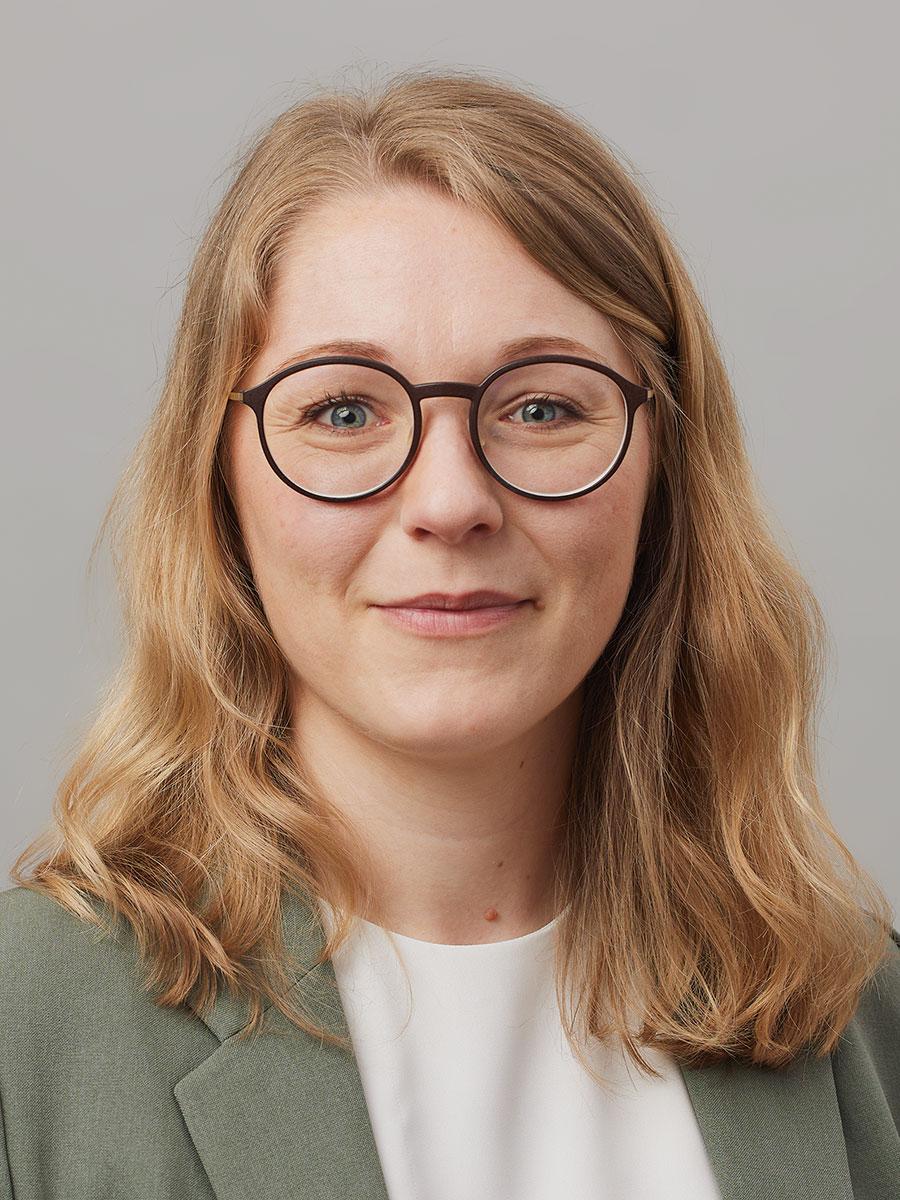
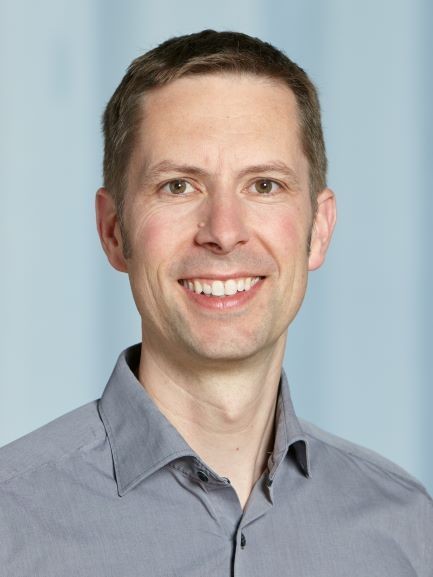
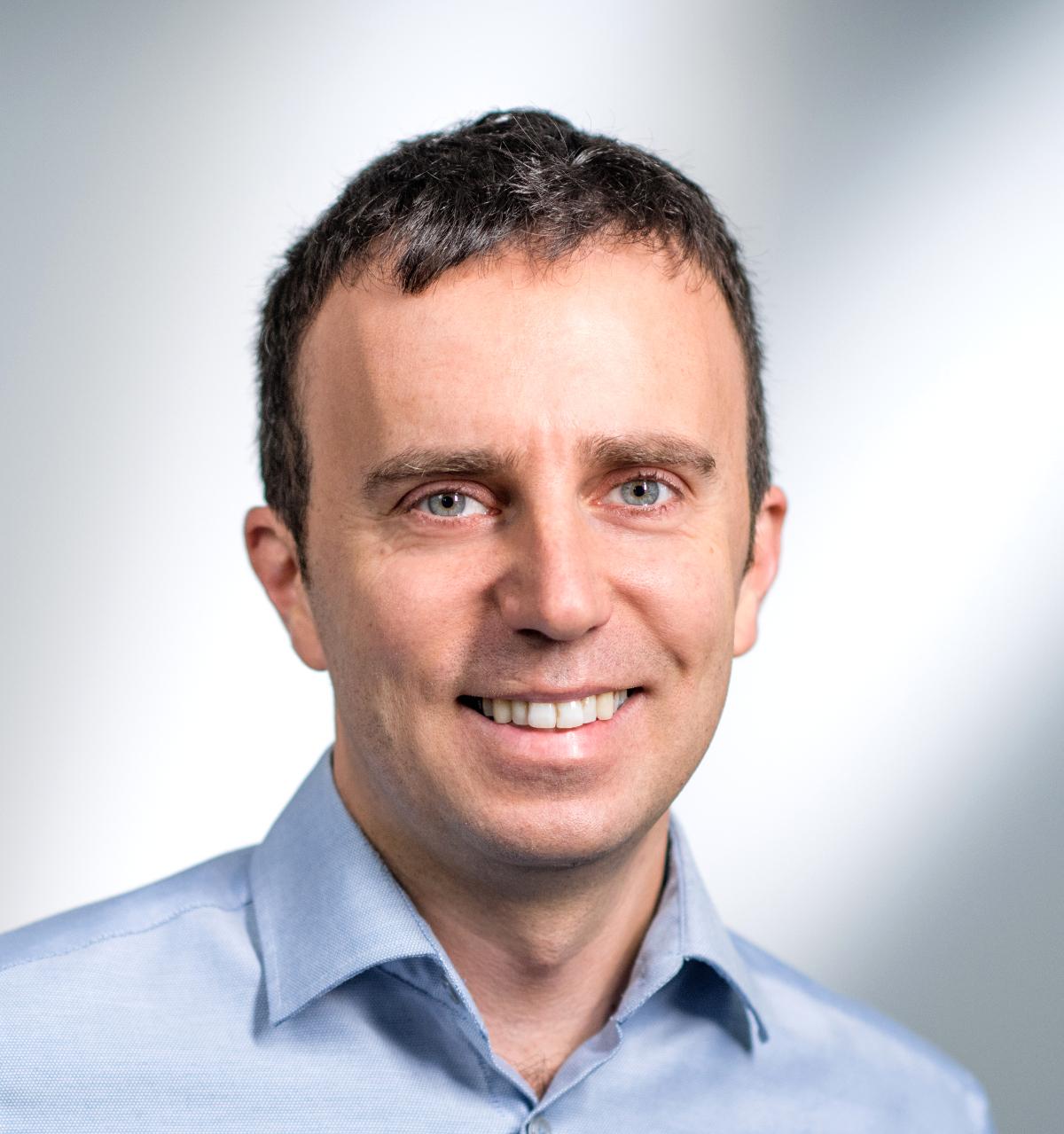
Prof. Nathalie Grob is an Assistant Professor in the Department of Chemistry and Applied Biosciences at ETH Zürich, leading a research group focused on peptide-based drug discovery. Her work emphasizes therapeutic modulation of protein-protein interactions using combinatorial chemistry and mass spectrometry, with a specific focus on diseases affecting women's health. She holds a BSc and MSc in Pharmaceutical Sciences from the University of Basel and a PhD from ETH Zürich, followed by postdoctoral research at MIT under Prof. Bradley Pentelute. Research interests include radiolabeled peptide development for cancer diagnosis/treatment, covalent peptide binders, and AI-driven small molecule discovery. Her group employs multidisciplinary approaches to develop robust drug discovery workflows, particularly targeting under-researched conditions relevant to women's health. Key achievements include a Swiss National Science Foundation Starting Grant and contributions to tumor-targeting minigastrin analogs. Courses taught include Drug Seminar (535-0011-00L) and Seminars on Drug Discovery and Development (535-0900-00L). Her research integrates chemical synthesis, molecular biology, and computational methods, with recent work published in high-impact journals. Current projects aim to advance peptide therapeutics through innovative design strategies and precision targeting mechanisms.
Christian Franck is a Full Professor at the Swiss Federal Institute of Technology (ETH) Zurich , leading the Power Systems and High Voltage Lab within the Department of Information Technology and Electrical Engineering. His career spans academic and industrial roles, including prior positions at ABB Research Center and Max-Planck-Institute for Plasma Physics. Education: Physics (Diploma, 1999) from University of Kiel, with studies at Bonn and Edinburgh PhD: Experimental Physics (2003) from Max-Planck-Institute Research focuses on technologies for future electric energy transmission systems , emphasizing high-voltage gaseous and solid insulation, current interruption, and SF6-free gas mixtures. His work combines experimental methods with multiphysics simulations to address classical high-voltage engineering challenges through novel approaches. 2025 publications highlight advancements in eco-friendly insulation gases , arc modeling for HVDC breakers, and AI-driven fault diagnostics. Key journals include Journal of Physics D: Applied Physics , Reliability Engineering & System Safety , and IEEE Transactions series. Teaching responsibilities include courses like High Voltage Engineering , Electric Power Transmission , and Ethics in Scientific Integrity . Lab activities involve experimental platforms for gas discharge studies, corona mitigation, and hybrid AC/DC transmission line analysis.
Prof. Ender Konukoglu is an Associate Professor at the Department of Information Technology and Electrical Engineering at ETH Zürich, leading the Computer Vision Laboratory. He holds a PhD from the University of Nice Sophia Antipolis (2009), following B.S. and M.S. degrees from Bogazici University. His postdoctoral work included roles at Microsoft Research (2009–2012) and Harvard Medical School (2012–2016), where he contributed to computational neuroimaging and radiology. His research focuses on biomedical image computing, with emphasis on medical image segmentation, computer vision in surgery, and deep learning applications in healthcare. Key contributions include real-time anatomical guidance systems, multimodal image analysis, and predictive models for clinical outcomes. His work spans 3D reconstruction, radiomics, and domain adaptation in medical imaging. His research interests include leveraging computer vision and deep learning for medical diagnostics, surgical assistance, and quantitative imaging. Notable projects include the AENEAS initiative for endoscopic neurosurgery guidance and the development of benchmark datasets for cross-modality harmonization. He has published extensively on topics like camouflaged object segmentation, Gaussian splatting for scene understanding, and predictive analytics for cardiovascular procedures. Prof. Konukoglu’s awards and recognitions are not explicitly listed in the provided text. His team’s work on synthetic CT generation for radiotherapy and the Tera-MIND brain simulation project highlights his interdisciplinary impact. Ongoing efforts focus on robust medical image segmentation, domain generalization, and real-time surgical navigation systems.
Francesco Corman is an Associate Professor at the Department of Civil, Environmental and Geomatic Engineering at ETH Zürich, where he also serves as the Head of the Institute for Transport Planning and Systems (IVT). His academic career spans from his doctoral studies at Delft University of Technology to his current position at one of Europe's leading technical universities. He has established himself as a leading researcher in transport systems with a focus on railway operations and optimization. His educational background includes: Doctoral Degree (Ph.D.) from Delft University of Technology (2007-2010) Master's Degree in Management & Automation Engineering from Roma TRE University, Italy (2004-2006) Bachelor's Degree in Computer Science Engineering from Roma TRE University, Italy (2001-2004) Professor Corman's research focuses on analytics, optimization and control in transport systems, with particular emphasis on public transport, railway networks, and logistics systems. His work bridges the gap between theoretical optimization models and practical applications in real-world transportation networks. He has developed innovative approaches to railway traffic management, public transport operations, and freight logistics that address contemporary challenges in transportation systems. His recent publications demonstrate a strong trend toward data-driven approaches in transportation, with increasing integration of machine learning techniques, particularly deep learning and Bayesian networks, into traditional transportation optimization problems. There's also a growing emphasis on sustainability considerations in transportation systems, as evidenced by research on environmental impacts of railway infrastructure. His scientific contributions include: Development of advanced models for railway traffic management and optimization Innovative approaches to public transport disruption analysis and recovery Integration of on-board monitoring data for railway infrastructure management Probabilistic modeling of transportation operations under uncertainty Professor Corman leads several significant research projects including ESTRA (Efficient Safe Train Dynamics), LeRaBe (Learning railways for better schedules), NCCR (Dynamic stochastic learning of train dynamics as enabler to highly automated train operation), RaDiCa (Modeling the Impact of Digitalization on Railway Capacity), and UrbanEcho (Envisioning tomorrow - A digital twin technology for sustainable urban planning in data poor regions). He teaches multiple courses at ETH Zürich including Public Transport Design and Operations, Public Transport and Railways, Logistics and Freight Transportation, and contributes to doctoral seminars on Data Science and Machine Learning in Civil Engineering. His teaching reflects his research expertise, bridging theoretical concepts with practical applications in transportation systems.
Prof. Jeremy Richardson is an Associate Professor in the Department of Chemistry and Applied Biosciences at ETH Zurich, specializing in theoretical quantum molecular dynamics. He holds a PhD from the University of Cambridge and has held postdoctoral positions at Friedrich-Alexander University Erlangen-Nürnberg and Durham University. His research focuses on quantum tunneling, nonadiabatic dynamics, and semiclassical methods, with notable contributions to ring-polymer molecular dynamics and instanton theory. He leads the Theoretical Molecular Physics group and teaches advanced courses in physical chemistry and molecular dynamics. Research interests include nonadiabatic quantum dynamics, quantum tunneling in molecules and clusters, and the development of novel simulation methods like the MASH approach. His work bridges theoretical and computational chemistry, with applications in understanding ultrafast processes and reaction mechanisms in chemical systems. Key contributions: Development of instanton theory for tunneling splittings, MASH surface-hopping algorithms, and machine learning integration in quantum dynamics. Recent trends: Exploring temperature-dependent tunneling mechanisms, cavity-modified reactions, and efficient quantum-classical hybrid methods. Awarded the 2020 Hellmann Prize for Theoretical Chemistry and actively involved in the ETH MPS Colloquium and theoretical chemistry seminars. His group collaborates on projects involving attosecond spectroscopy, vibrational polaritons, and surface reaction dynamics.
Prof. Dennis Kochmann is a Full Professor of Mechanics and Materials and Head of the Department of Mechanical and Process Engineering at ETH Zurich. His research focuses on theoretical, computational, and experimental solid mechanics, particularly the link between microstructure and macroscopic material properties. Key interests include metamaterials, architected materials, and instabilities across scales. His group develops advanced computational techniques like phase-field modeling and atomistic-to-continuum coupling. Education: He holds a Dipl.-Ing. from Ruhr-University Bochum (2005), a Master's from UW-Madison (2006), and a Dr.-Ing. from Ruhr-University Bochum (2009). He has held academic roles at Caltech before joining ETH Zurich in 2017. Research emphasizes architected materials with controllable properties, such as nano/micro-truss networks and active composites. Applications span additive manufacturing, energy absorption, and nonlinear dynamics. His work bridges mechanics, materials science, and computational methods. Awards: NSF CAREER Award, ERC Consolidator Grant, Bureau Prize (IUTAM), Richard von Mises Prize (GAMM) Leadership: Head of Department (since 2023), former Head of Institute of Mechanical Systems (2018-2020) Editorial Roles: Associate Editor for Applied Mechanics Reviews , Archive of Applied Mechanics , and others Labs/Teams: Leads the Mechanics & Materials Lab, focusing on computational and experimental material studies. Collaborates on projects involving AI-driven materials design and metamaterials optimization.
Henrik Rasmus Thomsen is a Researcher at the Institute of Geophysics, ETH Zürich, affiliated with the Exploration and Environmental Geophysics (EEG) group. He holds a doctoral degree from ETH Zürich (2021) and previously served as a Postdoctoral Researcher at the Chair of Structural Mechanics and Monitoring. His research focuses on metamaterials, elastic wave propagation, and non-destructive testing (NDT) using advanced techniques like ultrasound computed tomography and full-waveform inversion. He leads the Innosuisse-funded project developing quantitative methods for NDT of composite materials. Key projects include the MATRIX project (machine for time reversal and immersive wave experimentation) and the MetaVEH project (metasurface energy harvesting). His work spans theoretical, experimental, and applied domains, with contributions to metamaterial design, wavefield control, and structural health monitoring. Recent publications explore guided wave-based digital twins, phononic metamaterials for speech classification, and elastic wave control in granular media. Thomsen collaborates with institutions like the Acoustical Society of America and journals including Advanced Functional Materials and Philosophical Transactions of the Royal Society .
Georg Kocur is a Researcher at the Institute of General Mechanics, RWTH Aachen University. He holds a Diploma in Civil Engineering from Bergische Universität Wuppertal and a Ph.D. from ETH Zurich (IBK), focusing on non-destructive testing of structural concrete. His research emphasizes experimental mechanics, elastic wave propagation, and acoustic emission localization in complex materials. Previously, he served as a post-doctoral researcher at MIT’s Laboratory for Infrastructure Science and Sustainability and worked as a development engineer at Leviat (HALFEN). Key research interests include structural health monitoring, wave propagation modeling, and the application of machine learning in acoustic sensing. His work bridges civil engineering, materials science, and computational methods to enhance infrastructure safety and reliability. Publications highlight advancements in acoustic source localization, time reverse modeling, and numerical simulations for defect mapping in concrete and pipework. His contributions address challenges in sensor array optimization, signal processing, and algorithmic development for industrial and academic applications. Kocur’s career combines academic research with industry innovation, focusing on practical solutions for structural analysis and non-destructive testing in civil infrastructure.
Prof. Hua Wang is a Full Professor at ETH Zürich's Department of Information Technology and Electrical Engineering (D-ITET) and Deputy Head of the Integrated Systems Laboratory. He leads the Integrated Devices, Electronics, and Systems (IDEAS) Group and is a faculty member of the ETH Quantum Center. Prior roles include Founding Director of the Georgia Tech Center of Circuits and Systems and Associate/Assistant Professor at Georgia Tech's School of ECE. His research focuses on silicon and beyond-silicon integrated circuits for communication, sensing, and bioelectronics. Notable contributions include energy-efficient power amplifiers, mm-Wave systems, and AI-assisted design methodologies. Education: PhD (2009), MS (2007) - California Institute of Technology; BS (2003) - Tsinghua University. Research interests span: RF/mm-Wave/THz integrated systems AI-driven circuit design Bioelectronic sensors and actuators 6G communication technologies His 2025 publications highlight advancements in phased arrays, power amplifiers, and bioelectronic sensors. Awards include IEEE Fellow (2022), Qualcomm Faculty Awards (2021, 2020), and multiple student paper recognitions. Advising: Over 20 student paper awards across IEEE RFIC/IMS/CICC conferences. Labs: IDEAS Group (ETH), GEMS Lab (Georgia Tech). Courses taught include Radio-Frequency Electronics, CMOS for Biosensing, and Antenna Design.
Karim Achouri is an Assistant Professor at École Polytechnique Fédérale de Lausanne (EPFL), affiliated with the School of Engineering (STI) and the Advanced Electromagnetism and Photonics Laboratory (LEAP) . He also serves in the Teaching Service of STI (SMT-ENS). His research focuses on metasurfaces, electromagnetic modeling, and optical computing. Location: ELG 237, EPFL Contact: karim.achouri@epfl.ch Research Interests: Metasurface design and scattering control Optical forces and torques in nanophotonics Machine learning applications in electromagnetic systems Nonlinear and non-Hermitian metasurfaces Spatial symmetry analysis in photonic structures Phase manipulation for optical computing Teaching: Courses in optical engineering, applied electromagnetics for metamaterial design, and advanced photonics. Publications: Recent work emphasizes metasurface robustness, topological phase control, multipolar expansion methods, and nonlinear optical devices. Articles span electromagnetic theory, nanophotonics, and computational modeling. Doctoral Students: Mentoring Mahmoud Ahmed, Hossein Allahverdizadeh, and Mustafa Yücel.
François Maréchal is a Professor at the Industrial Process and Energy Systems Engineering Group (IPESE) within the School of Engineering (STI) at the Swiss Federal Institute of Technology in Lausanne (EPFL). His research focuses on computer-aided process integration, exergy analysis, and thermo-economic optimization of industrial and energy systems, with particular emphasis on renewable energy integration and waste heat valorization. Education : Chemical Engineer (1986) and PhD in Applied Sciences (1995) from the University of Liège, Belgium. Professional Affiliations : 2012–Present: Professor, EPFL 2005–2012: Research Teaching Master, EPFL 1995–2005: First Assistant, EPFL 1986–1995: Researcher, University of Liège Maréchal’s research addresses the integration of renewable energy resources into industrial processes and energy conversion systems, aiming to bridge thermodynamics with optimization techniques for sustainable development. He leads projects on decarbonization of industries like aluminum production, biorefineries, and pulp mills. The 15 most recent articles highlight his work on: system design optimization for aluminum decarbonization, district heating network modeling, biorefinery integration, machine learning applications in energy systems, and techno-economic assessments of hydrogen networks. Keywords span Environmental Engineering , Industrial Decarbonization , and Renewable Energy Systems . Teaching includes advanced courses in Process Integration, Exergy Analysis, and Energy Audits for Masters and postgraduate programs at EPFL. His pedagogical approach emphasizes computer-aided project-based learning to connect teaching with research. Key Collaborations involve the EDEY Doctoral Program and the Energy Domain at EPFL , with contributions to energy system modeling tools like EnergyScope and ROSMOSE.
Marco Mattavelli is a Professor at the École Polytechnique Fédérale de Lausanne (EPFL), affiliated with the School of Engineering (STI) and the Microsystems Engineering Laboratory (MM). His research focuses on data compression, hardware design for embedded systems, biomedical electronics, and blockchain/metaverse applications. He leads the GRAMM lab and has contributed to standards like MPEG-G for genomic data. His work spans FPGA-based systems, signal processing, and implantable medical devices. Education and affiliations: EPFL faculty since at least 2000, with roles in teaching and research. Collaborations include MPEG standards development, multidisciplinary projects in genomics and biomedical engineering. Research interests emphasize interdisciplinary innovation: genomic data compression, high-performance embedded systems, and leveraging blockchain for digital assets. His lab develops cutting-edge solutions for medical devices and energy-efficient electronics. Publications highlight contributions to neural clustering algorithms, genomic compression, and metaverse data analysis. Over 200 publications in top venues like IEEE Transactions and conferences like DCC, ICASSP, and BioCAS. Grants and labs: Active in securing research funding for projects in biomedical sensors, heterogeneous computing, and genomic standards. The GRAMM lab is central to his research activities.
Mario Paolone is a Full Professor at the Swiss Federal Institute of Technology Lausanne (EPFL) , leading the Distributed Electrical Systems Laboratory (DESL) within the School of Engineering (STI). His work focuses on smart grid technologies, power system dynamics, and renewable energy integration. Chair of DESL Teaching roles in Electrical and Electronic Engineering PhD Program Committee Member, Doctoral Program Energy EPFL Academic Strategic Committee Member His research spans real-time monitoring , optimal grid operation , and advanced protection techniques for power systems. Key contributions include PMU-based situational awareness and convex optimization methods for Active Distribution Networks. Recent work explores hybrid AC/DC grids , linear induction motors for transportation, and machine learning applications in energy systems. Notable scientific awards include: IEEE Fellow (2022) Richard B. Schulz Best Paper Awards (2017, 2018, 2020) IEEE EMC Technical Achievement Award (2013) He has supervised numerous PhD theses on grid-aware control , synchrophasor technologies , and renewable energy systems , with research sponsored by the Swiss National Science Foundation , Swiss Electric Research , and the European Union .
Jürg Alexander Schiffmann is an Associate Professor at École Polytechnique Fédérale de Lausanne (EPFL), leading the Laboratory for Applied Mechanical Design (LAMD). His work focuses on gas-lubricated bearings, small-scale turbomachinery, and automated design methodologies for energy systems. Academic Affiliation: EPFL School of Engineering Key Roles: Teaching, PhD program committee member (Energy & Robotics), Lab Director Research Interests His research bridges mechanical design optimization and small-scale energy systems , with a focus on gas bearings for turbocompressors, Organic Rankine Cycles for waste heat recovery, and herringbone grooved journal bearings . He pioneers AI-driven tools like DARTS-NETGAB for real-time turbomachinery simulation and surrogate modeling for robust design. Recent Publications span 2025–2023, emphasizing neural networks in optimization, experimental validation of gas bearings, and thermal management in high-speed turbomachinery. Trends highlight cross-disciplinary integration of AI and energy systems. Scientific Awards SwissElectric Research Award (PhD work) Advising includes supervising 25+ PhD students (e.g., Abramishvili Anna, Massoudi Soheyl) on topics like scroll expanders , rotordynamics , and haptics in automated driving . His grants involve collaborations with MIT, CERN, and industry partners like Fischer Engineering Solutions.
Dr. Valentin Bickel is a Researcher affiliated with the University of Bern's Space Research & Planetary Sciences department. His work focuses on planetary geology, remote sensing applications, and robotic exploration strategies for Mars, the Moon, and Mercury. Key areas of interest include analyzing surface processes like dust devil activity, impact crater dynamics, volatile ice distribution, and lunar subsurface exploration using advanced techniques such as deep learning and multi-satellite data integration. His research contributes to understanding planetary environments through missions like InSight, VIPER, and ExoMars. Recent studies involve mapping Martian slope streaks, lunar volcanic pits, and Mercury's hollows, while also developing methodologies for astronaut traverse optimization and in-situ resource utilization (ISRU). Dr. Bickel collaborates with international space agencies and robotic teams, advancing technologies for autonomous planetary exploration and hazard mitigation. His work bridges geoscience with engineering, addressing critical questions about planetary evolution, habitability, and sustainable human exploration.