Tien Ping Tan is an experienced researcher specializing in speech recognition , natural language processing , and machine learning applications. With a PhD in Automatic Speech Recognition for Non-Native Speakers from Joseph Fourier University (2008), his career spans two decades of impactful contributions across multiple domains.
Sio Kei Im is an active researcher with a focus on computer science, machine learning, and human-computer interaction. His recent work spans multiple domains including image processing, quantum computing, and virtual reality. Publications address advanced data augmentation (LogicMix), multi-modal quantum watermarking (MMQW), and efficient neural decoding algorithms (TRHyper). Research interests include time series optimization, dialogue summarization, and haptics in VR environments. Collaborations with experts in linguistics, electrical engineering, and software development indicate interdisciplinary expertise. Key contributions involve adaptive algorithms for AI model protection, speaker recognition systems, and real-time 3D rendering techniques.
Mohammed Lamine Kherfi is a researcher affiliated with Université de Ouargla, Algeria. His work focuses on machine learning, image retrieval, and data clustering with applications in computer vision and optimization. He has collaborated extensively with researchers like Oussama Aiadi, Mebarka Allaoui, and Djemel Ziou. His research bridges theoretical advancements in machine learning with practical applications in areas such as fruit classification, semantic image retrieval, and deep learning models. Key research areas include optimization algorithms (e.g., PSO integration with t-SNE), multi-view learning, and Bayesian methods for image representation. He has contributed to improving clustering techniques, feature extraction, and the development of lightweight neural network architectures. His work often emphasizes efficient and energy-aware solutions for real-world problems. Over 30 publications span prestigious venues like Expert Systems with Applications, IEEE Access, and Multimed Tools Appl. His collaborative network includes institutions in Algeria and international partners, reflecting a global impact in computational intelligence and computer vision.
Peter Palensky is a leading researcher in smart grids, power system cybersecurity, and cyber-physical systems. His recent work focuses on digital twins for power systems, quantum computing applications in energy analysis, and secure blockchain frameworks for distributed energy resources. He collaborates extensively with institutions across Europe, particularly in Dutch and Mongolian grid stability projects. Research areas include Smart grid resilience against cyber attacks Quantum-enhanced power flow analysis Electric vehicle grid integration (V2G) Machine learning for energy systems optimization High-voltage direct current (HVDC) security His publications emphasize practical implementations, such as hardware-in-the-loop testing for photovoltaic systems and real-time simulation models for energy storage. Recent articles explore large-scale synthetic data generation for grid analysis, dynamic tariff impacts on EV charging, and advanced control strategies for offshore MMC grids.
Dr. Philip Wotschack is Head of the Research Group 'Working with Artificial Intelligence' at the Weizenbaum-Institut for the Networked Society. He has held various academic roles including Researcher at WZB Berlin Social Science Center and the University of Groningen. His research focuses on social inequality, labor markets, digitalization, and algorithmic management. He earned his Ph.D. in Sociology from the University of Groningen (2009). Key research areas include: Impact of AI-driven algorithmic management in workplaces Continuing training practices for low-skilled workers Workplace digitalization and automation Gender and social inequality in training access Recent projects include the EU-funded INCODING project analyzing collective bargaining's role in algorithmic management governance, and experimental studies on human-technology interaction in automated systems. His work integrates institutional theory perspectives with empirical analyses of organizational practices. He has led projects funded by the German Research Foundation and European Commission. Publications span topics like labor market segmentation, workplace automation ethics, and skill development policies. He has authored/co-authored books on work-life balance and labor market institutions.
Zaiwen Feng is a researcher actively contributing to data governance, semantic modeling, and causal inference. His work focuses on knowledge graphs, graph-based methods, and service-oriented architectures through collaborations with institutions like the University of Queensland and universities in China. Research Focus : Graph Differential Dependencies, Entity Resolution, Causal Effect Estimation, and Ontology Alignment Methodologies : Machine Learning, Variational Autoencoders, Prompt Engineering, and Semantic Retrieval Application Areas : Biomedical Data, Property Graph Recommendation, and Process Model Repositories Key trends in his publications include automated semantic modeling , neural approaches for entity resolution , and causal inference with graph structures . He frequently collaborates with researchers like Keqing He, Wolfgang Mayer, and Selasi Kwashie across conferences such as HPCC, BIBM, and WISE.
John Quarles is a Professor at the University of Texas at San Antonio, specializing in Virtual Reality (VR) and Human-Computer Interaction. His research focuses on accessibility in immersive technologies, cybersickness mitigation, and inclusive design. He has contributed over 100 publications across top venues like IEEE VR, ISMAR, and IEEE Transactions on Visualization and Computer Graphics. His work addresses challenges faced by users with disabilities, such as balance impairments and mobility limitations, through innovative feedback systems and adaptive algorithms. Quarles has co-authored influential papers on cybersickness prediction, VR accessibility for persons with Multiple Sclerosis, and disability simulations to reduce societal bias. He has held leadership roles including Program Chair for IEEE VR 2023, demonstrating his influence in academic and industrial VR communities. His research spans interdisciplinary applications in healthcare, education, and rehabilitation, with notable collaborations on datasets like 'Mazed and Confused' and frameworks like SmoothRide. Key themes include multimodal feedback methods, user-centric design principles, and leveraging AI for personalized VR experiences.
Prof. Michael Beer is the Executive Director of the Institute for Risk and Reliability at Leibniz University Hannover. He holds a professorship in the Faculty of Civil Engineering and Geodetic Science and serves on the Faculty Council. His research focuses on structural reliability, uncertainty quantification, and risk analysis with applications in civil engineering systems. He leads the Collaborative Research Centres (CRC) 871 and 1463, addressing regeneration of complex capital goods and offshore megastructure design, respectively. His work integrates machine learning, Bayesian methods, and stochastic modeling to address challenges in seismic vulnerability, geotechnical systems, and reliability-based design optimization. Beer is also a member of the Leibniz Research Centre Energy 2050, emphasizing interdisciplinary energy systems research. Beer's research interests span probabilistic modeling of dynamic systems, uncertainty propagation in engineering systems, and data-driven methods for reliability assessment. His recent publications emphasize computational methods for reliability, machine learning applications, and seismic risk analysis. He actively contributes to academic leadership roles, including editorial boards and research center management.
Dr. Setareh Maghsudi is a Professor in the Learning Technical Systems group at the Faculty of Electrical Engineering and Information Technology at Ruhr-University Bochum. She joined Ruhr-University Bochum in August 2023 after serving as an Assistant Professor at the University of Tübingen (2020-2023) and at the Technical University of Berlin (2017-2020). Her academic journey began with an M.Sc. from Kiel University (2008-2010), followed by her Ph.D. and postdoctoral work at Technical University of Berlin (2011-2015), Yale University (2016-2017), University of Manitoba (2015-2016), and Kyushu University (2019). Dr. Maghsudi's research focuses on the application of machine learning to communication networks and distributed systems, with particular emphasis on bandit algorithms, federated learning, and resource allocation in dynamic environments. Her work bridges theoretical machine learning with practical networking challenges, developing algorithms that can adapt to non-stationary environments with partial information. She has made significant contributions to multi-armed bandit frameworks for wireless communications, edge computing, and network optimization. Her recent publications (2023-2025) demonstrate a strong trend toward addressing challenges in integrated sensing and communication (ISAC), federated learning for edge networks, and non-stationary decision-making problems. The publications show expertise spanning theoretical machine learning foundations, wireless communications engineering, and practical implementation for real-world networked systems. Her work increasingly incorporates causal reasoning and robustness considerations into learning frameworks for communication systems. Dr. Maghsudi leads the Learning Technical Systems research group at Ruhr-University Bochum, where she supervises PhD students and postdoctoral researchers working at the intersection of machine learning and communication systems. Her research is supported by various grants focusing on AI for future communication networks. Current projects include developing AI-driven solutions for next-generation communication systems with emphasis on robustness, efficiency, and adaptability in dynamic environments.
Prof. Lena Maier-Hein is a full professor at Heidelberg University and managing director of the National Center for Tumor Diseases (NCT) Heidelberg. She leads the division of Intelligent Medical Systems (IMSY) at the German Cancer Research Center (DKFZ) and oversees the cross-topic program 'Data Science and Digital Oncology'. Her research focuses on machine learning in biomedical imaging, particularly surgical data science and computational biophotonics. She chairs the Surgical Data Science initiative and serves on editorial boards for journals like Nature Scientific Data and IEEE TPAMI. Her awards include the 2024 German Cancer Award, 2013 Heinz Maier-Leibnitz Prize, and European Research Council grants. She advocates for trustworthy AI in healthcare, co-developing frameworks like Metrics Reloaded and TRIPOD+ AI. Her work bridges academic, clinical, and industrial sectors through initiatives like the FeTS challenge. Key contributions include advancing photoacoustic imaging, surgical AI systems, and validation methodologies. She emphasizes ethical AI deployment and interdisciplinary collaboration to address clinical challenges.
Prof. Katarzyna Reluga holds the position of Tenure Track Assistant Professor for AI in Business and Economics at the Humboldt-Universität zu Berlin's Faculty of Economics. Her research focuses on integrating artificial intelligence methodologies into business and economic analysis, particularly in decision-making frameworks and organizational economics. She is affiliated with the Department of Economics and contributes to the SAP Endowed Professorship for Organizational Economics – Future of Work. Key research interests include applying machine learning to economic forecasting, optimizing business strategies through AI, and exploring digital transformation impacts on economic systems. No specific publications, grants, or awards are listed in the provided materials.
Dr. Benjamin Winkeljann serves as a Group Leader at the Department for Pharmacy, Ludwig-Maximilians-University Munich, and as a Principal Investigator at the Comprehensive Pneumology Center Munich (CPC-M), Helmholtz Munich. He simultaneously holds the position of Co-Founder & CEO at RNhale GmbH since 2023. His academic trajectory includes completing his PhD in Mechanical Engineering at the Technical University of Munich, followed by postdoctoral positions at both LMU Munich and TUM's Department of Mechanical Engineering and Munich School of Bioengineering. Dr. Winkeljann's research centers on nanomedicine and advanced drug delivery systems, with specialized expertise in RNA therapeutics and pulmonary delivery platforms. His work uniquely bridges engineering principles with pharmaceutical applications, developing novel delivery systems for siRNA and other nucleic acids. He employs integrated experimental and computational methodologies to optimize drug carrier systems, with particular focus on endosomal escape mechanisms that determine therapeutic efficacy. His engineering background provides a distinctive perspective on pharmaceutical challenges that traditionally fall within pure pharmacy disciplines. His publication record reveals a clear progression from fundamental studies on polymer-RNA interactions toward increasingly applied research on pulmonary delivery systems. Recent work demonstrates integration of machine learning with traditional drug delivery approaches, reflecting his engineering background. The articles collectively address the critical bottleneck of efficient intracellular delivery in nucleic acid therapeutics, with growing emphasis on translational applications. His research shows strong interdisciplinary character, combining mechanical engineering, computational modeling, and pharmaceutical sciences. As a Group Leader completing his Habilitation, Dr. Winkeljann likely supervises PhD students and postdoctoral researchers, though specific advisees aren't listed in available materials. His position at the intersection of academia (LMU), research centers (CPC-M), and industry (RNhale GmbH) demonstrates a strategic approach to translational research, aiming to accelerate the path from discovery to clinical application. He operates within Prof. Olivia Merkel's research ecosystem at LMU, contributing engineering expertise to the lab's focus on "novel non-viral and targeted nanosized RNA delivery systems" for applications in cancer immunology, inflammatory diseases, and respiratory viruses.
Harald Köstler is an Associate Professor and Head of Research at the Erlangen National High Performance Computing Center (NHR@FAU) within the Department of Computer Science at Friedrich-Alexander-Universität Erlangen-Nürnberg (FAU). He leads the research group on HPC Software Design at the Chair of Computer Science 10 (System Simulation), focusing on software engineering for high-performance computing and data analytics. His research interests include: Software Engineering for HPC Code Generation for Numerical Solvers Performance Engineering on Hybrid Architectures Discontinuous Galerkin and Lattice Boltzmann Methods Multigrid Solvers and Parallel Algorithms Performance Portability across CPUs, GPUs, and FPGAs The recent publications highlight a strong trend in developing efficient, scalable, and portable simulation frameworks for complex physical systems. His work emphasizes code generation, performance optimization, and the integration of classical model-driven and data-driven approaches. Key application areas include computational fluid dynamics, geotechnical engineering, and climate modeling, often leveraging the waLBerla and ExaStencils frameworks. Harald Köstler has no listed scientific awards in the provided text. He advises students in the areas of high-performance computing, numerical methods, and software engineering for scientific applications. His research is supported by collaborations within the FAU HPC ecosystem and likely involves grants related to national high-performance computing initiatives. He is a key contributor to the waLBerla framework, a block-structured, high-performance software for multiphysics simulations, and is involved with the ExaStencils project, which focuses on advanced multigrid solver generation. These frameworks form the core of his research team's efforts in scalable scientific computing.
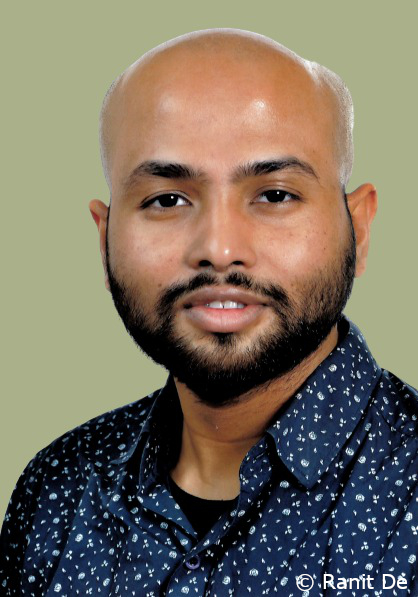
Ranit De is a Doctoral Researcher in the Department of Biogeochemical Integration at the Max Planck Institute for Biogeochemistry in Jena, Germany. De is affiliated with the International Max Planck Research School for Global Biogeochemical Cycles (IMPRS-gBGC) and works in the Model-Data Integration research group under Dr. Nuno Carvalhais. De's educational background includes: Ph.D. candidate (2021-present) at the International Max Planck Research School for Global Biogeochemical Cycles M.Sc. in Geo-information Science and Earth Observation (Water Resources and Environmental Management) from the University of Twente, Netherlands (2019-2021) B.Tech. in Agricultural Engineering from Sam Higginbottom University of Agriculture, Technology and Sciences, India (2015-2019) De's research focuses on understanding the global carbon cycle through advanced hybrid modeling techniques that combine physically based models with machine learning approaches. De specializes in simulating gross primary production at sub-daily scales using eddy-covariance data and light use efficiency-based models, with particular expertise in understanding interannual variability in terrestrial ecosystem fluxes. Analysis of De's recent publications reveals a strong research trajectory examining how temporal variation of hydrological parameters can improve model performance, investigating parametric uncertainties in land surface models, and exploring the relationship between spatiotemporal variability of model parameters and their controlling factors. De's work bridges the gap between traditional physical modeling and modern data-driven approaches. De has presented research at notable conferences including the EGU Mary Anning conference in June 2025 and the ICOS Science Conference 2024, demonstrating active engagement with the global scientific community. De's methodological innovations in model-data integration contribute significantly to improving biogeochemical models for better climate predictions and understanding carbon cycle dynamics under changing environmental conditions.
Jaime S. Cardoso is a prominent researcher at the University of Porto and Institute for Systems and Computer Engineering, Technology and Science (INESC TEC) in Portugal. His extensive publication record spanning two decades demonstrates his leadership in computer vision, medical image analysis, and pattern recognition. His research primarily focuses on applying artificial intelligence to healthcare challenges, particularly in medical imaging and diagnostics. Cardoso's research interests center on explainable AI for medical applications, biometrics, and computer vision. His work bridges the gap between theoretical machine learning and practical medical solutions, with significant contributions to breast cancer diagnosis, medical image segmentation, and biometric security systems. He has developed innovative approaches to medical image analysis, including virtual staining techniques and privacy-preserving explanation methods for medical AI systems. His recent publications (2023-2025) reveal a strong emphasis on explainable AI in medical contexts, with multiple papers addressing how to make deep learning models more transparent and trustworthy for healthcare applications. He has also made significant contributions to face recognition technology, video anomaly detection, and specialized medical imaging techniques for breast cancer and neonatal EEG analysis. Among his scientific contributions are numerous collaborations with researchers across Portugal and internationally. His work has appeared in top-tier journals including IEEE Access, Medical Image Analysis, and Neurocomputing, reflecting the high impact of his research. Cardoso has supervised numerous students who have become established researchers in their own right, including Ricardo P. M. Cruz, Kelwin Fernandes, and Ana Filipa Sequeira. His research group appears to focus on the intersection of deep learning, medical imaging, and biometrics, with strong connections to clinical applications.