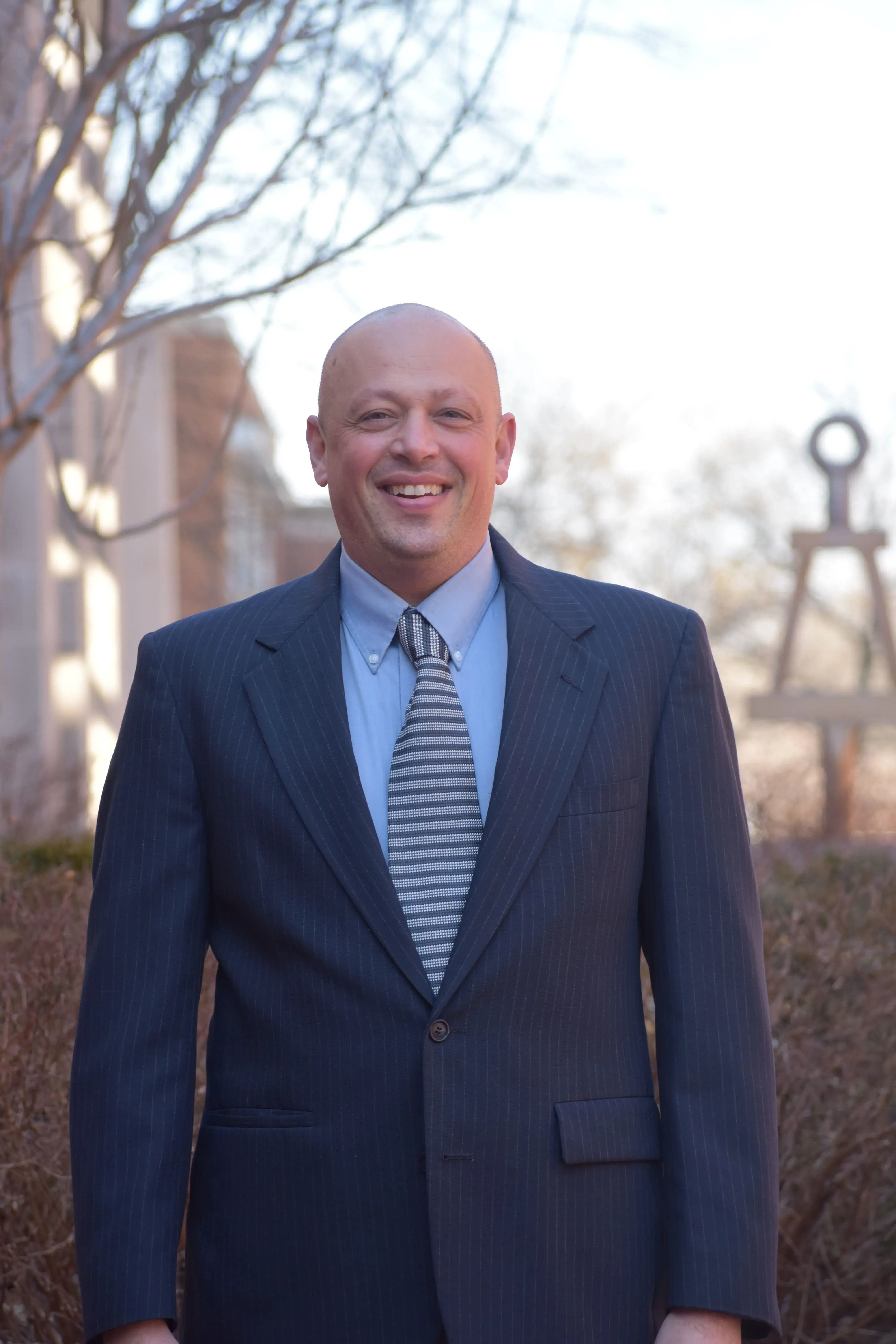
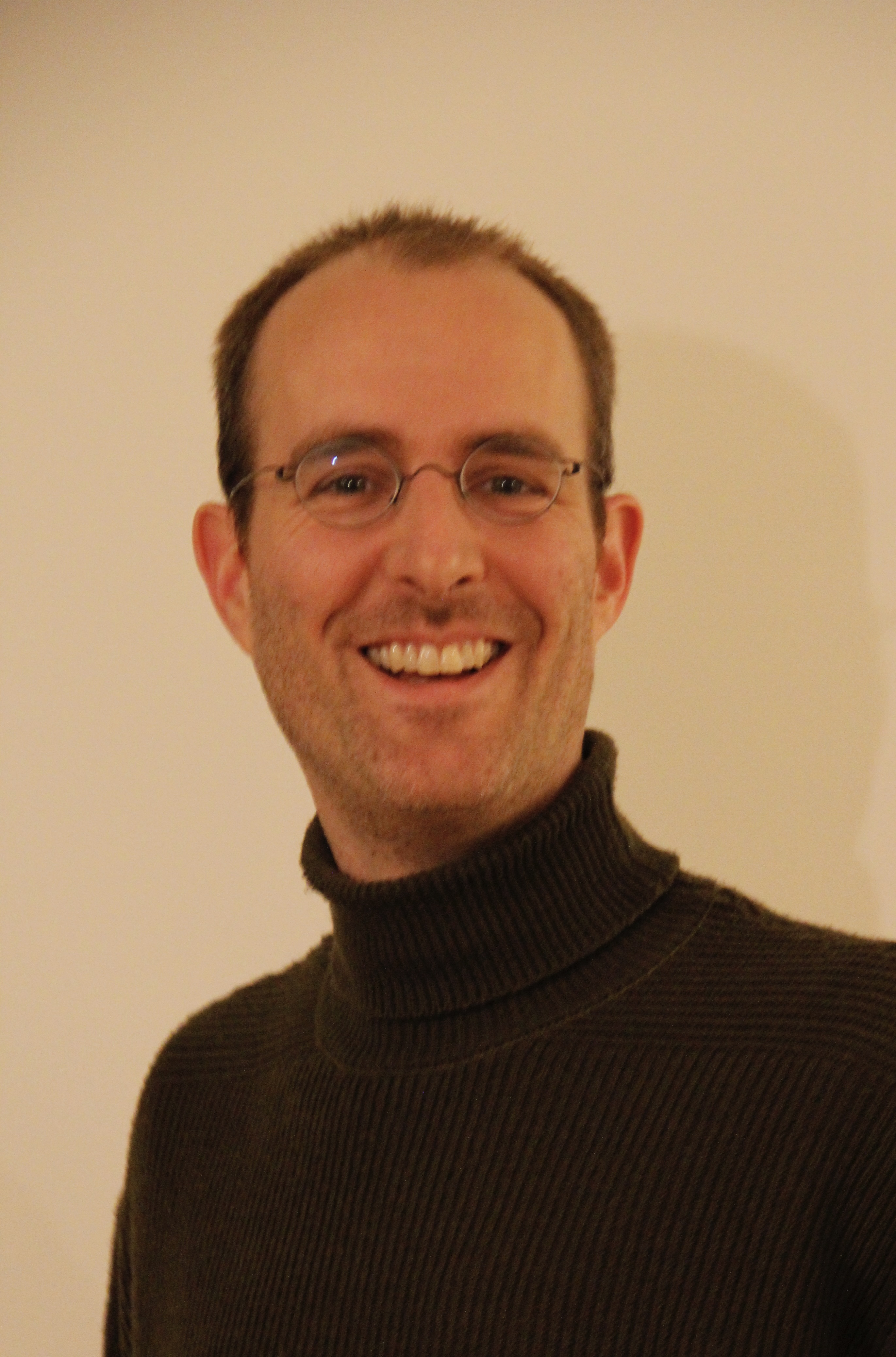
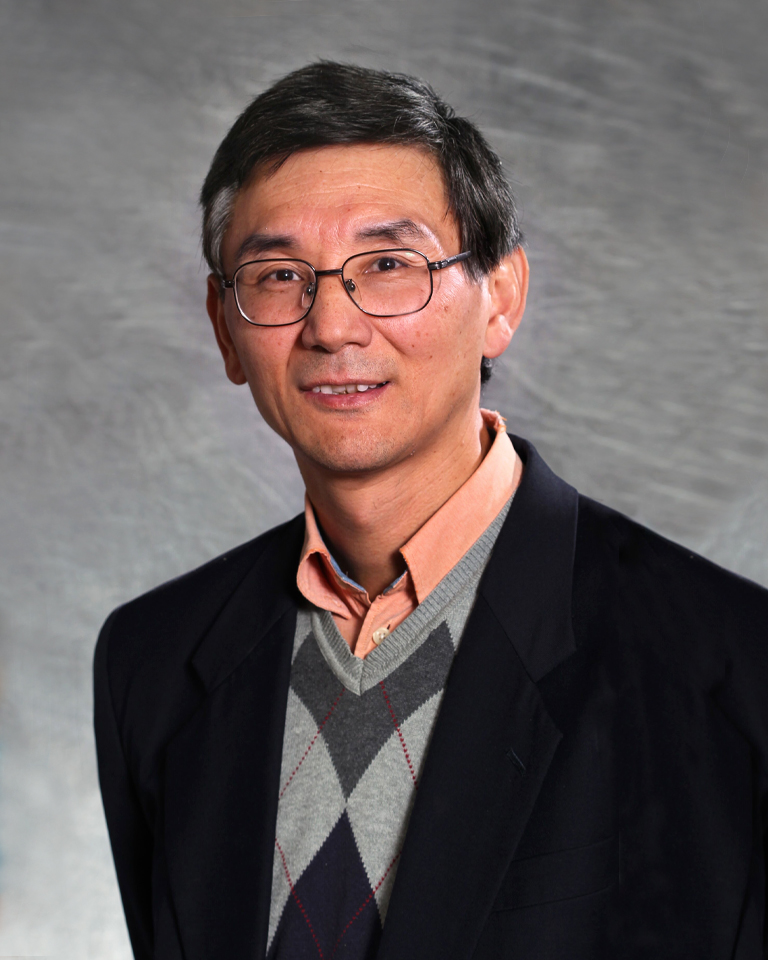
Eric Green is an Adjunct Assistant Professor in the Department of Civil Engineering at the University of Kentucky , affiliated with the Kentucky Transportation Center . He holds a Ph.D., M.S., and B.S. in Civil Engineering from the same institution. Ph.D., Department of Civil Engineering, University of Kentucky M.S., Department of Civil Engineering, University of Kentucky B.S., Department of Civil Engineering, University of Kentucky His research focuses on highway safety , spatial analysis (GIS) , crash modeling , and software development for traffic safety . Recent work includes text mining for secondary crash detection and GPS-based horizontal curve analysis. Publications highlight trends in crash analysis , Highway Safety Manual methodologies , and data integration for asset management . Key subfields include GIS applications, safety modeling, and automated regression techniques.
Thomas Demeester is an Associate Professor at the Internet Technology and Data Science Lab (IDLab), Ghent University - imec, Belgium. Appointed as Assistant Professor in 2019, he leads an AI research group focused on health applications and drug design, co-directing the Text-to-Knowledge research cluster with Prof. Chris Develder. His educational background includes: M.Sc. in Electrical Engineering from Ghent University (2005), completed with thesis work at ETH Zurich Ph.D. in Computational Electromagnetics from Ghent University (2009), funded by Research Foundation - Flanders (FWO) Demeester's research spans artificial intelligence with emphasis on deep learning and neuro-symbolic methods. Current tracks include energy-based models (Hopfield Networks, Deep Equilibrium Models), diffusion models for drug design, and clinical reasoning systems. His work bridges NLP, healthcare informatics, and generative AI with strong industry partnerships. Recent publications (2023-2025) reveal strategic expansion from NLP into health-centric AI: BioLORD biomedical encoders (2023), synthetic medical data frameworks (UAI/NeurIPS 2024), and novel diffusion model guidance (ICLR 2025). This evolution demonstrates convergence of generative modeling, clinical data analysis, and protein design. He actively mentors 24 PhD students across diverse AI domains: Current Research: Conversational agents, emotion analysis, clinical reasoning, antibody design, and diffusion model optimization Recent Graduates: Interpretable language models, biomedical semantics, task-oriented dialogue, and social media knowledge extraction Research is supported by imec funding and collaborations with Flemish biotech companies, building on his post-doctoral experience securing media-sector projects. Within IDLab, he co-leads the Text-to-Knowledge cluster driving NLP innovations for healthcare, legal, and economic applications.
Dr. Karim El-Basyouny is a Killam Laureate Professor and City of Edmonton Urban Traffic Safety Research Chair at the University of Alberta's Faculty of Engineering, where he serves as Associate Dean (Research Infrastructure and Innovation) in the Civil and Environmental Engineering Department. A licensed Professional Engineer in Alberta, he holds advanced degrees in Transportation Engineering from the University of British Columbia and has dedicated his career to advancing road safety through data-driven management frameworks. His academic credentials include: Doctor of Philosophy, Civil Engineering, University of British Columbia, 2011 Engineering Management Sub-specialization, Civil Engineering, University of British Columbia, 2010 Master of Applied Science, Civil Engineering, University of British Columbia, 2006 Bachelor's degree (ABET Equivalent), Civil & Environmental Engineering, United Arab Emirates University, 2003 El-Basyouny's research pioneers the integration of remote sensing, machine learning, and statistical modeling to enhance transportation safety. His work develops automated tools for infrastructure digitization, collision prediction, and speed management, treating safety as a systemic product requiring management frameworks. Key contributions include LiDAR-based road feature extraction, network-level safety evaluations, and frameworks for vision-zero outcomes that address both human-driven and autonomous vehicle contexts. His recent publications demonstrate a cohesive research trajectory centered on leveraging point cloud data and computational intelligence for safety management. Over 15 major publications since 2021 focus on automated infrastructure assessment (light pole detection, clear zone mapping, vertical clearance evaluation), weather-impact modeling, and enforcement resource optimization. This body of work bridges transportation engineering with computer vision and operations research to create scalable safety solutions. His scientific contributions have been recognized with prestigious honors including: 2024 Killam Annual Professorship Award 2024 Road Safety Achievement Award from TAC 2023 Donald Stanley Award for environmental engineering 2022 Faculty of Engineering Graduate Teaching Award 2021 Daniel B. Fambro Student Paper Award As an academic leader, El-Basyouny actively mentors graduate students and secures significant research funding through his endowed chair position. He currently recruits fully-funded PhD and postdoctoral candidates specializing in remote sensing applications, machine learning, and geomatics for road digitization projects. His research group collaborates with national safety committees and municipal agencies to translate findings into policy, while he serves on editorial boards for Transportation Research Record and Analytic Methods in Accident Research. The research group operates at the intersection of transportation engineering and computational science, developing automated frameworks that merge sensor technologies with data processing tools. Current projects focus on semantic segmentation of 3D point clouds, safety implications of infrastructure digitization, and machine learning applications for road feature extraction in both urban and rural environments.
Professor Louis Schmidt is a leading academic in the Department of Psychology, Neuroscience & Behaviour at McMaster University , with a research focus on developmental psychophysiology, temperament, and the long-term effects of early adversity. His work bridges neuroscience, psychology, and behavioral science, emphasizing the interplay between brain function and socio-emotional development across the lifespan. Key research themes: Shyness, social anxiety, autism spectrum disorder, schizophrenia, and outcomes of extremely low birth weight. Recognized for mentoring postdoctoral fellow Kristie Poole, who was celebrated as a role model in the Child Emotion Laboratory. Scientific Awards : Royal Society of Canada recognition for contributions to research and scholarship. Research Trends from 15 recent publications include: Neurophysiological mechanisms of shyness (EEG, ERP, RSA) Impact of antenatal corticosteroids on adult brain function Intergenerational effects of maternal mental health interventions Cross-cultural comparisons of temperamental shyness Developmental consequences of preterm birth Behavioral and neural correlates of social anxiety in diverse populations Grants & Collaborations : Led the SNACS randomized controlled trial on antenatal corticosteroids, with applications in obstetrics and developmental neuroscience. Collaborates extensively on topics like autism spectrum disorder, schizophrenia, and emotion regulation. Labs & Teams : Directs the Child Emotion Laboratory at McMaster University, fostering interdisciplinary research on developmental psychopathology and neural mechanisms of temperament.
Yiguang Ju is the Robert Porter Patterson Professor of Mechanical and Aerospace Engineering at Princeton University, affiliated with the HMEI Grand Challenges Program. His research focuses on plasma-assisted combustion, alternative fuels, and nano-material synthesis via flame processes. He investigates energy-efficient systems for microscale energy conversion, catalytic reactions, and low-temperature plasma chemistry. Research interests include non-equilibrium plasma dynamics, ammonia synthesis, and high-pressure oxidation kinetics. He develops advanced diagnostics like hybrid laser spectroscopy and machine learning models to study reaction mechanisms. Recent work explores plasma-enhanced combustion for hydrogen and alternative fuels, with applications in energy storage and emission reduction. His studies address challenges in plasma-chemistry interactions, material synthesis, and high-pressure combustion systems. His articles highlight innovations in plasma catalysis, combustion kinetics, and atmospheric chemistry. Collaborative projects include plasma-based material recycling and supercritical-pressure reactor analysis. He leads initiatives in clean energy technologies and sustainable chemical processes.
Ki-Woong Park is a tenure-track full Professor in the Department of Computer and Information Security at Sejong University. He leads the System Security and Computer Engineering Research (SysCore) Lab, which focuses on system security research with numerous ongoing projects funded by major Korean research institutions including IITP, NRF, and KRIT. Sejong University, Department of Computer and Information Security System Security and Computer Engineering Research (SysCore) Lab Leader Member of IEEE, IEEE Computer Society, and ACM Education: Ph.D. in Electrical Engineering & Computer Science, KAIST (Advisor: Prof. Kyu-Ho Park) M.S. in Electrical Engineering & Computer Science, KAIST (Advisor: Prof. Kyu-Ho Park) B.S. in Computer Science, Yonsei University (Summa Cum Laude) Exchange Student at University of California, Los Angeles (UCLA) Professor Park's research focuses on designing, building, and analyzing secure systems, particularly for cloud computing, networked systems, and embedded systems. His work often involves reevaluating existing security mechanisms and actual system implementations with subsequent evaluation in real computing environments. He has made significant contributions to areas including cloud security, IoT security, ransomware detection, moving target defense, and metaverse security. His research approach emphasizes both theoretical foundations and practical implementation, with numerous publications in top-tier security and systems venues. His recent publications (2023-2024) demonstrate a strong focus on emerging security challenges in modern computing environments, particularly in metaverse platforms, UAV systems, and edge computing. These works span both theoretical security frameworks and practical implementations, with an emphasis on visualization techniques, hardware-based security mechanisms, and AI-enhanced security analysis. His research shows a clear progression from traditional cloud and network security toward next-generation security challenges in immersive virtual environments and cyber-physical systems. Scientific Awards: Microsoft Research Fellowship (2009-2010) Best Poster Gold Award at WISA 2020 Best Paper Award at MobiSec'18 Professor Park actively mentors numerous graduate and undergraduate students through the SysCore Lab, with current members including Ph.D. students, MS students, and undergraduate researchers. His research is supported by multiple significant grants, including the NRF Outstanding Researcher-Mid-career Researcher project, IITP Information Security Core Source Technology Development, and Defense Technology Advancement Research Institute projects. These grants total tens of billions of Korean won and address critical national security challenges in cyber defense, cloud security, and metaverse technologies. The SysCore Lab, under Professor Park's leadership, maintains a strong industry and government collaboration network, with part-time researchers from organizations including Hyundai Duty Free, Astron Security, Korea University, and various military cyber commands. This unique structure enables the lab to address both theoretical security challenges and practical implementation issues in real-world systems.
Ping He is a Professor in the Department of Molecular, Cellular, and Developmental Biology (MCDB) at the University of Michigan in Ann Arbor. His research focuses on plant immunity mechanisms, particularly using Arabidopsis as a model system to study pathogen defense activation, signaling pathways, and the interplay between immunity and environmental stress responses. He also leads the Molecular, Plant-Microbe Interaction Laboratory, applying interdisciplinary approaches (genetics, biochemistry, cellular biology) to enhance crop resilience through foundational plant science discoveries. His work bridges plant biology and computational biology, with recent contributions to AI-driven medical imaging applications such as bladder cancer treatment response assessment, lung cancer early detection, and breast tomosynthesis denoising. These efforts emphasize integrating machine learning into clinical workflows and establishing best practices for AI in healthcare. Research Highlights: Plant immunity signaling and environmental stress crosstalk Radiomics and deep learning for cancer diagnosis/prognosis AI model validation and multi-institutional clinical trials Medical imaging artifact correction (e.g., motion blur, noise) Publications emphasize AI applications in oncology imaging, radiologist decision support systems, and multimodal data fusion. He has contributed to AAPM task group guidelines for AI in computer-aided diagnosis and advocates for rigorous quality assurance frameworks in medical AI deployment.
Professor Dylan Jones is a Professor of Operational Research at the University of Portsmouth within the School of Mathematics and Physics. He holds dual affiliations with the Centre for Operational Research and Logistics and the Centre of Excellence in Defence, Risk & Resilience. His academic journey includes a BSc (Hons) in Mathematics with Operational Research from the University of Southampton and a PhD in Operational Research from the University of Portsmouth. Specializing in Multi-Criteria Decision Making (MCDM), his research spans logistics, healthcare, renewable energy, and defense applications. He has led over 18 PhD theses and secured EU funding for projects focused on offshore wind energy and sustainable logistics. Professor Jones is also the Director of the Centre for Operational Research and Logistics, emphasizing strategic port development and disaster risk reduction. His work integrates advanced methodologies like goal programming and mixed modeling to address complex real-world challenges. Recent contributions include frameworks for offshore wind farm logistics, sustainable port selection, and resilience-based maintenance strategies. Education: BSc (Hons) in Mathematics with Operational Research, University of Southampton PhD in Operational Research, University of Portsmouth Research interests revolve around applying operational research principles to solve multi-objective problems in logistics, healthcare systems, and renewable energy sectors. His work emphasizes sustainability, decision-making under uncertainty, and optimizing resource allocation. Key projects include developing methodologies for offshore wind energy infrastructure and analyzing risk in maritime logistics. His research outputs (109+ publications) focus on advancing operational research techniques, with notable contributions to goal programming, logistics optimization, and multi-criteria decision analysis. He collaborates internationally, particularly in Brazil, France, Spain, and Portugal, to address global challenges in sustainable energy and infrastructure. Labs/Teams: Centre for Operational Research and Logistics Centre of Excellence in Defence, Risk & Resilience
Mustafa Yavuz is a Professor and Director of the Nano and Micro Systems Lab (NMSL) at the University of Waterloo, Canada, affiliated with Mechanical & Mechatronics Engineering, System Design Engineering, and Electrical & Computer Engineering. He holds cross-appointments in multiple departments and has been a faculty member since 2009. His research focuses on Opto-Nano/MEMS devices, quantum electronic solids, graphene, and superconductors. Yavuz has supervised over 28 graduate students and postdoctoral fellows, leading to impactful contributions in sensors, nanomaterials, and energy harvesting. He has authored/co-authored numerous articles and holds patents in MEMS and nanotechnology. His awards include the University of Waterloo Research Excellence Award (2018) and international fellowships from MINATEC and JSPS. Education: Ph.D. Materials Engineering (University of Wollongong, 1996) Ph.D. Applied Physics (University of Wollongong, 1995) M.Sc. Materials Engineering (Middle East Technical University, 1991) B.Sc. Materials Engineering (Middle East Technical University, 1989) Research Interests: Yavuz specializes in advanced materials and MEMS/NEMS technologies, including opto-nano-MEMS devices, quantum electronic solids (superconductors, graphene), and functional nanomaterials for sensors and energy systems. His work integrates fabrication, packaging, and reliability testing of nanoscale devices for applications in photonics, biomedical sensing, and environmental monitoring. Recent trends in his articles highlight innovations in resonant MEMS mirrors, graphene-based biosensors, and laser-functionalized 2D materials. Scientific Awards: MINATEC Fellowship (2019) Waterloo Engineering Research Excellence Award (2018) International Nanoarchitectonics Fellowship (2017) JSPS Fellowship (2007) Advising & Grants: Yavuz has supervised 26 doctoral students and 28 postdoctoral researchers. His labs, including the NMSL and BioGraph Sense Inc., focus on MEMS packaging, nanojoining, and plasmonic biosensors. He has led projects funded by NSERC, CFI, and industry collaborations with companies like Apple, Samsung, and Smarter Alloys. Labs/Teams: Director of the Nano and Micro Systems Lab (NMSL), co-founder of BioGraph Sense Inc., and collaborator in the Waterloo Institute for Nanotechnology (WIN). His research group develops cutting-edge nanoscale devices with applications in healthcare, energy, and environmental sensing.
Sayfe Kiaei is a Professor in the School of Electrical, Computer and Energy Engineering at Arizona State University (ASU), where he also directs the Connection One Center, an NSF I/UCRC Center. He holds the Motorola Chair in Analog and RF Integrated Circuits. Previously, he served as a professor at Oregon State University (1987–1993) and worked at Motorola’s Wireless Technology Center (1993–2001), contributing to wireless communications and broadband systems. Education: Ph.D. in Electrical and Computer Engineering from Washington State University (1987). Research focuses on RF/analog/digital integrated circuits, transceiver design, sensors, and power management. His work is funded by agencies like DARPA, NSF, DOE, and industrial partners. Key achievements include establishing two Industry-University Cooperative Research Centers (CDADIC and Connection One) and over 200 publications. He is an IEEE Fellow and has led technical committees for major conferences (RFIC, ISCAS, MTT). Industry collaborations span companies like Intel, Samsung, Texas Instruments, and Motorola, with expertise in 3G-4G wireless, bioelectronics, Bluetooth, GPS, and MEMS sensors. Awards include IEEE Fellow status (2002–present) and leadership roles in IEEE editorial and conference committees. Grants and projects include the NSF I/UCRC for Power Management Circuits, DARPA-funded research, and international initiatives like the Pakistan Centers for Advanced Studies in Energy. His lab develops cutting-edge technologies in full-duplex radios, MEMS-based sensors, and energy-efficient IC design.
Professor Raja Ayyanar is a faculty member in the School of Electrical, Computer and Energy Engineering at Arizona State University (ASU), where he has served since 2000. He holds a Ph.D. in Power Electronics from the University of Minnesota (2000), an M.S. from the Indian Institute of Science (1995), and a B.E. in Electrical Engineering from PSG College of Technology (1989). His research focuses on power electronics, renewable energy systems (including PV and wind integration), electric vehicles, motor drives, and wide bandgap devices. Notable contributions include advancements in DC-DC converters, power conversion for renewable energy interfaces, and high-frequency power electronics. He has published over 200 journal/conference papers and holds 8 U.S. patents. Ayyanar is a Fellow of the IEEE and has received the Office of Naval Research Young Investigator Award (2005). He leads or participates in major research initiatives, including the ACEPS Center and the Power Systems Engineering Research Center (PSERC). His work spans industry collaborations with entities like Sandia National Labs, Intel, and BP Solar. He teaches advanced courses in power electronics and has advised numerous students. His grants include projects on smart grid technologies, inverter reliability standards, and high-penetration renewable integration. He is affiliated with ASU’s Center for Efficient Vehicles and Sustainable Transportation Systems (EV-STS). Education: Ph.D. Power Electronics, University of Minnesota, 2000 M.S. Power Electronics, Indian Institute of Science, 1995 B.E. Electrical Engineering, PSG College of Technology, 1989 Affiliations: Professor, Ira A. Fulton Schools of Engineering Professor, PSERC and EV-STS Centers Grants & Projects: Over 60 grants from NSF, DOE, ONR, and industry partners Recent projects include dynamic sub-transmission-distribution co-simulation and EV/HEV traction drives
Deepak Ganesan is a Professor at the Manning College of Information and Computer Sciences (CICS) at the University of Massachusetts Amherst. His research focuses on low-power sensing and communication, networked systems, and machine learning applied to pervasive health monitoring and societal challenges. PhD, Computer Science, University of California, Los Angeles (2004) MS, Computer Science, University of California, Los Angeles (2000) BTech, Computer Science, Indian Institute of Technology, Madras (1998) Ganesan's work bridges wireless sensor networks, smart textiles, and healthcare applications. He designs ultra-low-power wearable devices for tracking health signals like drug use, smoking, and cognitive performance, often integrating machine learning for robust detection. His research emphasizes societal impact, particularly in aging and Alzheimer's care through the Massachusetts AI and Technology Center for Connected Care (MassAITC) and the Center for Personalized Health Monitoring (CPHM). Recent publications highlight innovations in edge-cloud collaboration, fabric-based sensors, and longitudinal health analytics. His NIH-funded MD2K Center for Excellence and affiliations with the Center for Data Science and Computational Social Science Institute further underscore his interdisciplinary approach. ACM Fellow NSF CAREER Award (2006) IBM Faculty Award (2008) UMass Junior Faculty Fellow (2008) UMass Lilly Teaching Fellow (2009) Best Paper at CHI 2013 Best Paper Runner-up at Mobicom 2014 Honorable Mentions at Ubicomp 2013 Ganesan leads the SENSORS: Wireless Sensor Networks Group and contributes to global initiatives like the Internet of Battlefield Things. His work spans academic research, industry partnerships, and policy development in AgeTech and digital health.
Stanislaw Jarecki is an Associate Professor of Computer Science at the Donald Bren School of Information and Computer Sciences (ICS) at the University of California, Irvine (UCI). He joined UCI in 2003 after earning his Ph.D. in Computer Science from MIT in 2001 under Prof. Shafi Goldwasser. His research focuses on applied and distributed cryptography, with significant contributions to threshold cryptography, secure computation, and password-authenticated key exchange (PAKE) protocols such as OPAQUE, which secures 2 billion WhatsApp users. He also worked at Intertrust’s StarLab and Stanford’s applied cryptography group under Prof. Dan Boneh. Education: Ph.D., Massachusetts Institute of Technology, 2001. Research Interests: Distributed cryptography, secure multi-party computation, privacy-preserving protocols, threshold security, blockchain applications, and efficient cryptographic primitives. His work emphasizes practical solutions for real-world systems, including protocols resilient to server compromises and scalable encryption methods. Awards: 2023 IACR Fellow for contributions to distributed cryptography and efficient secure computation. Advising and Grants: Jarecki’s research has been supported by grants including NSF SaTC programs. He advises students on cryptographic protocol design and security mechanisms. His work on OPAQUE and CHIC protocols exemplifies his focus on bridging theoretical cryptography with practical implementation. Labs/Teams: Leads a research group focused on applied cryptography and security within ICS at UCI, collaborating on projects like secure computation, privacy-preserving data processing, and cryptographic protocol development.
Professor David Alldred is a Professor of Medicines Use and Safety at the University of Leeds' School of Healthcare, within the Faculty of Medicine and Health. His expertise spans medicines optimisation, patient safety, deprescribing, and care home medication management. He leads key research initiatives such as the NIHR Yorkshire and Humber Patient Safety Research Collaboration's 'Decluttering Safely for Safety' theme and co-leads the School of Healthcare's Quality and Safety research theme. Education: PhD (clinical research on care home medication review), MSc in Clinical Pharmacy, PGCert in Learning and Teaching, and BPharm (Hons). Professional memberships include Fellowships of the Royal Pharmaceutical Society and the Higher Education Academy. Research focuses on improving medication use for older adults in care homes and underserved populations, employing systematic reviews, qualitative studies, and RCTs. Notable projects include the CHUMS study (Department of Health-funded medication error analysis in care homes) and leadership roles in NIHR Programme Grants like CHIPPS and CHARMER. He collaborates with NHS England to implement medicines optimisation programs and co-designed multilingual medication review resources to reduce health inequalities. Awards include the Pharmacy Practice UK Research Award (2015) and NIHR Senior Investigator status (2025). His work emphasizes translating evidence into clinical practice, with over 150 publications and supervising NIHR-funded doctoral students in critical care, diabetes, cystic fibrosis, and geriatrics. Led the Care Homes' Use of Medicines Study (CHUMS), contributed to NICE guidelines for care home medicines management, and developed interventions like the Medicines at Transitions Intervention (MaTI) for heart failure patients. His research themes address polypharmacy reduction, medication safety across care transitions, and pharmacist-led deprescribing strategies.
Mohammadreza Karamad is an Assistant Professor in the School of Sustainable Energy Engineering at Simon Fraser University (SFU), with a joint appointment in the Sustainable Energy Engineering department. His research focuses on computational materials discovery, leveraging quantum-mechanical methods (e.g., DFT) and machine learning (ML) to design advanced energy materials for clean technologies like hydrogen storage and catalysis. He holds a Ph.D. from the Technical University of Denmark (DTU) and completed postdoctoral research at Stanford University. His academic background includes leadership roles in the CMD Lab (Computational Materials Discovery), where he explores novel materials for electrochemical energy conversion processes. Key research areas include electrochemistry, heterogeneous catalysis, and material science, with a particular emphasis on CO2 reduction, ammonia synthesis, and sustainable energy storage solutions. Dr. Karamad collaborates with industry and academic partners to advance materials discovery through high-throughput computational screening and AI-driven approaches. He actively seeks motivated students (undergraduate and graduate) to join his research program, focusing on developing next-generation energy materials. His lab is located in room B8220, and he can be reached at mkaramad@sfu.ca. Notable technical contributions include pioneering work on transition metal nitrides for CO2 reduction, single-atom catalysts for ammonia synthesis, and machine learning frameworks for predicting material properties. His research bridges fundamental theory with practical applications, addressing global challenges in sustainable energy and environmental technology.