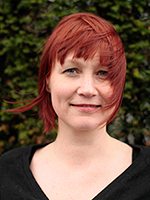
Cecilia Boschini is a Researcher affiliated with the Institute for Theoretische Informatik (Theoretical Computer Science) at ETH Zürich. Her work focuses on advanced cryptographic systems, particularly in post-quantum cryptography, lattice-based protocols, and privacy-preserving technologies. She contributes to developing secure digital signature schemes, threshold cryptography, and efficient cryptographic algorithms resistant to quantum computing threats. Her research bridges theoretical foundations with practical applications in cybersecurity and distributed systems. Key contributions include innovations in fail-stop signatures, two-round threshold signatures (Ringtail), and lattice-based multi-signature systems (MuSig-L). Boschini’s work emphasizes balancing security with efficiency, often addressing challenges in mobile device security and memory encryption. She has published extensively in top-tier venues, with a focus on cryptographic protocols that enhance privacy and data integrity without compromising usability.
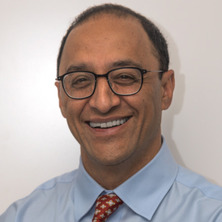
Dr. Ivan Puddu is a Researcher affiliated with the Institute for Information Security at ETH Zürich. His work focuses on advancing cybersecurity, particularly in the realms of Trusted Execution Environments (TEEs), hardware security, and privacy-preserving technologies. He explores vulnerabilities in modern computing systems, including attacks on enclave-based security mechanisms and side-channel exploits. His research also addresses distributed systems, blockchain, and FPGA-accelerated architectures, aiming to enhance system sovereignty and data integrity. Notable contributions include studies on code confidentiality in TEEs, disaggregated memory systems, and mitigating security threats in low-power networks.
Dr. Alessandro Ottaviano is a Researcher affiliated with the Department of Digital Integrated Circuits and Systems at ETH Zürich. His work focuses on advanced computer architecture and embedded systems, particularly in the domains of RISC-V processors, real-time systems, and heterogeneous computing. He contributes to the design of time-predictable virtual memory solutions, mixed-criticality systems, and energy-efficient hardware-software interfaces. Key research areas include modular processor architectures, hardware monitoring for safety-critical applications, and power management in high-performance computing (HPC) systems. His recent projects involve developing controllers for 2.5D systems-in-package and creating open-source networking solutions for mixed-criticality environments. Ottaviano’s work often emphasizes open-source hardware design and scalable system-level approaches to address challenges in autonomous systems and edge computing. He collaborates on advancements in interrupt handling for virtualized systems, peripheral event linking for IoT devices, and FPGA-based thermal emulation for many-core processors. His research bridges theoretical computer architecture principles with practical implementations in embedded and real-time systems.
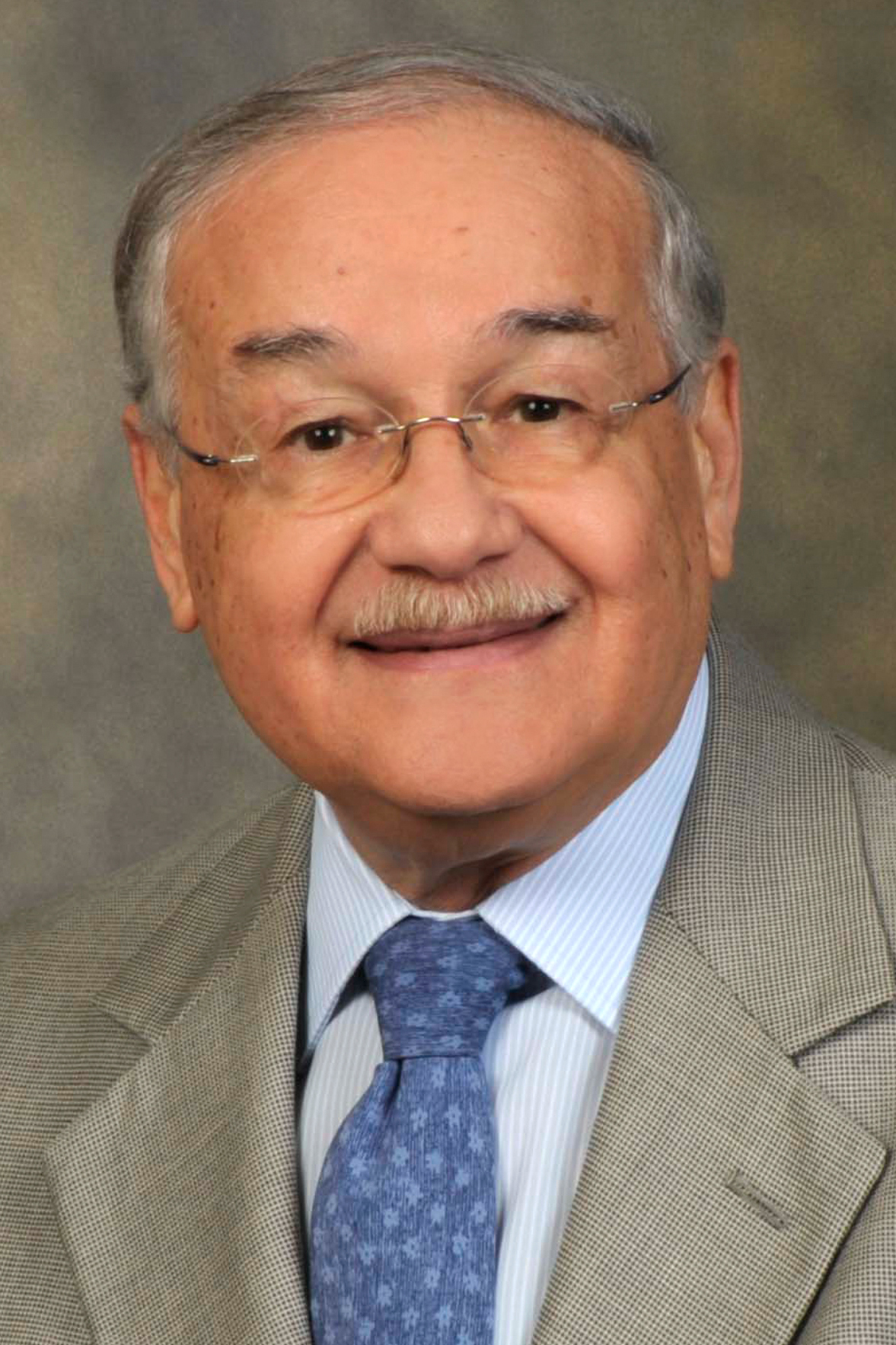
Bahaa E. A. Saleh is a UCF Distinguished Professor of Optics and Photonics at CREOL, The College of Optics and Photonics, University of Central Florida, and former Dean of CREOL (2009–2019). He holds a B.S. from Cairo University (1966) and a Ph.D. from Johns Hopkins University (1971), both in Electrical Engineering. His career includes roles as Chair of the Department of Electrical and Computer Engineering at Boston University (1994–2007) and Deputy Director of the NSF-funded Gordon Center for Subsurface Sensing and Imaging Systems (2000–2008). His research spans quantum optics, statistical optics, nonlinear optics, and optical communication. He authored three influential books, including Fundamentals of Photonics , and has published over 600 papers. He founded the Optical Society (OSA) Advances in Optics and Photonics and held editorial leadership roles in major optics journals. Awards include the 2013 C.E.K. Mees Medal, 2006 Kuwait Prize, and multiple fellowships from SPIE, IEEE, and OSA. Current research focuses on quantum information applications, such as entangled photon generation and quantum imaging. He advises students in optics and photonics, with notable alumni including Seth Smith-Dryden and Walker Larson. His work emphasizes interdisciplinary contributions to optics education and technology.
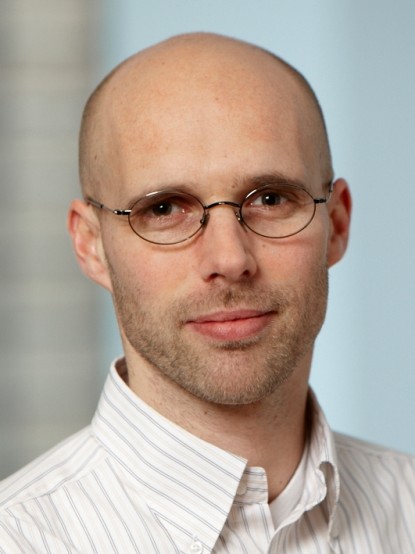
Prof. Heinz Koeppl is a Professor in the Department of Electrical Engineering and Information Technology at TU Darmstadt. His research focuses on self-organizing systems, systems biology, and control theory, with applications in synthetic biology, robotics, and stochastic processes. He explores interdisciplinary topics such as genetic circuit design, UAV swarm dynamics, and machine learning-driven modeling of biochemical systems. Key research areas include the development of deep learning frameworks for kinetic modeling, Bayesian optimization for riboswitch design, and mean field control theory for sparse networks. His work bridges theoretical foundations with practical engineering solutions, addressing challenges in molecular communication, gene regulation, and robotic swarm coordination. Publications from 2023–2025 highlight advancements in bio-inspired algorithms, swarm intelligence, and computational biology. Notable contributions include studies on RNA-based circuits, active matter dynamics, and optimization strategies for large-scale systems. His research emphasizes interdisciplinary collaboration, leveraging tools from electrical engineering, mathematics, and life sciences. No scientific awards are explicitly listed in the provided text. Advising and grants details are not available. Prof. Koeppl’s lab focuses on integrating systems biology approaches with engineering principles to solve complex problems in healthcare, environmental sustainability, and technological innovation.
Professor Khac Duc Do is a faculty member at Curtin University, holding a position in the School of Civil and Mechanical Engineering within the Faculty of Science and Engineering. He serves in the Office of the Provost and is based at Curtin Perth campus. His research focuses on advanced control systems, nonlinear dynamics, and robotics applications in marine, aerospace, and mechanical systems. He earned a PhD with distinction in 2003 and has held prestigious fellowships including ARC Postdoctoral Fellow (2004) and ARC Australian Research Fellow (2009). His teaching includes courses like Advanced Control and Mechatronics, Navigation and Marine Control Systems, and Advanced Control Engineering. Key research interests encompass control of nonlinear systems, stochastic systems, formation control of mobile agents, fluid-structure interaction, and boundary control of PDE-governed systems. His funded projects include wave-energy converter development (2023-2026), inerter-based damper research (2019-2021), and ocean vehicle control systems. Scientific awards include ARC grants totaling over AUD 2 million. Current opportunities include scholarships in control systems/fluid-structure interaction and a postdoc position in wave-energy conversion.
Prithvi Ravi Kantan is a full-time Researcher at Aalborg University's Department of Architecture, Design and Media Technology within The Technical Faculty of IT and Design. His work focuses on developing sound-based and multimodal feedback systems for motor rehabilitation, integrating principles from music technology and biomedical engineering. Education: PhD in Embodied Sonification Design (2021-2023) M.Sc. in Sound and Music Computing (2018-2020) B.E. in Electronics and Telecommunications (2009-2013) Research interests include real-time auditory feedback systems for neurological rehabilitation, user-centered design of clinical technologies, and the application of generative music in data sonification. He actively contributes to projects like HearWalk (2023-2027), exploring sound-facilitated motor learning in cerebral palsy patients. Notable achievements include winning the Danish Sound Day Research Pitch Battle (2023) and receiving the Best Student Paper Award at ICAD 2024. His work aligns with UN SDG 3 (Good Health) and SDG 4 (Quality Education). Teaching responsibilities include coordinating bachelor and master-level courses in PBL-based learning, emphasizing interdisciplinary approaches. He has supervised multiple student projects and contributed to over 39 publications since 2013.
Julien Warnan is a researcher at the Catalysis Research Center (CRC) of the Technical University of Munich (TUM). He leads a multidisciplinary research group focusing on renewable energy, particularly artificial photosynthesis and photocatalytic systems for fuel production. His work emphasizes molecular dyes, catalysts, polymers, and hybrid materials to transform CO2 and water into value-added chemicals. He holds the title of Researcher and is actively involved in academic leadership, including co-editing special issues and organizing international conferences like the ECAT conference. His research has been recognized with awards such as the TUM Chemistry Supervisory Award 2021. Recent activities include visiting scientist roles at Imperial College London and collaborations with groups at TUM and other institutions. Research interests encompass MOF-based photocatalysis, biohybrid systems, and sustainable energy conversion. Key achievements include pioneering studies on metal-organic frameworks for CO2 reduction and solar fuel production. His team has published extensively in high-impact journals like Angewandte Chemie and Advanced Materials , with a focus on functional hybrid materials and electrochemical systems. PhD supervision: Nadine Schmaus, Philip Stanley, Johanna Eichhorn, and others Notable collaborations: Shustova Lab, Rieger Group, Fischer Group Labs: Catalysis Research Center (CRC)
Retsef Levi is the J. Spencer Standish (1945) Professor of Operations Management at the MIT Sloan School of Management, affiliated with the MIT Operations Research Center. He co-directs the Leaders for Global Operations (LGO) Program. His work focuses on data-driven decision models for healthcare systems, supply chain optimization, and risk management. Levi holds a PhD in Operations Research from Cornell University and has led industry collaborations with major hospitals and organizations like the FDA and Walmart Foundation. Education: PhD in Operations Research, Cornell University, 2005 Bachelor’s in Mathematics, Tel-Aviv University, 2001 Research Interests: Levi’s research addresses complex decision-making under uncertainty in healthcare, supply chains, and logistics. Key areas include food safety analytics, risk-based sampling, and predictive modeling for zoonotic diseases. He designs algorithms for inventory control, appointment scheduling, and healthcare resource allocation. Articles Overview: Recent work spans AI-driven epidemiological models, supply chain cybersecurity, and agricultural market interventions. His articles emphasize practical applications of operations research in healthcare and public health. Awards: NSF Career Grant INFORMS Optimization Prize (2008) Wagner Prize (2013) Harold W. Kuhn Award (2016) Advising & Grants: Advised 10 PhD students and 34 master’s students. Led multi-million-dollar projects like the Walmart Foundation initiative for China’s food safety. Active in hospital process optimization and FDA risk management contracts. Labs & Teams: Runs MIT’s Food Supply Chain Analytics and Sensing Initiative, collaborating with global partners on predictive risk tools and healthcare analytics.
Dr. Wenxuan Zhang is a tenure-track Assistant Professor at the Information Systems Technology and Design (ISTD) Pillar of Singapore University of Technology and Design (SUTD), supported by the prestigious SUTD Assistant Professorship (SAP) award. He holds a PhD from The Chinese University of Hong Kong and previously worked as a research scientist at Alibaba Group Singapore. His research focuses on advancing large language models (LLMs) to be both inclusive (supporting multilingual capabilities) and trustworthy (ensuring safety and robustness). Key projects include SeaLLMs (specialized for Southeast Asian languages), Babel (serving 90% of global speakers), and M3Exam (LLM evaluation framework). Education: PhD in Computer Science, The Chinese University of Hong Kong Previous roles: Research Scientist at Alibaba Singapore (2022) Research Interests: Multilingual LLMs, AI safety, model evaluation, and cross-lingual adaptation. He leads projects addressing LLM trustworthiness through safety mechanisms and fair evaluation practices. Awards & Recognition: SUTD Assistant Professorship (2025) Alibaba Star (2022) ITU Best Innovate for Impact Award (2024) Service & Leadership: Area Chair for NeurIPS 2025, ACL 2025, and multiple other top conferences. Actively contributes to program committees for conferences like ICLR and EMNLP. Current Projects: Multilingual LLMs, model compression, safety frameworks, and evaluation methodologies. Openings for PhD/Postdoc researchers in these areas.
Samuel Jean Bassetto is an Associate Professor in the Department of Mathematics and Industrial Engineering at Polytechnique Montréal. He serves as Director of the Continuous Improvement Laboratory (LABAC) and holds membership in multiple prestigious research groups including the Research Group on Globalisation and Management of Technology (GMT), Poly-Industries 4.0 Laboratory, Interuniversity Research Centre on Enterprise Networks, Logistics and Transportation (CIRRELT), and Institute for Data Valorization (IVADO). Dr. Bassetto's research spans multiple disciplines, focusing on continuous improvement through the integration of engineering, artificial intelligence, cognitive science, psychology, and design. His primary sphere of excellence is in New Frontiers in Information and Communication Technologies, with secondary expertise in Modeling and Artificial Intelligence and Human Health. He develops tools that place humans at the center of technology to enhance organizational performance while respecting human rhythms and cognitive limitations. His recent publication portfolio reveals a strong interdisciplinary approach, with research bridging industrial engineering, cognitive neuroscience, and AI ethics. His work addresses practical challenges in lean manufacturing assessment, racial bias in medical AI systems, cognitive data collection in natural environments, and condition monitoring for industrial machinery. The research consistently demonstrates a commitment to developing practical solutions that integrate human factors with technological innovation. NSERC Synergy Prize for Innovation recipient Principal investigator on multiple research grants from NSERC, FRQ, and MITACS Collaborations with over a dozen institutions across multiple countries Supervision of over 150 highly qualified personnel throughout his career Dr. Bassetto teaches specialized courses including CAP7011 (Creativity in Research), IND8444 (Continuous Improvement), IND8203 (Industrial Launch), and previously taught IND8178 (Production). His teaching philosophy emphasizes practical application, with courses featuring hands-on exercises, real-world scenarios, and gamification techniques to enhance learning. His supervision portfolio includes numerous Ph.D. and Master's students working on topics ranging from human-technology collaboration to reinforcement learning for production management. Through LABAC, Dr. Bassetto leads research initiatives focused on developing human-centered tools for continuous improvement in organizational settings. The laboratory conducts projects related to industrial IoT applications, cognitive aspects of process improvement, and the development of practical frameworks for organizations to enhance performance while maintaining respect for human rhythms and cognitive capabilities.
Mark Crowley is an Associate Professor in the Department of Electrical and Computer Engineering at the University of Waterloo , with a cross-appointment in the Cheriton School of Computer Science . He is actively involved in the Waterloo Artificial Intelligence Institute (WAII) , the Waterloo Institute for Complexity and Innovation (WICI) , and serves as National Secretary for the Canadian Artificial Intelligence Association (CAIAC) , coordinating the Canadian Conference on AI . Research interests span the theoretical and applied aspects of Reinforcement Learning , Deep Learning , Manifold Learning , and Ensemble Methods . His work addresses challenges in domains with spatial dynamics, multi-agent systems, and uncertainty, particularly in Computational Sustainability (forest fire management, sustainable forestry), Autonomous Driving , Medical Imaging , and Material Design . Recent research focuses on integrating causal modeling with generative representation learning to improve out-of-distribution robustness in motion forecasting applications. Key publications include foundational work on ChemGymRL environments for safe chemical process reinforcement learning, Generative Causal Representation Learning for robust forecasting, and collaborative work on multi-advisor reinforcement learning in multi-agent settings. He co-authored a textbook Elements of Dimensionality Reduction and Manifold Learning (Springer, 2023) with Prof. Ali Ghodsi and Prof. Fakhri Karray. Teaching includes graduate and undergraduate courses in Algorithm Design , Computational Intelligence , Reinforcement Learning , and Data Modeling at the University of Waterloo since 2018. His research group has produced several notable graduates including Benyamin Ghojogh (2021), who continued as a postdoc until 2022.
Federico Miretti is an Assistant Professor at the Polytechnic University of Turin, affiliated with the Department of Energy and the interdepartmental center Cars@PoliTo. His research focuses on hybrid and electric vehicles, with emphasis on energy management strategies, battery state estimation, and sustainable transport solutions. PhD in Energetics from Polytechnic University of Turin Research areas include: Optimization-based Energy Management Strategies for hybrid propulsion systems Simulation and digital twinning of hybrid systems Thermal management for electrified vehicles Techno-economic assessment of mobility solutions Recent publications highlight advancements in battery temperature anomaly detection, wireless power transfer feasibility, and control algorithms for energy efficiency. His work aligns with SDGs 7 (Clean Energy) and 9 (Innovation). Teaching roles include: Fluid Machinery (2019-2025) Energy Management in Hybrid/Electric Vehicles (2021-2025) Projects: PRoSIT (2025): Predictive thermal management demonstrator Consulting contract with MIDAC SpA (2025): Battery Digital Twin development EBOAT project (2025-2026): Technical support for Vulkan
Remus Teodorescu is a Professor at AAU Energy , Aalborg University , specializing in Power Electronics System Integration and Materials . His work bridges Lithium-Ion Batteries , Modular Multilevel Converters , and Smart Battery Systems . Education : Not explicitly mentioned in the text. Research Interests focus on Battery Management Systems , AI-Driven Energy Optimization , and Power Electronics for renewable energy integration. Key projects include Digital Twin for Lithium-Ion Batteries and BMS-DC for Data Centers . Recent Publications (2025) emphasize Finite Set MPC , Gradient Descent Optimization , and AI in Battery Parameter Estimation . His 2024 work explores Physics-Informed Neural Networks and Fault-Tolerant Converters . Scientific Awards : Villum Foundation Grant (313 million kroner, 2021) Named world's best in electrical engineering (2023) Advising includes supervising PhD projects on AI-Accelerated Battery Twins and Data-Driven SOH Estimation . Collaborations span Energy Cluster Denmark and Villum Fonden .
Jon Weissman is a Professor of Computer Science at the University of Minnesota, Twin Cities. His research focuses on distributed systems, edge and cloud computing, and high-performance computing (HPC), aiming to enhance performance, reliability, and energy efficiency. Education: Ph.D. in Computer Science, University of Virginia (1995) M.S. in Computer Science, University of Virginia (1989) B.S. in Applied Mathematics and Computer Science, Carnegie-Mellon University (1984) His research explores edge and cloud computing, IoT, and HPC, including subtopics like storage systems, resource management, and security. Publications highlight trends in adaptive prefetching, compressed sensing for medical devices, and IoT-informed autoscaling. Scientific Awards: NSF CAREER Award (1995) Senior Member, IEEE He has advised Ph.D. students like Albert Jonathan, Kwangsung Oh, and Francis Liu. His lab is located in 4-204A Keller Hall, and he serves on steering committees for conferences like HPDC.