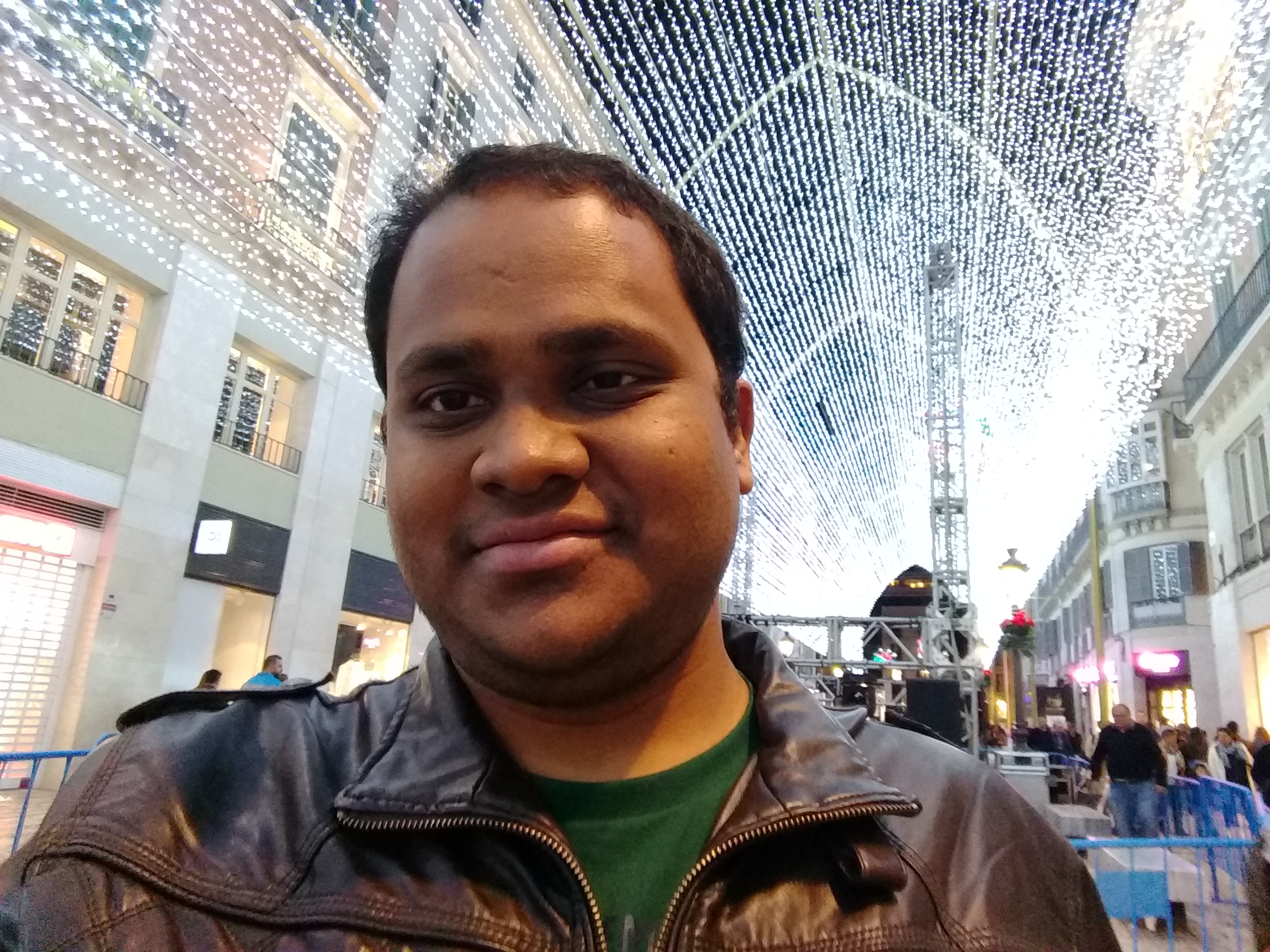
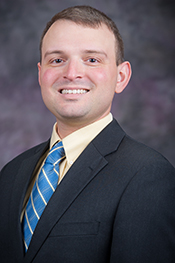
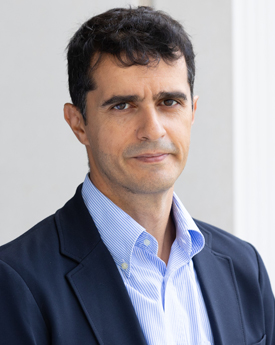
Kai Leonhard is an Adjunct Professor at the Chair of Technical Thermodynamics , RWTH Aachen University. His research focuses on computational chemistry, thermodynamics, and molecular modeling, particularly in solvent design and reactive chemical processes. Department: Chair of Technical Thermodynamics Email: kai.leonhard@ltt.rwth-aachen.de Prof. Leonhard's work integrates quantum chemistry with computer-aided molecular and process design (CAMD/CAPD), emphasizing solvation thermodynamics, reaction kinetics, and machine learning applications. His projects span biofuel combustion, microgel synthesis, and sustainable solvent development. Recent publications highlight advancements in COSMO-RS-based solvent screening, reaction network exploration via ChemTraYzer-TAD, and multi-fidelity modeling for partition coefficients. He employs machine learning to enhance predictive thermodynamic models and optimize chemical processes.
Prof. Dr.-Ing. Jürgen Teich is a full Professor and Chair for Hardware-Software Co-Design at the Department of Computer Science, Friedrich Alexander University Erlangen-Nuremberg (FAU). He serves as Head of Department Computer Science and Vice Dean of the Technical Faculty since August 2024, and has been Speaker of the FAU Research Center Embedded System Initiative (FAU ESI) since 2023. His educational background includes: Diploma degree in Electrical Engineering, University of Kaiserslautern (1989) Dr.-Ing. degree in Electrical Engineering, University of Saarland (1993) Habilitation (PD Dr.-Ing.) entitled "Synthesis and Optimization of Digital Hardware/Software Systems" (1996) Prof. Teich's research focuses on Embedded Systems , Invasive Computing , Hardware-Software Co-Design , and Reconfigurable Computing . His work spans from theoretical foundations to practical implementations, with particular emphasis on resource-constrained systems, many-core architectures, and energy-efficient computing. He has pioneered research in invasive computing paradigms that enable more efficient use of many-core processors by allowing applications to dynamically claim resources. His recent publications reveal a strong trend toward energy-efficient AI deployment on embedded devices , security of embedded systems , and novel memory technologies . There's a clear focus on practical implementations of machine learning on microcontrollers (TinyML), hardware acceleration for data processing, and innovative approaches to power management in self-powered systems. Among his notable scientific awards are: IEEE Fellow (since 2018) Member of Academia Europaea, Section Informatics (since 2011) Member of the National Academy of Science and Engineering (acatech) (since 2018) Member of the German Society of Humboldtians (since 2021) Prof. Teich has been Principal Investigator for numerous DFG-funded projects including SFB/Transregio 89 "Invasive Computing" (2010-2022), SFB 694, and multiple priority programs. He has coordinated large collaborative research efforts across Germany and internationally, with significant funding from DFG and other sources. His research group has produced influential work in embedded systems design and co-design methodologies. He leads the Hardware-Software Co-Design research group at FAU, which focuses on innovative approaches to embedded system design, invasive computing architectures, and efficient implementation of machine learning on resource-constrained devices. The group maintains strong collaborations with industry partners including Intel, Xilinx, and automotive companies.
Maurizio Martina is a Full Professor at the Department of Electronics and Telecommunications (DET) of Politecnico di Torino. He is a member of the Interdepartmental Center PEIC - Power Electronics Innovation Center and serves as an Associate Editor for the IEEE Transactions on Circuits and Systems I (2018-2023). His research focuses include: Digital circuits and signal processing Machine learning hardware architectures RISC-V extensions and post-quantum cryptography VLSI design for edge computing and IoT Recent publications emphasize cryptographic hardware implementations (CHIMERA, Keccak co-processors), RISC-V integration methodologies, and privacy-preserving neural network frameworks. His work spans VLSI architectures for video processing, bio-inspired electronics, and error correcting codes, with applications in cybersecurity, robotics, and biomedical systems. Scientific Recognition : Premio Nazionale Innovazione (2013) Premio dei Premi (2014) He supervises 12 PhD students across cycles 35-40 in Electrical, Electronics and Communications Engineering, including: Valeria Piscopo (2024-in progress) Alessandra Dolmeta (2022-in progress) Luigi Giuffrida (2022-in progress) Walid Walid (2019-2023) As part of the VLSILAB Group , his research explores hardware accelerators for machine learning, post-quantum cryptography on RISC-V, and bio-inspired embedded systems. Teaching activities include courses on Integrated Systems Architecture and Hardware & Wireless Security at Politecnico di Torino and Università di Pavia.
Dr. Lucie Kruse is a researcher at the Department of Informatics, University of Hamburg, specializing in Human-Computer Interaction (HCI) and Virtual Reality (VR). Her work focuses on immersive user interfaces for cognitive and physical training, particularly for older adults and those with dementia. She has been an active member of the University of Hamburg's HCI group since 2018 and served on the Ethics Commission since 2023. Her research interests include: Virtual Reality Exergames Serious Games Assistive Technologies Accessibility in VR Mental Health Applications Her publications from 2021-2025 demonstrate expertise in designing VR systems for healthcare, analyzing age-related interaction patterns, and developing inclusive interfaces. She has received multiple awards including the 2024 Honorable Mention for Best Poster at ACM SUI and the 2023 Honorable Mention at ACM CHI. Scientific Awards: Honorable Mention for Best Poster Award at ACM SUI (2024) Runner-Up Prize at Metaverse for the Good (2024) Honorable Mention at ACM CHI'23 Interactive Demo (2023) Honorable Mention at ACM VRST (2021) She has supervised multiple theses on topics like AI agents for mental health, accessibility of chatbots for seniors, and VR exergame design. Her work spans collaborations with institutions like HITLab NZ and Western Sydney University's MARCS Institute.
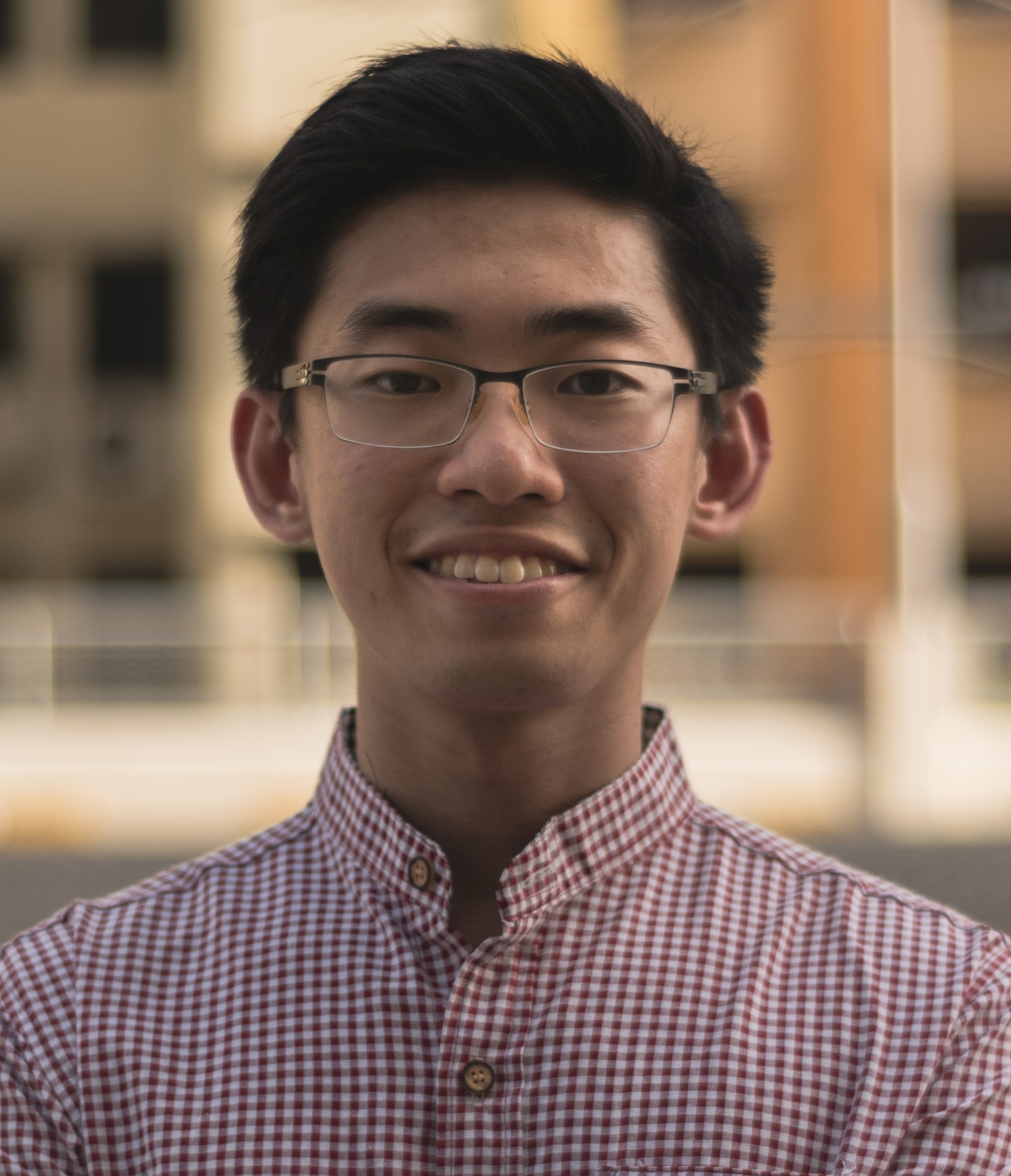
Quan Quan Tan is a Research Fellow at Nanyang Technological University (NTU), Singapore, specializing in symmetric-key cryptanalysis and automation tools. He previously served as a Cybersecurity Engineer at CSIT, Singapore for nearly two years. His educational background includes: Ph.D. in Mathematical Sciences from NTU (2023) under Prof. Thomas Peyrin. Thesis: "Cryptanalysis of Lightweight Symmetric-Key Cryptographic Algorithms" M.Sc. in Mathematical Sciences from NTU, with research on optimization techniques for block cipher hardware implementations B.Sc. in Mathematical Sciences from NTU Dr. Tan's research focuses on automation in cryptographic design and analysis, emphasizing secure symmetric-key primitives and advanced cryptanalysis tools. His work bridges theoretical cryptography with practical security engineering through algorithm development and vulnerability assessment. Analysis of his 2020-2025 publications reveals dominant themes in symmetric-key cryptanalysis, including innovative meet-in-the-middle attacks, differential cryptanalysis frameworks, and automated verification systems. His contributions span attack methodologies (e.g., higher-order differential-linear techniques), tool development (Trail-Estimator), and novel cipher design (uKNIT-BC), demonstrating consistent advancement in lightweight and low-latency cryptographic systems.
Christopher Rycroft is a Professor and Associate Chair in the Department of Mathematics at the University of Wisconsin–Madison. He leads the Rycroft Group, which focuses on mathematical modeling and scientific computation for interdisciplinary applications in science and engineering. Prior to joining UW-Madison in summer 2022, he was a professor at Harvard University's School of Engineering and Applied Sciences from 2014-2022, and before that a Morrey Assistant Professor at UC Berkeley from 2010-2013. Professor Rycroft's research spans three main areas: numerical methods for material mechanics, data-driven discovery, and computational geometry. His group develops new computational methods while working directly with domain scientists. Key achievements include the development of the reference map technique for fluid-structure interaction, Voro++ software library for Voronoi tessellation, and novel approaches to understanding crumpling physics. His work combines traditional analysis and modeling with machine learning methods to extract scientific insights from complex data. The Rycroft Group's publication record demonstrates a strong trajectory of interdisciplinary research bridging mathematics, physics, materials science, and biology. Recent work has focused on fluid-structure interaction, computational geometry applications, mechanical metamaterials, and biological fluid dynamics. The group develops both theoretical frameworks and practical software tools that have found applications across diverse scientific domains from materials science to virology. Everett Mendelsohn Award for Excellence in Mentorship (2021) Professor Rycroft has advised numerous PhD and master's students who have gone on to postdoctoral positions at institutions including MIT, EPFL, and Cornell. His teaching includes advanced scientific computing courses that have quadrupled in enrollment during his tenure. He has secured research funding supporting his group's work on computational methods and interdisciplinary applications. The Rycroft Group consists of graduate students, postdocs, and collaborators with diverse backgrounds in applied mathematics, physics, engineering, and computer science. The group maintains active collaborations with researchers across multiple institutions and participates in centers such as the Harvard Quantitative Biology Initiative.
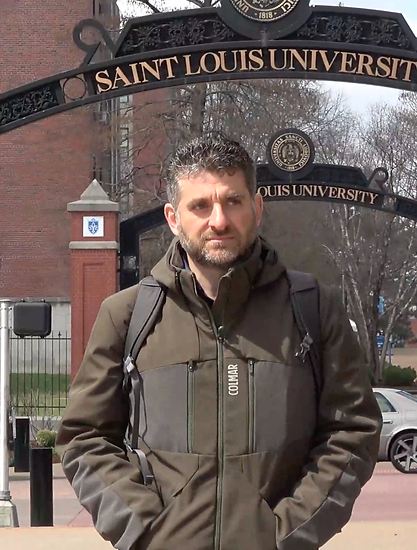
Flavio Esposito is an Associate Professor in the Computer Science Department at Saint Louis University's School of Engineering. He also serves as a Research Institute Fellow and CS Graduate Coordinator. His office is located in ISE 234D at 3450 Lindell Blvd, St. Louis, MO. Dr. Esposito's research focuses on cyber-physical systems and networked systems, including network virtualization, network management, Software-Defined Networks (SDN), network architectures, and wireless networks. He has a strong interest in interdisciplinary applications of these technologies to medicine and agriculture. His work bridges theoretical networking concepts with practical implementations. His publications span key areas in networking research, with recent work focusing on congestion control algorithms, virtual network embedding, recursive network architectures, and edge computing applications. The research trends show a progression from foundational networking protocols toward more sophisticated applications integrating machine learning, edge computing, and cyber-physical systems, with increasing emphasis on real-world applications in diverse domains. Outstanding Graduate Mentoring Faculty Award from the School of Engineering (2021) Finalist for the Undergraduate Mentoring Award in the College of Arts and Sciences Multiple NSF research awards including US Ignite, ICE-T, CNS Core, CC* Integration, CPS:TTP, and ModernCARE projects COMCAST Innovation Fund Award (January 2020) International Center for Responsible Gaming (ICRG) Award ($150K) Dr. Esposito actively mentors PhD and MS students, with numerous current and past students who have gone on to positions at major tech companies, universities, and research institutions. He has been a Principal Investigator on multiple significant research grants totaling millions of dollars. He co-founded Spaghetti Code Labs with former PhD student Alessandro Sangiorgi, whose cybersecurity educational app WeeNet has achieved 5.7M+ downloads. He leads several research labs and teams focused on cyber-physical systems, with current openings for PhD students, visiting researchers, and postdocs working on networks, learning, edge computing, and applications to medicine and agriculture. His teams have developed numerous software systems including Software Mutant, Neighborhood Method Prototype, VINEA, ProtoRINA, and BUtorrent.
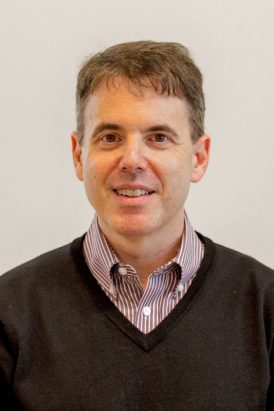
Fred Feinberg is the Joseph and Sally Handleman Professor of Marketing and Professor of Statistics (by courtesy) at the University of Michigan, where he is also an Affiliated Faculty member of the Center for the Study of Complex Systems. His work integrates advanced Bayesian methods with large-scale marketing data to illuminate how people make choices under uncertainty. Education Ph.D., Sloan School of Management, Massachusetts Institute of Technology (1989) Doctoral program in Mathematics, Cornell University (1983–84) S.B. Mathematics & S.B. Philosophy, Massachusetts Institute of Technology (1983) Research Focus Feinberg’s scholarship centers on discrete choice models that leverage real-world decisions to infer latent attributes such as demographics, product appeal, and socioeconomic status. Methodologically, he employs Hierarchical Bayes (HB) models and cutting-edge MCMC algorithms to handle massive data sets, while theoretically he advances dyadic utility theory and optimal search under uncertainty. Applications span click-through behavior, menu-based choice, online dating preferences, spatial marketing, and consumer reactions to intangible or aesthetic product features. Recent empirical studies explore the wearout versus weariness effects of online advertising, the impact of data breaches on consumer behavior, and dynamic pricing for digital media subscriptions. Across these projects, Feinberg couples rigorous statistical innovation with actionable managerial insights, bridging marketing science, operations, and engineering. Scientific Awards & Leadership Joseph and Sally Handleman Endowed Professorship Past President, INFORMS Society for Marketing Science Departmental Editor, Production and Operations Management Former Co-Editor, Marketing Science Co-author (with T. Kinnear & J. Taylor) of the textbook Modern Marketing Research: Concepts, Methods, and Cases Grants & Collaborations While explicit grant lists are not provided, Feinberg’s prolific publication record in top-tier journals (e.g., Journal of Marketing Research , Marketing Science , Management Science ) and editorial board service imply sustained external funding and interdisciplinary partnerships, particularly with operations, engineering, and computer-science groups. Laboratories & Teams Feinberg is formally affiliated with the Center for the Study of Complex Systems (CSCS) at the University of Michigan, where he collaborates on network-based choice frameworks and large-scale behavioral data analytics. He maintains active ties to the Ross Marketing faculty and the Department of Statistics, fostering joint workshops and doctoral training initiatives.
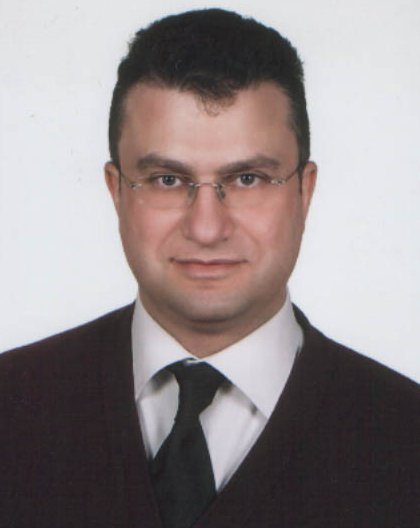
Professor Serdar Özoğuz is a full faculty member at the Department of Electronics and Communication Engineering , Istanbul Technical University . Holding a Ph.D. from ITU (2000) and a M.Sc. from ITU (1993) , he has taught courses like Active Network Synthesis , Basics of Electrical Circuits , and Scientific Research Ethics since 2014. His research focuses on Active RC filters Nonlinear electronic circuits Analog integrated circuit design Network synthesis . His recent publications emphasize machine learning applications in RF/microwave design , quantum computing for CAD tools , and emerging memory devices . The department's Devreler ve Sistemler Laboratuvarı Çok Geniş Ölçekli Tümdevre (VLSI) Tasarımı Laboratuvarı likely support his work. Despite no explicit awards listed, his 15+ recent articles in high-impact journals underscore his technical contributions.
Angshuman Karmakar is an Assistant Professor in the Department of Computer Science and Engineering at the Indian Institute of Technology Kanpur, India. His research focuses primarily on Post-Quantum Cryptography (PQC) and Computation On Encrypted Data (COED), which are critical areas in modern cryptography and computer security. Dr. Karmakar received his Ph.D. from Katholieke Universiteit Leuven (KU Leuven), Belgium, where he worked under Prof. Ingrid Verbauwhede in the COSIC research group. He was awarded the prestigious Erasmus Mundus fellowship for his doctoral studies and the FWO (Fonds voor Wetenschappelijk Onderzoek – Vlaanderen) fellowship for his post-doctoral research at KU Leuven. His research spans theoretical development of cryptographic schemes, implementation algorithms, side-channel and fault attack analysis, and countermeasure development. Dr. Karmakar has established extensive international collaborations with researchers and engineers worldwide to address complex challenges in cryptography and security. Recent publications demonstrate a strong focus on practical post-quantum cryptographic implementations with particular attention to hardware and software efficiency, side-channel resistance, and novel attack methodologies. His work bridges theoretical cryptography with real-world implementation challenges across diverse platforms from IoT devices to high-performance computing systems. Erasmus Mundus fellowship for doctoral studies at KU Leuven FWO fellowship for post-doctoral study at KU Leuven Google India Research Award for work on practical transition to post-quantum cryptography Dr. Karmakar is actively seeking graduate students and postdoctoral researchers to collaborate on cutting-edge research in cryptography and computer security. His work has significant implications for securing future communication systems against quantum computing threats, with applications spanning blockchain technologies, IoT security, and general-purpose computing systems.
Amir Bahadori serves as Professor and Nuclear Engineering Program Director in the Department of Mechanical and Nuclear Engineering at Kansas State University's Carl R. Ice College of Engineering, holding the Hal and Mary Siegele Professorship in Engineering. He directs the Radiological Engineering Analysis Laboratory (REAL) and established the Institute for Radiation Health Studies (IRHS) in 2024, focusing on radiation protection, space radiation environments, and radiation health effects. His educational background includes: Ph.D. in Biomedical Engineering, University of Florida (2012) M.S. in Nuclear Engineering Sciences, University of Florida (2010) B.S. in Mechanical Engineering and Mathematics, Kansas State University (2008) Bahadori's research spans radiation transport modeling, dosimetry, and risk assessment with applications in space exploration, medical physics, and radiation epidemiology. He develops computational frameworks for radiation exposure scenarios and biological response prediction, emphasizing space radiation protection for Artemis missions and chronic exposure studies through the Million Person Study collaboration. Analysis of his recent publications reveals dominant themes in space radiation measurement (Artemis missions), radiation epidemiology (Million Person Study innovations), and advanced detection systems (miniaturized neutron spectrometers). His work increasingly integrates big data approaches for radiation risk assessment and electrostatic shielding concepts for deep-space exploration. His scientific recognition includes: NASA Graduate Student Research Fellowship (2009) Certified Health Physicist designation Big 12 faculty fellowship (2022-2023) NCRP council election (2024) Two USPTO patents Bahadori secures substantial research funding from NASA for space radiation instrumentation, Department of Energy projects via the Kansas City National Security Campus, and collaborative epidemiological studies. He mentors nuclear engineering graduate students while leading interdisciplinary teams developing radiation protection solutions for aerospace and medical applications. His laboratory infrastructure includes the REAL with Beocat high-performance computing resources, radiation detectors, and a 3D printer, plus the IRHS with a Precision X-ray XRad320 irradiator and radon chamber. These facilities support collaborations across K-State colleges and external organizations for radiation health effect studies.
Professor Efthymios Pavlidis is a faculty member in the Department of Economics at Lancaster University Management School (LUMS). He holds the rank of Professor and specializes in macroeconomics, international finance, and time series econometrics. His research focuses on housing market dynamics through collaborations like the International Housing Observatory (with the Federal Reserve Bank of Dallas) and the UK Housing Observatory. He is a Fellow of the Higher Education Academy, reflecting his commitment to academic excellence in teaching and research. His research interests include speculative bubble detection, real estate price forecasting, and testing parity conditions in financial markets. Pavlidis actively supervises PhD students in applied time series econometrics, emphasizing practical applications in financial markets and housing economics. He is involved in numerous academic activities, including organizing conferences and workshops such as the Dynare Conference and the Lancaster Economics Seminar. Key contributions include developing econometric methods for detecting market exuberance and analyzing real exchange rates. His work bridges theoretical econometrics with practical policy implications, particularly in housing and energy markets. Pavlidis collaborates internationally, evidenced by his participation in global academic networks and institutions like the European Economic Association and the Royal Economic Society. His teaching includes the course ECON222 Intermediate Macroeconomics I, and he maintains an office in the Management School (B015), with weekly office hours on Tuesdays. A comprehensive overview of his research and projects is available at his personal webpage: https://sites.google.com/view/etpavlidis/ .
Marco Serafini is an Assistant Professor in the Department of Computer Science at the University of Massachusetts Amherst, affiliated with the College of Information and Computer Sciences (CICS). He leads the DREAM Lab (Data systems Research for Exploration, Analytics, and Modeling) and is part of the Center for Data Science. Prior to UMass, Serafini worked as a Senior Scientist at the Qatar Computing Research Institute (QCRI) and held a postdoctoral fellowship at Yahoo! Research in Barcelona. He earned his PhD in Computer Science from TU Darmstadt (Germany), where his thesis was recognized through nominations for best thesis awards across German, Swiss, and Austrian computer science societies. His research focuses on the intersection of database systems, distributed systems, and data science, emphasizing scalable architectures for big data analytics and machine learning. Key areas include computation pushdown in cloud DBMSs, graph neural network training systems, and efficient graph pattern matching. His work addresses challenges in tail latency mitigation, resource optimization, and transparent scaling of ML models. Serafini has contributed to influential systems like Arabesque (for distributed graph mining), E-Store (elastic partitioning), and Aion (event-time stream processing). He has been awarded an NSF CNS Core grant to advance scalable GNN training. His publications span top venues such as ACM SIGOPS, VLDB, and ICDE, reflecting his expertise in both theoretical foundations and practical system implementations. Professional recognition includes thesis nominations from major computer science societies and sustained contributions to open-source projects in distributed computing. Serafini advises students through the DREAM Lab, focusing on preparing the next generation of data systems researchers.
Li Song is a Professor and holds the Lesch Centennial Chair & Lloyd G. and Joyce Austin Presidential Professor at the University of Oklahoma's Aerospace & Mechanical Engineering Department. He leads the Building Energy Efficiency Lab and serves as AME Associate Director for Research. His expertise spans building energy systems, HVAC optimization, and fault detection technologies. Education: Ph.D. (Thermal/Fluid Science, 2004) from University of Nebraska-Lincoln; M.S. (Thermal/Fluid Science, 1996) from Harbin Institute of Technology; B.S. (Thermal Energy Systems, 1993) from Shengyang University of Civil Engineering and Architecture. Research focuses on energy-efficient HVAC systems, fault detection algorithms, and building performance analytics. Notable contributions include the ULEM-FDD system for high-performance buildings and virtual sensor technologies for airflow/water flow measurement. Awards include the ConocoPhillips Energy Prize (2011 finalist) and Bes-Tech Innovation Award (2006). Publications emphasize HVAC control strategies, energy modeling, and IoT-enabled diagnostics. Courses taught include Thermodynamics, Energy Efficient Building Systems Design, and HVAC Systems Engineering.
Miaoyan Wang is an Associate Professor in the Department of Statistics at the University of Wisconsin-Madison, part of the School of Computer, Data & Information Sciences. She holds early tenure and is a faculty affiliate in the Mathematical Foundations of Machine Learning, Institute for Foundations of Data Science (IFDS), and Center for Demography of Health and Aging (CDHA). She is currently on sabbatical as a visiting associate professor at Stanford University and Lawrence Livermore National Laboratory. Education: PhD in Statistics from the University of Chicago (2015), BS in Mathematics from Fudan University (2010). Postdoctoral training included positions at UC Berkeley (Computer Science) and the University of Pennsylvania (Math+X). Research focuses on statistical machine learning, with emphasis on matrix/tensor data analysis, high-dimensional statistics, nonparametric learning, and applications in genetics. Her work bridges theory and practice, addressing challenges in computational efficiency and statistical optimality for complex data structures. Awards include the prestigious NSF CAREER Award (2022), multiple best paper awards (ASA, IMS, NEURIPS), and recognition from ASHJ and IGES. Her group has secured grants totaling $3.4 million, including NSF funding for foundational machine learning research and collaborative projects in population genomics. Advising includes PhD students Chanwoo Lee and Jiaxin Hu, with former students Yuchen Zeng and Zhuoyan Xu. She teaches advanced statistical methods and computational courses, emphasizing rigorous theoretical foundations and practical applications. Key collaborations include work on tensor decomposition algorithms, statistical genetics, and interdisciplinary projects with biology and computer science departments. Her lab contributes open-source software tools for data analysis, including packages for tensor block models and multiway clustering.