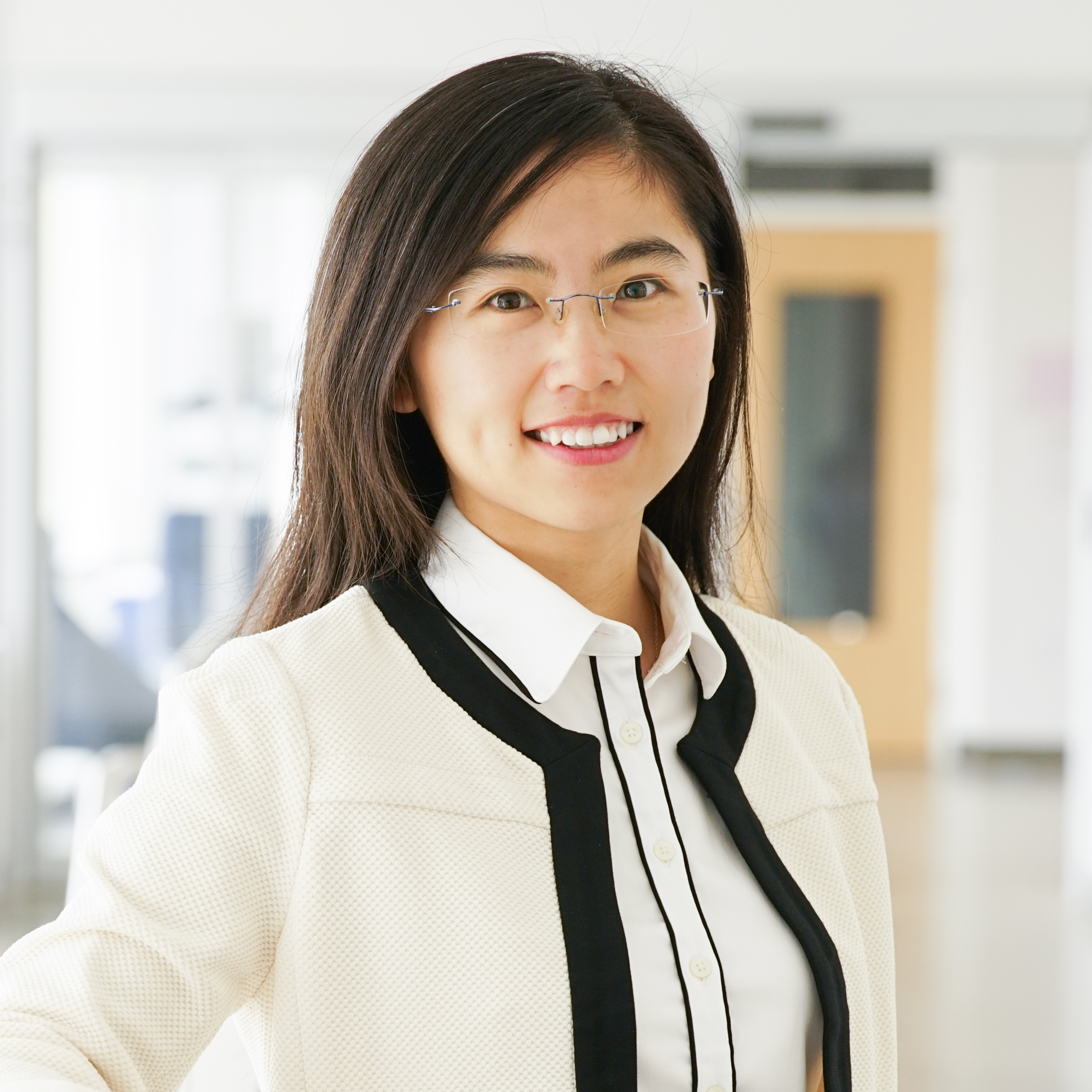
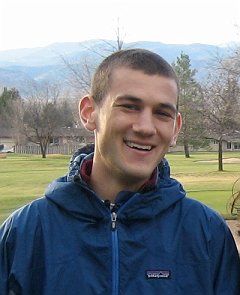
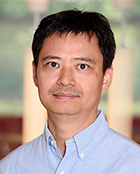
Fei Fang is an Associate Professor in the Software and Societal Systems Department at Carnegie Mellon University (CMU) , where she explores the intersection of artificial intelligence and multi-agent systems . Her work integrates machine learning with game theory to address challenges in security , sustainability , and mobility , aligning with the AI for Social Good mission. Ph.D. in Computer Science, University of Southern California (2016) B.Eng. in Electronic Engineering, Tsinghua University (2011) Recent research focuses on reinforcement learning , large language models (LLMs) , and human-AI collaboration . Her team’s work has been recognized with 15+ awards across prestigious venues like IAAI, AAAI, and IJCAI. Notable accolades include the 2023 Allen Newell Award , 2022 Sloan Fellowship , and NSF CAREER Award (2021) . She actively contributes to educational initiatives , including teaching "Demystifying AI for Everyone" at CMU, and has sought part-time teaching assistants for course development. Her research spans 15+ domains , including AI ethics , cyber defense , traffic optimization , and public health .
Ana Klimovic is an Assistant Professor at the Department of Computer Science, ETH Zürich, and Deputy Head of the Institute for Computing Platforms. She leads the Efficient Architectures and Systems Lab (EASL) and focuses on optimizing cloud computing performance and resource efficiency. Education: Ph.D. in Electrical Engineering (Stanford University), M.S. in Electrical Engineering (Stanford), B.A.Sc. in Engineering Science (University of Toronto) Previous Roles: Research Scientist at Google Brain Her research spans cloud computing, operating systems, distributed systems, and their intersection with machine learning. Key areas include cloud-native programming models, elastic storage, GPU sharing, and data pipeline optimization. The 2025-2024 articles highlight trends in serverless computing, large language model (LLM) serving, GPU optimization, and data-centric ML systems. Themes include elasticity, resource multiplexing, heterogeneous computing, and infrastructure for AI/ML workloads. Scientific Awards: Microsoft Research PhD Fellowship, Stanford Graduate Fellowship She has led research projects on ephemeral storage, distributed training automation, and cost-efficient ML preprocessing, with grants from Microsoft Research and Stanford.
Professor Simon Buckingham Shum is a leading academic in Learning Informatics at the University of Technology Sydney (UTS), serving as inaugural Director of the Connected Intelligence Centre since 2014. His work bridges Human-Computer Interaction, Educational Technology, and Learning Analytics to develop AI-driven tools like OnTask that enhance student belonging through personalized feedback. Key research areas: Human-Computer Interaction, Learning Analytics, AI in Education, Collective Intelligence Recent work focuses: LLM-augmented qualitative analysis, Belonging Analytics frameworks, and ethical AI implementation in education CIC received the 2024 Vice-Chancellor’s Student Experience Award for scaling OnTask across multiple faculties. His contributions span over 30 years, including founding roles at The Open University’s Knowledge Media Institute and innovations in Open Educational Resources (OER), SocialLearn, and FutureLearn platforms. Notable awards: 2024 Student Experience Award (OnTask), Fellow of the Royal Society of Arts (RSA), DEFI STRI Researcher at University of Cambridge Education: B.Sc. in Psychology (York), M.Sc. in Ergonomics (UCL), PhD in Human-Computer Interaction (York) He leads multidisciplinary collaborations with teams across Business, Law, and Education faculties, pioneering tools like Theme Explorer and Qreframer bot. His recent focus on the "metacrisis" reframes educational technology’s role in addressing global systemic challenges through transdisciplinary approaches.
Dr. Arkaprava Basu is an Associate Professor at the Indian Institute of Science (IISc), Bangalore. He received the ACM India Early Career Researcher (ECR) Award 2024 for his innovative contributions to efficient memory management in GPUs and CPUs through cross-stack software-hardware research. Affiliation: Indian Institute of Science (2018–present) Prior Roles: Full-time Research Staff at AMD Research (Austin, USA, 2014–2018) Education: PhD in Computer Science from University of Wisconsin-Madison (2013) His research focuses on optimizing AI hardware systems by integrating compiler, runtime, and OS design with hardware architecture. Collaborations include long-term consultancy with tech giants, emphasizing practical implementations of his theoretical work. Recognitions: ACM India ECR Award (2024) for "creative and impactful contributions toward efficient memory management for GPUs and CPUs"
Adriana Tapus is a Full Professor at ENSTA Paris, affiliated with Institut Polytechnique de Paris, leading the Autonomous Systems and Robotics Laboratory (SAR) within the Computer Science and Systems Engineering Unit (U2IS). She holds an HDR (Habilitation) and a PhD from EPFL, Switzerland, with postdoctoral experience at USC. Her research focuses on socially assistive robotics, human-robot interaction (HRI), and personalized therapy for individuals with physical/cognitive impairments. She directs the IP Paris Doctoral School and coordinates national/international projects like the EU-funded ENRICHME and SWEET. Education: PhD in Mobile Robotics, EPFL (2005) Habilitation (HDR), ENSTA Paris (2011) M.S. Computer Science, University Joseph Fourier Engineer, Politehnica University of Bucharest Research Interests: Tapus pioneers socially assistive robotics, integrating machine learning, human modeling, and multimodal communication (verbal/non-verbal/para-verbal). Her work addresses adaptive therapies for vulnerable populations using robotics, physiological data interpretation, and context-aware interaction. Key themes include: Human-robot cooperation and trust Emotion recognition and expression Personalized rehabilitation systems AI ethics and human-centered design Publications: Over 150 articles, with recent work exploring humor in HRI, teleoperation trust models, and cross-cultural intelligent vehicles. Notable 2025 contributions include studies on robot laughter efficacy and multimodal facial expression frameworks. Awards: 2025: 4 IROS papers accepted 2016: 25 Women in Robotics recognition 2010: Romanian Academy Award Multiple conference best paper awards (RO-MAN, ICRA, etc.) Advising & Grants: Supervised over 20 PhD students and led projects like EU Horizon 2020 ENRICHME. Current students focus on teleoperation dynamics, robot humor, and haptic interfaces. Active in editorial roles (IJSR, THRI) and conference organization (HRI General Chair 2019). Labs/Teams: Founder of RoboticsByDesign lab and co-initiator of the Hi! Paris interdisciplinary AI center. The SAR lab develops systems for healthcare, education, and human-robot collaboration.
Joel Goh is Associate Professor at the Department of Analytics and Operations, NUS Business School, National University of Singapore. He serves as Director of the J.Y. Pillay Comparative Asia Research Centre (under NUS Global Asia Institute) and PhD Program Director at the Institute of Operations Research and Analytics (IORA). Previously, he was Assistant Professor at Harvard Business School (2014-2017) and Visiting Scholar (2017-2022). BSc, MSc, PhD in Operations, Information, and Technology from Stanford University His research focuses on healthcare analytics (preventing health conditions, hospital operations, frailty assessment), supply chain analytics (digital business models, platform leakage), and service platform operations (hospital-at-home programs, incentive design). He co-created the Robust Optimization Made Easy (ROME) software. Recent publications analyze workplace psychological safety (2024), hospital-at-home models (2024), and platform leakage dynamics (2023). His work spans 18+ journals with 740+ citations for burnout cost studies (2022) and 606+ citations for physician well-being research (2017). Teaching Honors : 2023: Best MBA Teaching & Skinner Innovation Award 2021: NUS Annual Teaching Excellence Award 2020: Early Career Research Excellence Award & 40 Under 40 Best MBA Professors Advising & Grants : Served as PhD Program Director. Received NUS Start-Up Grant R-314-000-110-133 (2021) and Humanities & Social Sciences Fellowship (2021). Editorial roles include Associate Editor at Management Science , Manufacturing & Service Operations Management , and Senior Editor at Production and Operations Management .
Liping Liu is a Professor in the Department of Management at The University of Akron's College of Business. He holds a Ph.D. in Business from the University of Kansas (1995), Master of Engineering in Systems Engineering (1991), and dual bachelor's degrees in Applied Mathematics (1986) and River Dynamics (1987). Ph.D., University of Kansas MS, Huazhong University of Science and Technology B.E., Wuhan University BS, Huazhong University of Science and Technology His research spans Artificial Intelligence , Electronic Business , Systems Analysis , Data Quality , and Belief Function Theory . He pioneered coarse utility theory and linear belief functions , now taught in top Ph.D. programs across multiple disciplines. Key trends in his publications include Belief Function Applications (2012-2024), Medical Data Systems (2003-2015), and Decision Theory (2004-2014). Recent works focus on Gamma Belief Functions (2024) and computational improvements in linear belief function operations (2019-2016). Scientific contributions recognized via: Microsoft Azure Educator Grant (2014-2016) Inclusion in Who's Who in America (2010-2013) and Who's Who in the World (2011-2013) As an editor and committee member for major conferences (INFORMS, AMCIS, Belief Functions conferences), he bridges academic research with practical systems implementation in e-business and healthcare domains.
Subhasish Mitra is the William E. Ayer Professor of Electrical Engineering and Computer Science at Stanford University, holding dual appointments in both departments. He leads the Stanford Robust Systems Group and serves on the leadership team of the Microelectronics Commons AI Hardware Hub under the US CHIPS and Science Act. His research spans Robust Computing, NanoSystems, Electronic Design Automation (EDA), and Neurosciences, with breakthroughs in X-Compact test compression, carbon nanotube computing, and 3D integration. He has held international roles like the Carnot Chair at CEA-LETI and Visiting Professorships globally. Education & Honors: Recipient of over 40 awards including the IEEE Computer Society’s Harry H. Goode Memorial Award, ACM/IEEE’s A. Richard Newton Technical Impact Award, and the Intel Achievement Award. He earned top academic accolades from IIT Kharagpur and Jadavpur University, and is a Fellow of ACM and IEEE. Research Impact: Pioneered first-of-their-kind systems like the carbon nanotube computer and monolithic 3D integration. His work on robust computing techniques like QED validation and X-Compact compression has industry-wide adoption, saving billions in manufacturing costs. Collaborates with industry leaders like Intel, Google, and Samsung. Publications & Grants: Over 400 publications, including award-winning papers in DAC, ISSCC, and IEEE journals. Leads grants from NSF, DoE, and industry partnerships. His lab explores cutting-edge topics like neuromorphic computing, 3D thermal scaffolding, and AI hardware acceleration. Administration & Outreach: Serves as Associate Chair (Faculty Affairs) for Stanford’s Computer Science Department. Recognized by students for mentorship, and frequently invited to global forums like the World Economic Forum and National Academy of Engineering.
Steven I-Jy Chien serves as Professor and Director of the Transportation Program within the Department of Civil and Environmental Engineering at the New Jersey Institute of Technology (NJIT). His career spans academia, government, and industry with significant contributions to transportation engineering research and practice. His educational credentials include: Ph.D. in Civil and Environmental Engineering from University of Maryland-College Park (1995) M.S. in Civil and Environmental Engineering from University of Maryland-College Park (1991) B.S. in Civil Engineering from Tamkang University (1983) Professor Chien's research focuses on transportation system resilience, sustainable transit operations, and advanced traffic modeling. His work addresses critical challenges in urban rail networks, demand-responsive transit services, and energy-efficient transportation systems. He employs sophisticated computational methods including genetic algorithms, machine learning, and Bayesian approaches to solve complex transportation problems involving network vulnerability, passenger behavior, and infrastructure optimization under uncertainty. Analysis of his recent publications reveals strong emphasis on transportation resilience against cascading failures, sustainable operations for electric transit systems, and pandemic-responsive aviation scheduling. His research spans diverse geographic contexts including major Chinese metropolitan areas and U.S. transportation networks, demonstrating global applicability of his methodologies. His professional recognition includes: 2024 Keynote Speaker at Union-Tech Lecture, National Taiwan Ocean University 2022 Keynote Speaker at International Conference of Chinese Institute of Transportation 2022 Best Poster Award from New Jersey Department of Transportation Professor Chien has secured research funding from federal agencies including the Federal Highway Administration (FHWA) where he contributed to CORSIM traffic simulation software development. His industry experience with China Engineering Consultants Inc. and Information Dynamic Inc. informs his practical approach to transportation challenges. As Transportation Program Director, he oversees curriculum development and industry partnerships that prepare students for transportation sector careers. He maintains active collaboration with transportation agencies globally, particularly through his leadership in the Transportation Program at NJIT which serves as a hub for innovation in urban mobility solutions.
Vijay Raghunathan is a Professor in the Department of Electrical and Computer Engineering at Purdue University's College of Engineering. His work focuses on hardware and software architectures for embedded systems, wireless sensors for IoT, and wearable/implantable electronics with emphasis on low power design, energy harvesting, emerging memory technologies, and secure system design. Academic Rank: Professor Department: Electrical and Computer Engineering University: Purdue University Research Focus: Energy-efficient embedded systems, IoT, wearable devices His research explores low power design at both board-level and system-on-chip scales, micro-scale energy harvesting , and reliable/secure system design for medical devices. Recent work focuses on Processing-in-Sensor/Memory for battery-free AIoT devices, state space models for neural processing units, and security coprocessor integration in autonomous systems. Analysis of his publications reveals trends in energy-efficient neural network acceleration , approximate computing for edge inference , and compute-in-memory architectures . Key subfields include collaborative edge-cloud partitioning , sparse DNN accelerators , and security frameworks for medical devices. Vijay's work also addresses energy-accuracy tradeoffs in multimodal cognitive systems and intermittent computing using non-volatile memory technologies. His contributions span from microcontroller energy management to security protocols for implantable electronics.
Jian Huang is an Associate Professor of Electrical and Computer Engineering at the University of Illinois at Urbana-Champaign (UIUC), holding a 100% appointment since August 2024. He is also an affiliated Associate Professor in Computer Science and serves as the Y. T. Lo Faculty Fellow in ECE. Huang leads the Systems Platform Research Group and received his Ph.D. in Computer Science from Georgia Institute of Technology in August 2017, where his dissertation earned the College of Computing Dissertation Award. His research focuses on Computer Architecture, Memory and Storage Systems, AI Infrastructure, Distributed Systems, and Systems Security . Huang has pioneered work in sustainable AI infrastructures, modular data centers, neural processing unit virtualization, and ransomware-aware storage systems. His research has been featured in top-tier conferences including ISCA, MICRO, ASPLOS, OSDI, SOSP, and USENIX ATC, with over 50 publications and multiple patents issued worldwide. Huang's research has significant industry impact, with some work transferred into products and featured in popular media outlets including ACM CACM, TechXplore, and Science Daily. His work on non-volatile memory and storage systems has received extensive coverage, with some projects generating over 50 media reports. Among his notable achievements are the ACM SIGMICRO Early Career Award, NSF CAREER Award, IEEE Micro Top Picks (three times), USENIX Best Paper Award, and the MICRO Best Paper Runner Up in 2024. He has secured over $4.01M in grants ($11.12M with collaborators) from NSF, DARPA, Army Research Office, and industry partners. ACM SIGMICRO Early Career Award NSF CAREER Award IEEE Micro Top Picks (three times) USENIX Best Paper Award MICRO Best Paper Runner Up (2024) Google Faculty Research Award NetApp Faculty Fellowship Award Huang actively contributes to the academic community as program co-chair of NVMW'23 and organizer of HotInfra'23. He currently advises 12 Ph.D. students, 1 master student, and multiple undergraduates. His teaching innovations include developing ECE522: Emerging Memory/Storage System and revising ECE511: Computer Architecture with cutting-edge content.
Rakesh Kumar is a Professor and John Bardeen Faculty Scholar in the Electrical and Computer Engineering Department at the University of Illinois at Urbana-Champaign. His work focuses on computer architecture, system-level design automation, and low-power computing. PhD in Computer Engineering from University of California, San Diego BS in Electrical Engineering from IIT Kharagpur His research spans all layers of the computing stack, with key contributions to flexible computer systems , waferscale computing , error-resilient architectures , and approximate computing . He has pioneered work on voltage-reliability tradeoffs and peak power management techniques. Recent publications highlight trends in space microdatacenters , printed microprocessors , and neural graph accelerators . His work on plastic chips was recognized as one of the three biggest semiconductor headlines of 2022 by IEEE Spectrum. IEEE Fellow (2024) ISCA Influential Paper Award MICRO Test-of-Time Award ICCAD Ten Year Retrospective Most Influential Paper Award Best Paper Awards at CASES, SELSE, HPCA He has received teaching accolades including the Stanley H. Pierce Faculty Award and Ronald W. Pratt Outstanding Teaching Award . His research group explores hardware-software co-design for emerging applications in AI, IoT, and sustainable computing.
Nate Foster is a Professor of Computer Science at Cornell University and currently serves as the Associate Dean for Research in the Ann S. Bowers College of Computing and Information Science. He is also a Visiting Researcher at Jane Street and served as a Visiting Professor at École Polytechnique Fédérale de Lausanne during the 2023-24 academic year. His research uses ideas from programming languages to solve problems in networking, databases, and security. BA in Computer Science, Williams College (2001) MPhil in History and Philosophy of Science, University of Cambridge (2008, all work completed in 2003) PhD in Computer and Information Science, University of Pennsylvania (2009) Foster's research focuses on developing languages and tools that make it easy for programmers to build secure and reliable systems. His current work centers on the design and implementation of languages and tools for programmable networks, particularly using the P4 language. His past work includes bidirectional languages (also known as 'lenses'), database query languages, data provenance, type systems, mechanized proof, and formal semantics. His research group at Cornell has made significant contributions to network verification, software-defined networking, and formal foundations for programmable data planes. Analysis of Foster's recent publications reveals a strong focus on network verification and programming language foundations for networking. His work consistently applies formal methods to practical networking problems, with a particular emphasis on the NetKAT and P4 languages. Over the past five years, his research has evolved toward more complex network verification techniques, including infinite state verification, active learning of network models, and dependently-typed approaches to network programming. His work bridges theoretical computer science with practical networking systems, making formal methods accessible to network engineers. ACM Fellow (2025) ACM SIGPLAN Robin Milner Award (2023) ACM SIGCOMM Rising Star Award (2018) NSF CAREER Award (2013) Alfred P. Sloan Fellowship (2012) Multiple distinguished paper awards across top conferences including POPL, PLDI, and SIGCOMM Foster has advised numerous PhD and Master's students who have gone on to prominent positions in both industry and academia, with many continuing work in programming languages and networking. He has led multiple significant research grants including an NSF CAREER Award and has been involved in the P4 Language Consortium, serving as Chair of the P4 Language Governing Board. His work has been supported by various organizations including NSF, DARPA, and industry partners like Intel and Jane Street. Foster is also active in the programming languages research community, serving on numerous program committees and as Vice Chair of DARPA's Information Science and Technology (ISAT) study group. Foster leads a vibrant research group at Cornell focused on programming languages for networks, with collaborators from academia and industry. His group has developed several influential tools and frameworks including NetKAT, Petr4, and KATch. They maintain strong connections with the P4 community and work closely with industry partners to ensure their research has practical impact on real-world networking systems.
Professor Jiyuan Tu is a Professor in the Department of Mechanical and Automotive Engineering at RMIT University's School of Engineering. He specializes in computational fluid dynamics (CFD), multiphase flows, and their applications in renewable/nuclear energy, biomedical engineering, and built environment systems. His research has led to over 500 peer-reviewed articles, 9 books, and $10M+ in ARC grants. He has supervised over 50 postgraduate students and received prestigious awards such as the RMIT Research Excellence Award (2012) and Fulbright Senior Scholar Award (2008). Research interests include CFD modelling of bioaerosol transport, drug delivery systems, and thermal energy storage. He pioneered numerical models for multiphase flows, contributing to software implementations in industries. Notable works include books on CFD and multiphase flow analysis, and leadership in international conferences like COBEE 2018. He holds honorary professorships at Tsinghua University and is Editor-in-Chief of the Experimental and Computational of Multiphase Flow journal. Industry experience includes roles at ANSTO (1996-2001). Awards span fellowships from JSPS, KOSEF, and Fulbright programs. Grants include ARC Discovery, Linkage, and LIEF projects. His work ranks him among the world’s top researchers in pebble bed reactors and airborne infection studies (SciVal 2016-2025).
Haibin Ling is the SUNY Empire Innovation Professor in the Department of Computer Science at Stony Brook University, part of the College of Engineering and Applied Sciences. His research focuses on computer vision, medical image analysis, augmented reality, and AI applications in science. He holds a Ph.D. from the University of Maryland (2006) and prior degrees from Peking University. Previously, he worked at Temple University (2008–2019) and held roles at Siemens Corporate Research, UCLA, and Microsoft Research Asia. Professor Ling's work spans biomedical imaging, AI for science, and human-computer interaction. He leads the CV Lab and collaborates with the AI Institute at Stony Brook. Awards include the NSF CAREER Award (2014), Best Student Paper (ACM UIST 2003), and IEEE Fellow (2020). He serves on editorial boards for IEEE Trans. PAMI, Pattern Recognition, and CVIU, and chairs major conferences like CVPR. His research group includes over 50 students and alumni, with active projects in tracking benchmarks (LaSOT), Leafsnap, and medical imaging tools. Notable publications address OCTA flow estimation, backdoor attacks on vision models, and topology-guided medical learning. Collaborations involve institutions like Temple University and Stony Brook's Department of Applied Mathematics and Statistics.