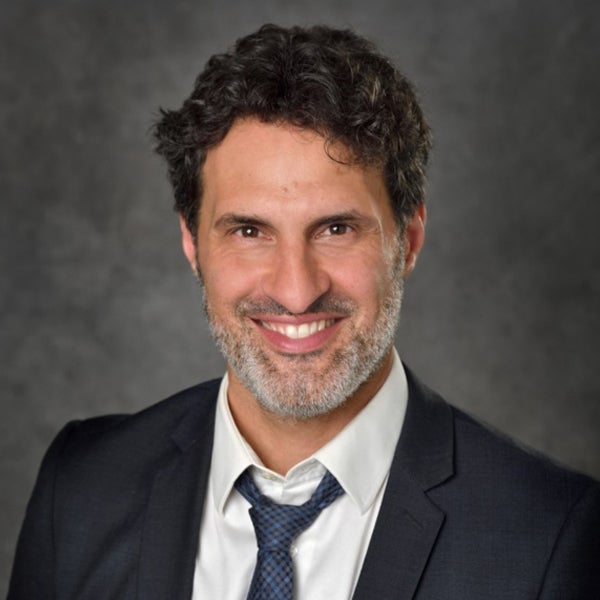
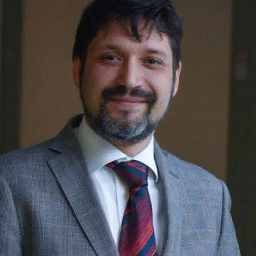
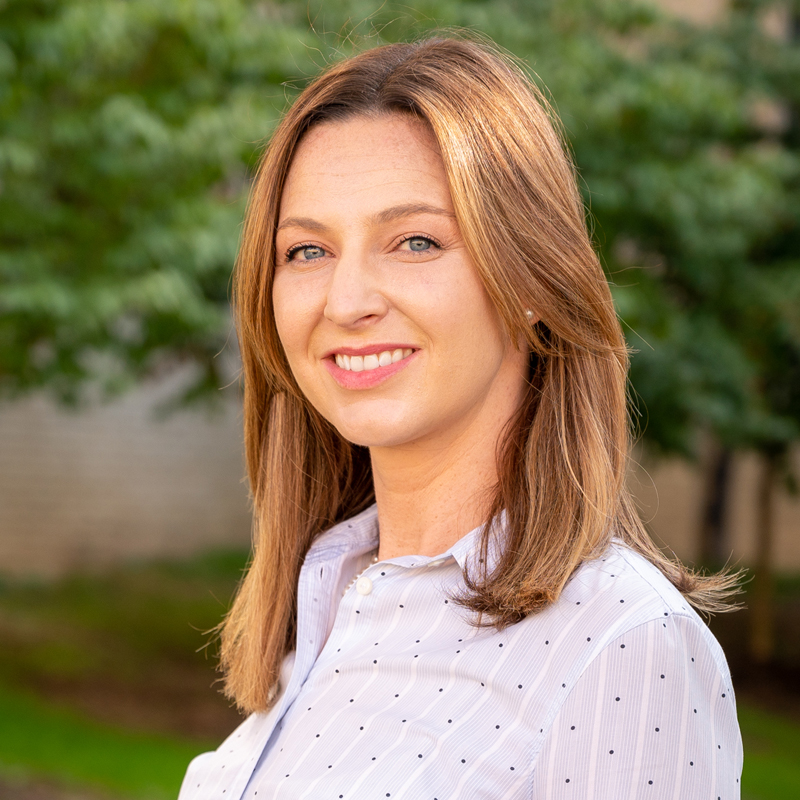
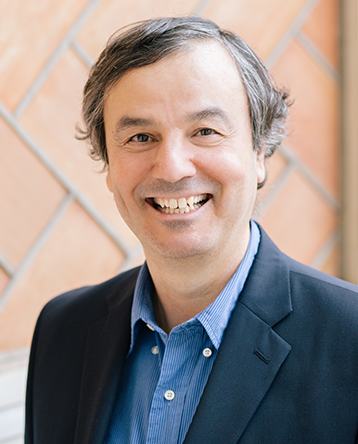
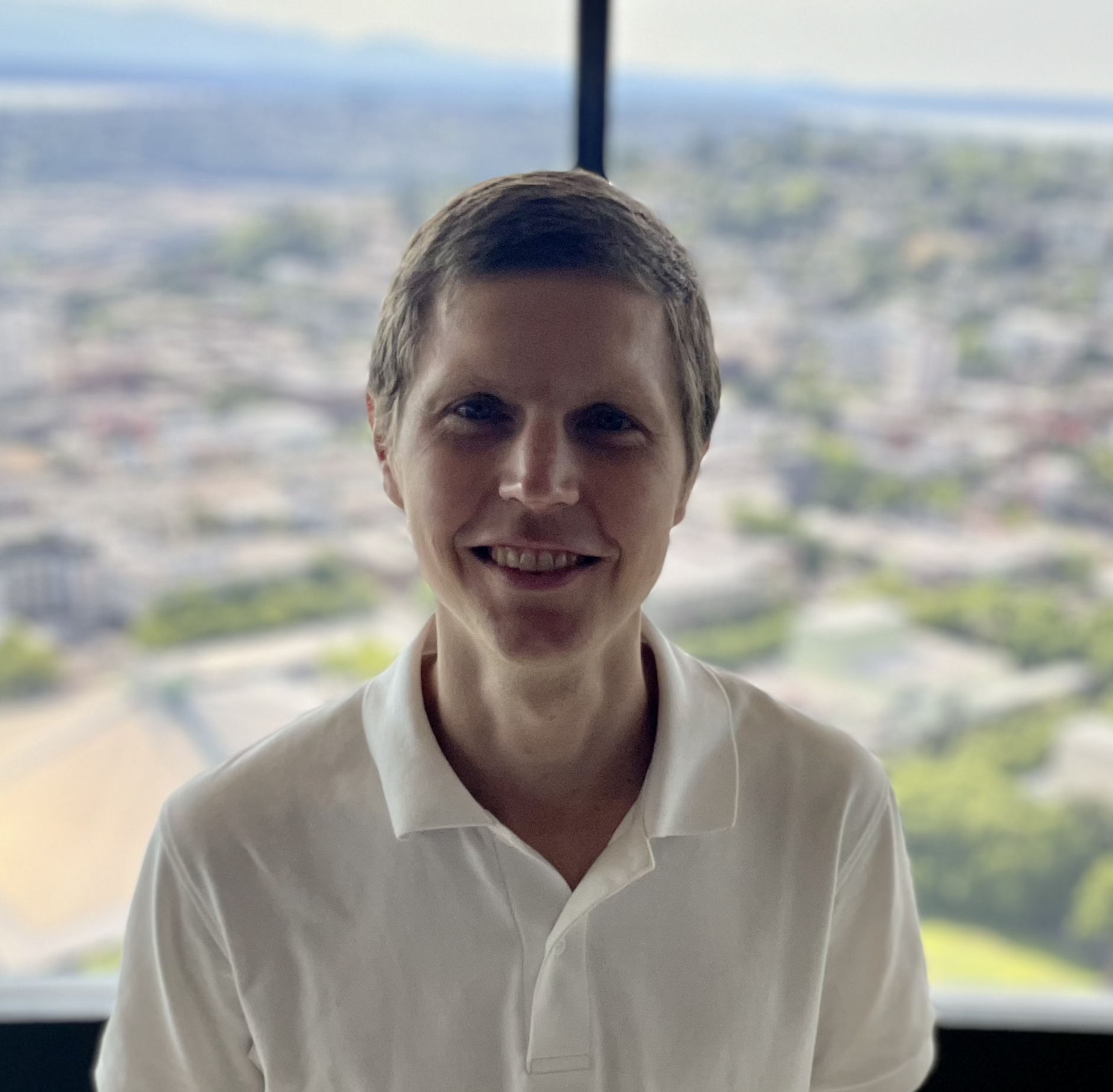
Frederi G. Viens is a Professor of Statistics at Rice University, where he leads research in probability theory, stochastic processes, and their applications to finance, climate science, and agro-ecology. Previously, he was a full professor at Michigan State University (2016–2022) and Purdue University (2000–2015), serving as Department Chair and Director of Actuarial Science. His work bridges theoretical mathematics with practical problems in agriculture, economics, and nuclear physics. Education: Ph.D. Mathematics, University of California, Irvine (1996) M.S. Mathematics, University of California, Irvine (1991) Maîtrise de Mathématiques Pures, Université de Paris VII, France (1991) Research Interests: Probability Theory & Stochastic Analysis Quantitative Finance & Actuarial Science Climate Science & Bayesian Statistics Agro-ecology & Agricultural Economics His collaborative projects include climate modeling, nuclear physics simulations, and sustainable crop diversity initiatives like the DRIVES network. Awards & Honors: Fellow of the Institute of Mathematical Statistics (2012) Franklin Fellow, U.S. State Department (2010) Purdue College of Science Research Award (2013) Grants & Collaborations: Funded by the NSF, USDA, and private donors, Viens has organized major conferences and serves on editorial boards for journals like Annals of Finance . He advises transnational research groups, including Sustainability Lake Chad , addressing agrarian sustainability in West Africa. Labs & Initiatives: Founding member of the DRIVES agro-ecology collaborative and moderator of the Seminar on Stochastic Processes.
Diane Guignard is an Assistant Professor in the Department of Mathematics and Statistics at the University of Ottawa. Her research focuses on numerical analysis, partial differential equations, and computational methods with applications to mechanics and stochastic systems. She holds a position in a leading mathematics department and can be contacted at dguignar@uOttawa.ca . Her research interests include finite element methods, model reduction, uncertainty quantification, and optimal transport-based mesh adaptation. She explores nonlinear approximation theories for high-dimensional anisotropic functions and develops computational frameworks for thin structures and colloidal flow simulations. Her work bridges numerical analysis with practical engineering challenges, emphasizing adaptive algorithms and error estimation techniques. Her recent publications (2021-2024) highlight contributions to goal-oriented mesh adaptation, stochastic field approximations on surfaces, and large deformation analyses of prestrained plates. These studies emphasize interdisciplinary approaches combining mathematical rigor with computational innovation. Dr. Guignard has not been explicitly noted for awards in the provided materials. Her advising record is currently unspecified, though her research group likely engages in advanced numerical methods and computational mechanics projects.
Leong Hou U, Ryan is an Associate Professor at the Faculty of Science and Technology, University of Macau, where he also serves as Head of the Centre for Data Science under the Institute of Collaborative Innovation. His work focuses on advancing data science methodologies and applications in large-scale and complex data environments. Education: Ph.D. in Computer Science, The University of Hong Kong, Hong Kong (2010) M.Sc. in E-Commerce Technology, University of Macau, Macau (2005) B.Sc. in Computer Science and Information Engineering, National Chi Nan University, Taiwan (2003) Dr. Leong's research interests center on large-scale data processing , spatial and spatio-temporal data analysis , graph data and graph neural networks , data visualization , crowdsourcing , reinforcement learning , and information retrieval . His work bridges theoretical advances with practical systems for handling modern data challenges across domains. The absence of listed publications prevents detailed analysis of article trends, but his research domains suggest strong engagement with artificial intelligence, data engineering, and human-in-the-loop systems. No scientific awards were listed in the provided text. Dr. Leong advises students and likely oversees research projects through his leadership at the Centre for Data Science, though no specific advisees or grants are mentioned. He plays a key role in shaping data science research direction at the University of Macau. He leads the Centre for Data Science at the Institute of Collaborative Innovation, which likely involves interdisciplinary teams working on data-driven innovation, possibly involving collaborations across faculties and industry partners.
Philip Bille is a Professor and Head of the Algorithms, Logic and Graphs section at the Department of Applied Mathematics and Computer Science, Technical University of Denmark (DTU), College of Engineering. His research centers on the design and analysis of efficient algorithms, particularly for string processing, compressed data, and data structures. His research interests lie at the intersection of theoretical computer science and practical applications. He focuses on algorithms , data structures , string indexing , pattern matching , and compressed computation . His work enables efficient querying and processing of large-scale, repetitive data, with applications in bioinformatics, intrusion detection, and green computing. The recent publications reflect a strong trend in developing space-efficient and fast algorithms for modern computational challenges. Key themes include compressed data structures , sliding window indexing , finite automata compression , and energy-aware matrix operations . These works demonstrate expertise in balancing theoretical rigor with practical performance. Philip Bille actively supervises multiple PhD students and leads several research projects. He contributes to advancing sustainable computing aligned with UN SDGs. His work integrates algorithmic theory with real-world efficiency. Supervises PhD projects on hierarchical compression, adaptive computation, and vector processor algorithms. Involved in research on green computing, compressed formats, and efficient data models. He is affiliated with the Algorithms, Logic and Graphs group at DTU, a hub for theoretical and applied algorithmic research. The team explores fundamental problems in data representation and processing, pushing the boundaries of what is computationally feasible in terms of time and space.
Aryeh Kontorovich is a Professor in the Computer Science Department at Ben-Gurion University. His research primarily focuses on theoretical machine learning, with expertise in probability, statistics, Markov chains, and metric spaces. His research interests span theoretical machine learning, with particular emphasis on: Probability theory and concentration inequalities Statistical learning theory Markov chains and mixing time estimation Metric space learning Kernel methods Sample compression schemes Professor Kontorovich's recent publications (2021-2025) demonstrate a continued focus on theoretical foundations of machine learning. His work shows strong trends in statistical estimation for Markov processes, distribution learning, metric space analysis, and sample compression. Many papers explore the intersection of probability theory and machine learning, particularly examining concentration inequalities, minimax optimality, and theoretical guarantees for learning algorithms. His research consistently bridges abstract mathematical theory with practical machine learning applications. Scientific awards and recognitions: Distinguished contribution award at MLG 2007 for "A Universal Kernel for Learning Regular Languages" Professor Kontorovich has advised numerous students and collaborated extensively with researchers in theoretical machine learning. His work spans both theoretical foundations and practical applications, with significant contributions to understanding the mathematical limits of learning algorithms. While specific grant information isn't provided in the source material, his extensive publication record in top venues suggests successful funding for his research programs. He maintains active collaborations with researchers worldwide, including prominent names like L. Gottlieb, D. Berend, and S. Hanneke.
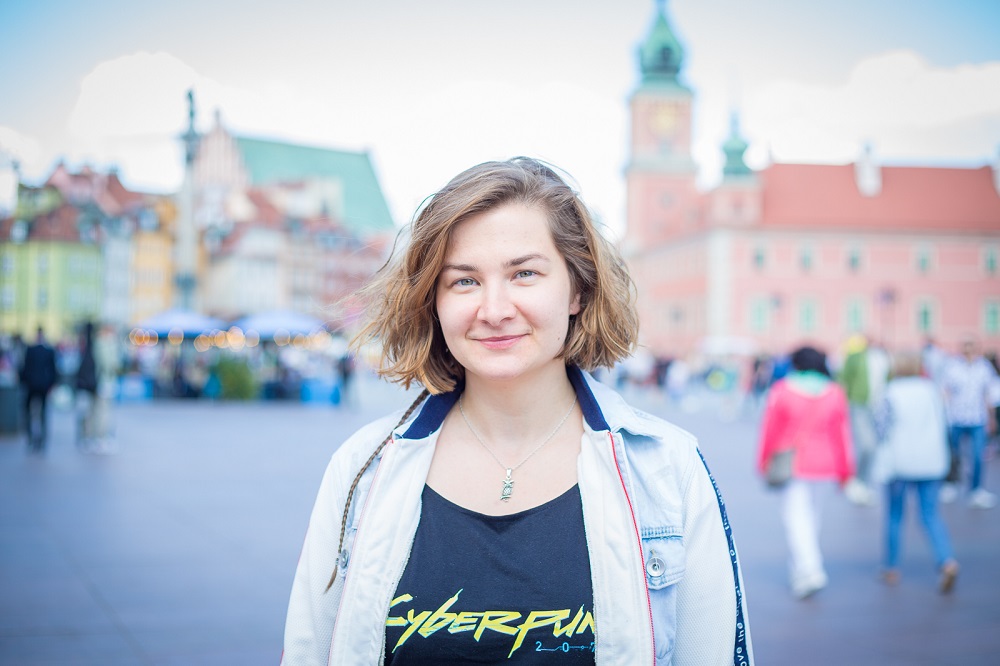
Anna Dawid-Lekowska is an Assistant Professor at the Leiden Institute of Advanced Computer Science (LIACS) and affiliated with the Leiden Institute of Physics (LION) at Leiden University, Netherlands. She leads a research group within the aQa group, focusing on the intersection of machine learning and quantum physics. Previously, she was a Research Fellow at the Center for Computational Quantum Physics, Flatiron Institute, New York. PhD in Physics and Photonics (joint, cotutelle), University of Warsaw & ICFO, Spain MSc in Quantum Chemistry, University of Warsaw BSc in Biotechnology, University of Warsaw Anna's research centers on interpretable machine learning for scientific discovery, particularly in quantum systems. She investigates how overparametrized models generalize, the role of loss landscape flatness, and double descent phenomena. Her work bridges deep learning with quantum simulations, aiming to detect quantum phase transitions and extract physical insights from trained models. She also explores ultracold molecules and novel quantum phases using simulation platforms. Her recent publications demonstrate a strong trend in applying machine learning to automate and interpret quantum experiments, such as detecting laser cooling schemes and understanding neural network initialization. The work emphasizes interpretability, aiming to make AI a transparent scientific tool rather than a black box. Anna has received significant recognition, including: 2022 FNP START laureate Participant in the 2024 Lindau Nobel Laureate Meeting She is actively mentoring and expanding her group, currently recruiting PhD students and postdoctoral researchers. Her work is supported by institutional affiliations with leading research centers and collaborations across Europe and the US. Anna also engages in science communication and education, having lectured at the Nordita Winter School on Machine Learning and Physics. She is involved in the aQa research group, which focuses on quantum algorithms and AI, fostering interdisciplinary collaboration between computer science and physics. Her lab integrates theoretical modeling, algorithm development, and applications to quantum experiments.
Guido Perboli is a Full Professor in the Department of Management and Production Engineering (DIGEP) at the Polytechnic University of Turin, where he also serves as Logistics Coordinator and Project Coordinator for activities supporting relationships with government bodies. He is a member of the Interdepartmental Center CARS@PoliTO (Center for Automotive Research and Sustainable Mobility) and serves as Director of the ICT for City Logistics and Enterprises (ICElab@Polito) research center, which he founded in 2016. His research interests span a broad range of topics including Operations Research, Logistics, Last-mile Delivery, Sustainable Logistics, Combinatorial Optimization, Stochastic Programming, Business Development, and Lean Business methodologies. His work particularly focuses on City Logistics, Green Logistics, and the application of emerging technologies like Blockchain and AI in supply chain management. He has developed GUEST, a Lean Business methodology for innovation processes from early idea definition to implementation. Professor Perboli's recent publications demonstrate a strong focus on urban logistics, last-mile delivery optimization, blockchain applications in supply chains, and the integration of AI techniques in transportation systems. His work shows an increasing trend toward interdisciplinary research that combines optimization methods with emerging technologies to address sustainable urban mobility challenges. Professional Recognition: CASE Best Paper award from IEEE Conference on Automation Science and Engineering (2011) Effective member of INFORMS (2019-present) Effective member of EURO (1995-present) Effective member of AIRO (1995-present) Associate Editor for Journal of Applied Research and Technology (2020-present) Associate Editor for Sustainability (2018-present) Professor Perboli actively advises PhD students and has supervised numerous research projects, including EU-funded initiatives like SINFONICA, HESTER, and 5G-LOGINNOV. He serves as Scientific Director for multiple commercial research projects focused on blockchain, IoT, and AI applications in logistics. Beyond academia, he is Chief Scientific Officer of Arisk S.p.A., a fintech company specializing in business crisis prediction using AI and machine learning. His research group, ICElab@Polito, focuses on two main areas supporting urban growth: logistics and enterprises. The center collaborates with numerous companies including Amazon, DHL, and FCA, addressing real-world challenges in urban logistics and supply chain management through innovative research approaches.
Cristiana De Filippis serves as Associate Professor in the Department of Mathematical, Physical and Computer Sciences at the University of Parma. Her academic journey includes a Bachelor's degree from the University of Torino (2014), Master's from University of Milano-Bicocca (2016), and PhD from the University of Oxford (2020), followed by a tenure-track position at Parma since 2021 and habilitation to full professorship in 2023. Her research focuses on Mathematical Analysis , particularly Regularity Theory for elliptic and parabolic partial differential equations and the Calculus of Variations . She investigates fundamental properties of solutions to nonlinear PDEs, including sharp growth conditions, nonuniform ellipticity, and double-phase functionals. Her work bridges abstract mathematical theory with applications in physics and engineering through rigorous analysis of solution behavior. Analysis of her 15 most recent publications reveals a concentrated research program in nonuniformly elliptic systems (2022-2025), double-phase variational problems (2023-2024), and gradient regularity under irregular coefficients (2020-2024). Key contributions include establishing sharp growth rates in Schauder theory and developing novel techniques for nearly linear growth conditions. European Mathematical Society Prize 2024 Bartolozzi Prize 2023 (Italian Mathematical Union) Iapichino Prize 2020 (Accademia dei Lincei) Premio per la Cultura Mediterranea 2023 G-Research Prize 2019 Forbes 100 Most Successful Italian Women 2023 European Mathematical Society Young Academy (inaugural cohort) Professor De Filippis has delivered invited lectures at prestigious institutions including Erwin Schrödinger Institute (2025), Charles University Prague (2024), and Accademia Nazionale dei Lincei (2022). She teaches Mathematical Analysis courses for Computer Science, Geological Sciences, and Management Engineering programs at undergraduate level. Her research is supported through multiple international collaborations, particularly with Giuseppe Mingione at Parma and researchers at European institutions.
Prof. Dr. Jörg Budde is a faculty member at the University of Bonn , affiliated with the Department of Economics . His academic rank is Professor , and he is actively engaged in research related to managerial accounting, performance measurement, and incentive contracts. Institute: Institute for Applied Microeconomics Email: joerg.budde@uni-bonn.de Contact: +49 228 73-9247 Budde’s research focuses on incentive design and performance evaluation in agency models, particularly under conditions of limited liability and distorted metrics. His work explores topics such as bonus pools , rank-order tournaments , and contractual frameworks that balance risk and incentive alignment. His publications span journals like Journal of Economics , Management Accounting Research , and Journal of Mathematical Economics , with a thematic emphasis on agency theory , information systems , and organizational behavior .
Associate Professor Lucy Chen is a faculty member at the NUS Business School , National University of Singapore, specializing in the Department of Analytics & Operations. With over 15 years at NUS, she bridges operations management and business analytics in her teaching and research. PhD and MSc in Operations Management from Cornell University Her research explores inventory management , supply chain dynamics , and the intersection of operations-marketing . Recent work investigates corporate behavior around quarterly targets, including publications like Supply Chain Performance with Target-Oriented Firms . She employs immersive teaching methods such as supply chain simulations and role-playing games to engage students. Lucy's Google Scholar profile reveals 15 years of contributions spanning: Strategic inventory optimization Behavioral aspects of supply chain decision-making Co-opetition models in service clusters Impact of financial turbulence on operations Cultural influences on inventory behavior Architectural innovations in balanced ordering systems In 2022, her research on target-oriented firms demonstrated how operational adjustments benefit trading partners more than focal companies. She actively mentors students in operations/supply chain management , emphasizing skill transferability to sectors like banking analytics and logistics consulting.
Robin Neumayer is an Assistant Professor in the Department of Mathematical Sciences at Carnegie Mellon University. Her research focuses on the intersection of calculus of variations, partial differential equations (PDE), and geometric analysis, with a particular emphasis on stability and regularity in geometric inequalities. Education: Ph.D. in Mathematics, University of Texas at Austin, supervised by Alessio Figalli and Francesco Maggi. Her work explores problems related to Sobolev inequalities, isoperimetric problems, scalar curvature, and free boundary phenomena. Recent publications highlight collaborations with leading researchers and address topics such as quantitative stability, anisotropic geometries, and nonlinear PDE. Scientific Awards and Fellowships: NSF Grant DMS-2155054 (2022-2025) RTG Postdoctoral Fellow at Northwestern University (2017-18, 2019-21) Institute for Advanced Study member (2018-19) She teaches courses such as Introduction to Differential Equations and maintains active research collaborations with institutions like the Center for Nonlinear Analysis.
Ozan K. Tonguz is a Professor in the Department of Electrical and Computer Engineering at Carnegie Mellon University's College of Engineering. He holds appointments with CyLab and the Carnegie Mellon-Portugal program, focusing on advanced research in telecommunications, networking, and intelligent transportation systems. His educational background includes: Ph.D. in Electrical Engineering from Rutgers University (1990) M.S. in Electrical Engineering from Rutgers University (1986) B.S. in Electronic Engineering from the University of Essex (1980) Tonguz's research spans telecommunications and networking with emphasis on vehicular networks, wireless communications, cybersecurity, and smart infrastructure systems. His work bridges theoretical networking concepts with practical transportation applications, particularly in vehicle-to-vehicle and vehicle-to-infrastructure communications. He has published approximately 300 papers in IEEE journals and conference proceedings and authored the book 'Ad Hoc Wireless Networks: A Communication-Theoretic Perspective' (Wiley, 2006). His recent publications demonstrate a strong focus on vehicular networks and intelligent transportation systems, with particular attention to traffic flow optimization, virtual traffic light systems, and the application of wireless communication technologies to solve urban transportation challenges. His research has evolved from fundamental networking concepts to applied transportation solutions with real-world implementation potential. Tonguz actively mentors PhD students and has founded Virtual Traffic Lights, LLC, a CMU spinoff company addressing transportation problems through innovative communication paradigms. His work has received attention from IEEE Spectrum and other technical publications, highlighting the practical significance of his research in intelligent transportation systems. He leads research efforts in vehicular ad hoc networks, wireless ad hoc and sensor networks, self-organizing networks, smart grid applications, and security. His Virtual Traffic Lights technology has demonstrated potential to increase urban traffic flows by 60% during rush hours, with implications for reducing commute times, mitigating congestion, and supporting greener environments.
Matthew J. Graham is a Research Professor of Astronomy at the California Institute of Technology (Caltech), serving as the Project Scientist for the Zwicky Transient Facility (ZTF). His work bridges astronomy, machine learning, and data science, focusing on time-domain sky surveys that produce hundreds of thousands of public transient alerts per night. Previously, he has worked on the Catalina Real-time Transient Survey (CRTS), NOAO DataLab, Virtual Observatory, and Palomar-Quest Digital Sky Survey. Dr. Graham's primary research interests involve applying machine learning and advanced statistical methodologies to astrophysical problems, particularly the variability of quasars and other stochastic time series. His work addresses the unprecedented data volumes generated by 21st-century astronomy while expanding our ability to work with complex information systems beyond simple correlations. His current projects include real-time low latency inferencing via the NSF-funded A3D3 Institute, reinforcement learning for optimizing astrophysical follow-up campaigns, neural differential models for supermassive black hole variability, and functional analysis of multivariate time series. Analysis of Graham's recent publications reveals a strong focus on time-domain astronomy, particularly leveraging the capabilities of the Zwicky Transient Facility. His work spans multiple areas including gravitational wave counterpart identification, active galactic nuclei variability, supernova characterization, and machine learning applications for transient detection. A notable trend is the integration of artificial intelligence techniques to handle the massive data streams from modern sky surveys, enabling real-time analysis and decision-making that would be impossible with traditional methods. Dr. Graham has been instrumental in developing infrastructure for time-domain astronomy, including the alert distribution system for ZTF and data processing pipelines for handling massive transient datasets. His work on the Catalina Real-time Transient Survey established important methodologies for identifying variable and transient sources that continue to influence the field. As Project Scientist for ZTF, Graham leads a major international collaboration involving Caltech, IPAC, and numerous partner institutions worldwide. The facility represents a significant advancement in time-domain astronomy, providing unprecedented coverage of the dynamic sky and enabling discoveries across multiple areas of astrophysics.
Professor David D. Yao is a Senior Fellow at the Hong Kong Institute for Advanced Study, City University of Hong Kong, and a full Professor of Industrial Engineering and Operations Research at Columbia University , where he has held distinguished chairs since 1988. A member of the US National Academy of Engineering and Fellow of IEEE, INFORMS, and SIAM, his career spans over four decades with groundbreaking contributions to stochastic systems, supply chain optimization, healthcare operations, and financial engineering. Ph.D. (1983), M.A.Sc. (1981) from the University of Toronto Academic appointments: Assistant Professor at Columbia (1983-86), Associate Professor at Harvard (1986-88), Professor at Columbia (1988–present) Research Interests center on stochastic modeling, optimization of complex systems, and risk management , with applications to healthcare logistics, semiconductor manufacturing, internet traffic modeling, and financial networks. He has pioneered theories in polymatroid optimization, dynamic scheduling, and systemic risk analysis. Recent Trends in Publications emphasize financial systemic risk via network models , asymptotic inventory optimization , healthcare resource allocation , and multi-bottleneck stochastic networks , reflecting his interdisciplinary approach. Scientific Awards include the 2024 Presidential Award for Outstanding Teaching, 2015 Markov Lecture, 2015 National Academy of Engineering membership, 2005 INFORMS and IBM Faculty Awards, 2003 SIAM Outstanding Paper Prize, and 1999 Franz Edelman Award. Grant Leadership spans $302,875 NSF-CMMI-1462495 for systemic risk modeling to $20.45M Hong Kong RGC Theme-Based Grant for healthcare systems. His editorial roles and co-founding of Columbia’s Center for Applied Probability and the Financial and Business Analytics Center underscore his institutional impact. Patents cover semiconductor job configuration, warranty inspection systems, and inventory optimization, with 8 US patents. He has supervised over 15 postdoctoral fellows and advised 20+ doctoral students.
Sean Welleck is an Assistant Professor at Carnegie Mellon University's School of Computer Science, specifically within the Language Technologies Institute (LTI). He leads the L3 Lab and serves as an advisor for the AI for Math Fund. His academic journey includes a PhD from New York University under Kyunghyun Cho and postdoctoral positions at the Allen Institute for Artificial Intelligence and the University of Washington with Yejin Choi. Dr. Welleck's educational background shows a strong foundation in computer science. He earned his PhD in Computer Science from New York University, where he worked under the mentorship of Kyunghyun Cho and Zheng Zhang. Prior to this, he completed his MSE and BSE in Computer Science from the University of Pennsylvania, demonstrating a long-standing commitment to the field. Dr. Welleck's research focuses on bridging informal and formal reasoning with AI, with particular emphasis on developing learning, inference, and evaluation algorithms for large language models. His work spans multiple cutting-edge areas including mathematical reasoning , code generation , inference algorithms , and AI reasoning agents . A significant portion of his recent work involves combining AI with formal methods for mathematics, where he has developed frameworks like Llemma (an open-source language model for mathematical reasoning) and meta-generation (for inference-time algorithms). His research is characterized by a strong theoretical foundation coupled with practical applications that push the boundaries of what AI systems can achieve in formal reasoning domains. Analysis of Dr. Welleck's recent publications reveals a clear research trajectory focused on enhancing language models' capabilities in formal reasoning and mathematical problem-solving. His work demonstrates an evolution from foundational research in neural text generation to increasingly sophisticated approaches that integrate formal methods with deep learning. Key trends include the development of inference-time algorithms that improve model performance without additional training, frameworks for mathematical reasoning that connect informal and formal proofs, and novel evaluation methodologies for language models. His publications consistently appear in top-tier conferences including NeurIPS, ICLR, ICML, and ACL, reflecting the high impact of his contributions to the field. Dr. Welleck's scientific achievements have been recognized with several prestigious awards: NAACL 2025 Best Paper Award ICLR 2025 Oral Presentation (Top 2%) ICLR 2025 Spotlight Presentation (Top 5%) NeurIPS 2021 Outstanding Paper Award (Top 0.1%) for MAUVE NVIDIA AI Labs Pioneering Research Award (2017 and 2018) As an educator and mentor, Dr. Welleck actively guides the next generation of AI researchers. He currently advises multiple PhD students including Pranjal Aggarwal, Weihua Du, Andre He, and Seungone Kim (some co-advised with other faculty), along with MS students Riyaz Ahuja, Jiewen Hu, Qinyue Tan, and Thomas Zhu, and undergraduate Tate Rowney. At CMU, he teaches advanced courses such as Neural Code Generation and Advanced NLP, and has previously taught at New York University and the University of Washington. His commitment to education extends to creating resources like the Thesis Review Podcast and developing tutorials on neural theorem proving that have been presented at major conferences. Dr. Welleck leads the L3 Lab at CMU, which focuses on the intersection of language, learning, and logic. The lab brings together students and researchers to tackle challenging problems in AI reasoning, with particular emphasis on mathematical reasoning and code generation. Recent initiatives include the development of Llemma, an open-source language model specialized for mathematical reasoning, and work on inference-time algorithms that enable language models to improve their performance through additional computation during inference rather than through additional training.