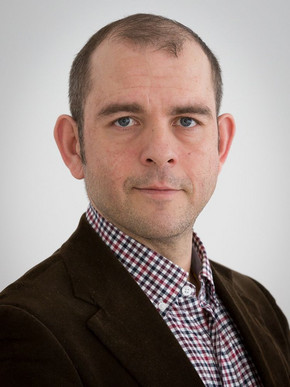
Johannes Oetsch is a researcher at TU Wien's Forschungsbereich Knowledge Based Systems within the Faculty of Informatics. His work focuses on Answer Set Programming (ASP) , neuro-symbolic computing , and visual question answering systems . He holds a Diplom-Ingenieur (Dipl.-Ing.) and a Doctor of Technical Sciences (Dr.techn.) in informatics. Key research areas include: Integration of large language models with symbolic reasoning frameworks Optimization techniques in ASP for scheduling problems Explainability mechanisms for neuro-symbolic systems Recent work emphasizes visual question answering using graph-based representations and contrastive explanation methods. He has contributed to the development of ALASPO , an adaptive optimization framework for ASP solvers. His research also explores applications in manufacturing scheduling and automated testing of logic programs. Notable contributions include: Neuro-symbolic pipelines combining ASP with vision-language models Lexicographical makespan optimization in parallel machine scheduling Large-neighbourhood search strategies for ASP-based optimization
Michael Konstantin Heckmann holds an M.Sc. and works as a researcher at the University of Applied Sciences Upper Austria, specifically within the Research Center Hagenberg and the Center of Excellence for Smart Production. His work focuses on Digital Transformation and Information & Communications Technology with particular emphasis on optimization algorithms for production systems. His research interests center around dynamic production scheduling, genetic algorithms, convergence analysis, and surrogate modeling for tolerance chain analysis. Heckmann has made significant contributions to the field of mathematical optimization as applied to manufacturing systems, with particular focus on how algorithms behave in dynamic environments where production requirements change over time. His scholarly output demonstrates consistent focus on optimization problems in production scheduling, with recent work examining how genetic algorithms converge when applied to dynamic production environments and how learning techniques can be incorporated for self-adaptation in scheduling systems. His research also extends to precision engineering applications through surrogate modeling for tolerance chain analysis. h-index: 2 Citations: 1 Heckmann has been actively involved in research collaborations, serving as a Co-Investigator in the Josef Ressel Center for Adaptive Optimization in Dynamic Environments project (2019-2024), working alongside researchers including Stefan Wagner, Bernhard Werth, and Michael Affenzeller. His work bridges theoretical optimization techniques with practical manufacturing applications.
Peter Kirschenhofer holds the Chair of Mathematics, Statistics and Geometry at the Graz University of Technology, within the Faculty of Mathematics, Physics and Geodesy. His research focuses on number theory, combinatorics, discrete mathematics, and polynomial analysis with applications to data structures. He has published 15 research outputs between 2005 and 2019, including peer-reviewed articles in journals like Monatshefte für Mathematik and INTEGERS . His work often explores distribution results of polynomials, Catalan sequences, and theoretical mathematical frameworks. Kirschenhofer has actively participated in academic events such as the 'Numeration and Substitution 2012' conference and the 'Seminar des steirischen Doktoratskollegs'. He contributed to academic recognition efforts, including a laudatio for Wilfried Imrich and an obituary for Gerd Baron. His research aligns with the university's focus on discrete mathematics and theoretical computer science.
Gemma de les Coves is an ICREA Research Professor at the Departament d'Enginyeria of Universitat Pompeu Fabra (Barcelona) and holds an Associate Professorship at the University of Innsbruck (Austria). Her research bridges quantum physics, mathematical theory, and philosophy, focusing on universality, undecidability, and interdisciplinary frameworks. She leads the Mathematical Quantum Physics research group in Innsbruck and has received prestigious awards including the START Prize (2020) and the ICREA professorship (2024). Education & Academic Path: PhD in Theoretical Physics (University of Innsbruck, 2011) Postdoc at Max Planck Institute for Quantum Optics (2011–2016) Assistant Professor (University of Innsbruck, 2018–2023) ICREA Research Professor (2024–present) Research Interests: Universality in physical and computational systems Undecidability in quantum models and formal languages Mathematical foundations of quantum theory Interdisciplinary connections between physics, philosophy, and culture Awards & Recognition: START Prize (FWF, 2020) Elise Richter Fellowship (2016–2018) Emmy Noether Visiting Fellowship (Perimeter Institute, 2016) Advisees & Grants: Supervised PhD students include Tobias Reinhart, Andreas Klingler, and Mirte van der Eyden Recipient of the START Prize grant (FWF) Labs & Outreach: Runs the Mathematical Quantum Physics group at Innsbruck Active in science communication via YouTube, podcasts, and public lectures
Fabian Kleon Zehetgruber is a Project Assistant at the Institute of Analysis and Scientific Computing, Vienna University of Technology (TU Wien), since November 2023, working under the supervision of Univ. Prof. Michael Feischl. His research explores the integration of artificial neural networks with numerical mathematics. His educational background includes: Master of Science in Mathematical Modeling from Sorbonne Université Paris (completed September 2023) Bachelor of Science in Technical Mathematics from TU Wien (2021) His research focuses on Numerical Mathematics , Artificial Neural Networks , and Partial Differential Equations , specifically investigating how neural networks can solve complex computational problems in scientific computing. This work bridges deep learning with classical numerical analysis techniques. His recent publications (2024-2025) reveal a strong trend toward developing neural network frameworks for operator learning and optimization in numerical mathematics, addressing computational hardness and hierarchical training methodologies. No scientific awards are documented in the provided information. As a supervised Project Assistant, he is actively engaged in doctoral-level research within TU Wien's institutional framework, though specific grants are not detailed. His role involves collaborative work under Prof. Feischl's guidance. He contributes to the Computational PDEs research group within TU Wien's Numerical Analysis unit, focusing on numerical methods for partial differential equations and their intersection with machine learning.
Elisa Davoli is a Professor at TU Wien, affiliated with the Multiscale Calculus of Variations Research Group (E101-01-3). Her work focuses on calculus of variations, micromagnetics, and material science, with applications in phase transitions, nonlocal models, and stochastic homogenization. She collaborates extensively with researchers such as Irene Fonseca, Manuel Friedrich, and Ulisse Stefanelli. Her recent research includes studies on fractional Cahn-Hilliard systems, sharp-interface limits, and optimal control in nonlocal frameworks. She also investigates stochastic homogenization in micromagnetics and structural changes in nonlocal denoising models through bilevel learning. Key contributions include existence results in large-strain magnetoelasticity, two-scale convergence methods for composite materials, and the derivation of linearized fracture models under non-interpenetration constraints. Her work bridges mathematical analysis with applications in solid mechanics and image processing.
Kevin Sturm is an Associate Professor at TU Wien's Department of Numerical Analysis. His research focuses on topology optimization, partial differential equations on surfaces, and their applications in engineering and biomedical contexts. He leads projects involving topological derivatives, shape optimization algorithms, and numerical methods for complex systems. Key research interests include developing automated computational techniques for topological sensitivity analysis, with applications in nonlinear elasticity, reaction-diffusion systems, and structural mechanics. His work bridges theoretical mathematics (e.g., variational inequalities) with practical engineering problems (e.g., actuator design, membrane mechanics). Recent publications highlight advancements in Lagrangian-based optimization frameworks, adjoint methods for high-order derivatives, and numerical implementations in software like NGSolve. He advises graduate students Albert Vlasak and Philipp Wörle on shape optimization for parabolic problems and variational inequalities. His lab contributes to interdisciplinary projects at the intersection of computational mathematics, material science, and biomedical engineering. Current efforts focus on optimizing geometries for vibration control, membrane behavior, and imaging modalities like electrical impedance tomography.
Yllka Velaj is an Assistant Professor in the Faculty of Computer Science, affiliated with the Research Group on Data Mining and Machine Learning. Her research focuses on machine learning, data mining, and network analysis, with applications in social networks, recommendation systems, and AI-enhanced education. She actively contributes to advancing methodologies for uncertain graphs, game-based learning in IT project management, and educational technologies targeting non-computer science students. Her scholarly activities include organizing events such as the Austrian Computer Science Day 2024. Her work bridges theoretical computer science with practical applications, emphasizing learner-centered approaches in data science education and innovative solutions for complex network problems. Key research areas include node embedding, cluster analysis, and algorithm design for social influence maximization. She collaborates on projects addressing multi-relational graph clustering, semi-supervised learning, and optimizing communication in datacenters.
Prof. Margaretha Gansterer is a full professor and Dean of the Faculty of Economics and Law at Alpen-Adria-Universität Klagenfurt. She leads the Institute for Production, Energy and Environmental Management and the Department of Production Management and Logistics. Her work focuses on production economics, logistics optimization, and collaborative transportation systems. Key research areas include supply chain resilience, vehicle routing problems, and disaster response logistics. Her research addresses challenges such as decentralized production planning, automated parcel locker networks, and emergency resource allocation during crises. Notable contributions include methodologies for demand uncertainty mitigation, horizontal collaboration in transportation, and optimization of multi-agent systems. Prof. Gansterer's recent publications (2023–2025) emphasize pandemic-related logistics, such as SARS-CoV-2 testing strategies in healthcare settings and contingency planning for driver absenteeism. She also explores innovative applications of combinatorial auctions and artificial intelligence in logistics decision-making. Research Priorities: Business Administration, Logistics, Production Management Leadership Roles: Senate Dean, Institute Head, Department Head Key Facilities: Production Management and Logistics Department (Campus South Wing East) Her work integrates simulation-based optimization with real-world supply chain modeling, contributing to both academic and practical advancements in operational efficiency and sustainability.
Bettina Klinz is an Associate Professor at the Institute for Discrete Mathematics within Graz University of Technology , Austria. Her academic background includes a Diplom Ingenieur (M.Sc.) and Dr. techn. (Ph.D.) in Technical Mathematics from TU Graz, with a habilitation in Applied Mathematics. Research Interests: Combinatorial optimization, network flow problems, graph algorithms, and efficiently solvable cases of NP-hard optimization problems. Teaching: Regular instructor of courses like Combinatorial Optimization 1 and Optimization 1 , focusing on polynomially solvable problems, matroids, shortest paths, and flow problems. Supervision: Advised numerous diploma/master's and Ph.D. theses on topics ranging from spanning trees to nurse shift scheduling and MAX-SAT algorithms. Contact: Emails klinz@opt.math.tu-graz.ac.at (primary) and bettina.klinz@tugraz.at , with office in Steyrergasse 30/II, Graz.
Yurii Malitskyi is an Assistant Professor at the Faculty of Mathematics , University of Vienna , affiliated with the Department of Mathematics . His research focuses on optimization algorithms, machine learning, and wireless communication systems.
Mária Ercsey-Ravasz is a Researcher at Babes-Bolyai University and a member of the Transylvanian Institute of Neuroscience in Romania. She holds a joint Ph.D. in Physics from Babes-Bolyai University and Information Technology (infobionics) from Péter Pázmány Catholic University, Budapest, Hungary (2008). Her research spans network science, nonlinear dynamics, and analog computing, with a focus on applications in neuroscience and optimization problems. Education: B.Sc. and M.Sc. in Physics from Babes-Bolyai University Joint Ph.D. in Physics and Information Technology (infobionics) Her work includes over 46 ISI publications and 1,700+ citations (h-index: 18). She has been recognized with prestigious awards such as the Marie Curie Fellowship , UNESCO-L’Oreal National Fellowship , and multiple honors from the Hungarian and Romanian Academies of Sciences. Scientific Awards: Junior Bolyai Prize (2003) Award of Young Researchers (Transylvanian Committee of the Hungarian Academy of Sciences) Marie Curie Fellowship (2012-2014) UNESCO-L’Oreal National Fellowship (2013) Constantin Miculescu Award (Romanian Academy of Sciences, 2015) QP Award for Young Researchers (Hungarian Academy of Sciences, 2019) She is also a member of the Hungarian Young Academy , contributing to interdisciplinary research at the intersection of physics, neuroscience, and computational science.
Klaus Doschek-Held is a Professor affiliated with the Chair of Thermal Processing Technology , focusing on metallurgical processes and waste valorisation. His research spans lithium-ion battery recycling, slag upcycling, and sustainable construction materials. Key collaborations include institutions like University of Leuven , Chair of Waste Processing Technology , and Christian-Doppler Laboratories . Research activities emphasize circular economy principles, with publications in Journal of Environmental Chemical Engineering , Results in Materials , and symposium proceedings. His work bridges pyrometallurgy, biohydrometallurgy, and AI-driven waste management. Recent projects include GECCO 2, a research lab for eco-friendly residual building materials, and investigations into phosphide formation in industrial slags. He actively presents at conferences like the Slag Valorisation Symposium .
Andreas Mild serves as Associate Professor and Deputy Head of Institute at the Institute for Production Management within the Department of Information Systems and Operations Management at Vienna University of Economics and Business (WU). His academic career spans over two decades with continuous research and teaching activities at WU, where he completed both his doctoral and habilitation degrees in Social Science and Economics. Dr. Mild's research focuses on quantitative approaches to business problems, particularly in new product development, revenue management, and decision support systems. His work bridges theoretical models with practical applications, especially in retailing and e-commerce contexts. Recent research has increasingly focused on the intersection of data science, artificial intelligence, and operations management, with significant contributions to understanding e-grocery operations and prediction markets. His publication record shows consistent scholarly output across top journals in operations research and management science, with recent work concentrating on food waste reduction in e-grocery systems, consumer preference modeling, and efficient last-mile delivery solutions. These publications demonstrate his ability to address contemporary challenges in retail operations through rigorous quantitative methods. Among his notable recognitions are the VHB Best Paper Award (2008) and multiple finalist positions for prestigious awards including the INFORMS Society for Marketing Science Practice Prize (2005, 2006) and the Franz Edelman Award for Achievement in Operations Research (2006). Dr. Mild maintains an active research agenda with current projects exploring the potential of Large Language Models for HR documentation (2025) and automated job description generation (2024), demonstrating his ability to adapt research focus to emerging technological trends while maintaining core expertise in decision support systems. His international teaching experience across Europe, Asia, and Australia reflects a global perspective in his academic work. His research activities are closely tied to practical business applications, with collaborations spanning multiple institutions and industries, particularly in the retail and logistics sectors where his work on e-grocery operations has gained significant attention.
Aleksandar Borković is a Researcher at the Institute of Structural Mechanics , Graz University of Technology. His work focuses on advanced computational methods in structural engineering, particularly isogeometric analysis, finite strip modeling, and van der Waals interactions in slender structures. Department: Institute of Structural Mechanics Email: aborkovic@tugraz.at His research bridges theoretical mechanics and practical engineering applications, addressing nonlinear dynamics, contact mechanics, and geometrically exact formulations. Recent publications highlight innovative approaches to modeling molecular interactions in fiber systems and optimizing computational efficiency for structural simulations. The 15 most recent articles demonstrate expertise in: Van der Waals attraction in curved beams Geometrically exact isogeometric formulations Finite strip method for stiffened plates Contact dynamics in beam-to-beam interactions Nonlinear stability analysis of thin-walled structures Moving load simulations in spatial beams He has also contributed to educational software development for structural analysis, emphasizing real-time visualization and numerical accuracy.