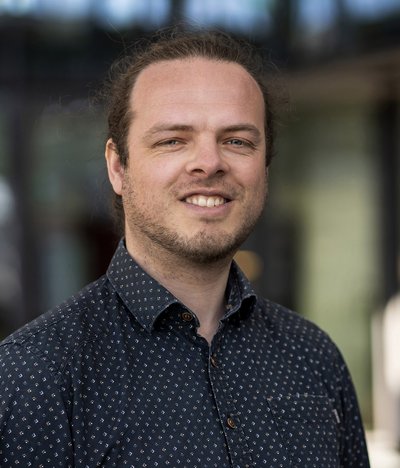
Thijs M.M. Laarhoven is a researcher in the Coding Theory and Cryptology group within the Mathematics and Computer Science department at the Eindhoven University of Technology (TU/e) . He completed his PhD in 2016 with honors and previously worked at the IBM Research laboratory in Zurich, Switzerland. PhD in Cryptography, TU/e (2016) Master’s in Mathematics, TU/e (2011) Bachelor’s in Mathematics, TU/e (2009) His research focuses on cryptographic algorithms, lattice-based cryptography, quantum computing, and nearest neighbor search techniques. He has made significant contributions to angular locality-sensitive hashing and lattice sieving algorithms . His publications highlight advancements in time-space trade-offs for approximate near neighbors and quantum optimization of lattice-based problems. His awards include the NWO Veni Grant (2018) and multiple Best Paper Awards (2012, 2014, 2015).
Sandra Bellekom is a Lecturer-researcher at Hanze University of Applied Sciences, working within the Entrance – Center of Expertise Energy. Her work focuses on system integration in the energy transition, with particular expertise in renewable energy systems, solar power optimization, and smart grid technology. She contributes significantly to research projects related to sustainable energy solutions and environmental systems analysis. Education: Ph.D. in Electrical Engineering from Delft University of Technology (1993-1998) Master's degree in Energy and Environmental Sciences, cum laude, from University of Groningen (2002-2005) Basic Teaching Qualification (BKO) from University of Groningen (2010-2011) Master's degree in Electrical Engineering (ir), cum laude, from Delft University of Technology (1989-1993) Sandra Bellekom's research interests span the critical areas of energy transition and sustainable systems. Her work emphasizes practical applications of renewable energy technologies, particularly focusing on system integration challenges. She investigates how solar energy systems perform under real-world conditions, examining factors like panel contamination and cleaning effectiveness. Her research also extends to hydrogen energy systems, smart grid integration, and the economic optimization of renewable energy solutions. Through her work, she addresses key challenges in making the energy transition technically feasible and economically viable, with a strong focus on data-driven analysis and system modeling. Her recent publications (2019-2025) demonstrate a clear trend toward applied research in solar energy optimization and hydrogen systems. The research shows increasing focus on practical field studies examining how real-world factors like bird droppings, dust, and other contaminants affect solar panel performance. There's also a notable shift toward system-level analysis, particularly in hydrogen energy configuration and the integration of multiple renewable sources. Her work consistently bridges technical analysis with practical implementation considerations, making it highly relevant for industry applications. Sandra actively participates in multiple research projects including 'Effect of pollution and cleaning of solar parks,' 'Hydrogen Works,' and studies on sensible heat storage systems. Her collaborative approach is evident in her numerous co-authored publications across various energy domains. While specific mentoring relationships aren't detailed in the available information, her background includes supervising master's students during previous academic positions. Her research laboratory and team work primarily through the Entrance – Center of Expertise Energy, focusing on practical field studies and system modeling. Current projects involve monitoring solar parks across the Netherlands, developing hydrogen configuration tools, and optimizing energy storage solutions for buildings. The team employs a combination of field measurements, data analysis, and system modeling to address real-world energy challenges.
Erwin W. Hans is a Full Professor at the University of Twente, affiliated with the TechMed Centre and the Department of Industrial Engineering & Business Information Systems. He co-founded the Center for Healthcare Operations Improvement & Research (CHOIR) and specializes in healthcare operations management, focusing on capacity management, planning, and scheduling. He lectures in graduate and undergraduate programs and contributes to the UN Sustainable Development Goals (SDG4: Quality Education). Educational Background: PhD in Resource Loading by Branch-and-Price Techniques (University of Twente, 2001) Master in ELMA: Model of a Liberalized Electricity Market (University of Twente, 1996) His research applies operations research methodologies to healthcare challenges, including nurse allocation, hospital resource management, and organizational resilience. Recent work emphasizes stochastic scheduling, simulation-optimization, and data-driven capacity planning. Scientific Awards: Best Student Advocate Award for the Health Science program (2025) Canadian OR Society Practice Prize (2012) Central Education Award: Best Lecturer at University of Twente (2015) Decentral Education Prize (IEM Program, 2019) Decentral Education Prize (IEM Program, 2007) Hans supervises academic research and organizes conferences like ORAHS 2012. He serves as an editor for Operations Research for Health Care and leads the CHOIR PhD Summer School.
Alain Hecq is a Full Professor in the department of QE Econometrics at the School of Business and Economics, Maastricht University. His research focuses on econometric methodologies, particularly in time series analysis, noncausal models, and financial econometrics. He has contributed significantly to the understanding of volatility dynamics, cryptocurrency markets, and inflation targeting regimes. His work often addresses policy-relevant questions in macroeconomics and financial markets. Key research interests include mixed causal-noncausal autoregressive models, volatility modeling with MARMA-GARCH frameworks, and the application of these techniques to real-world phenomena such as oil price bubbles and cryptocurrency volatility. He has also explored the credibility of central banking policies during crises, such as the Brazilian inflation-targeting regime during the pandemic. His recent work emphasizes methodological advancements in high-dimensional time series analysis, including spectral estimation, hierarchical regularizers for mixed-frequency data, and reduced-rank matrix autoregressive models. These contributions reflect a blend of theoretical rigor and practical applicability in addressing complex economic and financial problems. While no formal awards are listed, his extensive publication record and focus on cutting-edge econometric techniques underscore his scholarly impact. Advising and grant activities are not detailed in the provided information, but his research demonstrates sustained engagement with both academic and policy-oriented audiences.
Stella Kapodistria is an Associate Professor at Eindhoven University of Technology's Department of Mathematics and Computer Science, specializing in Stochastic Operations Research. She holds roles as EAISI High Tech Systems Associate Professor and editorial board member of journals like MCAP and PEIS. Her research focuses on data-driven decision-making, stochastic systems optimization, and maintenance policies, with applications in renewable energy, critical infrastructure, and cryptocurrency networks. She has secured grants including NWA-ORC, NWO Big Data, and TKI WoZ, and collaborates with industry partners in the Brainport region. Education: BSc (2003), MSc (2006, Hons.), and PhD (2009, summa cum laude) in Mathematics from the University of Athens. Postdoc at TU/e, followed by roles at Groningen University and TU/e's Stochastic Operations Research group. Teaching includes courses on Optimal Decision Making, Stochastic Performance Modeling, and Financial Mathematics. Research interests emphasize real-time learning, system resilience, and scalable algorithms for complex networks. Recent work addresses maintenance logistics, blockchain confirmation times, and wind energy prediction. She has published over 40 peer-reviewed articles and contributed to the 4TU Resilience Engineering Center. Awards include editorial leadership roles and grant funding. Advised 32 academic works and oversees industrial projects bridging theory and practice. Her labs and collaborations focus on adaptive systems, predictive analytics, and sustainable engineering solutions.
Michiel E. Hochstenbach is an Associate Professor at Eindhoven University of Technology (TU/e), affiliated with the EAISI High Tech Systems and EAISI Foundational initiatives. He holds positions in the Department of Mathematics within the School of Mathematics and Computer Science. His research focuses on numerical linear algebra, ill-posed problems, and computational methods. Hochstenbach earned his PhD from Utrecht University (2003) and held roles at Düsseldorf University and Case Western Reserve University before joining TU/e in 2006. His work spans numerical analysis, scientific computing, and software development for numerical algorithms. He has secured grants including an NSF (2004–2007) and NWO Vidi (2012–2017). His research group advises PhD students who have also received awards for their contributions. Key research areas include matrix computations, inverse problems, and optimization techniques. Recent publications address subspace methods, gradient algorithms, and matrix factorization innovations. He is an editorial board member of several journals and actively contributes to interdisciplinary computational science projects. Notable awards include the NWO Vidi Award (2011) recognizing his rapid advancements in matrix methods. His teaching includes courses on calculus, linear algebra, and mathematics fundamentals. Hochstenbach collaborates internationally, contributing to computational mathematics and sustainable development through algorithmic efficiency.
Clemens V. Verhoosel is an Associate Professor in Computational Methods for Model- and Data-Driven Engineering at Eindhoven University of Technology (TU/e). He holds positions in the Department of Mechanical Engineering under the Energy Technology and Fluid Dynamics section, and is affiliated with the EAISI Foundational initiative. His research focuses on scan-based immersed isogeometric analysis, uncertainty quantification, and Bayesian inference for complex engineering problems. He leads the Group Verhoosel and manages the Engineering Mechanics Graduate School since 2018. Education: MSc (Aerospace Engineering, TU Delft, 2005, cum laude PhD, TU Delft, 2009). Postdoctoral research at University of Texas at Austin (2009-2010). Awarded NWO VENI Grant (2011). Research interests include numerical methods for solid mechanics, fluid dynamics, coupled problems, and applications in biomedical engineering (e.g., cardiac mechanics). He develops open-source tools like the Nutils toolkit and collaborates with industry partners such as Evalf Computing. Key contributions include isogeometric analysis for fracture mechanics, phase-field models, and mesh-free simulation workflows. Honors: NWO Veni Award (2011). Teaching includes Advanced Discretization Techniques and Scientific Computing courses. Active in professional activities, including invited talks on cardiac mechanics and computational methods.
Peter Borm is a Full Professor of Mathematics and Game Theory at Tilburg University, affiliated with the Department of Econometrics and Operations Research within the Tilburg School of Economics and Management (TS Economics and Management). His career spans over three decades, beginning as an Assistant Professor in 1990 and advancing to his current role since 2001. His research focuses on cooperative and non-cooperative game theory, operations research, bankruptcy problems, and networks, with notable contributions to strategic behavior in interactive decision-making and opinion dynamics. Education: PhD in Mathematics from Radboud University Nijmegen (1990), focusing on game-theoretic models and solution concepts. Research interests include game practice, games of skill/chance, sequencing and delivery situations, and stochastic environments. He has supervised over 25 PhD students, many of whom have produced influential work in game theory and operations research. Awards highlight his teaching excellence, including multiple TiSEM Best Teacher recognitions. Current research trends in his articles revolve around cooperative investment dynamics, strategic bankruptcy models, opinion network influence, and financial network clearing mechanisms. His work bridges game theory with real-world applications in economics, environmental policy, and infrastructure.
Dr. Kiki de Jonge is an Assistant Professor at the Faculty of Behavioural and Social Sciences of the University of Groningen , specializing in Organizational Psychology . She combines her academic role with running her company, Groeiflow Coaching & Training , where she focuses on enhancing flow experiences and creativity in personal and professional development. Her research explores how individual differences interact with work contexts to optimize performance and well-being. Her research interests include Flow and creativity in the workplace Matching individual needs with work environments Blended working practices Conflict resolution through creativity Age-related work strategies Key trends in her publications revolve around understanding how creativity, age, and organizational climates influence work outcomes, with recent studies on AI acceptance, gender dynamics in conflict resolution, and ethical implications of creative behavior. She has contributed to journals like International Journal of Conflict Management and Frontiers in Psychology . Scientific awards include nominations for the David van Lennep masterthesis price GAP-masterthesis price She teaches Academic Skills to first-year psychology students and has held roles in educational committees and as a mindfulness trainer. Her outreach activities include media commentary on productivity, brainstorming, and blended work challenges.
Dr. Tijn Fleuren is a researcher and teacher at the Department of Econometrics and Operations Research within the Tilburg School of Economics and Management (TiSEM) at Tilburg University. His work focuses on optimizing production-inventory systems under uncertainty, with applications in high-tech, low-volume manufacturing supply chains. Institution: Tilburg University School: Tilburg School of Economics and Management Department: Department of Econometrics and Operations Research Email: T.W.A.Fleuren@tilburguniversity.edu ORCID: https://orcid.org/0000-0002-0925-6892 Office: Koopmans Building, Room K 423, Warandelaan 2, 5037 AB Tilburg, Netherlands His research lies at the intersection of operations research and supply chain management, with a strong emphasis on stochastic modeling, risk-aware decision-making, and integrated planning under uncertainty. Key themes include production-inventory optimization, customer portfolio selection, procurement planning, and dynamic supply chain configurations. His work often addresses real-world challenges in collaboration with industry leaders like ASML. The recent publications demonstrate a consistent focus on advanced optimization techniques applied to complex supply chain environments. These include multi-stage stochastic programming, conic quadratic programming heuristics, sampling-based methods, and deep reinforcement learning. The research spans both theoretical contributions—such as optimality conditions and bounds—and practical applicability, particularly in high-tech sectors with long lead times and customization requirements. Dr. Fleuren completed his doctoral studies at Tilburg University in January 2025, contributing significantly to the field through his dissertation on stochastic approaches in production-inventory planning. While no formal scientific awards are listed, his research outputs have been published in top-tier journals such as International Journal of Production Economics and Omega–International Journal of Management Science . He is actively involved in teaching courses such as Supply Chain Analytics and Introduction to Data Analysis. As a recent PhD graduate, he may be mentoring students informally, though no formal advisees are listed. His research has been supported through collaboration with industrial partners and academic grants, likely via CentER and the Operations Research Center at Tilburg University. Dr. Fleuren is affiliated with the Operations Research Center at TiSEM, where he contributes to a vibrant research environment focused on quantitative methods in economics and management. His ongoing work continues to advance methodologies for decision-making under uncertainty in complex, real-world supply chains.
Bert de Vries is a Professor at the Signal Processing Systems Group at Eindhoven University of Technology (TU/e), where he has been employed since January 2012. He maintains a dual career, also working at GN Hearing in the hearing aids industry since April 1999, where he holds both research and managerial roles. His academic journey began at TU/e, where he earned his MSc in Electrical Engineering in 1986, followed by a PhD from the University of Florida in 1991. Between 1992 and 1999, he worked at Sarnoff Research Center in Princeton, NJ, contributing to diverse signal and image processing projects. Professor de Vries's research centers on Bayesian Machine Learning, with particular focus on the Free Energy Principle and its applications to engineering problems. His work bridges theoretical neuroscience with practical signal processing systems, especially in biomedical applications. He directs the BIASlab research team at TU/e, which develops probabilistic programming tools including RxInfer.jl, ForneyLab.jl, GraphPPL.jl, ReactiveMP.jl, and Rocket.jl. His research spans active inference, variational message passing, probabilistic programming, and Bayesian neural networks, with applications ranging from hearing aids to multi-agent systems. Analysis of his recent publications reveals a strong trend toward practical implementations of Bayesian inference frameworks, particularly through Julia-based probabilistic programming tools. His work shows increasing focus on active inference applications, message passing algorithms, and the intersection of Riemannian geometry with probabilistic modeling. The research demonstrates consistent progression from theoretical foundations toward real-world engineering applications, particularly in biomedical signal processing and autonomous systems. Professor de Vries teaches a graduate-level course on Bayesian Machine Learning at TU/e and actively contributes to open-source software development through his GitHub profile (bertdv), with recent activity as recent as August 2025. His research team has developed several influential probabilistic programming libraries that have gained significant attention in the machine learning community. The BIASlab research group continues to advance the state of the art in Bayesian inference methods with applications in hearing technology, robotics, and signal processing.
Dr. ir. Dirk T.S. Rijkers is an Associate Professor at Utrecht University in the Department of Chemical Biology & Drug Discovery, Faculty of Science. He has been working at Utrecht University since 1997, progressing from post-doctoral researcher to his current position as Associate Professor since 2022. His educational background includes: 1985–1990: Chemical Engineering at Eindhoven University of Technology, with a major in bioorganic chemistry 1990–1994: PhD in bioorganic chemistry at Catholic University of Nijmegen Rijkers' research focuses on peptide chemistry, with his central theme summarized as 'Peptides: synthetic challenges, tools, materials and therapeutics.' His work is highly synthesis-driven with strong emphasis on biologically relevant applications. He has documented his research in 117 original papers and 118 proceedings/abstracts, with an h-index of 43 and over 6,000 citations. His work has led to 3 patents and he has presented his research in 19 invited lectures. Analysis of his recent publications shows a consistent focus on peptide synthesis methodologies, particularly ring-closing metathesis and click chemistry approaches. His work spans antimicrobial peptides (especially nisin analogs), vancomycin mimetics, amyloid research, and peptide-based materials. The research demonstrates strong interdisciplinary connections between organic chemistry, biochemistry, and pharmaceutical sciences, with applications in antibiotic development and biomaterials. His scientific awards and grants include: NWO-CW TOP Grant 700.51.302 (2002) Netherlands Proteomics Center grant (2004) Journal of Peptide Science Travel Award Gdansk 2006 ETH Research Council scholarship (2008) NWO-CW ECHO Grant 700.57.014 (2008) NWO-CW Investment Grant 700.59.105 (2010) Rijkers has supervised 12 PhD students and 5 post-doctoral researchers throughout his career. He has served on numerous grant review panels including NWO-CW TOP-ECHO committees and STW-VENI committees. His extensive peer review activities include journals such as Advanced Materials, Angewandte Chemie, Bioconjugate Chemistry, and Journal of the American Chemical Society. He maintains strong collaborative networks across Utrecht University departments and with international institutions including ETH Zürich, University of Melbourne, and University of Oxford. His laboratory focuses on developing novel peptide synthesis methodologies and applying them to biologically relevant problems, particularly in antimicrobial development and protein-protein interaction modulation.
Dr. Michal Heger is a Researcher at Utrecht University's Faculty of Science, specifically within the Membrane Biochemistry & Biophysics department. He also holds the position of Professor of photonanomedicine at Jiaxing University Medical College in China and serves as Editor-in-chief of the Journal of Clinical and Translational Research. Additionally, he is Chief formulation officer at Nurish.Me in San Diego. Dr. Heger's research primarily focuses on the development of minimally invasive diagnostic and therapeutic modalities for treatment-resistant cancers, with special emphasis on bile duct cancer (extrahepatic cholangiocarcinoma, eCCA). His work follows three pillars: minimally invasive approaches, patient-friendly treatments, and affordable solutions. Photodynamic therapy (PDT) forms the core of his research program, where he investigates nanoscale carrier platforms for photosensitizer delivery, cancer cell responses to PDT, PDT-induced immune responses, and representative cell and animal models for cholangiocarcinoma. His publication record shows significant expertise in photodynamic therapy, with numerous articles spanning from 2012 to 2025. The research trends indicate a strong focus on nanotechnology applications in cancer therapy, particularly in developing targeted delivery systems for photosensitizers and combination therapies. His work bridges basic science with clinical applications, especially in difficult-to-treat cancers where conventional approaches have limited success. Dr. Heger collaborates extensively with various research groups, particularly in the areas of liquid biopsies and molecular profiling for cancer diagnostics and therapy monitoring. His work often involves interdisciplinary approaches combining pharmacology, nanotechnology, and molecular biology to address challenging clinical problems in oncology.
Laurens Bliek is an Assistant Professor at the Department of Industrial Engineering & Innovation Sciences, Eindhoven University of Technology (TU/e). He specializes in combining artificial intelligence (AI) with optimization techniques for computationally intensive problems, focusing on sustainable applications such as public transport, electric vehicles, and CO 2 reduction. Education: MSc in Applied Mathematics (2014), PhD in Systems & Control (2019) from Delft University of Technology. Prior Role: Postdoctoral researcher at the Algorithmics group, Delft University of Technology. Research Interests: His work addresses AI-driven optimization of expensive cost functions, particularly in logistics, communications, and healthcare. He develops methods to handle computationally intensive simulators and digital twins, emphasizing real-time decision-making and sustainability. Recent Publications: His research spans predictive maintenance using Fourier graph neural networks, real-time container yard allocation, and 5G network optimization. Articles appear in journals like IEEE Transactions on Neural Networks and Learning Systems and Computer Networks . Collaborations: Laurens collaborates with industry partners (LioniX, Dutch Railways) and organizations (European Supply Chain Forum, Logistics Community Brabant). He co-leads the 12-PhD program AI Planner of the Future and participates in AI sustainability working groups. Supervision: Co-promotor of PhD students Ya Song and Abdo Abouelrous, focusing on AI applications in routing and maintenance logistics.
Monique Laurent is Professor of Quantitative Microeconomics at Tilburg University and Senior Researcher at CWI Amsterdam. Her research combines discrete mathematics and optimization, focusing on algebraic, combinatorial and geometric methods for algorithm design. Research interests include: Semidefinite programming for combinatorial optimization Approximation algorithms for NP-hard problems Polynomial optimization techniques Matrix factorization ranks Graph theory applications Recent publications develop semidefinite programming approaches for matrix factorization and biclique problems. She leads European research networks including TENORS on tensor optimization. Awards: Khachiyan Prize (2023) EUROPT Fellow (2021) Member of Royal Netherlands Academy (KNAW) SIAM Fellow (2017)