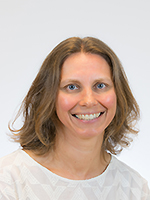
Trine Grønhaug Halvorsen is a Professor at the University of Oslo's Department of Pharmacy, within the Faculty of Mathematics and Natural Sciences. Her research focuses on developing innovative analytical methods for protein analysis in complex biological samples using mass spectrometry. She specializes in sample preparation techniques, smart sampling strategies, and biomarker quantification. Education: PhD in Drug Analysis (2003), Cand.pharm. (1998) Awards: Publication Award (2001) for pioneering liquid-phase microextraction work Research interests include molecularly imprinted polymers, antibody-based capture methods, and electromembrane extraction. Her work emphasizes improving analytical sensitivity and speed for low-abundance proteins in clinical and biomedical contexts. Recent articles highlight advancements in smart samplers, dried blood spot analysis, and LC-MS-based protein quantification. These studies address challenges in biomarker detection and clinical diagnostics. Labs/Teams: Pharmaceutical Analytical Chemistry Group, SmartProteinAnalysis@UiO Teaching: Courses in bioanalytical chemistry, drug analysis, and sample preparation
Martin Mayer serves as Associate Professor at the University of Inland Norway within the Faculty of Applied Ecology, Agricultural Sciences and Biotechnology and the Department of Forestry and Outback Studies. Based at the Evenstad study location, his research focuses on large mammal ecology in human-dominated landscapes across Scandinavia and Europe. His primary research interests center on Wildlife Ecology and Large Mammal Conservation , with particular emphasis on human-wildlife conflict resolution, road ecology, and carnivore management. Mayer investigates how species like moose, deer, and beavers adapt to anthropogenic landscapes through habitat selection, movement patterns, and population dynamics. His work integrates cutting-edge methodologies including GPS telemetry, drone surveillance, and citizen science data to address conservation challenges in agricultural and urban settings. Analysis of Mayer's recent publications reveals strong trends in using roadkill data for population monitoring, examining spatial constraints on wildlife movement, and developing mitigation strategies for human-wildlife conflicts. His research increasingly incorporates cross-border European perspectives on wildlife management while maintaining a strong foundation in Scandinavian field ecology. Mayer actively contributes to the LARGE research group (ecology of large animals), which conducts field studies on ungulate behavior, predator-prey dynamics, and landscape-scale conservation planning in Norway's boreal ecosystems.
Sebastien Nicolas Gros is a Professor at the Department of Engineering Cybernetics, Norwegian University of Science and Technology (NTNU). His research focuses on safe reinforcement learning (RL) and data-driven model predictive control (MPC), with applications in energy systems, biomedical engineering, and autonomous vehicles. Institution: Norwegian University of Science and Technology Department: Engineering Cybernetics His work emphasizes AI-driven optimization for domestic energy storage, battery integration, and smart building management. Collaborations include Equinor, DNV, Kongsberg, Volvo, and CorPower Ocean. Key themes in his publications include: Control theory for renewable energy systems (wave energy converters, buildings) Biomedical applications (artificial pancreas, glucose monitoring) Transportation systems (electric vehicles, autonomous ships) Machine learning integration with physical models He supervises 6 PhD students and co-supervises projects on multi-rotor wind turbines and industrial PhD collaborations. The articles demonstrate a convergence of RL, MPC, and uncertainty quantification across energy, biomedical, and transportation domains.
Prof. Chong-Yu Xu is a Professor of Hydrology at the University of Oslo's Department of Geosciences, affiliated with the Section for Geography and Hydrology (GeoHyd). He has held this position since 2005, having previously served as an Associate Professor at Uppsala University (1998–2005) and Assistant Professor (1994–1998). His research focuses on hydrological modeling, climate change impacts, regional evapotranspiration, and uncertainty analysis. He teaches courses such as GEO4310 (Stochastic Methods in Hydrology) and GEO4320 (Hydrological Modelling). Education: BSc in Hydrology (Nanjing University, 1978–1982), MSc in Regional Hydrological Modeling (Free University Brussels, 1986–1988), and PhD in Hydrological Modelling (Free University Brussels, 1988–1992). He has been honored with prestigious awards, including the NHF Lifetime Achievement Award (2022) and IWA Publishing Award (2022). He serves as an honorary professor at institutions like Hohai University and is a doctoral supervisor at multiple universities. His research spans global, regional, and local hydrological modeling, with a focus on climate change adaptation and water resource management. He leads projects such as the NORHED-II initiative on climate change and ecosystem management in Malawi and Tanzania. His work bridges theoretical hydrology with practical applications, including flood risk reduction and hydropower optimization. Publications highlight advancements in hydrological extremes, non-stationary drought assessment, and AI-driven flood prediction. Collaborative efforts with international networks like the Nordic Hydrological Association underscore his global impact in hydrological sciences.
Professor Yngve Karl Frøyen works at the Department of Architecture and Planning, Faculty of Architecture and Design, Norwegian University of Science and Technology (NTNU). With expertise in sustainable transport solutions, urban spatial modeling, and GIS applications for planning, he has taught and supervised urban and regional planning topics since 2010. His work spans multiple master programs and involves improving transport modeling tools for walking, transit, and bicycling modes. Research Focus: Sustainable urban transport (walking, bicycling, public transit), urban density, GIS methods, land use-transport interactions, and urban logistics. Teaching: Courses in GIS methods, land use-transport integration, regional planning, and master thesis supervision. Publications: 15+ works on transport modeling, urban density impacts, bicycle infrastructure, and planning methodology. Outreach: Regularly presents at conferences and seminars on topics like urban logistics, walking modeling, and transport policy. His academic career spans from 1981 civil engineer graduation to current professorship, with prior roles at Norwegian Institute of Urban and Regional Research (NIBR) and SINTEF. He combines technical GIS proficiency with policy-oriented planning expertise.
Anis Yazidi is a Professor at Oslo Metropolitan University, affiliated with the Faculty of Technology, Art and Design and the Department of Information Technology. His research focuses on Artificial Intelligence, Machine Learning, Medical Technology, and IoT Security, with a particular emphasis on Applications of AI in Healthcare, EEG Signal Processing, and Digital Transformation. Active research projects include AI Mind (dementia diagnostics), Glycopathology in dry eyes, and Pain and mental distress analysis Completed projects: Digital hate speech analysis, AI in reproductive technology, Nano-antibiotics development His recent publications (2023-2025) demonstrate expertise in: Tsetlin Automaton algorithms for concept learning EEG classification using visibility graphs and vision transformers AI ethics frameworks for medical practice Deepfake detection methodologies Collaborative work spans institutions in Norway, Czech Republic, and international AI research communities.
Rune Strandberg is an Associate Professor at the Department of Engineering Sciences, University of Agder. He holds a PhD in solar cell physics from NTNU and specializes in photovoltaic materials, solar cell physics, and energy conversion. His research focuses on advanced solar cell concepts including tandem cells, intermediate band solar cells, and thermoradiative energy harvesters. Education: Master of Technology (2005) and PhD (2010) in solar cell physics from NTNU. Pedagogical training includes Uniped courses (2014-2015) and PhD supervision qualification. Current teaching: Renewable Energy, Solar Energy Systems, Electromagnetism, Advanced Photovoltaics Prior roles: PhD student at NTNU (2005-2009), Senior Researcher at Teknova AS (2010-2013) Research areas: New photovoltaic concepts, characterization of photovoltaic cells, solar cell physics, emissive energy harvesters His recent publications analyze band gap optimization, radiative coupling in multi-junction cells, temperature sensitivity, and theoretical efficiency limits across multiple high-impact journals. Collaborators include Anne Gerd Imenes, Alfredo Sanchez Garcia, and Sissel Tind Kristensen. Key contributions include development of analytical models for solar cell performance, field testing of PV modules in Norway, and studies on temperature effects in multicrystalline silicon wafers.
Daniel Beat Müller serves as Professor at the Industrial Ecology Programme within the Department of Energy and Process Engineering at the Norwegian University of Science and Technology (NTNU), Trondheim. His office is located at Realfagbygget Gløshaugen (E4-120) with contact details daniel.mueller@ntnu.no and +4791897755. His research centers on analyzing human needs in relation to material/energy flows and environmental impacts, with two primary focus areas: (i) urban evolution and associated material flows for managing building/infrastructure stocks, and (ii) national/global metal cycles to identify supply constraint reduction strategies. His methodology integrates design, modeling, and decision-making through transdisciplinary stakeholder engagement. Müller teaches Material Flow Analysis and Systems Analysis of the Built Environment for Industrial Ecology and Civil Engineering Master's students. His research outputs demonstrate strong trends in circular cities, critical mineral management, and urban metabolism, with recent publications emphasizing building information modeling, electric vehicle battery systems, and phosphorus cycling. His work consistently addresses resource criticality within energy transition contexts. As (ad interim) chair of the International Society of Industrial Ecology’s MFA-ConAccount section, he contributes to methodological standardization. He previously served on the U.S. National Research Council’s Committee on Defense Stockpiles and remains active in Switzerland's National Research Programme 65 "New Urban Quality". Müller supervises numerous Master's and doctoral students, with thesis topics spanning lithium-ion battery recycling, building stock dynamics, and urban resource flows. His projects frequently involve industry collaboration for practical implementation of material stewardship strategies.
Hakan Basarir is a Professor in the Department of Mining Engineering at the Norwegian University of Science and Technology (NTNU), Trondheim, Norway. His research and teaching focus on mining rock mechanics, rock mass characterization, underground support systems, and the application of soft computing methods in mining engineering. PhD in Mining Engineering (2002) 20+ years of research and teaching experience 60+ publications in journals and conferences Research Interests include rock mass property prediction using measurement while drilling (MWD) techniques, numerical modeling of mining structures, optimization of mine support systems, and sustainable material development. His work integrates machine learning and computational methods to address challenges in mining geomechanics and backfill design. Recent Publications highlight advancements in AI-driven lithology prediction, eco-concrete formulation, and backfill mixture optimization. He has also contributed to tunnel stability analysis and seismic rock slope modeling. Teaching includes advanced courses in mining engineering, mineral production modeling, and specialization projects in geotechnology.
Christian Hirsch is an Associate Professor for Data Science and Statistics at Aarhus University, where he studies random networks motivated from biology and health sciences through techniques from topological data analysis and stochastic geometry. He is a member of the Stochastics group at the Department of Mathematics and holds additional affiliations as an Associate Fellow of the Aarhus Institute for Advanced Studies, and with the AU DIGIT Centre and the AU Quantum Campus. Current Position: Associate Professor for Data Science and Statistics, Aarhus University Previous Positions: Assistant Professor at University of Groningen and University of Mannheim Postdoctoral Experience: Aalborg University, LMU Munich, WIAS Berlin Education: PhD from Ulm University Christian Hirsch's research focuses on the statistical foundations of topological data analysis, large deviations theory in stochastic geometry, and percolation theory of spatial random networks. His work bridges theoretical mathematics with practical applications in data science, particularly in analyzing complex structures through topological methods. He investigates how topological features form and disappear in growing data structures, developing statistical tests to determine whether observed patterns are significant or merely random occurrences. His recent publications reveal a strong trend toward applying topological data analysis to increasingly complex structures, with significant focus on statistical validation of topological features. Hirsch has made substantial contributions to understanding the probabilistic behavior of persistent homology, developing functional central limit theorems and large deviation principles for topological functionals. His work spans theoretical foundations in stochastic geometry while finding applications in materials science, neural networks, and wireless communication systems. As an educator, Hirsch teaches graduate courses including Topological Data Analysis, Stochastic Geometry, Monte Carlo Simulation, Markov Decision Processes, Probability Theory, and Stochastic Processes. He has supervised numerous PhD, MSc, and BSc students, with several of his former students securing academic positions at institutions like University of Leiden, Tokyo Institute of Technology, and Budapest University of Technology. Hirsch leads a research group within the Stochastics group at Aarhus University, collaborating extensively with researchers across Europe and North America. His work demonstrates how topological methods can provide rigorous statistical insights into complex data structures, making significant contributions to both theoretical mathematics and practical data analysis techniques.
Alvaro Köhn-Luque is an Associate Professor at the Oslo Center for Biostatistics and Epidemiology, University of Oslo, and Group Leader at the Department of Medical Genetics, Oslo University Hospital. His work bridges mathematical modeling with clinical applications, particularly in cancer research. His academic background includes a PhD in Mathematical and Computational Biology from Complutense University of Madrid (2012), preceded by multiple Master's degrees in Mathematics and Physics from Spanish universities. Dr. Köhn-Luque's research focuses on mathematical oncology , developing computational models to understand cancer dynamics and improve treatment strategies. His work spans multiscale modeling of tumor growth, personalized cancer medicine through computer simulations, and biomarker discovery using machine learning approaches. He has made significant contributions to modeling breast cancer progression and treatment response, particularly in the context of endocrine therapy and CDK4/6 inhibition. His recent publications demonstrate a strong trend toward integrating mechanistic learning approaches that combine mathematical models with machine learning techniques. This hybrid methodology allows for more accurate prediction of treatment outcomes while maintaining biological interpretability. His work frequently involves collaboration with clinical researchers to ensure models are grounded in real patient data and have direct translational potential. Computational modeling of tumor heterogeneity and drug response Development of methods for phenotypic deconvolution in cancer cell populations Integration of multi-omics data for personalized treatment prediction Application of birth-death processes to model tumor evolution Creation of user-friendly computational tools for biomedical researchers Dr. Köhn-Luque has supervised multiple PhD students including Even M Myklebust, Salim Ghannoum, and Xiaoran Lai, and has secured funding for projects including RESCUE, BigInsight, and Integreat. His research demonstrates a consistent trajectory from theoretical mathematical biology toward increasingly clinically relevant applications in personalized cancer medicine.
Kjetil Nordby is a Professor at the Oslo School of Architecture and Design (AHO), specializing in interaction design for maritime environments. He leads the Ocean Industries Concept Lab (OICL) and manages the OpenBridge Design System, an open-source framework for standardized ship bridge interfaces. Research focus: Augmented/Virtual Reality in maritime operations Key projects: OpenRemote (remote operation center UI), OpenAR (AR integration) Collaborations with institutions like Royal Institution of Naval Architects His work addresses cross-vendor interface consistency, safety-critical UX, and open innovation in maritime design. Recent publications explore AR/VR applications for navigation, collaborative workstations, and energy-conscious maritime systems. Scientific contributions include: 15+ peer-reviewed articles in journals like Journal of Marine Science and Engineering and Applied Ergonomics Book chapters on sensemaking in safety-critical maritime environments
Tom Roar Eikebrokk is a Professor at the Department of Information Systems , University of Agder , Norway. He contributes to the Center for Digital Transformation (CeDiT) research group and has over two decades of academic and practical experience in digitalization, business process management, and collaborative innovation. Research Focus : Digital transformation, co-creation frameworks, e-health innovation, IT service management (ITIL), and remote work dynamics. Methodologies : Empirical studies, mixed-method research, case analysis, and Delphi studies. Recent Publications (2024–2025) explore reciprocal relationships between BPM and digitalization, generative AI for sustainable co-creation, and open innovation workspaces in specialized industries. His 2018–2021 work on co-creation in SME networks, worklife ergonomics in digital environments, and robotic process automation impacts remains influential. Collaborative Networks : Frequently co-authors with Dag Håkon Olsen , Niels Frederik Garmann-Johnsen , and Jon Iden , focusing on cross-municipal healthcare systems, digital governance, and IT competence frameworks.
Professor Ole-Christoffer Granmo is a distinguished academic at the University of Agder, Norway, where he serves as Professor in the Department of Information and Communication Technology. He is the Founding Director of the Centre for Artificial Intelligence Research (CAIR) at the University of Agder, leading cutting-edge research in artificial intelligence and machine learning. Dr. Granmo obtained his master's degree in 1999 and his PhD in 2004, both from the University of Oslo. His academic journey has been marked by significant contributions to the field of AI, most notably the creation of the Tsetlin machine in 2018, for which he received the AI research paper of the decade award from the Norwegian Artificial Intelligence Consortium (NORA) in 2022. Professor Granmo's research primarily focuses on logical and causal world modeling across multiple modalities including images, sound, and natural language. His work spans logical auto-encoding, convolution, regression, transformer architectures, and reinforcement learning, all with the overarching goal of creating ultra-low-power artificial general intelligence through transparent logical learning and reasoning. His publications reveal a strong emphasis on interpretable AI systems, hardware implementations, and applications across diverse domains including cybersecurity, healthcare, social media analysis, and bioinformatics. AI Research Paper of the Decade (2022) - Norwegian Artificial Intelligence Consortium (NORA) Eight paper awards in machine learning Professor Granmo has coordinated over seven research projects and mentored 55+ master's students and nine PhD students. His leadership extends to co-founding the Norwegian Artificial Intelligence Consortium (NORA) and establishing two companies: Anzyz Technologies AS and Tsense Intelligent Healthcare AS. As an advisor at Literal Labs, he actively bridges academic research with practical industry applications, demonstrating his commitment to translating theoretical innovations into real-world solutions that address complex challenges across multiple sectors.
Eirik Valseth is an Associate Professor of Scientific Computing at the Norwegian University of Life Sciences (NMBU), Department of Data Science. He holds concurrent roles as a research associate at the Oden Institute, University of Texas at Austin, and an affiliated researcher at Simula Research Laboratory (Department of Numerical Analysis and Scientific Computing). His expertise lies in advanced finite element methods for PDEs with applications in flood modeling and hydropower systems. Current Affiliation: NMBU (Norwegian University of Life Sciences) Secondary Affiliations: Oden Institute (UT Austin), Simula Research Laboratory Research interests span numerical methods for challenging PDE systems, including: Stabilized finite element formulations Hurricane storm surge and riverine flood modeling Hydropower infrastructure analysis Computational mechanics and applied mathematics His recent publications (2024–2025) emphasize flood risk assessment (compound flooding, dam breaks, dredging impacts), advanced numerical methods (isogeometric analysis, stochastic finite elements, graph-grammar algorithms), and environmental applications (pollution transport, pathogen distribution, mosquito population dynamics after hurricanes). Key trends include cross-disciplinary integration of physics-aware machine learning and robust hydrodynamic simulation tools. Valseth's work extends to software development (e.g., WAVEx for spectral wave models, SWEMniCS for coastal circulation) and large-scale modeling frameworks like the ADCIRC unstructured mesh model for US coasts. Collaborative projects involve institutions such as University of Texas at Austin, Simula, and NOAA.