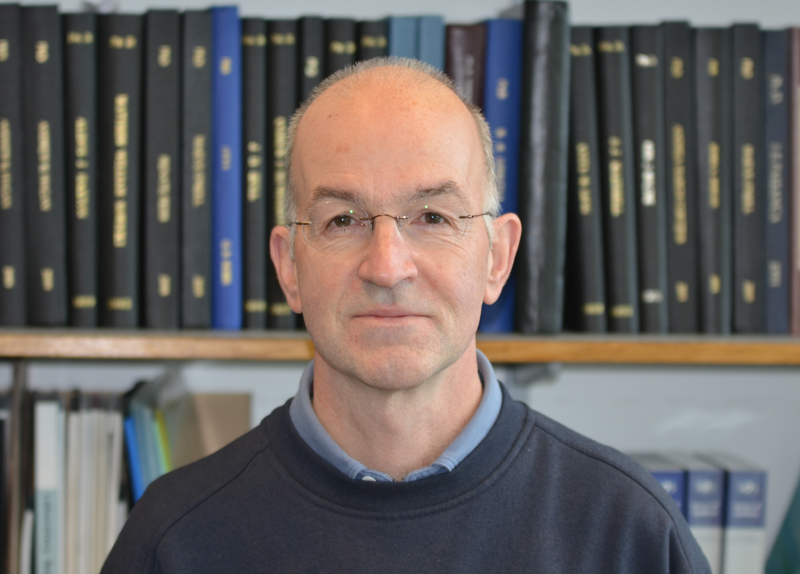
Nicholas Turner is a Professor of Chemical Biology at the University of Manchester, UK, since 2004. Previously, he held positions at the University of Edinburgh (1998-2004 as Professor, 1995-1998 as Reader) and University of Exeter (1987-1995 as Lecturer). His research focuses on asymmetric synthesis, synthetic biology, directed evolution of enzymes, protein engineering, and biocatalysis, with emphasis on developing innovative enzymatic methods for sustainable chemical synthesis. He has received numerous accolades, including the 2020 Fellowship of the Royal Society, the 2018 ACS Catalysis Lectureship, and an ERC Advanced Grant (2017-2022). His work bridges fundamental enzymology with industrial applications, addressing challenges in drug development and process chemistry through enzyme engineering and biocatalytic cascade design. Turner’s contributions span enzymatic reaction discovery, biocatalytic pathway optimization, and sustainable synthesis strategies. His recent research highlights include the RetroBioCat platform for computer-aided biocatalytic synthesis planning and the development of reductive aminase cascades for amine synthesis. His studies on imine reductases and carboxylic acid reductases have advanced understanding of enzyme mechanisms and their applications in industrial processes.
Erik Leitinger is a Senior Researcher at the Graz University of Technology, Austria. He holds a Dipl.-Ing. (M.Sc.) and Ph.D. in electrical engineering from the same institution, awarded in 2012 and 2016 respectively. His work focuses on ultrawideband (UWB) wireless communication, indoor positioning systems, Bayesian inference, and factor graph-based algorithms. He has contributed to multipath-based simultaneous localization and mapping (SLAM), cooperative localization, and MIMO systems. Leitinger’s research integrates theoretical frameworks like belief propagation and variational inference with practical applications in automotive radar, RFID positioning, and 5G/6G systems. His academic contributions span over 50 peer-reviewed articles, with recent work emphasizing non-ideal reflective surfaces, scalable positioning systems, and neural-enhanced SLAM algorithms. He actively collaborates with institutions like the University of Lund (Sweden) and KTH Royal Institute of Technology, contributing to projects such as the EU-funded IPIN competitions. Leitinger teaches courses on adaptive systems, signal processing, and machine learning. His student projects include topics like neural-enhanced SLAM, acoustic source localization using reflections, and real-time multipath-assisted localization with channel sounders. He is affiliated with TUGRAZonline and ORCID, maintaining an open research profile.
Prof. Robert Mach is a faculty member at TU Wien's Institut für Verfahrenstechnik, Umwelttechnik und technische Biowissenschaften. His research focuses on microbial biotechnology, genetic regulation in fungi, and applications in bioindustrial processes. He leads studies on Trichoderma reesei for enzyme production and biorefinery strategies, as well as radiation-based pest control methods for tsetse flies. His work integrates molecular biology, bioinformatics, and environmental engineering to address challenges in sustainable bioprocessing and vector-borne disease management. Key areas of research include strain optimization in fungi, detoxification of lignocellulosic hydrolysates, and development of the Sterile Insect Technique using X-ray irradiation. Collaborations span entomology, microbiology, and computational biology, with contributions to genomic tools like FunOrder 2.0 for analyzing fungal biosynthetic pathways. Prof. Mach also investigates symbiotic relationships between insects and microbes, advancing understanding of tsetse fly microbiota and their impact on disease transmission.
Julian Huber is an Associate Professor at MCI Management Center Innsbruck, where he also served as Senior Lecturer from 2021 to 2024. Previously, he held roles such as Senior Expert in Smart Grids & Energy Markets at FZI Forschungszentrum Informatik and led the Information Management and Analytics department there. He earned a Dr. rer. pol. in Information Systems from Karlsruher Institute für Technologie (KIT) and holds M.Sc. and B.Sc. degrees in Engineering from KIT and TU Berlin. His research focuses on integrating technical and behavioral dimensions of energy systems, including smart charging systems, energy markets, and sustainable technologies. Notable projects include optimizing EV charging for carbon efficiency and improving indoor air quality using IoT sensors. He teaches courses on data science, IoT, and energy systems at MCI and other institutions. Huber’s work spans over 30 peer-reviewed publications, with recent emphasis on environmental data analysis, user-centric systems, and smart grid innovation. He actively contributes to conferences like the DACH+ Conference on Energy Informatics and co-leads research initiatives on energy informatics and sustainability.
Professor Johannes Siebert is a faculty member at MCI | THE ENTREPRENEURIAL SCHOOL® in Innsbruck, Austria, where he teaches Behavioral Economics, Decision Sciences, and Supply Chain Management. He holds a secondary position as a Private Lecturer at the University of Bayreuth, Germany, where he was habilitated in Behavioral Operations Research and Decision Sciences. His research focuses on improving decision-making processes for individuals and organizations, extending classical nudging concepts to empower self-guided decision architecture. Education: Diplom Kaufmann (Business Administration) - University of Bayreuth (2005) Dissertation: Modeling of interactions - conception of an innovative approach in multi-attribute utility theory (2010) Habilitation in Behavioral Operations Research and Decision Analysis (2015) Research interests include proactive decision-making, belief perseverance bias mitigation, and the application of decision analysis in healthcare, education, and terrorism studies. He has pioneered methods like 'self-nudging' to enhance decision quality and has been recognized with multiple awards, including the 2023 Best Research Paper Award for Innovative Education and repeated finalist status in the Decision Analysis Practice Award (INFORMS). Awards and recognition: Finalist, Decision Analysis Practice Award (INFORMS, 2016, 2017, 2020) Nominated for Best Publication Award (INFORMS, 2017) City of Bayreuth Dissertation Prize (2009) Grants and consulting: Secured over €1 million in third-party funding and advised public/private entities in Europe and the U.S. on decision-driven projects. Active in editorial roles for Decision Analysis (INFORMS), the INFORMS Journal of Applied Analytics, and the Journal of Multi-Criteria Decision Analysis. Labs/Teams: Leads initiatives like KLUGentscheiden to train adolescents in decision-making. Member of the Executive Board of the International Society on Multiple Criteria Decision Making and chairs the DAS Video Committee (INFORMS). Co-founded the Behavioral OR Brown Bag Seminar Series.
Univ.Prof. David Preinerstorfer is a Professor at the Department of Statistics and Mathematics at WU Vienna University of Economics and Business. His research focuses on econometric theory, statistical methodology, and high-dimensional testing. He has published extensively in top journals such as Econometrica , Journal of Econometrics , and Annals of Statistics . Key research areas include heteroskedasticity and autocorrelation robust testing, high-dimensional statistical inference, bootstrap methods, and optimal policy learning. His work addresses challenges in econometric testing under complex data conditions and develops methods to enhance statistical power and validity. Recent publications analyze topics like modern Gauss-Markov theorems, superconsistency in high dimensions, and treatment allocation with distributional targets. Preinerstorfer collaborates frequently with researchers such as A. B. Kock and B. M. Pötscher on projects addressing robust testing procedures and statistical methodology advancements.
Philipp Sprüssel is a Senior Lecturer at Graz University of Technology's Institute of Discrete Mathematics. His research focuses on Random Graphs , Enumerative Combinatorics , and Phase Transitions , with particular emphasis on graphs on surfaces, hypergraphs, and simplicial complexes. He has organized conferences like the Random Structures and Algorithms and contributed to workshops on enumerative combinatorics and phase transitions. His academic career includes roles as a Postdoctoral Researcher at the University of Haifa and the University of Oxford, and a DAAD-funded position at the University of Hamburg. He holds a PhD from the University of Hamburg (2010). Teaching responsibilities span courses in Analytic Combinatorics , Discrete Mathematics , and Mathematics for Engineering , with recent activities in 2023. Research grants include an FWF-funded project on graphs on surfaces. Key contributions include studies on cohomology groups of random simplicial complexes, phase transitions in graph evolution, and symmetry characterization of unlabelled triangulations. His Erdős number is 2.
Dipl.-Ing. Dr.techn. Carlo Corinaldesi is affiliated with TU Wien's Department of Energy Economics and Energy Efficiency within the Research Unit Energy Economics and Energy Efficiency (E370-03). His research focuses on sustainable energy systems, electromobility, and smart grid technologies. He contributes to projects addressing decentralized energy systems optimization, sector coupling, and prosumer dynamics in energy transition contexts. Key research interests include energy flexibility markets, electric vehicle integration, cost-benefit analysis of charging infrastructure, and grid stability enhancement through EVs. His work explores innovative business models for aggregated flexibility in European electricity markets and the socio-technical aspects of local energy communities. Recent publications emphasize real-time trading algorithms, portfolio optimization of end-user flexibilities, and the economic viability of residential car-sharing models. He collaborates on projects analyzing transmission congestion mitigation and market potentials for new flexibility products in continental Europe. Corinaldesi's contributions span technical reports on algorithm scalability, forecasting methodologies, and dynamic interfaces between aggregators and energy management systems. His research bridges theoretical frameworks with practical implementations in energy policy and market design.
Bernhard Gittenberger is an Associate Professor at the Institute of Discrete Mathematics and Geometry at TU Wien. His research focuses on enumerative combinatorics, analysis of algorithms, and probability theory, particularly stochastic processes in combinatorial structures. He has advised numerous Master's and PhD students, contributing to advancements in discrete mathematics and algorithmic analysis. Affiliation: TU Wien, Institute of Discrete Mathematics and Geometry Roles: Academic Researcher, Educator, PhD Advisor His work encompasses lattice paths, tree structures, phylogenetic networks, and analytic combinatorics. He has been involved in multiple research projects, including FWF-funded initiatives and collaborations with institutions like Université de Versailles and Academia Sinica. Key contributions include studies on asymptotic enumeration, probabilistic methods in combinatorics, and algorithmic analysis of discrete structures. His scientific achievements include the Jubiläums-Studienpreis from the Austrian Mathematical Society in 1996.
Ivona Brandić is a University Professor for High Performance Computing Systems at TU Wien's Institute of Software Engineering and Interactive Systems. Born in Gradačac, Bosnia and Herzegovina, she moved to Austria in 1992 as a refugee during the Bosnian War. She earned a master's degree (2002) and doctorate (2007) in business computer science from TU Wien and completed her habilitation in applied computer science there in 2013. Her career includes roles as an assistant professor (University of Vienna, 2002–2007) and postdoctoral researcher (University of Melbourne, 2008). She transitioned to a tenure-track position at TU Wien in 2014 and became a full professor in 2016. Brandić’s research focuses on cloud computing, energy-efficient ultra-scale systems, and hybrid quantum-classical computing. She has been recognized with the MiA Award (2011), the Austrian Science Fund's Start-Preis (2015), and membership in the Austrian Academy of Sciences' Young Academy (2016). Her work emphasizes sustainable computing, edge systems, and optimizing resource management for distributed applications. Education: Bachelor's degree in Business Informatics (University of Vienna/TU Wien) Master's in Business Computer Science (University of Vienna, 2002) PhD in Applied Computer Science (TU Wien, 2007) Habilitation in Practical Computer Science (TU Wien, 2013) Research Interests: Brandić’s work spans cloud computing, energy efficiency in HPC systems, edge computing, and quantum-classical hybrid systems. She explores autonomic resource management, distributed system resilience, and sustainability in ultra-scale infrastructures. Her projects often address real-world applications like drug design, environmental monitoring, and smart energy grids. Publications: Her 2009 paper Cloud Computing and Emerging IT Platforms is a seminal work in the field. Recent publications focus on quantum-edge integration, energy optimization in AI models, and adaptive edge analytics frameworks. These contributions highlight trends toward sustainable, distributed, and hybrid computational paradigms. Awards: 2011: MiA Award for distinguished contributions by international backgrounds 2015: Austrian Science Fund’s Start Prize 2016: Austrian Academy of Sciences Young Academy Membership Advising & Grants: Brandić leads research groups and has secured grants for projects like NESSUS (energy-efficient cloud systems) and CHIST-ERA’s SDCDN (distributed networks). She mentors students in HPC, edge computing, and quantum systems. Advised topics include workload scheduling, fault tolerance, and energy-aware algorithms. Labs & Teams: She directs research on autonomic cloud management, edge intelligence frameworks (e.g., Sea-LEAP, FRESCO), and quantum-classical workflow systems (RIGOLETTO). Her teams collaborate internationally, integrating academia and industry for scalable, sustainable solutions.
Dr. Elisabeth Gludovacz is a researcher at the Institute of Animal Cell Technology and Systems Biology , part of the Department of Biotechnology and Food Science at the University of Natural Resources and Life Sciences, Vienna (BOKU). Her work focuses on the structure, function, and therapeutic potential of diamine oxidase (DAO) , a key enzyme in histamine metabolism, and its applications in biopharmaceutical development using Chinese Hamster Ovary (CHO) cell systems . Her research spans enzyme engineering, protein characterization, and metabolic pathway analysis, with a particular emphasis on histamine-related pathologies and the development of histamine-scavenging therapeutics . She has pioneered studies on heparin-binding motifs , glycosylation sites , and N-glycan interactions to optimize DAO's pharmacokinetics and stability. Her team has also contributed to CHO cell line engineering through siRNA screens and recombinase-mediated gene integration strategies. Scientific awards and grants are not explicitly detailed in the provided data. She has supervised presentations at international conferences like the European Congress on Biotechnology and ACIB Science Days , often in collaboration with researchers such as N. Borth and T. Boehm . Her work integrates biochemical assays , molecular modeling , and in vivo studies to address challenges in biopharmaceutical production and metabolic disease .
Nicolas Marx is a Researcher at the Institute of Animal Cell Technology and Systems Biology , part of the Department of Biotechnology and Food Science within the University of Natural Resources and Life Sciences, Vienna. His work focuses on mammalian cell engineering, particularly in Chinese Hamster Ovary (CHO) cells, integrating epigenetics , genetic tools , and synthetic biology to enhance cellular production capabilities. Current position: Researcher at BOKU Research areas: Epigenetic editing, CHO cell engineering, promoter modulation His research explores targeted epigenetic modifications to improve gene expression stability and production efficiency in mammalian systems, with applications in biopharmaceuticals and cell factory design . Recent publications highlight advancements in transposase technology , Nanopore sequencing for integration site analysis, and CRISPR-based epigenetic tools . Marx has supervised multiple Master/Diploma Theses on topics including mRNA stability optimization , Cas9-targeted sequencing , and dCas9-ChIP methods . He serves as a peer reviewer for journals like Biotechnology Journal and Biotechnology Advances, contributing to scientific discourse in his field.
Katharina Draxler is a researcher at the Institute of Food Science within the Department of Biotechnology and Food Science at the University of Natural Resources and Life Sciences Vienna (BOKU), specializing in advanced analytical methodologies for food composition assessment. Her work bridges food chemistry, technology, and safety through rigorous laboratory-based investigations of nutritionally relevant compounds. Her expertise centers on chromatographic techniques, particularly Ultra-High Performance Liquid Chromatography (UHPLC), for precise quantification of vitamins and bioactive components in diverse food matrices. Current research focuses on optimizing separation protocols to enhance accuracy in detecting B-vitamins in unconventional food sources like Ushivi beans and developing specialized methods for Vitamin B12 analysis in breast milk, reflecting her commitment to advancing food safety standards and nutritional science. Dr. Draxler's scholarly output demonstrates a consistent trajectory in refining analytical frameworks for food ingredient verification, with recent work emphasizing methodological innovation for complex biological samples. Her approach integrates analytical chemistry principles with practical food technology applications, addressing critical gaps in quantitative food analysis. She actively contributes to academic development through thesis supervision, currently guiding Master's research on UHPLC methodology for infant nutrition analysis. Her involvement in the BOKU-funded project "Optimization of chromatographic (UHPLC) separation methods for improved quantitative determination of nutritionally relevant food ingredients" (2024-2026) highlights her role in advancing institutional research capacity in food science instrumentation and protocol development.
Dipl.-Ing. Manuel Reithofer Ph.D. is a researcher at the Institute of Molecular Biotechnology within the Department of Biotechnology and Food Science at the University of Natural Resources and Life Sciences, Vienna . His work focuses on molecular biology, cell biology, and microbiology, with a strong emphasis on recombinant protein production and immune response mechanisms. Education: Ph.D. in Immunology (2014-2018), Medical University of Vienna. Master in Medical Biotechnology (2012-2014), University of Natural Resources and Life Sciences, Vienna. Bachelor in Food Science and Biotechnology (2009-2012), University of Natural Resources and Life Sciences, Vienna. Dr. Reithofer's research explores baculovirus-mediated gene delivery (BacMam platform), SARS-CoV-2 spike protein interactions, and allergen-specific immunotherapy. He leads the REMBAC project (2025-2026, funded by FFG) and contributes to SARS-CoV-2 biosensor development (2021-2023, FWF). His work spans collaborations with institutions like the Medical University of Vienna. He has presented at international conferences (e.g., Protein Expression in Animal Cells (PEACe), Sitges 2023 ) and maintains affiliations with multiple BOKU research teams.
Enrico Soranzo is a Senior Lecturer at the Institute of Geotechnical Engineering, part of the Department of Landscape, Water and Infrastructure at the University of Natural Resources and Life Sciences, Vienna (BOKU). His research focuses on the application of Artificial Intelligence in geotechnical engineering , particularly in tunnelling , slope stability , and soil mechanics . He has contributed extensively to understanding stress redistribution in tunnels, levee cross-sections, and probabilistic analysis using surrogate models. Research Highlights: Soranzo's work bridges computational engineering with physical modeling , utilizing geotechnical centrifuge testing and machine learning to address challenges in infrastructure stability. Recent studies involve predicting soil particle size distribution via convolutional neural networks and analyzing landslide transitions from slow movement to catastrophic failure. Scientific Awards: Brenner Award 2011 Advising and Grants: Though no explicit student names are listed, Soranzo has supervised theses on topics like root-reinforced slopes and tunnel face stability . His work often involves collaborations with institutions like Delft University of Technology and the Verband Beratender Ingenieure.