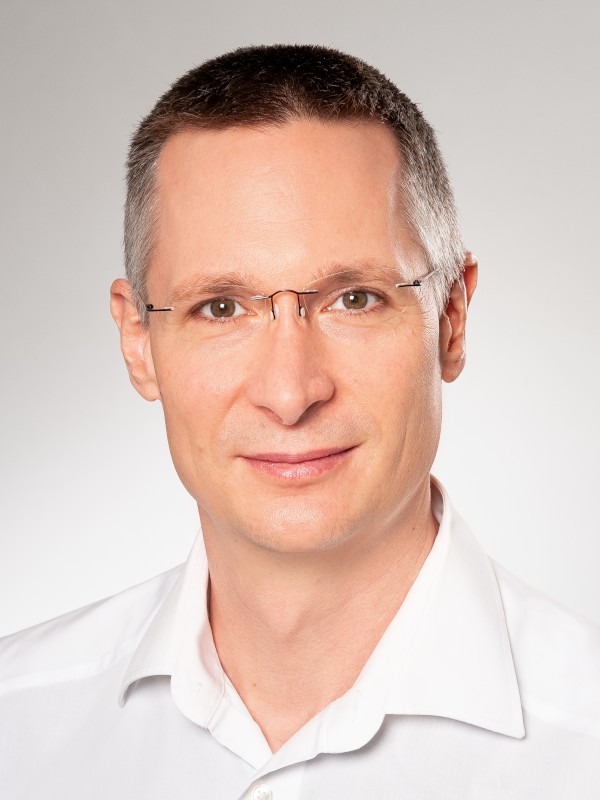
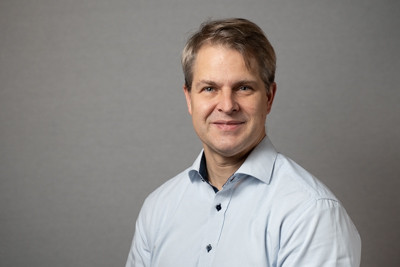
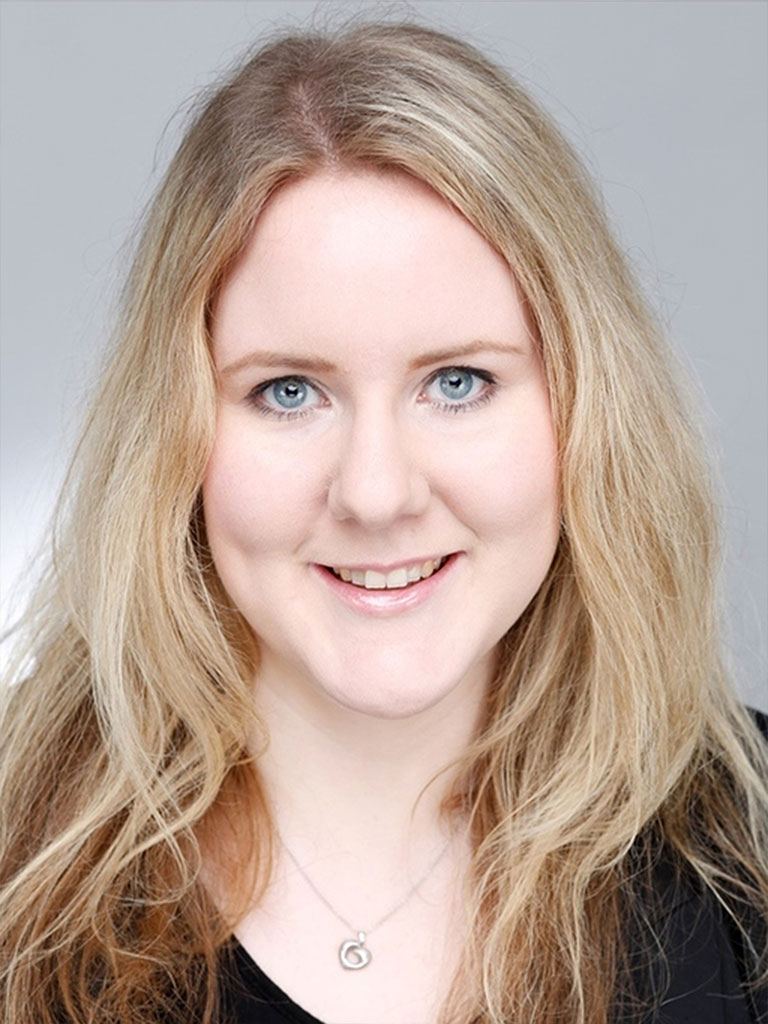
Marco Munderloh is a research fellow at the Leibniz University Hannover under the Institute for Information Processing . His career spans advanced video coding, predictive maintenance, and photonic design, with a focus on low-bitrate aerial video compression and motion detection. Dipl.-Ing. in Computer Engineering (2004), Technical University of Ilmenau PhD (2015), Leibniz University Hannover His research interests include: Wave Field Synthesis (WFS) with patented applications in cinema sound systems Predictive maintenance using deep learning and Bayesian neural networks Inverse design for photonic integrated circuits and 3D nanostructures Region-of-interest (ROI) video coding and motion compensation Optical verification of construction materials Marco's recent publications (2025–2018) cover predictive maintenance, video compression, and photonic design. Key trends involve applying machine learning to industrial reliability, optimizing video codecs for aerial surveillance, and computational inverse design for optical devices. Scientific achievements include: Patent for WFS technology in sound reproduction Collaborations span institutions like IEEE, CIRP, EUSPEN, and journals such as APSIPA Transactions and Bautechnik . Contact: Marco.Munderloh@tnt.uni-hannover.de , Marco.Munderloh@web.de .
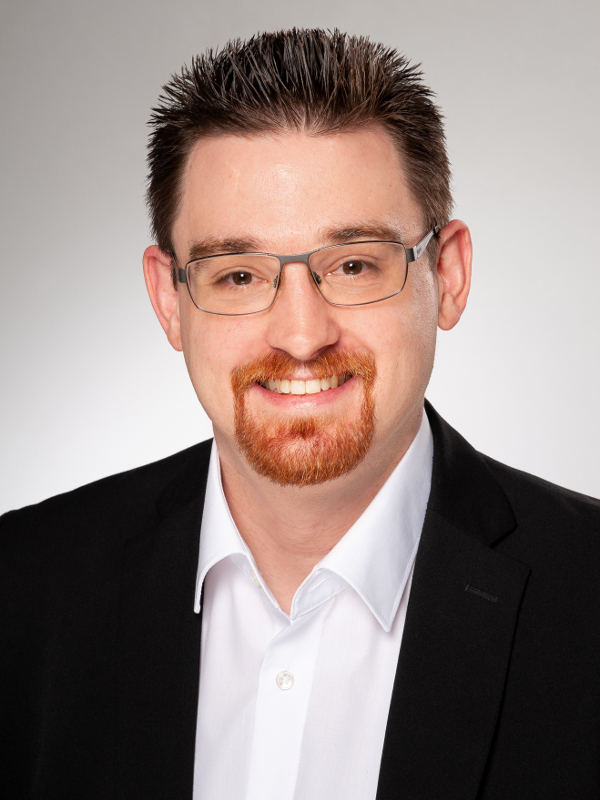
Daniel Gritzner is a researcher at the Institute for Information Processing (Leibniz Universität Hannover) , specializing in computer vision, remote sensing, and scenario-based software engineering. His work bridges academic research with real-world applications in renewable energy, geospatial analysis, and automated code generation. Studied Computer Science (B.Sc. 2010, Diploma 2014) at the University of Mannheim Focus areas: Deep Learning, Semantic Segmentation, Remote Sensing, Formal Specifications His research integrates computer vision with remote sensing , applying techniques like transfer learning and domain adaptation to aerial/satellite imagery. Key projects include SegForestNet for segmentation and WindGISKI for wind turbine site selection. Recent publications highlight advancements in semantic segmentation, hyperspectral band optimization, and scenario-based controller synthesis. Collaborative work with Jörn Ostermann and others demonstrates interdisciplinary approaches across IEEE, Springer, and arXiv platforms. Technical contributions include the open-source SegForestNet framework, implementing binary space partitioning trees for geospatial analysis. This toolchain combines Python/Rust with PyTorch, emphasizing reproducibility and practical deployment in industrial/energy domains.
Dr. Hannes Lagemann is a researcher at the Jülich Supercomputing Center (JSC), part of Forschungszentrum Jülich (Research Center Jülich GmbH). His work focuses on quantum computing and high-dimensional system simulations , leveraging supercomputing infrastructure for advanced numerical modeling. Institution: Forschungszentrum Jülich Affiliation: Jülich Supercomputing Center (JSC) Role: Researcher His research spans: Quantum computer simulation models Transmon qubit systems Time-dependent Hamiltonian dynamics Error metrics in quantum gates Algorithmic optimization for quantum processors Recent publications highlight his expertise in numerical analysis and computational physics , particularly in simulating flux-tunable transmon systems and benchmarking supercomputers for quantum applications. Contact: h.lagemann@fz-juelich.de | +49 2461/61-6579
Adel Mhamdi serves as Associate Professor and Chair of Process Systems Engineering within the Faculty of Mechanical Engineering at RWTH Aachen University. Based in the Research building NGP2 (AVT, BTA [5001]) at Forckenbeckstraße 51, Aachen, he holds the position of Senior Academic Councillor and maintains active research leadership in chemical process engineering. His research spans dynamic modeling, optimization, and control of complex chemical systems with emphasis on sustainable process design. Key focus areas include electrified biodiesel production, microgel synthesis with tailored properties, reactor intensification, and hybrid mechanistic/data-driven modeling approaches. He integrates experimental validation with computational techniques such as Raman spectroscopy, CFD, and Bayesian optimization to address challenges in energy efficiency and product quality. Analysis of his 2022-2025 publications reveals dominant trends in electrification of chemical processes (particularly biodiesel), advanced microgel synthesis methodologies, and innovative control strategies for flexible operation. His work consistently bridges fundamental polymer chemistry with industrial-scale process optimization, demonstrating strong interdisciplinary collaboration through co-authored datasets and experimental validations. Dr. Mhamdi operates within the AVT (Aachener Verfahrenstechnik) research ecosystem at RWTH Aachen, leveraging shared infrastructure for millireactor development, process monitoring, and plantwide control systems. His laboratory focuses on translating theoretical models into practical implementations for sustainable chemical production.
Torsten Klie serves as Managing Director and Senior Research Associate ( Akademischer Oberrat ) at the FAU Research Center Embedded Systems Initiative (FAU ESI) at Friedrich-Alexander University Erlangen-Nuremberg. He is affiliated with the Department of Computer Science, specifically the Chair of Computer Science 12 (Hardware-Software Co-Design). Dr. Klie received his PhD in Computer Science (Dr.-Ing.) from Technical University of Braunschweig in December 2008 under Prof. Dr.-Ing. Lars Wolf (1st Reader) and Prof. Dr. Stefan Fischer (2nd Reader). His academic journey began with a Diploma in Business Informatics from the same institution in January 2003, preceded by research positions at the Institute of Operating Systems and Computer Networks (2005-2009) and the L3S Research Center in Hanover (2003-2005). His research focuses on cyber-physical systems, autonomic communication, and policy-based management, with increasing emphasis on industrial applications under Industry 4.0 frameworks. His work spans from foundational network management systems to current explorations of sustainable smart industry through the Industrial Internet of Things. Dr. Klie has developed a distinctive research trajectory examining how embedded systems can enable smarter industrial processes through advanced communication architectures and autonomous management approaches. Analysis of his publications from 2009-2025 reveals a clear evolution from theoretical network management frameworks toward practical industrial applications. His recent work increasingly addresses sustainability in industrial contexts, embedded AI implementations, and open-source hardware approaches to cyber-physical systems. The recurring theme across his career is the integration of hardware and software systems to create more autonomous, efficient, and responsive embedded solutions for industrial applications. Dr. Klie teaches courses on cyber-physical systems at FAU and previously taught computer networks, distributed systems, and operating systems at Technical University of Braunschweig. His teaching portfolio includes multiple specialized seminars on advanced networking topics, real-time sensor networks, and security in distributed systems. He leads the ESI Application Center focused on Sustainable Smart Industry – The Industrial Internet of Things as a Model for Sustainable Industrial Value Creation as part of the Emerging Fields Initiative. His current research direction emphasizes how embedded systems can drive sustainable industrial transformation through smarter connectivity and autonomous decision-making capabilities.
Prof. Dr.-Ing. Markus Fidler is a Professor of Communications Networks at the Institute of Communications Technology , affiliated with the Faculty of Electrical Engineering and Computer Science at Leibniz University Hannover since 2009. His academic journey began with a doctoral degree in Computer Engineering from RWTH Aachen University (2004), followed by post-doctoral fellowships at Institute Mittag-Leffler (2004), NTNU Trondheim (2005), and University of Toronto (2006). He led the Emmy Noether Research Group at Technische University of Darmstadt (2007-2008), where he also earned his habilitation (2008). His research interests span Network Calculus , Effective Bandwidths , Available Bandwidth Estimation , and Parallel Systems (e.g., Multi-path Protocols, Synchronization Constraints). He explores Future Internet architectures, Wireless Communication (including Cognitive Radio and Car-2-X systems), and Congestion Control for Cooperative ADAS and Platooning. His work integrates Machine Learning and Stochastic Modeling for network performance analysis. Recent publication trends emphasize Age-of-Information (AoI) in tandem queues, Statistical Bounds for parallel systems, and Granularity Trade-Offs in multi-server environments. He applies Min-plus Algebra to AoI modeling and investigates Hybrid Time-Event Triggered Systems for resource-efficient communication. His projects include ADINeMo (2024) on Deviation-of-Information for sensor sampling and VaMoS 2 (2024) on validated models for MapReduce scaling. Scientific Awards ERC Starting Grant (2012) Advising includes current doctoral students Sami Akin , Brenton Walker , and Mahsa Noroozi , alongside numerous past advisees now holding academic positions globally. He leads DFG-funded projects such as FeelMaTyC (2017-2020) and GRK SocialCars (2014-2023), focusing on IoT, cooperative mobility, and network calculus applications.
Dr. Michael Schlottke-Lakemper is a Professor of High-Performance Scientific Computing at the University of Augsburg, Faculty of Mathematics, Natural Sciences, and Materials Engineering. He previously held positions as an Interim Professor of Computational Mathematics at RWTH Aachen University (2022–2024) and led a research group at the High-Performance Computing Center Stuttgart (HLRS) from 2021 to 2024. His career includes postdoctoral roles at the University of Cologne and RWTH Aachen University/FZ Jülich. Education: Ph.D. in Mechanical Engineering, RWTH Aachen University (2017) Diplom in Aerospace Engineering, University of Stuttgart (2011) His research focuses on adaptive multi-physics simulations, research software engineering for high-performance computing (HPC), and scientific machine learning. Applications span fluid mechanics, aeroacoustics, and astrophysics, with recent work emphasizing robust high-order summation-by-parts methods and Julia-based computational frameworks like Trixi.jl and TrixiParticles.jl. His publications highlight advancements in discontinuous Galerkin methods, entropy stable schemes, and HPC optimization for compressible flows. Scientific contributions include Developing dynamic load balancing algorithms for multiphysics simulations Creating hybrid computational aeroacoustics methods Advancing Julia's adoption in HPC communities Improving error-based step size control in numerical solvers Current teaching activities include graduate seminars on Maschinelles Lernen in Theorie und Praxis and undergraduate courses in Numerische Lineare Algebra . He leads a research team at the University of Augsburg with collaborators across Germany, including Simon Candelaresi, Valentin Churavy, and Niklas Neher.
Dr. Eishi Arima is a researcher at the Chair of Computer Architecture and Parallel Systems within the Department of Informatics at the Technical University of Munich (TUM). His work focuses on cutting-edge computer architecture and high-performance computing systems, with particular expertise in power-aware computing, resource management, and heterogeneous systems. He actively contributes to numerous international conferences and collaborative research projects addressing challenges in modern computing infrastructure. Dr. Arima's research spans multiple critical areas in computer architecture including memory and storage systems, performance modeling and optimization, hardware/software codesign, and processor microarchitectures. His work demonstrates particular strength in addressing energy efficiency challenges in high-performance computing environments, with numerous publications on power capping, resource partitioning, and sustainable computing approaches. His research bridges theoretical concepts with practical implementations, often incorporating machine learning techniques to optimize system performance under various constraints. Analysis of Dr. Arima's publication record reveals a strong focus on addressing the energy efficiency challenges in modern computing systems. His work consistently targets the intersection of hardware architecture and system-level resource management, with particular emphasis on heterogeneous computing platforms combining CPUs, GPUs, and emerging memory technologies. Over time, his research has evolved from traditional cache and memory system optimizations toward more holistic approaches incorporating machine learning for resource management in power-constrained environments. Recent publications demonstrate increasing attention to sustainability aspects of computing, reflecting broader industry trends toward greener computing solutions. Dr. Arima has served in various organizational capacities for major international conferences including as Program Committee member for SC, IPDPS, and Cluster conferences, and as Program Co-Chair for ACM CF'20. His journal review activities span multiple prestigious publications including IEEE TPDS and Elsevier FGCS. This extensive service demonstrates his recognition as a respected member of the international computer architecture research community. Dr. Arima has mentored numerous students through bachelor's theses, master's theses, and guided research projects. His students have produced research on topics including reinforcement learning for resource management, job scheduling optimization, memory system improvements, and power-aware computing techniques. Several student projects have resulted in publications at reputable conferences, indicating the high quality of research conducted under his supervision. His mentoring covers both theoretical aspects of computer architecture and practical implementation challenges in real-world systems. Dr. Arima is actively involved in multiple research projects including SEANERGYS (EuroHPC), PlasmaPEPS, OpenCUBE, DaREXA-F, ScalNEXT, PDexa, MUNIQC-ATOMS, BB-KI_Chips, QuaST, and Q-DESSI. These projects address various aspects of high-performance computing, from energy efficiency to quantum computing integration. His work contributes to the development of next-generation computing infrastructure that balances performance requirements with sustainability concerns.
Shuangyou Zhang is a Senior Scientist at the Max Planck Institute for the Science of Light, specializing in optical frequency combs, integrated photonics, and quantum optics. His work focuses on chip-scale atomic clocks, two-photon transitions for optical frequency standards, and dispersion engineering in microresonators. Education Bachelors in Electronics, Jilin University PhD in Electronics, Peking University Research Trends Analysis of his publications reveals expertise in soliton microcombs, Kerr symmetry breaking, Brillouin scattering, and silicon nitride-based photonic devices. His work spans nonlinear optics, photonic integrated circuits (PICs), and applications in sensing and optical computing. Labs & Collaborations He is affiliated with the Max Planck Institute for the Science of Light, which explores quantum optics, nanophotonics, and light-matter interaction.
Hermann Jahnke is a Full Professor and Chair for Management Accounting and Operations Management at the Faculty of Economics, Bielefeld University. He has held academic positions at the University of the German Federal Armed Forces in Hamburg and Cologne University, and served as Dean of his faculty twice (1997-1998, 2015-2023). Education: Habilitation in Operations Management (Hamburg University), PhD in Statistics and Econometrics (Hamburg University) Affiliations: Chair of Business Administration, Controlling & Production Management; Bielefeld Graduate School of Economics and Management Research Focus: His work bridges managerial accounting, decision theory, and operational challenges in modern retail and manufacturing contexts. Key contributions include: Demand forecasting frameworks for e-grocery retailers using distributional regression Complexity analysis of discrete lot-sizing and scheduling problems Integration of internal/external accounting under IFRS for SMEs Strategic cost modeling and service operations management Investigations into crowd logistics and fast fashion supply chains Publications: Over 30 peer-reviewed articles in journals like Decision Sciences , European Journal of Operational Research , and International Journal of Forecasting , plus 3 German-language books on cluster analysis and operations management.
Christian Wischke is Professor of Biopharmacy and Controlled Delivery Systems at Martin Luther University Halle-Wittenberg, Faculty of Natural Sciences, Institute of Pharmacy Biopharmacy Department. He assumed this position in 2021 after serving as Head of the Pharmaceutical Technology group (renamed Medical Device Fabrication Schemes in 2021) at the Institute of Active Polymers from 2011-2021. His research program centers on multifunctional polymer-based carrier systems, adapted carriers for local release and cell modulation, and structure-function relationships of carrier systems. With expertise spanning pharmaceutical technology, polymer science, and biomedical engineering, his work aims to develop advanced drug delivery platforms that respond to physiological conditions for improved therapeutic outcomes. Analysis of his publication record (2006-2025) reveals a strong focus on shape-memory polymers, microfluidic fabrication techniques, nanoparticle design, and controlled release systems. His recent work explores innovative approaches to protein encapsulation, stress-induced sequential release systems, and composition-dependent protein-material interactions, demonstrating continuous evolution in research sophistication. Prof. Wischke maintains extensive collaborations, particularly with Andreas Lendlein, resulting in numerous high-impact publications in journals including International Journal of Pharmaceutics, ACS Omega, and Journal of Controlled Release. His ORCID ID (0000-0001-5531-9033) documents his scholarly contributions across pharmaceutical sciences and biomaterials engineering.
Dr. Verena Pflug is a researcher at the Ruhr University Bochum within the Research and Treatment Center for Mental Health (FBZ) , specializing in Clinical Child and Adolescent Psychology . She leads and contributes to significant research projects like the KibA-Studie (Kinder bewältigen Angst) and IMPROVE-MH-Studie (mental health support for refugees), funded by the German Federal Ministry of Education and Research (BMBF). Her work focuses on emotional disorders, anxiety disorders, and school absenteeism in youth, with a strong emphasis on structured diagnostic tools and evidence-based interventions. Education: Dr. rer. nat. (PhD), Ruhr University Bochum (2020) Approbation as Child and Adolescent Psychotherapist (2017) MSc in Clinical Psychology (2010) BSc in Psychology (2008) Research Priorities include optimizing diagnostics for children and adolescents, leveraging structured interviews, and digital psychotherapy solutions like DiSkO (Diagnostik Skills Online Lernen). She integrates parental involvement in therapeutic processes and evaluates long-term outcomes through multicenter studies. Her recent publications examine extinction learning in anxiety disorders, metacognitive shifts post-exposure therapy, and affective style modifications via CBT. Scientific Awards include a 5,000 Euro prize from RUBeL-Wettbewerbs 5x5000 (2020) and a DAAD Travel Award for the EABCT Congress (2013). She has secured substantial BMBF funding for projects such as DiSkO and PROTECT-AD P2. Labs and Teams are centered at the Center for Child and Adolescent Psychotherapy and the Clinical Child and Adolescent Psychology department, collaborating with networks across Germany and international institutions.
Prof. Dr.-Ing. Tobias Morck serves as Professor and Head of Urban Water Engineering at the Institute of Water, Waste and Environment within the Faculty of Civil and Environmental Engineering at the University of Kassel. His research drives innovation in sustainable water infrastructure with focus on advanced treatment technologies and resource recovery systems. Research interests span wastewater treatment optimization, micropollutant removal mechanisms, and climate-resilient infrastructure design. Key specialties include powdered activated carbon systems, membrane bioreactor innovations, ozonation processes, and digital monitoring solutions. Morck actively develops tools for climate neutrality assessment (KlicK-Webtool) and explores wastewater heat recovery potential alongside biorefinery concepts for nutrient and energy valorization. Analysis of recent publications (2023-2025) reveals concentrated efforts on trace contaminant elimination through adsorption and oxidation technologies. His group pioneers rotating membrane systems for energy efficiency and implements intelligent control centers for resource optimization. Emerging work focuses on digital twins for real-time process management and circular economy integration in municipal treatment plants. No scientific awards were documented in available sources. Details regarding specific advisees and grant funding remain undisclosed in current materials. As head of the Urban Water Engineering group, Morck leads research initiatives addressing critical challenges in water security and sustainability at the University of Kassel's engineering faculty.
Jack B. Muir is a Marie Skłodowska-Curie Fellow at the University of Oxford's Department of Earth Sciences and Junior Research Fellow at Wolfson College. His research integrates advanced mathematics with seismology to address inverse problems in Earth imaging and hazard assessment. Education: PhD in Geophysics, Caltech Seismolab (2021) Research focuses on physics-informed neural networks for seismic wavefield simulation (TerraPINN project), nonparametric seismicity rate modeling using deep Gaussian processes, geologically-constrained tomography, and Bayesian methods for wavefield reconstruction. His work targets applications from near-surface structures to Earth's core, emphasizing machine learning acceleration and uncertainty quantification in inverse problems. Recent projects include Distributed Acoustic Sensing (DAS) optimization and seismic swarm analysis. Publication trends (2022-2025) reveal strong emphasis on machine learning integration (PINNs, Gaussian processes) with geophysical inverse problems, particularly for DAS data processing, deep Earth imaging, and probabilistic hazard assessment. Key themes include multi-scale analysis, instrument response calibration, and computational efficiency. Scientific Awards: Marie Skłodowska-Curie Fellowship John Monash Scholarship Junior Research Fellowship at Wolfson College, Oxford Grant-funded projects include TerraPINN for physics-based seismic hazard assessment and collaborations leveraging Caltech's Community Seismic Network. He actively develops open-source tools for core-mantle boundary modeling and DAS data processing. Labs and teams involve Oxford's Seismology group (Tarje Nissen-Meyer), Caltech (Zach Ross), Australian National University (Hrvoje Tkalčić), and JAMSTEC (Satoru Tanaka), with fieldwork utilizing ocean-bottom seismometers and urban sensor networks.
Prof. Tobias Seidl serves as Vice Dean at the Westphalian Institute for Bionics within the Department of Mechanical Engineering at the Westphalian University of Applied Sciences in Bocholt, Germany. He has been with the university since January 2011, teaching bionics and sensor technology while leading research in biomimetic applications for robotics and engineering. Education: Bionics studies at Saarbrücken PhD on desert ant navigation systems under Rüdiger Wehner at the University of Zurich with fieldwork in Tunisia Professional experience at the European Space Agency (ESA) in Noordwijk, Netherlands Research Focus: Prof. Seidl's work centers on bionics , translating biological principles into engineering solutions. His expertise spans neuroethology (neural basis of natural behavior), functional morphology (structure-function relationships), and biomechanics . Key application areas include biomimetic robotics inspired by ants and spiders, sensor development, and bio-inspired materials. His research consistently bridges entomology with robotics, aerospace, and materials science to solve complex engineering challenges. Publication Trends: Recent publications (2025-2016) reveal a strong focus on biomimetic applications in robotics, 3D printing, and aerospace. Dominant themes include adaptive biomimetic valves for automotive cooling, force-based path integration in walking robots, hydrophobic surface replication, and satellite deployable structures inspired by insect wings. His work consistently leverages biological observations—particularly from desert ants and spiders—to advance robotic locomotion, adhesion mechanisms, and space technology. Research Infrastructure: As head of the Westphalian Institute for Bionics, Prof. Seidl leads R&D projects such as developing force sensors in ant legs for robotic applications. His institute serves as a hub for interdisciplinary collaboration between biologists and engineers, focusing on translating biological insights into technical innovations for automotive, aerospace, and medical applications.