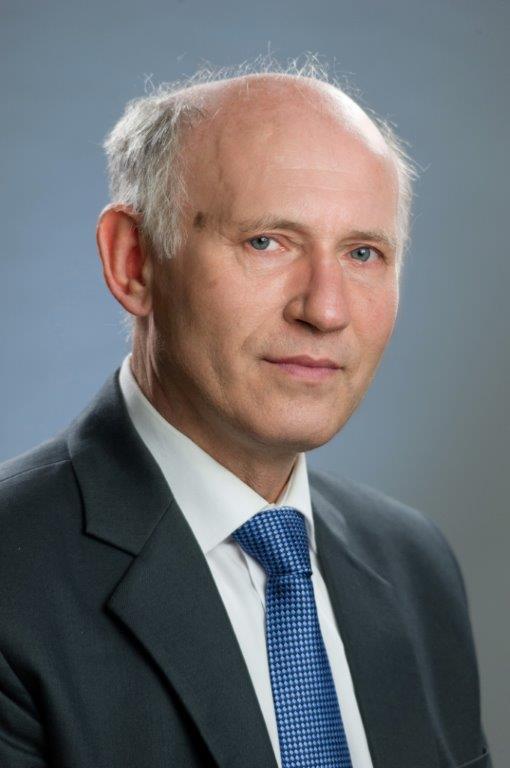
Professor Martin Bača is affiliated with the Department of Applied Mathematics and Informatics at the Faculty of Mechanical Engineering , Technical University in Košice , Slovakia. His academic role involves advanced research and teaching in graph theory and discrete mathematics. Research Interests: Specializing in graph labelings including vertex irregular total labelings, magic and antimagic labelings, edge-magic labelings, face-magic labelings of type (a,b,c), and harmonious labelings. Key areas: irregularity strengths , modular labelings , doubly resolving sets , and antimagic graphs . Focus on applications in network topology , chemical graph theory , and combinatorial optimization . Recent Article Trends: His 2024-2023 works explore modular irregularity strengths for dense graphs, corona products, and flower graphs, alongside antimagic labelings for digraphs, fullerenes, and generalized prisms. Notable themes include graph evaluation techniques , edge-antimagic total labelings , and vertex-antimagic labelings .
Vladimír Siládi, PhD, serves as Assistant Professor and Head of the Department of Computer Science at Matej Bel University in Banská Bystrica, Slovakia, where he has held academic positions since 1995. His current roles include Project Coordinator for the Virtual University initiative and Registration Authority for SlovakGrid, with prior experience as a part-time Assistant Professor at Slovak University of Technology. Educational Background: PhD in Computer Science, Slovak University of Technology in Bratislava (1997-2007) Master's in Theology, Comenius University in Bratislava (2003-2008) Master's in Secondary Education and Teaching (cum laude) and PaedDr. (EdD), Matej Bel University (1988-1993, 2005) High School Diploma, GMN Banská Štiavnica (1984-1988) His research centers on Grid Computing architectures , parallel processing techniques , and security frameworks for distributed systems . Specialized expertise includes GPU-accelerated algorithms for NP-hard problems, trust models in ad hoc grid environments, and cloud-based educational platforms. His interdisciplinary work bridges computer science with environmental modeling and psychological applications through virtual reality systems. Publication analysis reveals a consistent focus on computational optimization across 12 major works (2006-2014), with recent contributions emphasizing trust intersection models for decentralized grids (2012-2013) and cloud-based educational infrastructure (2013). Earlier works established foundations in GPU-accelerated network topology optimization and genetic algorithms for irregular systems (2006-2010). Scientific Awards: No awards documented in source materials Project leadership includes the Virtual University of Matej Bel University (ITMS 26110230077) coordinating 85 team members across 280 courses, plus TEMPUS-FLACE distance learning development (1998-2000). His registration authority role for SlovakGrid since 2009 supports national research infrastructure. Departmental leadership involves managing the Computer Science team while teaching core courses in algorithms, grid technologies, and GPU programming, maintaining consultation hours for student engagement.
Dr. Karol Kyslan serves as Associate Professor and Vice-Dean for Research at the Faculty of Electrical Engineering and Informatics, Technical University of Košice, where he leads research initiatives and doctoral education programs. His academic profile centers on advanced control systems for electrical drives, with institutional affiliation deeply rooted in industrial automation applications. His research expertise spans sensorless control of Permanent Magnet Synchronous Motors (PMSM) , finite control set model predictive control , and sliding mode observers , addressing critical challenges in low-speed operation, fault tolerance, and industrial implementation. Key application domains include material processing lines, rotary shears, and steel production systems, where his work bridges theoretical control algorithms with practical machinery dynamics. Analysis of his 2021-2025 publications reveals a strategic evolution toward integrating machine learning for fault diagnosis while maintaining core focus on high-frequency signal injection techniques. Recent work demonstrates increasing sophistication in torque ripple compensation and real-time optimization, with growing emphasis on multiphase machine control and hardware-in-the-loop validation for industrial deployment.
Michaela Bačíková is an Assistant Professor at the Faculty of Electrical Engineering and Informatics (FEI) of the Technical University of Košice (TUKE). Her research focuses on Human-Computer Interaction (HCI), domain usability, and domain analysis, with an emphasis on graphical user interfaces (GUIs), domain-specific languages (DSLs), and gesture-driven interaction. She leads the development of the DEAL tool, a domain analysis framework for extracting domain models from software systems. Her teaching includes courses on component-based programming, web technologies, and user interface design. Research Projects: DEAL (Domain Extraction ALgorithm) : A tool for analyzing GUIs to generate DSLs, ontologies, and usability metrics. EU Project: 'Evolving Architectural Knowledge in the Edge-to-Cloud Continuum' (participant). Educational initiatives: Integrating gesture-driven IDEs and social networks for mentoring in programming courses. Research Interests : Automated domain usability evaluation using DEAL. DSL-driven GUI generation and feature modeling. Innovations in teaching software development and user experience design. Grants & Labs : Recipient of FEI TUKE Grant no. FEI-2015-16 for domain usability metrics research. Active in the FEI lab developing DEAL and related tools.
Matej Lorko is an Assistant Professor at the Department of Insurance, Faculty of Economics and Finance, Bratislava University of Economics and Business. He holds a PhD from Macquarie Business School, Sydney. His research focuses on behavioral and experimental economics with emphasis on decision-making processes, project management efficiency, and public policy interventions. Education: PhD in Economics from Macquarie University (Sydney, Australia). Active research areas include behavioral nudges in tax compliance, effectiveness of charitable contributions, and improving project planning accuracy through controlled experiments. He runs the Bratislava Behavioral and Economic Experiences for Research Lab (bee4R LAB) and contributes to the SecureDataLab initiative. Key research programs involve: Economic experiments in project management (2016–2020) Enhancing charitable contribution effectiveness (since 2019) Behavioral tax compliance studies (since 2021) His work combines laboratory experiments with real-world applications, focusing on how cognitive biases affect decision-making in professional and policy contexts. Notable contributions include demonstrating anchoring effects in project duration estimates and developing interventions to improve schedule accuracy. Labs/Teams: bee4R LAB (behavioral economics experiments), SecureDataLab (data-driven policy analysis).
Jana Faixová Chalachanová is an Assistant Professor at the Department of Global Geodesy and Geoinformatics, Faculty of Civil Engineering, Slovak University of Technology in Bratislava. Since 1998, she has contributed to teaching and research in geospatial technologies, CAD systems, and data interoperability. Teaching Subjects: Geoinformatics, GIS in Building Sciences, Spatial Modeling in GIS, CAD Systems in Geodesy, Programming, Web Technologies in GIS Current Research Focus: Geographic Information Systems, spatial modeling of geoobjects, optimization of spatial analyses, and integration of heterogeneous geospatial data Her research spans applications in archaeology, solar radiation modeling, and environmental protection, leveraging LiDAR data and fuzzy logic frameworks. She has participated in multiple VEGA and APVV projects as a researcher and project leader. Scientific grants and projects she has participated in include: VEGA 1/0300/19 - 3D solar radiation modeling on tree vegetation APVV-0249-07 - Prediction of archaeological sites (project leader) VEGA 1/1035/04 - Standardization of geographic information (project leader) VEGA 1/5062/1998 - Geoinformation model of agricultural regions
Michal Staš is a Lecturer at the Technical University of Košice, Slovakia. His current contact information includes the email michal.stas@tuke.sk and office N32 619. He teaches courses in Linear and Quadratic Programming , Computer Modeling , and Mathematics II . His research focuses on Graph Theory , particularly on problems related to crossing numbers , cyclic permutations , and join graph operations . His recent publications (2020–2022) analyze crossing numbers of graphs combining wheels, paths, cycles, and discrete graphs, using techniques like cyclic permutations. Keywords from his work include Graph Theory , Combinatorics , Discrete Mathematics , and Computational Geometry .
Stanislav Szabo is a Professor in the Department of Commercial Entrepreneurship at the Faculty of Business Economics with seat in Košice, University of Economics in Bratislava. He maintains a workplace in Michalovce and possesses an extensive academic background with qualifications including PhD, MBA, and LL.M, along with honorary distinctions Dr.h.c. and prof.h.c. Position: Professor Department: Department of Commercial Entrepreneurship Workplace: Michalovce Contact: Phone 056/6443290 Professor Szabo's research spans multiple domains of business economics with particular emphasis on air transport economics, financial analysis methodologies, and performance measurement systems. His scholarly work demonstrates expertise in applying analytical frameworks to practical business challenges across transportation, healthcare, and corporate management sectors. His recent publications reveal a strategic research trajectory focused on transportation economics, particularly in aviation, with significant contributions to understanding operational efficiency in aircraft ground handling, pandemic response in air transport systems, and optimization of flight route economics. His work also extends to healthcare management, where he examines staff motivation and efficiency measurement in medical facilities. Teaching activities include: Managing human resources, Communication and Management, Distribution management, and Project management His scholarly output shows consistent productivity from 2004 through 2022 He frequently collaborates with researchers like GAVUROVÁ, B. on performance measurement systems Professor Szabo's research bridges theoretical frameworks with practical applications, particularly evident in his work on airport operations, airline economics, and crisis management in transportation systems. His publications in journals such as Aerospace, Sustainability, and Journal of Applied Economic Sciences demonstrate international scholarly impact in his specialized fields.
Pavol Lipták is a PhD. student at the Department of Marketing, Faculty of Commerce, University of Economics in Bratislava . His work focuses on Category Management , Distribution in Marketing , and AI applications in business . Education: Pursuing doctoral studies since 2023; Master's in Marketing and Trade Management (2022); Bachelor's in Business in Trade (2020). Research Interests: Category Management, AI-driven retail strategies, and post-crisis business adaptation. Grant Involvement: Co-researcher in projects on AI challenges in marketing and linguistics, and distribution management during crises. Conference Participation: Active presenter at ICISAS 2025, Innovations 2024, and ISCDS 2024; member of organizing teams for CEECBE 2024 and faculty anniversary events. Teaching & Outreach: Tutor for MiniErasmus; promoter at university fairs and roadshows. Key Publications: Analyzed AI profitability in category management, post-pandemic retail strategies, and multilingual pricing effects.
Prof. RNDr. Katarína Cechlárová, DrSc, is a distinguished academic at Pavol Jozef Šafárik University's Faculty of Science, specializing in theoretical mathematics and algorithmic research. Her career focuses on combinatorial optimization and discrete mathematical structures. Research interests include Theoretical computer science foundations Combinatorial optimization problems Algorithm design and analysis Discrete mathematical modeling
Sándor Szénási is a Professor at the Department of Informatics within the Faculty of Economics and Informatics at J. Selye University, where he serves as the person responsible for the Applied Informatics study program. With over two decades of academic experience, he has established himself as a leading researcher in parallel programming, GPU programming, and image processing, with recent expansion into machine learning applications. Eötvös Loránd University, Faculty of Science and Informatics (2001-2004): Information technology teacher Budapest Polytechnic, John von Neumann Faculty of Information Technology (1997-2001): B. Engineer in Information Technology Óbuda University (2010-2013): PhD in Applied Informatics Habilitation at Óbuda University (2019): Information Science and Technology Professor inauguration at Óbuda University (2022) Szénási's research spans computational methods with practical applications across multiple domains. His early work focused on parallel and GPU programming for image segmentation and heat transfer simulation. More recently, he has integrated machine learning techniques with traditional computational approaches, particularly in metaheuristic optimization, speech processing, and inverse problem solving. His interdisciplinary research bridges computer science with transportation safety, manufacturing, and medical applications. His recent publications reveal a clear evolution toward hybrid computational approaches that combine machine learning with traditional algorithms. There is a strong emphasis on optimization techniques, particularly metaheuristics enhanced with machine learning components. His work spans diverse application areas including speech emotion recognition, autonomous vehicle control, additive manufacturing, and heat transfer simulation, while maintaining a core focus on computational efficiency and parallel processing. Szénási has been actively involved in multiple EFOP-funded research projects including 'Improvement of higher education institutes for better teaching quality and accessibility,' 'Dynamics and control of autonomous vehicles,' and 'Solving the Inverse Heat Conduction Problem with Machine Learning.' His collaborative work with researchers like Gábor Kertész, Zoltán Vámossy, and Imre Felde demonstrates his commitment to interdisciplinary research.
Robert Verner is an Associate Professor at the Department of Quantitative Methods within the Faculty of Economics and Business at the University of Economics in Bratislava. His work focuses on financial markets, optimization methods, and statistical modeling, contributing to both academic research and practical applications in business analytics. His recent publications span topics such as: Computational finance and machine learning Stock market forecasting with neural networks Risk analysis in insurance using AI Educational assessment frameworks He has also participated in international research initiatives and collaborative programs, including the Central Europe Connect initiative, which brings together students from leading business schools in Warsaw, Bratislava, and Vienna.
Prof. Martin Lukáčik, PhD, is a Professor at the Department of Operations Research and Econometrics, Faculty of Economic Informatics, University of Economics in Bratislava. His academic career spans over two decades, focusing on econometric modeling, macroeconomic analysis, and operations research applications. Education: 2005: PhD in Econometrics and Operations Research, University of Economics in Bratislava 1998: Master's in Operations Research and Econometrics, University of Economics in Bratislava His research interests include econometrics, operations research, spatial spillover effects, and fuel price asymmetry. Recent projects analyze pandemic impacts on EU economies, asymmetric fuel pricing, and spatial economic dynamics. He has supervised doctoral students such as Ádám Csápai (2021–2024), Martin Benkovič (2013–2018), and Patrik Kupkovič (2013–2016). Grants include VEGA 1/0052/24 (structural parameter estimation) and KEGA 026EU-4/2024 (interactive economics books). Prof. Lukáčik is actively involved in international collaborations, including ERASMUS+ mobilities in Prague, Ostrava, and Split. He serves on scientific councils and editorial boards for journals like Equilibrium .
Igor Košťál is an Assistant Professor at the Department of Applied Informatics within the Faculty of Economic Informatics at the University of Economics in Bratislava . His research focuses on Distributed Technologies , Parallelization of Applications , and Data Structure Optimization , particularly in the context of .NET frameworks and industrial robotics. University: University of Economics in Bratislava School: Faculty of Economic Informatics Department: Department of Applied Informatics Academic Rank: Assistant Professor Košťál's work emphasizes software performance testing , with publications analyzing execution efficiency in .NET applications using parallel programming , Dijkstra's algorithm , and symbol table implementations . His recent research explores modern UI development in mobile applications and algorithm optimization for industrial robotics. Key trends in his 15 most recent articles (2014-2022) include: Performance analysis of parallel and sequential algorithms in .NET environments Optimization of data structures (arrays, linked lists, skip lists) for search efficiency Integration of asynchronous methods in WCF services and clients Testing precision in KUKA welding robots through structured data extraction
Peter Procházka is an Assistant Professor at the University of Economics in Bratislava, affiliated with the Faculty of Economic Informatics and the Department of Applied Informatics . His teaching and research focus on IoT , UX Design , Multimedia Applications , and technical education. His research spans several subfields, including: IoT : Development of educational tools using Arduino, smart device integration, and open-source platforms. Generative AI : Prompt engineering for neural networks and machine learning applications. Web Analysis : SEO tools, linguistic summaries for data visualization, and compliance with public administration standards. His publications highlight a trend toward data-driven decision-making in technology, including big data, machine learning, and IoT frameworks. He has also contributed pedagogical works on computer hardware, multimedia, and IoT, alongside collaborative studies on digital citizenship and pandemic response in educational institutions.