Athanasios Vasilakos is a Professor at the University of Agder's Department of Information and Communication Technology. His research focuses on cutting-edge ICT domains including quantum computing, cybersecurity, and distributed systems. He maintains an extensive publication record with recent works concentrated in quantum machine learning, blockchain applications, and IoT security. Research interests span: Quantum computing architectures and cryptographic applications Secure federated learning frameworks for distributed networks AI-driven solutions for IoT and telecommunications systems Advanced cybersecurity techniques including steganalysis and homomorphic encryption Cross-domain applications in bioinformatics, smart grids, and autonomous vehicles Publication analysis reveals strong thematic focus on: security enhancements for emerging technologies (blockchain, quantum systems), privacy-preserving machine learning, and IoT optimization. Recent works demonstrate increasing attention to quantum-classical hybrid systems and their real-world implementations. Collaboration networks include extensive international partnerships across Europe and Asia, particularly in quantum computation, cybersecurity, and intelligent systems research.
Robert Handfield is a Professor at North Carolina State University , affiliated with the Department of Bioproducts . He serves as Editor-in-Chief of Logistics and leads the Supply Chain Resource Cooperative , focusing on interdisciplinary research in supply chain systems. Research Keywords: Supply Chain Management, Cybersecurity, Machine Learning, Public Health Analytics Key Collaborations: Amir Hossein Sadeghi, Dayna Simpson, Emel Aktas His research spans supply chain security , healthcare logistics , and machine learning applications in industrial contexts. Recent publications address cybersecurity vulnerabilities, pandemic testing protocols, opioid crisis patterns, and railcar health monitoring systems. Articles demonstrate cross-domain expertise in integrating analytical frameworks with public health and transportation networks. As a leading academic , he contributes to advancing strategic sourcing and supplier development methodologies, while mentoring emerging scholars through collaborative research initiatives at North Carolina State University.
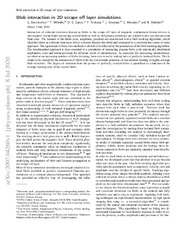
Gregor Decristoforo is a plasma physics researcher at UiT The Arctic University of Norway specializing in computational modeling of magnetically confined fusion plasmas. His work focuses on turbulence and transport phenomena in scrape-off layers, particularly studying blob dynamics and intermittent fluctuations critical for fusion energy development. His research interests span plasma turbulence modeling , computational physics , and fusion boundary layer phenomena . Using advanced numerical simulations and stochastic modeling techniques, he investigates coherent structures in magnetized plasmas, developing blob tracking algorithms and GPU-accelerated computation methods to analyze cross-field particle transport mechanisms. His publication record shows consistent research output from Master's research (2016) through doctoral work (2021) to recent first-author journal articles (2024), demonstrating ongoing contributions to understanding plasma exhaust processes in magnetic confinement devices. Current work examines RF-induced flow effects during ion cyclotron resonance heating, addressing key challenges in mitigating scrape-off layer transport for viable fusion energy production.
Afaq Ahmad is a Postdoctoral Fellow at Oslo Metropolitan University , affiliated with the Faculty of Technology, Art and Design and the Department of Built Environment. His research focuses on the intersection of civil engineering, structural analysis, and machine learning applications. Institution: Oslo Metropolitan University Department: Built Environment Afaq's work examines hybrid concrete technologies, fiber-reinforced composites, and structural health monitoring using advanced computational methods. He specializes in applying image processing and neural networks to evaluate concrete properties and defects. His recent publications highlight innovations in engineered cementitious composites for masonry, symbolic matrix structural analysis for beams, and machine learning-driven assessments of concrete columns and wooden structures. Key trends include non-destructive testing and predictive modeling for infrastructure resilience. Research activities span from 2022-2025 , with 15 representative articles demonstrating expertise in: Concrete material science and failure analysis Machine learning integration in structural engineering Seismic performance evaluation Hybrid composite reinforcement systems His work frequently combines computer vision techniques with civil engineering challenges, particularly in defect detection and load capacity prediction.
Morten Ottestad serves as a Senior Lecturer in the Department of Engineering Sciences at the University of Agder, Norway. His research spans multiple interdisciplinary domains within engineering, with particular focus on robotics, biomechatronics, and control systems. He maintains an active research profile with publications spanning from 2009 to 2024, demonstrating sustained scholarly contribution to his fields. Dr. Ottestad's research interests center on Biomechatronics and Collaborative Robotics , with significant contributions to prosthetics and orthotics technology. His work integrates Artificial Intelligence with practical engineering applications, particularly in medical device development. Recent publications demonstrate expertise in open-source hardware design for medical applications and virtual reality rehabilitation systems. He has also made substantial contributions to hydraulic systems research, particularly in oil/water separation technology for petroleum applications, and has published extensively on multicopter/UAV design and control systems. His publication trends reveal a strategic evolution from traditional engineering domains like hydraulic systems and petroleum engineering toward more contemporary areas including biomechatronics, prosthetics, and educational applications of robotics. This trajectory demonstrates both technical versatility and responsiveness to emerging technological needs in healthcare and education sectors. Dr. Ottestad actively contributes to engineering education through innovative teaching frameworks, particularly in mechatronics education. His research groups include Artificial Intelligence, Biomechatronics and Collaborative Robotics and Robotics and automation , indicating leadership in these specialized laboratory environments where theoretical concepts are translated into practical applications.
Geir Kjetil Ferkingstad Sandve is a Professor at the Biomedical Informatics Research Group within the Department of Informatics (UiO), University of Oslo, specializing in machine learning methodology for biomedical applications. His research focuses on Generalization in machine learning models Exploiting mechanistic/causal domain relations Software platforms for domain-adapted ML Multiple-instance learning techniques Historical work in statistical genome analysis and motif discovery His recent publications (2022-2025) demonstrate expertise in Adaptive immune receptor repertoire analysis Antibody-antigen interaction prediction Proteome scoring systems for celiac disease Causal modeling in biomarker generalization Multi-modal single-cell data integration Synthetic dataset generation for immunology He leads a computational research group prioritizing Reproducible codebases and software development Competence-building through strategic research Interdisciplinary collaboration with biomedical teams Training in algorithmic challenges and software design
Johan Gustav Bellika is a Professor of Medical Informatics at the Department of Clinical Medicine, Faculty of Health Sciences, UiT The Arctic University of Norway, and serves as Chief Research Informatics Officer (CRIO) for PraksisNett, a national research infrastructure for primary health care. He has worked at the National Center for e-Health Research at the University Hospital of North Norway since 1997. Master’s (1997) and PhD (2006) in Informatics from UiT Research focus: Privacy-preserving health data reuse and learning healthcare systems Contributed to >100 scientific publications Supervision of Master’s, PhD, and postdocs His work spans health data security , ontology-based terminologies , e-health modernization , and federated learning . Key projects include DigSam (digital security), PraksisNett (primary care research infrastructure), and ASCLEPIOS (secure cloud solutions). Articles highlight expertise in distributed health analytics , patient confidentiality , and clinical decision support systems . Scientific contributions include: Advancing privacy-preserving statistical computation with Statistics Norway Implementing SNOMED CT standardization Developing secure platforms for health data analysis
Anders Hjort is a Doctoral Research Fellow (now PhD graduate) at the University of Oslo's Department of Mathematics within the Statistics and Data Science group. He successfully defended his PhD dissertation in February 2025, focusing on uncertainty quantification in house price prediction using machine learning techniques. His work bridges academic research and industry applications through collaboration with Eiendomsverdi, a Norwegian property technology company. His educational background includes a Master of Science in Industrial Mathematics from the Norwegian University of Science and Technology (NTNU) in Trondheim (2019), complemented by one academic year at Technische Universität Berlin. Prior to his PhD, he worked as a consultant for Deloitte. Hjort's research centers on tree-based machine learning methods, conformal prediction, and computational statistics for real estate valuation. He specializes in developing interpretable models that quantify prediction uncertainty, particularly for automated valuation systems in housing markets. His approach combines statistical rigor with practical machine learning applications to address challenges in property technology. His publication record reveals a consistent trajectory in applying conformal prediction and interpretable AI to housing market analysis. The research spans theoretical uncertainty quantification frameworks to empirical studies of Norwegian and international markets, often utilizing locally weighted methods and ensemble tree models. This work demonstrates increasing sophistication in handling spatial heterogeneity and model confidence in real estate prediction. Hjort has actively engaged with the academic community through conference presentations at COPA and WEAI events, participation in the Machine Learning Summer School near Cape Town, and a visiting researcher position at North Carolina State University's Statistics Department in fall 2023. His PhD project (2021-2024) was supervised by Associate Professors Johan Pensar and Ida Scheel, and Professor Dag Einar Sommervoll from NMBU.
Fan Zhang is a Postdoctoral Fellow at the Rosseland Center for Solar Physics, University of Oslo, specializing in computational fluid dynamics and solar plasma modeling. His research bridges high-order numerical methods with astrophysical applications, particularly in magnetohydrodynamics (MHD) for solar corona and wave propagation studies. University of Oslo Rosseland Center for Solar Physics Research Interests Zhang's work focuses on advancing numerical techniques for shock-capturing and MHD simulations, enabling precise modeling of solar phenomena like coronal mass ejections (CMEs), Alfvén waves, and plasma dynamics. He develops finite-volume and compact nonlinear schemes tailored for unstructured grids, addressing challenges in numerical stability and accuracy. Recent Publications His 15 most recent articles (2025–2021) highlight innovations in time-accurate MHD models (e.g., SIP-IFVM, COCONUT), mesh topology effects on solar simulations, and algorithms for overshooting oscillation suppression. Key themes include computational efficiency, high-order numerical schemes, and two-fluid modeling of solar plasmas. Collaborative Work Zhang frequently collaborates with international researchers on projects like COCONUT, which optimizes preprocessing of magnetic maps for space-weather forecasting and solar cycle modeling. His contributions span algorithm design, model validation, and cross-disciplinary computational frameworks.
Ernst Gunnar Gran is Associate Professor at the Department of Information Security and Communication Technology at the Norwegian University of Science and Technology (NTNU), where he heads the communication technology discipline. He also holds an adjunct research scientist position at Simula Research Laboratory, where he headed the Cloud department until December 2016. His research spans high performance computing (HPC), HPC interconnection networks, enterprise data centre networks, cloud computing, and data-intensive processing in multi-clouds. He serves as the Scientific Leader of Communication Technologies in the RCN-funded infrastructure project eX3 (Experimental Infrastructure for Exploration of Exascale Computing) and has significant experience with both RCN-funded and EU-funded research projects, including the H2020 project Melodic (Multi-cloud Execution-ware for Large-scale Optimised Data-Intensive Computing). Gran received his M.Sc. and Ph.D. degrees in computer science from the Department of Informatics, University of Oslo, in 2007 and 2014, respectively. Both theses focused on different aspects of resource management in high performance interconnection networks. He previously headed the RCN-funded project ERAC (Efficient and Robust Architecture for Big Data Clouds) and led the design, implementation, and deployment of the multi-homed IP-based research testbed NorNet Core. Gran also has several years of experience as a system administrator and scientific programmer. His research interests center on the intersection of high performance computing and networking, with particular focus on anomaly detection in time series data, HPC interconnection networks, network virtualization, and cloud computing infrastructure. His work demonstrates a consistent evolution from fundamental networking research to applied solutions for modern computing challenges, particularly in IoT security and smart home applications. His recent publications show a strong emphasis on developing lightweight, real-time anomaly detection systems using deep learning techniques. Analysis of his publication trends reveals a clear progression from traditional HPC networking research toward time series anomaly detection applications, particularly for IoT systems. His 15 most recent publications show dual focus areas: approximately 60% concentrate on anomaly detection methods for time series data (particularly for IoT applications), while the remaining 40% maintain his foundational work in HPC networking, virtualization, and cloud infrastructure. This evolution demonstrates his ability to adapt core networking expertise to emerging application domains while maintaining technical depth. While no specific scientific awards are mentioned in the provided text, Gran's leadership roles in significant research projects (eX3, Melodic, ERAC) indicate recognition of his research capabilities within the academic and research funding communities. His position as Scientific Leader of Communication Technologies in the RCN-funded eX3 project further demonstrates his standing in the Norwegian research community. Gran's teaching responsibilities include serving as course coordinator for DCSG1006 Data Communication and Networks, DCSG2001 Interconnected Networks and Network Security, and Networks: Administration, Programming and Security. His research leadership extends to significant grant-funded projects, including the RCN-funded eX3 infrastructure project and the EU H2020 Melodic project. His previous leadership of the ERAC project and the NorNet Core research testbed demonstrates sustained ability to secure and manage substantial research funding. His laboratory and team affiliations include the Department of Information Security and Communication Technology at NTNU, where he heads the communication technology discipline, and Simula Research Laboratory, where he maintains an adjunct position. The NorNet Core research testbed, which he led the development of, represents a significant infrastructure contribution to the networking research community. His current work with the eX3 project suggests ongoing involvement in experimental infrastructure for exascale computing exploration.
Raghavendra Ramachandra is a Professor at the Department of Information Security and Communication Technology , NTNU (Norwegian University of Science and Technology) . His research focuses on Biometrics , Deep Learning , and Image Processing , particularly addressing Morphing Attack Detection and Presentation Attack Detection in biometric systems. Current Projects: SALT (2022-2026) : Developing privacy-preserving face biometric authentication with morphing attack detection. OffPAD (2022-2025) : Creating cryptographic tools and fingerprint attack detection techniques. SWAN (2015-2020) : Mitigating presentation attacks in biometric access control. Research Interests: Biometric security, deep learning for fake face detection, smartphone-based biometric authentication, and morphing attack countermeasures. Publication Trends: His recent work explores advanced neural network architectures for attack detection (e.g., attention networks, vision transformers), synthetic dataset generation, and multi-sensor biometric verification. Technical Expertise: Combines computer vision, machine learning, and cryptographic security for robust biometric systems. Contact: raghavendra.ramachandra@ntnu.no
Bjørn Jonny Villa serves as Associate Professor at the Norwegian University of Science and Technology (NTNU), specializing in computer networking with emphasis on adaptive video streaming and Quality of Experience (QoE) optimization. His research addresses critical challenges in home networks, public WiFi security, and bandwidth management, as evidenced by publications spanning 2010-2014 in top venues including IEEE, Springer, and international journals. Villa earned his PhD from NTNU in 2014 with the dissertation "Enhancing Quality Aspects of Adaptive Video Streaming in Home Networks," establishing foundational work for his subsequent research. His academic journey reflects deep specialization in network performance optimization for multimedia delivery systems. Core research interests include adaptive HTTP video streaming, QoE measurement and optimization, network security vulnerabilities (particularly in public WiFi), and active probing techniques for bandwidth estimation. Villa employs experimental user studies and traffic analysis to develop practical solutions for improving streaming fairness and network resource allocation, with significant contributions to understanding how burst durations and traffic shaping impact user-perceived quality. Analysis of Villa's publication timeline reveals consistent focus on video streaming challenges: early work (2010-2011) established monitoring frameworks and home gateway optimization, mid-period research (2012-2013) advanced fairness algorithms and traffic shaping, while his 2014 output expanded into security implications of public networks. His collaborative approach is evident through recurring partnerships with Poul Einar Heegaard and Anders Instefjord across multiple publications. No scientific awards are documented in the available records. Similarly, no information regarding research grants or student supervision appears in the provided materials. Villa actively engages with the research community through conference presentations including Forskningsdagene (2013) and NIK conferences, and contributes to public discourse through media appearances in Aftenposten and Inside Telecom. His work operates within NTNU's telecommunications research ecosystem, focusing on practical implementations of network optimization techniques for real-world video delivery systems.
Ståle Andreas Skogstad is a Research Fellow at the University of Oslo , affiliated with the Department of Informatics under the Faculty of Mathematics and Natural Sciences . His research focuses on real-time digital filter design , motion capture technologies , and human-computer interaction in musical contexts.
Cordian Benedikt Riener is a Professor in Mathematics at UiT The Arctic University of Norway, Tromsø, and serves as Pro-Dean for PhD education at the Faculty of Science and Technology. He leads the Algebra group and is a co-director of the Lie-Størmer Center for Fundamental Structures in Computational and Pure Mathematics. His academic roles include chairing the Norwegian Mathematics Council and serving on the Abel Prize board. Habilitation in Mathematics (2018, University of Konstanz) Magister Artium in Philosophy (2013, Goethe University Frankfurt) PhD in Mathematics (2011, Goethe University Frankfurt) Master in Pure Mathematics (2005, Université de Bordeaux 1) Diplom in Mathematical Economics (2006, Universität Ulm) Riener’s research bridges mathematics and theoretical computer science, focusing on computational complexity, real algebraic geometry, and polynomial optimization. His work includes characterizing positive polynomials via sums of squares, studying moment problems, and developing semidefinite relaxation methods. He explores symmetry in algebraic structures, such as Specht ideals and Weyl group orbits, with applications in discrete geometry and spectral graph theory. His recent publications emphasize symmetric semi-algebraic sets, trigonometric polynomial optimization, and tropical geometry. The 15 most recent articles span 2023-2025, addressing topics like symmetric nonnegative forms, orbit space descriptions, and algorithmic symmetry reduction. Keywords include Real Algebraic Geometry, Optimization, and Computational Complexity, with subfields such as Sums of Squares, Spectral Bounds, and Tropical Geometry. Aalto Science Institute Fellow (2012-2016) Zukunftskolleg Associate Fellow (2011-2012) Riener contributes to academic service as chair of the Norwegian Mathematics Council and Abel Prize board member. He has organized conferences like ISSAC 2023 and Nordic Combinatorial Conference 2022. His projects include POEMA (Horizon 2020) and SymRAG, with leadership in the Lie-Størmer Center and MASCOT collaborations.
Sushmit Dhar serves as an Associate Professor in the Department of Automation and Process Technology at UiT The Arctic University of Norway, focusing on control engineering and automation solutions for Arctic maritime challenges. His work bridges theoretical control methods with practical applications in extreme environments. His research spans: Classical and modern control methods (PID, LQR, MPC) State estimation and Kalman filtering Physics-Informed Neural Networks and Reinforcement Learning for decision support IoT-based automation for maritime operations Marine icing phenomena and sea spray measurement Recent publications demonstrate cutting-edge work in marine icing prediction using LiDAR and capacitive sensors, Arctic road safety systems, and optimization of maritime operations. His research integrates advanced sensing technologies with data-driven modeling to address safety challenges in cold climates, particularly through sea spray measurement innovations and route planning algorithms for fishing vessels and search-and-rescue operations. Dr. Dhar actively contributes to collaborative initiatives: Member of the Sustainable Technology and Safety (STS) research group Member of the IR, Spectroscopy, and Numerical Modelling Research Group Key participant in the SPRICE project (Multidisciplinary approach for spray icing modelling and decision support) His teaching portfolio includes foundational courses in Linear Systems (AUT-2604) and Control Engineering (AUT-2801) for Automation Engineering undergraduates, preparing students for technical challenges in Arctic engineering contexts.