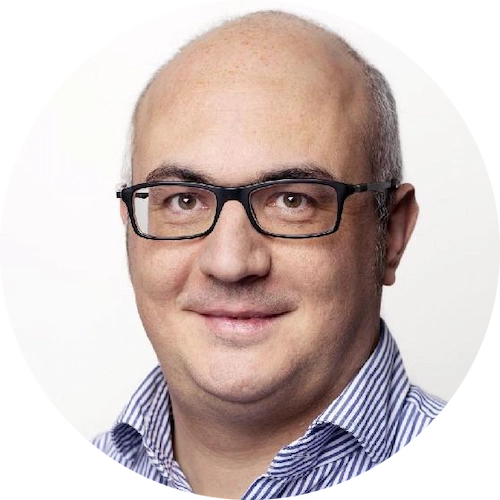
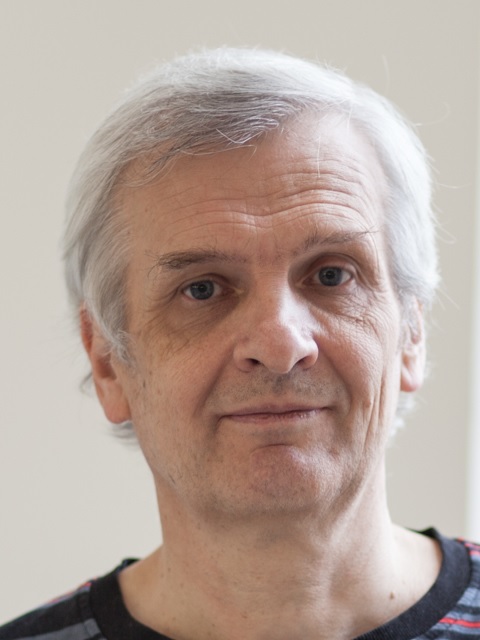
Marco Marcozzi is a researcher at the Vilnius University Blockchain and Quantum Technologies Group. His work focuses on blockchain systems, quantum computing, and performability analysis of fault-tolerant protocols. Research Interests : Blockchain technology, quantum computing, Byzantine fault tolerance, consensus protocols, and data-driven system performance modeling. Key Contributions : Led studies on quantum-enhanced machine learning, performability analysis of PBFT systems, and classification of DLT consensus protocols using clustering algorithms. Publications Trend : Recent works emphasize quantum computing applications in blockchain systems, performability modeling for fault-tolerant architectures, and machine learning approaches to consensus protocol analysis across disciplines like computer science and system reliability engineering. Current Affiliation : Blockchain and Quantum Technologies Group, Vilnius University, Akademijos St. 4, Vilnius.
Oskaras Klimašauskas is a Researcher affiliated with the Cognitive Computing Group at Vilnius University's Institute of Data Science and Digital Technologies. His work focuses on reinforcement learning applications in autonomous vehicle navigation and route optimization. His research explores Artificial Intelligence , Machine Learning , and Visual Environment Development . Recent publications (2024-2025) demonstrate his expertise in applying reinforcement learning to autonomous driving scenarios, including route navigation, track driving, and interactive route computing environments. The articles reflect interdisciplinary work at the intersection of Computer Science , Data Science , and Software Engineering . Key sub-fields include simulation, optimization, intelligent navigation systems, and vehicle control algorithms. Though no formal awards are listed, his publications indicate active research contributions.
Dr. Fabio Sgarbossa is a Full Professor of Industrial Logistics at NTNU's Department of Mechanical and Industrial Engineering (MTP), leading the Production Management Research Group and overseeing the Logistics 4.0 Lab. He holds a PhD in Industrial Engineering from the University of Padova (2010) and previously served as an Associate Professor there. His research focuses on industrial logistics design, supply chain management, digitalization in logistics, and human factors in production systems, with contributions to over 150 international publications. He is an Associate Editor for the International Journal of Production Research and actively involved in organizing international conferences. His work integrates advanced technologies like Industry 4.0, additive manufacturing, and AI to address challenges in supply chain resilience, sustainable production, and ergonomic system design. Notable projects include optimizing warehouse systems, evaluating assistive technologies for worker well-being, and developing decision frameworks for spare parts management. His research bridges theoretical models with practical applications, emphasizing human-centered design and circular economy principles. Dr. Sgarbossa’s contributions extend to strategic frameworks for disassembly systems, collaborative logistics in rural contexts, and the mitigation of Lean implementation barriers through digitalization. His Logistics 4.0 Lab serves as a platform for experimental research and education, fostering innovation in smart manufacturing and logistics solutions. He collaborates extensively on EU-funded projects and guides industry partnerships to translate academic insights into actionable strategies.
Edvardas Bielskis is an Assistant Professor at Vytautas Magnus University's Department of Electrical and Electronic Engineering. His research focuses on renewable energy systems, power electronics, and automation technologies with applications in smart grids and industrial automation. He holds a Doctor of Science degree in Electrical and Electronics Engineering. Education: Doctor of Science in Electrical and Electronics Engineering. Professional Experience: 7 years in academia and industry collaboration, specializing in industrial automation research and priority research areas including intelligent production engineering and mechatronics. Key research areas include: Reactive power compensation using multilevel inverters Microinverter efficiency optimization for photovoltaic systems Power quality improvement through asymmetric compensation techniques Development of educational control system prototypes Notable projects include the Integer CONUS project (2017-2019) in Siauliai and participation in the eLABa initiative. His work has been published in journals like Symmetry and Elektronika ir elektrotechnika , focusing on power electronics innovations and grid integration solutions.
Dr. Dervinis Donatas is an Assistant Professor at the Department of Electrical and Electronic Engineering, VU Šiauliai Academy. His research focuses on Renewable Energy, Automation, Computer Vision, and Cybersecurity, with a strong emphasis on practical applications in industrial systems and educational technologies. He holds a Doctor of Science in Electrical and Electronics Engineering and has over 22 months of academic experience. His educational background includes advanced studies in electrical engineering, complemented by a prolific career in research. Key research areas include solar energy systems, image processing, and automated systems for transportation and security. He contributed to the development of a textbook on Image Processing (2012) and has been affiliated with the eLABa research group. Donatas has authored or co-authored over 15 peer-reviewed publications, exploring topics such as energy-efficient cloud computing, password security, and real-time video analysis for human recognition. His work bridges theoretical advancements with practical implementations in fields like industrial automation and biomedical engineering. While no specific awards are listed, his publications appear in reputable journals like Applied Scientific Research and Professional Studies: Theory and Practice . His academic advising and grant activities are not explicitly detailed, though his research often involves collaborative projects with institutions like Tallinn University of Applied Sciences and Šiauliai State College. Donatas is actively involved in the eLABa research team, focusing on innovative solutions in electrical engineering and technology education. His future work continues to emphasize sustainable energy systems and advanced computer vision applications.
Roles & Affiliation: Professor at the Regional Development Institute of Šiauliai Academy (Vilnius University). Previously served as Professor and Head of the Department of Electronics at Šiauliai University. Specializes in Computer Science, Environmental Science, and Biometrics, with a focus on airborne pollen recognition, deep neural networks, and bioaerosol monitoring. Doctorate in Electrical and Electronic Engineering from Kaunas University of Technology (1999). Research Interests: Combines computer vision and machine learning to advance automated pollen classification, allergen forecasting, and health impact analysis. Explores applications of AI in environmental monitoring, biometrics, and medical diagnostics. Publications: Over 50 peer-reviewed articles, with recent work emphasizing real-time pollen detection systems, health correlations of airborne allergens, and automated bioaerosol monitoring. Key projects include EU-funded initiatives on synergistic effects of pollen and air quality, and real-time pollen forecasting. Grants & Projects: Led EU FP6 projects (COGAIN, MICOLE) on eye-tracking technology for disabled users. Active in Lithuania’s Research Council and EU Structural Funds projects focusing on pollen and environmental health. Labs & Teams: Collaborates with interdisciplinary teams in Šiauliai Academy’s Department of Electronics and bioaerosol research groups. Part of international networks like ISCA and IEEE, contributing to standards in eye-tracking and environmental monitoring.
Tadeusz Trzaskalik is a Professor at the University of Economics in Katowice, specializing in the Department of Operations Research. His work focuses on multiobjective dynamic programming, decision support systems, and stochastic optimization. Research Interests: Development of bipolar methods for multistage decision processes Multiobjective dynamic programming applications in project portfolio selection Stochastic programming for resource allocation and reliability analysis Interactive decision-making procedures with hierarchical criteria Preference modeling in complex economic systems Operations research in business and industrial applications Academic Contributions: Published extensively in journals like Annals of Operations Research, Central European Journal of Operations Research, and Croatian Operational Research Review Authored textbooks on linear programming, integer programming, and decision support systems Developed interactive procedures for multiobjective allocation and scheduling problems
Linas Petkevičius serves as an Associate Professor at Vilnius University's Faculty of Mathematics and Informatics, actively teaching courses including Introduction to Quantum Computing across 10 consecutive academic years from 2016/2017 through 2025/2026 as evidenced by institutional schedules. His research demonstrates remarkable interdisciplinary breadth spanning quantum computing algorithm optimization, medical diagnostics through digital pathology analysis, and satellite-based environmental monitoring. He develops machine learning solutions for breast cancer prognosis using Ki67 heterogeneity metrics, creates quantum circuit schemes adapted to hardware constraints, and implements deep learning models for algal bloom detection in Baltic waters using Sentinel-2 data. His work consistently bridges theoretical computer science with practical healthcare and environmental applications. Analysis of his 15 most recent publications (2023-2025) reveals three dominant research thrusts: 1) Quantum computing optimization for NISQ devices, 2) Medical image analysis focusing on spatial tumor microenvironment characterization in breast cancer, and 3) Remote sensing applications using transformer models and few-shot learning for satellite change detection. His publications show increasing specialization in combining deep learning architectures with domain-specific constraints across these fields. Scientific Awards: No scientific awards were mentioned in the provided materials. Advising and Grants: The provided texts contain no information regarding student advisement, research grants, or funded projects.
Agnė Brilingaitė is an Associate Professor at the Faculty of Mathematics and Informatics, Vilnius University. Her work bridges cybersecurity with transportation systems and mobile services, focusing on practical skill development, risk assessment, and human-centric approaches to security education.
Dalia Breskuvienė is a PhD student and junior researcher at the Cognitive Computing Group of Vilnius University’s Institute of Data Science and Digital Technologies. Her research spans Machine Learning, Data Mining, and Fraud Detection , focusing on optimizing classifier training for highly imbalanced data in financial contexts. Doctoral Studies : Enrolled from 2021 to 2025 under supervisor Prof. Gintautas Dzemyda. Research Focus : Addresses challenges in fraud detection by innovating feature selection, encoding, and training strategies for imbalanced datasets. Publications : Explores autoencoders, clustering techniques, and concept drift in machine learning models. Conferences : Presented her work at annual Computer Science Engineering PhD Student Conferences in Vilnius (2022–2023).
Romas Alonderis is a Researcher at the Cybersocial Systems Engineering Group within the Institute of Data Science and Digital Technologies at Vilnius University, Lithuania. His work focuses on mathematical logic and its applications in computer science, particularly in the areas of proof theory and automated reasoning. Dr. Alonderis earned his Doctor of Mathematics degree in 2001 with a dissertation titled "Investigation of the Proof Theory of Time Logic with Time Slots." His academic career has been dedicated to advancing the understanding of logical systems and their computational applications. Dr. Alonderis specializes in the proof theory of classical and non-classical logics, with particular expertise in temporal logic, intuitionistic logic, and modal logic. His research focuses on developing efficient proof-search methods, analyzing sequent calculi, and exploring applications of logical systems in computer science. He has made significant contributions to the understanding of cut elimination, loop-check mechanisms, and the automation of reasoning processes in various logical frameworks. His work bridges theoretical foundations with practical applications in formal verification, knowledge representation, and multi-agent systems. Analysis of Dr. Alonderis's recent publications reveals a consistent focus on advancing proof-theoretic methods for various logical systems. His work spans mathematical logic, theoretical computer science, and artificial intelligence, with particular emphasis on temporal reasoning, epistemic logic, and automated theorem proving. A notable trend in his research is the development of efficient algorithms for proof search in non-classical logics, addressing challenges related to termination, complexity, and practical implementation. His publications demonstrate a progression from foundational work on temporal logic to more recent applications in multi-agent systems and quantum computing contexts. Member of the Lithuanian Mathematical Society Throughout his career, Dr. Alonderis has participated in research projects focused on "Proof-finding methods for non-classical logics and communicative complexity." His work has been presented at numerous Lithuanian Mathematical Society Conferences, covering topics such as Indexed Multisuccessive Constructive Logic Calculus, intuitionistic discrete-time logic, and structural rules in temporal logic. As a member of the Cybersocial Systems Engineering Group at Vilnius University, Dr. Alonderis collaborates with interdisciplinary teams working at the intersection of logic, computer science, and social systems. His office is located at Akademijos St. 4, room 228, Vilnius, where he continues his research on advanced logical frameworks and their computational applications.
Prof. habil. dr. Leonidas Sakalauskas is an Affiliated Scientist at the Smart Technologies Research Group within the Institute of Data Science and Digital Technologies at Vilnius University. His extensive research career spans mathematical modeling, stochastic programming, and statistical analysis with significant contributions across multiple disciplines. He maintains an active research profile with recent publications extending into 2025. Professor Sakalauskas' research focuses on stochastic programming, mathematical modeling, financial mathematics, statistical analysis, optimization, and queueing theory. His work demonstrates a consistent pattern of interdisciplinary research, bridging theoretical mathematics with practical applications in finance, social sciences, and computer science. He has developed innovative approaches to agent-based modeling, fractal analysis, and Monte Carlo methods, contributing significantly to both theoretical frameworks and practical implementations. His recent publications reveal a continuing evolution of research interests, with increasing emphasis on data science applications, computational social science, and advanced statistical modeling techniques. The articles demonstrate sophisticated methodological approaches to complex problems across diverse domains including financial modeling, social cohesion analysis, and network performance optimization. Throughout his career, Professor Sakalauskas has maintained a strong publication record in high-impact journals and conference proceedings, reflecting his ongoing engagement with the international research community. His work shows consistent methodological rigor combined with practical relevance across multiple application domains. Professor Sakalauskas has collaborated extensively with researchers across Lithuania and internationally, demonstrating strong teamwork and interdisciplinary engagement. His research has practical applications in financial modeling, social science analysis, and computational systems optimization, contributing to both theoretical advances and real-world implementations.
Dr. George Dounias is a researcher at the Department of Financial and Management Engineering, University of the Aegean. His work spans computational intelligence, machine learning, and soft computing with applications in medical diagnosis, industrial systems, and disaster preparedness. Research Keywords: Inductive machine learning Artificial intelligence in engineering management Fault diagnosis in complex systems Medical decision making with AI Recent publications highlight his focus on: Hybrid ML for evacuation behavior analysis Neural networks in production line throughput estimation Computational intelligence for polyneuropathy and breast lesion detection
Professor Dzemydienė Dalė holds a prominent academic role at the Regional Development Institute of Vilnius University's Šiauliai Academy. Previously, she served as a professor at Mykolas Romeris University (2009–2017) and Vilnius Gediminas Technical University (2017–2023). Her academic journey includes a PhD in Mathematics and Informatics (1995) and a habilitation (2004). She has extensive experience in research, including roles at the Institute of Mathematics and Informatics and the Lithuanian Academy of Sciences. Her research focuses on artificial intelligence, knowledge-based systems, and e-service design, with notable contributions to transportation logistics, data-driven decision-making, and ICT in education. She has led projects like the Smart Specialization initiative (2022–2023) and contributed to international collaborations, including internships at Foggia and Valencia Universities. Her work emphasizes interdisciplinary applications, integrating IoT, GIS, and AI to address challenges in cargo management, environmental monitoring, and sustainable development. She actively participates in academic organizations such as the Lithuanian Computer Society and the European Operations Research Association.
Dr. Vytautas Dūdėnas is a Researcher at the Institute of Theoretical Physics and Astronomy (ITPA) within the Faculty of Physics at Vilnius University. His primary research focuses on particle physics theory and phenomenology, with specific expertise in quantum field theory, renormalization techniques, and beyond standard model physics. His work bridges theoretical frameworks with experimental applications in laser physics and optics. Dr. Dūdėnas' research interests span particle physics theory, quantum field theory, renormalization methods, and beyond standard model physics. His recent publications demonstrate a significant focus on laser-matter interactions, nonlinear optics, and advanced optical techniques. His work explores fundamental aspects of particle interactions while applying these principles to cutting-edge optical technologies and material processing techniques. The consistent theme across his research is the investigation of fundamental physical phenomena through both theoretical frameworks and experimental applications. Analysis of his recent publications reveals a strong emphasis on Bessel beams, supercontinuum generation, femtosecond laser processing of materials, and advanced optical techniques. His work demonstrates expertise in both theoretical physics concepts and their practical applications in photonics and materials science. The interdisciplinary nature of his research connects fundamental particle physics with applied optical technologies. Dr. Dūdėnas teaches advanced physics courses including Quantum Field Theory II and Mechanics, contributing to the education of future physicists at Vilnius University. His ORCID profile (0000-0001-9405-9959) provides access to his complete publication record, while his research outputs are extensively documented on INSPIRE-HEP.