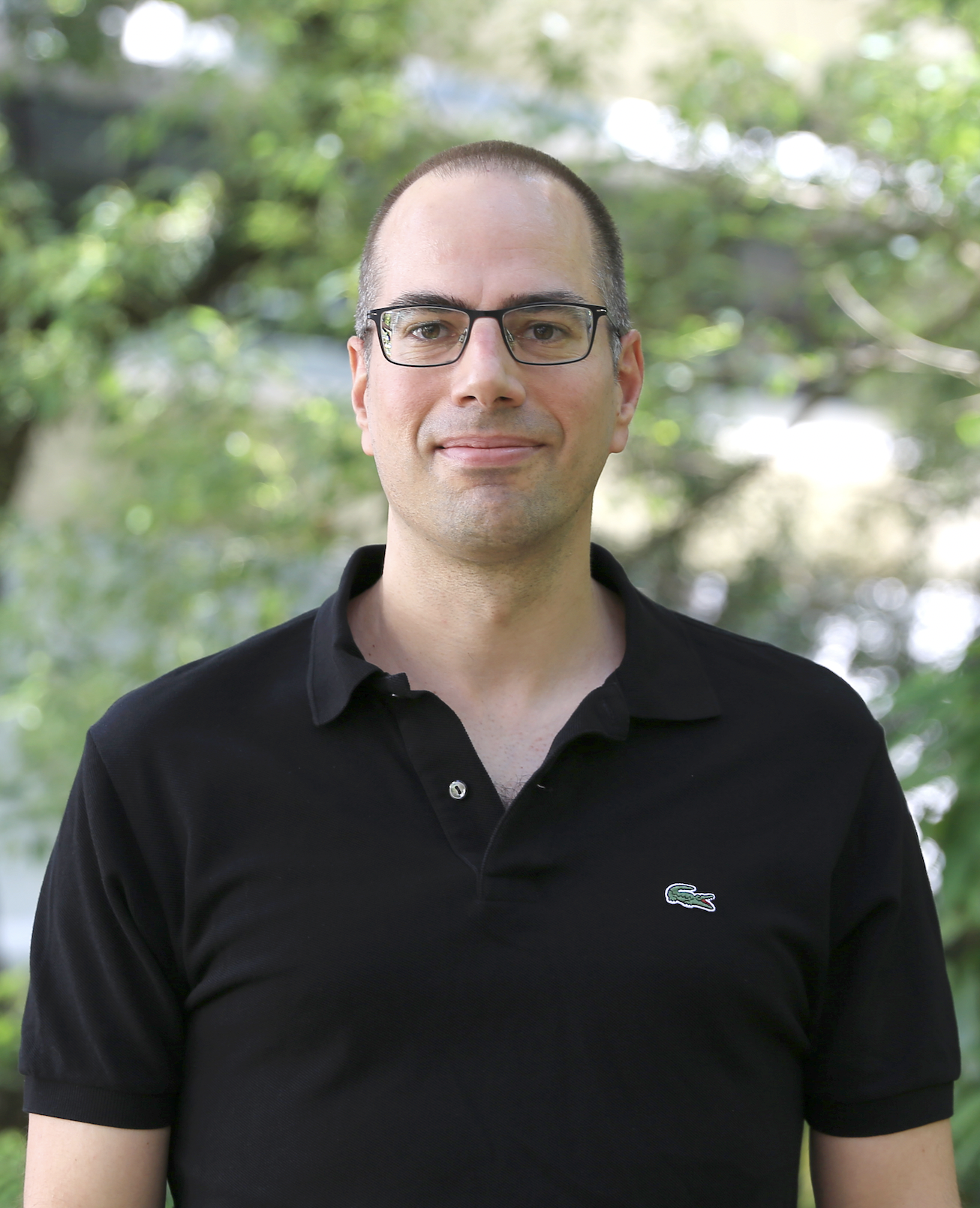
Marius Hofert serves as Associate Professor of Statistics in the Department of Statistics and Actuarial Science at The University of Hong Kong's School of Computing and Data Science, with office in Room 228 of the Run Run Shaw Building. His research fundamentally addresses statistical dependence structures and computational methodologies for risk assessment. His core research domains include: Copula theory and dependence modeling for complex stochastic systems Advanced Monte Carlo and quasi-random sampling techniques Quantitative risk management frameworks for financial and insurance applications Recent publications demonstrate increasing integration of machine learning with traditional statistical methods, particularly through generative neural networks for dependence modeling. His critical examinations of AI tools like ChatGPT in quantitative contexts reveal methodological pitfalls while exploring new computational frontiers. As Academic Adviser in Risk Management, he mentors PhD candidates with strong mathematical backgrounds. He actively develops open-source statistical software through R packages including copula , nvmix , and qrmtools , maintaining the Quantitative Risk Management tutorial website (qrmtutorial.org).
Hubert Tsz-Hong Chan is an Associate Professor in the Department of Computer Science, School of Computing and Data Science at The University of Hong Kong. He earned his PhD in 2007 from Carnegie Mellon University under the supervision of Anupam Gupta, followed by post-doctoral research at the Max-Planck-Institut für Informatik (2007-2009). Education PhD in Computer Science, Carnegie Mellon University, 2007 Research Interests Dr Chan's research lies at the intersection of algorithms , combinatorial optimisation , discrete metric spaces , and security & privacy . A recurring theme is the design of provably efficient approximation algorithms for geometric and graph-theoretic problems under realistic or adversarial settings. Representative contributions include polynomial-time approximation schemes (PTAS) for TSP and Steiner Forest in doubling metrics, spectral analysis of hypergraph Laplacians, and foundational work on differential obliviousness and oblivious RAM. Publications & Trends With more than 80 peer-reviewed papers in premier venues such as JACM , SIAM Journal on Computing , Algorithmica , FOCS , SODA , EUROCRYPT , ASIACRYPT , CCS , and WWW , his recent output (2018-2021) demonstrates a shift toward privacy-preserving algorithms, differential obliviousness, and socially-aware optimisation models, often combining rigorous theory with practical datasets like Netflix and Twitter. Scientific Awards IPDPS 2019 Best Paper Award WWW 2018 Honorable Mention Students & Mentoring Dr Chan has successfully graduated 17 PhD and MPhil students and currently mentors 7 PhD candidates and 1 MPhil student. His graduates have secured academic and industry positions worldwide, and their theses frequently build on his funded projects. Research Funding & Labs Since 2012 he has been Principal Investigator on 12 competitive grants from the Hong Kong Research Grants Council (RGC), totalling more than HK$8 million, spanning topics from privacy-preserving aggregation to Byzantine-resilient federated learning. While no dedicated laboratory name is advertised, his group operates within the Security & Privacy and Algorithms Labs in the Department of Computer Science.
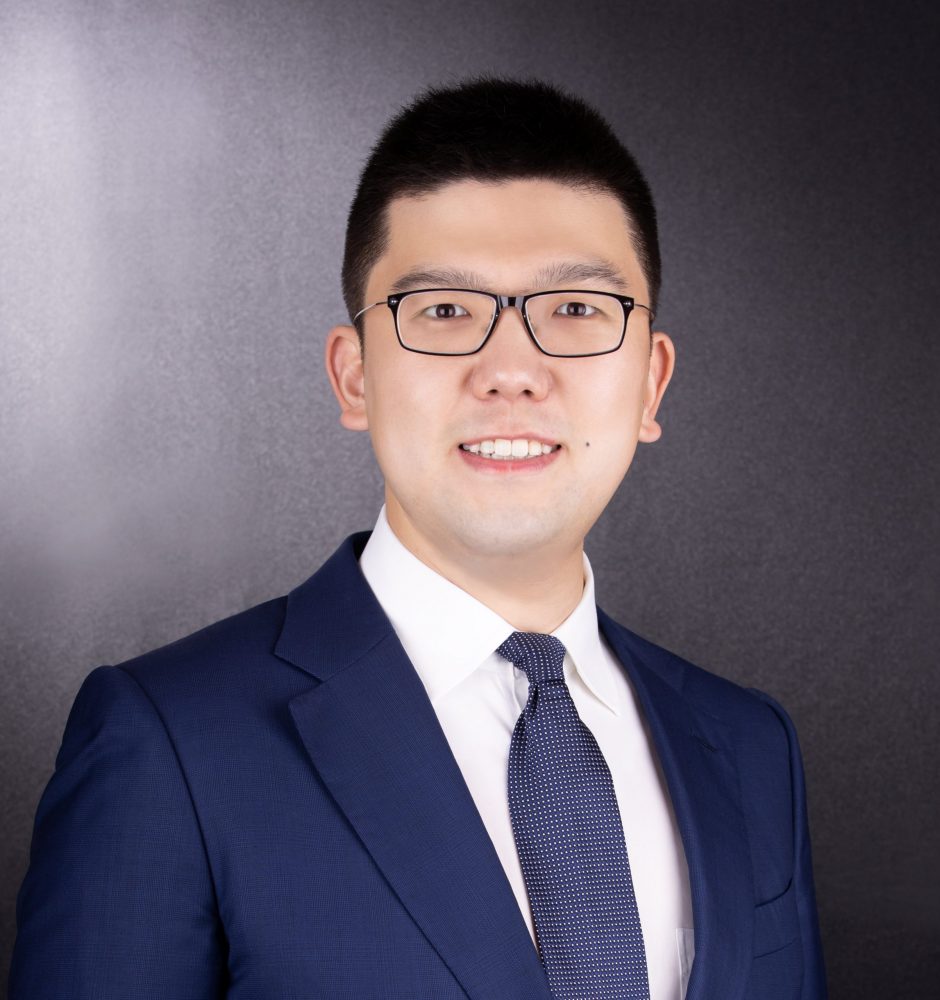
Ting Kei Pong is a Professor in the Department of Applied Mathematics at the Hong Kong Polytechnic University, where he has been employed since August 1, 2014. His research focuses on continuous optimization, with particular expertise in convex relaxations and first-order methods for large-scale optimization problems. Dr. Pong received his Bachelor's degree in 2004 and MPhil degree in 2006 from the Department of Mathematics at the Chinese University of Hong Kong. He completed his PhD in 2011 from the Department of Mathematics at the University of Washington under the supervision of Professor Paul Tseng, with co-advisement from Professors Maryam Fazel and Rekha Thomas after Professor Tseng's disappearance. His postdoctoral training included positions at the University of Waterloo (2011-2013) and the University of British Columbia (2013-2014) as a PIMS postdoctoral fellow. His research interests span Continuous Optimization , with current focus on convex relaxations and first-order methods for large-scale problems. He also investigates constraint qualifications for convex optimization, statistical computation, and robust optimization. His work bridges theoretical foundations with practical applications in areas such as compressed sensing, sensor network localization, and machine learning. Dr. Pong's publication record demonstrates consistent high-impact contributions to optimization theory. His recent work (2022-2025) shows a strong focus on convergence analysis, error bounds for conic optimization problems, and development of efficient algorithms for nonconvex optimization. His research often combines theoretical analysis with practical implementation, as evidenced by the availability of code for many of his publications. He serves as Associate Editor for Mathematics of Operations Research (since 2019) and on the editorial boards of Computational Optimization and Applications, Pacific Journal of Optimization, and Open Journal of Mathematical Optimization. Dr. Pong actively mentors students and postdocs, currently supervising PhD students Yanbo Wang and Hao Zhang, and postdoc Jiefeng Xu. His former students have secured positions at institutions including the University of Texas Arlington, University of Hong Kong, and Sun Yat-Sen University. His advising reflects his research expertise, with students working on topics in nonconvex optimization, compressed sensing, and matrix factorization. He maintains an active research schedule, regularly presenting at major optimization conferences including ICCOPT, ISMP, and SIAM Optimization. His upcoming talks in 2025 demonstrate continued research productivity in error bounds for log-determinant cones and single-loop proximal-conditional gradient methods.
Chi-Wing FU, Philip is a Professor in the Department of Computer Science and Engineering at The Chinese University of Hong Kong (CUHK). He holds dual roles in research and education, including Associate Editor-in-Chief of IEEE Computer Graphics and Applications. His research focuses on computer graphics, 3D vision, and human-computer interaction, with over 100 publications in top venues like SIGGRAPH, CVPR, and IEEE Visualization. Education: B.Sc. (1st Hons), Computer Science & Engineering, CUHK M.Phil., Computer Science & Engineering, CUHK PhD, Indiana University, Bloomington Research Interests: Dr. Fu's work spans 3D shape generation, computational LEGO design, AR visualization, and robotic interaction. He has pioneered projects like Make-A-Shape (large-scale 3D modeling) and DreamStone (text-driven 3D creation). His team also develops tools for medical data visualization and hand-object pose estimation. Recent Trends in Articles: Recent work emphasizes AI-driven creativity (e.g., LEGO art, text-to-3D systems) and real-time AR applications. His publications often bridge theory (e.g., generative models) with practical systems (e.g., user interfaces for design). Awards: Postgraduate Research Output Award (2023) MSRA Fellowship Nomination (2022) Best Associate Editor (IEEE CG&A) Outstanding Reviewer (ICCV 2021, CCF CAD/CG 2023) Advising & Grants: Supervised over 40 PhD/Master students and postdocs. Active in securing grants for projects like computational LEGO design (with Autodesk), medical AR visualization, and 3D generative AI. Collaborates with industry partners like Adobe and Huawei. Labs & Teams: Leads the Computational Design and Visualization Lab, focusing on 3D systems, robotics, and creative AI. Key projects include the LEGO Sketch Art toolchain and the HandShadowPoser AR system.
Yifan Chen is an Assistant Professor in the Department of Computer Science and affiliate faculty in the Department of Mathematics at Hong Kong Baptist University's Faculty of Science. He joined HKBU in Fall 2023 after completing his PhD in Statistics from the University of Illinois Urbana-Champaign in 2023 under the guidance of Prof. Yun Yang. His educational background includes: B.S. in Statistics from Fudan University (2018), advised by Prof. Juan Shen and Prof. Chenghong Zhang Ph.D. in Statistics from University of Illinois Urbana-Champaign (2023), advised by Prof. Yun Yang Dr. Chen's research focuses on developing efficient algorithms for machine learning, with particular emphasis on non-parametric models and neural networks featuring intensive matrix operations. His work bridges statistical theory with practical computational challenges in modern machine learning systems, especially those involving Transformers (language models) and Graph Neural Networks (GNNs). He approaches machine learning from both theoretical and applied perspectives, seeking to understand statistical structures while addressing real-world computational constraints. His publication record shows consistent output in top-tier venues including ICML, NeurIPS, KDD, and EMNLP, with recent work spanning graph coarsening, optimal transport, efficient language model fine-tuning, and causal inference. His research demonstrates strong mathematical foundations combined with practical applications in AI systems. Among his notable achievements: NSFC Young Scientists Fund (2025) GDSTC General Program funding (2024) RGC Early Career Scheme proposal grant (2024) ICML 2023 Grant Award ($1,500) Dr. Chen actively mentors students through his research group, supervising PhD students and visiting research assistants. He has successfully guided students who have gone on to PhD programs at institutions including Institute of Science Tokyo, HKU, Fudan, and NUS. His teaching includes COMP 7070 Advanced Topics in Artificial Intelligence and Machine Learning, which covers core machine learning concepts for AI application research, and COMP 2027 Applied Linear Algebra for Computing. His research group focuses on efficient machine learning algorithms, with current projects spanning graph neural networks, optimal transport, language model efficiency, and causal inference. He collaborates with researchers from institutions including UIUC, Fudan University, and industry labs like Amazon Alexa AI.
Jingcun Cao is an Assistant Professor at the University of Hong Kong, where he joined in 2020. He holds a Ph.D. in Marketing from Indiana University, an M.A. in Economics and Business from the same institution, and a B.S. in Computational Mathematics from Xiamen University. He also completed visiting programs at the University of Chicago Booth School of Business and National Tsing Hua University. His research addresses mobile app ecosystems, online education, healthcare, digital marketing, and environmental policy. Methodologically, he specializes in causal inference, applied machine learning, randomized field experiments, and econometrics. His collaborations with tech firms focus on business intelligence and big data analytics. Teaching responsibilities include courses such as Big Data Marketing (MKTG 3530), Introduction to Marketing (MKTG 2501), and executive education modules in MarTech, Business Analytics, and Brand Management. His publications analyze trends in digital platform governance, deep learning applications for consumer behavior, socioeconomic impacts of policy interventions, and mobile app monetization strategies. Research consistently integrates multidisciplinary approaches to solve industry-relevant problems. He is currently recruiting Research Assistants and holds pending patents for machine-learning algorithms related to marketing analytics.
Daniel W. C. HO is a Chair Professor of Applied Mathematics and Associate Dean (Undergraduate Education) at the College of Science, City University of Hong Kong. He has been with City University of Hong Kong since 1989, having previously served as a Research Fellow at the University of Strathclyde, Glasgow, UK from 1985 to 1988. Prof. Ho received first class honours in BSc, MSc, and PhD degrees in mathematics from the University of Salford, Greater Manchester, UK in 1980, 1982, and 1986, respectively. His academic journey began with foundational work in control theory and has evolved into a distinguished career spanning over three decades. Prof. Ho's research interests span multiple domains in control theory and systems engineering. His primary focus areas include Control Theory , Estimation and filtering theory , Complex dynamical distributed networks , Multi-agent networks , Nonlinear singular systems , and Stochastic systems . His work bridges theoretical advances with practical applications, particularly in networked control systems, cybersecurity for cyber-physical systems, and distributed optimization. Prof. Ho has made significant contributions to the understanding of synchronization phenomena in complex networks, resilient control under cyber attacks, and quantized control systems with communication constraints. His research has evolved from classical control theory to address contemporary challenges in networked and distributed systems, reflecting the changing landscape of control engineering. Prof. Ho's publication record shows a strong emphasis on secure control systems under cyber attacks, distributed optimization with communication constraints, event-triggered control schemes, quantized control systems, and synchronization of complex networks. His work demonstrates a consistent progression from theoretical foundations to addressing practical implementation challenges in cyber-physical systems, with increasing focus on security aspects in recent years. Prof. Ho has received numerous prestigious awards and honors throughout his career. He was named a Fellow of the Institute of Electrical and Electronics Engineers (IEEE) in 2017 and elevated to IEEE Life Fellow status in 2024. He was awarded the Chang Jiang Chair Professorship by the Ministry of Education, China in 2012. Prof. Ho has been recognized as a Highly Cited Researcher for eleven consecutive years from 2014 to 2024, and is among the Top 2% of most highly cited scientists globally from 2020 to 2024. He received the Best Paper Award from The 8th Asian Control Conference in 2011 and the Teaching Excellence Award from City University of Hong Kong in 2020 for his innovative teaching approaches. Prof. Ho has held significant editorial responsibilities, serving as Subject Editor of the Journal of Franklin Institute, Co-Editor in Chief of Franklin Open, Associate Editor of IEEE Transactions on Neural Networks and Learning Systems, Asian Journal of Control, and Action Editor of Neural Networks. He has also served on the editorial boards of several other prestigious journals, contributing to the advancement of his field through scholarly communication. His leadership extends beyond research and teaching as Associate Dean (Undergraduate Education) of the College of Science at City University of Hong Kong, where he plays a key role in shaping the educational experience for science students.