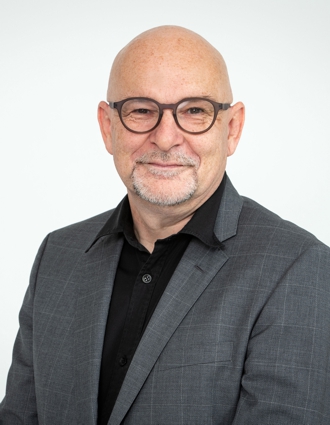
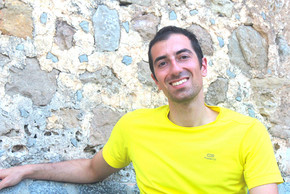
Muntaha Sakeena is a Junior Researcher in the Media Computing Research Group at the Institute of Creative\Media/Technologies, Department of Media and Digital Technologies, St. Pölten University of Applied Sciences (FHSTP) in Austria. She has held this position since 2017 and is currently on leave. Her educational background includes a Master's in Computer Engineering from NUST, Pakistan (2016) and a Bachelor's in Computer System Engineering from NFCIET, Pakistan (2012). Her research focuses on machine learning, image processing, pattern recognition, and computer vision applications across diverse domains including real estate analysis, environmental monitoring, medical imaging, and cybersecurity. She has contributed to projects such as: IMREA (Intelligent Multimodal Real Estate Assessment) Active deep learning for object detection Scribe ID AI InfraBase (Automatic Building Footprint Segmentation) ImmoAge (Visual Age Prediction of Real Estate) Her publications demonstrate consistent focus on computer vision applications, with recent work expanding into digital heritage preservation and environmental disaster response. Research trends show progression from medical imaging (2017-2018) toward geospatial and architectural analysis (2019-2023), utilizing deep learning methods like CNNs and level sets.
Bernward Asprion is a researcher at the Institute for IT Security Research within St. Pölten University of Applied Sciences, specializing in the Department of Computer Science and Security . His work focuses on data intelligence, multi-sensor systems, and digital transformation across industries like agriculture and automotive. Academic Rank: Researcher Department: Computer Science and Security Location: B - Campus-Platz 1 Research Interests include Digital Twins , Smart Farming , Cluster Analysis , and Signal Processing . He integrates IT Security and Data Science to optimize production planning and environmental monitoring. Key Publications (2022–2023) address digital agriculture, automotive forecasting, and multi-sensor land monitoring. Earlier works (1991–2000) explore operations research , ultrasound technology , and production planning in small-batch manufacturing.
Werner G. Müller is a full Professor and Head of Department at the Institute of Applied Statistics within the Kurt Rothschild School of Economics and Statistics (RoSES) at Johannes Kepler University Linz (JKU), Austria. He serves as Head of the Division for Data Acquisition and Data Quality and maintains an active teaching schedule including Statistical Inference, Introduction to Statistics and Data Science, and various seminars for the 2025 winter semester. Professor Müller's research spans several key areas in statistics with particular emphasis on Experimental Design and Spatial Statistics . His work bridges theoretical statistical methodology with practical applications in spatial econometrics, genomic modeling, and extreme value analysis. His research portfolio demonstrates a consistent focus on optimal experimental design under correlation structures, spatial prediction methods, and statistical approaches to complex data problems across various domains. The trends in his recent publications reveal a strong focus on advancing methodology for spatial statistics and experimental design, with increasing applications in genomic modeling and machine learning. His work consistently addresses challenges related to correlated observations, optimal sampling strategies, and prediction accuracy in complex statistical models. The interdisciplinary nature of his research connects traditional statistical theory with contemporary applications in data science and computational statistics. President of the Austrian Statistical Society (2014-2017) Co-editor of Statistical Papers (Springer) since 2010 Professor Müller has supervised numerous graduate students through master's seminars and thesis supervision. His research program is supported by multiple active projects including 'Bayesian Design for Combined Physical and Computer Experiments' and 'Spatial Econometrics,' reflecting his leadership in securing research funding. He has co-authored over 50 refereed journal articles and contributed to more than 70 additional publications, accumulating over 2,000 citations on Google Scholar. His book 'Collecting Spatial Data' and six co-edited volumes represent significant contributions to statistical literature. As Head of the Division for Data Acquisition and Data Quality, Müller leads research initiatives focused on experimental design methodology and spatial statistics. His team collaborates on projects spanning statistical literacy, applications of statistical methods, and specialized research in spatial econometrics. The research seminar he leads features prominent statisticians including Holger Dette and Thomas Kneib, indicating his central role in connecting the JKU statistics community with international experts.
Matthias Neubauer is a Professor at the University of Applied Sciences Upper Austria (FH Oberösterreich), based at the FH Steyr campus and affiliated with the LOGISTIKUM Center of Excellence for Logistics. His research focuses on Smart Automation and Robotics within logistics and transport systems, with an h-index of 6 and 180 citations from 75 research outputs since 2010. Neubauer's research centers on logistics and intelligent transportation systems, including Subject-oriented Business Process Management (S-BPM), Truck Platooning, Cooperative Intelligent Transport Systems (C-ITS), and the Physical Internet. He investigates supply chain resilience, automated driving integration, and sustainable mobility solutions through projects like LOG-HyFAR and LOG-UNITE. His recent publications (2024-2025) analyze C-ITS services using system dynamics and field studies, revealing impacts on traffic efficiency, environmental sustainability, and driver acceptance. Key themes include cooperative routing, GLOSA/CACC synergy, and Austrian fleet integration challenges. Scientific Awards: No awards documented in provided materials Neubauer supervises graduate research (4 students documented) and leads 9 active projects including LOG-HyFAR (hybrid fleets for regional development), LOG-Auto.Ready (automated mobility framework), and LOG-UNITE (fleet conversion evaluation). His work receives Austrian government funding through the Fachhochschule OÖ dissertation program. Current Focus: Hybrid fleet automation, C-ITS deployment, sustainable transport policy Methodologies: System dynamics, field studies, agent-based modeling As a core member of LOGISTIKUM, Neubauer collaborates with regional mobility labs across Upper Austria and participates in national initiatives like 'Connecting Austria'. His research network spans C-ITS validation, automated driving test regions (e.g., DigiTrans), and Physical Internet implementation.
Michael Reichelt is a researcher affiliated with the Institute of Applied Mathematics , focusing on computational methods and simulations in engineering and physics. His work spans finite element analysis, multigrid techniques, and space-time modeling for complex systems. Research interests include: Fundamental and applied numerical mathematics Space-time finite element methods for parabolic equations Contact simulations in elasto-hydrodynamic systems Isogeometric analysis for electric machine modeling Magnetohydrodynamic stability in tokamaks Recent publications highlight advancements in optimal control problems, multigrid efficiency, and transient simulations using IGA. His activities involve presenting at international conferences on computational techniques.
Peter Auer is a Professor affiliated with the Institute of Machine Learning and Neural Computation . His research spans Computer Science , focusing on Machine Learning , Pattern Recognition , and Artificial Intelligence . Key contributions include work on boosting algorithms, feature extraction, and visual information systems. Projects : Learning for Adaptable Visual Assistants (LAVA) (2002-2005) Research Trends : Publications emphasize object recognition , feature vectors , and hierarchical document repositories , with applications in computer vision and information retrieval.
Roberto Maria Rosati is a Research Associate at the Institute of Transport Economics and Logistics at WU Vienna (Research Institute for Supply Chain Management). He holds a PhD in Industrial and Information Engineering from the University of Udine (2020–2024) and has previously served as a Research Associate at the same institution. PhD studies: 2020–2024, University of Udine Master's degree: 2015–2016, University of Udine (jointly with FH Joanneum) Bachelor's degree: 2011–2015, University of Udine His research focuses on optimization methodologies, particularly combinatorial optimization and multi-neighborhood search algorithms. He has contributed to logistics and supply chain management research through academic positions and industry experience. He currently teaches Business Analytics II and has prior professional experience as an IT Consultant and Project Manager at OverIT SpA (2016–2020). His academic work bridges theoretical optimization techniques with practical applications in transport economics and logistics. He has held visiting positions at Vienna University of Technology (2021) and IIIA-CSIC, Barcelona (2021).
PD Dr. Thomas Rusch serves as Deputy Head of the Competence Center for Empirical Research Methods at the Vienna University of Economics and Business (WU Vienna), where he provides statistical consultation and supports faculty and graduate students in applying appropriate statistical methodologies. He has also taught at Harvard University (2019-2021) and FH Technikum, delivering courses in applied statistics, data analysis, computational statistics, and related fields. His educational background includes: Habilitation ("Venia Docendi") in Statistics, Vienna University of Economics and Business (2021) Doctoral studies in Social and Economic Sciences, majoring in Statistics, Vienna University of Economics and Business (2012) Master's degree in Statistics, University of Vienna (2010) Graduated with a degree in Psychology, University of Vienna (2008) Bachelor's degree in Statistics, University of Vienna (2007) Dr. Rusch's research focuses on improving various aspects of modern data analysis, with particular emphasis on discrete data analysis, data mining and statistical learning, exploratory data analysis and visualization, multivariate statistics, natural language processing, and psychometrics. His work bridges statistical methodology with applications in social and behavioral sciences, especially business research and youth mental health. He is particularly known for his contributions to multidimensional scaling, clustering algorithms, and psychometric modeling. His recent publications demonstrate a strong trend toward developing and applying advanced statistical methods to solve real-world problems. His work spans computational statistics, with a focus on R programming implementations, categorical data analysis, and applications in clinical psychology and business analytics. Many of his recent papers address challenges in data visualization, model stability, and the application of machine learning techniques to social science data. His scientific achievements have been recognized with multiple WU Awards for Outstanding Research Achievements (2017, 2018, 2019, 2021, 2022). As a statistical consultant, Dr. Rusch has advised numerous faculty members and graduate students on research methodology and data analysis. He has also been active in developing statistical software, particularly R packages for data analysis and visualization. His collaborative work extends to international projects, including research on youth mental health interventions in Kenya. He is actively involved in organizing academic events, such as the Vienna Workshop on Data and Model Visualisation, and serves as a reviewer for prominent journals in computational statistics.
Ann-Kristin Thienemann is a Researcher at the University of Applied Sciences Upper Austria (FH OÖ), Steyr campus, affiliated with the Center of Excellence for Smart Production within the Department of Production and Operations Management. She actively contributes to the Josef Ressel Centre for Data-Driven Business Model Innovation (2023-2027) as a Co-Investigator, collaborating on projects spanning business model innovation, supply chain systems, and digital transformation initiatives. Her research centers on Supply Chain Management with emphasis on Circular Supply Chains, where she pioneers methodologies for Environmental and Social Performance Evaluation. Key interests include Digital Sustainability frameworks, Revenue Ratio optimization in allied supply chains, and ontological approaches to SWOT Analysis. Her work integrates quantitative market segmentation techniques with sustainability metrics to address weaknesses in current performance measurement systems. Recent publications (2024-2025) reveal a strong trend toward data-driven sustainability solutions, combining PCA-based market segmentation with environmental impact assessment. Her Procedia Computer Science articles demonstrate cross-disciplinary innovation in applying computational methods to supply chain finance, customer satisfaction digitalization, and granular strategic analysis. Scientific recognition includes: Certificate of Appreciation (Best Reviewer Award, 2024) Thienemann serves as a peer reviewer for academic publications while advancing research through the Josef Ressel Centre grant. Her collaborative projects involve multi-institutional teams developing actionable recommendations for business model innovation, particularly in supply chain cost-profit distribution and digital customer experience enhancement. She operates within the Center of Excellence for Smart Production, a research hub focused on Industry 4.0 applications where her team develops data-driven methodologies for sustainable operations management and market-responsive business models.
Bogdan Burlacu serves as R&D-Headquarters at the Center of Excellence for Smart Production HEAL at University of Applied Sciences Hagenberg. With an ORCID identifier 0000-0001-8785-2959 and h-index of 10 (619 citations), he maintains active research leadership through 2025. His research focuses on Symbolic Regression and Genetic Programming, with significant contributions to Multiobjective Optimization and Benchmark Problems. Key application areas include Explainable AI systems, hardware acceleration for evolutionary algorithms, and astrophysical modeling. His work demonstrates strong interdisciplinary connections between computer science and physical sciences. Recent publication trends show increasing focus on interpretability frameworks and domain-expert validation in symbolic regression, with notable applications in cosmology and engineering systems. His 2025 publications emphasize practical benchmarking methodologies and hardware acceleration techniques. Burlacu actively supervises research through two documented supervised works and contributes to major collaborative projects. He leads research activities within the Center of Excellence for Smart Production HEAL and participates in the Josef Ressel Center for Symbolic Regression. His work integrates distributed intelligence systems with rapid prototyping methodologies for industrial applications.
Florian Christian Holzinger is a Researcher at the University of Applied Sciences Upper Austria, Campus Hagenberg, specializing in predictive maintenance and industrial optimization. He is affiliated with the Center of Excellence for Smart Production and the HEAL Produktion und Operations Management department. His research focuses on Predictive Maintenance (83%) , Machine Learning , and Multi-criteria Optimization with applications in radial fan systems and manufacturing. Key research areas include sensor-based health prediction, concept drift detection, and data acquisition systems for industrial applications. His publication trends show consistent output in computer-aided systems theory with emphasis on EUROCAST conference proceedings. Recent work (2023-2025) explores constraint-based regression methods, composable evolutionary computation, and workflow optimization in manufacturing. Dr. Holzinger has participated in multiple research projects including DigiVent (2017-2020) for predictive maintenance of industrial radial fans and FlashCheck (2017-2020) for arc detection in DC networks using compressed sensing.
Lukas Kammerer is a Research Fellow at the University of Applied Sciences Upper Austria, specifically affiliated with the Research Center Hagenberg Center of Excellence for Smart Production and the Focal area ICT - Information & Communications Technology. His work bridges computer science methodologies with astrophysical applications, particularly in symbolic regression and emulator development. His primary research areas include: Symbolic Regression and its theoretical foundations Genetic Programming efficiency analysis Development of analytic emulators for cosmological simulations Bias-variance tradeoffs in regression methods Precise modeling of matter power spectrum Nonlinear optimization techniques for function extraction Dr. Kammerer's publication record demonstrates strong interdisciplinary work connecting computer science with astrophysics. His recent publications show increasing sophistication in developing symbolic representations of complex physical phenomena, with applications ranging from machine learning benchmarks to cosmological modeling. The dual focus on methodological improvements in symbolic regression and their concrete applications in astrophysics represents a distinctive research trajectory. As a Co-Investigator on major research projects including the Josef Ressel Zentrum für Symbolische Regression (2018-2022) and EREMA Recycling 4.0 (2017-2019), he has secured significant research funding and collaborated with international teams across multiple scientific domains. His work is associated with the HEAL research group at the University of Applied Sciences Upper Austria, which focuses on computational methods for scientific applications, particularly in the domains of symbolic regression and its practical implementations.
Johannes Alexander Karder is an Assistant Professor at Upper Austria University of Applied Sciences (Research Center Hagenberg), specializing in Information & Communications Technology (ICT) under the HEAL focal area. His research focuses on optimization algorithms, metaheuristics, and simulation modeling. Focal area: ICT - Information & Communications Technology Institution: Upper Austria University of Applied Sciences Collaborations: Active in international projects (Austria, Germany, Spain) Research interests include: Dynamic Optimization Fitness Landscape Analysis Network Optimization Crane Scheduling Personnel Planning Evolutionary Algorithms Recent publications (2024-2025) demonstrate expertise in: Dynamic Stacking Optimization Concurrent Crane Scheduling Self-Adaptive Optimization Fitness Landscape Metrics Robust Production Systems Simulation-Based Decision Making He contributes to projects like adaptOp (Josef Ressel Center for Adaptive Optimization) and SimGenOpt2, focusing on production planning and control using heuristic methods.
Dejan Nickovic is a Senior Scientist specializing in Security & Communication Technologies. His research focuses on Computer Science , Cyber-Physical Systems , and Formal Verification . Key roles : International Programme Committee Member (Design, Automation and Test in Europe Conference, Runtime Verification Conference, QEST+FORMATS, Formal Methods Symposium). Research areas : Temporal Logic, Autonomous Driving Verification, Runtime Monitoring, AI Integration, and IoT Applications. Recent work spans safety monitoring specifications, distributed system monitoring, and AI-quantum integration, emphasizing formal methods and verification techniques. Scientific awards : Best Paper Award (2022) RV Test of Time Award (2021)
Judith M. Rollinger is a Full Professor of Pharmacognosy and Pharmaceutical Biology at the University of Vienna's Faculty of Life Sciences, where she heads the 'Phytochemistry & Biodiscovery' division. She serves as a Member of the Senate of the University of Vienna and maintains an active research program focused on natural product drug discovery. Education: Magister in Pharmacy, University of Innsbruck (1983-1990) PhD in Pharmacognosy, University of Innsbruck (1995-1999) Habilitation in Pharmacognosy, University of Innsbruck (2007) Research Focus: Her work integrates ethnopharmacology with computational and experimental approaches to discover bioactive natural products against viral infections (especially influenza), inflammatory processes, and metabolic disorders. She pioneers in silico techniques like molecular modeling combined with phenotypic screening using Caenorhabditis elegans models. Her group also investigates cardiotoxic compounds in botanicals and quality control of natural medicines. Publication Trends: Her 135+ publications demonstrate consistent focus on pharmacognosy innovations, with recent work emphasizing computational screening models, antiviral natural products, and mechanisms of healthy aging. Research frequently bridges traditional medicine knowledge with modern drug discovery paradigms. Awards & Honors: Science Award 2020 (Vorarlberg) KIWIE Silver Medal (2010) PHOENIX Science Prize (2005) Multiple recognition awards from Innsbruck University Leadership: Coordinates major projects including FWF doc.funds 'Anti-Infectives Drug Discovery' (2025-2029) and Schwabe Innovation Challenge (2022-2025). Currently Vice-President of the Society of Medicinal Plants and Natural Product Research and editorial board member of the Journal of Natural Products .