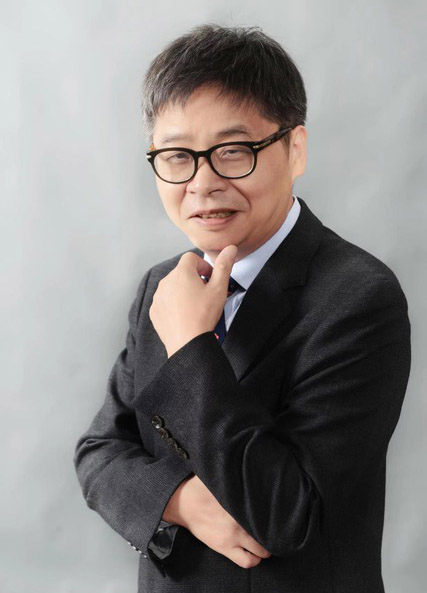
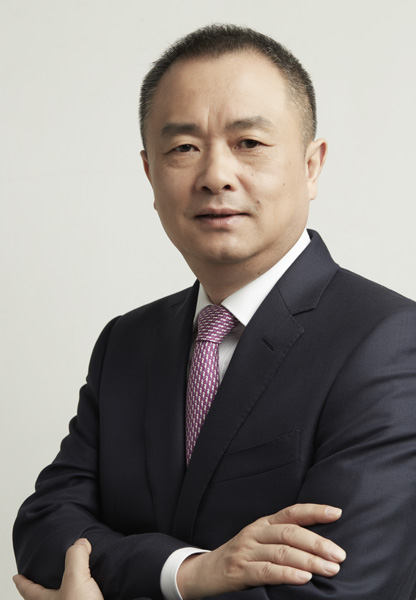
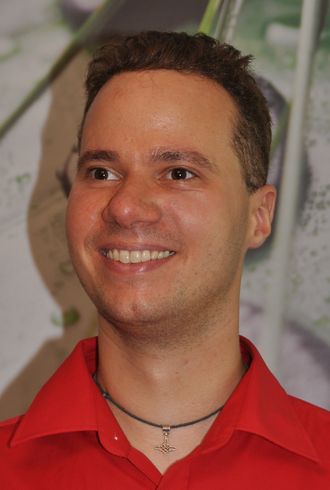
Horst Bischof is a Professor at the Institute for Computer Graphics and Vision at Graz University of Technology, Austria, and serves as Vice Rector for Research. He holds an M.S. and Ph.D. from Vienna University of Technology and a Habilitation (venia docendi) in applied computer science. His research focuses on computer vision, medical image processing, and robot vision, with over 750 peer-reviewed publications. He has organized major conferences like CVPR 2015 and ECCV 2018, and serves on editorial boards of prestigious journals. Key awards include the Most Influential Paper over the Decade Award (MVA 2019), Jan Konderink Award (ECCV 2018), and the 29th Pattern Recognition Award (2002). His work spans object recognition, medical computer vision, and visual learning. He leads research teams in robot vision and collaborates with industry partners like Infineon Technologies. Current projects include LiDAR-based sensing systems, autonomous vehicle technologies, and medical imaging solutions like MedEyeTrack for eye tumor treatment. His research emphasizes practical applications in robotics, automotive, and healthcare sectors.
Thomas Pock is a Professor at the Institute of Visual Computing at TU Graz. His research focuses on computer vision, optimization methods, and mathematical models in computer vision, with significant contributions to medical imaging and inverse problems. He leads projects integrating deep learning with traditional variational methods for applications in MRI reconstruction, microscopy, and cardiac signal analysis. His work emphasizes efficient sampling techniques, uncertainty quantification, and algorithmic optimization in computational imaging. Education and academic background are not explicitly detailed in the provided texts, but his extensive publication record indicates expertise in interdisciplinary areas such as biomedical engineering, signal processing, and machine learning. Key research themes include variational networks, total variation methods, and generative adversarial networks (GANs) for image reconstruction and segmentation. His research spans collaborations in both academic and clinical settings, addressing challenges in 3D reconstruction, particle flow estimation, and cardiac electrophysiology modeling. Notable projects include Total Deep Variation and inverse Eikonal methods for medical data analysis. He actively contributes to open-source tools and frameworks for variational optimization and deep learning integration.
Minyi Guo is a Chair Professor and Head of the Department of Computer Science and Engineering at Shanghai Jiao Tong University (SJTU), China. Previously, he served as Professor and Department Chair at the School of Computer Science and Engineering, University of Aizu, Japan. Dr. Guo received his BSc and ME degrees from Nanjing University, China in 1982 and 1986, and his PhD from University of Tsukuba, Japan in 1998. Dr. Guo's educational background includes: BSc in Computer Science, Nanjing University, China (1982) ME in Computer Science, Nanjing University, China (1986) PhD in Computer Science, University of Tsukuba, Japan (1998) Dr. Guo's research spans multiple areas in computer science, with a primary focus on parallel/distributed computing , compiler optimizations , cloud computing , database systems , and big data . He has published over 400 papers including approximately 150 in major journals and 250 in international conferences, with more than 60 papers in IEEE/ACM transactions and over 100 papers in prestigious conferences. Dr. Guo has also authored 7 books (4 in English, 3 in Chinese) and received 5 best/highlight paper awards from international conferences. Dr. Guo's publication record demonstrates strong contributions across multiple domains of computer systems research. His recent work shows particular emphasis on big data processing, edge computing, graph neural networks, and data center optimization. The publications reveal a consistent trajectory of impactful research in parallel and distributed systems, with increasing focus on AI/ML applications and blockchain technologies in more recent years. Dr. Guo has received numerous prestigious awards and honors: State Technological Invention Award of China (second class award, 2019) Shanghai Technological Invention Award (first class award, 2018) IEEE Technical Committee on Scalable Computing Award for Excellence in Scalable Computing (2018) Ministry of Education Natural Science Award (first class award, 2017) IEEE Fellow (2017) Chief Scientist of National Basic Research Project (973 Program, 2014) Recruitment Program of Global Experts (2010) Excellent Academic Leaders of Shanghai (2010) National Science Fund for Distinguished Young Scholars (2007) As an academic leader, Dr. Guo has served as Department Head for ten years, managing a department with over 100 faculty members and 1000+ students. Under his leadership, the department was promoted to the top tier in China and ranked among the top 40 in the world. He has secured significant research funding, including serving as Chief Scientist of the prestigious 973 Program in 2014 and receiving the National Science Fund for Distinguished Young Scholars in 2007. Dr. Guo has also been selected for the Recruitment Program of Global Experts in China (2010). Dr. Guo actively contributes to the academic community as an associate editor of IEEE Transactions on Parallel and Distributed Systems, IEEE Transactions on Cloud Computing, and Journal of Parallel and Distributed Computing. He has served as General/Program Chair for IEEE conferences and delivered keynote speeches at well-established conferences. His research group has developed practical technologies with industry impact, including 28 licensed patents, some of which have been transferred to companies like Alibaba.
Mei Hong is a Professor and Vice President for HR and International Collaboration at Beijing Institute of Technology. Previously held roles include Professor and Vice President at Shanghai Jiao Tong University (2013-2016), Director of key national research centers at Peking University, and leadership positions in software engineering education and research. Holds dual academic leadership and technical expertise in software engineering. Education: BSc/MSc (Nanjing University of Aeronautics & Astronautics, 1984/1987); PhD (Shanghai Jiao Tong University, 1992). Research focuses on software architecture, cloud computing systems, component-based engineering, and software testing. Has pioneered the 'Internetware' paradigm and contributed to national standards for software development. Publications span software engineering methodologies and tools, with recent work emphasizing mobile computing optimization and automated testing techniques. Over 20 awards including IEEE Fellow (2014), Member of Chinese Academy of Sciences (2011), and multiple best paper awards. Advisory roles include Alibaba DAMO Academy's Academic Board, China's National Key R&D Program, and leadership in 863 High-Tech Program committees. PI of 40+ grants totaling over 200 million CNY. Editorial leadership includes SCIENCE CHINA-Information Sciences (Editor-in-Chief since 2018), ACM Computing Surveys, and top-tier journals/conferences. Active in conference organization (General Chair for ICSME 2017, SPLC 2016).
Aravind Srinivasan is a Professor in the Department of Computer Science at the University of Maryland, USA, since 2006. He was previously an Associate Professor with Tenure (2001-2006) and has held roles at Bell Laboratories and the National University of Singapore. B. Tech. , Indian Institute of Technology Madras Ph.D. , Cornell University His research focuses on randomized algorithms, social networks, combinatorial optimization, and probabilistic methods, with applications in public health, machine learning, energy, and networking. He explores the intersection of algorithms and networks, applying these techniques to domains like the social Web, biology, and energy systems. Elected Fellow of the ACM (2015), AAAS (2012), IEEE (2010), and EATCS (2017) Distinguished Faculty Award (University of Maryland, 2016) Distinguished Alumnus Award (IIT Madras, 2016) IBM Graduate Fellowship (1992) and Cornell Research Fellowship (1992) Best Paper/Best Student Paper Awards at conferences Dr. Srinivasan has mentored PhD students who now hold tenure-track positions, work in research labs (AT&T, IBM), major corporations, and U.S. Government agencies, while some have founded startups. He has served as Editor-in-Chief of the ACM Transactions on Algorithms and delivered keynote lectures globally.
Ulrich Bauer is an Associate Professor in the Department of Mathematics at Technical University of Munich (TUM), leading the Applied & Computational Topology group. His research focuses on topology and geometry, particularly persistent homology, discrete Morse theory, and geometric complexes, supported by DFG and MDSI grants. He developed Ripser, a leading software for computing Vietoris–Rips persistence barcodes, and contributed to PHAT, a persistent homology library. Bauer holds editorial roles at Foundations of Computational Mathematics , Journal of Applied and Computational Topology , and SIAM Journal on Applied Algebra and Geometry . He is a core member of the Munich Data Science Institute (MDSI) and a principal investigator at the Munich Center for Machine Learning (MCML). His academic journey includes a PhD from the University of Göttingen and postdoctoral work at IST Austria under Herbert Edelsbrunner. Research Interests: Bauer's work bridges computational topology and geometry, with applications in topological data analysis. His key areas include persistent homology algorithms, discrete Morse theory, and geometric complexes. Recent focus includes Reeb graph analysis, stability theorems, and topological machine learning. His software tools (e.g., Ripser) are widely used in academia and industry. Publications Trends: Bauer's recent work emphasizes theoretical foundations (e.g., Reeb graph stability, Morse theory) and practical software development. His articles often address computational efficiency, algorithmic innovation, and interdisciplinary applications in data science and machine learning. Scientific Awards: None explicitly listed. Grants & Funding: DFG Collaborative Research Center (Discretization in Geometry & Dynamics), Munich Data Science Institute (MDSI). Labs & Teams: Leads the Applied & Computational Topology group at TUM, collaborates with MDSI and MCML. His advisory roles include the DFG CRC board and EPSRC's Centre for Topological Data Analysis.
Gernot Bodner is a Senior Lecturer at the University of Natural Resources and Life Sciences, Vienna (BOKU), specializing in Plant Production Ecology. His research focuses on sustainable agricultural practices, soil health, root system biology, and precision agriculture. He holds teaching authorizations in Plant Production Ecology and actively engages in interdisciplinary projects combining field experimentation with advanced imaging and machine learning techniques. His work emphasizes soil organic carbon dynamics, conservation farming systems, and the integration of remote sensing technologies for crop monitoring. Key contributions include studies on root architecture, soil compaction mitigation, and microbial contributions to soil health. He leads initiatives like the FARM/IT project to enhance climate resilience in farming systems through digital technologies. Recent research highlights include advancements in 3D root imaging, spectral analysis for soil health assessment, and evaluating SOC sequestration potentials in Austrian arable soils. His methodologies bridge traditional agronomy with cutting-edge analytical tools, aiming to optimize resource use efficiency and ecological sustainability. Collaborations span international institutions, particularly in China and Russia, addressing global challenges in soil management and climate adaptation.
Benjamin Roth is a Professor at Saarland University holding dual affiliations in the Faculty of Computer Science (Research Group Data Mining and Machine Learning) and the Faculty of Philological and Cultural Studies (Department of European and Comparative Literature and Language Studies). His research focuses on natural language processing, large language models, machine learning, and computational linguistics. He leads multiple active research projects including 'Understanding Language in Context' (2025–2033) and 'Linguistic Methods for the Detection of Implicit Abuse' (2024–2027). Notable collaborations span cross-functional studies on LLM behavior, clinical text analysis, and knowledge graph integration. He actively participates in conference organization and has presented at venues like the Konferenz zur Verarbeitung natürlicher Sprache (2024). His work emphasizes methodological innovation in weak supervision, model calibration, and multimodal reasoning. Recent contributions include studies on persona effects in LLMs, specification overfitting mitigation, and zero-shot temporal relation extraction. He has co-authored over 20 peer-reviewed publications since 2020, with a focus on advancing ethical AI, model interpretability, and NLP education.
Siegfried Benkner is a full Professor at the Vienna University of Technology (TU Wien) within the Faculty of Computer Science and leads the Research Group for Scientific Computing. His work focuses on high-performance computing (HPC), parallel programming models, runtime systems, and performance optimization for heterogeneous architectures. He has actively contributed to EU-funded projects such as TROCI (2024–2027) and PEPPHER, addressing resilience in critical infrastructures and programmability for exascale systems. His research spans topics like task-based runtime systems (OCR-Vx), autotuning frameworks (Periscope PTF), and performance portability for GPUs/Xeon Phi architectures. Recent interests include accelerating graph neural networks via novel matrix compression formats and cloud-edge continuum systems for eHealth applications. Prof. Benkner has published over 270 articles, with a focus on runtime systems, parallel patterns, and HPC infrastructure. His work emphasizes practical applications, including semantic data management for medical research and cloud-based analytics frameworks for big data processing in cellular networks. He has led multiple EU projects (9 total), including the 2024 initiative on exascale computing and resilience, and frequently presents at conferences like Euro-Par and Supercomputing events. His activities include media engagement on topics like exascale hardware trends and HPC challenges.
Univ.-Prof. Hannes Pichler is a Professor and Group Leader of the Pichler Group - Quantum Science Theory at the University of Innsbruck's Institute for Quantum Optics and Quantum Information. His research focuses on quantum simulation, quantum computing, and many-body quantum systems using Rydberg atom arrays. He leads a multidisciplinary team including postdocs and PhD students working on topics such as quantum entanglement, topological order, and error-corrected quantum processors. Education and affiliations: No explicit details provided, but his group is part of the IQOQI, a leading quantum research center in Innsbruck. His work integrates theoretical physics with experimental platforms like neutral atom arrays. Research interests emphasize quantum many-body scars, categorical symmetries, and scalable quantum hardware. Recent publications highlight advances in adiabatic optimization, Hamiltonian learning, and topological entanglement protocols. Scientific awards: None explicitly listed in available texts. Advising and grants: Supervises 9 PhD/Master students and multiple postdocs. Group members include Lisa Bombieri, Francesco Cesa, and Giuliano Giudici. Collaborates on projects involving quantum RAM, error correction, and combinatorial optimization using programmable atom arrays. Labs/Teams: Operates the Pichler Group within IQOQI, focusing on theoretical and experimental quantum science. Active in developing quantum algorithms and hardware architectures for next-generation quantum processors.
Markus Schedl is a Full Professor at Johannes Kepler University (JKU) Linz, Austria, leading the Multimedia Mining and Search (MMS) group at the Institute of Computational Perception. He also heads the Human-centered Artificial Intelligence (HCAI) group at the Linz Institute of Technology (LIT) AI Lab. His expertise spans recommender systems, information retrieval, algorithmic fairness, and music technology. He holds a PhD from JKU and degrees from TU Wien, WU Wien, and the University of Gothenburg. His research focuses on hybrid AI for personalization, ethical AI, and music data mining, with industry collaborations at Siemens, Spotify, and Deezer. Key projects include the FAME challenge for face-voice association and work on bias mitigation in recommendation systems. He teaches courses such as Introduction to Machine Learning and Multimedia Search at JKU, and has guest-lectured internationally. Publications emphasize AI ethics, music playlist analysis, and multimodal learning. His work addresses fairness, transparency, and user-centric design in AI systems.
Prof. Clemens Heitzinger is an Associate Professor at TU Wien, affiliated with the Forschungsbereich Machine Learning (E194-06) . His research focuses on interdisciplinary applications of machine learning, computational methods, and nanotechnology. Key areas include reinforcement learning for healthcare optimization, stochastic modeling of PDE systems, and Bayesian inversion in sensor design. He leads the project PDE models for nanotechnology under the Scientific Computing and Modelling department (E101-03). His work spans medical imaging (e.g., electrical impedance tomography), nanopore sequencing, and nanoscale sensor development. Notable contributions include algorithms for corticosteroid therapy optimization in sepsis and superhuman performance in sepsis prediction via distributional reinforcement learning. He has advised over 13 PhD and Master's students, including Tobias Kietreiber, Sebastian Bittner, and Leila Taghizadeh. His research methodologies integrate machine learning with numerical analysis, emphasizing uncertainty quantification and PDE modeling. Recent trends in his publications highlight applications in personalized healthcare, industrial anomaly detection, and computational fluid dynamics in nanoscale systems. While no scientific awards are explicitly mentioned, his work has been published in high-impact journals and conference proceedings, reflecting his contributions to computational science and engineering.
Andreas Fellner is a Researcher at TU Wien's Scientific Computing and Modelling department, focusing on interdisciplinary research spanning biomedical engineering, computational neuroscience, and software testing. His work integrates numerical simulation techniques like the finite element method (FEM) with biological systems, particularly neural stimulation modeling in cochlear implants and retinal ganglion cells. He has contributed to understanding excitation thresholds, block phenomena in neurons, and optimizing electrode placements in auditory nerve stimulation. Fellner also bridges computer science and neuroscience through mutation testing frameworks and algorithmic test case generation methods. Key research areas include neural modeling using COMSOL, auditory nerve fiber response simulation, and improving medical device efficacy through computational analysis. His collaborations span fields such as neuroprosthetics, cellular biophysics, and formal software verification. Fellner has supervised multiple graduate theses on topics like 3D auditory nerve fiber structures and EEG noise reduction, reflecting his mentorship in both engineering and computational biology domains.
Peter Sykacek is a researcher at the Institute of Computational Biology, Department of Biotechnology and Food Science, University of Natural Resources and Life Sciences, Vienna (BOKU). He holds the academic title of Privatdozent and has served as Head of Analytical Method Development at the Science Chair of Bioinformatics since 2006. His research integrates computational biology, bioinformatics, and machine learning to address complex biological questions in molecular biology, medical biotechnology, and systems biology. His research interests are centered on computational biology , bioinformatics , and machine learning , with a strong emphasis on statistical and probabilistic modeling . He applies these methods to diverse domains including genomics (RNA-seq, microarrays), proteomics, plant phenotyping, and medical biotechnology. His work often involves the development of novel computational frameworks for data analysis, such as for protein complex prediction, kinase activity assays, and root system modeling. The analysis of his recent publications reveals a consistent trend in applying advanced machine learning and statistical methods to biological data. His work spans from fundamental methodological developments in probabilistic modeling and force field validation to applied research in agricultural science (e.g., root phenotyping in Vicia faba) and medical biotechnology (e.g., EGFR mutation analysis, extracellular vesicle profiling). A key theme is the use of computational tools to extract meaningful biological insights from high-dimensional datasets. Dr. Sykacek has supervised numerous academic theses, including master’s and doctoral projects, indicating an active role in mentoring the next generation of scientists. He has been involved in organizing scientific workshops and has served as a reviewer for prominent journals such as Bioinformatics , Nature Biotechnology , and Scientific Reports , reflecting his standing in the academic community. He has contributed to several research projects, including the TD0801 project on statistical challenges in plant genome sequences, and has been a key participant in organizing the ECCB Satellite Meetings on Probabilistic Modelling in Computational Biology. His collaborative work spans multiple institutions and research groups, particularly within the BOKU ecosystem.
Kristian Bredies is a Professor of Applied Mathematics at the Department of Mathematics and Scientific Computing, University of Graz, Austria, where he leads the research group "Inverse Problems and Mathematical Imaging". His work focuses on developing mathematical methods for solving inverse problems in medical imaging applications including MRI and CT reconstruction. His research spans mathematical image processing, inverse problems, data-driven methods, and optimization algorithms. Key areas include variational methods, multi-order regularization, sparsity constraints, dynamic optimal-transport approaches, operator learning, and preconditioning techniques for first-order optimization. His group bridges theoretical analysis with practical medical imaging applications to overcome physical limitations in current diagnostic technologies. Recent publications demonstrate a concentrated focus on optimal transport theory applied to dynamic inverse problems, featuring novel conditional gradient methods and mathematical frameworks for motion-aware imaging. These works advance reconstruction techniques for medical imaging by integrating mathematical rigor with computational efficiency. No scientific awards were documented in the source material. Professor Bredies directs major research initiatives including: MR-DYNAMO : Austrian Science Fund (FWF) Special Research Area (SFB) F 100800 (2025-2029) Next Generation CEST MRI : FWF/DFG Project I 4870 (2020-2025) TraDE-Opt : EU H2020 Marie Skłodowska-Curie ITN (2020-2024) PIR 27 : FWF/CDG Project on motion-aware medical imaging (2017-2020) These projects involve international interdisciplinary collaboration and have trained early-career researchers in mathematical optimization for medical imaging. He heads the "Inverse Problems and Mathematical Imaging" research group at the University of Graz, which maintains strong international partnerships including the International Research Training Group IGDK Munich-Graz. The group's work integrates theoretical development, algorithm design, and practical implementation to address critical challenges in medical imaging reconstruction.