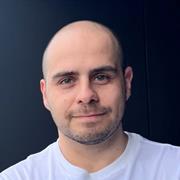
Dr. Afshin Jafari is a Research Fellow at RMIT University's School of Global, Urban and Social Studies (GUSS) and the Centre for Urban Research. His work focuses on computational methods to promote active and sustainable transport, including cycling, walking, public transport, and electric mobility. He leads developments of key models such as the AToM simulation framework for Greater Melbourne and the Victoria Bicycle Simulation tool. Research interests include activity-based modelling, integrated land-use transport systems, and agent-based simulation. He collaborates on projects addressing urban sustainability, transport infrastructure impacts, and equitable mobility solutions. Dr. Jafari is open to supervising PhD/Master’s students in transport and land-use modelling domains. Notable contributions include developing open-source transport simulation tools and advancing methodologies for assessing urban resilience during pandemics. His work aligns with UN Sustainable Development Goal 11: Sustainable Cities and Communities. Teaching involvement includes guest lectures on transport and land-use modelling. He actively engages in industry collaborations and media consultations related to urban mobility challenges.
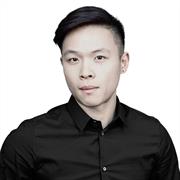
Dr. Ding Wen 'Nic' Bao is a Senior Lecturer in Architecture and Architecture Technology Stream Coordinator at RMIT University's School of Architecture and Urban Design. He concurrently serves as a Visiting Professor in Civil Engineering at Shenzhen University and holds research positions at RMIT's Centre for Innovative Structures and Materials and Post-Carbon Research Centre. His academic affiliations include previous lecturing roles at the University of Melbourne, Monash University, and Tongji University. Education includes: PhD from RMIT University (Centre for Innovative Structures and Materials) Master of Architecture from University of Melbourne Bachelor of Architecture from RMIT University Exchange studies at Chinese University of Hong Kong and Universitat Politècnica de Catalunya Bao's research integrates computational design, structural engineering, and digital fabrication through three primary domains: 1. Biomimetic Optimization : Developing bio-inspired structural systems using evolutionary algorithms 2. Digital Manufacturing : Advancing robotic fabrication and 3D printing for sustainable construction 3. Performance-Driven Design : Creating computational workflows for material-efficient architecture His recent publications (2023-2025) demonstrate strong interdisciplinary focus, with recurring themes of topology optimization (applied in 73% of works), sustainable material innovation (67%), and bio-inspired computational strategies (53%). The research consistently bridges architectural design with structural engineering principles. Significant scientific awards include: 2023: A'Design Award, DigitalFUTURES Young Award, RMIT Research Excellence Award 2022: IAI Design Award 2021: Grand Prix Design Paris Gold, Muse Design Award, Young CAADRIA Award 2019-2020: First prizes in structural optimization competitions Bao supervises multiple research projects including ARC Advance Timber Hub initiatives, 3D-printed concrete systems, and solar-integrated building components. He leads the FormX Research Lab, co-directs B.W Architects and Wonderform Studio, and partners with Ameba Institute of Engineering Structure Optimisation.
Dr. Chi Wu serves as a Lecturer in Mechanical Engineering at the University of Newcastle's School of Engineering. With a PhD from the University of Sydney (2022) and postdoctoral experience there (2023-2024), he has established himself as a rising researcher in computational mechanics and advanced manufacturing. His work bridges engineering principles with biomedical applications, particularly in the development of machine learning-driven approaches for material and structural optimization. Education: Doctor of Philosophy, University of Sydney Dr. Wu's research spans computational mechanics, topology optimization, machine learning, biomechanics, and advanced manufacturing, with particular emphasis on developing novel machine learning-based approaches for design optimization of advanced materials and structures. His work focuses on creating functionally graded tissue scaffolds, optimizing composite structures, and developing phase field models for fracture analysis. His research experience spans academia, industry, and clinical applications, demonstrating strong interdisciplinary connections. Analysis of Dr. Wu's publication record reveals a strong focus on integrating machine learning with additive manufacturing, particularly for biomedical applications. His work shows increasing sophistication in combining computational mechanics with experimental validation, with recent publications emphasizing time-dependent optimization and multi-scale modeling approaches. The trend indicates growing recognition of his work in both computational mechanics and biomedical engineering communities. Scientific Awards: Acta Journal Award (2023) Inaugural Grant Steven Award for Early Career Researchers (2023) Best Paper Award at the 12th International Conference on Structural Integrity and Failure (2021) Wiley Top Cited Article Award for 2020-2021 Best Paper Award at the 4th Australasian Conference on Computational Mechanics (2019) Dr. Wu actively recruits PhD students for research in mechanical, materials, and manufacturing engineering, with particular interest in candidates with computational mechanics and optimization backgrounds. He co-supervises students with Prof. Qing Li (ARC Future Fellow, Highly Cited Researcher) at the University of Sydney and Dr. Jianguang Fang (ARC Future Fellow) at the University of Technology Sydney. The University of Newcastle offers various scholarships, with additional support available for candidates from mainland China applying for the CSC scholarship. Dr. Wu maintains extensive collaborative networks across multiple institutions including Harvard University, Max Planck Institute, University of Exeter, Tohoku University, and several Australian universities and medical institutions including Chris O'Brien Lifehouse cancer hospital and industry partners like Cochlear Australia and Zimmer Biomet Australia.
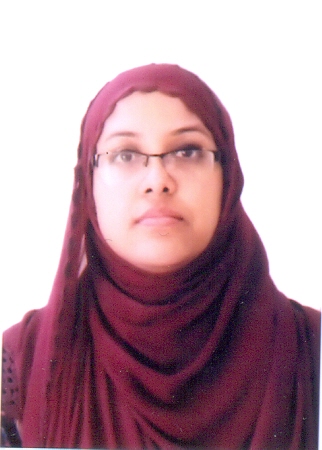
Dr Marjia Haque is a researcher affiliated with the School of Engineering and IT at the University of New South Wales (UNSW) in Canberra. Her research focuses on critical areas including transportation, logistics, supply chain management, optimisation techniques, and systems engineering. Her academic credentials include a PhD in Computer Science from UNSW, an M.Sc. in Industrial & Production Engineering from Bangladesh University of Engineering and Technology (BUET), and a B.Sc. in the same field from BUET. She has contributed to the academic community through publications in book chapters, journal articles, and conference papers, though specific titles are not detailed in the provided data. Dr Haque teaches advanced courses such as Option Analysis (ZEIT8403) and Evidence-Based Decision Making (ZEIT8402) . Her work bridges theoretical research with practical applications, particularly in managing decentralised supply chain systems and reducing bullwhip effects through fuzzy genetic algorithms.
Alex Newcombe serves as a Lecturer in the College of Science and Engineering at Flinders University, where he also holds a Research Staff position with the Centre for Defence Engineering Research and Training. His academic profile shows strong connections between theoretical mathematics and practical defense applications. His educational background includes: PhD in Mathematics from Flinders University (2019) Bachelor of Science with First Class Honours in Mathematics from Flinders University (2015) Newcombe's research centers on graph theory and combinatorics, with particular expertise in domination problems, crossing numbers, and Cartesian graph products. His work bridges theoretical mathematics with practical applications in defense and geolocation systems through collaborations with the Centre for Defence Research and Training. His publications demonstrate sophisticated approaches to complex graph structures using methods like cross-entropy optimization and binary programming formulations. Analysis of his recent publications reveals a consistent research trajectory focused on domination variants and graph product structures. His work shows increasing sophistication in handling complex graph problems with applications to network security and optimization. The publications span specialized mathematics journals including Entropy, Journal of Combinatorial Mathematics and Combinatorial Computing, and Ars Mathematica Contemporanea. His notable achievements include: Vice Chancellor's Award for Doctoral Thesis Excellence (2019) Participation in the Artificial Intelligence for Decision Making Initiative through the Defence Innovation Partnership (2020-2022) Newcombe teaches several engineering mathematics courses including ENGR2711 Engineering Mathematics, MATH3703 Optimisation, and ENGR8761 Engineering Mathematics. His research grants indicate strong institutional support for his work at the intersection of theoretical mathematics and defense applications. The Centre for Defence Engineering Research and Training serves as his primary research hub, facilitating collaborations between academic mathematics and practical defense challenges. His research activities are centered at the Tonsley campus of Flinders University, working within the College of Science and Engineering's research ecosystem. The Centre for Defence Engineering Research and Training provides the institutional framework for his defense-related collaborations, connecting mathematical theory with real-world security applications.
Prof Zhen (Jeff) Luo is a Professor at the School of Mechanical and Mechatronic Engineering at the University of Technology Sydney (UTS). Since 2012, he has led the Advanced Metamaterials & Metastructures (AMM) and Engineering Computation and Optimisation (ECO) research groups, focusing on multi-disciplinary engineering innovations. Expertise : Advanced materials design, topology optimization algorithms, additive manufacturing, and computational mechanics. Education : PhD in Mechanical Engineering from Huazhong University of Science and Technology (2005). His research bridges Mechanical, Structural, Aerospace, and Biomechanical Engineering , developing cutting-edge metamaterials and computational methods. Recent work includes two-scale lattice optimization , stochastic bandgap analysis , and machine learning-aided virtual modeling for structural reliability. Key contributions span 3D-printed heat sinks , frequency-selective surfaces , and hydrogen storage systems . As a World’s Top 2% Scientist (Stanford, 2019–present), he has secured over AUD $7 million in grants, including from the Australian Research Council (ARC) and National Intelligence Discovery Research Grants (NI220100074). Awards : IAAM Scientist Award, IAAM Fellow. Leadership : Editorial roles in Structural and Multidisciplinary Optimization , Frontiers in Bioengineering and Biotechnology , and organizing roles in 21 international conferences.