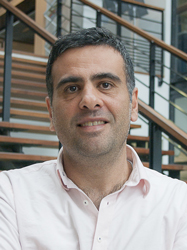
Professor Petros Elia is a faculty member at EURECOM, holding the position of Professor within the Department of Communications systems. He specializes in Information Theory , Coding Theory , Caching , Distributed Computing , and Wireless Networks , with additional research in Biometrics . His work focuses on advancing theoretical foundations and practical applications in distributed systems and wireless communication efficiency. He received a prestigious ERC Consolidator Grant for his DUALITY project (2016) and a four-year Fulbright Scholarship (1993-1997). He is also a recipient of the Newcom++ Network of Excellence Distinguished Achievement Award (2008-2011) and the Best Student Paper Award at SPAWC 2011, awarded to his advisee Arun Singh. His research explores cutting-edge topics such as tessellated distributed computing , hypergraph decomposition , and topology-aware caching , with recent contributions presented at venues like the IEEE International Symposium on Information Theory (ISIT 2025). His work bridges theoretical advancements with real-world applications in wireless networks and distributed systems. Education: Supported by his Fulbright Scholarship, he pursued studies in the U.S. during 1993-1997. Grants: ERC Consolidator Grant (2016), and others. Advising: Mentor to Arun Singh , whose work earned a student paper award. He actively contributes to teaching Mobile Communications at EURECOM and remains a key figure in advancing the field through interdisciplinary collaborations and leadership in the Communication Systems department.
Karthik Dantu is an Associate Professor in the Department of Computer Science and Engineering at the University at Buffalo, State University of New York, within the School of Engineering and Applied Sciences. His research focuses on mobile sensor networks, robot networks, networked embedded systems, mobile computing, wireless networks, and embedded operating systems. He leads the Distributed Robotics and Networked Embedded Sensing (DRONES) Lab and has received significant funding including an NSF CAREER Award. Dr. Dantu's educational background includes: PhD in Computer Science from University of Southern California (2009) BE in Computer Science from Sri Jayachamarajendra College of Engineering (1999) His research interests center on algorithmic and systems challenges in Edge Computing Systems, with particular focus on enabling seamless vision sensing in cloud-edge environments. Dantu's work bridges mobile systems and robotics, developing novel approaches for UAV software, visual SLAM, and distributed sensing. His research addresses critical challenges in resource-constrained environments, security, and real-time performance for mobile and robotic systems, with emphasis on practical implementations that solve real-world problems in autonomous systems. Dr. Dantu's publication record shows a strong trajectory in mobile systems and robotics research, with increasing focus on edge computing applications for visual sensing. His recent work demonstrates expertise in adapting visual SLAM to edge environments, securing mobile systems through technologies like Rushmore, and developing novel approaches for UAV software reliability and depth sensing. The research spans theoretical algorithms and practical system implementations, with particular strength in bringing academic research to practical applications in robotics and mobile computing. Dr. Dantu has received several scientific honors: NSF CAREER Award on Enabling Seamless Vision Sensing in Cloud-Edge Systems Outstanding service award from the Office of International Services NSF Travel Grant for SenSys 2005 Conference Travel Grant for SIGCOMM 2002 As an advisor, Dr. Dantu has mentored numerous PhD students to completion, with graduates now working at companies like Samsung Research and Zoox Inc., or continuing academic careers as Assistant Professors. His research is supported by substantial grants including a DARPA OFFSET Sprint 4 award ($470k), an NSF CAREER award ($550k), and multiple NSF collaborative grants totaling over $1.5 million. He serves on numerous conference committees including Mobicom, MobiSys, and ICRA, demonstrating leadership in the mobile systems and robotics research communities. Dr. Dantu leads the Distributed Robotics and Networked Embedded Sensing (DRONES) Lab at UB, which focuses on developing algorithms and systems for mobile sensor networks, robot networks, and embedded sensing applications. The lab's work spans theoretical foundations to practical implementations, with particular expertise in UAV systems, visual SLAM, and edge computing for robotics, maintaining strong collaborations with industry partners and other academic institutions to advance the state of the art in mobile and robotic systems.
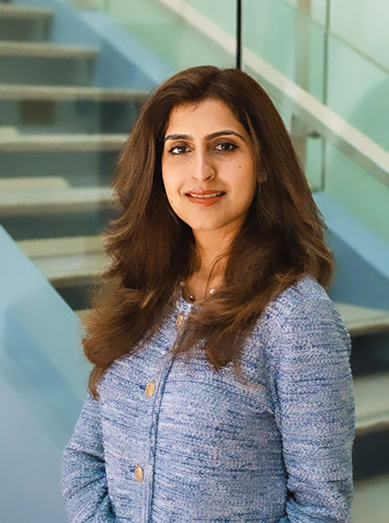
Konpal Ali serves as an Assistant Professor in the Division of Engineering & Mathematics within the School of Science, Technology, Engineering & Mathematics at the University of Washington Bothell. Her office is located in UW2-323 and she can be reached at ksali@uw.edu. Education Background: Ph.D. and M.S. in Electrical Engineering from King Abdullah University of Science and Technology (KAUST), Thuwal, Saudi Arabia B.S. in Electrical Engineering from Lahore University of Management Sciences (LUMS), Lahore, Pakistan Research Focus: Dr. Ali specializes in wireless communication systems with emphasis on physical layer design. Her work employs stochastic geometry to model large-scale wireless networks for real-world deployment scenarios. Key research thrusts include 5G/6G enabling technologies such as device-to-device communication, full duplex systems, non-orthogonal multiple access (NOMA), and intelligent reflecting surfaces (IRS). She actively investigates integrated sensing and communication (ISAC) frameworks, physical layer security mechanisms in interference-correlated environments, and machine learning applications for resource allocation optimization. Her recent publications explore meta distribution analysis to characterize percentile-level performance metrics in next-generation wireless networks. Teaching Responsibilities: Dr. Ali instructs core electrical engineering courses including EE 341A (Discrete Time Linear Systems), EE 517A (Wireless Communications I), EE 235A (Continuous Time Linear Systems), and EE 518A (Wireless Communications II), covering both undergraduate and graduate curricula. Professional Background: Prior to her faculty appointment, she completed postdoctoral research at the University of Manitoba and New York University (NYU) Abu Dhabi, building expertise in wireless network modeling and performance analysis.
Brenton Faber is a Humanities & Arts Professor affiliated with the Department of Biomedical Engineering at Worcester Polytechnic Institute (WPI) . He holds a B.A. in Political Science & English from the University of Waterloo (1992), an M.A. in English from Simon Fraser University (1993), and a Ph.D. in English from the University of Utah (1998). His research focuses on healthcare delivery for uninsured populations, medical writing, and the application of allostasis theory to healthcare systems. He volunteers as a practicing paramedic with rural ambulance squads and urban clinics. Education: B.A. (University of Waterloo), M.A. (Simon Fraser), Ph.D. (University of Utah) Faber’s lab investigates human factors in medical diagnosis and patient care, emphasizing pre-hospital care and clinical report analysis. His work integrates allostasis concepts to address chronic health conditions and patient decision-making. Current projects include a free urban clinic’s electronic database initiative and a 'food is medicine' program targeting hypertension/diabetes patients. He advises an undergraduate research team and co-founded the 'Medical Mystery' series in WPI’s student newspaper. His recent publications span healthcare logistics, emergency medicine, and discourse analysis. Notable works include The End of Genre (2022) and studies on community paramedicine optimization (2023). While no formal awards are listed, his contributions to medical communication and patient advocacy are central to his scholarly identity. Advising focuses on interdisciplinary teams addressing public health challenges. Collaborative grants are not explicitly mentioned, but his work with free clinics and paramedic squads highlights community-oriented engagement. His lab’s activities emphasize translational research bridging humanities and biomedical engineering disciplines.
Abdol-Hossein Esfahanian is a Professor and Chairperson of the Computer Science and Engineering (CSE) Department at Michigan State University (MSU), part of the College of Engineering. He joined MSU in 1983 and has held leadership roles, including Graduate Director for 10 years and Associate Chair. His research focuses on applying graph theory to computer networks, algorithm design, and fault-tolerant computing. He has published extensively in journals like IEEE Transactions on Computers and Discrete Applied Mathematics, and serves as an editor for professional journals. Education: Ph.D. in Electrical Engineering and Computer Science from Northwestern University (1983), M.S. in Computer, Information, and Control Engineering from the University of Michigan (1977), and B.S. in Electrical Engineering from the University of Michigan (1975). Research interests include graph theory applications in network design, distributed systems, and fairness-aware algorithms. Notable awards include the Withrow Teaching Excellence Award (2005, 2015) and recognition as an IEEE Senior Lifetime Member. Teaching includes courses like CSE 835 (Algorithmic Graph Theory). He has contributed to curriculum development, emphasizing computational competencies for engineering students. His work integrates theoretical foundations with practical applications in networking and distributed systems.
Ahmed Elbeltagi is an Assistant Professor in the Agricultural Engineering Department at Mansoura University's Faculty of Agriculture. His work focuses on hydrology, agricultural water management, and climate change adaptation. Specializes in data-driven modeling for water resource optimization Integrates machine learning with traditional hydrological models Active in climate change impact assessments on agricultural systems Recent research trends include: Developing open-source tools like Aqua-MC for irrigation simulation Applying hybrid deep learning models for evaporation prediction Advancing water quality assessment through multivariate analysis Exploring economic applications of wetlands in arid regions He collaborates with institutions across Egypt, India, China, and Saudi Arabia, with a focus on sustainable water management solutions.
Prof. Michael Weyrich is a faculty member at the Institute of Industrial Automation and Software Engineering (IAS) within the University of Stuttgart , leading the Cluster of Excellence IntCDC . His academic rank is Professor, and he focuses on Industrial Automation , Digital Twins , and Large Language Models (LLMs) for manufacturing and automotive systems. His research explores integrating LLMs into industrial automation for adaptive control, cloud offloading of vehicle functions, and semantic interoperability via Asset Administration Shells . He investigates modular production architectures , connected vehicle systems , and synthetic data generation for autonomous machinery. Recent publications highlight LLM-driven production planning , dynamic sensor calibration , and machine learning for fault detection in electric vehicle powertrains. His work emphasizes real-time data modeling and flexible microservice orchestration .
Dr. Olga Zinovieva is a Lecturer in Mechanical Engineering and Program Coordinator at UNSW Canberra's School of Engineering and Technology. Her research focuses on computational modeling in metal additive manufacturing, particularly on processing-microstructure-property relationships. She has held research positions at the University of Bremen, Russian Academy of Sciences, and Tomsk Polytechnic University, and visiting roles in Australia, Germany, Brazil, and France. Research Interests: Modeling for additive manufacturing Multiscale methods Computational materials science Computational mechanics Microstructure evolution in 3D printing Mechanical behavior under dynamic loading Recent research trends from her publications emphasize predictive modeling of mechanical properties in additively manufactured metals, microstructure simulation, and digital solutions for advanced manufacturing. Her work integrates ICME approaches and high-performance computing to optimize alloy performance and process parameters. Scientific Awards and Grants: ARC Discovery Early Career Researcher Award (2025–2028) NSW DIN Pilot Project (2024–2025) CSIRO ON Prime Performance Bonus (2024) UNSW Start-up Grant (2022–2024) DFG-RFBR Project (2017–2022) Multiple travel and research grants from RFBR, University of Bremen, and Tomsk State University Supervision and Grants: Dr. Zinovieva actively supervises PhD and undergraduate research students in projects related to additive manufacturing modeling. She has secured over 20 grants as a Chief Investigator, including leadership in international collaborations between Germany and Russia. She mentors students through UNSW’s HDR programs and industry-linked research initiatives. Labs and Teams: She leads computational research in metal additive manufacturing at UNSW Canberra, utilizing high-performance computing resources. She collaborates with international teams at the University of Bremen and participates in editorial and advisory roles for journals such as Metals and Journal of Materials Informatics .
Soumaya Cherkaoui is a Full Professor in the Department of Computer Engineering and Software Engineering at Polytechnique Montréal. Previously, she served as a Full Professor at Université de Sherbrooke and held industrial roles as an aerospace project manager. Her research integrates artificial intelligence with telecommunications, focusing on quantum computing, frugal edge intelligence, and applications in connected vehicles and IoT. Current Position: Full Professor, Polytechnique Montréal Prior Academic Role: Full Professor, Université de Sherbrooke Industry Experience: Aerospace Project Manager Research Interests: Convergence of AI and communications, quantum computing for networking, frugal intelligence at the edge, and applications in autonomous vehicles, industrial IoT, and smart grids. She leads government and industry-funded projects, including a $6 million quantum initiative in 2025. Recent Publication Trends: Her 2025–2024 work emphasizes quantum-enhanced anomaly detection (via QGANs), Open RAN slicing with quantum optimization, and reinforcement learning for secure cognitive radio networks. Topics span 5G/6G, vehicular networks, and zero-trust architectures. Scientific Awards: IEEE Communication Society Distinguished Lecturer (2020) ACM Mirela Notare Award (2023) IEEE Bio-Inspired Computing STC Leadership Award (2023) N2Women: Stars in Networking and Communications (2023) Best Paper Awards at IEEE ICC 2017, IEEE LCN 2021, ICCSPA 2024 Advising and Grants: Supervised 3 Master's students in 2024, with research on quantum GANs and federated learning for vehicular networks. Secured grants like the $6 million quantum project (2025) and participated in CFI-QC government funding (2022). Editorial and Leadership: Served as Associate Editor for IEEE, Wiley, and Elsevier journals. Chaired conferences like IEEE LCN 2019 and IEEE ICC2025, and held leadership roles in IEEE Communications Society committees.
David Tse is a Professor in the Department of Electrical Engineering and Computer Sciences at the University of California, Berkeley. He holds a Ph.D. in Electrical Engineering from the Massachusetts Institute of Technology (1994) and a B.A.Sc. in Systems Design Engineering from the University of Waterloo (1989). Education: B.A.Sc., Systems Design Engineering, University of Waterloo (1989) M.S., Electrical Engineering, MIT (1991) Ph.D., Electrical Engineering, MIT (1994) His research focuses on information theory , wireless communications , and networking , particularly on fundamental limits of communication systems, diversity-multiplexing tradeoffs, and capacity scaling in wireless networks. Selected work includes groundbreaking studies on MIMO channels , cooperative diversity , and spectrum sharing . Recent publications (2003–2007) analyze channel coherence, network capacity, and diversity-embedded coding, reflecting his emphasis on theoretical foundations of wireless communication. Key themes include fading channels, network optimization, and mathematical modeling using percolation theory and signal space approaches. Scientific Awards: IEEE Richard W. Hamming Medal (2019) National Academy of Engineering Member (2018) IEEE Information Theory Society Shannon Award (2017) IEEE Joint Paper Awards (2015, 2000, 2003) INFORMS Erlang Prize (2000) NSF CAREER Awards (1998) Okawa Research Grant (1997)
Michel Gendreau is a Full Professor in the Department of Mathematics and Industrial Engineering at Polytechnique Montréal . His research focuses on the application of Operations Research to Transportation , Telecommunications , and Energy Systems , with an emphasis on Stochastic Optimization and Real-time Planning . He co-directs the Intelligent Transportation Systems Laboratory and is affiliated with the CIRRELT , IVADO , and Trottier Energy Institute . Education : Ph.D. in Computer Science (1984), Université de Montréal His work includes developing metaheuristics for complex optimization problems and dynamic transportation systems . Recent projects address smart supply chains and real-time logistics . He has supervised over 40 doctoral and master's students, including notable graduates like Sanchez-Martinez, Guillen Reyes, and Parada Pradenas. Dr. Gendreau has been recognized with prestigious fellowships from IFORS (2022) and INFORMS (2010). His academic contributions span 420 publications, with recent studies appearing in Reliability Engineering and System Safety and Networks , focusing on stochastic programming , multiperiod routing , and UAV network design . He collaborates extensively with industry partners and has secured grants from organizations like FRQNT and CIRRELT . His research integrates machine learning with operations research to solve real-world challenges in transportation , energy , and logistics .
Professor Sander Nieuwenhuis (Leiden University) specializes in Cognitive Neuroscience of Decision Making through behavioral, EEG, and pharmacological approaches. His work bridges prefrontal cortex function and noradrenergic system mechanisms in human cognition. Studied cognitive psychology (Groningen) and earned PhD (Amsterdam, 2001) International experience: Cambridge University (visiting research), Princeton University (postdoc) Research focuses on noradrenaline's role in attention, decision-making, and cognitive control via: Locus coeruleus-norepinephrine system dynamics Phasic vs. tonic alertness effects Cognitive task performance under neuromodulator deficiency Neuroprotective pathways in Alzheimer's models Recent publications analyze DBH deficiency (Jepma et al., 2011) and attentional blink mechanisms (Nieuwenhuis et al., 2005). His Temporal Attention Lab integrates fMRI, genetics, and computational modeling . Teaching leadership includes: Chair of Research Master Program Committee Coordinator of Scientific Writing courses
Peter Pal Zubcsek serves as Senior Lecturer of Marketing at Tel Aviv University's Coller School of Management, previously holding an Assistant Professor position at University of Florida. His academic work bridges marketing, network science, and consumer psychology through rigorous quantitative analysis. His educational background includes: Ph.D. in Management from INSEAD M.Sc. in Informatics from Budapest University of Technology and Economics Zubcsek's research investigates how social network structures shape consumer behavior, with special focus on mobile advertising effectiveness, customer relationship management, and innovation diffusion. His work employs advanced network analysis to model consumer interactions and predict market responses. His publication trajectory from 2011-2017 reveals evolving expertise: starting with foundational network diffusion models (2011), progressing through mobile advertising frameworks (2016), and culminating in connected consumer intelligence systems (2017). This progression demonstrates increasing sophistication in integrating real-world network data with consumer behavior prediction. Key recognitions include: Journal of Interactive Marketing Best Paper Award (2016) MSI Research Grants totaling over $70,000 for mobile consumer behavior projects International Mathematical Olympiad silver medal (1998) He has secured significant research funding including MSI's $40,000 'Ideas Challenge' grant and leads the 'mLab' mobile research initiative, though specific student mentorship details remain undisclosed. His editorial role at Journal of Interactive Marketing underscores disciplinary leadership. The 'mLab' research initiative represents his current focus on mobile consumer behavior, leveraging collaborative frameworks to study real-time advertising response and device ecosystem interactions.
Ross Koppel is an Adjunct Professor of Sociology with expertise in healthcare information technology, medication errors, and ethics in social research. His work explores the intersection of technology and societal impacts, focusing on data governance, clinical workflows, and human factors in health IT systems. Research Interests Context-sensitive understanding of medication errors Societal implications of clinical data sharing Ethical challenges in AI and informatics Healthcare cost analysis Scientific Awards Fellow of the American College of Medical Informatics (FACMI)
Farinaz Koushanfar is a Professor in the Department of Electrical and Computer Engineering at the Jacobs School of Engineering, University of California San Diego (UCSD) . She holds the Siavouche Nemat-Nasser Endowed Chair and serves as Founding Co-Director of the Center for Machine-Intelligence, Computing and Security . Her affiliations include NSF Trust-Hub (Co-PI) and NSF TILOS AI Institute . She also serves on the Editorial Board of The Proceedings of the IEEE . Research Focus: Prof. Koushanfar leads research in secure and efficient computing , including robust/safe AI , hardware/system security , AI-based optimization , and cryptographically secure privacy-preserving computing . Her work pioneered logic obfuscation/locking for chip security, automated co-design of AI systems , watermarking/tracing of deep learning models , and physical proofs of provenance . She explores co-design with cryptographic constructs for privacy preservation and manages nonlinearities in ciphertext domains. Article Trends: Recent publications show expertise in neural watermarking (deepfakes, media authentication), zero-knowledge proof frameworks , Trojan attack defenses in ML models, secure federated learning , and hardware acceleration of cryptographic protocols . Her work combines machine learning , cryptography , and physical design security across 2022-2025 publications. Scientific Awards: Fellow of ACM Fellow of IEEE Fellow of National Academy of Inventors (NAI) Fellow of Kavli Foundation of NAS Inducted to NAI 2024 Fellows Advising & Leadership: She has advised multiple PhD students who became faculty at top universities (e.g., Stanford, Purdue). She chairs conferences like ACM WiSec 2024 and co-led the NSF SaTC decadal review. Her lab ( ACES Lab ) produces award-winning graduates like Bita Rouhani (DAC Under-40 Innovators) and Shehzeen Hussain (UCSD Best Dissertation Award).