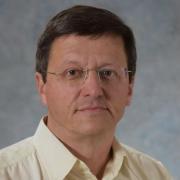
Kai Ding is a researcher at the Johns Hopkins University School of Medicine , affiliated with the Department of Radiation Oncology . His work focuses on medical physics and radiation therapy advancements for cancer treatment, particularly pancreatic cancer. Radiation Therapy Optimization Proton Therapy Applications Medical Imaging Innovations Research trends include developing hydrogel-based spacers, fiducial marker localization techniques, and computational models for precision radiotherapy. His publications emphasize improving radiation delivery through ultrasound imaging, deep learning, and patient-specific simulations. Collaborations span institutions like Johns Hopkins University and Frontiers Media SA, with a focus on clinical applications and imaging technology integration in radiation oncology.
Ivan Milovanović is a researcher at the Department of Postgraduate Studies , University of Singidunum, Belgrade, Serbia. He holds a doctoral degree in Advanced Protection Systems from Singidunum University (2015) and has previously completed master's and bachelor's studies in Contemporary Information Technologies and Graphics and Design at the same institution. His career spans roles in software development, wireless communication research, and neural network applications for electromagnetic signal processing. B.Sc. in Graphics and Design (2008), Singidunum University M.Sc. in Contemporary Information Technologies (2009), Singidunum University Ph.D. in Advanced Protection Systems (2015), Singidunum University Milovanović's research focuses on applying neural networks to solve complex problems in wireless communications, particularly in direction-of-arrival (DOA) estimation for stochastic electromagnetic sources. His work addresses challenges in localization accuracy, signal correlation, and power variation. He has contributed to advancements in 2D/1D DOA estimation using hybrid neural models, experimental validation of antenna array measurements, and noise interference analysis in wireless systems. Publications span topics like wireless sensor networks, channel modeling, and MESH network security. Recent publications highlight a strong interdisciplinary focus combining neural networks with electromagnetic signal processing , antenna array optimization , and wireless communication systems . His work explores stochastic source tracking, coherent signal resolution, and noise mitigation techniques, often collaborating with researchers like Z. Stanković and N. Dončov. While no scientific awards are explicitly mentioned in the provided text, his extensive publication record indicates active contributions to applied electromagnetics and telecommunications engineering.
Xiaolong Liu serves as Assistant Professor at Southern University of Science and Technology's School of Microelectronics. His academic journey includes a Ph.D. from Hong Kong University of Science and Technology (2019), M.E. from Tsinghua University (2014), and B.E. from Beijing University of Aeronautics and Astronautics (2010). Prior to his current position, he worked as Staff Engineer at eTopus Technology in Silicon Valley (2019-2021) and completed a postdoc at HKUST. Ph.D. in Electronic and Computer Engineering, Hong Kong University of Science and Technology (2019) M.E. in Microelectronics, Tsinghua University (2014) B.E. in Electronic Engineering, Beijing University of Aeronautics and Astronautics (2010) Dr. Liu's research spans cutting-edge RF/mm-Wave/THz integrated circuit design, focusing on high-performance signal generators , ultra-wideband transceivers , and low-power frequency synthesis . His work addresses critical challenges in 5G/6G communications, terahertz spectroscopy, and high-speed wireline interfaces through innovative CMOS architectures. Technical emphases include varactor-less VCOs, harmonic enhancement techniques, and magnetic tuning mechanisms for millimeter-wave systems. His publication portfolio demonstrates consistent leadership in IEEE flagship journals/conferences (JSSC, TMTT, ISSCC, VLSI), with recent work advancing Class-F oscillators, sub-sampling PLLs, and sub-THz synthesizers. Notable trends include migration toward sub-THz frequencies (2023-2025) , multi-core oscillator architectures , and elimination of harmonic tuning for simplified design. IEEE VLSI Paper Technical Highlights (2019) IEEE CICC Invited Talk (2019) IEEE TVLSI 2023 Best Reviewer Award Top 4 Most Downloaded Paper in TCAS-II (July 2022) Dr. Liu actively mentors students through SUSTech's graduate programs, with advisees consistently earning university-level thesis awards and conference recognitions. His lab maintains strong industry ties through silicon validation and collaborates on cutting-edge tapeouts in 7nm/16nm nodes. Current projects focus on cryo-CMOS interfaces for quantum computing and ultra-wideband transceivers for 6G applications. His research group operates within SUSTech's state-of-the-art microelectronics facility, specializing in mm-Wave/THz characterization and high-speed SerDes validation. The team maintains partnerships with semiconductor foundries for advanced-node prototyping and collaborates with industry leaders on real-world implementation challenges.
Rimvydas Aleksiejūnas is an Assistant Professor at Vilnius University's Institute of Applied Electrodynamics and Telecommunications (IAET) and affiliated with the Department of Radiophysics . His work focuses on Wireless Network Technologies , Microwave Electrodynamics , and Antenna Theory . Research Interests : Radio Wave Propagation, GNSS Systems, MIMO Channel Modeling, Electromagnetic Compatibility, Antenna Design, Radio Interference Analysis Recent Publications : 15+ works on wireless channels, UAV detection systems, and microwave engineering from 2011-2022 Awards : Galileo Masters 2020 prize (with S. Rudys and P. Ragulis) Best lecturer of Physics faculty 2018
Olivier Lévêque is a Senior Scientist at the École Polytechnique Fédérale de Lausanne (EPFL), affiliated with the School of Computer and Communication Sciences. He conducts research at the Laboratory of Information Theory (LTHI) and holds teaching responsibilities in both Communication Systems (SSC) and Computer Science (SIN) sections. Additionally, he contributes to the Interface EPFL-Gymnases initiative. Lévêque obtained his Physics diploma (1995) and PhD in Mathematics (2001) from EPFL, with a visiting lectureship at Stanford University's Electrical Engineering Department in 2005-2006. His research explores fundamental aspects of information theory , random matrices , and stochastic calculus , with applications in wireless communications and network theory. Key interests include capacity scaling laws in ad hoc networks, diversity-multiplexing tradeoffs, and mathematical frameworks for communication systems. Recent publications demonstrate broad interdisciplinary engagement, spanning computational thinking assessment (2022), digital education frameworks (2019), satellite positioning systems (2018), and theoretical advances in probability (2018). His work consistently integrates mathematical rigor with practical communication challenges, particularly in wireless network optimization and information-theoretic security. He has supervised four doctoral students at EPFL and teaches courses including Information, Computation, Communication , Markov Chains and Algorithmic Applications , and Cryptography . Lévêque leads research activities within the Laboratory of Information Theory, focusing on theoretical foundations of modern communication systems.
Kazuhiko Tamesue is an Associate Professor at the Faculty of Science and Engineering , Waseda University , with a focus on Terahertz Communication , Artificial Intelligence , and IoT Network Security . His academic journey spans academia and industry, including long-term roles at Panasonic Corporation (1991–2009) and current leadership in advanced wireless systems since 2022. Research Areas : Telecommunications, Wireless Hardware, Data Science, Machine Learning, Atmospheric Sensing Key Contributions : Pioneering 300GHz OFDM transceivers, AI-driven GNSS spoofing detection, and dual-frequency THz radar for cloud physics Projects : NICT-funded terahertz networks (2023–2024), ultra-low-latency systems (2022–2024), and security-enhancing radar technologies His 15 most recent publications (2024–2008) demonstrate expertise in (1) terahertz propagation for NTN/HAPS platforms, (2) machine learning for security (LSTM, GANs), and (3) next-generation IoT protocols (LPWAN, distributed ledger). He holds 20+ patents in antenna design, direct-conversion receivers, and power line communication. As an IEEE and IEICE member, he contributes to standards in 5G/6G and EMC.
Alex Yasha Yi is Professor of Electrical Engineering at the University of Wisconsin-Milwaukee and Director of Research at the Connected Systems Institute. He holds an affiliate position with MIT's Microsystems Technology Laboratory. Dr. Yi earned his PhD in Electronics and Optoelectronics from MIT, followed by postdoctoral research at the MIT MicroPhotonics Center. His professional experience includes research roles at Los Alamos National Laboratory and 3M Corporate Research Laboratory. His research spans integrated photonics , renewable energy systems , and intelligent micro-sensors , with applications in VR/AR, autonomous vehicles (LiDAR), and telecommunications. Key focus areas include: 3D photonic integrated circuits Optical phased array technology Solid-state lighting and LiDAR Nanophotonic device fabrication Machine learning for photonic design His publications demonstrate consistent innovation in optical systems, with recent advances in multi-layer waveguide integration, metalens optimization, and silicon-rich nitride devices. Patent contributions include 34 issued patents (18 U.S., 16 international). Honors and professional recognition: Fellow of Optica (Optical Society of America) IEEE Senior Member AAAS Member Dr. Yi has led numerous government and industry-funded projects, serving on review panels for NSF, DOE, and DOD. His MIT affiliation facilitates ongoing collaboration in microsystems technology development.
Prof. Amir Boag is a Professor in the Physical Electronics Department of the School of Electrical Engineering at Tel Aviv University. He received his B.Sc. and B.A. degrees Summa Cum Laude in 1983, M.Sc. in 1985, and Ph.D. in 1991, all from the Technion - Israel Institute of Technology. His academic journey includes faculty positions at the Technion (1991-1992), a Visiting Assistant Professorship at the University of Illinois at Urbana-Champaign (1992-1994), and industry experience at Israel Aircraft Industries (1994-1999) before joining Tel Aviv University in 1999. Prof. Boag's research focuses on computational electromagnetics and acoustics, specializing in numerically efficient algorithms, beam representations of fields, radar imaging techniques including Synthetic Aperture Radar, quantum-electromagnetic simulations, and antenna/nano-antenna design. His work bridges theoretical developments with practical applications in electromagnetic and acoustic systems. His research group comprises over ten graduate students working on cutting-edge problems in wave physics. Prof. Boag has published more than 130 journal articles and presented over 300 conference papers. He has been instrumental in organizing the Tel Aviv University Antenna Symposium and Underwater Acoustics Symposium, with the 13th Underwater Acoustics Symposium scheduled for October 23, 2025. IEEE Fellow (2008) for contributions to integral equation based analysis, design, and imaging techniques Fellow of the Electromagnetics Academy Former Associate Editor for IEEE Transactions on Antennas and Propagation Holder of approximately ten patents in electromagnetics and antenna design Prof. Boag's research demonstrates strong continuity in developing efficient numerical methods for electromagnetic and acoustic problems, with increasing focus on quantum-electromagnetic interactions and nano-scale applications in recent years. His work maintains strong connections between fundamental theory and practical engineering applications, particularly in radar and imaging systems.
Alberto Toccafondi serves as an Associate Professor in the Department of Information Engineering and Mathematical Sciences at the University of Siena. He teaches core courses including Physics II for Management Engineering undergraduates and RFID Technologies for the Master's program in Electronics and Communications Engineering. His research centers on advanced antenna systems with specialization in metasurface antennas and reconfigurable intelligent surfaces (RIS) . Key focus areas include circular polarization techniques, surface wave manipulation, Ka-band applications, and electromagnetic modeling for next-generation wireless systems. His work bridges theoretical electromagnetic analysis with practical antenna implementation. Recent publications (2024-2025) reveal a concentrated research trajectory in metamaterial-based antenna engineering, emphasizing multi-beam capabilities, polarization diversity, and network-theoretic optimization of RIS. This work consistently targets 5G/6G infrastructure challenges through publications in IEEE Transactions on Antennas and Propagation and flagship antenna conferences.
Pieter Sijtsma serves as a Professor in the Department of Operations & Environment within Delft University of Technology's Faculty of Aerospace Engineering. His academic career spans over 15 years of specialized research in aeroacoustics, with significant contributions to microphone array technology and noise measurement methodologies. Current affiliations include active roles in the Berlin Beamforming Conference Committee and ongoing collaborations with major aerospace research entities. Professor Sijtsma's research focuses on advanced acoustic measurement techniques for aerospace applications. His work centers on beamforming algorithms , engine noise characterization , and wave propagation modeling in complex environments like wind tunnels and annular ducts. Key specialties include CLEAN-SC deconvolution methods for noise source mapping, directivity pattern analysis, and experimental validation of acoustic assessment techniques. His fingerprint reveals dominant expertise in acoustics (100%), noise measurement (97%), and microphone array technology (68%). Recent publication trends show concentrated activity in improving acoustic field assessment (2025), engine noise directivity determination (2024), and beamforming in swirling flows (2023). His work consistently addresses practical aerospace noise challenges through rigorous experimental validation and mathematical modeling, with strong emphasis on measurement accuracy and algorithmic innovation. Professor Sijtsma actively supervises research through collaborative projects, typically co-mentoring students with colleagues like Snellen and Avallone. His group maintains strong industry connections, evidenced by committee roles with the Ministry of Infrastructure and Environment and participation in international standard-setting conferences. Current projects involve EU-funded research on wind tunnel acoustic correction methods and engine noise source characterization. The research infrastructure leverages TU Delft's advanced wind tunnel facilities with specialized acoustic treatment and high-channel-count microphone arrays. Recent dataset releases confirm access to sophisticated wave propagation modeling tools and experimental validation platforms for closed-test-section environments.