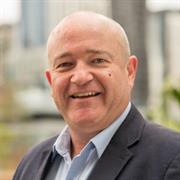
Ben Sparkes is a Research Fellow at the University of Adelaide's Faculty of Sciences, Engineering and Technology, affiliated with the School of Physics, Chemistry and Earth Sciences and the Institute for Photonics and Advanced Sensing. His work focuses on quantum technology development for next-generation computing and secure communications. Educational background: PhD in Physics, Australian National University (2013) Research interests span quantum information storage/manipulation, cold atom electron/ion sources for ultra-fast biological imaging, and sub-nanometer fabrication. Current DECRA-funded work develops fibre-based quantum networks for secure communications infrastructure. Key recognitions: McKenzie Fellowship for novel electron source development ARC DECRA Fellowship for quantum network research 2018 SA Tall Poppy Award for science outreach leadership Dr. Sparkes leads ARC-funded quantum technology projects and supervises graduate students. He actively participates in public engagement through the Amazing University of Adelaide Laser Radio program and presented at the 2019 Research Tuesday seminar on quantum mechanics' societal impact. He contributes to the Precision Measurement Group's mission of advancing quantum sensing technologies through interdisciplinary collaboration with South Australia's Department for Industry and Skills.
Prof Christina Lim is a Professor at the Department of Electrical and Electronic Engineering, University of Melbourne, Australia. She serves as the Associate Dean of Research for the Faculty of Engineering and Information Technology (FEIT) and manages the Tucker Lab. Previously, she held roles as Research Group Leader of the Electronics and Photonics System group and Deputy Head of Department (Teaching and Operations) Education: PhD and Bachelors from University of Melbourne Research Interests: Radio-over-Fibre, Optical Wireless Communications, Microwave Photonics, Augmented Reality Displays, Reservoir Computing, Optical Crosshaul Networks Recent publications demonstrate expertise in optical waveguide design for AR, underwater optical wireless communications, photonic switching, and network optimization. Her projects focus on next-generation wireless infrastructure, including Photonics Computing Enabled Ultra-Broadband Wireless Communications (2024-2027, $598k ARC grant) and Additive Manufacturing of Optical Elements (2025). She has secured significant funding, including ARC Discovery Projects and Future Fellowships. Scientific Honors IEEE Fellow (2022) Optica Fellow (2018) ARC Future Fellow (2009-2013) ARC Australian Research Fellow (2004-2008) Professional Service Vice-President of Conferences, IEEE Photonics Society Deputy Editor, IEEE/Optica Journal of Lightwave Technology ARC College of Experts (2014-2016)
Professor Stefan Maier holds the position of Head of School in Physics and Astronomy at Monash University. Previously, he served as the Lee Lucas Chair in Experimental Physics at Imperial College London (2007–2018) and built a new chair at Ludwig-Maximilians-Universität München (2019–2022). His research focuses on nanophotonics, plasmonics, and metasurface engineering, with emphasis on optical trapping, nonlinear optics, and novel photonic devices. Education: Bachelor’s degree in Physics, Technical University of Munich M.Sc. and Ph.D. in Applied Physics, California Institute of Technology (Caltech) Research Interests: Development of metamaterials and metasurfaces for light manipulation Applications of nanophotonics in sensing, imaging, and quantum technologies Optical trapping and plasmonic catalysis Nonlinear optical phenomena in nanostructured materials Articles Trends: Recent work emphasizes bound states in the continuum (BICs), 3D nanoprinted optical platforms, and active metasurfaces with tunable properties. Key themes include hybrid nanophotonics, ultra-high-Q resonators, and plasmonic nanomaterials for energy applications. Awards: ISI Highly Cited Researcher (2017–present) Grants/Projects: Chief Investigator in the All-on-chip twisted light modulator project (2022–2025) Leadership in Monash’s nanophotonics research team Labs/Teams: Directs a multidisciplinary lab at Monash focused on integrating 3D nanofabrication with optical physics, including collaborations in metafiber development and plasmonic biosensing.
Professor Hala Zreiqat AM is a leading biomedical engineer at The University of Sydney , serving as the Director of the ARC Training Centre for Innovative BioEngineering . A Fellow of all major Australian academies (AAS, ATSE, FAHMS, FRSN), she develops 3D printed bioceramics for bone regeneration while championing diversity through initiatives like the IDEAL Society and BIOTech Futures mentorship program. Her work bridges academia, clinical practice, and industry in musculoskeletal research . Research Focus: Her lab creates synthetic bone scaffolds that mimic natural bone architecture, strength, and porosity, enabling non-rejected bone regeneration via patient-matched implants. Key applications include orthopaedic, dental, and maxillofacial repair , with over $18M in competitive funding and multiple patents. Current projects explore AI-driven scaffold performance prediction and anti-senescence strategies for aging-related bone loss. Scientific Trends: Recent publications highlight 3D printed nanovoxelated ceramics , antisenescence biomaterials , and multifunctional theranostic platforms . Her team integrates machine learning for scaffold design, atom probe tomography for interface analysis, and two-photon imaging for cellular monitoring in 3D environments. 2021-2022 Fulbright Senior Scholar 2018 NSW Premier's Woman of the Year 2019 Eureka Prize for Innovative Use of Technology Fellow of Australian Academy of Science (2021) Over $18M in research funding Teaching & Leadership: She designed core courses like Tissue Engineering and Nanomaterials in Medicine , mentoring 158 students in 2020 alone. As Chair of CAAR (2020-2023), she strengthens Australia-Arab collaborations. Her lab trains early-career researchers , with alumni now in academia and industry.
Distinguished Professor Dayong Jin is a leading academic in nanotechnology and biomedical engineering at the University of Technology Sydney (UTS). He holds roles including Director of the Institute for Biomedical Materials and Devices (IBMD), ARC Laureate Fellow, and Chair Professor at Southern University of Science and Technology (China). His research focuses on photonics, luminescent materials, and their applications in healthcare, including cancer detection, rapid diagnostics, and super-resolution microscopy. Key innovations include 'Nano Torch' technology for disease detection and 'Super Dots' nanocrystals for imaging and anti-counterfeiting. Education: PhD from Macquarie University (2007). Leadership: Established UTS's IBMD and multiple research hubs, including the ARC IDEAL Research Hub and Australia-China Joint Research Centre. Research Interests: Transforming nanophotonics into diagnostic tools, rapid antigen tests (e.g., for COVID-19), and biomedical devices. His work bridges physics, engineering, and biology to address global health challenges. Awards: Australian Museum Eureka Prize (2015), Prime Minister's Prize for Science (2017), ARC Laureate Fellowship (2021), and Fellow of the Australian Academy of Technology and Engineering. Grants: Overseeing funded projects on quantum biotechnology, deep-tissue imaging, and nanoscale thermometry. Active in interdisciplinary collaborations, including with Chinese institutions. Labs/Teams: Leads IBMD, the ARC IDEAL Hub, and the UTS-SUSTech Joint Research Centre, fostering innovation in wearable biomaterials and point-of-care technologies.
Professor Andrew Doherty is a prominent academic in the Faculty of Science at the University of Sydney, specializing in quantum information science and quantum computing. His research focuses on quantum error correction, quantum control, and foundational aspects of quantum mechanics, particularly involving quantum trajectories and entanglement. He leads projects within the Sydney Nanoscience Hub (SNH), contributing to advancements in superconducting qubits and topological codes. His work bridges theoretical and experimental quantum physics, with grants including the 'Quantum and Advanced Technologies' project (2024) and the ARC Training Centre for Future Leaders in Quantum Computing (2023). His publications emphasize scalable error suppression, photonic qubit systems, and code concatenation strategies, reflecting a commitment to both fundamental science and applied quantum technologies. Research Themes: Quantum error correction, quantum measurement theory, topological codes, and superconducting circuits. Key Collaborations: Involvement with international teams in quantum computing and nanoscience. Labs/Teams: Active member of the Sydney Nanoscience Hub (SNH). Professor Doherty's contributions span over 100 articles, with recent work addressing noise-aware decoding and Gottesman-Kitaev-Preskill (GKP) states. His research aims to advance fault-tolerant quantum computing and deepen understanding of quantum correlations.
Dr. Ludovic Rapp is a Senior Research Fellow at the Research School of Physics , Australian National University (ANU) , and leads the High-Power Laser group at the Laser Physics Centre (LPC) . His expertise spans ultrafast laser interaction with matter , beam shaping , and laser-induced microexplosions for synthesizing super-dense material phases , including novel silicon allotropes. He is also the Laser Safety Officer for the Research School of Physics.
Dr. Chathura Bandutunga is a Research Fellow at the Centre for Gravitational Astrophysics within the Research School of Physics at the Australian National University (ANU). His research focuses on advanced optical techniques for precision measurement, with significant contributions to gravitational wave detection technology, molecular spectroscopy, and space exploration instrumentation. Dr. Bandutunga's research expertise spans digital interferometry, fiber optic sensors, and precision optical measurement systems. His work has pioneered digitally enhanced interferometric techniques that have enabled new capabilities in molecular dispersion spectroscopy, gravitational wave detection, and optical frequency referencing. He has developed innovative methods for phase noise suppression, common-mode noise rejection, and thermal-noise-limited optical measurements that operate at the boundaries of physical possibility. His publication record demonstrates consistent innovation in optical measurement technology, with recent work advancing fiber optic gyroscopes, frequency comb technology, and applications for interstellar propulsion systems like the Breakthrough Starshot program. His research bridges fundamental optical physics with practical applications in both terrestrial scientific instrumentation and space-based technologies. Dr. Bandutunga is actively involved in the Centre for Gravitational Astrophysics at ANU, contributing to Australia's participation in international gravitational wave research collaborations. His technical leadership in precision optical measurement systems directly supports next-generation gravitational wave detectors and related technologies requiring unprecedented measurement stability.
Niels Quack is an Associate Professor in Micro- and Nanosystems at The University of Sydney's School of Aerospace, Mechanical and Mechatronic Engineering. He joined the university in 2022 after serving as an SNSF Assistant Professor at EPFL (Switzerland). His roles include Academic Director of the Research and Prototype Foundry and membership in the University of Sydney Nano Institute. He holds a Dr.Sc. from ETH Zurich and an M.Sc. from EPFL. His research focuses on micro- and nanosystems engineering, integrating mechanics and photonics at the microscale. Key applications include fiber-optical communication, quantum sensing, and integrated photonics using diamond and silicon materials. Quack has pioneered silicon photonic MEMS and diamond micro-optics, with over 100 publications in journals like ACS Photonics , Optics Letters , and Nanoscale . He leads international collaborations with institutions like Ghent University (Belgium) and EPFL (Switzerland), and serves on editorial boards for IEEE Journal of Microelectromechanical Systems and SPIE Journal of Optical Microsystems . His awards include the Optica Senior Member distinction (2023) and Sydney Research Accelerator Prize (2023). Quack supervises PhD and Master's students in advanced micro- and nanosystems design, offering projects in programmable photonics and diamond-based biosensors. He actively recruits postdoctoral researchers and advises on funded projects like 'Nurturing Commercialization Opportunities for Multipoint Fiber-Optical Pressure Sensors.' His lab develops cutting-edge technologies such as vacuum-sealed silicon photonic MEMS and diamond nanopillar arrays, advancing applications in quantum sensing and optical communication systems.
Dr. Shelley Wickham is an Associate Professor and ARC DECRA Fellow at the University of Sydney, holding joint appointments in the Schools of Chemistry and Physics. She serves as a Westpac Research Fellow and leads the DNA Nanotechnology Group at the Sydney Nano Institute. Dr. Wickham is also co-Champion of the Sydney Nano Institute Grand Challenge project in Molecular Nanorobotics for Health, co-lead of the School of Physics Grand Challenge on Nanoscale brain navigation for targeted drug delivery, and faculty mentor of the University of Sydney BIOMOD team. Bachelor of Science and Master of Science in Physics from University of Sydney PhD in Condensed Matter Physics from University of Oxford Postdoctoral Fellow at Harvard Medical School, Dana-Farber Cancer Institute, and Wyss Institute Dr. Wickham's research focuses on self-assembling nanotechnology and molecular robotics, particularly in the design and assembly of programmable nanostructures out of DNA. Her work spans applications in cell biology, materials science, and nanomedicine. Current research projects include design and synthesis of self-assembling DNA nanostructures, proto-cells made of DNA gels that move under flow, new plasma fabrication methods for biomolecule micropatterning, and DNA computation circuits for navigating the brain using machine learning. Her research aligns with the Faculty of Science Research Strengths in Molecules to Materials, Preventing and Treating Disease & Disorder, and Next Generation Materials. Analysis of Dr. Wickham's recent publications reveals a consistent focus on DNA nanotechnology with increasing sophistication in structural complexity and biological applications. Her work has evolved from fundamental DNA origami structures to increasingly complex multi-component systems with practical applications in nanomedicine and biomimetic engineering. Recent publications show strong interdisciplinary collaboration across chemistry, physics, biology, and engineering disciplines, with emphasis on real-world applications including drug delivery systems and biomolecular sensors. ARC DECRA Fellow Westpac Research Fellow BIOMOD World Champions (2019) Dr. Wickham actively mentors PhD students and postdoctoral researchers in her DNA nanotechnology group. She has secured significant research funding including ARC Discovery Projects, Westpac Scholarships, and NSW Health grants. Her current grants support projects such as '3D Bio-Nanomaterial Displays with Designer Architectures and Functions' and 'RNA aptamer sensing devices for rapid detection of blood clotting.' Dr. Wickham encourages applications from diverse backgrounds and maintains active collaborations with researchers at Harvard, Oxford, and other international institutions. Dr. Wickham leads the DNA Nanotechnology Group at the University of Sydney, which is part of the Sydney Nano Institute. Her lab focuses on building tools from DNA origami - including tweezers, spanners, wrenches and springs - to better understand biological processes at the nanoscale. The group has achieved notable success with the BIOMOD team winning world championships in 2019, and continues to develop innovative approaches to molecular robotics for healthcare applications.
Professor Brant Gibson is a Deputy Dean of Research and Innovation and holds the rank of Professor in the School of Science at RMIT University. His research focuses on quantum technologies, particularly diamond-based systems including nitrogen-vacancy (NV) centers, fluorescent nanoprobes, and hybrid materials for sensing applications. He leads projects in quantum magnetometry, photonics, and biomedical imaging, with an emphasis on translating lab-based innovations into practical devices for fields like medical diagnostics and environmental monitoring. Brant’s work spans condensed matter physics, nanotechnology, and optical engineering, with notable contributions to diamond-doped optical fibers, quantum sensor development, and the application of nanodiamonds in biophotonics. His research integrates experimental physics with computational modeling to optimize material properties and sensor performance. He is actively involved in student supervision, offering guidance for Masters and PhD candidates in quantum engineering, materials science, and interdisciplinary applications. Current projects include quantum tensor gradiometry for navigation, bioimaging with near-infrared emitters, and silk-diamond composites for wound monitoring. Brant’s academic contributions are further reflected in over 150 peer-reviewed publications and collaborations across academia and industry. His work bridges fundamental research with real-world applications, emphasizing Australia’s role in global quantum technology advancements.
Assoc. Professor Enbang Li is a Senior Lecturer at the School of Physics within the Faculty of Engineering and Information Sciences at the University of Wollongong. His research focuses on photonics, medical physics, and optical sensor technologies with applications in radiation dosimetry, biomedical engineering, and wearable devices. He has supervised numerous PhD and Master’s students in areas such as fiber-optic dosimetry for radiotherapy, blood glucose sensing, and microfluidics. His work includes advancements in fiber-optic dosimeters for MRI-LINAC systems, polymer-based biosensors for glucose monitoring, and integrated photonic sensors for temperature and pressure measurements. He has secured funding from organizations like the Australian Synchrotron Research Program and the University of Wollongong for projects related to dosimetry and photonic integration. Recent publications highlight innovations in HDR brachytherapy dosimetry, flexible electro-optic modulators for ECG signals, and lab-on-a-chip systems. His research also extends to material science, including corrosion studies of Al-Mg alloys and the dynamic behavior of sunscreens under in-service conditions.
Ediz Cetin is an Associate Professor in Digital Electronics Engineering at Macquarie University's School of Engineering and a member of the Astrophysics and Space Technologies Research Centre. He serves as Course Director for the MEng Electronics Engineering program and Chair of the School's Postgraduate Coursework Committee. His research focuses on radio frequency interference mitigation, fault-tolerant reconfigurable circuits for space applications, machine learning in RF signal analysis, and low-power digital circuit design. Education: PhD in Signal Processing (Unsupervised Adaptive Signal Processing Techniques for Wireless Receivers) B.Eng. (Hons.) in Control and Computer Engineering Research Interests: RF interference detection and localization GNSS anti-jamming and spoofing detection FPGA-based reconfigurable systems Space instrumentation and CubeSat technologies Machine learning for signal processing Awards: Excellence in Learning Innovation (FSE Teaching Award, 2022) Highly Commended Finalist – Vice-Chancellor’s Award for Learning Innovation (2022) Innovative Approaches – Highly Commended (FSE Teaching Award, 2020) Key Projects: SmartSat CRC (2020–2026): Smart Satellite Technologies and Analytics Spacecraft Innovation Lab (2021–2022) CubeSat Biological Payload (2019–2022) Teaching Contributions: Led the 'Improving Student Engagement with Anywhere and Any-time Laboratory Access' initiative (2019–2020), enhancing remote lab accessibility for students.
Central Queensland University (CQUniversity Australia)Australia
Dr. Hassan Saeed Khan is a Lecturer (Assistant Professor) at Central Queensland University and an Adjunct Lecturer at the University of New South Wales . He holds a Ph.D. in Built Environment from UNSW (2018-2022), a Master of Science in Architectural Engineering from Politecnico di Milano (2010-2012), and a Bachelor of Science in Building and Architectural Engineering from UET Lahore (2003-2008). His research focuses on zero-energy buildings , radiative cooling materials , and urban heat mitigation . Ph.D. in Built Environment, UNSW Australia (2018-2022) MSc in Architectural Engineering, Politecnico di Milano (2010-2012) BSc in Building and Architectural Engineering, UET Lahore (2003-2008) Dr. Khan specializes in urban climatology , energy-efficient building systems , and climate-responsive urban design . His work includes fluorescent radiative coolers for urban surfaces, seasonal performance modulation of cooling materials, and microclimate evaluation in coastal regions. His research spans thermal performance of buildings, extreme heat event analysis , and renewable energy integration . His recent publications highlight scalable radiative cooling solutions, synoptic weather interactions with urban heat, and green infrastructure benefits in subtropical environments. Key projects include ARC Discovery grants on fluorescent materials and consultancy with BlueScope and Dulux for material performance optimization. HDR Completion Scholarship (UNSW, 2022) Data61 CSIRO Ph.D. Top-up (2019-2022) ADA HDR Research Output Awards (2021, 2022) UniverLecco Gold Merit Scholarship (Politecnico di Milano, 2010-2012) Award of Distinction (KFUPM, 2016-2017) Dr. Khan has supervised research in 4011 Environmental Engineering , 3302 Building , and 3304 Urban Planning . His interdisciplinary approach bridges building science , materials engineering , and climate adaptation . He employs tools like ENVI-met for microclimate analysis and DesignBuilder for energy modeling.
Dr. Xiaoyi Tian is a Researcher at the School of Electrical and Computer Engineering, University of Sydney. They are affiliated with the University of Sydney Nano Institute and specialize in microwave photonics, sensor technology, and machine learning applications. Their research focuses on integrating machine learning with photonic sensors, particularly using microresonators and optical signal processing for high-resolution sensing. Key areas include microwave-photonic hybrid systems, signal processing algorithms, and sensor optimization. Dr. Tian has contributed to advancements in athermal sensors, subwavelength grating resonators, and recurrent neural networks for sensor performance enhancement. Their work spans conferences like OFC, CLEO-PR, and IEEE journals. No formal awards or student advisees are listed, though their publications reflect active collaboration in interdisciplinary research.