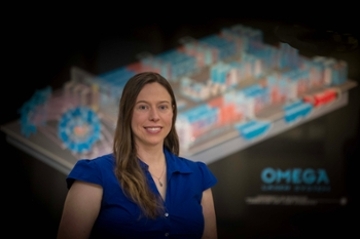
Tobias Feuerbach is a Researcher at the 3. Physikalisches Institut (3rd Physics Institute) of the University of Stuttgart. His work focuses on telecom wavelength single-photon sources and the design, fabrication, and characterization of LNOI-PIC (Lithium Niobate on Insulator Photonic Integrated Circuits). He holds a Master of Science (MSc) degree and contributes to advancements in quantum photonics and integrated optics. Research interests include developing practical quantum technologies for secure communication and photonic systems. His current projects emphasize material engineering for optical devices and scalable fabrication techniques. No specific awards, grants, or advised students are listed in the provided information.
Ioannis Tigelis is Professor at the Department of Physics of the National and Kapodistrian University of Athens, specializing in high-power microwave sources and electromagnetic wave theory. His research contributes to nuclear fusion technology, particularly gyrotron development for plasma heating in tokamaks and stellarators. Publications focus on MW-class fusion gyrotrons, parasitic oscillation suppression, and industrial-scale vacuum electronics. Research encompasses wave propagation in complex media, scattering phenomena, and applications in fusion devices like ITER and Wendelstein 7-X. Recent work advances second-harmonic gyrotron designs for EU-DEMO and addresses challenges in high-frequency power generation.
Professor Gizopoulos Dimitris is a faculty member at the Department of Informatics and Telecommunications, National and Kapodistrian University of Athens. His research focuses on advanced topics in computer architecture, reliability engineering, and hardware security. With a strong emphasis on fault tolerance and computational integrity, his work addresses critical challenges in modern computing systems such as silent data corruptions, GPU reliability, and RISC-V cloud ecosystems. Key research interests include microarchitecture-level analysis, cross-layer system reliability assessment, and energy-efficient computing. His contributions span fault propagation modeling, hardware-software co-design for resilience, and innovative approaches to detecting silent errors in CPUs and GPUs. He actively participates in large-scale projects like NEUROPULS and Vitamin-V, advancing secure neuromorphic architectures and open-source cloud infrastructure. Recent publications highlight trends in silent data corruption quantification, GPU vulnerability analysis, and energy-efficient RISC-V designs. His work bridges theoretical models with practical implementations, emphasizing real-world validation through frameworks like gem5 and fault injection experiments. Despite no listed advisees or grants in current records, his research collaborations and project leadership position him at the forefront of next-generation computing reliability. Labs and teams associated with his work include the Vitamin-V virtual environment development team and the NEUROPULS consortium for secure neuromorphic accelerators. These initiatives reflect his commitment to advancing both theoretical and applied aspects of dependable computing systems.
Dr. Vanessa Egan is an Associate Professor at the University of Limerick, affiliated with the School of Engineering and the Bernal Institute. Her research focuses on heat transfer and fluid mechanics in two-phase/multiphase flows, aircraft compartment cooling, and thermal management of electronics. She employs advanced experimental techniques like Particle Image Velocimetry (PIV) and IR thermography. Her work has been supported by industry partnerships and competitive grants, resulting in over 80 publications, including 25 peer-reviewed journal articles and book chapters. Research Interests: Two-phase flow analysis in microfluidics Aircraft compartment heat transfer Low-profile cooling solutions for electronics Optical measurement techniques for fluid dynamics Nanofluids thermal performance Recent Research Trends: Her recent articles emphasize heat pipe optimization, liquid-liquid Taylor flow dynamics, and thermal management systems for aerospace and electric vehicles. Collaborations have explored novel methodologies for non-destructive analysis of heat pipes and real-time flow characterization. Advising & Grants: Dr. Egan has supervised four PhD students to completion and secured funding from industrial and competitive grant sources. Her work contributes to UN Sustainable Development Goals related to affordable and clean energy (SDG 7) and industry innovation (SDG 9). Labs & Teams: Active within the Bernal Institute, her research integrates interdisciplinary approaches to thermal and fluid systems, with applications in aerospace, electronics, and energy storage.
Dr. David F.P. Pile is a physicist specializing in condensed matter physics with a focus on plasmonics and nano-optics. He holds a PhD in Physics from Queensland University of Technology (2003) and has held research positions at the University of Tokushima and UC Berkeley. Since November 2008, he has served as an editor at Nature Photonics while maintaining academic affiliations as a Visiting Scholar. His research interests center on theoretical analysis and experimental investigation of condensed matter physics, particularly acoustic & optic wave propagation including plasmon-polaritons, slow and fast light phenomena, novel waveguide designs, and physics of periodic and layered media. His work bridges theoretical physics with practical nanophotonic applications, focusing on manipulating light at subwavelength scales. Dr. Pile's publication record shows consistent output in top journals from 1999-2009, with significant contributions to plasmonics including the prediction and experimental confirmation of plasmonic nanofocusing effects and the discovery of channel-plasmons in sharp V-grooves. His 2004 paper became the most accessed article in the American Institute of Physics that December, demonstrating the impact of his work. Selected for the February 12, 2007 issue of Virtual Journal of Nanoscale Science & Technology Number 1 accessed article of the American Institute of Physics, December 2004 His collaborative research spans multiple institutions including UC Berkeley, Imperial College London, CNRS, and various Japanese universities, reflecting the international recognition of his expertise in plasmonics and nano-optics. His work has provided foundational insights for subsequent developments in plasmon nanolasers and other nanophotonic devices.
Dr. Andrivo Rusydi is an Associate Professor at the National University of Singapore. His office is located at S13-02-01, and he can be contacted at +65 6516 4897 / 8931. His research focuses on the interplay of spin, charge, orbital, and lattice degrees of freedom at interfaces and surfaces of complex systems, including magnetic materials, high-temperature superconductors, and molecular electronics. He specializes in developing and applying advanced in-situ synchrotron-based characterization techniques such as resonant soft X-ray magnetic scattering, spectral generalized magneto-optical spectroscopic ellipsometry (from mid-infrared to vacuum-ultraviolet), and angular resolved photoemission spectroscopy. His work also involves atomically controlled film growth using molecular beam epitaxy at the Singapore Synchrotron Light Source. Analysis of his selected publications reveals a focus on oxide interfaces (LaAlO3/SrTiO3), spintronic materials, superconductivity dynamics, and electronic structure modifications in correlated systems. Key methodologies include synchrotron radiation studies, optical conductivity analysis, and time-resolved spectroscopy.
Erich Mueller is a Professor at the Department of Physics , College of Arts and Sciences , Cornell University . He directs the Laboratory of Atomic and Solid State Physics and previously served as Director (2015-2023). His research focuses on theoretical physics of ultracold atomic gases , quantum optics , and exotic quantum phenomena . B.Sc. in Mathematics/Physics (1996, University of British Columbia) Ph.D. in Physics (2001, University of Illinois at Urbana-Champaign) Postdoctoral: Ohio State University (2001-2003) Faculty: Cornell (2003-present, promoted to Professor in 2015) His research interests span quantum simulation of strongly correlated matter , non-equilibrium quantum dynamics , and topological states . He bridges condensed matter , nuclear physics , and high-energy physics concepts through cold atom experiments , using analytical and DMRG/cluster expansion techniques. Recent publications emphasize quantum information science (2022), Wigner-Mott transitions (2023), and non-Abelian braiding (2012). Collaborations include Randy Hulet (Rice), Brian DeMarco (UIUC), and Jeevak Parpia (Cornell) on superfluid 3 He studies. Scientific Recognition : Alfred P. Sloan Fellow (2005-2007) American Physical Society Fellow (2014) Paul Award for Advising Excellence (2013) He advises 11 graduate students (including Darren Pereira , Bhuvanesh Sundar ), with research groups exploring quantum Hall systems , spin-orbit coupling , and non-equilibrium phenomena . Funding sources include NSF and DARPA OLE grants.
Dr. Christopher Hutchison is a Researcher in the Department of Life Sciences at Imperial College London, managing the Laser Lab within the Faculty of Natural Sciences. His research focuses on ultrafast spectroscopic techniques, nonlinear optics, and structural biology. He is affiliated with the Frontiers of Ultrafast Measurement initiative, advancing methodologies in femtosecond crystallography and laser-based instrumentation. His work bridges chemistry and physics, with key contributions to understanding photoactive protein dynamics, chromophore interactions, and high-order harmonic generation in plasmas. Notable projects include XFEL beamline development for ultrafast science and the application of serial femtosecond crystallography to study light-driven biological processes. Publications highlight innovations in ultrafast structural dynamics, laser-induced temperature-jump spectroscopy of zeolites, and optical control of protein systems. Hutchison’s research emphasizes interdisciplinary collaboration, particularly in developing cutting-edge instrumentation for time-resolved studies.
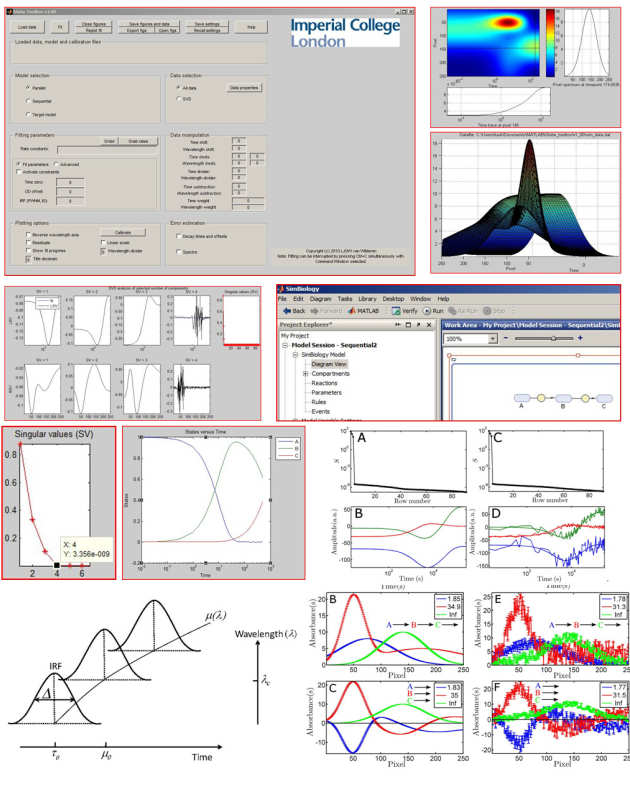
Professor Jasper van Thor is a faculty member at Imperial College London's Department of Life Sciences, part of the Faculty of Natural Sciences. He holds the title of Professor of Molecular Biophysics and leads the Ultrafast Spectroscopy Laboratory and Molecular Biophysics group. His research focuses on ultrafast molecular dynamics using techniques like femtosecond crystallography and spectroscopy, particularly studying light-sensitive proteins such as photoreceptors, fluorescent proteins, and photosynthetic systems. He has pioneered work on structural dynamics using X-ray free electron lasers (XFELs) and developed open-source software tools like the Ultrafast Spectroscopy Modelling Toolbox and PyLDM for data analysis. Education: MSc (1993) and PhD (1999) in Chemistry from the University of Amsterdam, followed by postdoctoral research at the University of Oxford under Dame Louise Johnson, supported by EMBO and HFSP fellowships. He joined Imperial College in 2007, establishing the Ultrafast Spectroscopy Lab. Research Interests: Ultrafast structural changes in proteins, photoactivation mechanisms, coherent vibrational dynamics, XFEL applications in biology, and theoretical modeling of population dynamics. His work bridges molecular biophysics, chemistry, and materials science, with contributions to understanding photosynthesis and protein signaling. Key Achievements: Director of Imperial's Frontiers of Ultrafast Measurement network and PI of the LUXD lab. Developed novel methods for femtosecond infrared crystallography and revealed mechanisms like the 'hula-twist' isomerization in fluorescent proteins. Authored influential papers on protein structural dynamics and spectroscopic analysis tools. Awards: EMBO Research Fellowship (2000), HFSP Long-Term Fellowship (2000), Royal Society University Research Fellowship (2002). Recognized for contributions to ultrafast structural biology. Grants & Labs: Active in XFEL collaborations globally (LCLS, SACLA, European XFEL). Oversees the Electron Microscopy Centre and Energy Futures Lab affiliations. His lab develops open-source software for data analysis, emphasizing reproducibility and accessibility.
Professor Manjula Sharma is a Professor of Science Education at The University of Sydney, holding dual appointments in the Faculty of Science and the Department of Physics. She serves as Director of the STEM Teacher Enrichment Academy and previously led the Sydney University Physics Education Research (SUPER) group. Her roles include Vice Chair of IUPAP Commission C14 on Physics Education, and co-founder of the Australian Conference on Science and Mathematics Education (ACSME) and the International Journal of Innovation in Science and Mathematics Education (IJISME). Sharma's educational background includes a PhD in Physical Optics and MEd in Research Methods from The University of Sydney, following early studies at the University of the South Pacific. Her research focuses on physics education, STEM teacher training, and innovative laboratory pedagogy. She has pioneered initiatives such as the ASELL Schools program for advancing science and engineering through laboratory learning. Her work emphasizes curriculum development, active learning strategies, and the integration of technology in education. Notable projects include the development of workshop tutorials for physics education and the creation of multimedia resources for physics students. She has secured grants for advancing STEM teaching practices in Australia and international collaborations, including India through the Australian Leadership Awards Fellowships program. Sharma’s contributions span over 100 peer-reviewed publications across books, journals, and conference proceedings. Her research addresses topics such as student engagement in labs, peer observation programs, and the transition to online teaching during the pandemic. She actively engages in policy-making through academic networks like SaMnet, fostering collaboration among university science educators nationally and globally.
Professor James C. Gates is a Professorial Fellow (Research) at the University of Southampton's Optoelectronics Research Centre (ORC), specializing in quantum technology engineering and photonic systems. With over 25 years of experience, he leads a research team developing proprietary fabrication techniques including flame hydrolysis glass deposition, air-bearing stabilised laser inscription, and ultra-precision milling. His research focuses on quantum technology manufacturing, particularly photonic and superconducting quantum computing hardware. Key areas include ultra-precision machining of optical structures for quantum systems, integrated photonics for quantum information processing, and non-linear optical devices for quantum applications. His work bridges fundamental research with industrial quantum technology manufacturing challenges. Quantum vacuum cell fabrication Photonic waveguide systems Ultra-precision diamond machining Quantum processor integration Optical manufacturing techniques Quantum sensing hardware His publication portfolio demonstrates significant contributions to quantum hardware manufacturing, with recent work emphasizing sapphire substrate machining for superconducting processors, UV generation in waveguides, and wafer-scale diamond grinding techniques. The research spans quantum computing, communications, and sensing applications. Vice Chancellor's Award (2012) Research group award: Highly Commended (2017) Professor Gates has secured over £100m in research funding as PI and Co-I, including EPSRC projects UPROAR and PURE. He leads the EPSRC Centre for Doctoral Training in Quantum Technology Engineering and serves as Co-I on the EPSRC Hub in Quantum Computing and Simulation. His team actively mentors PhD students and collaborates with defense and commercial partners on quantum technology development. His laboratory maintains a world-class suite of ultra-precision machining technologies, supporting both academic research and commercial quantum technology development. The team specializes in solving manufacturing challenges for quantum computing hardware, particularly in optical accessibility, vacuum integration, and cryogenic compatibility.
Professor Tim O'Farrell is the Chair in Wireless Communication at the University of Sheffield's School of Electrical and Electronic Engineering and a Fellow of the Royal Academy of Engineering (FREng). His research focuses on wireless communications systems, specializing in energy-efficient radio access networks (RANs), physical layer signal processing, and radio systems engineering. He has pioneered advancements in Wi-Fi standards (IEEE802.11g) and developed industry-standard practices for measuring energy efficiency in RANs. As Co-Founder and CTO of Supergold Communication Limited, he contributed to foundational Wi-Fi technology. He leads the UKRI National 6G Radio Systems Facility and has managed £29M in research projects. Education: BSc in Electrical and Electronic Engineering, University of Birmingham MSc and PhD in Electrical and Electronic Engineering, University of Manchester Affiliations: Director of the UKRI National 6G Radio Systems Facility (EP/X030016/1) Former leader of the UK Research Strategy Community Organisation (CommNet II, EP/N007824/1) Professional Roles: External Examiner at King's College London Member of the Royal Academy of Engineering's mobile Virtual Centre of Excellence His research interests span multiple-access techniques, MIMO systems, visible light communication, and network optimization. Over 27 major projects and extensive publications reflect his impact on both academia and industry. Key awards include the prestigious FREng designation. His advisory role extends to guiding PhD students in wireless systems and networking, with notable graduates including S. Abukharis, A. Arbi, and R. Singh.
Dr. Mark Quinn is a Senior University Teacher in Physics and Employability Lead for Physics at the University of Sheffield's School of Mathematical and Physical Sciences. His research focuses on physics education, intense laser-plasma interactions, laser-driven particle accelerators, and space debris remediation. He leads the Level 1 Physics Laboratory and contributes to initiatives like the ShePHERD research group. His work includes studies on laser-driven proton radiography, space debris removal via coherent amplifying network (CAN) lasers, and electron transport dynamics in high-intensity laser-solid interactions. Quinn has co-authored over 50 peer-reviewed publications since 2003, spanning topics from plasma physics to astrophysical observations with gamma-ray telescopes. Teaching responsibilities include computational physics courses (PHY236) and professional skills development (PHY113). Collaborations involve international projects such as the LIBRA initiative for laser-driven ion sources and radiobiology applications.
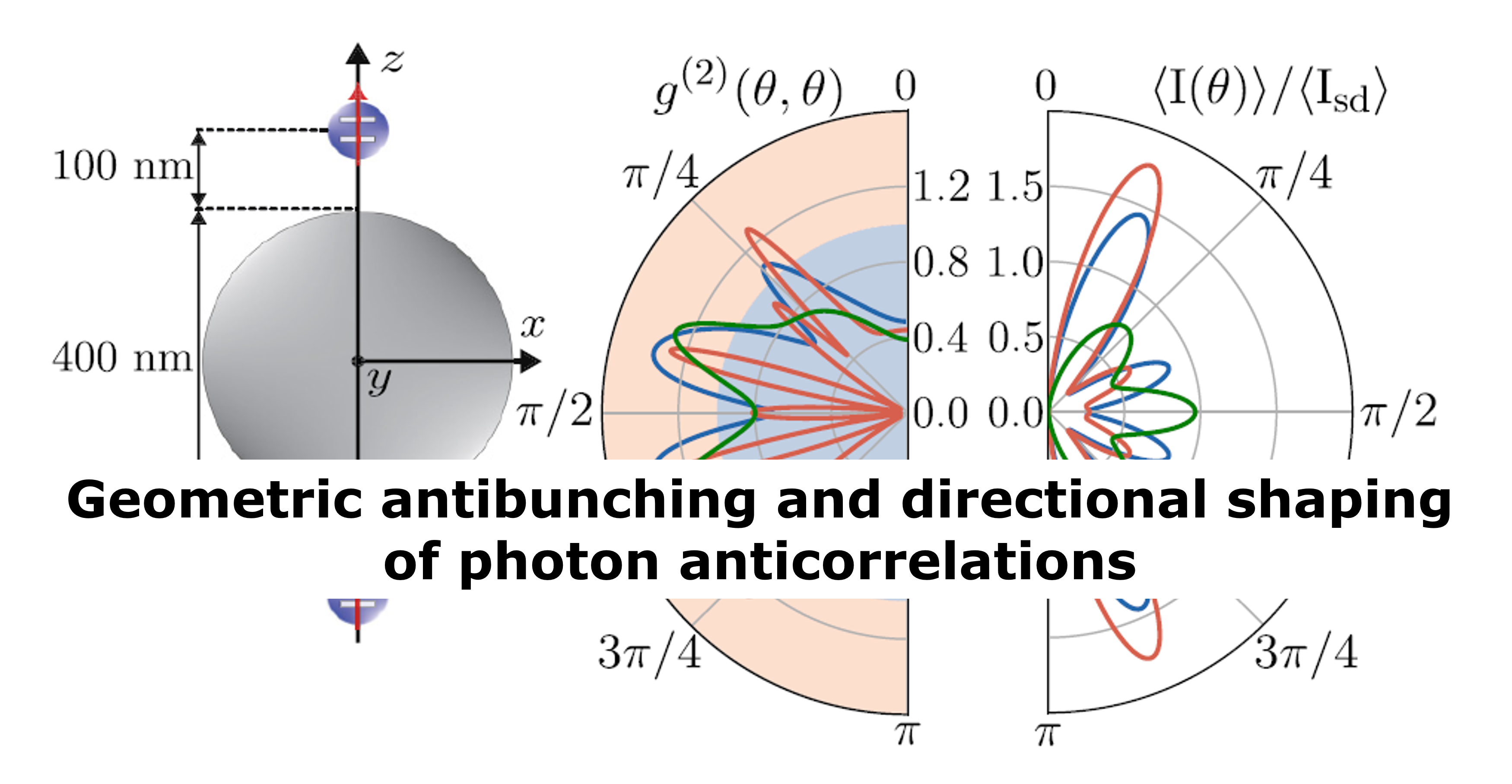
A. I. Fernández Domínguez is an Associate Professor in the Department of Theoretical Condensed Matter Physics at the Universidad Autónoma de Madrid (UAM), Spain. He is affiliated with the Condensed Matter Physics Center IFIMAC and focuses on theoretical investigations of quantum nanophotonic phenomena. His research spans transformation nano-optics, light-matter interactions at the nanoscale, and spoof plasmon metamaterials. Educational Background: Not explicitly stated in the provided text. Research Interests: Transformation Nano-optics: Explores material-geometry links in Maxwell's equations, applied to nano-antennas and plasmon-exciton coupling. Light-Matter Interactions: Investigates plasmon-assisted energy transfer, exciton dynamics, and quantum optical effects in nanophotonic systems. Quantum Nanophotonics: Develops strategies for quantum light generation and tailoring photon-emitter interactions in nanocavities. Spoof Plasmon Metamaterials: Designs metamaterials enabling plasmonic effects in infrared/THz ranges through geometric surface modes. Articles Trends: Recent work emphasizes quantum emitters in nanocavities, non-Hermitian systems, and plasmon-molecule coupling. Topics include directional photon emission, polariton dynamics, and metamaterial applications in low-frequency photonics. Scientific Awards: No awards listed in the provided text. Advising/Grants: Advising information unavailable; no grant details provided. Labs/Teams: Active in the Condensed Matter Physics Center IFIMAC, collaborating on theoretical nanophotonics projects.
Dr. Jessica Shaw is a Researcher at the University of Rochester’s Laboratory for Laser Energetics. She holds M.S. and Ph.D. degrees in Electrical Engineering from UCLA, specializing in laser-plasma interactions. Her research focuses on experimental short-pulse laser-plasma interactions, including plasma-based Raman amplification, laser wakefield acceleration physics, and applications of accelerator-produced beams. Education: M.S. and Ph.D. in Electrical Engineering (UCLA) Her work emphasizes advancing ultrafast laser technologies for high-energy-density physics. Key areas include programmable flying focus pulses, dephasingless laser wakefield acceleration, and x-ray source development using picosecond lasers. Recent studies explore electron beam generation, plasma channel formation, and parameter optimization for direct laser acceleration. Her research leverages facilities like OMEGA EP and NSF OPAL, addressing challenges in plasma dynamics and beam diagnostics. Contributions include breakthroughs in x-ray radiography techniques and bubble-regime wakefield control. Current efforts aim to achieve single-stage TeV-class electron beams and enhance plasma-based laser systems. Notable projects involve supersonic gas-jet nozzle validation, ion beam acceleration, and the role of focusing geometry in electron dynamics. Her work bridges fundamental plasma physics with applied technologies for high-energy physics and inertial confinement fusion diagnostics.