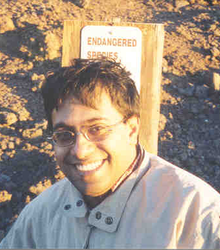
Anuradha GuptaView profile
Assistant Professor
Dr. Anuradha Gupta is an Assistant Professor in the Department of Physics and Astronomy at the University of Mississippi, affiliated with the College of Liberal Arts. She is an active researcher in gravitational wave physics and astrophysics, and a member of major international collaborations including the LIGO Scientific Collaboration and the LISA Consortium. Education: B.S. in Science, Dr. Ram Manohar Lohiya Avadh University, India (2007) M.Sc. in Physics, Banaras Hindu University, India (2009) Ph.D. in Physics, Tata Institute of Fundamental Research, India (2014) Her primary research interests lie in gravitational wave physics, astrophysics, and cosmology, particularly focusing on neutron stars, black holes, and tests of general relativity. She contributes to the detection and parameter estimation of gravitational wave signals from compact binary systems. Her work bridges theoretical modeling with observational data from advanced detectors. Dr. Gupta has been recognized with several prestigious scientific awards, including the Gruber Cosmology Prize (2016), the Buchalter Cosmology Prize (Second Prize, 2019), and the Excellence in Community Engagement Award from the University of Mississippi (2024). She has also received recognition for her presentations and research excellence during her postdoctoral tenure. She has mentored students through teaching core physics courses such as Physics for Science & Engineering I and II, Mechanics, and Optics. Her professional memberships include the American Physical Society, International Astronomical Union, LISA Consortium, and the Indian Association of General Relativity and Gravitation. She previously held postdoctoral fellowships at the Inter-University Centre for Astronomy and Astrophysics (2014–2017) and Pennsylvania State University (2017–2020). Dr. Gupta is actively involved in large-scale scientific collaborations, particularly through the LIGO Scientific Collaboration and LISA Consortium, contributing to the global effort in gravitational wave astronomy and future space-based detection missions.