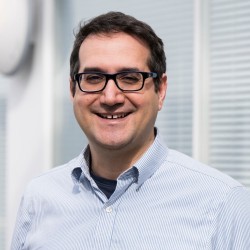
Yiwen Chu is an Assistant Professor in the Department of Physics at ETH Zürich, where she leads the Laboratorium für Festkörperphysik (Laboratory for Solid State Physics). Her research focuses on quantum physics with specialization in quantum acoustics, superconducting qubits, and quantum measurement techniques. She explores fundamental quantum phenomena in mechanical systems and develops quantum technologies using acoustic resonators. Her recent publications demonstrate consistent focus on quantum acoustic systems, quantum measurement techniques, and macroscopic quantum phenomena. Work shows progressive development from foundational quantum acoustics (2018) to complex quantum state engineering (2024). A significant trend is the exploration of mechanical systems for quantum information processing, with recent advances in mechanical qubits and multimode quantum interactions. No scientific awards mentioned. No advising information available regarding PhD or Master's students. Leads the quantum devices group at the Laboratorium für Festkörperphysik, focusing on hybrid quantum systems combining superconducting circuits with mechanical resonators.
Sotirios Kentros is an Associate Professor in the Computer Science Department at Salem State University , focusing on Distributed Computing , Computer Security , Cryptography , and Computer Science Education . His work emphasizes formal mathematical analysis for system safety and security, particularly in cyber-physical systems and electronic voting. Ph.D. and M.Sc. in Computer Science and Engineering from University of Connecticut M.Sc. in Biomedical Engineering from National Technical University of Athens and University of Patras Dipl.-Ing. in Computer Science and Engineering from University of Patras His research bridges Distributed Systems with Security , including work on Oblivious RAM , At-Most-Once Semantics , and Location-Based Authentication . Publications span venues like IEEE Trans. Inf. Forensics Secur. , USENIX Security Symposium , and DISC . Teaching includes courses like Computer Networks , Operating Systems , and Computer Security .
Dr. Muzammil Khan is a Researcher at the Faculty of Electrical Engineering, Mathematics & Computer Science, University of Twente, Netherlands. He maintains an active research profile with dedicated laboratory space (RaM laboratory) and institutional contact details at Carré 3718. His research spans high-impact domains in medical technology and computational mathematics: Computer vision systems for medical diagnostics Anomaly detection using deep learning architectures Advanced calculus applications in image processing Optical flow algorithms for motion analysis Visual SLAM implementations in surgical robotics Dr. Khan leads the ROADIME-NOVA and ROADIME-Bladder projects focused on medical image analysis innovation. His RaM laboratory serves as the operational hub for developing real-time vision systems in clinical environments, emphasizing practical translation of theoretical frameworks to healthcare solutions.
Univ.-Prof. Hannes Pichler is a Professor and Group Leader of the Pichler Group - Quantum Science Theory at the University of Innsbruck's Institute for Quantum Optics and Quantum Information. His research focuses on quantum simulation, quantum computing, and many-body quantum systems using Rydberg atom arrays. He leads a multidisciplinary team including postdocs and PhD students working on topics such as quantum entanglement, topological order, and error-corrected quantum processors. Education and affiliations: No explicit details provided, but his group is part of the IQOQI, a leading quantum research center in Innsbruck. His work integrates theoretical physics with experimental platforms like neutral atom arrays. Research interests emphasize quantum many-body scars, categorical symmetries, and scalable quantum hardware. Recent publications highlight advances in adiabatic optimization, Hamiltonian learning, and topological entanglement protocols. Scientific awards: None explicitly listed in available texts. Advising and grants: Supervises 9 PhD/Master students and multiple postdocs. Group members include Lisa Bombieri, Francesco Cesa, and Giuliano Giudici. Collaborates on projects involving quantum RAM, error correction, and combinatorial optimization using programmable atom arrays. Labs/Teams: Operates the Pichler Group within IQOQI, focusing on theoretical and experimental quantum science. Active in developing quantum algorithms and hardware architectures for next-generation quantum processors.
Jun Yang is a Professor at the Swanson School of Engineering, University of Pittsburgh. His research focuses on embedded systems, hardware security, memory systems, and processor microarchitecture. He has made significant contributions to GPU architecture, quantum computing, and secure memory management. Key honors include the NSF Faculty Early Career Development Award (2008) and Best Paper awards at ISLPED 2013 and ICCD 2013. His work bridges theoretical computer science with practical hardware implementations, addressing challenges in modern computing systems. Research Interests: Embedded Systems & Hardware Security: Developing robust systems against side-channel and memory vulnerabilities. Quantum Computing: Optimizing quantum circuit evaluation on photonic and hybrid platforms. Memory Systems: Innovations in GPU page management, TLB optimization, and storage deduplication. Publications span high-impact areas like multi-GPU systems, quantum resource management, and covert channel mitigation. His work frequently appears in top-tier conferences such as HPCA, ISCA, and ASPLOS.
Gage Hills is an Associate Professor of Electrical Engineering at Harvard University's John A. Paulson School of Engineering and Applied Sciences (SEAS). His primary research focuses on sustainable computing, nanotechnology, and semiconductor design, addressing energy efficiency and environmental impact in computing systems. He leads the Nanodesign Lab, developing carbon-efficient architectures and monolithic 3D integration technologies. Education details are not explicitly provided in the text, but his extensive research contributions span over 15 years, with notable work in carbon nanotube-based microprocessors, PFAS modeling, and carbon footprint reduction frameworks. He has been awarded a $12M NSF grant (2024) for a multi-institutional sustainable computing initiative aiming to reduce computing's carbon footprint by 45% by 2034. His research interests emphasize transforming nanodevices into practical systems, including carbon nanotube field-effect transistors (CNFETs), resistive RAM (RRAM), and hybrid silicon-CNT architectures. Recent work includes frameworks like CORDOBA (carbon optimization) and Carbon Connect (sustainability ecosystem tools). Key articles (2023–2025) explore photonic integration with lithium niobate, bendable non-silicon processors, and quantifying PFAS environmental impacts in semiconductor manufacturing. He collaborates with industry partners to bridge academic research with commercial semiconductor fabrication. Notable grants and initiatives include NSF funding and the N3XT project (2018), advancing energy-efficient abundant-data computing. His lab's work has been highlighted in IEEE journals and international conferences, emphasizing both theoretical and applied aspects of nanoelectronics.
Kiran Sreedhar Ram is a Lecturer in Engineering at Charles Darwin University (CDU), affiliated with the Faculty of Science and Technology, Environment and the North Australia Center for Autonomous Systems (NACAS). He holds a PhD in Organic Photovoltaics from CDU, following a Bachelor of Technology in India and a Master of Engineering. His research focuses on organic and perovskite solar cells, interfacial defects, device optimization, and renewable energy. He has contributed to projects like 'Highly Efficient and Stable Solar Cells with Hybrid Nanostructures' and 'Perovskite Cell Measurement and Performance.' Teaching roles include fostering student success through in-person and online methods. He volunteered with NASA’s Pluto Occultation Mission (Hubble optics team) and served as Science Outreach Officer at InspiredNT, engaging students in robotics and programming. Finalist for Engineers Australia’s 'Emerging Professional Engineer of the Year.' Over 17 peer-reviewed publications, emphasizing photovoltaic efficiency and materials science. Collaborations on UN Sustainable Development Goals related to affordable energy and innovation. His work bridges energy research and autonomous systems, advancing sustainable technologies.
Eran Tromer is a Professor of Computer Science at Boston University, specializing in cryptography and information security. His research focuses on building secure distributed systems, cryptographic tools like zero-knowledge proofs, and mitigating side-channel attacks. He co-founded the Zcash blockchain, Sealance for privacy-preserving financial regulation, and led the ZKProof Standardization Effort. Education: PhD from the Weizmann Institute of Science Prior affiliations: Columbia University, Tel Aviv University, MIT, and Microsoft Research Research Interests Tromer's work bridges theoretical cryptography with practical implementations, emphasizing: Privacy-preserving technologies (blockchain, zero-knowledge) Cryptographic protocol security Side-channel attack mitigation Hardware vulnerabilities Recent articles explore topics like snake-eye resistant encryption, optical cryptanalysis, and adversarial machine learning attacks on perceptual hashing. Professional Contributions Founder of Zcash and Sealance, Tromer has also contributed to open standards through ZKProof. His research often intersects hardware security and software resilience, with a focus on real-world deployable solutions.
Professor Adam Amara is the Head of the School of Mathematics and Physics at the University of Surrey. His research focuses on observational cosmology, galaxy formation, and gravitational lensing, primarily utilizing data from the Euclid space telescope. He leads efforts in photometric redshift calibration, strong lensing detection algorithms, and intracluster light studies. Amara's work involves developing machine learning tools for galaxy morphology analysis and physical parameter extraction. He contributes to the Euclid mission's scientific ground segment, including simulation frameworks and data calibration techniques. His recent studies include investigations into ram-pressure stripping in galaxy clusters and protocluster candidates in the early universe. Key achievements include pioneering the Strong Lensing Discovery Engine (SLIDE) for automated lens detection and advancing methodologies for 3D galaxy clustering analysis. His research bridges observational astronomy with cosmological parameter inference, leveraging large-scale surveys to probe dark matter and dark energy. Amara collaborates extensively with global teams, including contributions to the Euclid Quick Data Release (Q1) analysis of ultracool dwarfs and active galactic nuclei. His work has implications for understanding galaxy evolution, cosmic structure formation, and the interplay between galaxies and their environments.
Professor Duygu Kuzum is a faculty member in the Department of Electrical and Computer Engineering at the University of California San Diego. Her research focuses on nanoelectronic devices for brain-inspired computing, neural interfaces, and clinical neurodevices. She has developed synaptic devices emulating brain computation and transparent neural implants for high-resolution brain monitoring. Kuzum holds the Joan and Irwin Jacobs-Kavli Foundation Chancellor's Endowed Faculty Fellowship and has been recognized with awards including MIT TR35, Penn Neuroscience Innovation Award, and Texas Instruments Fellowship. Her lab, the UCSD Neuroelectronics Lab, pioneers neurotechnologies combining nanoelectronics with neuroscience to advance understanding of brain circuits and develop next-generation neural interfaces. Education: PhD in Electrical Engineering (Stanford University, 2010), Postdoc in Bioengineering (University of Pennsylvania, 2011-2015), B.S. in Electrical Engineering (Bilkent University, 2004). Research interests include neuromorphic computing, neural interface design, and bio-plausible learning systems. Key innovations include filament-free RRAM for energy-efficient neural networks, graphene-based transparent electrodes, and bioresorbable neural implants. Recent work explores functional integration of cortical organoids with host brain circuits using multimodal monitoring. Grants and Awards: NIH New Innovator Award (2020), multiple industry and foundation fellowships. Her lab collaborates on projects like E-organoid systems and closed-loop optogenetic systems. Labs/Teams: Director of UCSD Neuroelectronics Lab, affiliated with Kavli Institute for Brain and Mind. Active in developing transparent neural probes and neuromorphic brain interfaces.
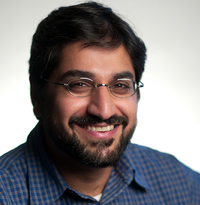
Professor Randall Victora is a Centennial Chair and Department Head in the University of Minnesota's College of Science and Engineering , leading the Department of Electrical and Computer Engineering. His research group focuses on magnetic materials for information storage, spintronics, and biomedical applications, utilizing micromagnetic simulations and electronic structure theory . Department Head, Electrical and Computer Engineering Centennial Chair, University of Minnesota Co-Investigator at C-SPIN Center Research emphasizes Heat-Assisted Magnetic Recording (HAMR) , Spin-Transfer Torque , and non-linear magnetic damping mechanisms. Collaborations span theoretical and experimental domains. Current projects include: Developing sub-10 nm magnetic sensors Predicting switching fields for magnetic materials Optimizing spin-wave transmitter performance His work contributes to magnetic storage advancements and biomedical applications, with extensive publications and leadership in computational magnetism.
Jian-Ping Wang is a Distinguished McKnight University Professor and holds the Robert F. Hartmann Chair in the Department of Electrical and Computer Engineering at the University of Minnesota's College of Science and Engineering. His research group, the Nanomagnetism and Quantum Spintronics Lab (Nanospin), is actively engaged in cutting-edge research at the intersection of nanomagnetism, spintronics, and biomedical applications. Professor Wang's research interests span a broad spectrum of nanomagnetic and quantum spintronic phenomena. His work focuses on developing novel magnetic materials with extremely high magnetic anisotropy, giant saturation magnetization, high spin polarization ratio, and large spin-orbit torque. His group investigates applications of these materials in next-generation information storage and computing, biomedical technologies including disease early detection and neuron stimulation, and green energy solutions. Specific research programs include studying L1 0 -FePd materials for scalable spintronics, developing synthetic antiferromagnetic magnetic tunnel junctions, and exploring voltage control of magnetic properties for energy-efficient devices. Analysis of Professor Wang's recent publications reveals a strong emphasis on spin-orbit torque phenomena, voltage-controlled magnetism, and biomedical applications of magnetic nanoparticles. His work bridges fundamental physics with practical applications, particularly in developing energy-efficient spintronic memory and logic devices, magnetic particle imaging for biomedical diagnostics, and micromagnetic neurostimulation technologies. The research shows increasing interdisciplinary collaboration, particularly with neuroscience and biomedical engineering fields. Distinguished McKnight University Professor Robert F. Hartmann Chair NSF Graduate Research Fellowship (awarded to student Onri Jay Benally) Professor Wang has successfully advised numerous PhD students including Dr. Renata Saha (thesis on micromagnetic neurostimulation), Dr. Deyuan Lyu (thesis on advanced perpendicular magnetic tunnel junctions), and Dr. Jianxin Zhu (thesis on molecular dynamics simulation of magnetic thin films). His research is supported by substantial funding from multiple sources including the National Science Foundation, Department of Energy, Western Digital Corporation, and SRC, INC. Current projects include Minnealloy (Critical-Material-Free High-power High-Frequency Transformers), NSF-MeitY: Energy-efficient quantum materials based magnetic tunnel junctions, and Ni 4 W for Energy-Efficient, Field-Free and Ultra-Fast Switching SOT MRAM. Professor Wang leads the Nanomagnetism and Quantum Spintronics Lab (Nanospin), which is affiliated with multiple research centers including the C-SPIN Center, SMART Center, Spin Valley, and Minnesota NeuroSpin Initiative. His lab maintains strong collaborations across disciplines, particularly with neuroscience researchers for developing magnetic neurostimulation technologies and with materials scientists for developing novel magnetic materials. The research group actively participates in the broader spintronics community through these centers and initiatives.
Tania Roy is an Associate Professor in the Department of Electrical and Computer Engineering at Duke University's Pratt School of Engineering. Education: M.S. (2008) and Ph.D. (2011) in Electrical and Computer Engineering from Vanderbilt University Postdoctoral Training: Georgia Institute of Technology (2011-2013), University of California, Berkeley (2014-2016) Research Interests: Focus on developing AI hardware using two-dimensional materials, neuromorphic computing architectures, wide bandgap semiconductors for high-power electronics, and radiation effects characterization in gallium nitride (GaN) devices. Key areas include electrical characterization techniques for device reliability, defect analysis, and emerging materials systems. Scientific Awards: Presidential Early Career Award for Scientists and Engineers (PECASE) - 2024 Teaching: Instructs courses including ECE 526 (Semiconductor Devices), ECE 493/391 (Engineering Projects), and ECE 230L (Microelectronic Devices).
Eric Montoya is an Assistant Professor in the Department of Physics and Astronomy at the University of Utah, where he has led the MLAB (Magnetic Materials and Spin Dynamics Laboratory) since January 2022. His research focuses on experimental condensed matter physics, specializing in magnetic materials, spin dynamics, and nanofabrication for spintronic applications. Education: PhD in Physics, Simon Fraser University (2016) BS in Physics and Astronomy, Western Washington University Postdoctoral Scholar, Physics and Astronomy, University of California, Irvine Research Focus: Montoya's group investigates spin-orbit interactions, magnetization dynamics, and spin transport phenomena. They develop novel spintronic devices like spin Hall oscillators and explore quantum technologies through materials engineering. Recent breakthroughs include discovering self-generated spin-orbit torques and anomalous Hall nano-oscillators. Publication Trends: His 26+ articles primarily explore spin-orbit torques, nano-oscillators, and spin transport mechanisms. Works frequently bridge fundamental physics (e.g., quantum well states, chaos-driven magnetization) with applied device innovation (memory, oscillators). Common themes include interfacial spin effects, universal Hall phenomena, and radiation-resistant nanodevices. Awards: NSF CAREER Award (2025) Grants & Advising: Secured $900k NSF-MRI grant (2023) for materials characterization systems. Advises PhD/Master's students including Noah (DOE CSGF fellow), Prakash (poster award winner), and Jonathan (undergraduate research awardee). Research supported by instrumentation for electrical/magnetic characterization. Laboratory: The MLAB group specializes in sample growth, nanofabrication, and spin dynamics characterization, with recent work on universal Hall effects and spin-orbitronic devices.
Rajeev Ram is the Clarence J. LeBel Professor of Electrical Engineering at MIT. His research encompasses photonics, integrated optics, semiconductor devices, and applications in sensing and communications. Dr. Ram develops silicon photonics technology, nanoscale optical devices, and systems for biological and environmental monitoring.